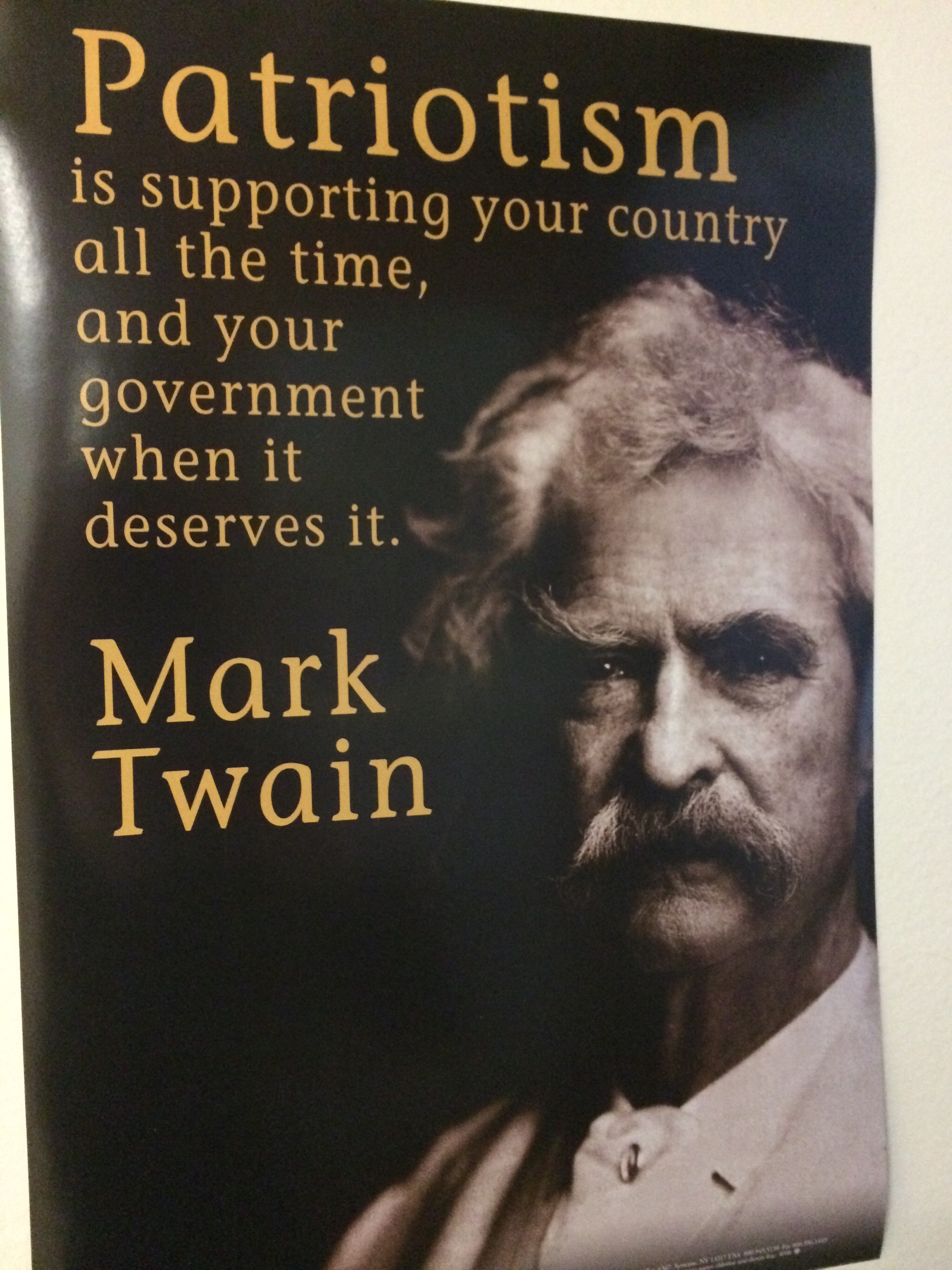
This is All I Have For Now

Hope for today: a new student came to my advisory. A Syrian refugee who has been here for 20 days. He could not communicate very well in English, but another newcomer from El Salvador who’s been here for a few months was able to help him with signs and support. He also took pictures on his tablet of everything I handed out and was able to run the words through an app that translated the words to Arabic. And, through the tablet translation, proudly told me at the end of class that he speaks three languages: Arabic, Turkish, and Kurdish.

I wonder what else he has stored behind those questioning eyes? I can’t wait to find out. And I’m so glad he made it through the Trumpocracy.

#standwithrefugees #standwithimmigrants

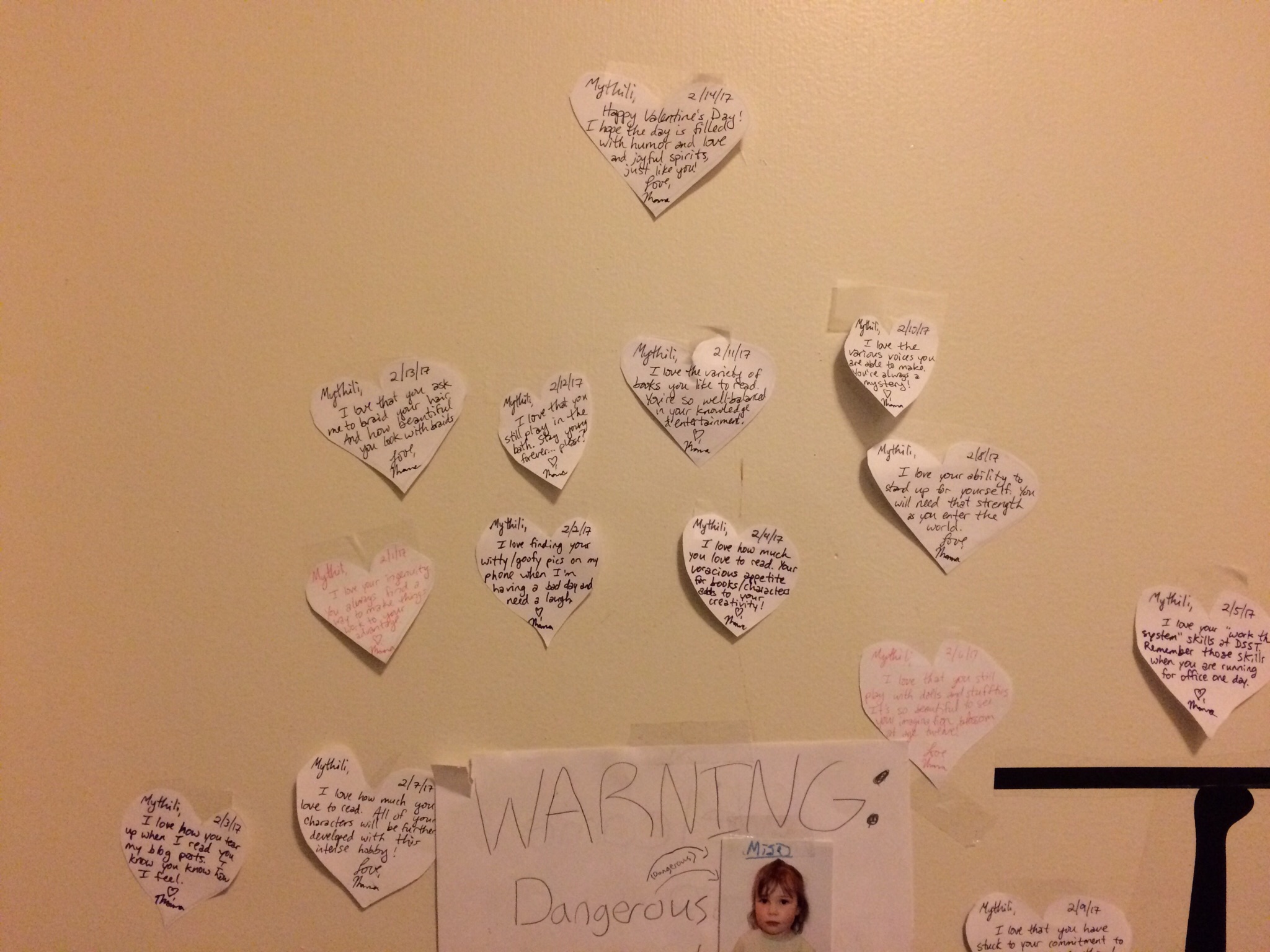
Heart In Time

day’s small victories:
 video discovery,
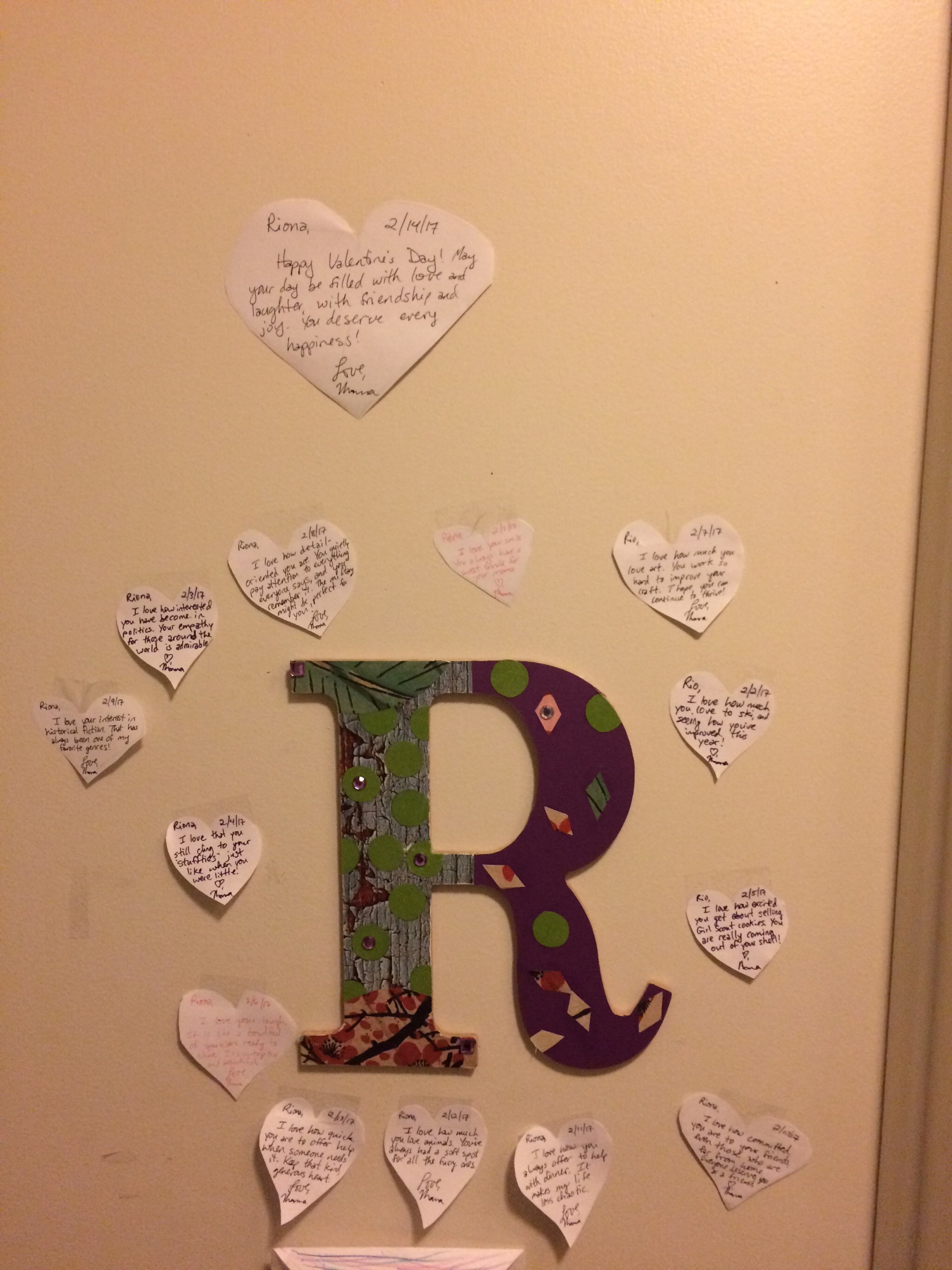
 love hearts updated
 
 (these little remnants
 of jam-packed, drama-filled day
 make my heart smile)
 

The Last Plane

Red hair, green eyes, tall and sure of himself, he peeks into my room, searching for a familiar face after lunch. I have seen this look before, as my students often seek their native-language counterparts.
 
 “Who are you looking for?” I ask, the after-lunch crowds raucously meandering around our conversation.
 
 “I am looking for you. I am a new student.” His accent is smooth and meticulous, genteel and articulate.
 
 “Oh, OK. What’s your name?”
 
 “Arvin.”
 
 “Where are you from?”
 
 “Iran.”
 
 “Iran? … And… how did you get here??” But I have to look away because the tears are already in my eyes.
 
 “I boarded the plane on Friday morning. I was in the last group of Iranians to come.”
 
 I want to continue the conversation, but I can’t. I can’t because the tears will fall. I can’t because I have to teach for the next ninety minutes. I can’t because every waking moment of my life since this election, since this inauguration, have become a cycle of servitude. Of serving this need or the next, of wishing for this and receiving that, of hoping for the best and seeing the worst.
 
 Instead I tell him where to sit and hand him a hard copy of I Am Malala. We will listen to the lilting Pakistani accent from Audible today as we continue to highlight human rights violations from the Universal Declaration of Human Rights (we will highlight thirteen incidents in three chapters; we will connect media suppression and fascism and women’s rights to an education too closely to our lives; we will hear Fazlullah’s rants with an American accent).
 
 My weekly volunteer returns from the library after a time with a group of students. She meets with my Iranian student to explain to him his role in the group as they create posters connecting Malala’s experiences to the UDHR. He fits in well and tells the group he cannot draw very efficiently, so can he please have the role of interpreting the quotation from the chapter and connecting it to the UDHR document?
 
 He has been here for five days. He got in on the LAST PLANE.
 
 After class, my retired-white-woman volunteer asks, “If he just got here from Iran, how come he can speak English?”
 
 And that is when I decide.
 
 I have to start here. Right in this moment. With this woman who drives one mile from her upscale mansion in Cherry Creek North to “make a difference.”
 
 “Pretty much all of the students who come here learned English before they came. Usually only the refugees have interrupted schooling. But most countries start teaching English when the kids are in kindergarten.”
 
 I swear her jaw drops ten inches. She wants to say something, but she doesn’t have the words to describe her ignorance.
 
 “Oh…”
 
 And now you know, I want to say. But I don’t. I don’t cry when I want to, because I have to be strong for them. I don’t tell her that Trump’s America is not my America, not Arvin’s America. I don’t tell her that the combination of students in this room represents the values of our country better than most Americans I know. That a red-headed Iranian entering my classroom five days past an executive order banning Muslims is as beautiful to me as Ziauddin’s tears in the New York Times documentary as he sees Swat for the first time in three months (which we watch at the end of class).
 
 Instead, I say, “Thank you for your help. I’ll see you next Wednesday.”
 
 And that is all I can do to resist.
 
 All for today.

Weighing In

Wednesdays have turned into a ritual for Riona and I, as the older two get a ride home from the carpool and she has joined in with her expertise at helping me go grocery shopping (if expertise means begging me for Cheez-its, Naked juice, and blueberries…).

On this Wednesday, five days into Trumpocracy, the weight of it all is heavier than ever before. The two stores, the lines of people at guest services while I wait to buy bus passes, the shuffling of semi-broken carts, the weaving in and out of crammed-too-full aisles filled with Valentine’s candy and magazines and gift cards and everything, it seems, except the food I need to feed my family.

The knowledge that I carry with me now, of stripped healthcare, border wall building, claims of voter fraud, Muslim refugee bans, women’s healthcare denials, mortgage fees reinstated… It makes even the mundane tasks of finding the right brand of almond milk, of selecting a new variety of potatoes, of giving in to the Cheez-it bid, seem heavy and dark and worrisome.

How long will this variety of foods be here? I begin to wonder. How long will this variety of people be here? My darker self asks, as I hear a series of languages and see every skin tone meander through this shared space, this shared ritual of finding food.

At the second store, after I’ve sent Riona off on her own to fulfill half the list while I buy the bus passes, we count our items in the small cart to see if we can shimmy into the “About 15 Items” line behind four other groups. We stand behind them like a crooked tail as carts shuffle past, and slowly move forward to the monotonous beep of the register. As we pile our goods atop the belt, I’m proud of her ability to stick to the list. “Good, you got just the almond milk I like,” I smile down at her, and she grins back, “Of course, Mama. I’m not Daddy.”

A tall blond woman rings us up in a slow, methodical fashion. Riona, who has just finished checking off the last item on the iPhone grocery list, proudly clicks the phone shut and begs to put my credit card into the chip reader. “How does it work, exactly?” she asks excitedly, wholly unaware that my usual no has slipped into a dull yes because my mind is on all my Muslim students from all those countries on his list who will likely never see their extended families again (and not on who’s putting my card in the chip reader).

“Awww,” the cashier coos, “I wish I could be a kid again… although, I had a terrible childhood.”

I look up at her, the pale blue eyes, the straight blond hair, and the hint of an accent. She knows she has my attention now, though of course a line of people still waits impatiently in this express lane, wanting to check out, to go home, to pop open a beer and drink this day away.

“Have you ever heard of the Bosnian genocide?” she asks, and my mind flashes back to my first year of teaching when I had a student whose letter of introduction to me was, when I asked about his childhood, “Only an American would ask about that. Because my childhood was shit. My childhood was war.”

“Yes… I have had students who were from Bosnia,” I reply to the cashier.

“Oh, where do you teach?” she asks excitedly.

“South High School.”

“My sister went there!”

I’m reminded again of how connected our humanity is. She hands me my receipt, I tell her what a great school it is, and I grab the hand of my ten-year-old, whose childhood still lights up by the sushi we always share (unbeknownst to her sisters) before we drive home. Whose childhood is road trips and living in Europe for a year and grandparents who are right down the road and two loving, living parents.

We make our way across the parking lot, and she rams the cart into the speed bump. The eggs tumble to the ground and she frantically looks up at me, ready for the annoyance that would normally be present on my lips.

But I am crying because I don’t care about the damn eggs. I care about the millions of refugees, just like that girl in the grocery store, who won’t be coming here. About the thousands who have come. And the thousands who have been left behind. About the impotence I feel, the numbness that creeps into the corners of my days, as I face this new regime.

“What is it, Mama?” she asks, taking my hand again. I tell her what the girl said about the Bosnian genocide. About the papers Trump is ready to sign. About my first-year-of-teaching student.

We open our crunchy California roll and I put all the wasabi on one piece. She smiles, holding up the bottle of water for me, wanting me to douse it out. “Not this time,” I say, “I want to feel all that fire in my mouth.”

I want to feel something. To feel like I can go to the grocery store without crying. To feel like we live in a place where everyone is welcome, everyone is loved, and everyone is free. Where everyone has the chance to have a happy childhood.

Halfway home, she asks, “Can I have the last piece?”

“Of course.”

She pops it into her mouth and squirms in her seat. “Don’t worry, Mama, I’ll throw the package away before the sisters find out.” She hops out of the car and dances across the lawn towards the outside trash can. “It’ll be OUR secret.”

As usual, she is as happy as a clam. She doesn’t carry the weight of the media, the weight of the presidential pen, the weight of a genocide, as she goes through her days.

She has the gift of a happy childhood. And for now, that is the only weight I want her carry.

“We’ll never tell,” I smile back, the spicy wasabi still sticking to my tastebuds. I can feel the fire in my mouth. And for this moment, at least, I am only thinking about how happy she is.

About how glad I am to have my girls, my home, my school that is a safe haven for all the refugees, for the grocery store filled with a microcosm of the world where a refugee now works, and all the food our family will need.

Because it is something. It is enough. Enough for today.
Locationally Challenged

Where is my place in this America? It is the question asked by millions, and so frequently no answer is ever offered. Our collective experiences often lead us to both hate and love this country. It’s a balance, a scale, ready to tip as easily towards hate as towards love.

I am a white woman. It is a blessing and a curse. It comes with white privilege and preferential treatment. It comes with the burden of white privilege and preferential treatment. Because yes, these are burdens. I participate in the historical women’s march and am demonized for the privilege the protesters are allowed by law enforcement since the organizers and protesters are primarily white. I am reminded that “white women voted for Trump” even though I am not one of those white women.

I am trapped between feeling like I want to do everything to stop the hatred that has taken over the world and feeling like no matter what I do, nothing will change. Trump will continue to sign executive order after executive order (ten so far in three business days) stripping every last one of us from our human rights. I have signed at least 100 petitions since election day. I have posted on social media. I have spoken to friends and family about my beliefs. I have supported my students as best as I can while “remaining neutral” (a requirement of the school district). I have called the Department of Justice, my senators, my congress men and women (only to be blocked, to receive a busy signal, or be directed to a full voicemail box).

Where is my place in this America? As a mother of three daughters, a wife of a white man, a teacher of refugee and immigrant students, a Democrat, an atheist, an idealist?

Because white women have betrayed me. Defriended me. Voted for Trump (58% of them??).

Because mothers don’t seem to care that we have a president who brags about grabbing women by their pussies.

Because white men (nothing like my husband)–63%–voted for a man who publicly mocked a disabled reporter.

Because Democrats voted for third party candidates instead of Clinton.

Because I spend my day surrounded by non-whites from every culture and religious belief you can imagine, and I don’t belong with any of them, other than as a figurehead to the white world that is Our America.

Where is my place in this America? I can’t seem to find it. I search in my students’ eyes, my daughters’ artwork, my husband’s anti-government views… And no matter where I look, I feel homeless. Hopeless.

I am searching for what we have lost and will continue to lose. Seeking the solace of activists and friends. Pouring myself into research and writing. Studying law and politics and fact-checking every last piece of media. Taking the time to understand how horribly impactful the violation of human rights can be, how that violation trickles from person to person until the entire society buckles under itself.

And all I can ask, all I keep asking as I am surrounded by doubt and alternative facts and fact-checkers and protests and postcards and last-ditch efforts, is where is my place in this America?

Where is yours?

Why We March

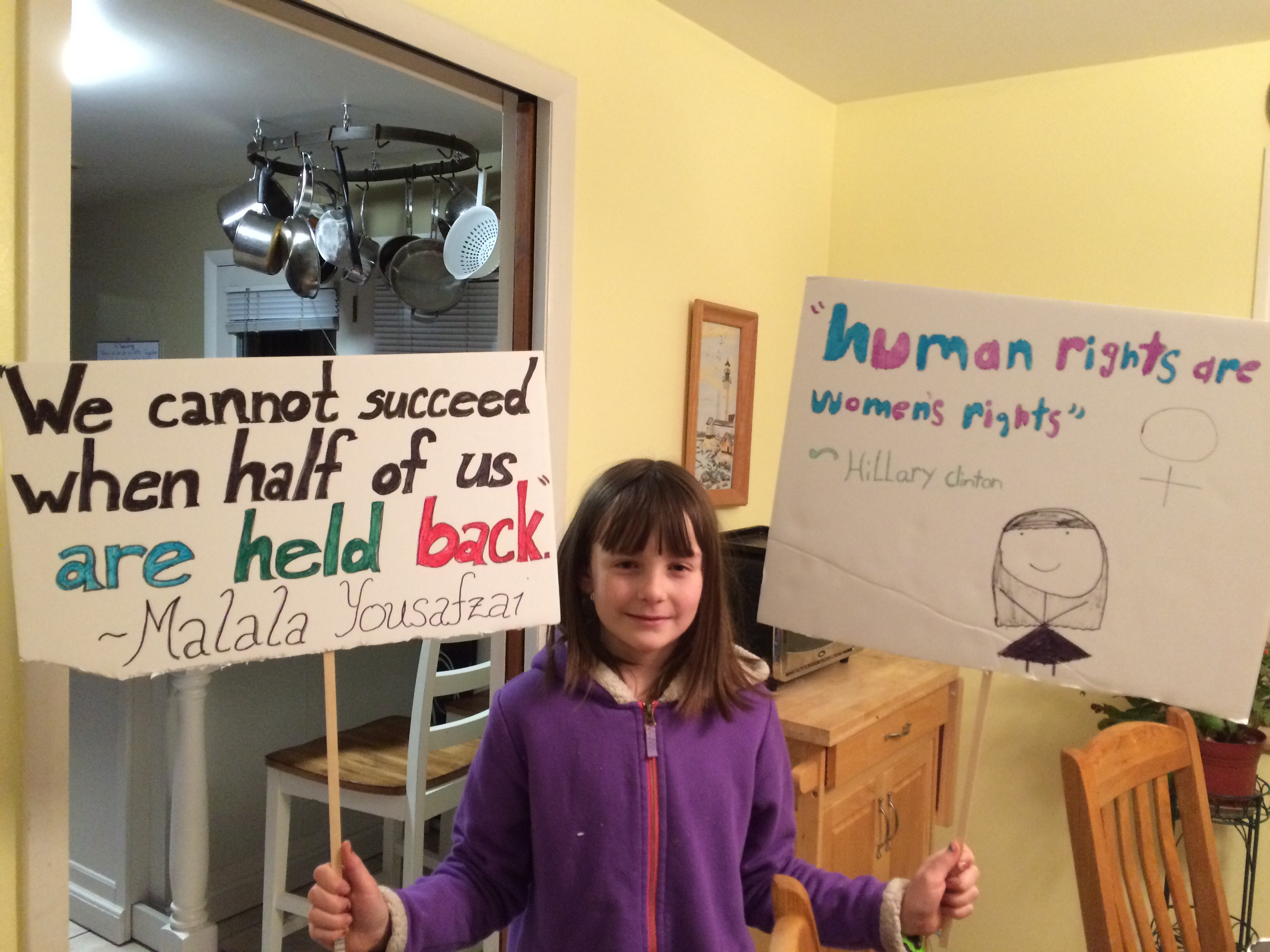
We march because we have daughters. Because no one has the right to grab them by their pussies. Because “women’s rights are human rights” (God bless you, HRC). Because the world needs a wakeup call.

We march because we have sons. Sons who will grow into men who can learn how to respect women.

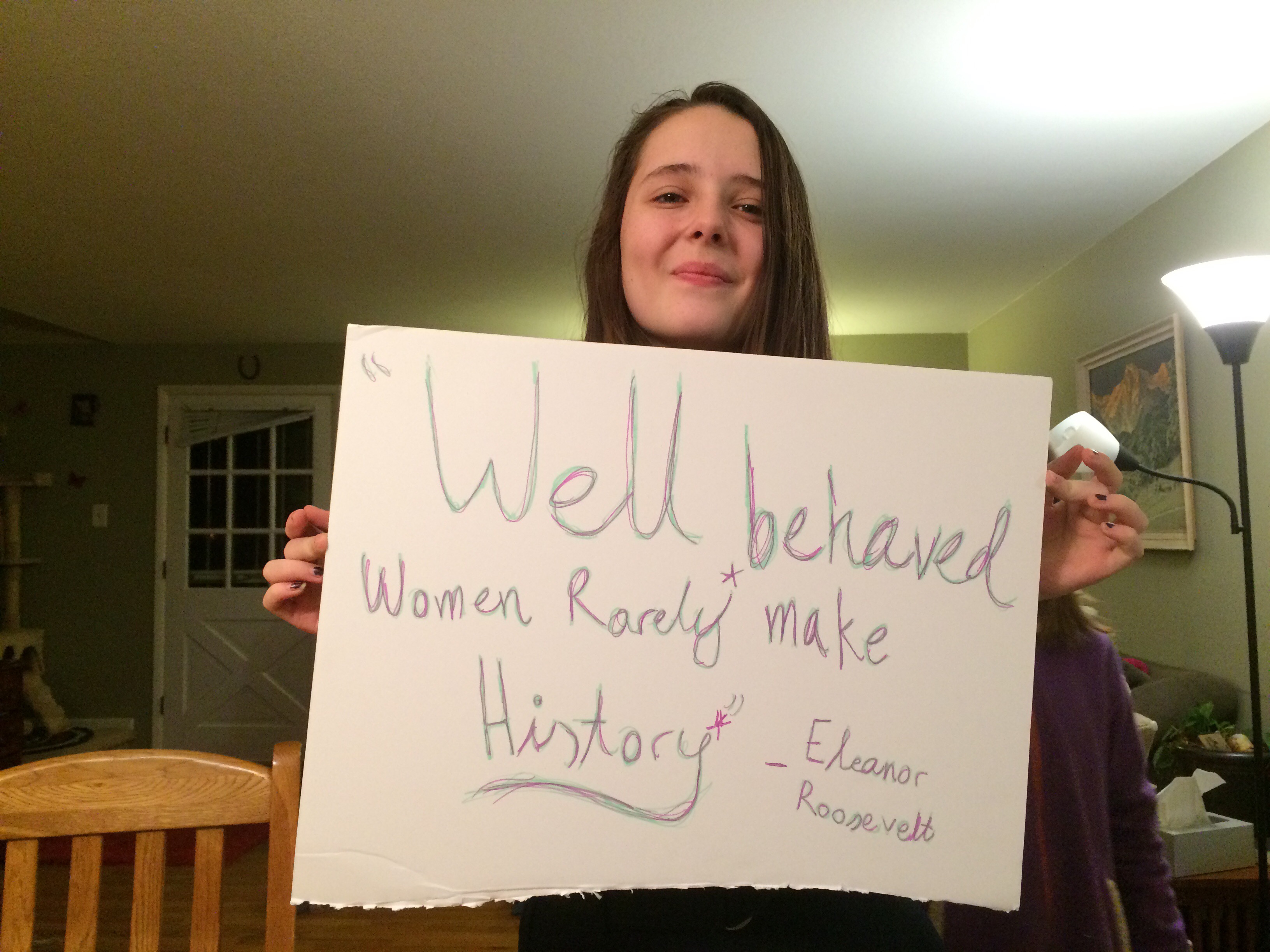
We march because we can’t be bullied. We can’t have anyone–male, female, binary–telling us what to believe. What to do with our bodies. What level of education we deserve. What pay rate we should succumb to.

We march because of our mothers who fought their way into the workforce. Because of our grandmothers who balanced households and work during WWII. Because of our great-grandmothers who were forced into marriages with strange men. Because of every woman who was ever mistreated or controlled by a man.

We march because politics matter. Political policies affect our lives, from whether we have birth control choices to being able to play sports in school to having equal opportunities in higher education.

We march because we are women and men, Muslim and Christian and Hindu and Jewish and Buddhist and atheist, LGBTQ and straight, married and unmarried, parents and grandparents, employees and employers, activists and pacifists.

We march because we are human. Because the United Nations created the Universal Declaration of Human Rights, and we see it as a binding contract with our government. A binding contract with our world.

We march because we are free.

We march to protect that freedom.

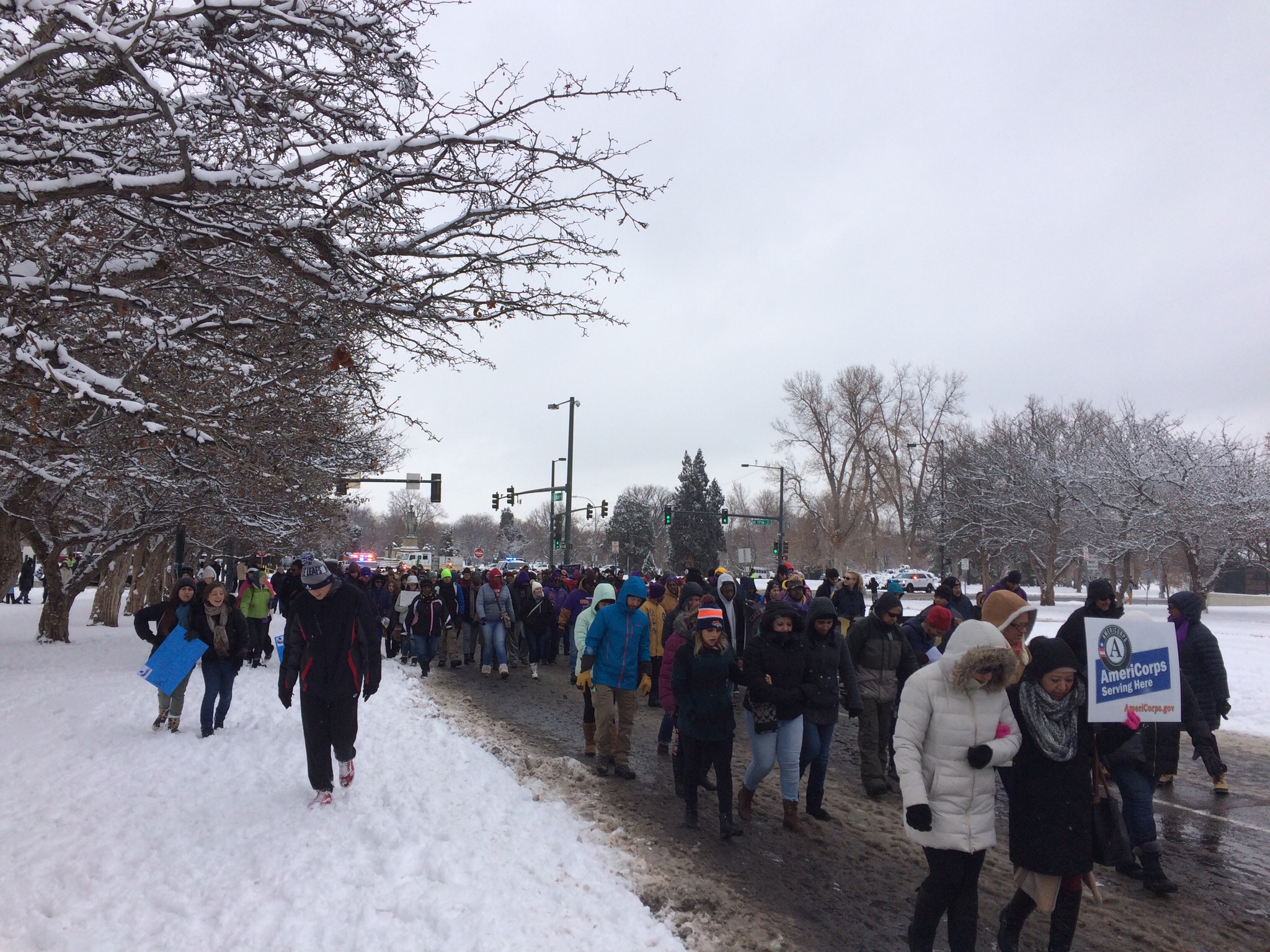
Make My Marade

annual Marade
 frosted with ice (years without)
 but now winter’s here–
 
 in Trump’s dark shadow
 we march for all we have lost,
 all there is to lose.
 
 we resist snowflakes
 that try and fail to stop us
 from the truth we seek
 
 we fight the good fight
 in songs, in signs, in speeches
 (and one day we’ll win)


Honesty. Squared.

It’s a Friday in January and my mouth is running rampant. She came, she asked, and I don’t lie.

I know that people hate the truth, and the truth hurts (me the most–sometimes I think this), but she wanted the truth, and had twenty different ways for us to share it with her, most of them anonymous.

But I said what I thought. What we all think. What needs changing. What already works. I had evidence and examples, just like I always tell my students to write in their ACEITCEIT paragraphs. And I splayed my soul in front of God and everyone–I got a 3 (7 is the best), and Nick was as honest as could be when he spoke to me, and said, ‘I sat in my garage for three hours last night in turmoil over this’–and that humanization of the score meant more to me than anything else. That humanization–that’s what teachers want. 

And do you know what they said (of course)? You let him give you a 3?

As if they hadn’t heard the whole conversation. As if it weren’t enough, the admittance, the heart on sleeve, the truth.

The, Why can’t you be a little more honest?

On with my day. Two more classes in the afternoon. Coming in a bit tired and a bit disgruntled about the first standardized test of the semester they took yesterday, but still willing to work for me. To discuss and argue about the validity of the Universal Declaration of Human Rights and try to decide which one they thought was most important, and write a paragraph about it (ACEIT today, just ACEIT).

If I’d known sophomore year was going to be all about paragraphs… one begins, unable to finish as she shakes her hands between sentences. But look at the progress you have made! I begin, but am interrupted by knock at the door number four for period five, with a para and a stack of papers three feet thick. Oh my God, what have I done? I start to ask, but cut myself off when I realize it’s the first four chapters of I Am Malala, copied times 160, because we still don’t have the books on our tablets.

You just saved my life, I whisper, and pile the pile on the desks.

Then, just after I thought my day was done after my sixth period valiantly pointed out a grammatical error on my sentence stem (Have you ever had an HONORS ELD course?? You should try it some time. Come by any day at 1:11), I remembered my ultimate task: covering the severe needs special education class. Seventh period. On Friday.

There is no amount of money in the world that could be a fair salary for what these women do every day. With needs that range from nonverbal to highly functioning, students who are obsessed with either Play-Doh or making sure my watch is exposed from under my long-sleeved shirt, to vacuuming relentlessly and walking around only on knees, to the computer dying mid-class and the wheelchair-bound girls moaning in distress, to the speech-language-pathologist teaching the alphabet to one girl for fifty minute straight, there. Is. No. Fair. Salary.

Before I left, I saw a man who I visited last summer during one of our home visits. He was chain smoking and playing violent video games in the projects, his tiny apartment nothing but white windowless walls. He was kind and adept, and described his rather difficult job of trying to keep severely autistic teenage boys from harming others. I suggested he apply at our school since his daughter would be attending there. You have a severe needs program there? I didn’t even know! Today I saw him for the first time, and we fist-bumped. You’re the reason I even have this job, he told me.

Best moment of my day.

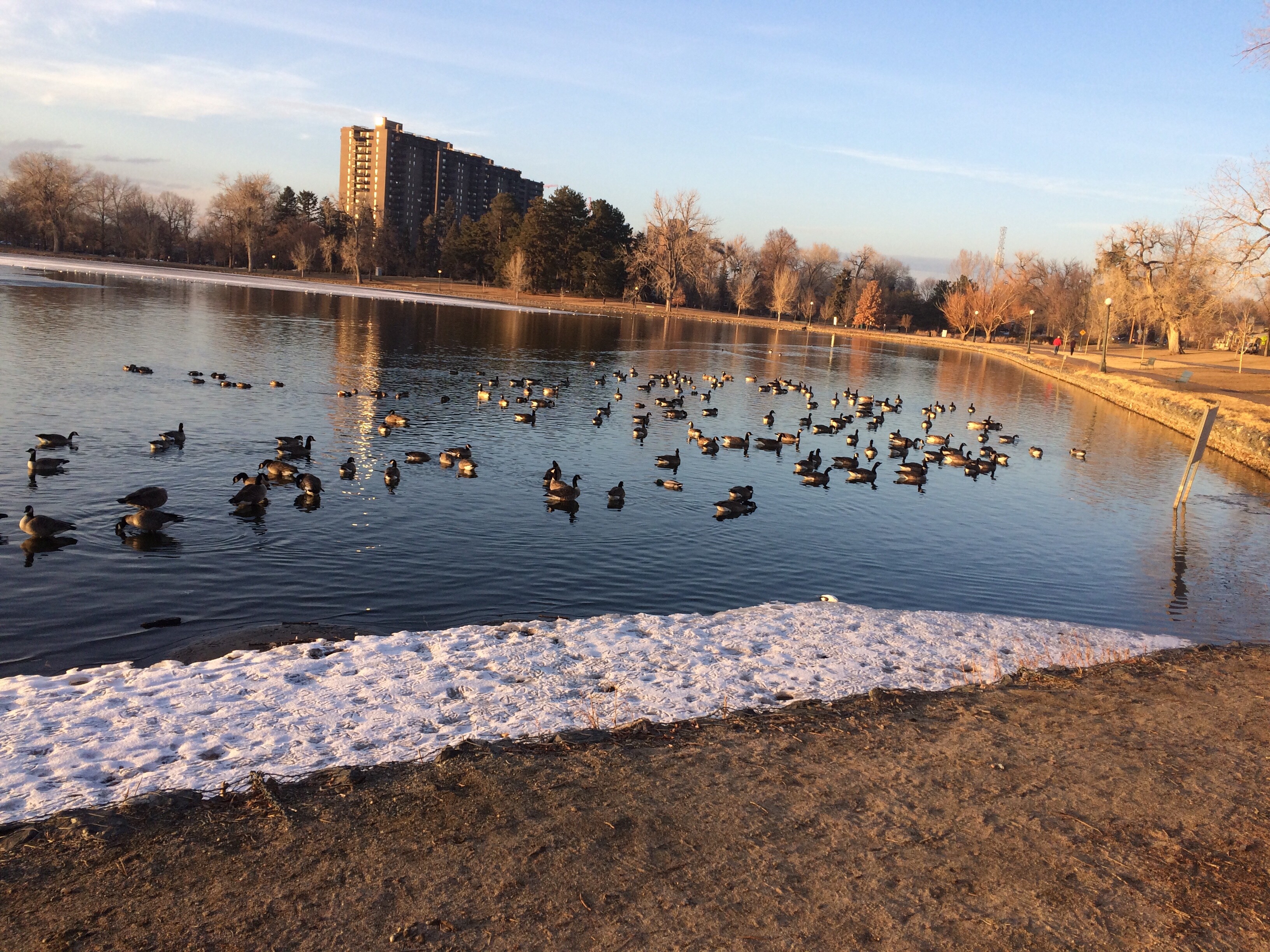
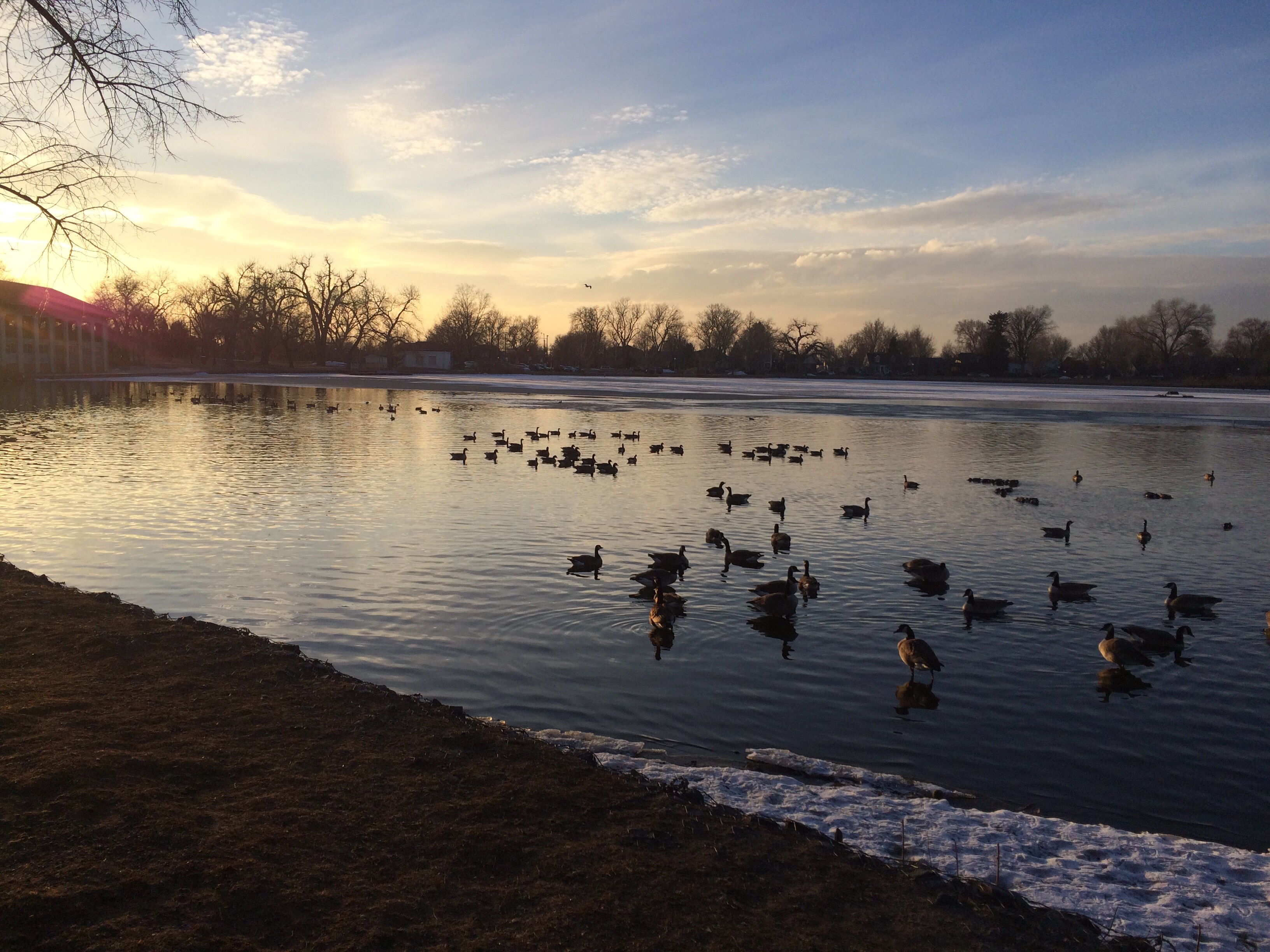
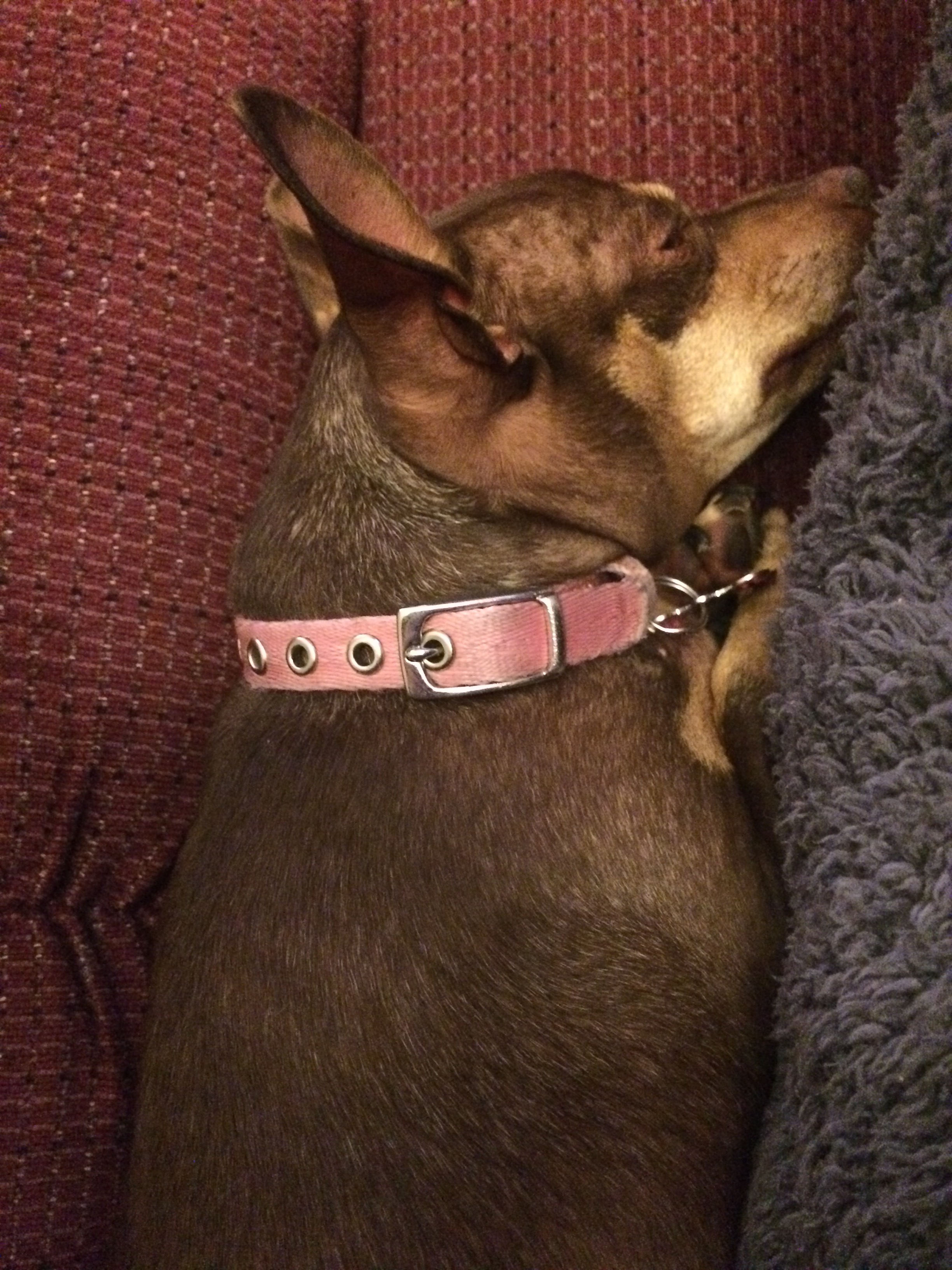
Or, the walk. Yes, I got in a walk after all that honesty and writing and chaos. Around the park with the little dog we’re watching. And the winter light sparkled just so on those geese, perfect silhouettes against the season.


These moments allowed to me before Izzy entered the car and spilled the entire sex ed story, provided by none other than Planned Parenthood and a literal wooden penis named Woody. Yes, they demonstrated how to put the condom on Woody. Yes, “Becca” taught them how to insert a female condom using only her fingers. Yes, they passed around an IUD and pressed it against their skin so everyone in the class could see what it felt like. Yes, the main way to prevent pregnancy is abstinence.

Yes, we live in Denver now, where it’s as liberal as it gets, apparently.

No, this is not the sex ed you remember.

I wonder why my almost-fourteen-year-old thinks nothing about telling me the whole sex ed story? Could it be that she’s my too-honest daughter?

No matter. We made it home and I made dinner. Or rather, I stuck some chicken and potatoes in the oven and called it dinner while I searched for ski condos in Crested Butte. (More than an hour later…) Dinner’s ready!!! Condo is booked!! Friday is done!!! 

It’s a Friday in January, and my mouth is running rampant. But at least I’m being honest about it.


To Laugh Until I Cry. To Live Until I Die.

In the crook of early January, three weeks since seeing my students, on a cold wintry Saturday morning I shlep across town to make lesson plans with three other colleagues.

Later I will heat water for hot tea and curl in my recliner with a book, wishing I could write a novel as lyrically beautiful as Caramelo as my children wander in and out of rooms, in and out of our house and the neighbor’s, in and out of wanting to be near their dear old mom.

This after two attempts to jumpstart the old Hyundai whose lights I left on in our trek to the grandparents’ house last night.

This after listening to dating tales and math updates and wondering what it would really be like to be a single woman in modern America.

This after coloring intricate books with the girls in the brief time between our latest tech argument and the neighbor’s reemergence.

So is our Saturday, chicken defrosting in the sink, chores done and Echo playing my Pandora playlist to suit the color of my mood.

No dog to walk, no true purpose to the day other than making plans for a class no one really wants to teach.

What sits in the back of my mind is how easily I want to be able to relax. To have a deep and thought-provoking conversation that is justifiably, blood-burningly exciting. To laugh until I cry. To live until I die.

To take these lonely household moments and flip them over or back or somewhere else, when my children were small and my Chihuahua never left the warmth of my leg, when my marriage was young and everything we thought and did was about each other, not some game or book or phone or faraway friend.

In the crook of early January, holidays left out on the curb waiting for a second chance at life (mulch me till I can be reborn!), the cold of winter settles into my bones. The winter of this year, of my children’s childhood, of my marriage, nineteen years in the making.

Even with the beauty of the flakes that fall, their demise lies in slushy streets and icy black pavement, ready to trick any masterful driver, so used to winter but not its ugly, dry-grassed truth that lies beneath the surface.

In the crook of early January, I wait for the sun to rise high in the sky. For the snow to melt. For the tree to be taken. For the hollowness that hides inside this nook to break open in me a new way of looking at the world. For the bend of this season to straighten out into a road I can see, wide and clear and as questionless as a summer’s day.

But in the crook of January, there are no summer days. There are only questions.

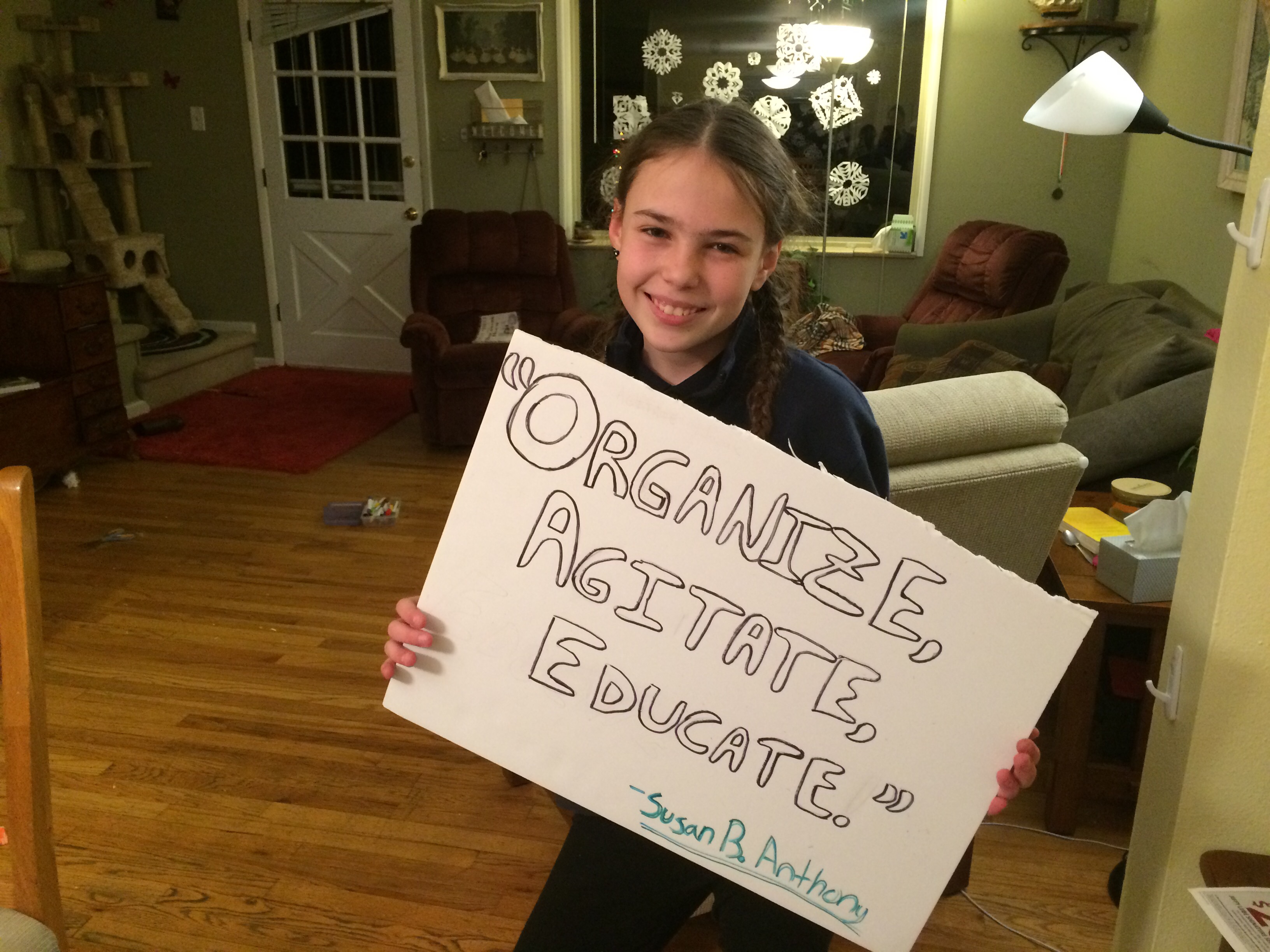
Lighting the Fire

ready to make change
 with posters, books, and writing
 with hope in our schools