Something Given (Datum)

I have a data tracking problem. It starts with the word itself which is used to put a number, instead of a face, on my students. Data. A Star Trek android.  A mathematician’s daily routine. A financier’s dream.

Here is my data problem. It starts with the word itself. From Latin dare, “to give” to Latin datum, “something given.”

We ask them to give us everything. Their trauma (trainings throughout the year on the various levels of trauma which range from a singular event to chronic abuse to historical-impossible-to-erase-racial bias), their educational history, or lack thereof, their familial and cultural belief systems, their languages, their motivation (impacted by anything that ranges from zero to a thousand), their futuristic ambitions.

We ask them for everything. We ask them for themselves.

And they bring themselves, each little datum, into my room each day. They bring themselves to my meetings with colleagues when, upon realization during our DDI analyses, my co-teacher informs me that the majority of an entire section of her course can’t even read the sentence, “The cat sat upon the mat and spat,” let alone correctly analyze an SAT passage for grammatical inconsistencies.

“And how am I supposed to teach them how to read?” she ponders, a high school teacher for twenty-five years.

And how am I supposed to categorize my students’ data by skin color, as my school asks me to, to close the gap between my three-years-here Iraqi refugee whose favorite English words are cusses, who has adeptly adapted to U.S. culture so fluently that he can identify how absurd it is when people come up to him on the street, assume he’s Latino, and start rambling in Spanish, with the Rohingya Muslim who just entered my room from a refugee camp where the militia taught him a great deal of verbal English, but who has never spent a day in school, saw his parents murdered by this same militia, and can’t even read or write in Burmese, let alone English?

Or should I include the datum of A who spent five months trying to cross the border and another five months in three American detention centers with limited food, clothing, blankets, toothbrushes, or hope, only to be “adopted” by a white American suburban family, more or less ex-communicating his entire Honduran upbringing and culture because “it must be better here”?

Should I include each individual datum of the paraprofessionals who translate information for these students? Who have mostly arrived here as refugees themselves, but lost everything in war-torn, conflict-bound transport, including degrees in education, civil engineering, law, and decency, to get paid $15 an hour to translate to my kids the silly little things their crazy teacher says?

Should my, could my, data include my school district, that spends millions of dollars a year purchasing curricula that neither reflects my students’ faces or experiences nor is adequate enough to meet the various cultural and linguistic needs of every kid who walks into my classroom anxious to learn? My school district that employs and perpetuates incompetent leaders who have never taught an ELD course in their lives, let alone learned a second language, but choose inadequate resources for my students because THEY LINED THEIR POCKETS WITH GREED?

Should my data include what my Newcomers scored on their practice PSAT 9 test? Do you think that after two months of learning how to pronounce “th” and practicing “There is/there are” verbal phrases, they can accurately and beautifully read 500-word passages and correctly choose the best College-Board-meant-to-cherry-pick-college-bound-geniuses analyses?

Should my data include my professional development leadership meetings, where they show me every week, rather than asking me how it’s going, rather than ever once visiting my data meeting and giving me feedback, rather than taking a moment to understand what it’s like to be an English Language Learner, how to run a data meeting?

One that includes disgruntled teachers. One that includes major gaps. One that includes colonial white language and not the language of my students, and WHAT ARE YOU GOING TO DO TO FIX THAT, ESPECIALLY WITH THIS WHITE COLONIAL LANGUAGE WE THROW AT YOU WITH OUR “CURRICULUM”?

No.

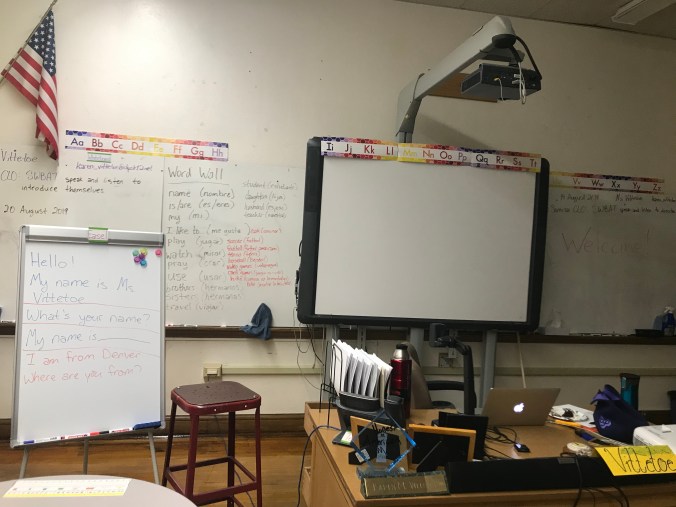
My data is I. B. A. J. E. A. H. All their names. All their stories. All the letters of the alphabet (some of them just learned this alphabet from me, thank you very much).

My data is me talking to those two boys about how their counselor should have told them they didn’t have to take physics with the hardest teacher in the school, that they could have taken zoology and had a passing grade and the science credits they needed to graduate.

My data is every one of the dishes my Newcomers brought to the table after learning how to give directions, walking through the neighborhood and telling each other to turn left, stop at the light, learning how to bake brownies from scratch, learning that English verbs are actually quite simple, and they can explain to the entire class and the entire world how easy it is to make chapati, pupusas, patacones, flan.

My school, my school district, my world: they ask me for something given.

But what have they given to them?

Have they given them a better life? Have they given them words as powerful as redwoods, indestructible after a thousand years? Have they given them the hope they crossed the ocean, the river, the bitterness, to attain?

Have they given them the data that they will need to make their dreams a reality?

I have a data problem. It starts with the word itself. And it stops when I see their beautiful faces.

It stops here. Because they are all that matters. Not numbers. Not something given.

Something to give. Me to them. More than anything: them to me.


Bleed Purple

first Newcomer year

brings the joy of teaching back

at career’s midpoint

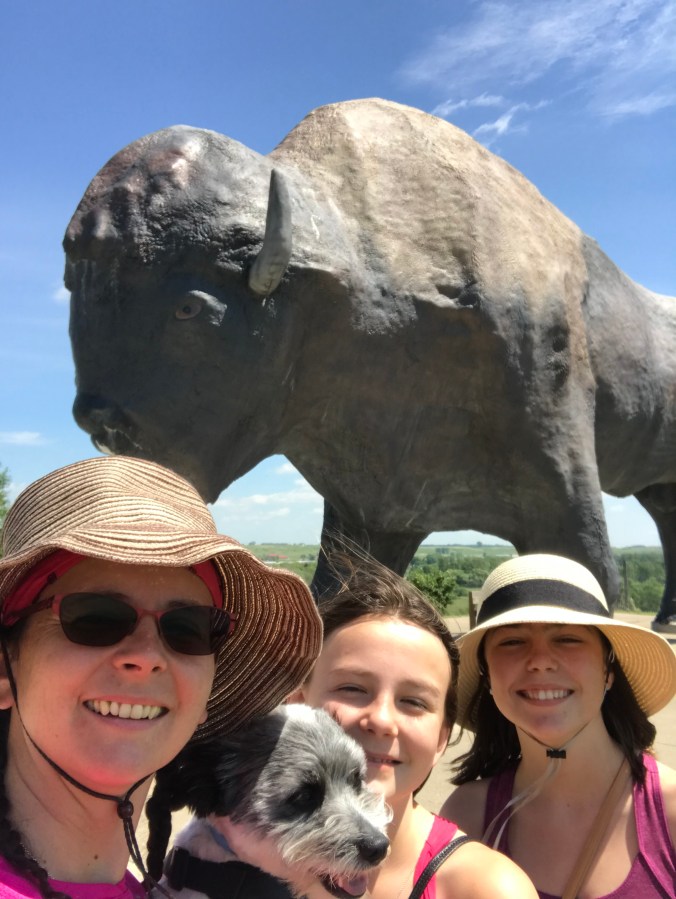
Road Trip 2019: North Dakota, Day Four

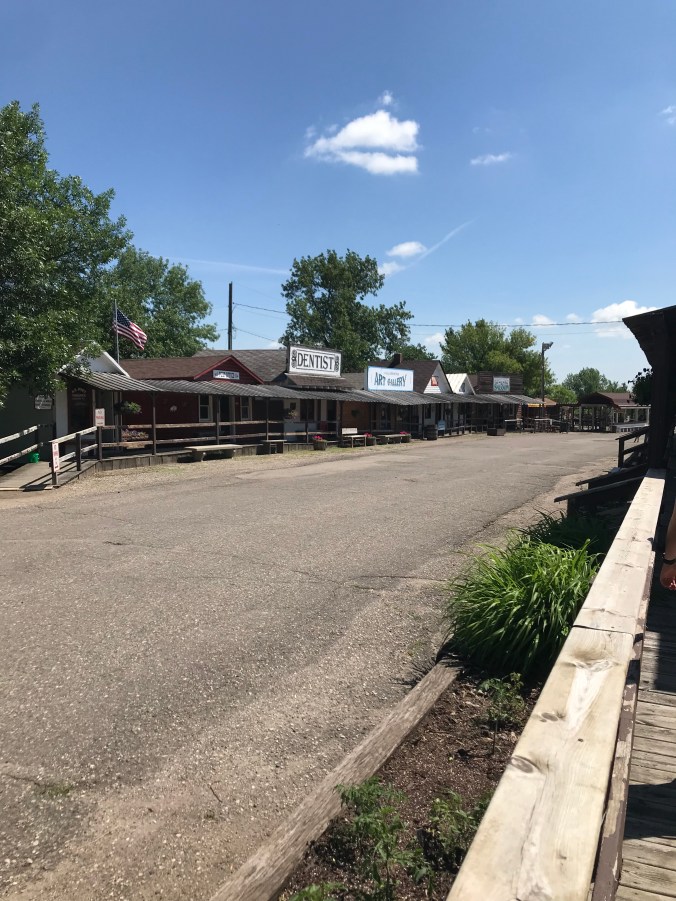
a frontier village

with world-record bison

thank you, Dakota

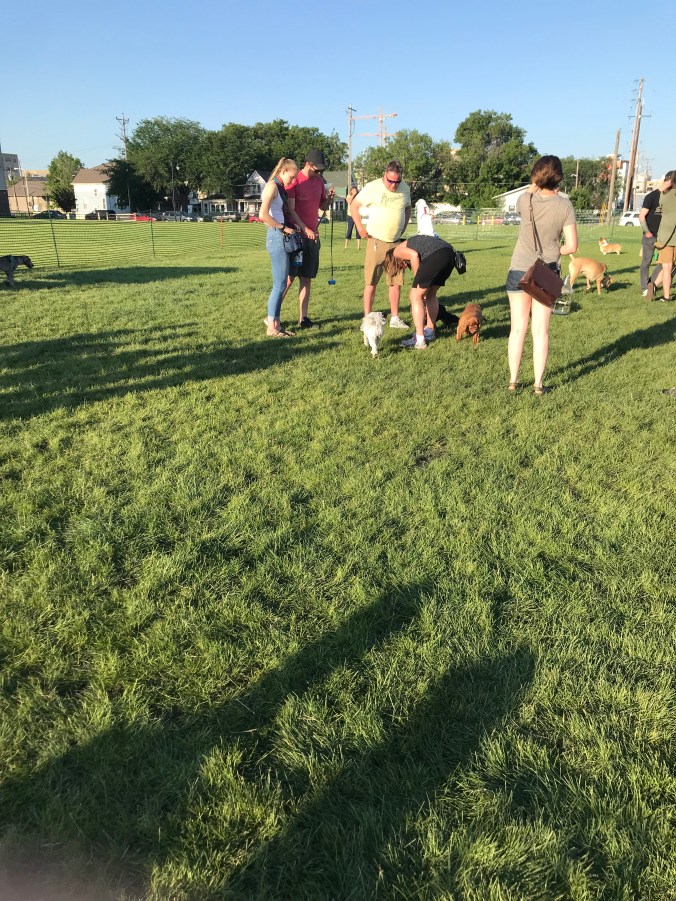
a cider dog fest

on a random Fargo night?

(mead is delicious)

the northern midwest

is a reality show

of kindness at play

Lemonade

Most people who hear that I have three, not two, daughters, send me a sympathetic look, or trade empathic stories of their own three or four girls, or commiserate in some form or fashion.

“Three teenagers? All at once?” Their shock and worry for my well-being come hand in hand with the realization.

Rarely am I praised or labeled blessed for such a thing. Because three is too many. Three girls, or three of any one gender, is too many.

But an accusation is a whole other ballpark that I don’t quite know how to bat for.

“Can’t you understand the plight of my daughter, someone who doesn’t have two sisters who are her best friends, and how lonely she must feel? And you sit here with your sisters and have a house full of friends and treat her that way?”

She stands at my doorstep. I recognize her voice, but I find my feet paralyzed in the kitchen staring at the pizza dough my youngest has spent the better part of a day preparing. My youngest, who righteously defends herself against the bullied petulance of her sisters, but outside of our family, has likely never said an unkind word to anyone.

“Do you not like my daughter? Do you have the decency to admit it? And YOU, what did YOU say to her? What did you do to her?”

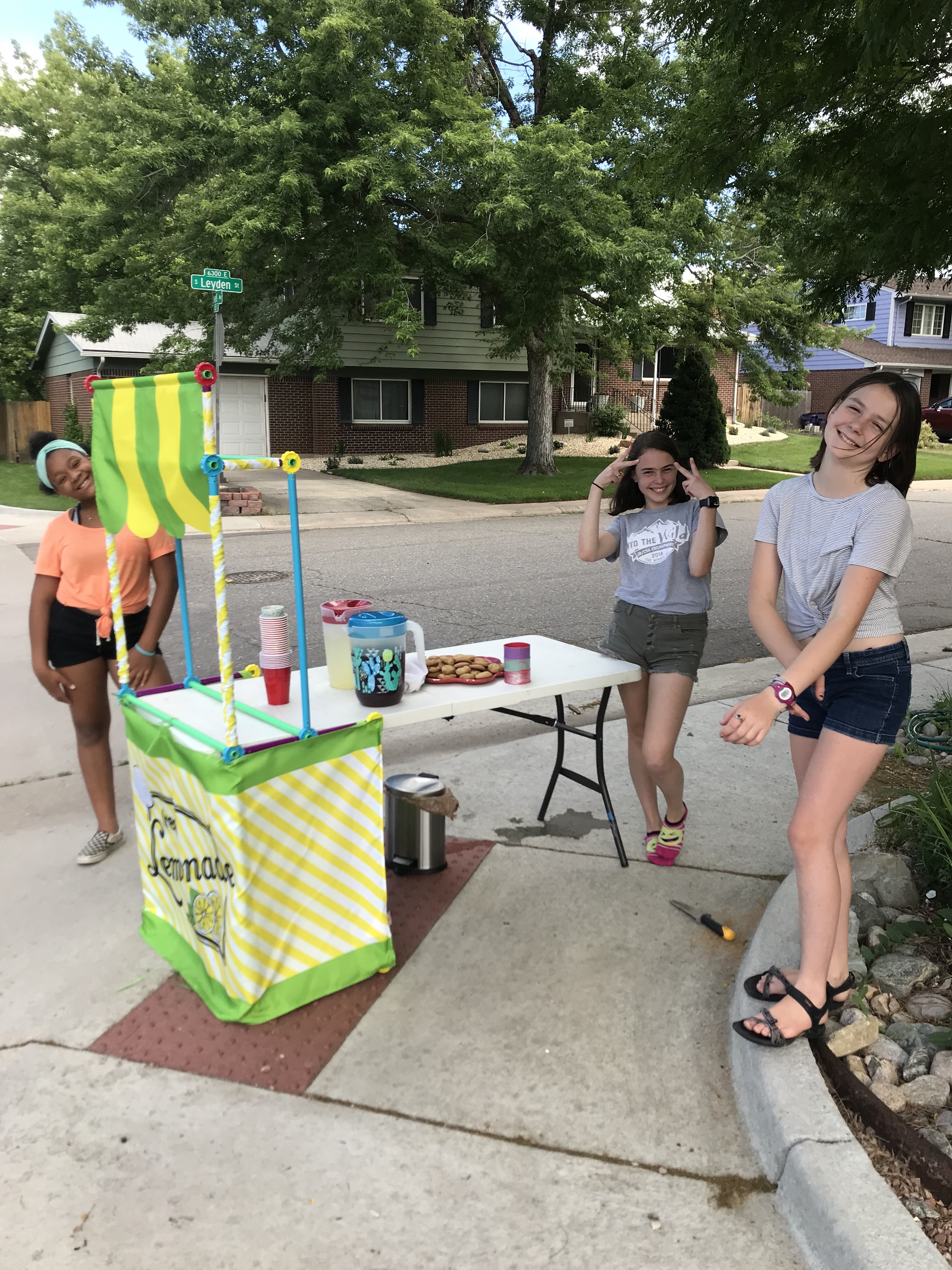
I listen to my girls stumble over words as I put the scene together in my mind. One neighbor came over and spent the morning rolling out cookie dough, boiling water, squeezing lemons, and stirring iced tea. She and my youngest set up the lemonade stand at the corner and made a catchy but annoying hip-hop rant to woo passing cars: “Lemon-ade and cookies too, get your lemon-ade, doo-doo!”

After more than an hour and many dollars later, the pitchers of iced tea and lemonade were nearly empty before the third child arrived. My middle girl and I were still in the midst of the nightmare job of pulling tiny bits of crabgrass out of five hundred square feet of pink rocks, and my oldest had just pulled up with a shake and chicken nuggets, her hair freshly cut, offering everyone a taste.

The third girl stood at the edge of the scene, and Riona offered for her to help clean up, giving her two cookies and five dollars once the lemonade was gone.

“I want to know who called my daughter anus? Was it you?” I can feel her eyes burning into Riona’s, whose tears are already burning down her cheeks.

“We were just messing around. We say that to each other all the time,” the first friend pipes in.

But she is not done ranting. She lays on the (must-be) Catholic guilt of her daughter coming home crying, of being excluded, of the disgrace of the name-calling, pinning it directly on this household and “the fact that we know nothing about you three girls even though we’ve spent so much time with ___, and nothing like this has happened before.”

The snake that is Jealousy has slithered heavily down the block, consuming all air from my lungs, from my children’s stuttered responses, and choked us all into shocked silence. How venomous it tears apart a young girl’s heart, how twisted offhand remarks become when in the presence of new friends.

I begin to find footing to approach the mother, but she has stormed off before I can peel myself from petrification in my pocket-door kitchen.

Did she not take a moment, in her Mama-Bear attack, to think that it might be possible, just maybe, that her girl was feeling left out and blew the comment out of proportion? Did she want to find a scapegoat for the tears? Did she want her to lose a friend?

Tears are the only characters in the room once she leaves. Everyone has her version.

“She thinks we’re friends with each other?” the sisters exchanged snarky glances.

“I just offered her some of my ice cream.”

“I was weeding.”

“I gave her five dollars and a cookie.”

“I called her anus like I do every day, and I am NOT playing soccer with her no more.”

And what is a mother to do?

I present my Jealousy Lecture, fresh from my pocket and a conversation with my oldest from just a few days ago. “Just think how you feel when your sister gets something that you don’t, and how hurt you are, thinking that we favor one of you over the other one.”

Everyone nods, recollects, brings fresh tears to her eyes as they draw upon recent memories of Air Pods or Apple Watches or a damn raincoat two sizes too small and three years past being angry about.

But they get it.

“Why don’t you two make a card…”

They take the card stock, the permanent markers, the classroom supplies I am always buying for my classroom, and blatantly apologize as only children can: “I’m sorry you felt discluded.” “I’m sorry I called you anus.” “You are our friend.”

Too afraid to walk the block alone, I accompany them to the house. They timidly ring the bell, and the mother answers, her husband hovering in the doorway.

Perhaps the mother says something. Calls her daughter. Perhaps there is a vague apology to me for storming in and accusing my girls of something that they didn’t say.

But no one hears anything but his voice. Threatening. Thick with hatred. Eyes on the friend. “Don’t you EVER say that crap to my daughter again, do you understand me?”

I can almost feel the fist in his voice. The toxic masculinity as he repeats the command as if he is speaking to an enemy in the ring, a wife who won’t listen, a waiter who brought him the wrong drink.

Tears immediately fill her face as she backs away, unable to even speak the words of her apology to the young girl whose parents believe everything she says and have no idea how to handle any of it.

Riona puts her arm around her for the long block home, consoling her, telling her it’s not her fault.

In the retelling of events, Izzy asks, “Is he like that angry customer who tried to get us all fired for asking him to check the freezer for the pint he wanted?”

Yes. Exactly like that.

“Is he like that guy who cut you off and flipped you off?”

Yes. Exactly like that.

“Is he like Trump?”

Yes. Exactly like that.

And… I don’t have to explain. They already know, though no men in their direct life are anything like these men, and no women in their life would accuse without taking the time to understand.

They enter, finish baking the pizza with the fresh-snipped basil and spinach from the garden, set up the hammock to eat it in, sit in the swing together, play Scattergories and act like best friends… if only for a couple of hours.

At least one of today’s accusations can have some validity.

At least I don’t need a sympathetic look for how I have raised them. How lucky I am to have a man who has never spoken a harsh word to anyone, let alone an 11-year-old girl.

And at least they know how to make lemonade out of lemons.

The Endless Cycle

shooting aftermath:
AP testing in mid-June
for suburbanites

the gun’s reach has wrath
stretching fifteen miles south
of where my home is

they shuffle in, grin;
calculators, pens ready
for a number game

but they’re missing one,
his seat echoed in “thank-yous”
as they shuffle out

they are just children
trying to grow up and catch
the world’s beauty

my tires spin home,
the grey ponds reflecting love
i cannot give them

A Day at a Time

between this sunrise

painted so perfectly pink

and this steak dinner

lay a fasting day

of walking, planting, napping

fifteen days, hours

Enough

I remember newspapers for a week filled with grisly details,

journalists  flooding our city like vampires in search of storied blood

I remember crying all day on my twenty-first birthday,

the tears permanent streaks of worry on my cheeks.

I remember thinking, How can I become a teacher now?

and also, Nothing could be worse than this.


I remember that it was ten miles from my home,

with faces just like my own now plastered on screens across the world.

I remember thinking that it could never happen again,

that with this media spotlight on the atrocity, it wouldn’t.


I remember my first lockdown, two years later,

kids huddled alongside me under desks like rats in a sewer.

I remember the silent votes of every white man and woman

in charge of our devolving society that grips guns like lifeblood.


I remember clutching my six-year-old child for hours

after twenty of her American peers were murdered

for the love of the Second Amendment.


I remember living in Spain where the scariest sound

was an infantile firecracker celebrating El Día de San Juan

and every door was open for the world to walk into

what it might be like to Not. Be. Afraid.  


I remember when I once believed that someone would shout,

Enough is enough! and Congress would listen

instead of filling their pockets with NRA dollars.


I remember my high school in the ‘bad neighborhood,’

before a police officer stood at the door,

before I’d ever heard the word lockdown,

before I even knew what we would become.

Student Teacher

the docent guides us
through arrays of modern
and native artists

she knows history
as told through the white man’s lips
my students tune out

4CC233B0-1338-4C20-8D2D-A806A2059F17

in the third floor hall
a border touts a blue sky
peppered with soft clouds

A6E2F6EE-D413-4405-90EE-199F42C9E383

in haunted vocals
the artist sings the DREAM Act
as the clouds roll by

my kids find blankets
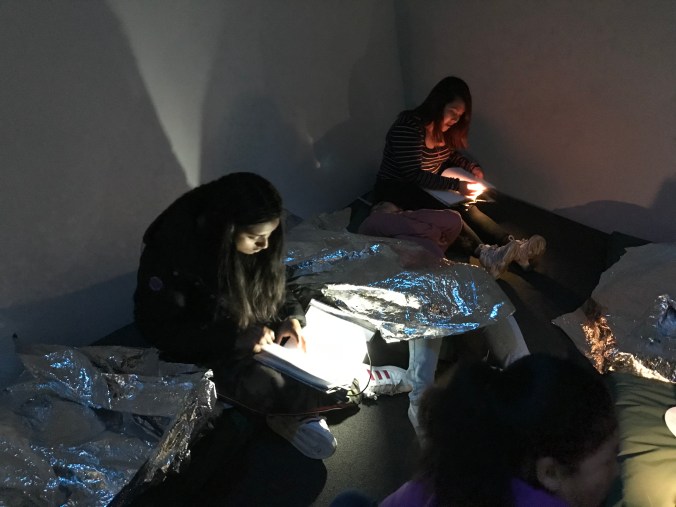
as thin as Mylar balloons
and read their stories

84B25A39-4F86-494D-B340-6976250E036E
when my Honduran
says, “Our blankets were warmer,”
the docent’s perplexed

“You mean… You? You crossed?”
“Yes. And they kept me just like this.”
(like rats in a cage)

“Did you come alone?”
her disbieving voice shakes
(new history here)

“Yes… I was alone.”
her honest confession steals
the docent’s lesson

(she, like all teachers
thought she could share her knowledge
only to be schooled)

I Remember Columbine

I remember newspapers for a week filled with grisly details,

journalists  flooding our city like vampires in search of storied blood

I remember crying all day on my twenty-first birthday,

the tears permanent streaks of worry on my cheeks.

I remember thinking, How can I become a teacher now?

and, Nothing could be worse than this.


I remember that it was ten miles from my home,

with faces just like my own now plastered on screens across the world.

I remember thinking that it could never happen again,

that with this media spotlight on the atrocity, it wouldn’t.


I remember my first lockdown, two years later,

kids huddled alongside me under desks like rats in a sewer.

I remember the silent votes of every white man and woman

in charge of our devolving society that grips guns like lifeblood.


I remember clutching my six-year-old child for hours

after twenty of her American peers were murdered

for the love of the Second Amendment.


I remember living in Spain where the scariest sound

was an infantile firecracker celebrating El Día de San Juan

and every door was open for the world to walk into

what it might be like to Not. Be. Afraid.


I remember when I once believed that someone would shout,

Enough is enough! and Congress would listen

instead of filling their pockets with NRA dollars.


I remember my high school in the ‘bad neighborhood,’

before a police officer stood at the door,

before I’d ever heard the word lockdown,

before I even knew what we would become.

A Credible Threat

At 12:39 a.m., my husband’s phone rang. A text message beeped. He rolled over and turned it off, not revealing to me the message, though I tossed and turned for the next fewer-than-five hours of “sleep” until my alarm startled me into a flood of my own messages. Realities of life in America in 2019.

One person, an 18-year-old child, lost and confused, dead before the day was over, shut down every major school district in a massive metropolitan area today.

This child, infatuated with the Columbine massacre that has been the backbone of her school upbringing, made “a credible threat” to “a school” and kept all the parents, teachers, officials, and students in a state of shock for the remainder of the day.

A girl, a lost girl brought up by school lockdowns, a mass shooting every day of her young life (of all of our lives), school shootings that have taken the lives of teens and six-year-olds, schools surrounded by armed police officers and security guards, and social media filled with conspiracy theorists and bullying…

Was she a credible threat, or was it us?

Is it us?

When will guns ever be considered a credible threat? When will gun stores who sell shotguns to 18-year-old out-of-state children be considered a credible threat? When will assault rifles be considered a credible threat? When will her online banterings (cries for help), the banterings of every filled-with-angst teen, be considered a credible threat?

One “shoe bomber” entered a plane. We remove our shoes in security.

Thousands of children died in car accidents. We put them in car seats.

Thirty babies died in baby swings. We recall the swing.

Are these credible threats?

Just as Sol Pais grew up with the Columbine tragedy as a backstory to her school experience, I have grown into my teaching career, my parenting life, with its everyday reality. I was a junior in college when the front pages of both newspapers in Denver were filled for weeks with the news of,  Why? Who? How? All the major networks sent reporters that day for an emergency special. All of America, seeing the horrific scene played out on television, sat in numb disbelief.

Twenty years later, hundreds of school shootings later, there might be a few headlines for a day or two. A growing number of protests. A teary-eyed president’s remarks. An ignorant president’s remarks.

Yet, we have done everything but what we need to do to prevent the credible threat of another mass shooting.

We have lockdowns and lockouts at least four times per school year just for practice. Our kids huddle like rats in cages under desks in a dark corner of the classroom, always acutely unaware if this will or will not be the day they die.

We have more security guards and armed police officers walking the hallways. Some schools even arm teachers.

We watch videos to start the school year showing active shooter training for our district staff.

We have metal detectors, clear backpacks, and every exterior door locked to outsiders.

We have to talk to our kids, all of our kids–our students and our own–on a regular basis about reporting threats to Safe2Tell, about keeping an eye on suspicious students, adults, about what guns can and will do.

But…

The most credible threat in the world, the simplest solution, has never even been considered.

What if we just stopped selling guns? Assault weapons?

What if this 18-year-old child barely knew about Columbine because, after all the horrifying media attention after it occurred, our senators and representatives went back to Congress and represented the victims, rather than the NRA, and passed a bill that could save every credible threat like this from ever happening?

What if, at 12:39 a.m., I could dream a peaceful dream, and not have to think about what I’ll say to my daughters today and my students tomorrow?

There is only one credible threat here, and it is not an 18-year-old child.

It is ourselves. Our government. Our inability to bring the life, liberty, and security that we so proudly proclaim we offer in this “dreamland” of the United States.