This Is Why I Will Strike

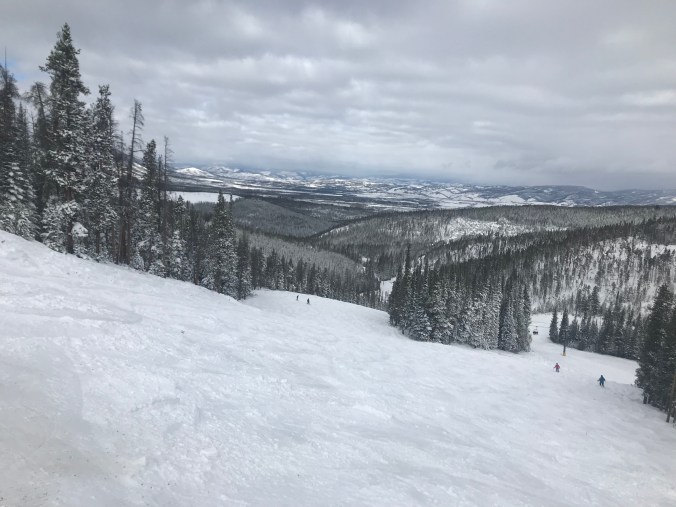
I just want to think about how hard-won this moment is. This day. This five of us skiing down a mountain together. This money we didn’t have before that we have now.

This fresh powder.

This view. Could you beat that view if you went anywhere else in the world? Well, could you?

I don’t want to think about the five years we, a family of five, lived on a frozen, constituents-unwilling-to-vote-on-a-mill-levy teacher’s salary of $48,000. The $10,000 out-of-pocket expenses we paid to give birth to our third child. The penny-pinching. The laying-out-$400-every-three-months to earn those goddamn fifteen credits so I could get a raise if I … changed school districts.

I don’t want to think about how Spain screwed me out of a decent salary and we came home afterward with $19,000 in debt, more than any we’ve had as a married couple.

I don’t want to think about the TWO 1998 cars we have outside our house right now, car-payment free.

I don’t want to think about a teacher’s strike. I don’t want to think about my refugees trekking across town on two buses and being huddled into the auditorium to wait, without teachers, the long seven hours until they trek back, because if they don’t wait, they might not have a meal that day.

About the hundreds of hours I, and every teacher I know, has put into grading, planning, meeting, educating (ourselves and them), in the ten months between August and June. Hundreds of hours outside our contract day listening to students tell us their traumas that are greater than any soul could bear, listening to our admin and school district rate us as failures when we wake before dawn and go home after dusk to bring our best selves into that classroom every day, listening to our coworkers decide between renting a slumlord shithole or buying a house an hour away…

Listening.

I don’t want to think about the thousands of union workers who died for this day. For this choice. For a society where corporate greed is not the only answer.

I just want to see my husband and my three girls gliding down this Colorado slope, this Colorado hope.

I want to ski. To smile. To rejoice.

I don’t want to go on strike.

But I will.

Just like I walked in and out of Manual High School in 1994 when my teachers asked me to support them.

Just like I lived on pittance pay for the early part of my children’s lives.

Just like every other union member everywhere who’s looking to find empathy in the eyes of the corporate monsters that rule our society.

I will strike.

And I will ski.

And we will win ourselves a bluebird day.

A Little Broken

I wish I could write you a letter.

But I have.

And sometimes it hurts to BREATHE.

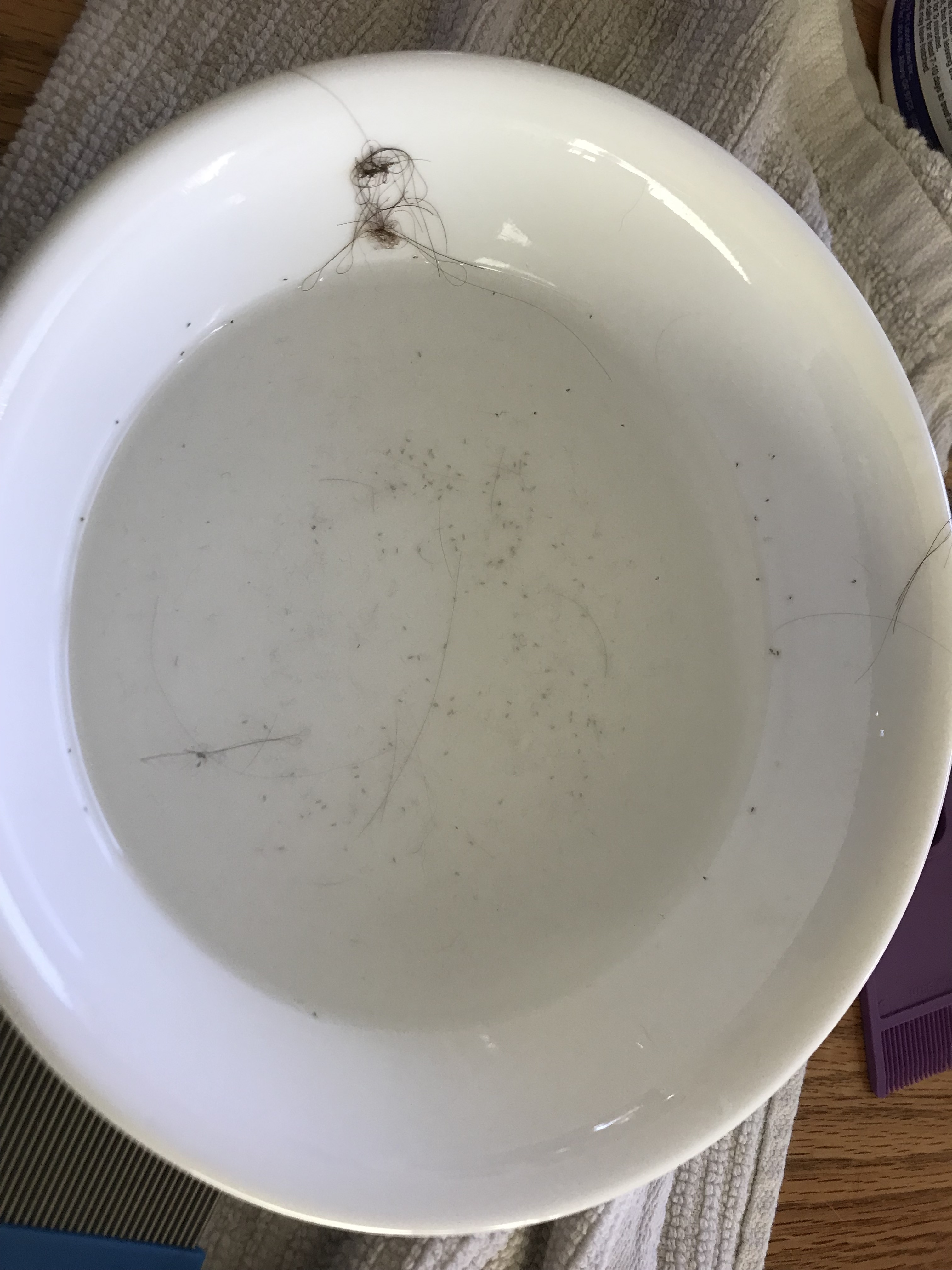
To know the truth of the world we live in. To face the daily struggle that is parenthood in all its lice-ridden, ailing-dog, money-stealing reality.

To know that Failure begins with a capital F and follows me every turn I take. A teacher, a mother, a wife, a leader, a human.

Why is it so hard to be a human?

That’s all for today. And some lice and torn-ACL puppy pics for good measure.

Almost Invisible

I wish I could say I am a set of skis, but this is not the case. If I were a set of skis, I’d be flying down the mountain right now, powder billowing up around me in glittery fury. I’d be turning over moguls and clapping flakes off from the lift and racing my daughter’s skis down.

I’d be free.

But I am not a set of skis. I am a louse.

I am the louse found at the nape of my oldest’s neck, as pale brown as her hair, almost, almost invisible.

I am the louse that enters your classroom and tries for twenty minutes to think of positivity and negativity and mix it all together with nits for words in an online documentation that we all try to wash away with Nix.

I am the louse that enters your friendship, trying so hard to show you how genuinely I love you, laying my eggs in every place you thought you’d never find in hopes that with one, with just one minuscule combing, you’d choose to keep me there, tenacious and prolific and ever-loyal to the warmth of your scalp.

I am the louse that enters my classroom, sneaking between desks, reaching out with my frail antennae in the somewhat-silent attempt to encourage students to reach up, scratch, and move their eyes away from their phones and onto the idea, just the idea, that a good comb-through could bring them an education.

I am the louse hiding at the base of the bristle on the brush, in the stitches of the winter hood, in the soft cotton bedding bought from the bargain store. Waiting. Breathing in my twenty-four hours of life one solitary pull of oxygen at a time, hoping for a single strand to clasp, to scurry up, to hold on to until I reach the warmth of humanity, until I can rejuvenate my weakened heart with the blood of someone else’s life.

I am the louse of motherhood, the constant irritation of teen angst wishing to be rid of me, my frail footprints finding no real response to my desperate attempts to make a home on these humans’ hearts.

If I were a set of skis, I’d be flying across a Colorado bluebird day. Over mountain passes. Into a bowl so deep with powder you couldn’t find your tips.

But I am a louse. And lice don’t ski.

They breed.

uk%l9ryqpjkpvtpcrlq

Colorful Contributions

Do refugees contribute to our society? You tell me.

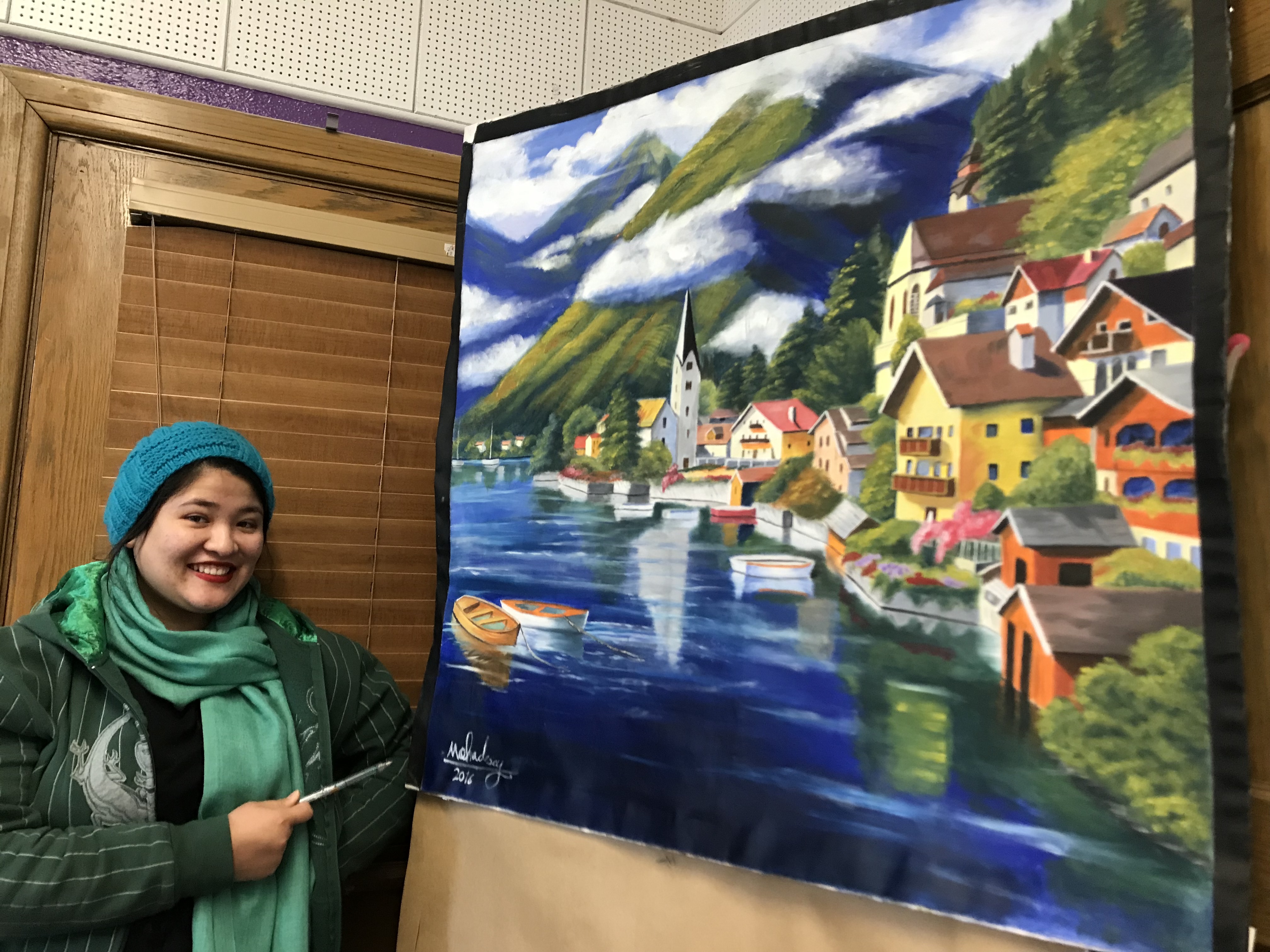
This was Mohaddeseh’s FIRST oil painting. Her family had to leave a U.S.-instigated war in Afghanistan to try Iran, where they were ostracized, to Turkey, overburdened by refugees, and finally came here.

Look at this art. This art show, all the cultures and colors and beauty of the world.

This beautiful painting next to this beautiful human could be the world we live in.

Just put yourself here. There.

With us. #withrefugees

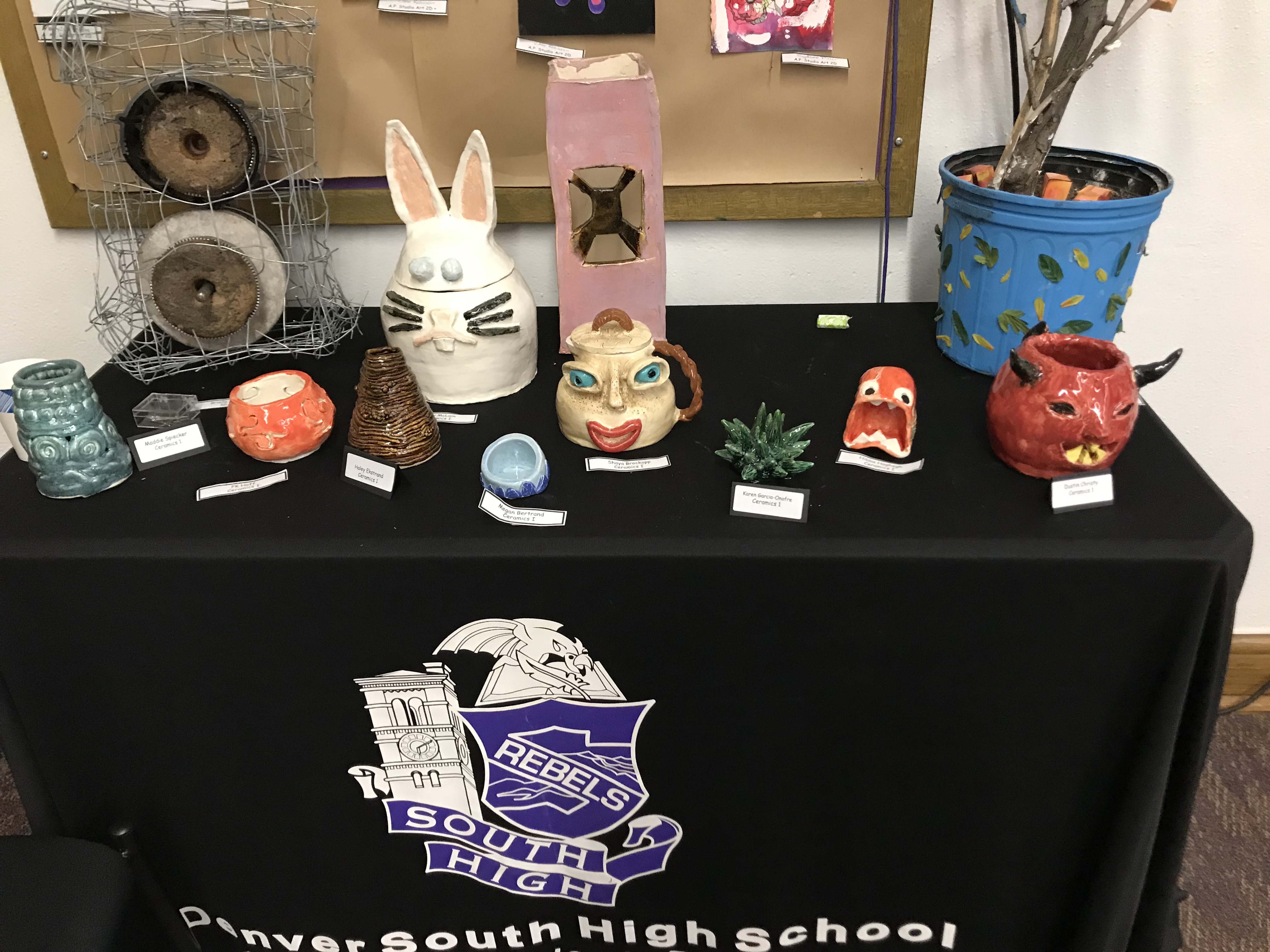
Sing, Sing a Song

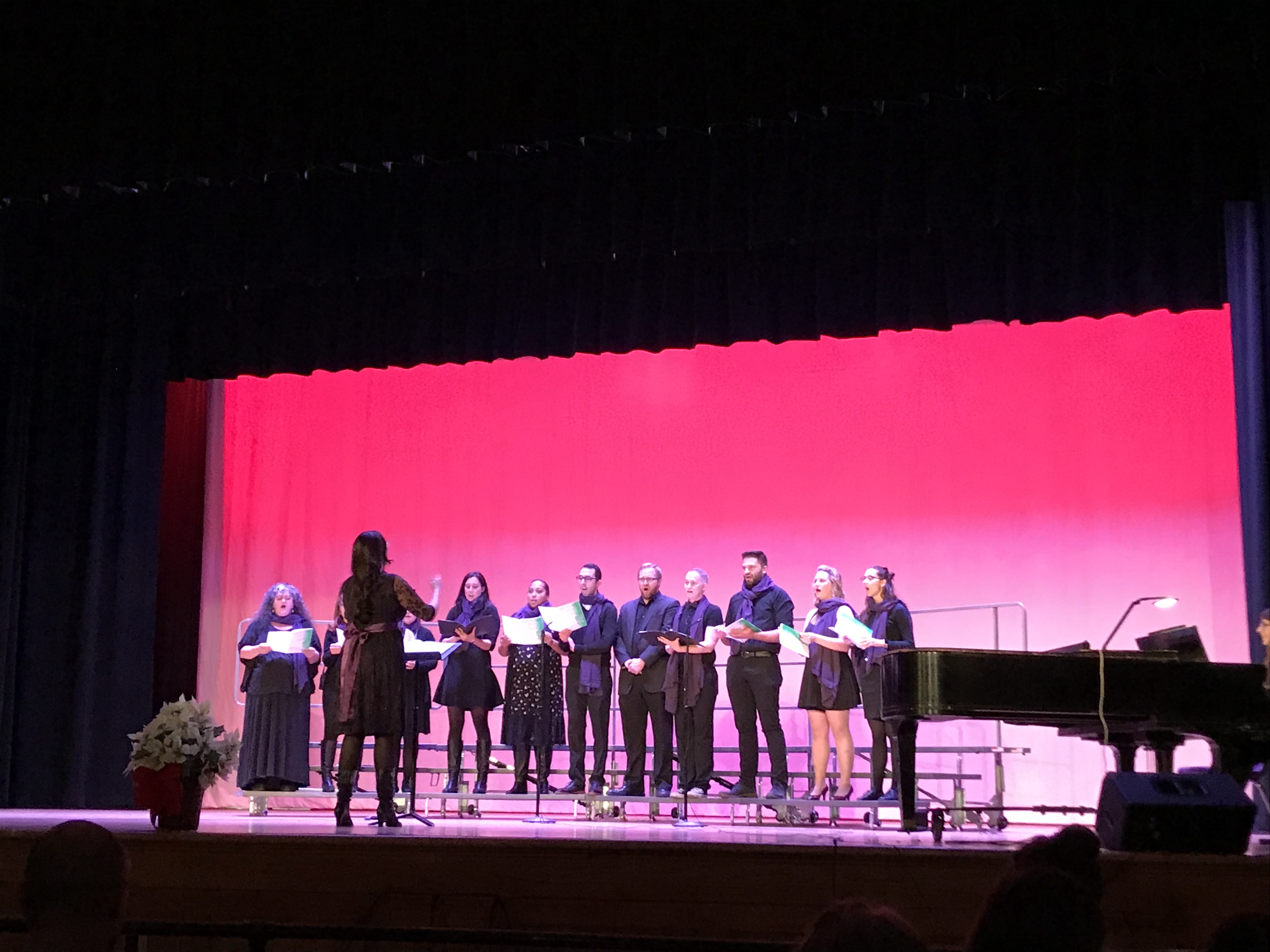
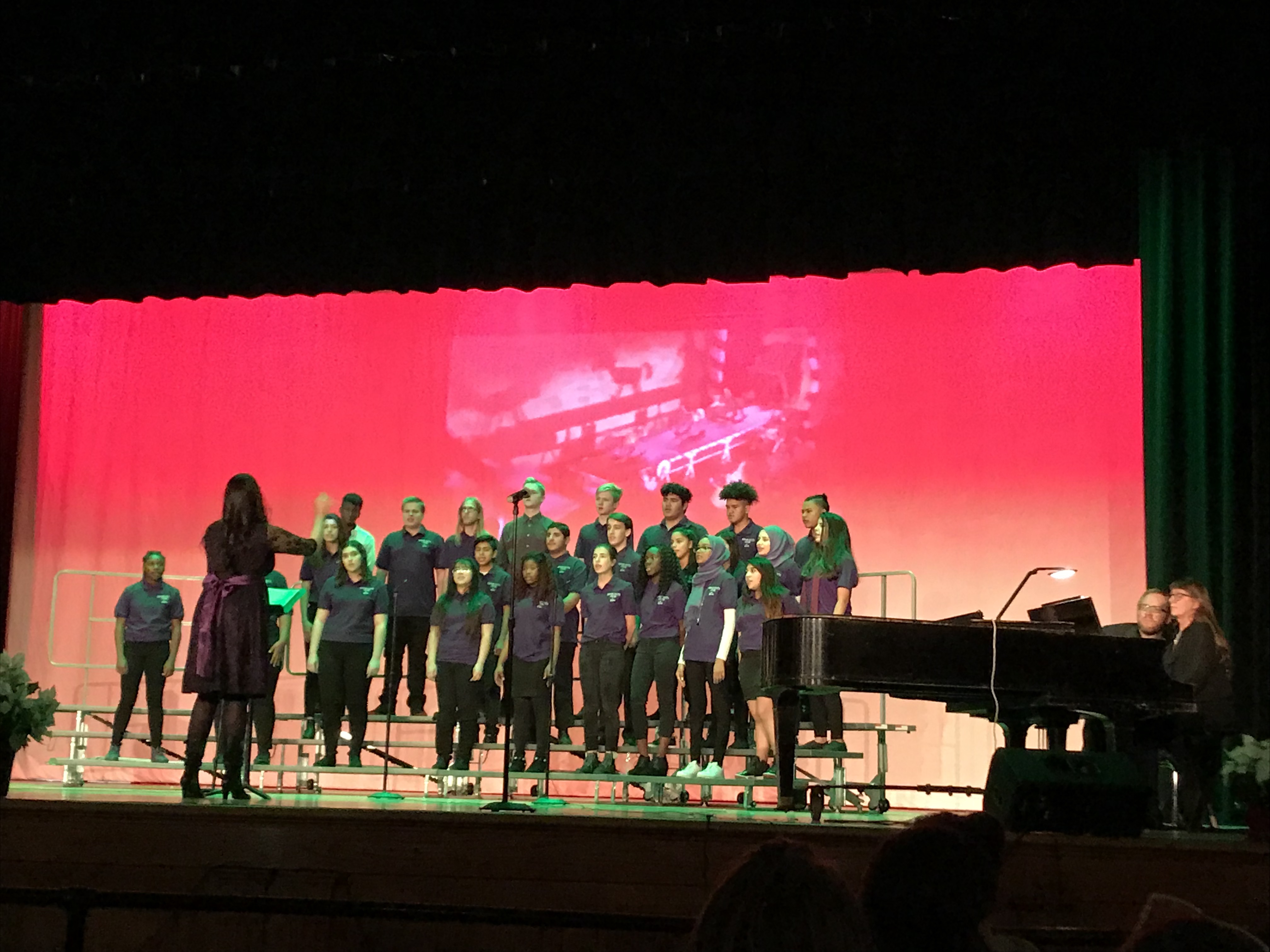
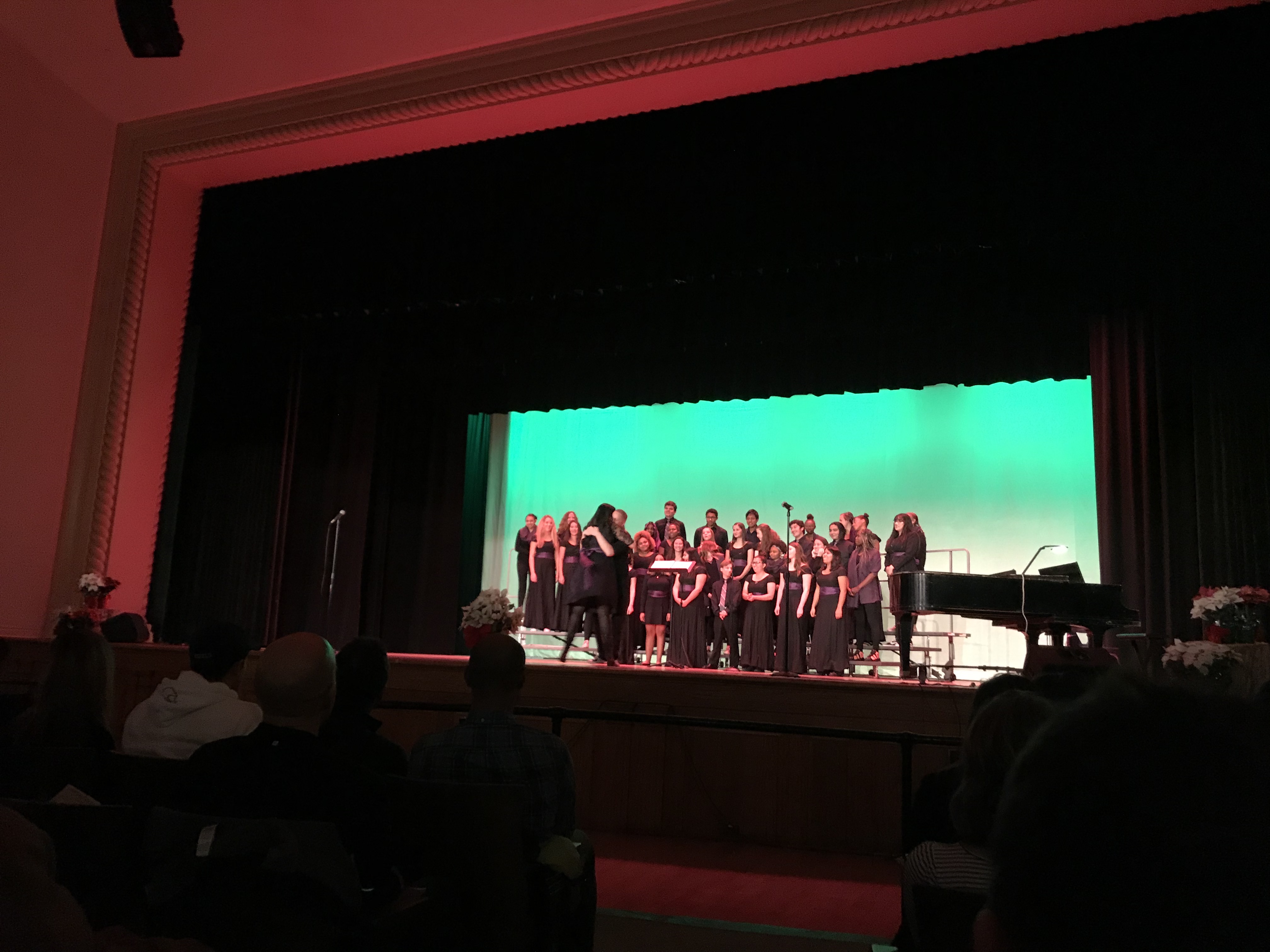
my school’s world peace:
with every type of choir
my school’s world piece

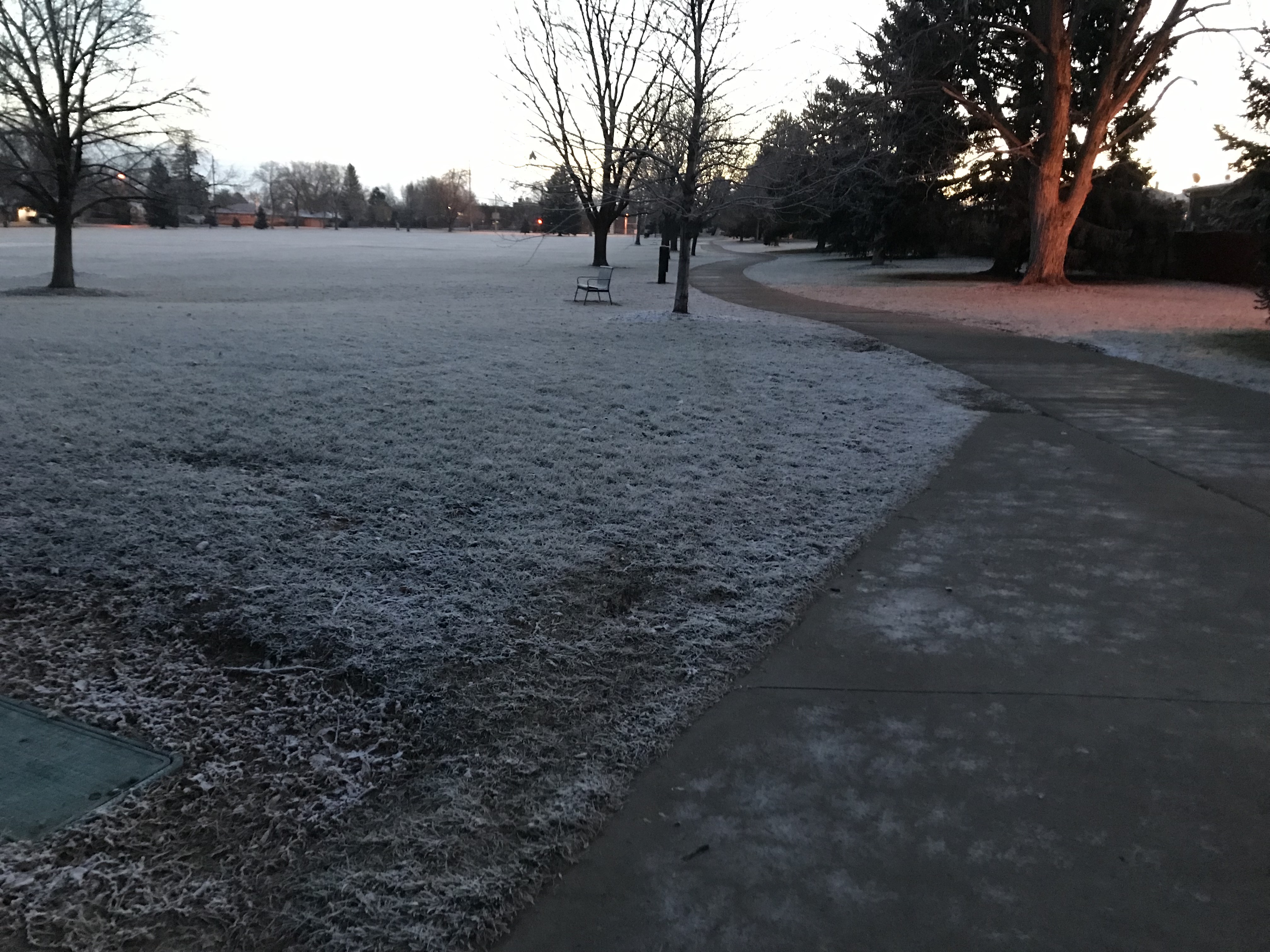
The Sun Will Still Rise Tomorrow

no matter how cold
my pup and i feel the sun
bringing warmth home

Tweaks

The day begins with tweaking. That is all that life is, really. Just one small tweak in a different direction and the result could be completely the opposite. If my daughter tweaks that steering wheel just a little more to the left, we could have a head-on collision. If I tweak my reaction to her left-leaning grip to a scream instead of a stifled breath, the whole day could be doomed by her admonishment of my “criticism.”

If you could just tweak your lesson by a few words, you could build up the academic vocabulary.

If you could just tweak your email a little bit, I would actually understand the task you are asking me to accomplish by the end of tomorrow.

If you could just tweak the fuck out of this pay scale, maybe I could afford to breathe.

The day ends with tweaking. Eighteen months into planning a trip with one of these multi-million-dollar scams to take some students to Costa Rica to complete sixteen hours of service, to have a purpose for their privilege, the rep from the company calls to inform me that no one else signed up for the service trip for that week, that we won’t be able to take that tour, that we will have to do the normal tour, pay a bit more, add an extra day, horseback ride, visit a national park, see the sea, be the fucking privileged bastards that we are, never making even the least bit of a positive mark on this cursed world.

“Are there any other options?” I ask after she has already said to me, “Was it your personal preference to do service or a school district requirement?”

I should have said school district requirement. I should have gathered up the words I have in my heart now, about how hard this has been to organize, how few students I’ve recruited, how my colleague can’t even come because we don’t have enough, how angry I am that after all this time, NOW, now I find out that I can’t even do the one thing I wanted to do? Teach English to small kids? Clean up a littered beach? Build a latrine? Something that makes a difference?

I should have tweaked my words, my never-present verbality incomparable to print, to thought, to hours later and all the tweaks I need to fuck this day.

During first period on a 90-minute-class block day, the few of us who had planning should have been feeling pumped. No students yet. No admin. No meetings. Just a moment to think about what we could do, what minds we could shape, what students would be there and what students we hoped wouldn’t.

And what did we discuss? A broken-down car, an Uber driver who saved the moment and makes more money than us in a day. Dog walking that pays double our salary. Being a trainer for Lowe’s. The emotional drain of being asked to please one hundred students, at least half of their parents, all of the admin, all of the district, all of the “failed” test scores, all of the data-driven nightmares, all in a day’s work.

It was a short discussion. We returned to our paperwork nightmare, our school district applications that freeze without warning on cheap PCs that break without warning, our plans that get interrupted by ten passes in a period, phone calls asking about missing students, requests for kids to attend assemblies, students who leave to pray, students who leave to get chips from the vending machines, students who won’t put their phones away, strings of emails five miles long trying to help the students who won’t help themselves, strings of want five miles long that stretch between breaks that, without, we’d utterly fail.

Could I tweak this? Could I just change five minutes of this lesson to ignore my Syrian refugee whose question (directly related to our reading, I promise) breaks me down to my core?

“Miss, why do white people think that they need guns? Who are they trying to kill?”

What academic vocabulary can I infuse into my white-supremacist rant, my explanation of three hundred years of slavery and colonization that we are just now taking the first steps to recover from, what words can I tweak to make her understand the weight of my response?

The weight of her question?

The weight of it all. The weight we carry with their questions, their presence… their absence.

My Honduran beauty, quiet as a field mouse, who ran away for ten days, scaring the shit out of all of us, her stepsister coming in teary-eyed and disheveled, whispering about the police, the older boyfriend, the fear. And when she miraculously reappeared after the break, I couldn’t do anything but wrap my arms around her, to tell her that everything was going to be OK, even though she knows I’m lying, that she has already flown across this border to live with a mostly-unknown father and stepmother, her mother back home working to her bones under the brutality of gang violence.

Could I tweak my interaction with this child, teach her how to take the SAT to the satisfaction of my school district?

Could I tweak this day, this or that news, this or that email, this or that career, to make all of it feel like it’s worth my time? My soul-bearing, heart-breaking time?

“If only I could write,” one of the teachers said this morning. “Maybe I could get some books published, make some money, get out of this.”

And she’s only five years in. Maybe she could find her words, find her magic, and escape the hell that we go through each day.

But then she wouldn’t have the stories. Those kids, they burn us and break us and… save us.

“This is my favorite class, Miss,” a boy with a 42% tells me after school, begging for work before the semester ends. “You are fun, and you make me work so hard.”

Not hard enough, I think. Could I have tweaked my thirty-person ELD class to differentiate for his specific needs?

I have a million messages from parents and students and admin and I shouldn’t be taking the time to write this post.

But no matter how much I try to tweak it, the work of a teacher never ends.

And no matter how much I try to tweak it, the love for teaching never ends.

And that is why I will rise tomorrow and face the same battles. The emails. The absences. The presence. The questions. The turns. The work.

With a little tweaking, maybe I can turn this work into a life. It’s only a matter of turning the wheel.

Cussing Colloquialisms

At the elevator, brace still on, crutch still under his arm, he tells me he thinks that a good return-to-work date would be June 4, five days before we leave for Spain. He seems optimistic as he hobbles down the tiled hallway, as we enter the carpeted office, as we check in and he holds the door open for a woman with a walker, pointing out, “It’s kind of strange they don’t have an automatic door in the orthopedic’s office,” to which she adamantly agrees.

On the plastic, paper-coated bed, he hands me the folder while the PA takes him for x-rays. After just a few minutes, the doctor enters with the films. He has photographs of the entire procedure. He intricately describes the meniscus (intact), the bones (drilled into), the ACL (torn and then repaired). Bruce and I lift our eyebrows at each other, barely able to distinguish the tiny details he points out in each picture.

In his cozy spinning chair, the doctor is also optimistic. “I think you can ditch the brace right now and ditch the crutches by Friday. Use the stationary bike on Sunday. By Monday, you should be walking around the block. Maybe driving.”

From the green paper folder, I begin to pull out the forms. First: short-term disability approval. A list of lines with dates, surgery and medication verification. Affably, he takes them in stride: “I’ll be sure to get these to the right people to fill them out.” Because he has people. Because he charged the insurance company $36,000, more than half of what I earn in a year, for an outpatient surgery that took less than 90 minutes. Because we live in the land of the free.

From the green paper folder, I continue to pull out forms. Bruce begins to tell him–without ever being able to finish because of the doctor’s rambling explanations, the doctor’s defense of his procedures, the doctor’s justification for not filling out anything–about wanting to return to work before Spain. I pull out The Form, the one that CenturyLink requires for him to be able to work: a release of liability for driving a company vehicle, an “if-something-happens-it’s-not-on-us, your-injury-better-not-affect-your-work” form.

From his throne, he glances at the wording. He throws in more anecdotes peppered with cussing colloquialisms. “In twenty-six years of doing this, I have never seen a company require a form like this. What if you’re a shitty driver? How can I, as your medical doctor, determine if you’re OK to drive? I won’t sign a form like that. If you get in an accident and hurt someone and I’ve signed this form, then it’s all on me.”

From my plastic chair, I listen to the tone of my twenty-years-spouse change from respectful to grainy. I can almost feel the lump at the back of his throat as he tries to go on. “Well, my supervisor is willing to let me come back on light duty…”

From his throne, the doctor interrupts: “What you’re going to be dealing with is HR, not your supervisor, and if HR says you can’t work, that’s where things get muddy when I start putting my name on these forms.”

From my plastic chair, I am counting down the hours in my mind until the moment I can let these tears actually fall. First I have to continue listening to this white-haired, privileged surgeon continue rambling on about lawsuits. Then, we have to make Bruce’s appointments for physical therapy. Next, we have to drive home and track Mythili’s progress on her bicycle, as I had no way to pick her up today. After that, I have to take her to her doctor’s appointment, where they will make commentary about how my thirteen-year-old hasn’t had her period yet.

From my plastic chair, I am frozen and without words. The doctor turns to me. “You look frustrated.”

Is that the word you would use? Do you think frustration sums up the past six weeks of my life?

“The thing is…” Bruce begins, “… I’m probably going to get laid off on July 30.”

The doctor has finished listening. “That’s why we have to be so careful when filling out these forms. This happens all the time, when companies decide you can’t work.”

“No, it’s unrelated…” he begins again, that painful lump sitting on top of his beautiful, sexy voice.

“Are you really not going to fill out the form?” is the only thing I can muster. The doctor hands it back to Bruce, asks if there’s anyone he can call, anyone he can talk to, any way he can go back to work without it.

From the tiny patient meeting room, he stands. He shuffles us out the door. He guides us to his people who will make the next appointment. I place The Form neatly back inside the green paper folder.

I think of a few cussing colloquialisms I could shout. I think of hindsight, all of it. Of next year’s ski passes we wasted $2300 on. Of the thousands we’ve already spent in this office. Of the four weeks at seventy-percent-pay he’ll get for short-term disability. Of the thousands we’ve spent on Spain that is gone and tarnished before boarding the plane.

But I have no words in these moments when I have bowed down to our litigate society, our corporations’ fear of liability, our doctors’ refusal to help the little man other than spurting cussing colloquialisms while trying to relate to us.

At the elevator, his brace in my hand, crutch still under his arm, I don’t speak. Picking up Mythili, exhausted from her bike ride, I don’t speak. At the following doctor’s appointment, where, as usual, we only get to see the PA, I cross my arms and don’t speak, forcing Mythili to respond to questions about who she lives with, how she likes her sisters, what kinds of food she eats.

From my recliner at home, I do have a few cussing colloquialisms for the orthopedic surgeon. I could spout them all day, all night, every waking moment of the past twenty years of marriage, every waking moment of my life as a not-quite-middle-class American who just needs A GODDAMN FORM SIGNED SO WE HAVE A FEW PENNIES TO OUR NAME…

From my recliner at home, the words are useless. All the words, all the work, all the life we have put into living, everything feels useless.

And there is no cussing colloquialism that will bring me that doctor’s signature, bring my husband his job, bring me some peace. So why bother spouting them at all?


A Few English Words

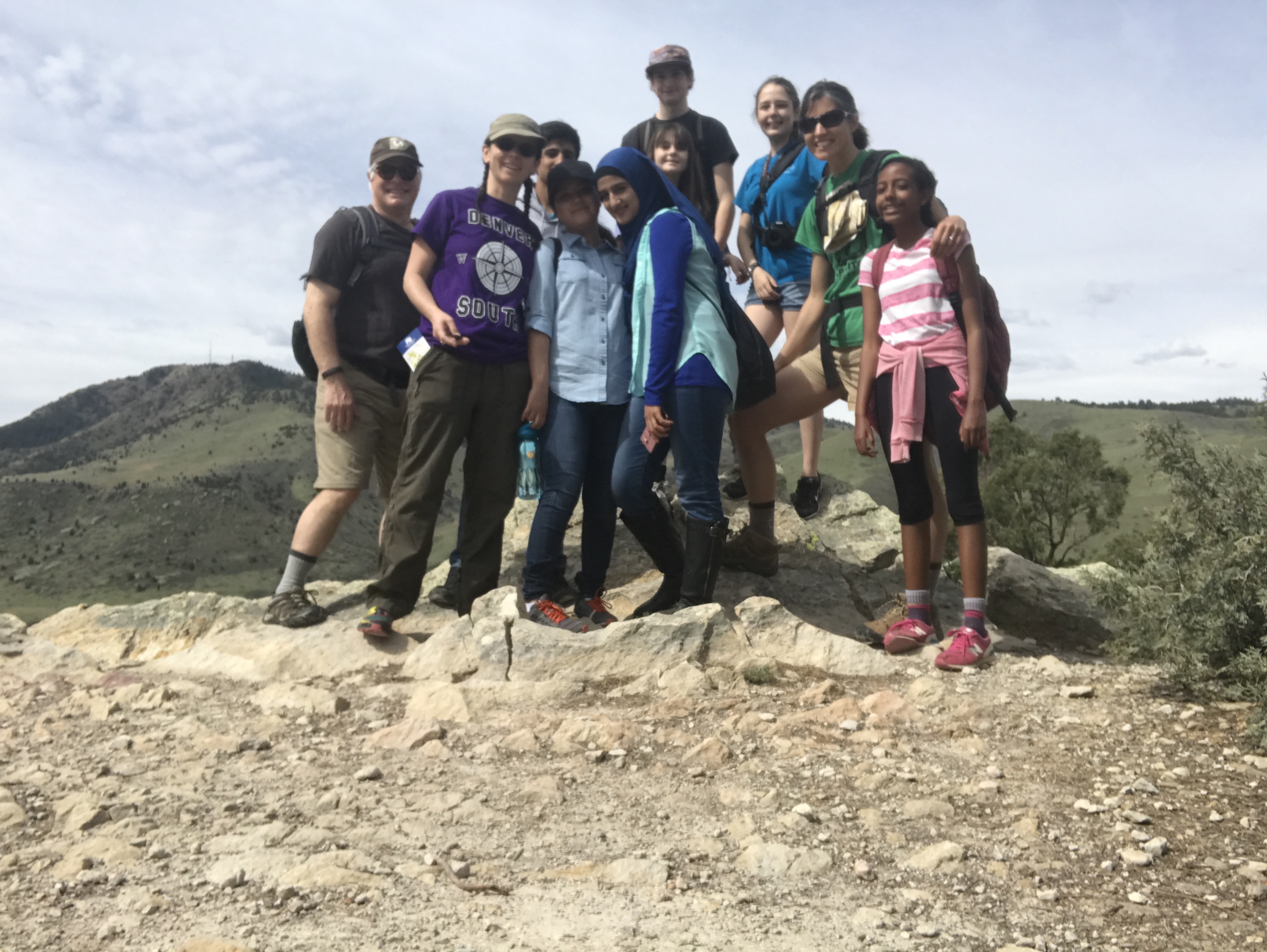
We took three Afghani students to the foothills today. They have been here for less than a year, so they learned a few English words today: Hike. Trail. Juniper. Ponderosa. Colorado=red rocks. View. 

I tried to ask what it was like for them back home, but they only knew a few English words to describe it: Danger. No school. Grandparents. Parents here in Colorado. All kids–brother, sister, other brother–in Afghanistan. 

Each time I asked if they wanted to continue down the trail or turn around, the most confident girl, the hijab girl, kept insisting we go on. She had no desire to go back to whatever life she had outside of that blue-sky hike, her knee-high boots and sweaty face no hindrance to her joy. She just wanted to walk. To escape. To be on that mountain.

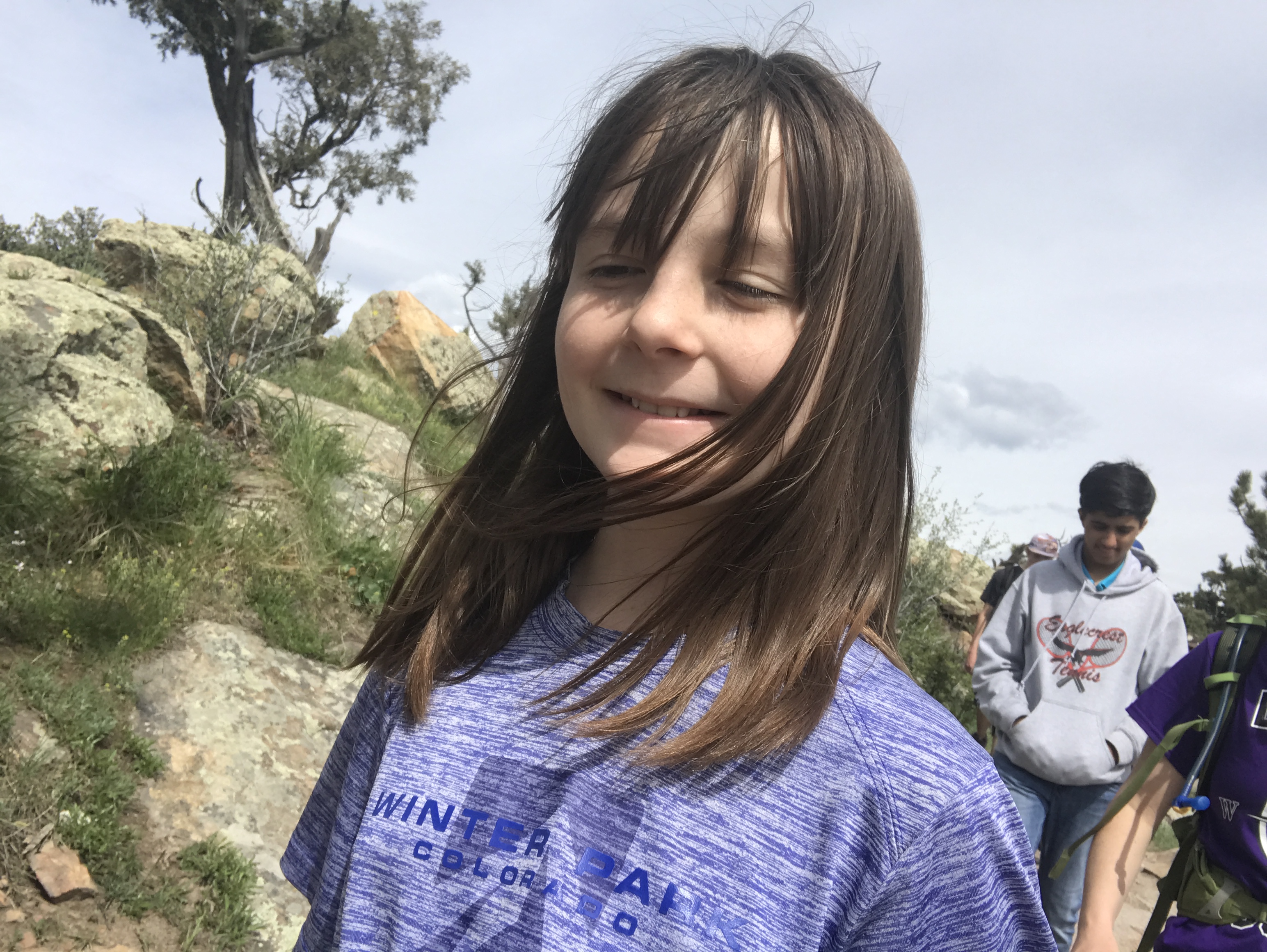
When we were at the top, she leaned in to take a selfie with me, and then one with my youngest daughter whose experiential-learning school had just visited the same location, whose quiet voice shared with us the details of the sedimentary rock layers, the lichen, the igneous and metamorphic. This was a perfect match–the low-English Afghani and my quiet youngest–smiling shyly for a photo, a perfect frame of world peace.

With a walk like this, we step towards empathy. Understanding. Gratitude. We know that things could be worse, that they are worse, for so many people in the world.

But it doesn’t stop me from feeling the pain, the loss that I feel now. For feeling gypped, for feeling like nothing I do, nothing my husband and I ever do, will be good enough to make our lives easier.

Perhaps it’s the curse of Spain. Six years ago, after welcoming two Spaniards into our home, after asking practically nothing for rent, after offering them my car for months when theirs broke down (I rode my bike to work 25 miles a day for three months), after hosting parties for their friends, babysitting their friends’ kids, driving them to South Dakota, after everything, we went to Spain and never heard from either of them again. In addition to the nightmare that that year in Spain was for us, with its broken promises, broken paychecks, and lost jobs, they had to twist the knife right into our backs by acting like they never knew us.

And now we’ve planned a redo. Twentieth wedding anniversary. Fortieth birthdays. Three years into living like kings for the first time in our marriage, with two steady, well-paying jobs, great benefits, and our dream house that we opened up to friends of ours, six of them, rent free for two months because they were down on their luck, and Spain has cursed us again. Our six-week vacation that is 90% bought and paid for, that I have spent over forty hours meticulously planning every last expenditure and activity, will be marred by a pending layoff, loss of benefits, and a mortgage we simply cannot afford on a teacher’s salary.

Let me tell you about that teacher’s salary. Let me tell you about the master’s degree plus thirty credits I have. Let me tell you about all the school events I attend, the lunch meetings, the hours before and after school I work, the summer workshops, the home visits, the dance chaperoning, the sporting events, the class coverage, the every last everything I do to work, to earn an extra buck, to make it. Let me tell you about the eight years we lived on a $48,000 frozen salary.

Let me tell you about my childhood. Parents with bachelors’ degrees in journalism working for a small town newspaper and barely making it. Powdered milk. Ten-year-old, rusted-out Datsun. Ancient house with windows so thin that ice collected on the glass. My mother scraping together a $20 bill for my eleventh birthday and me looking at it holding back silent tears because I already knew that it was equivalent to two and a half hours of her work, and my father was failing his master’s program, and we were moving to Denver for a better life, and everything was crashing down at once.

Let me tell you about contract work, the only kind of work Bruce was able to find when he left the Air Force. No guarantee. No health insurance. No paid time off. No holidays. No sick leave. And when it ends? No unemployment checks.

Let me tell you about health insurance. Let me tell you about the two children I have given birth to without having health insurance because it was a pre-existing condition, and the near $10,000 we paid for those births.

Let me find a few English words to explain to these students from Afghanistan: American Dream. Housing. Insurance. Education. SCAM.

Let me tell you about what we have done to avoid bankruptcy: No car payments. No student loans. No credit card debt. Two properties. Saving and spending. Buying a house only when we were ready, when we could afford it. Saving up for a cursed redo of Spain. Road trips staying with family and camping to save money while traveling. One computer for the whole family. Still driving my 1998 Hyundai Accent.

Let me tell you how I know what poverty is. I know what sacrifices are. I have made them.

Let me find a few English words to say: Fuck this country. Fuck this Trumpian tax cut that cuts workers while CEOs live like kings. Fuck this blue-sky day. Fuck my husband’s military sacrifice, his months in the desert, his sold-his-soul-to-boot-camp commitment, his veteran status that has given us NOTHING.

Let me be twenty years into my youthful marriage and not have to feel like I’m just twenty minutes in. Let me keep my dream house. Let him keep his union (that screwed him) dream job. Let my kids feel like there’s a future here for them and that with two degrees they won’t be buying powdered milk.

Just. Let me be. I’ve had enough.

Inglorious Glory

As usual, one of my honors students has decided to try to evade work by commenting on how he has already written a personal essay for another class, and can’t he just use that one?

I don’t even try to hide my snarky rebuttal: “And I’ve written 2,200 blog posts, but I spent two hours searching for one and one hour revising it yesterday so that I could give you yet another exemplar.”

But he’ll do what he wants, as they all do. He’ll pretend to write tomorrow in class while the others snicker around him, falling out of chairs and posting immature comments on the class discussion thread, eating their lunch two hours too late, leaving torn bits of fast food wrappers littered on the floor as if there were no trash cans in the school.

It doesn’t matter that I have also spent hours planning and replanning each moment of these lessons, that I have begged and borrowed ideas from a colleague, that I have uploaded links and found beauty in words that some of them will never take the time to read aloud, to fit into their mouths and taste their glory. It doesn’t matter that I have a wealth of class activities that ask them to collaborate and ask them to be introspective and ask them to move around the room, and that I have thought about them in the predawn sleepless hours of my weekday mornings. It doesn’t matter that, unlike every teacher portrayal in movies and books, this isn’t the only lesson I planned today, that I also rushed to the copier this morning with a quick revision of my other class’s lesson because yesterday’s trial was such an utter failure that I wanted today’s students to have a better shot at comprehension.

They will do what they want. They will put little or no effort into a story about their lives and wonder why I put so much effort into the words describing mine. “2,200 posts?” another boy chimes in, calculator-phone in hand, “that’s like you’ve been writing every day for the past eight years straight.”

“That’s exactly what I have done.” And his eyes widen even more as he slips the phone back into his pocket.

“What could you possibly think of to write?”

How could I summarize it for him (how could I admit how many of them have been haikus?)? How could he possibly understand a passion so extreme that guilt rides my insomnia if I take even a day, let alone a week, a month, without writing?

How could I not write, when the world is filled with so many ideas, so much beauty and frustration and kids who drive me nuts and make me love them within the same seconds of the same inglorious day?

Like the Moroccan student who, after our ten-minute free-write, wouldn’t stop, who begs me to read through her words describing her journey into a country that threw hate talk and cuss words at her name (which means generosity), at her religion (which means peace), at the center of her beautiful soul.

Like the A students who put a stop, online, to the Nickelodeon banter on the class discussion.

Like the student (straight from Ethiopia) who has only been a presence in my room for a few months and stops by after school to tell me today, broken English and all, that his family has to move to Utah, and he wants to thank me for the “great much of knowledge” that I have given him.

Like the quiet persistence of the introverts whose words they share with me on shallow screens, turning their light just so, exposing their torn experiences with adolescence, with depression, with whatever shadows have followed them into this too-well-lit, too-hot classroom today.

Later, I think of what I should have said to the boy so caught up on my hours of writing: There is always a reason to write. There is always something you could think of to put into words. There is always a moment worth capturing, however painful, however disappointing, however uplifting, that I try to fit into seventeen syllables, an image, an essay. 

There is no glory in these inglorious moments of our day-to-day lives.

But there is glory in words.

And that is what I am searching for. Every. Damn. Day.