Lemonade

Most people who hear that I have three, not two, daughters, send me a sympathetic look, or trade empathic stories of their own three or four girls, or commiserate in some form or fashion.

“Three teenagers? All at once?” Their shock and worry for my well-being come hand in hand with the realization.

Rarely am I praised or labeled blessed for such a thing. Because three is too many. Three girls, or three of any one gender, is too many.

But an accusation is a whole other ballpark that I don’t quite know how to bat for.

“Can’t you understand the plight of my daughter, someone who doesn’t have two sisters who are her best friends, and how lonely she must feel? And you sit here with your sisters and have a house full of friends and treat her that way?”

She stands at my doorstep. I recognize her voice, but I find my feet paralyzed in the kitchen staring at the pizza dough my youngest has spent the better part of a day preparing. My youngest, who righteously defends herself against the bullied petulance of her sisters, but outside of our family, has likely never said an unkind word to anyone.

“Do you not like my daughter? Do you have the decency to admit it? And YOU, what did YOU say to her? What did you do to her?”

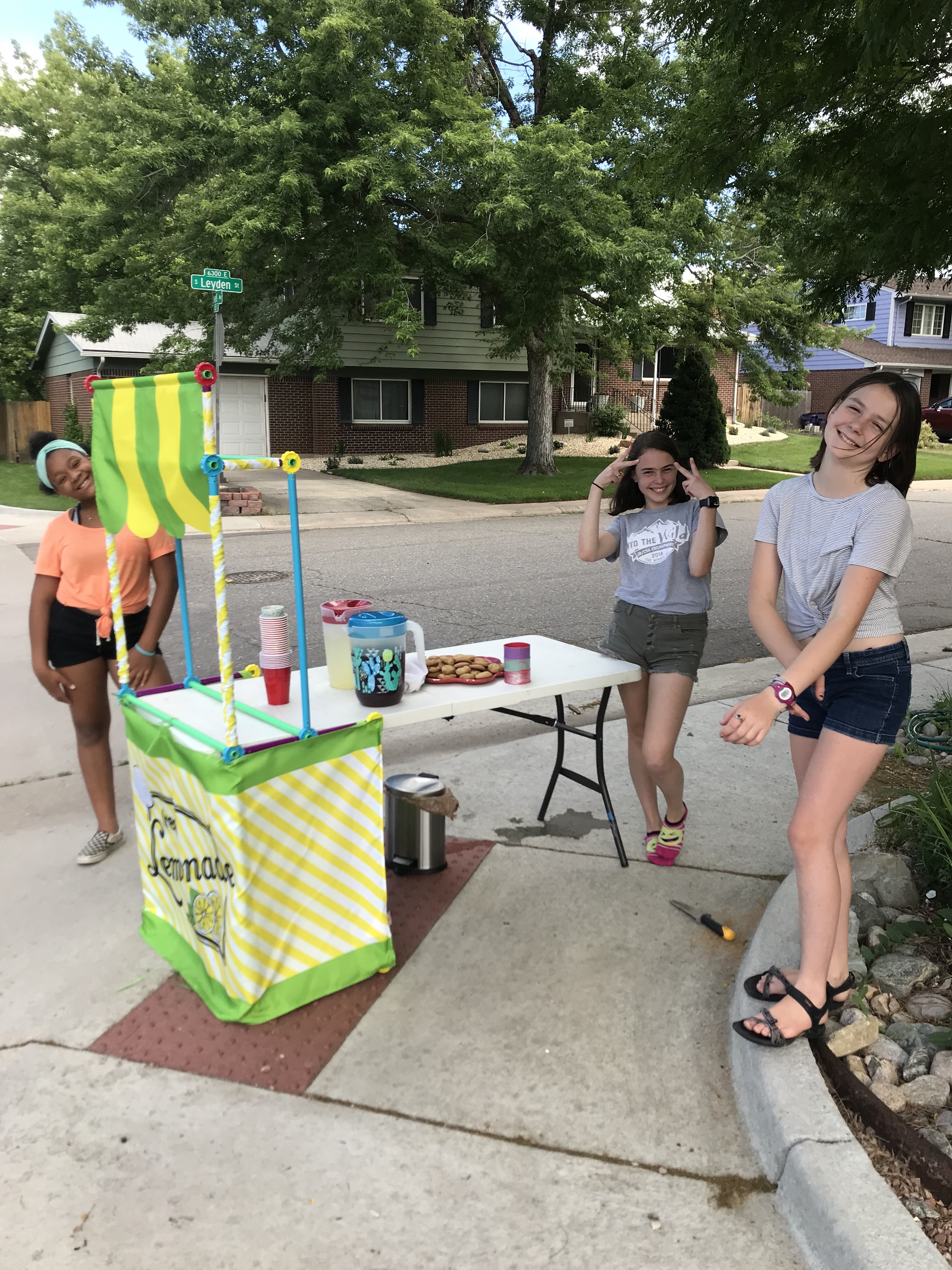
I listen to my girls stumble over words as I put the scene together in my mind. One neighbor came over and spent the morning rolling out cookie dough, boiling water, squeezing lemons, and stirring iced tea. She and my youngest set up the lemonade stand at the corner and made a catchy but annoying hip-hop rant to woo passing cars: “Lemon-ade and cookies too, get your lemon-ade, doo-doo!”

After more than an hour and many dollars later, the pitchers of iced tea and lemonade were nearly empty before the third child arrived. My middle girl and I were still in the midst of the nightmare job of pulling tiny bits of crabgrass out of five hundred square feet of pink rocks, and my oldest had just pulled up with a shake and chicken nuggets, her hair freshly cut, offering everyone a taste.

The third girl stood at the edge of the scene, and Riona offered for her to help clean up, giving her two cookies and five dollars once the lemonade was gone.

“I want to know who called my daughter anus? Was it you?” I can feel her eyes burning into Riona’s, whose tears are already burning down her cheeks.

“We were just messing around. We say that to each other all the time,” the first friend pipes in.

But she is not done ranting. She lays on the (must-be) Catholic guilt of her daughter coming home crying, of being excluded, of the disgrace of the name-calling, pinning it directly on this household and “the fact that we know nothing about you three girls even though we’ve spent so much time with ___, and nothing like this has happened before.”

The snake that is Jealousy has slithered heavily down the block, consuming all air from my lungs, from my children’s stuttered responses, and choked us all into shocked silence. How venomous it tears apart a young girl’s heart, how twisted offhand remarks become when in the presence of new friends.

I begin to find footing to approach the mother, but she has stormed off before I can peel myself from petrification in my pocket-door kitchen.

Did she not take a moment, in her Mama-Bear attack, to think that it might be possible, just maybe, that her girl was feeling left out and blew the comment out of proportion? Did she want to find a scapegoat for the tears? Did she want her to lose a friend?

Tears are the only characters in the room once she leaves. Everyone has her version.

“She thinks we’re friends with each other?” the sisters exchanged snarky glances.

“I just offered her some of my ice cream.”

“I was weeding.”

“I gave her five dollars and a cookie.”

“I called her anus like I do every day, and I am NOT playing soccer with her no more.”

And what is a mother to do?

I present my Jealousy Lecture, fresh from my pocket and a conversation with my oldest from just a few days ago. “Just think how you feel when your sister gets something that you don’t, and how hurt you are, thinking that we favor one of you over the other one.”

Everyone nods, recollects, brings fresh tears to her eyes as they draw upon recent memories of Air Pods or Apple Watches or a damn raincoat two sizes too small and three years past being angry about.

But they get it.

“Why don’t you two make a card…”

They take the card stock, the permanent markers, the classroom supplies I am always buying for my classroom, and blatantly apologize as only children can: “I’m sorry you felt discluded.” “I’m sorry I called you anus.” “You are our friend.”

Too afraid to walk the block alone, I accompany them to the house. They timidly ring the bell, and the mother answers, her husband hovering in the doorway.

Perhaps the mother says something. Calls her daughter. Perhaps there is a vague apology to me for storming in and accusing my girls of something that they didn’t say.

But no one hears anything but his voice. Threatening. Thick with hatred. Eyes on the friend. “Don’t you EVER say that crap to my daughter again, do you understand me?”

I can almost feel the fist in his voice. The toxic masculinity as he repeats the command as if he is speaking to an enemy in the ring, a wife who won’t listen, a waiter who brought him the wrong drink.

Tears immediately fill her face as she backs away, unable to even speak the words of her apology to the young girl whose parents believe everything she says and have no idea how to handle any of it.

Riona puts her arm around her for the long block home, consoling her, telling her it’s not her fault.

In the retelling of events, Izzy asks, “Is he like that angry customer who tried to get us all fired for asking him to check the freezer for the pint he wanted?”

Yes. Exactly like that.

“Is he like that guy who cut you off and flipped you off?”

Yes. Exactly like that.

“Is he like Trump?”

Yes. Exactly like that.

And… I don’t have to explain. They already know, though no men in their direct life are anything like these men, and no women in their life would accuse without taking the time to understand.

They enter, finish baking the pizza with the fresh-snipped basil and spinach from the garden, set up the hammock to eat it in, sit in the swing together, play Scattergories and act like best friends… if only for a couple of hours.

At least one of today’s accusations can have some validity.

At least I don’t need a sympathetic look for how I have raised them. How lucky I am to have a man who has never spoken a harsh word to anyone, let alone an 11-year-old girl.

And at least they know how to make lemonade out of lemons.

Pay Them. Keep Them.

a teacher’s impact

can last decades after school

relationships count

Almost Invisible

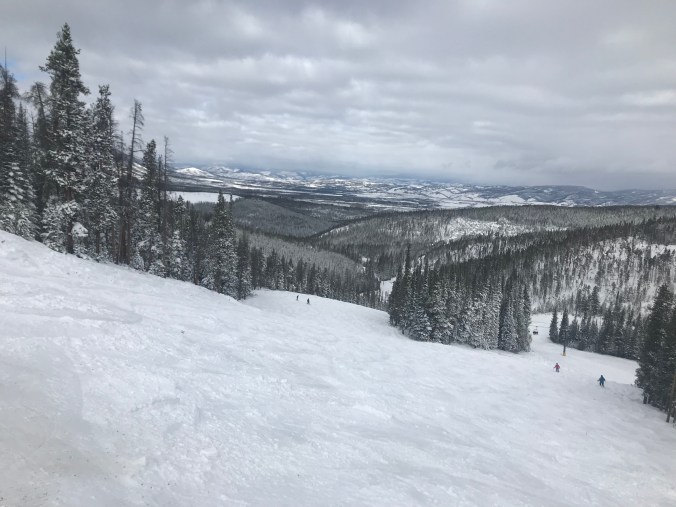
I wish I could say I am a set of skis, but this is not the case. If I were a set of skis, I’d be flying down the mountain right now, powder billowing up around me in glittery fury. I’d be turning over moguls and clapping flakes off from the lift and racing my daughter’s skis down.

I’d be free.

But I am not a set of skis. I am a louse.

I am the louse found at the nape of my oldest’s neck, as pale brown as her hair, almost, almost invisible.

I am the louse that enters your classroom and tries for twenty minutes to think of positivity and negativity and mix it all together with nits for words in an online documentation that we all try to wash away with Nix.

I am the louse that enters your friendship, trying so hard to show you how genuinely I love you, laying my eggs in every place you thought you’d never find in hopes that with one, with just one minuscule combing, you’d choose to keep me there, tenacious and prolific and ever-loyal to the warmth of your scalp.

I am the louse that enters my classroom, sneaking between desks, reaching out with my frail antennae in the somewhat-silent attempt to encourage students to reach up, scratch, and move their eyes away from their phones and onto the idea, just the idea, that a good comb-through could bring them an education.

I am the louse hiding at the base of the bristle on the brush, in the stitches of the winter hood, in the soft cotton bedding bought from the bargain store. Waiting. Breathing in my twenty-four hours of life one solitary pull of oxygen at a time, hoping for a single strand to clasp, to scurry up, to hold on to until I reach the warmth of humanity, until I can rejuvenate my weakened heart with the blood of someone else’s life.

I am the louse of motherhood, the constant irritation of teen angst wishing to be rid of me, my frail footprints finding no real response to my desperate attempts to make a home on these humans’ hearts.

If I were a set of skis, I’d be flying across a Colorado bluebird day. Over mountain passes. Into a bowl so deep with powder you couldn’t find your tips.

But I am a louse. And lice don’t ski.

They breed.

uk%l9ryqpjkpvtpcrlq

A Few English Words

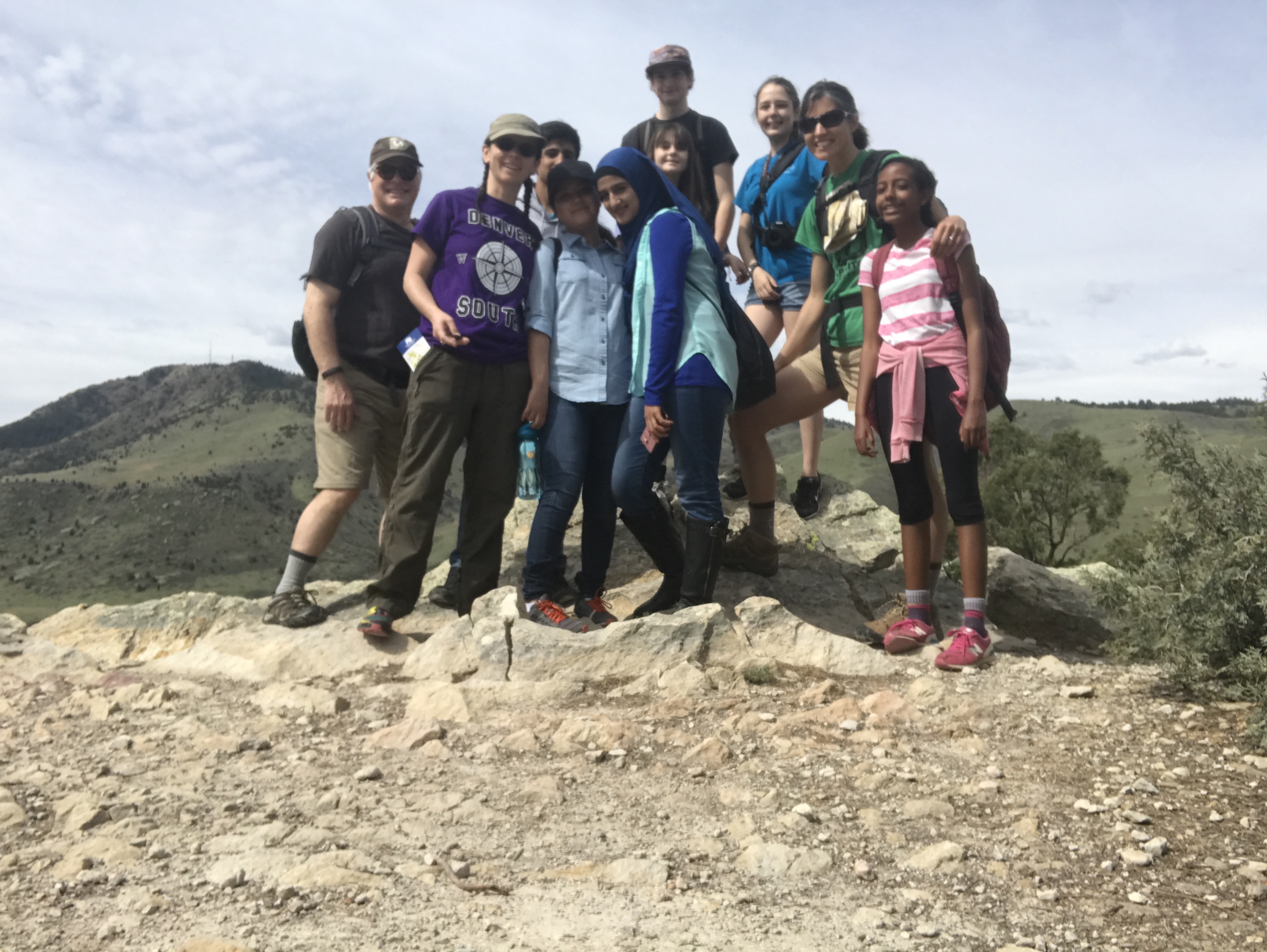
We took three Afghani students to the foothills today. They have been here for less than a year, so they learned a few English words today: Hike. Trail. Juniper. Ponderosa. Colorado=red rocks. View. 

I tried to ask what it was like for them back home, but they only knew a few English words to describe it: Danger. No school. Grandparents. Parents here in Colorado. All kids–brother, sister, other brother–in Afghanistan. 

Each time I asked if they wanted to continue down the trail or turn around, the most confident girl, the hijab girl, kept insisting we go on. She had no desire to go back to whatever life she had outside of that blue-sky hike, her knee-high boots and sweaty face no hindrance to her joy. She just wanted to walk. To escape. To be on that mountain.

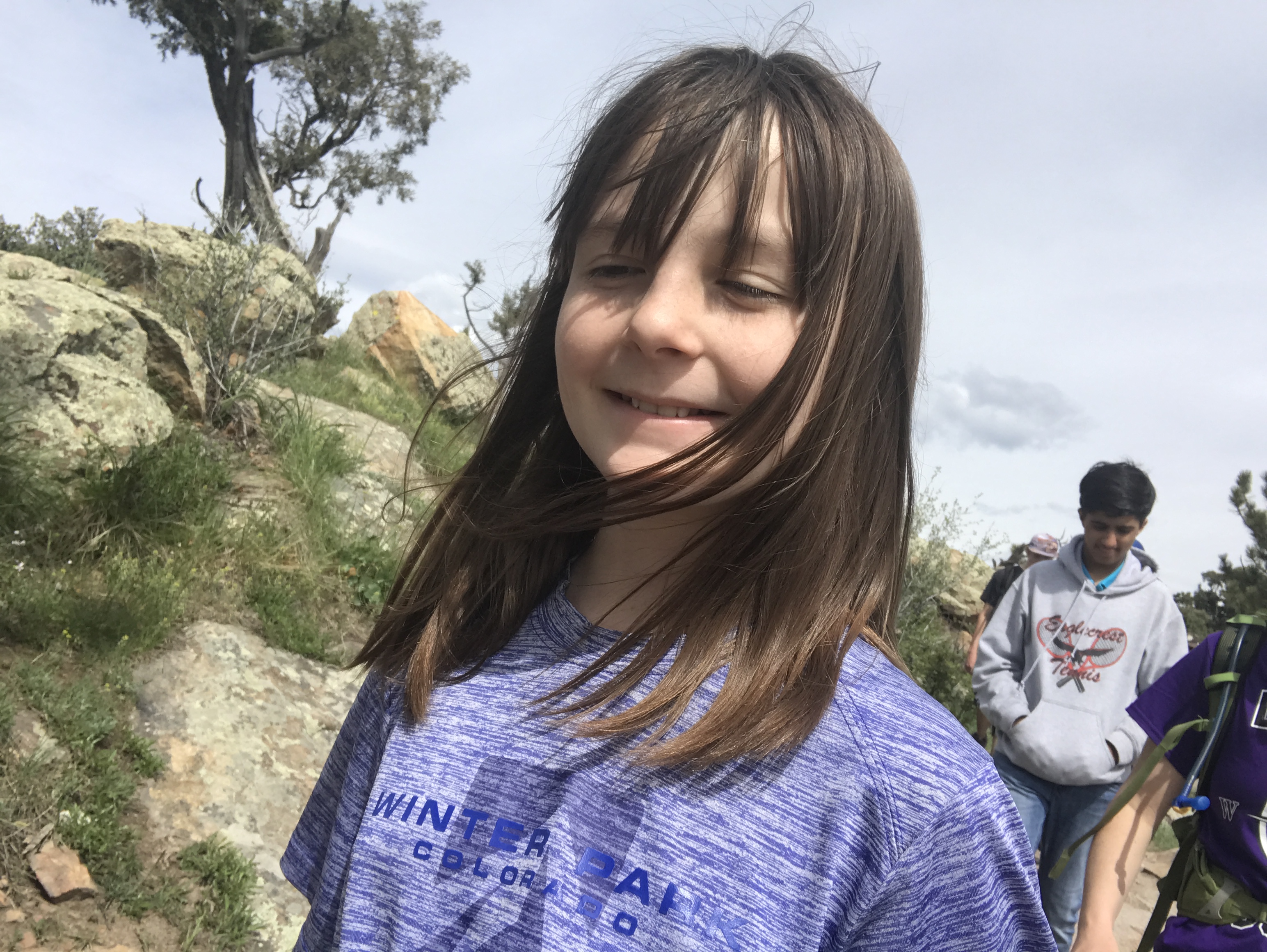
When we were at the top, she leaned in to take a selfie with me, and then one with my youngest daughter whose experiential-learning school had just visited the same location, whose quiet voice shared with us the details of the sedimentary rock layers, the lichen, the igneous and metamorphic. This was a perfect match–the low-English Afghani and my quiet youngest–smiling shyly for a photo, a perfect frame of world peace.

With a walk like this, we step towards empathy. Understanding. Gratitude. We know that things could be worse, that they are worse, for so many people in the world.

But it doesn’t stop me from feeling the pain, the loss that I feel now. For feeling gypped, for feeling like nothing I do, nothing my husband and I ever do, will be good enough to make our lives easier.

Perhaps it’s the curse of Spain. Six years ago, after welcoming two Spaniards into our home, after asking practically nothing for rent, after offering them my car for months when theirs broke down (I rode my bike to work 25 miles a day for three months), after hosting parties for their friends, babysitting their friends’ kids, driving them to South Dakota, after everything, we went to Spain and never heard from either of them again. In addition to the nightmare that that year in Spain was for us, with its broken promises, broken paychecks, and lost jobs, they had to twist the knife right into our backs by acting like they never knew us.

And now we’ve planned a redo. Twentieth wedding anniversary. Fortieth birthdays. Three years into living like kings for the first time in our marriage, with two steady, well-paying jobs, great benefits, and our dream house that we opened up to friends of ours, six of them, rent free for two months because they were down on their luck, and Spain has cursed us again. Our six-week vacation that is 90% bought and paid for, that I have spent over forty hours meticulously planning every last expenditure and activity, will be marred by a pending layoff, loss of benefits, and a mortgage we simply cannot afford on a teacher’s salary.

Let me tell you about that teacher’s salary. Let me tell you about the master’s degree plus thirty credits I have. Let me tell you about all the school events I attend, the lunch meetings, the hours before and after school I work, the summer workshops, the home visits, the dance chaperoning, the sporting events, the class coverage, the every last everything I do to work, to earn an extra buck, to make it. Let me tell you about the eight years we lived on a $48,000 frozen salary.

Let me tell you about my childhood. Parents with bachelors’ degrees in journalism working for a small town newspaper and barely making it. Powdered milk. Ten-year-old, rusted-out Datsun. Ancient house with windows so thin that ice collected on the glass. My mother scraping together a $20 bill for my eleventh birthday and me looking at it holding back silent tears because I already knew that it was equivalent to two and a half hours of her work, and my father was failing his master’s program, and we were moving to Denver for a better life, and everything was crashing down at once.

Let me tell you about contract work, the only kind of work Bruce was able to find when he left the Air Force. No guarantee. No health insurance. No paid time off. No holidays. No sick leave. And when it ends? No unemployment checks.

Let me tell you about health insurance. Let me tell you about the two children I have given birth to without having health insurance because it was a pre-existing condition, and the near $10,000 we paid for those births.

Let me find a few English words to explain to these students from Afghanistan: American Dream. Housing. Insurance. Education. SCAM.

Let me tell you about what we have done to avoid bankruptcy: No car payments. No student loans. No credit card debt. Two properties. Saving and spending. Buying a house only when we were ready, when we could afford it. Saving up for a cursed redo of Spain. Road trips staying with family and camping to save money while traveling. One computer for the whole family. Still driving my 1998 Hyundai Accent.

Let me tell you how I know what poverty is. I know what sacrifices are. I have made them.

Let me find a few English words to say: Fuck this country. Fuck this Trumpian tax cut that cuts workers while CEOs live like kings. Fuck this blue-sky day. Fuck my husband’s military sacrifice, his months in the desert, his sold-his-soul-to-boot-camp commitment, his veteran status that has given us NOTHING.

Let me be twenty years into my youthful marriage and not have to feel like I’m just twenty minutes in. Let me keep my dream house. Let him keep his union (that screwed him) dream job. Let my kids feel like there’s a future here for them and that with two degrees they won’t be buying powdered milk.

Just. Let me be. I’ve had enough.

I Cry for his Loss

i cry for the card, for his loss,
 for his Iraqi-Syrian past,
 for all the burning hours of summer school
 where he committed himself
 to finishing high school in three years.
 
 i cry for his words, for his loss,
 his inescapable self that has hidden
 a kind face in a chaotic classroom,
 his sly smile catching my every
 snuck-in witty remark
 (even when no one else could).
 
 i cry for the system, for his loss,
 shuffled by our government’s wars
 between homelands that stole his home,
 for his pride in Iraqi architecture
 that he may never see again.
 
 i cry for his future, for his loss,
 for how unequivocally kind his soul remains
 after all he has witnessed in twenty-one years,
 for his brothers who wait under his watchful shadow,
 for our country to give him a chance.
 
 i cry for his words, for my loss,
 to not have his presence in my classroom,
 to have the nicest thing anyone’s
 ever written to me
 disappear with a graduation ceremony.
 
 i cry for the world, for their loss,
 for robbing refugees of their rights,
 for keeping the beauty that is him,
 that is within all of them,
 from sharing their strength
 with all of us, inshallah,
 for a brighter tomorrow.
 

Behold this, Eyes:

diversity wins–
 the key to unlock hatred–
 where beauty beats all.
 

Art Night Redux

the canvas denied
 (i forgot the calendar)
 and now she’s alarmed
 
 cuddling, crying
 is how Thursday’s doomed to end
 (until humor comes)
 
 thank god for sisters
 who constantly entertain
 (our family of friends)
 

The Swirling Reality of Everyday Life

img_5224
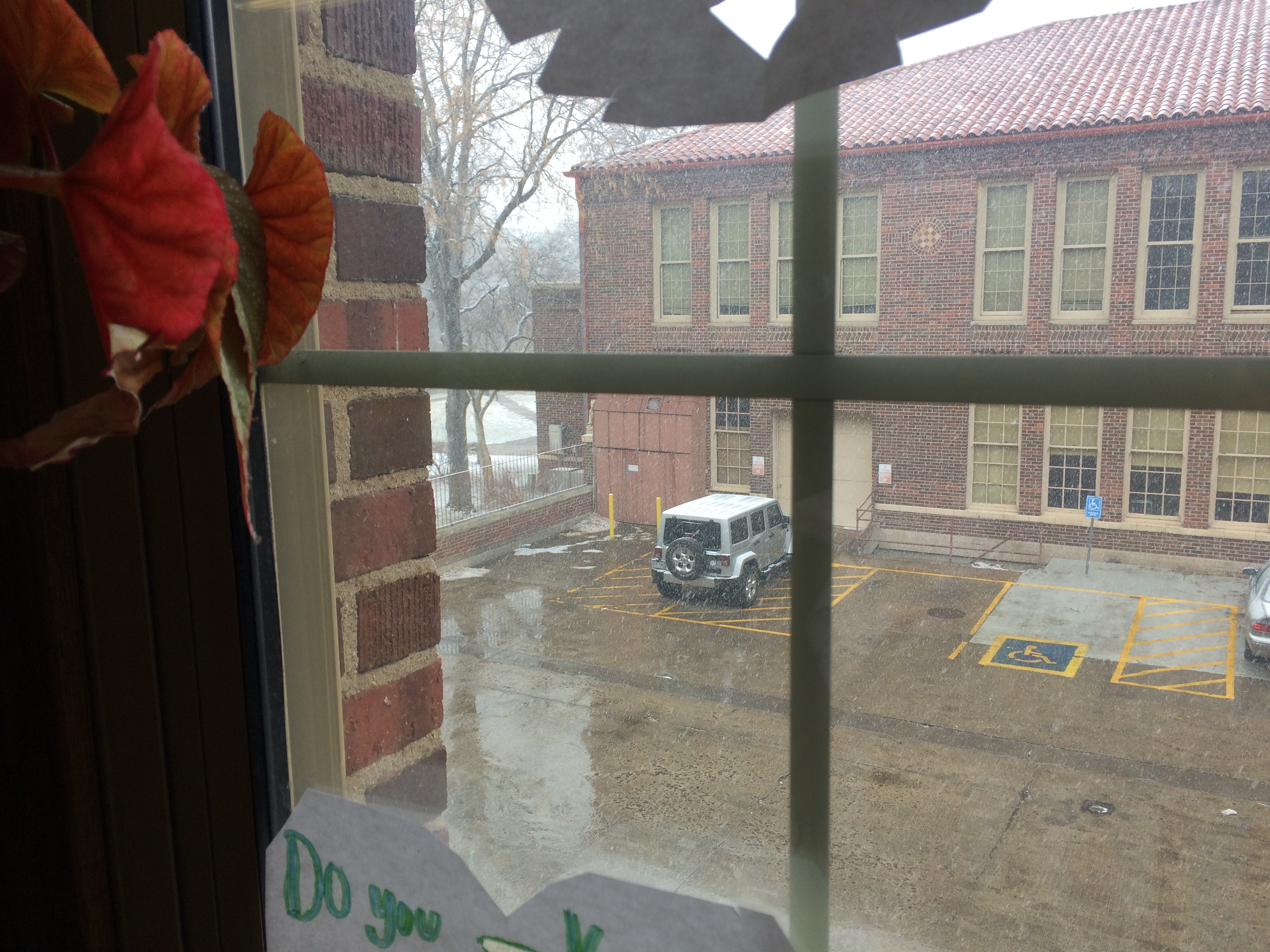
I watch the white world spin outside the third story window. Flakes, long absent, now twirl in a late winter dance, clinging to bare branches, reaching for a new hope.

I catch glimpses of the video–an analytical description of the autonomic nervous system. It is both too much and too little for me right now. The primitiveness of the hunt, the threat that is ever-present in our lives, has put me on this graph at full activation–State 1–always ready to react.

I want to be outside. To feel the flakes on my face. To bite the cold with shivering teeth. To pretend that winter will stay.

I want to be those bare branches, gathering snow in my arms, soaking up every last bit of moisture after too many days of drought.

The sky whitens as the swirls make their way across the city. The video provides a relatable example–how we react when we’re driving a car on a snowy evening and slide on a patch of ice. I giggle, minimally, and my co-worker turns her whole body towards me to be sure I see her how-dare-you? glare.

Does she not understand the irony? After a winter without snow, we’re watching a video with this particular example on a snowy afternoon?

Later, State 1 follows me as I rush out of the building, late to pick up my youngest. I find a parking spot half a block away and rush against the crowd of parents and children leaving the school. I stomp through the slushy parking lot and round the corner of the building as the first grade teachers close their doors. There she is, the final student standing in the cold, holding her hood around her eyes and huddling against the brick wall.

She asks for both of my gloves before we arrive at the car, blasts the heat, and turns on the heated seat, but she doesn’t complain. For once, she doesn’t complain, and I find myself breathing in, breathing out, like the wild animal described in the video, ready to let go.

But I can’t let go. It’s the drive on ice in swirling snow, the counting of thousands of cookie dollars when I get home, the friend over, the constant mess, the story told of the one day the older girls caught–and almost missed–two city buses, the trek across town to the bank, the grocery stop, the endlessness of the swirling snow and the swirling reality of everyday life.

Before I jolt across the parking lot that separates the bank from the grocery store, I hear the sirens. The sound of panic, the crashing of metal. The slipping on ice.

I grab the few frozen items I need off the shelves and make my way back into the snake of traffic. It twitches and slithers in the shadow of blinking red and blue lights. The accident, less than five minutes behind me, four cars splattered in pieces across the intersection, firefighters fighting the good fight.

That could have been me.

I think about the graph in the video, the curving line, the constant dip that we find ourselves trapped inside, unable to get over the hump that could save our lives.

The panic that sets in when our kids won’t listen, when we’re running late, when we fuck up an interview, when we slip. On ice.

I make my way into the snake. In slow motion, we weave through the mess of the accident. I breathe in. Breathe out. Think of the words I will write. Of the children I will hug.

Of the irony of this swirling reality of everyday life.

And I laugh.

(No one glares at me).

This is All I Have For Now

Hope for today: a new student came to my advisory. A Syrian refugee who has been here for 20 days. He could not communicate very well in English, but another newcomer from El Salvador who’s been here for a few months was able to help him with signs and support. He also took pictures on his tablet of everything I handed out and was able to run the words through an app that translated the words to Arabic. And, through the tablet translation, proudly told me at the end of class that he speaks three languages: Arabic, Turkish, and Kurdish.

I wonder what else he has stored behind those questioning eyes? I can’t wait to find out. And I’m so glad he made it through the Trumpocracy.

#standwithrefugees #standwithimmigrants