Spanglish park play date
joy found amongst las ramas
friend language rooted
(questionable choice–
my student’s family, my girls–
here we cross borders)
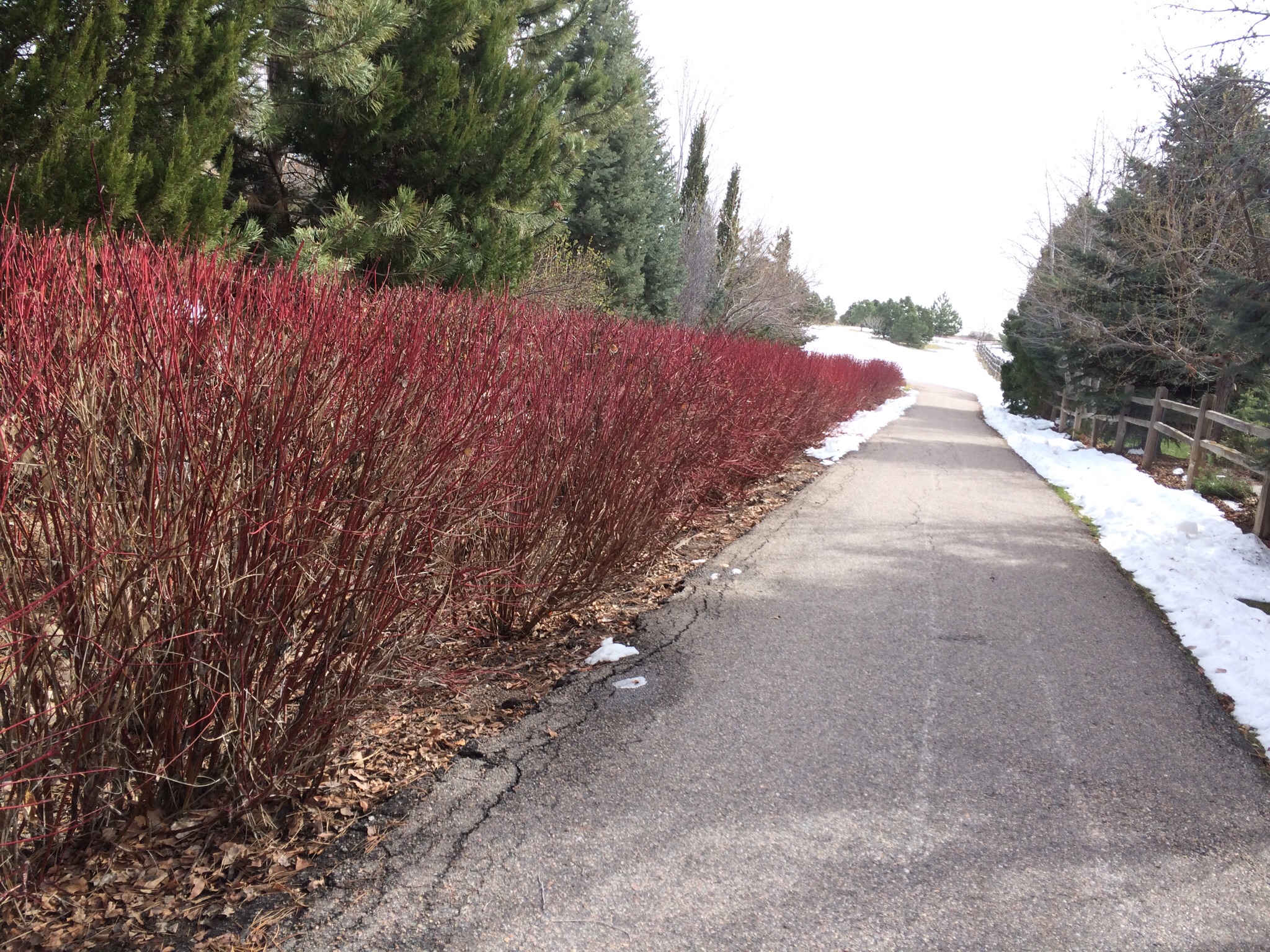


Spanglish park play date
joy found amongst las ramas
friend language rooted
(questionable choice–
my student’s family, my girls–
here we cross borders)
reasons why i stopped:
one–brutal voice in writing,
uncensored anger
two–not much laughter,
too much crying to count
(my tear stained regrets)
three–exhausted sleep
from too many restless nights
swimming in nightmares
four–so much good lost
on the desire to numb,
to not fully live
five–waste of money
in times when we had little,
in times when we’re rich
six–lust and lack of
mediocre love-making
blurred by consumption
seven–fat belly
of someone too far along
to give up this quick
eight–every bad choice
i have made as an adult
came from that bottle
nine–joy i once felt
disappeared on icy rocks
of my lost chances
ten–my daughters’ eyes
watching every move i make
(and i’m making… them)
I remember the first time I encountered poverty. I thought I’d encountered it when I was eight, in my grandmother’s kitchen. We’d just opened our Christmas gifts, and my cousins had their usual wealth of new skis, Patagonia sweaters, and trips to the ski slopes, when I heard my mother say to my father, “I wish we weren’t poor.”
But that wasn’t poverty. That was Christmas in Connecticut where my grandparents flooded us with what they could afford. Where we spent a day in New York standing under the giant tree that took up Rockefeller Center. Where the snow fell and the white, white Christmas shined crystal clear.
I did’t see poverty until three and a half years later, on a bus ride home from my middle school in Denver. And I know (now) it wasn’t the poverty of the third world, that it could have been so, so much worse. But it was as real for me then as it was today, twenty-six years later, walking across those same railroad tracks that I saw that day on that infamous ride home.
I was new to everything: the city, the diversity, the concept of extracurricular activites and late busses. After missing the correct bus home on the first day, I was anxious not to make the mistake again. But I didn’t think to ask anyone in my MathCounts group about the details of the after school activity bus, and three weeks into the school year, I hopped on to one of two busses thinking it didn’t matter.
As the yellow bus made its way across town, nowhere near a neighborhood that looked like mine, I began to hold in my heart a silent panic. I had followed my crush onto this bus, a boy named Schuyler whose name I wrote in my notebook for most of sixth grade. He chatted with friends as we moved from block to block, across rivers and bridges and a trainyard so large it could only have come from a downtrodden version of “The Little Engine That Could”, my favorite childhood book.
But this was no picture book. The houses became more decrepit, the neighborhoods transformed from treelined mansions into ramshackle shacks with dirt yards… And I was nowhere near home.
My “home” at the time being a two-bedroom apartment furnished with secondhand furniture and borrowed dishes while my parents spent their days searching for an opportunity in this city that had promised them the world.
I sat ten rows back from the driver, and as the time ticked by, my frightful silence pounded into my ears with a heart-throbbing vengeance. When the moment arrived for the tall, thin, dark-skinned driver to let out his last passenger, I knew I’d have to speak up. But my small-town New York voice didn’t want to. I wanted to go back to my small town, where my father had failed student teaching and wasted four years on a master’s degree that wouldn’t come to fruition; where my mother had supported us all on $6.25 an hour from the daily newspaper; where I could walk along the singular street that led from my elementary school to my home, and never feel like the village (city) idiot.
“Now, did you miss your stop?”
“I… ”
“Where do you live, honey?”
“I know my stop is Ogden and Ellsworth.”
“Well that was a whole other bus.”
He got on the radio. He made a plan. And I thought about him pulling up to my block of apartment buildings. About the little girl, Valerie Martinez, who had invited me over once and once only. “My mama gets paid on Fridays. Every Friday I get a treat. Last week it was a push pop. This week I might get a set of stickers.” She told me this from the tiny room she shared with her two brothers at the back of the apartment complex. She had a small desk where we played travel Sorry! and I scanned the walls that were filled with pictures torn from magazines and religious idols.
She had lived there her whole life.
I knew my placement in the apartment would be temporary. That my parents would find jobs (they did), that I would live walking distance from the school (I did), in a house we would own after selling our house in New York (we did). That my whole life would never be as dark, as frightening, as the bus ride home across the other side of the tracks. That I wouldn’t have to wait till Friday’s paycheck to get a silly little treat. Or share a room with two brothers for the rest of my life.
“You can tell me where you actually live, honey. You’re the only one left, and I plan on taking you all the way to your doorstep at this point.”
But I didn’t want him to know. That my parents had borrowed money from both sets of grandparents to make the trek across country. That we were living in that tiny, crappy place. That I’d seen the other side of the tracks, with gutted out cars and broken-in windows, and that I was scared. Scared shitless of what my life was at that moment, of what it could become.
I didn’t want him to know that I’d remember that day. How kind he’d been to me. How frightened I’d been. That I would keep track of those disturbing images of poverty like a prized collection at the back of my brain, unsure of what to do with it. That I would understand, years later, just how deep white privilege lies.
Underneath the snow. Between the tracks. Where my city has fallen not into the arms of an unforgiving God, but into the arms of a greedy monster of wealth. Where they have torn down every last remnant of what was real to build cookie-cutter apartments for hipsters overlooking those same tracks. Where the middle class has all but disappeared and I walk with my three girls through a world I couldn’t begin to describe to them because I don’t understand it myself.
Where I am just eleven years old, trapped on a bus, hoping the driver will take me to my stop.
Because without that hope, there is nothing. Just a blue-sky day in the middle of December, a long walk home across tracks I will continue to cross, and a world I am just now beginning to understand.


The refugee question:
A firestorm all over social media. National media. International media. One that’s asking us to question our faith, that’s asking us to question our humanity. One that suddenly, after hundreds of years of terrorist violence from all corners of the globe, screams for an answer.
I have one.
First: open your eyes and call yourself a Christian. It starts first with forgiveness. With love. With hope. With faith. The same faith that these refugees have sought to protect for themselves. The same hope that they carried in rafts across the Mediterranean Sea at the risk of their tiny children being washed upon the shore, lifeless and in the arms of a forgiving God. The same love that ties together their families, that protects them from all that is evil in the world, the same love they see on those long walks across he Middle East and Europe, the love for the gift of another sunrise, the joy of another meal, the peace that comes from one set of open arms.
“And now these three remain: faith, hope, and love. But the greatest of these is love.” Corinthians 13:13
Second: Meet a refugee. A Muslim. Have you… Ever? Because I have a classroom full. Every day. They smile and call me by my full and formal name. They do their homework and ask to fix every error on every test they didn’t quite pass. They come before and after school for help. They smile. They thank me. They are polite and reserved, jubilant and chatty. When Denver Public Schools wouldn’t call a snow day and more than two thirds of my American-born students who live closer apathetically didn’t show up to show their consternation, my refugees took two or three busses from the suburb that had the most snow to be here. On time. Ready to learn. And every last one of them from a place where they’d never seen a snowflake before entering this country.
That’s how BRAVE they are. That’s how much they CARE. About everything. They will miss religious holidays, fast all day and finish projects, beg me for more work because they are so desperate to be as proficient in English as a native speaker…. Their parents will work in meat factories and drive taxis and pick up your garbage and do everything you never were willing to do because your American righteousness makes you too good for it…
And you haven’t even met one, have you? You’ve never even had a conversation, let alone spent an hour a day together for two or three years straight.
Third: Protect yourself. The hate that lives inside of you for people who are trying to flee to the promised land with nothing but the shirts on their backs is the SAME HATE the extreme terrorists carry inside themselves when they light the bombs that blow up everyone within their circle. Protect yourself. For you are the enemy: the enemy that lies within. Fear leads to anger. Anger leads to hate. Hate leads to evil. Evil leads to terrorism.
What are you afraid of? Hard work? Tenacity? Dedication? Faith? Hope?
Love?
Fourth: Open your mind. Your door. Your heart. Be the person who lights red, white, and blue across the sky to ask for a better world. The person who wants your children to be safe. Who wants a better tomorrow for everyone who ever set foot in or was born in this country… This world. Be the good you want to see in this world.
Be the smile. Because if you met one, you would know:
They smile.
sacrifice summed up
in a hundred teens’ letters
breaks my heart each year
All three of my children were born in the evening. If you are a mother, you can acknowledge the significance of this. They were twenty-one months apart, so when I had my third, my oldest was just three and a half.
The first two spent their first night in and out of my arms, crying because of a reaction to the pain medication I’d taken during labor or because she was THAT starving.
But Riona?
I barely heard a sound from her… for EVER.
She lay next to me in the bed for all of that first night. She murmured a little, nursed a little, and settled back into sleep, happy to be near me.
And so it began. The ending of my motherhood with the child who came into the world as peaceful as a lamb.
And that is why I am crying now. Because you didn’t take a moment to see her. To listen to her soft calls, to her murmurs in the night. Because you thought an eight-almost-nine-year-old’s protests meant nothing.
What you. DON’T UNDERSTAND. Is that SHE never protests. She gives in. She listens to her older sisters’ whims and plays along, whether she really wants to or not. She fits into the jealous eye of her eldest sister, who often teases her because “no one can ever be as nice as Riona.” She is just like her father, same birth sign and all: born with a pure heart, giving, generous, willing to sacrifice all for the love of those around her.
Riona is the one who, back in March, cried herself to sleep because I told her we couldn’t afford camp this year. Riona is the reason I have sacrificed four weeks of my summer for summer school and home visits and Spanish class, all in the futile hope that I could pay for that one week of camp for all three girls.
So. NO. I do NOT want to hear that you “lost” her paperwork, sent in the SAME envelope as my other two daughters. I don’t want to come back from 50 hours of class in 5 days to hear that my youngest daughter was told she was leaving on Tuesday, was not allowed to participate in any camp activities because of this even though she ADAMANTLY TOLD YOU SHE WAS LEAVING ON FRIDAY AND YOU NEVER CALLED US TO CHECK, was told her camp store account was EMPTY WHEN SHE HAD $16 DOLLARS LEFT AND COULD HAVE BOUGH CHAPSTICK FOR HER DRIED LIPS, or that she was just… some other eight-year-old.
Because she’s not. If you could see her, really see her, for the gentle soul that she is, you would understand why I can’t stop crying. You would understand why I have given up half of my summer for my daughters to have the experience that you have now stripped from her. You would understand that a protest from a small voice should be THE LOUDEST PROTEST YOU HAVE EVER HEARD.
But you are not a mother. You are eighteen years old and have yet to learn the reality of this kind of pain.
And that is why I forgive you. Because Riona would.
one call changes all
fifteen years of wait lifted
our family’s lost weight
bad college advice
from those who are still in school
and haven’t paid debt
trapped in the banks’ lies
for an unsure future life
they might not afford
tell them: study hard
work your ass off, all four years
with a paying job
choose a cheaper school
or a major that pays out
once you graduate
but would they listen?
their biggest concern: when’s lunch?
debt lost on all ears
this news sent so quickly in the midst
of my latest sacrifice (summer school)
brings it all together–
the twelve plus years of parenthood
where each of us stepped out of our careers
to stay home
to be there, wholly be there,
for every waking moment of their childhood
(it was mostly him,
a remorse i will carry
long after they have left the house)
and three years back,
when i made that choice
to carry this family to Spain,
and all the weight of it
that i have carried since
(was it the right choice?
was it worth the debt?
will we lose our house?
are the girls’ schools good enough?
have they lost every speck of Spanish?)
all of it comes full circle with his text:
I got the job.
The REAL job.
The DREAM job.
the job he’s been waiting for
since he stepped out of the barracks
and into The Real World,
where he was offered contract after contract
(no benefits, no real hope)
and was better than most of the company employees
(and better than any man you will ever meet)
and here we are.
seventeen years into the marriage.
twelve and a half into parenthood.
a stay-at-home chef, hairstylist,
chauffeur, housekeeper, computer technician,
financial analyst, tax adviser, veteran,
TELECOM TECH.
here we are, dream-of-dreams,
full circle, lifetime opportunity later.
and it was so worth it.
so, so, so worth it.
we make home visits to welcome freshmen
who haven’t set foot in our school.
on the drive we discuss gentrification,
how these kids are coming across town
to our school because they think it’s better
(but it’s so much better than the remnants
of gangs that linger in their northwest ‘hood,
in the high school that hasn’t caught up
with the white money-chasers)
inside the first house, a blond bombshell
(shy as a country field mouse) lets us into
her gutted bungalow, replete with
granite counters all around, tells us she chooses us
because the people at our school were nicer
than the pompous competitor next to City Park
we make our way back to the south side
and step into a mansion built
on top of one of Denver’s many scrapes,
with oriental rugs leading from
hallway to music room to never-ending kitchen,
with a nice mother and a moody teenage boy
who grunts responses to questions
(because manners can’t be bought)
and then, within the same zip code of
block after block of mansions that
have all but stomped out the middle class,
we pull up to our last stop:
The Red Pine Motel,
settled along Broadway
between a bar and a pot shop.
in a tiny apartment without a table,
a man stands eating a bowl of soup,
his hand half broken and bandaged,
his pony tail tied at the nape of his neck,
his high-heeled wife potty training
her three-year-old in the adjacent room.
“you can come and look, do your check,
do what you need to do.”
we exchange glances.
do they they think we’re the cops?
are they used to this?
my colleague reassures him that this is a friendly visit,
that we have papers and t-shirts
and hope for a better tomorrow
(God save us all)
we sit on the bench-like singular piece of furniture
in the kitchen/living/dining room,
(no more than 100 square feet)
with a miniature gas stove and not a single
speck of a counter, granite or otherwise
the boy is running late
and both parents engage in disgruntled talk
when he arrives,
and they plain as day tell us what he’s like
and he plain as day answers.
they use words like imaginative.
engaging.
photographic memory.
and the little girl sports her
oversized South Future Rebel t-shirt,
and the uncle waits outside and begs
to have a t-shirt too,
so proud are they of sending their boy
on the one mile
(the one million mile)
walk between their dwelling and
the grandiose Italian architecture
that will be his high school,
where he will walk past
block after block of mansions
in the same zip code
through the disappearing middle class
into the institution
that will grant him a future
or place him right back
into the thin line of poverty
that hovers over our city.
and this is what it’s like to be a teacher
in today’s world.
 Step Write Up