Understanding (Comprensión)

My boy loves to ski.

That should be the whole post, I know, because what else is actually important with this groundbreaking news from a person who’d never been outside of a tropical environment before seven months ago?

But it has been a hard week. It started with a $270 phone call to Honduras (yes, the phone company forgave my discrepancy in understanding here, bringing it down to $27). It continued with my child withdrawing (to the point of email contact from a math teacher who never contacts me) completely from math class, to juggling and standing on desks in science class where my colleague (covering a class) texted, “Man your son is a shit” to several outbursts and clownish behavior in the three hours I have him every afternoon.

This is what it comes down to: I have three daughters, and I do not understand how to raise a son.

Last night I took him to Walmart where we scored the final pair of snow pants for $10, and after we stood in the endless line, we arrived home to no dinner.

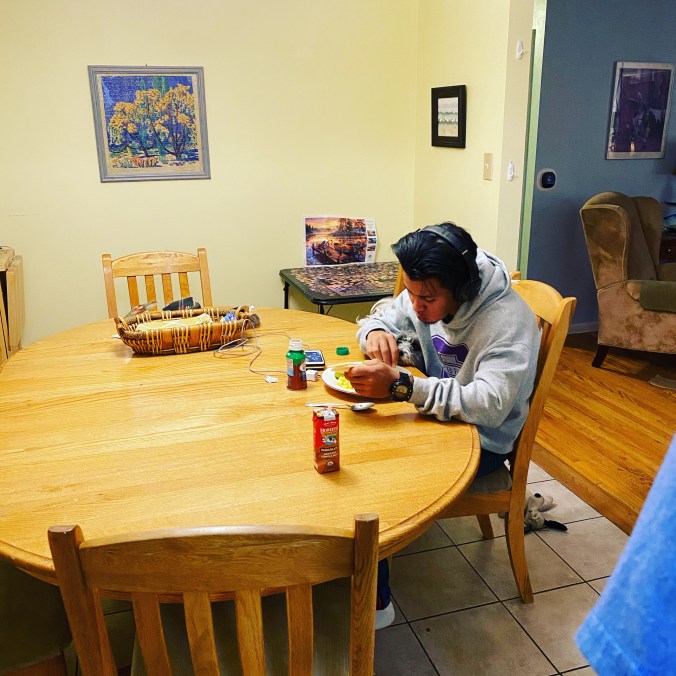
He fixed eggs for himself (his go-to meal), and I carved out an avocado to pair with my wine.

I mentioned, again, his behavior in all of his classes.

“But I am just being myself, Miss, and I can’t change who I am. And I always show you respect.”

“Do you show me respect when you return from a doctor’s appointment and shout across the room when everyone is taking a test, telling the whole class that you can’t write because of the shots you got? Do you show respect when you ask Melvin to tear off your bandaids? When your goal is to flirt instead of to learn?”

“No, Miss.”

“You are eighteen. And you can change your behavior. Not your personality. Your behavior. And the thing is… I already love you. I love you because you are my son. And I spend hours planning those lessons because I really care about everyone in that class learning English… Everyone including you. Do you understand?”

No response except visible tears that this boy will not allow to fall (though my three daughters pride themselves on regular tear-shedding).

“Oh, son. Give me a hug.” This sentence 100% in English as I pull him towards me in the middle of the kitchen, and Riona and her best friend witness the entire event, understanding nothing, but are too afraid to continue making their meringues, as he won’t let go.

He just holds me in that kitchen like he hasn’t been hugged in a hundred years.

And maybe he hasn’t.

“What did you say to him?” Riona asks when he finally releases me, opens the refrigerator, searches for hot sauce.

“I think I should tell you later. Who knows how much he really understands.”

“Really, Mama? I don’t think he understands us at all. He doesn’t act like it.”

He pulls his face away from the fridge: “Que pasa?”

We all laugh. Back to Spanish: “Do you know what we’re saying?”

“I understand some words, but not the whole conversation.”

“Do you know the word, ‘understand’ in English?”

“No.”

And that is it. That is my Saturday post. I knocked on his door at 5am and he was ready to sing me Spanish love songs all the way to Winter Park by 5:15. He learned how to ski in one day with his absentee fear and my broken Spanish, and what more could one ask for from a brokenhearted, ever-loving, muy-atletico, hijo hondureño?

Does he understand me?

A little.

Do I understand him?

I’m working on it.

But one thing I know:

I love him.

And that is better than any frost you will feel on your face.


But We Talked

because of my pup

(and i already love him)

this was a hard week

Four Now

no pictures today

just the hollow, lonely sound

of a house with teens

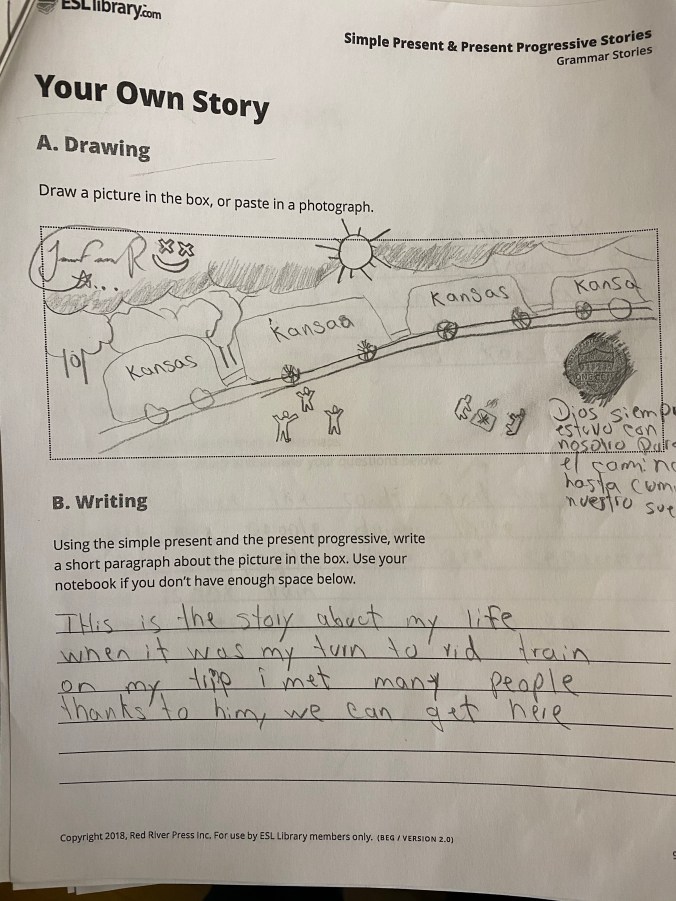
La Bestia Beckons

we will never know

how sketchy the ride will be

until we arrive

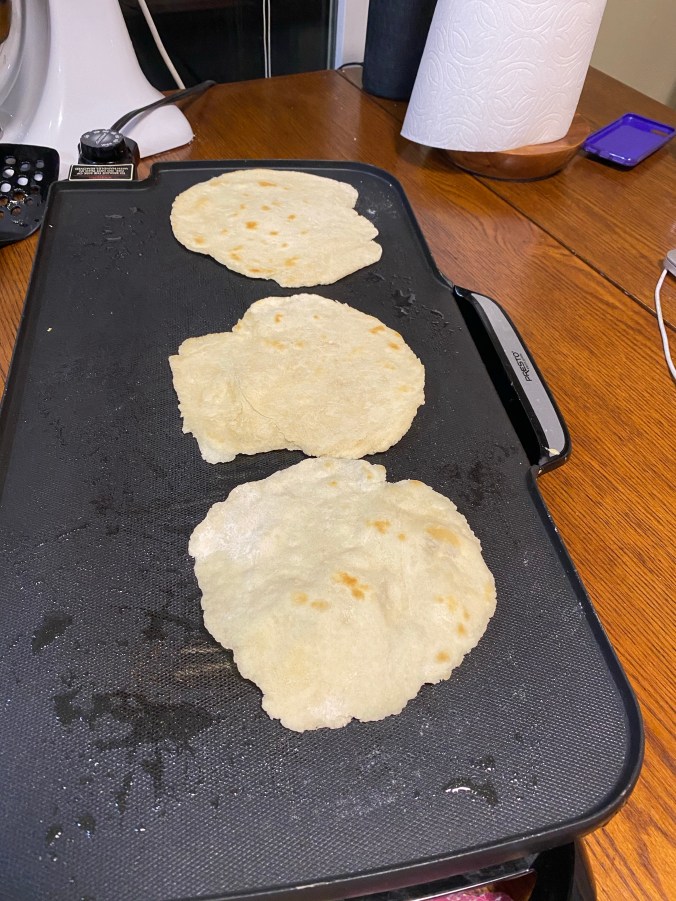
Cocinando Hondureño

my first tortillas:

will they erase racism

that followed him here?

Shut Your Ego

all you need to know:

we legally have this kid

(it’s not your business)

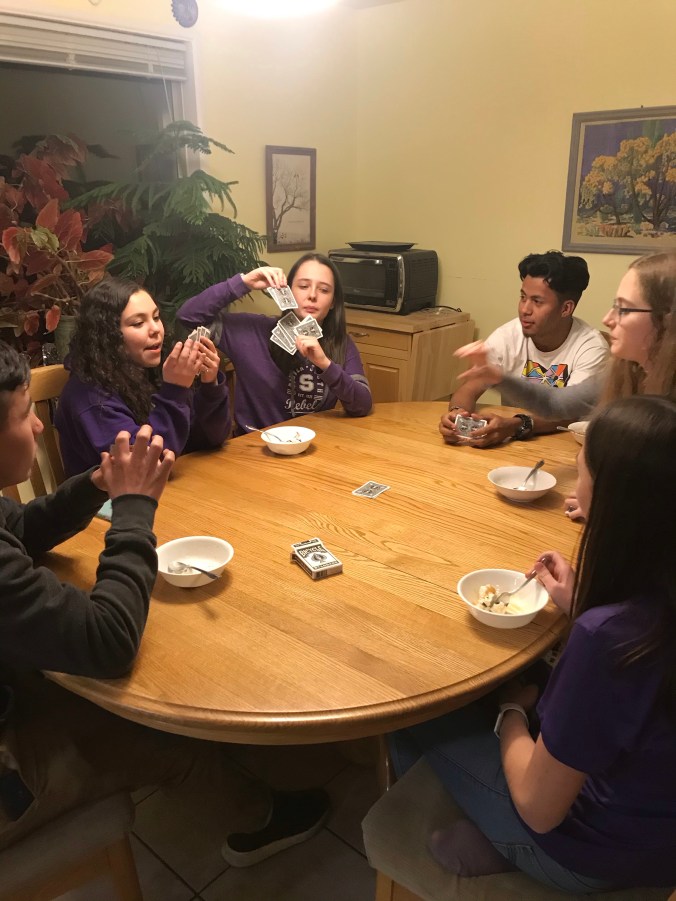
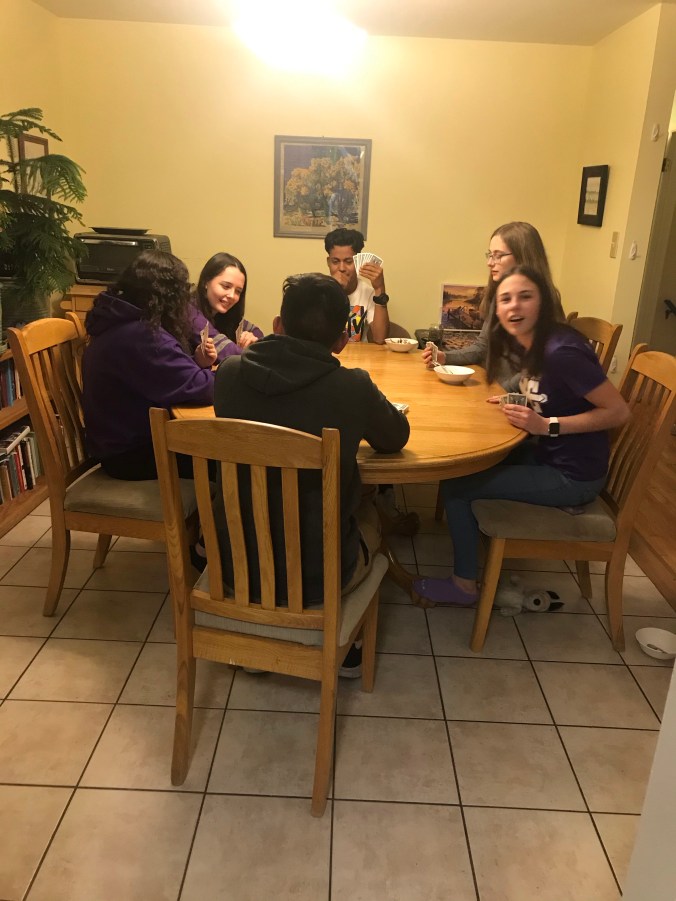
No Spades Here

cards always unite

no matter the game’s language

laughter translates all

I Just Have One Question

On the phone with the immigration lawyer four weeks ago: “I just have one question. What can we do at the school to get this boy out of a homeless shelter?”

“He needs someone to offer him a home and then we can begin the process of going through family court and applying for an SIJS visa.”

Five minutes later, calling my husband (which I NEVER do) in the middle of a school day:

Bruce: “What’s up?”

Me: “I just have one question.” Loooong pause.

Bruce: “Yeah…?”

Me: “Would you be willing to take this boy into our home?”

Bruce: “This boy who’s been in your class for three weeks and we know nothing about?”

Me: “… Yep.”

On the phone with the social worker, one day later:

Social worker: “Our ultimate goal is to place him with a Spanish-speaking family, although it doesn’t always work out that way. He told me that you might be willing to take him, and just so you know, I already Googled your house and everything I could find out about you. And I just have one question.”

Me: “Yes…?”

Social worker: “How do you feel about taking in a teenage boy when you have three teenage daughters living at home?”

(This was the easiest of these questions to answer).

In an email to the school psychologist, counselor, registrar, and social worker: “I just have one question. How does one take in a student in a situation like this?”

Response: “We don’t know.”

In my living room, three weeks later, meeting with the Uaccompanied Refugee Minor team of five adults–an interpreter, a bilingual social worker, a coordinator from Lutheran Family Services, a Guardian ad Litem lawyer, and a caseworker from the Department of Human Services. My puppy jumps from couch to couch, hovers on the floor with toys he begs them to throw, sniffs in their on-the-floor bags. Fabian holds the laser pointer and fiddles with the dog’s rampant scavenges for its source in the depths of the hardwood floor.

Social worker: “The primary goal of this program is to reunite you with your family. Let’s talk about all the family members you have in the U.S.”

So begins a lengthy discussion about every reason why his four family members cannot take him. One with a crime, one with a house too full, one in prison, and an uncle in Connecticut he doesn’t know.

Social worker: “Let’s talk about the uncle you don’t know. What if you went to visit?”

Fabian: “It’s too far.”

Social worker: “We could buy you a plane ticket. Pay for a hotel.”

Fabian: “…”

Social worker: “We don’t have to decide today. You can think about it. It’s always an option for your future. OK?”

Fabian: “OK.”

Fifteen minutes later, the meeting is coming to an end.

Social worker: “Now you both have the chance to ask any questions that you have.”

My quiet son, with red eyes and pulling his hands away from his downturned face, looks up and says, “Solo tengo una pregunta.”

We wait for the interpreter to repeat his words.

Fabian: “I just want to know how many times you are going to keep asking me to reunite with my family. Because I was in a homeless shelter for four months and no one in my family did anything for me, and I don’t want to reunite with them.”

Every mouth in the room: Silence.

I just have one question: What would you do?

Knowing that his journey across four borders and a lifetime of woes has ever-gratefully placed him in your living room. Knowing that you will lose sleep over this, waking in the middle of the night to police sirens thinking that ICE is coming, worrying that he will hate you, that he’ll turn back and re-cross those borders, that he won’t fit into your family. Knowing that when he sits in your classroom with all the others, they might make somewhat-joking, somewhat-bitter commentary about “your son.” Knowing that your daughters will get jealous over him being allowed to watch a movie on a weeknight or having a specially-made dinner and a piñata for his birthday. Knowing that people in your life are going to question every aspect of this choice (“College is coming up… can you afford this?” “Are you sure he’s not a criminal?” “Are you worried about having him in a house with three teenage daughters?”).

Knowing that for every day of your life, from the moment when he raised his face and asked his singular question, you will never forget its weight on your soul, on your humanity.

I just have one answer: love. It is the only response that is worth listening to out of every possibility. It is the only way to get through each of the borders that we must cross, each of the dark memories that plague us all, each of the questions we have always asked about what we could do.

We could love each other just a bit more.

2020 Vision

road trip, adjusted:

no Canadian journey

([s]miles with our son)

That Would be Us

after everything

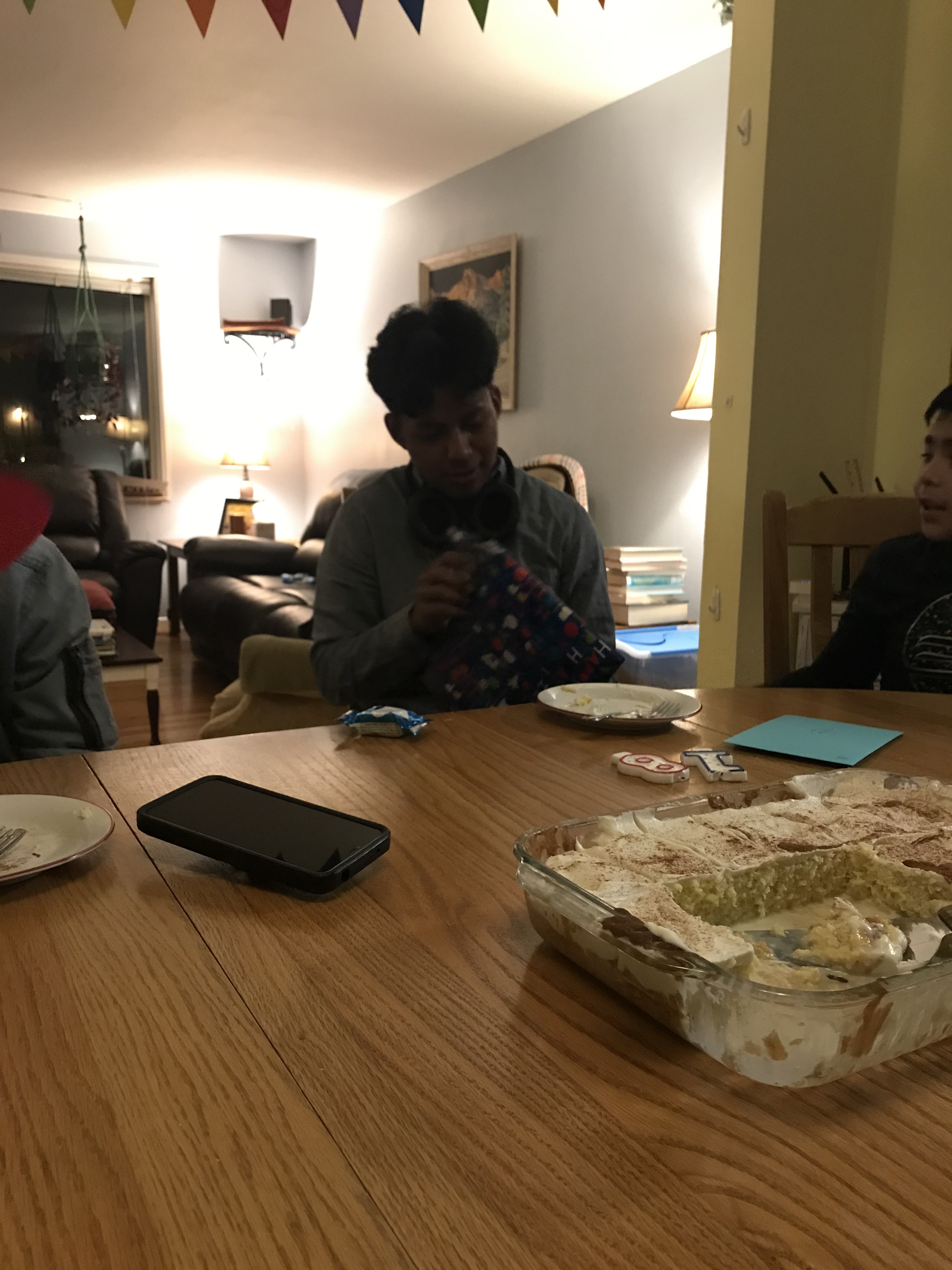
he asked if he could stay here

with his new family