Ni Arco Iris Ni Nada

dear stranger who

intentionally ran the red light

and first almost hit a car

then almost hit this cyclist:

a curse upon you and your

raised middle finger.

my cusses were valid;

your intersection rape was not.

you are not the rainbow

but the clouds

that produce no rain

on a hot August night

and the sun will strike you down.

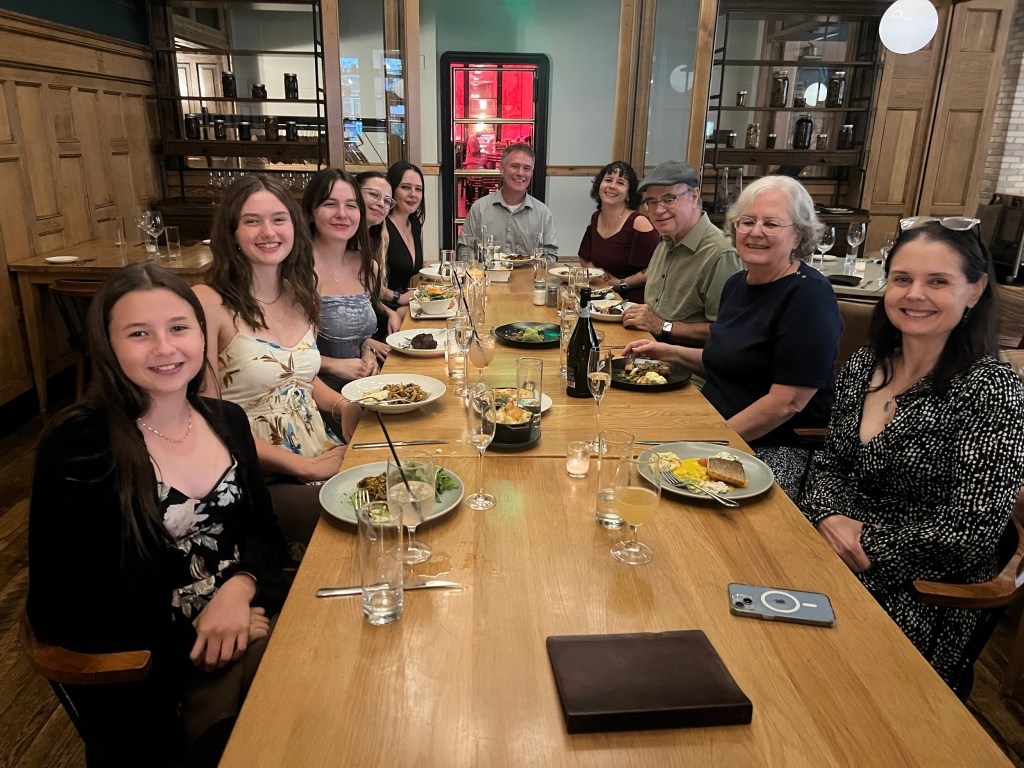
Happy 50th!

It all started with a van his little brother bought after working in their parents’ store for their childhood, a summer road trip across the country with his brothers, and falling in love with the snowy peaks, cool temps, and endless blue skies of Colorado. Dad just knew he had to leave woodsy, rainy, gray Connecticut, the only home he’d ever known, and transfer colleges. A transfer that would give him the degree he wanted as a journalist and editor, and better than any degree, a transfer to a university where he would meet Mom, marry his love within a year, and raise a family of two daughters, never once complaining about being a ”girl mom”.

And just like that summer road trip where some nights were cold and wet and some days were filled with rays of golden hope, Mom and Dad have weathered many storms in fifty years. Challenging jobs, layoffs, more moves across the country to help Grandma and Grandpa Dowling run that same store when Grandpa got sick, finding jobs in the beautiful, idyllic Finger Lakes where Elizabeth and I created core childhood memories exploring the woods and riding our bikes and swimming in lakes, then back to Colorado where there were more opportunities when the sky got stormy again.

And just like that summer road trip where Dad discovered what he wanted in life, Mom and Dad took us on many trips even when money was tight. Mom drew carnivorous plants so perfectly for a botany book that she earned enough money for us to drive down to Disney World, camping the whole time, where we met Mickey and baked in the spring Floridian sun at the water park. We came to Colorado and went camping with Mom’s family, learning how to ride motorbikes and four-wheelers, borrowing Grandma and Grandpa Jordan’s old station wagon to see the Grand Canyon and Mesa Verde, to see that never-ending stretch of blue sky on ancient rock formations shaped by rivers and men, and to find within ourselves that desire to see more of the world than what was under our giant maple back home.

Every fall we drove to Vermont for a long weekend at Bob’s ski lodge with Dad’s whole family, soaking in the sauna and hiking amid swiftly falling multicolored New England leaves. We took trips to Washington, D.C., New York City, the Adirondacks, and coastal Maine. We visited family in most of the places we traveled to, Elizabeth and I fought our way through un-air-conditioned backseat travel, eating Mom’s homemade tuna sandwiches and picking on Dad for carrying around his “Daddy purse”, his camera bag, because he was always taking pictures of our adventures.

Once we settled down in Denver, we continued to travel, camping and skiing in our beautiful Rocky Mountains, Mom changing her bedtime song from, “It’s bedtime in the Finger Lakes” to, “It’s bedtime in the Rocky Mountains!” so happy to be home. We grew into ourselves walking city streets and meeting people from all over the world in our newly diverse classrooms, blossoming into the women we have become—women who know the value and importance of travel, education, hard work, starting over, and never staying still.

Sure, we never had one of those beach vacations where you sip piña coladas for a week and lounge around the hotel pool . Was it because we couldn’t afford it or because we couldn’t afford to miss what was really out there in the world—the historical architecture and beautiful art that Mom always shared along the way, or the long bike rides through state and national parks that dad loved to lead—these are the gifts you gave us.

It all started with a road trip in an old, used van. And we’re so happy to celebrate a fifty-year marriage, and all the memories you created for us, as you drove your dreams and guided ours. Thank you, Mom and Dad. Cheers to fifty years, and to many more. We love you.

A National Emergency

A national emergency is a series of hurricanes on one coast and as many fires on the other coast, the direct results of climate change that our country chooses to ignore. A national emergency is the healthcare crisis, where we can’t get prosthetics if we’re missing a limb or pay for cancer treatment even if we’re dying. A national emergency is CEO pay which has multiplied exponentially for five decades and left the common worker with a salary too low to buy a house, buy eggs, or pay rent.

There is no national emergency at our border. There are millions of people, despite all of our national emergencies, who have faced far worse: farms that can no longer grow coffee due to climate change, dictatorships that have taken away all rights, medical care that includes fewer options for cerebral palsy or cancer than we have here.

Their emergencies trail behind them, left in their home countries weeks, months, or years ago, and like that train that they cling to carrying them across Mexico, they hope never to see again.

They are here now, families in tow, babies in tow, ready to work, ready to enroll their children in school and provide jobs for teachers like me, ready to take into their hands the American Dream that you have declared doesn’t exist for them.

They are not criminals.

They are not illegal.

They are not a national emergency, an executive order you’ve used to circumvent Congress on your first day in office.

They pick your food and clear your sidewalks after snow and build your roofs and work in your restaurants and run your factories and teach your children and make you rich. They are professors and lawyers and engineers and mechanics and everything in between.

They are human.

And after more than four hundred years of forced colonization and enslaved labor indoctrinated in our blood by imperialists like you, the only national emergency is how far back we’ve moved the dial of progress, and for how long we will make Suffering the motto of YOUR AMERICA.

Seventeen

I’m already starting to count semesters left, though I have nearly a decade to win my pension. I have seventeen left. Seventeen semesters to deal with the pain, the argument, the love/hate relationship I have with this career, and today it hurts me more than it helps me.

Why is he in the hallway now, laughing his ass off and GOOFING OFF WITH HIS FRIENDS? Why do I hear his voice, after he cheated on her, after he convinced her back, after she came in distraught with handmarks on her arm, her breakfast tossed to the floor, his controlling words still ringing in her ears? Why did I call the dean, the assistant principal, who came jogging to my classroom to extricate her, to hear her story, ONLY TO HEAR HIS VOICE IN THE HALLWAY three hours later? Why wasn’t he sent home, after the long list of inappropriate behavior, everything from intentionally using racial slurs to skipping class to cussing out the admin to refusing to do work to taking advantage of a girl in the bathroom and allowing his friend to film it and post it online…

Seventeen semesters left of arguing with kids about their phones, convincing them that English is important, and telling those in charge to do something about kids who should be nowhere near this school.


And sometimes it feels like seventeen lifetimes.

Work

i'm back at work today
after a solid two weeks
of rest and relaxation

in which i found this schedule
from my first job
age seventeen
(started there at sixteen)

where i'm scheduled for all but four days
of July of '95
and i've never stopped since.
really stopped.

even when i was
home with the babies
i watched other people's babies

and the two weeks
thirty years past due
just seems
so
short

Stamina

The Atlantic and many other news sources have recently reported that students at elite colleges can’t even finish a book, and probably only read one book in high school, if that. The article focuses on the inability of students at elite universities who are struggling more than ever because of their lack of focus and literacy.

As a twenty-two-year veteran English teacher, I can verify that much of this argument is true. I have seen the curricula of high school English shift from reading novels to focusing on shorter, nonfiction texts since Common Core was implemented soon after I started teaching. So, yes, in school, students aren’t reading many books. But what about the rest of their time? Are they playing sports, playing on their phones, playing with drugs, or all of the above?

As my career has shifted from a typical English classroom to a Newcomer classroom, I am challenged with many more pressing issues. Students who don’t know how to cope with the trauma they have experienced. Students who only went to school sporadically at best or not at all. Students who have never held a pencil and students who have witnessed gang or war violence all of their lives.

In my attempt to teach them functional English–everything from the 44 phonemic sounds of our English alphabet to how to ask for directions–I must also teach them about the way our world works… or, at least, how to function in this new country.

When I find out that one of my students is pregnant, I feel it’s my fault because I didn’t tell that shy, sweet child to walk downstairs to the clinic and get the free birth control Colorado provides.

When I find out one of my students doesn’t only speak Sango but Ngama and was forced to attend school in Chad where everything was taught in French, I know I need to find more resources for her family so she can finally learn to read… in English, her fourth language.

When I find out one of my student’s stepfather is abusing his mother, after they crossed the Darién Gap together and weathered the immigration storm only to discover things aren’t much better here, I know I need to connect him to housing resources and domestic violence shelters.

When I discover that none of my students has ever read a book and can barely read the ten-page phonics stories in our weekly reading groups, but stumble through every word in their attempt to learn English, I think about what a waste our world’s resources are. We have the richest country in the world and public libraries every half a mile, and as usual, teachers are blamed because students can’t read, even these elite students who have the world’s books at their fingertips.

These “elite” students can’t get through a novel, and sometimes I feel like I can’t get through a day. Maybe they feel the same way, but I don’t know why. I don’t know why our government doesn’t open its arms to welcome the burning desire that every immigrant I’ve ever met has had to work and be a part of something that they couldn’t find elsewhere.

Instead, Trump comes to my town and tells his followers, all from a luxurious resort with six restaurants and an indoor water park, that immigrant gangs are ruining our city.

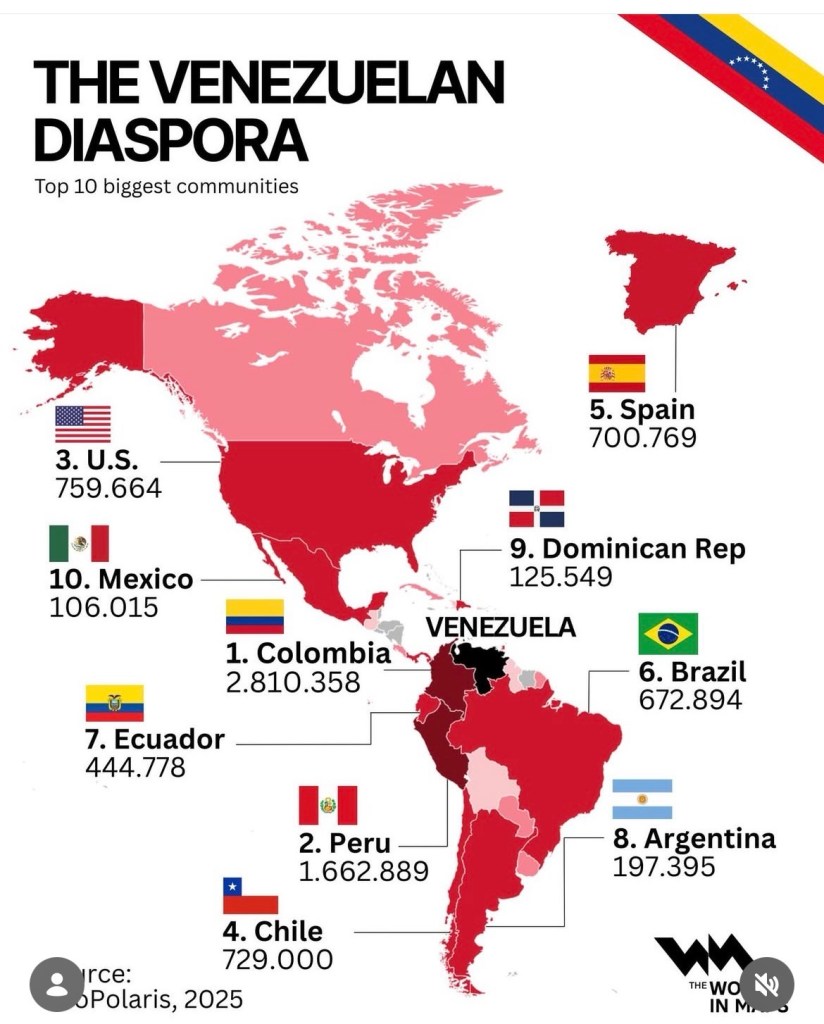
My classroom is mostly Venezuelan, and most Venezuelans are the most literate and hardworking students I have. He doesn’t know a goddamn thing about why they’re here or what they’re doing or where they’re living or what they have to offer. Just like those elite university students who can’t get through a novel, he couldn’t possibly survive a day in their shoes or stand at the front of my classroom trying to convey the cultural nuances of this country while also bridging the gaps between what they know and what they have to learn.

Now, who should we be more worried about–the elite students who don’t have the stamina to finish a book, the candidate who has likely never read one, or the immigrants whose lives are already more traumatic than any novel, and are here to tell their story and make this country part of it?

You tell me… if you’ve had the stamina to read this.

$1000

What can I buy with $1000?

A color printer for my classroom so I can make posters pop for my Newcomer students. Eighteen credits at ISU so I can try to earn a livable wage with a salary lane change. A week in a hotel for one of my students and his family who were out on the streets.

What can you buy with $1000?

The last shred of dignity that DPS promised on our September paychecks. You said you kept your promise with extra pay for hard-to-serve positions and bonuses, a 2.06% raise, and $1000.

But guess what? We didn’t receive the $1000 that you are holding because our union wants arbitration against your broken promise. We only got the watered-down raise.

Where is it? Where is the 5.2% COLA raise that you agreed to?

When my student’s family was living in a tent, I asked my English colleagues at South for as much money as they could spare. Within a day, I had collected more than $1000 to keep this family off the street for a week. Why did I ask when we’re all strapped for cash, when gas and food prices and mortgage interest rates keep so many of us from paying our bills?

Because that is what I do. I teach Newcomers who came here for a better life. I work with generous colleagues who would reach into their nearly-empty pockets to come up with $1000 because it matters to a student. A family. A life.

How else can I earn $1000, or a real raise? From my second job as an adjunct professor, where, if the classes don’t get canceled before they begin, I might earn $1000 extra a month to make up for the gaps in my DPS paycheck? From teaching summer school, doing ISA paperwork, coaching, directing, or after-school supervision?

Why isn’t what I do in a day, in a school year, enough to earn $1000 of your respect? To earn 5.2% of your respect?

I plan lessons and grade papers for four preps. I have a classroom of students who just arrived from all over the world and speak seven different languages. I engage them in English, help them cope with trauma, show them where our food bank is, take them on excursions across the city, teach them about cultural norms, and communicate with their families about their never-ending physical and emotional needs. I have kids who have never held a pencil and don’t know their letters in their home language and kids who could write a novel in Spanish, and I work my ass off to meet all of their needs, even if it means giving them $1000.

What I don’t have is a salary proving that DPS believes that what I do is respectable and professional. What I don’t have is my promised COLA.

DPS, you agreed to support your teachers with a real raise, and you couldn’t even give us $1000. If a picture is worth 1000 words, I hope my words are worth at least $1000.

An Empty Trail

you should ride your bike 
is all i have to say
to rural New York
it’s legit flat straight 
at a low elevation
you could breathe. and see.
a lock will open
one day on your broken heart
and you’ll see the blue

Where I’m From Version …?

i showed my students a picture of

my childhood home today

“I’m from a big white house

with the giant maple tree still standing”

These were the words of my

“Where I’m From” poem

“Que rico estuviera” YanCarlos called me out

not seeing the old Chevy Nova,

four bicycles on top,

my dad’s homemade trailer behind,

my mother, father, sister, me,

our dog, our cat,

inside the tiny car,

ready to drive 1200 miles

for a future in Denver

Denver, a mile high,

a million jobs,

or so we… THEY… thought?

How deceptive a photo can be,

bragging riches

when there were just empty pockets,

an almost-lost mortgage,

a pile of debt.

Yet here we are,

here I am,

begging them to write me a poem

even if it’s in Spanish,

Even if they haven’t a single photo of their home,

their family,

their past.

Where they are from

Is

And will always be

so much more painful

Than that old Chevy.

Scene 1000 From a Marriage

you will never see
a light as bright as this light
walking your dog home

twenty-five years in