Ground Transportation Parent

In eight months, my youngest daughter will start middle school. What should be an easy transition for our family, being the youngest of three girls, has instead led to the same levels of anxiety brought on when we made this decision three years ago with our oldest.

Why should we have anxiety about choosing a middle school, you might ask?

It’s everything and nothing all in one. The ratings, of course. Should there be any other choice outside of the number-one rated school (three years running) that both of her sisters attend? The middle child didn’t even blink, but set her heart and mind to go there, following in her sister’s footsteps. Even though she’s nothing like her sister. She’s introverted. Imaginative. Responsible. Impossibly sassy. Gets things done, quickly, in order to have more time to enter her otherworldly land of play which has no end in sight.

And yet the decision was easy for her. She didn’t want a surprise. She wanted to go with the option of familiarity after hearing two years of tales from sis.

But the youngest? She’s cut from a different bouquet. She hates reading. Doing homework. Being anything remotely likened to a responsible fifth grader. She won’t brush her hair. She won’t speak up in class. She remains fiercely loyal to her friends, even one who moved away over a year ago to Thailand. She wants to be the baby forever, to delve herself into art and play and being a kid.

So why is this so hard? Because at school the other teachers, all union like me, get their feathers ruffled when they find out my kids go to a charter school (how dare I?), and pester me with questions. Do they have special ed? Do they have ELLs? Do they hand-pick their kids? Aren’t your kids geniuses anyway? What are their attrition rates? What happens when they don’t want a kid–can they say no? Where does the money come from? Why did you put them there?

There are no easy answers to any of these questions. All but one of them are not parents, of course, yet experts on parenting.

I wish I was an expert on parenting. I wish I could figure out the formula for raising three daughters in the twenty-first century that is plagued with sexting and social media and ambiguous court approvals of date rape, no suspect ever really sentenced fairly.

These are the things I think about late at night, when I know my daughters will be in a school where a kid would never, ever think about having a cell phone out in class. Where the militaristic, cult-like chants that carry them from class to class grow on them to the extent that they sing their praises in the hallways of our home. Where they will be sheltered, engaged in academics, protected from bullying, for at least the next three years.

Not many people can remember the details of their middle school years, but I remember mine. New to a city with forced-integration busing, I was small for my age and constantly tormented. Once they took the loose sleeves of my sweatshirt as we stood outside the building on a cold morning (we weren’t allowed inside the school until five minutes before the first class) and tied me to the flagpole. When I couldn’t find a place in the schoolyard after lunch, not being into sports or raucous gossip, I sat up on a small slope next to the building reading out of the literature book from English class every day, only to have small groups of girls meander by taunting, “Loner, loner,” in singsong voices. On a semi-daily basis, vicious fights broke out in the hallways–girls, usually–screaming and ripping each other’s hair out. When all the other girls were spraying their bangs into masterpieces of early-nineties art, I sometimes didn’t take a shower for a week or more, not having the energy or the desire to try to fit in.

Perhaps I am jaded and worried about what my youngest will face in a non-charter middle school. Because at the end of the day, after dealing with a hundred needy teenagers and meeting with teachers over data instead of planning lessons, after driving in circles with a carpool, after trying to come up with a meal plan that is healthy, cost-efficient, and acceptable to all, after running up and down stairs with loads of washed and unwashed laundry, after pestering the girls about chores and homework and reading and piano practice, I… I just can’t keep up. I can’t log in to Class Dojo to monitor Riona’s behavior in fifth grade. I can’t log in to Parent Portal to make sure everyone has perfect attendance, no tardies, all As and Bs. I can’t check Zearn to make sure Rio has been keeping up with her math.

I can barely come up with a menu, fold two loads, have everything ready before Bruce comes home at seven o’clock. I can barely grade the stack of papers on the dining room table, carve out an hour for my semi-second job (more grading), and read with Rio, who rarely will read on her own.

I am not an expert on parenting. In fact, most of the time, I feel like I’m a failure at it. I give them what they want (phones) and spend the rest of my waking hours arguing with them about them. I spend MOST of my time arguing with them. What will they wear to The Nutcracker? Why won’t they brush their teeth? Why can’t they practice piano before Daddy comes home? Why are candy wrappers all over the floor? When was the last time they cleaned out their closets? WHERE ARE THE SCISSORS?

I don’t have the energy to monitor every moment of every day. I am no good at being a Helicopter Parent. I can barely keep up with being a Ground Transportation Parent. (Shuffle you to school? Shuffle you to piano? Shuffle you to Tae Kwon Do? I’ve managed to cut all of these tasks to almost no driving with a carpool, an in-home piano teacher, a Tae Kwon Do center within walking distance).

When I made this choice of charters for my oldest, I wanted to protect her. After a year in Spain and a year in a horrific, gossipy fifth-grade class, I wanted her to be in a place that would ensure her mental and emotional stability, not a middle school plagued with social awkwardness and bullying. And so we dealt with the militarism and the constancy of calls to stay after school for one absurd detention after another, for forgetting a heading, a belt, a pencil.

And while my middle child (the responsible one) has had few encounters with after school “retentions,” I know this will not be the case for the youngest. She will forget her pencil, her homework, her charger. She will miss assignments and lose points for not having enough curiosity or courage. She will be intimidated by the chants and irritated by the homework load. And she knows all of these things about herself, and has begged me to consider another option for her.

And just like when I broke the news to my oldest that she “got in” to this great school, she cried. She cried because she loves art and she hates homework and she doesn’t want anyone to push her too much because she’s the baby.

She cried because she’s so much like her oldest sister. She’s afraid to see the potential that she has, the ability to blossom under the Helicopter School.

So now I have my answer for the belligerent teachers. Why, why, why?

Because I’m no expert. I’m no Helicopter Parent. I choose this school because I’m not very good at micro-managing their success, and this school does it for me. I choose this school because it will protect my fragile daughters from a harsh world, if only for a few more years. I choose this school because I’m a Ground Transportation Parent, and at the very least, I can drive them there and pick them up an hour late. I can’t keep up with the homework load, the grade checks, the Class Dojo, but I can hope that after a year my shy eleven-year-old will emerge from its doors with more confidence, more responsibility, more courage and curiosity.

I can at least recognize, as their driver, the similarities between my soul sisters. Whether they wanted it or not, they need this school, just like they need each other to balance out their somewhat-tumultuous relationship with the middle child. They are the two who love ice skating, skiing, Tae Kwon Do. Who forget belts and homework and live in an artistic resemblance of life. Whose fragility connects them.

I am a Ground Transportation parent. All I can hope is that my wheels, my turns, my steering, guide them in the right direction, because there sure as hell isn’t a map anywhere in sight.

And we’re just starting middle school!
img_4837

Pity Party

Another year is over, and it ends with a tinge of the same sinking feeling that every year begins with. The constant question all teachers ask themselves as they tackle this challenging career: Is this worth it?

Sometimes it is just a small thing that can make you sad or frustrated or feeling burned out. A student who didn’t come back to make up the final he blew off. An administrator who wouldn’t renew a colleague’s contract. A message from admin that our keys, checkout form, rooms, and us, are all being carefully micro-managed. (We can be trusted to instill knowledge and take charge over 150 students in a year, but god forbid we leave without being checked to ensure we followed through and cleaned out our damn desks).

But for me this year, after three years of teaching at the same school, it is the hollow disappointment of not having any real friends where I work.

While the thought crosses my mind off and on throughout the year as colleagues gather together for happy hours that I cannot attend because of childcare needs, or weekend parties or outings where a group of all the people I work most closely with have all attended and I only see the event posted on Facebook (not invited myself), today, on the last day of the year, the smallest event brought me to tears.

I had just heated up my lunch and was sitting alone in the office. A colleague came in and asked me to watch a student who was taking a test in the next room because she was going out to lunch. And while she offered to get me something while she was out, since I’d already brought my lunch, I said I’d be fine to eat in the classroom with the student.

But when I walked into the hall, it hit me: There they all were, in their too-cool-for-high-school clique, purses in hand, chatting and giggling their way to their outing together.

They had already made plans.

I sat alone with the student and then graded her final, texting her teacher that she was done (a text–one of several in the past few months, including accolades toward him and gratitude for one thing or another–he did not respond to).

I brought the test up to the assessment coordinator and went back down to my lonely, empty classroom, and cried.

Because this job is hard enough. Because I fight every day for these kids just like they do. Because I try to reach out to them, invite them to things, and get outright blacklisted. Because I don’t know why I’ve been blacklisted–is it because I have an opinion? Because I’m a “cynic”? Because I don’t fit into their mold of single and alcoholic?

Because it would be nice to have a friend, even a singular friend, who could support me in this constant battle that is teacherhood.

Because it’s the end of the year, and I won’t see or hear from any of them all summer, and … I guess it doesn’t matter.

At my former school, I had so many great colleagues. We ate lunch together every day and laughed so hard that someone literally started choking once and another teacher had to perform the Heimlich to save him. We’d go to happy hour, occasionally, or children’s events, occasionally, or parties. A couple of them I would get together with during the summer, just for kicks, because we were FRIENDS.

And on days like this, when there were no students? There wasn’t a soul in the building who stayed inside eating lunch alone. We’d gather in groups, ride together to a local restaurant to have lunch, and see the rest of the crew there anyway, and we’d make a giant table and laugh until we cried.

And I knew that going to Spain was going to change all that and that I wouldn’t be going back there.

But, three years in, on the last day of school, it just. Fucking. Hurts.

So this is how my year ends. With a pity party.

Looking forward to a summer with my family, a real party with my actual friends this weekend, and a break from this place. God knows I need one.

Tracks

I remember the first time I encountered poverty. I thought I’d encountered it when I was eight, in my grandmother’s kitchen. We’d just opened our Christmas gifts, and my cousins had their usual wealth of new skis, Patagonia sweaters, and trips to the ski slopes, when I heard my mother say to my father, “I wish we weren’t poor.”

But that wasn’t poverty. That was Christmas in Connecticut where my grandparents flooded us with what they could afford. Where we spent a day in New York standing under the giant tree that took up Rockefeller Center. Where the snow fell and the white, white Christmas shined crystal clear.

I did’t see poverty until three and a half years later, on a bus ride home from my middle school in Denver. And I know (now) it wasn’t the poverty of the third world, that it could have been so, so much worse. But it was as real for me then as it was today, twenty-six years later, walking across those same railroad tracks that I saw that day on that infamous ride home.

I was new to everything: the city, the diversity, the concept of extracurricular activites and late busses. After missing the correct bus home on the first day, I was anxious not to make the mistake again. But I didn’t think to ask anyone in my MathCounts group about the details of the after school activity bus, and three weeks into the school year, I hopped on to one of two busses thinking it didn’t matter.

As the yellow bus made its way across town, nowhere near a neighborhood that looked like mine, I began to hold in my heart a silent panic. I had followed my crush onto this bus, a boy named Schuyler whose name I wrote in my notebook for most of sixth grade. He chatted with friends as we moved from block to block, across rivers and bridges and a trainyard so large it could only have come from a downtrodden version of “The Little Engine That Could”, my favorite childhood book.

But this was no picture book. The houses became more decrepit, the neighborhoods transformed from treelined mansions into ramshackle shacks with dirt yards… And I was nowhere near home.

My “home” at the time being a two-bedroom apartment furnished with secondhand furniture and borrowed dishes while my parents spent their days searching for an opportunity in this city that had promised them the world.

I sat ten rows back from the driver, and as the time ticked by, my frightful silence pounded into my ears with a heart-throbbing vengeance. When the moment arrived for the tall, thin, dark-skinned driver to let out his last passenger, I knew I’d have to speak up. But my small-town New York voice didn’t want to. I wanted to go back to my small town, where my father had failed student teaching and wasted four years on a master’s degree that wouldn’t come to fruition; where my mother had supported us all on $6.25 an hour from the daily newspaper; where I could walk along the singular street that led from my elementary school to my home, and never feel like the village (city) idiot.

“Now, did you miss your stop?”

“I… ”

“Where do you live, honey?”

“I know my stop is Ogden and Ellsworth.”

“Well that was a whole other bus.”

He got on the radio. He made a plan. And I thought about him pulling up to my block of apartment buildings. About the little girl, Valerie Martinez, who had invited me over once and once only. “My mama gets paid on Fridays. Every Friday I get a treat. Last week it was a push pop. This week I might get a set of stickers.” She told me this from the tiny room she shared with her two brothers at the back of the apartment complex. She had a small desk where we played travel Sorry! and I scanned the walls that were filled with pictures torn from magazines and religious idols.

She had lived there her whole life.

I knew my placement in the apartment would be temporary. That my parents would find jobs (they did), that I would live walking distance from the school (I did), in a house we would own after selling our house in New York (we did). That my whole life would never be as dark, as frightening, as the bus ride home across the other side of the tracks. That I wouldn’t have to wait till Friday’s paycheck to get a silly little treat. Or share a room with two brothers for the rest of my life.

“You can tell me where you actually live, honey. You’re the only one left, and I plan on taking you all the way to your doorstep at this point.”

But I didn’t want him to know. That my parents had borrowed money from both sets of grandparents to make the trek across country. That we were living in that tiny, crappy place. That I’d seen the other side of the tracks, with gutted out cars and broken-in windows, and that I was scared. Scared shitless of what my life was at that moment, of what it could become.

I didn’t want him to know that I’d remember that day. How kind he’d been to me. How frightened I’d been. That I would keep track of those disturbing images of poverty like a prized collection at the back of my brain, unsure of what to do with it. That I would understand, years later, just how deep white privilege lies.

Underneath the snow. Between the tracks. Where my city has fallen not into the arms of an unforgiving God, but into the arms of a greedy monster of wealth. Where they have torn down every last remnant of what was real to build cookie-cutter apartments for hipsters overlooking those same tracks. Where the middle class has all but disappeared and I walk with my three girls through a world I couldn’t begin to describe to them because I don’t understand it myself.

Where I am just eleven years old, trapped on a bus, hoping the driver will take me to my stop.

Because without that hope, there is nothing. Just a blue-sky day in the middle of December, a long walk home across tracks I will continue to cross, and a world I am just now beginning to understand.


Books and Love

On the drive home, we are missing our carpool companions thanks to the relentless militarism of their middle school, and I take advantage of this moment to hop skip and jump just shy of downtown.

Me: “We all need books. This is the only library in the city that has Spanish ones.”

I: “I’m only reading this one.”

R: “That’s MY book borrowed from MY teacher that YOU stole.”

Me: “There are 100,000 books here. Can’t you choose a different one?”

Both: “Not until she gives me that one.”

I give up. I take four escalators to the top floor of the library in the center of the city, the epicenter of the Latino world, where I stare down four shelves of outdated, bindings-falling-off Spanish books, trying to find one that is 1) at my level 2) not a hundred years old 3) interesting. What a bunch of bullshit this is. ¡No me jodas!

We ride home in silence. Semi-silence. They read. I listen to La Busca de Felicydad while R groans about my Spanish audiobooks. We sit in traffic and I miss the turn because I’m listening to how a small fatherless black boy has to witness his stepfather beating the shit out of his poor mother whose education was denied by her father so her brother could go to school and I am thinking about how fucking entitled my white children are and how unentitled my refugee students are who learn the new vocabulary phrase, “take it off” and all the girls write, for their “demonstration of knowledge” sentence, “As soon as I get home, I take off my hijab.” Like it’s a burden, a weight, a freedom they wait all day to release, and my own kids are fighting over a damn book.

But bless them all the same. For loving to read. For fighting over a damn book.

And this is America, I think, as we drive past the wealthiest mall with its block of Christmas-lit trees. As R settles into her hopeful view of the book I will leave for her. As I will rise and teach tomorrow, perhaps a new phrase such as, “What gives us hope?” And they will post pictures of their childhood in the refugee camp and my girls will ask me to read them a story (because they’re never too old) and I will drive the carpool home and hope for a better America. One without militarism. Without fear.

With books and love. Books and love. Where we can all learn what it means to “take it off.”

To find a Spanish book on the fourth floor of the library. To read. To give in to sisterly needs. To remember that we are all refugees.

That we all seek shelter. In a book. A drive. A removal of a hijab.

In each other’s arms.

In the Middle

They come into two classes to tell them the (what I think will be simple) news: they will have a new English teacher next semester, and it won’t be me. The AP describes it in her usual convoluted fashion: “We are growing as a school, and we need your teacher’s skills to teach another class, and you’re going to have a different teacher.”

Z shouts out (as always–no one scares him)–“Wait. So we have the teacher with the best skills and you’re going to give us the teacher with the least?”

She begrudgingly looks at me: “Is that what I just said?”

But I know what he means. I speak his outspoken language.

Another student: “But I like this small class. It’s safe.”

Another: Tears. No words.

Another (different class): “I ain’t doin’ it. I’m still coming here fourth period. Try and stop me.”

AP (to me): “Isn’t it great to be loved?”

And I think, these are the same kids I threw under the bus the other day for not showing up on the “NOT” snow day. These are the kids I was jumping up and down about saying goodbye to because I want to teach immigrants, kids who really care, who are fully invested in wanting to be in my classroom every day. On time. Ready to learn.

And I feel a mix of joy and hatred all in the same moment.

And I think about these things, these fourteen-year-old faces running across my mind as I begin my Thanksgiving break. As I drive the carpool kids home and drop my girls off at piano and put frozen pizza (my Friday cop-out meal) in the oven and cross stitch and listen to my Spanish book and wait until the optimal moment before venturing out into the snow back into my old neighborhood.

I am saying goodbye to these green walls and these three girls and all the kids who have come in and out of my classroom for fifteen years to drive into richville and pretend like I’m someone else.

It is just what I thought and nothing like I thought. One block away from where I grew up, a 1940s war home that (amazingly) hasn’t been torn down… just doubled in size on the backside, granite counters and a peak-through kitchen from the living to dining to family room to breakfast nook. The hostess is a jubilant extroverted redhead with children who are driving up with their father to ski training for a week. She proudly shows us the brownies and fudge they made, the doggie bandanna (“bark scarves”) business her children have developed (web site and all), describes the destruction and reconstruction of her “starter-turned-family” home.

And I make the mistake of telling all the blond and blue-eyed businesswomen-doctor-lawyer-private-school-till-now moms that I teach. At the local high school.

And they want the good. The bad. The ugly.

“I’ve been keeping an eye on it for years.”

“I even hosted a German exchange student a couple years ago to see how it was (and I wasn’t impressed).”

“I heard the principal is leaving.”

“I heard that there’s no accountability.”

“I heard they have a great football team.”

And there I stand. In the middle. I’m not going to lie. And I’m not really going to satisfy their curiosity either. And I’m not going to go home to a mansion. And send my kids to a ski team training. Or use Uber because “it’s better than driving.” I’m not going to be a “CEO recruiter” and tear down half a house because the one I bought wasn’t good enough. I’m not going to find some German kid to “test out the local high school” for me.

And I’m not going to lie.

“It’s apathetic.”

“The administration is mediocre at best.”

“The kids don’t do their homework.”

Everything they want to know. And don’t want to know.

Because I’m in the middle. I am a teacher and a mother. And I constantly ask myself: What is best for my kids? (MY kids.) And: What is best for my kids (THEIR kids). And the answers almost never match up.

Because that kid who cried in my class today told me his story about his mom beating the shit out of him. About social services ripping him away from her broken-bottle alcoholic rants. About the safe haven with grandparents in New Mexico. About how fucking scared he is every time he steps out of his Denver home because his mom lives SOMEWHERE IN THIS STATE.

And he doesn’t want to tell it again.

Because that kid who said he likes the small class can’t quite do work when “he’s going through some emotional tough shit, Miss,” and I let him have extra time.

Because that kid who said, “I ain’t gonna do it” has lingered into lunch on five occasions, emptying my wallet for a few bucks to have a meal.

Because I can’t lie. And I can’t tell the truth. And I can’t be a CEO recruiter who could never understand why a day filled with luncheons and a flexible schedule will never be my day. I can’t fit in with the blond-and-blue-eyed bitches just as well as I can’t fit my kids in with kids who won’t do their fucking homework (and yet I love them anyway).

There is no middle ground. There is no balance to what I face every day (tears and joy, tears and joy) and what I want my kids to see (apathy mixed with perseverance???).

And there is no way in hell a single one of these women would understand where I’m coming from anyway.

So why am I here? Why am I asking these questions?

I put my coat on and the hostess begins a story about running out of gas at the top of a pass on the way to a camping trip and coasting down the mountain into the only gas station in town.

I tell my story of driving 5000 miles in a Prius and running out gas in a no-cell-phone range and putting on my bike helmet and riding my bike down I-70 for six miles at 21:30 and my husband guarding the three kids in the back seat.

“I like your story better,” she admits as she walks me to the door. “I think I might steal it and call it my own.”

She’d be just like those other teachers who Z thinks “don’t have the skills” to teach him. Just like my kids who I can’t quite fit in to this frenzied life of private schools and ski team training.

Just like me. Stuck in the middle, good story in hand, just not quite the right place to publish it.

They Smile

The refugee question:

A firestorm all over social media. National media. International media. One that’s asking us to question our faith, that’s asking us to question our humanity. One that suddenly, after hundreds of years of terrorist violence from all corners of the globe, screams for an answer.

I have one.

First: open your eyes and call yourself a Christian. It starts first with forgiveness. With love. With hope. With faith. The same faith that these refugees have sought to protect for themselves. The same hope that they carried in rafts across the Mediterranean Sea at the risk of their tiny children being washed upon the shore, lifeless and in the arms of a forgiving God. The same love that ties together their families, that protects them from all that is evil in the world, the same love they see on those long walks across he Middle East and Europe, the love for the gift of another sunrise, the joy of another meal, the peace that comes from one set of open arms.

“And now these three remain: faith, hope, and love. But the greatest of these is love.” Corinthians 13:13

Second: Meet a refugee. A Muslim. Have you… Ever? Because I have a classroom full. Every day. They smile and call me by my full and formal name. They do their homework and ask to fix every error on every test they didn’t quite pass. They come before and after school for help. They smile. They thank me. They are polite and reserved, jubilant and chatty. When Denver Public Schools wouldn’t call a snow day and more than two thirds of my American-born students who live closer apathetically didn’t show up to show their consternation, my refugees took two or three busses from the suburb that had the most snow to be here. On time. Ready to learn. And every last one of them from a place where they’d never seen a snowflake before entering this country.

That’s how BRAVE they are. That’s how much they CARE. About everything. They will miss religious holidays, fast all day and finish projects, beg me for more work because they are so desperate to be as proficient in English as a native speaker…. Their parents will work in meat factories and drive taxis and pick up your garbage and do everything you never were willing to do because your American righteousness makes you too good for it…

And you haven’t even met one, have you? You’ve never even had a conversation, let alone spent an hour a day together for two or three years straight.

Third: Protect yourself. The hate that lives inside of you for people who are trying to flee to the promised land with nothing but the shirts on their backs is the SAME HATE the extreme terrorists carry inside themselves when they light the bombs that blow up everyone within their circle. Protect yourself. For you are the enemy: the enemy that lies within. Fear leads to anger. Anger leads to hate. Hate leads to evil. Evil leads to terrorism.

What are you afraid of? Hard work? Tenacity? Dedication? Faith? Hope?

Love?

Fourth: Open your mind. Your door. Your heart. Be the person who lights red, white, and blue across the sky to ask for a better world. The person who wants your children to be safe. Who wants a better tomorrow for everyone who ever set foot in or was born in this country… This world. Be the good you want to see in this world.

Be the smile. Because if you met one, you would know:

They smile.

Day Twenty-Two, Road Trip 2015

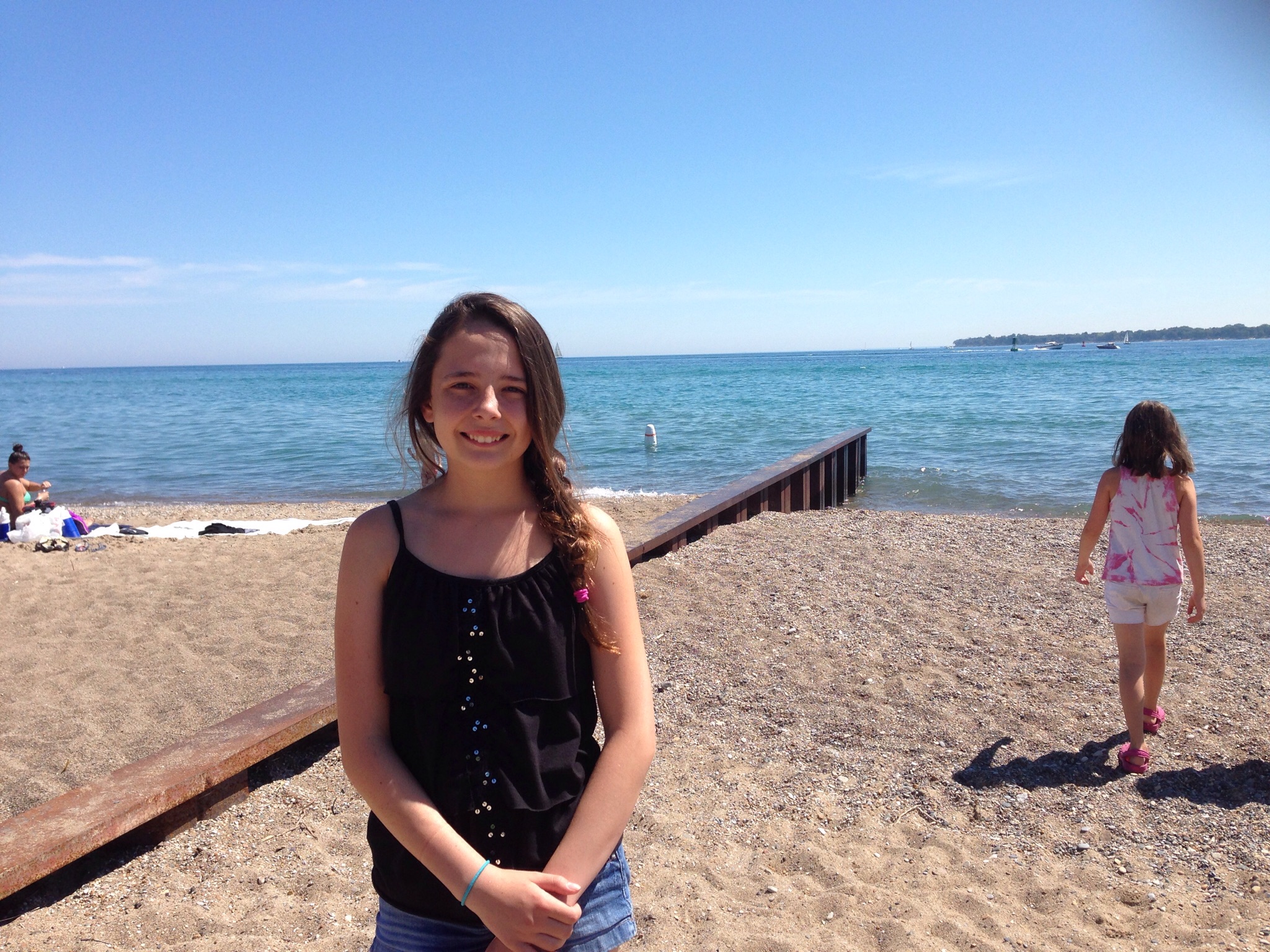
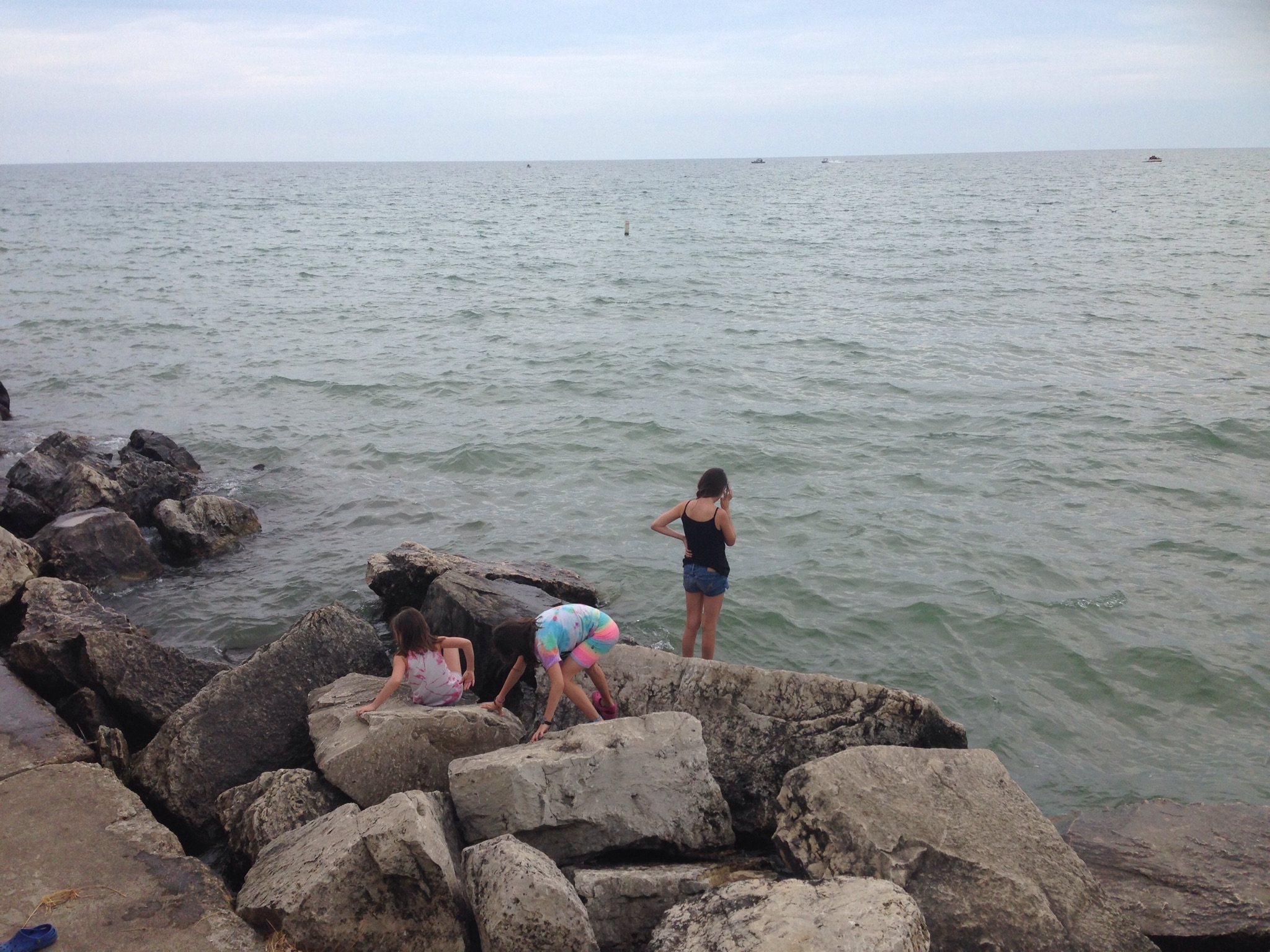
two days, three Great Lakes
 city view transfers to beach
 (they’re tired of pics)
 
 look how amazing!
 i shout to their grumbling
 freshwater ocean!
 
 reluctance wavers
 as they find rocks and small waves
 accept magnitude
 
 (this after lunch fight
 refusing peanut butter
 drive-thru battle won)
 
 Illinois takes us
 twelve hours past the border
 at Wendy’s, give in
 
 they live for water
 cause it’s all about the pool
 on the long ride home
 

The Buck that Burns Across My Back

It is 14:52 on the eve of ESL summer school. We have spent an entire day, AN ENTIRE DAY, planning for a sixty-five-minute lesson from curriculum that we first laid our eyes on this morning after a completely different and unrelated ENTIRE DAY presentation of curriculum yesterday. And at this moment, he announces that tomorrow, for the first day, the schedule will be “different.” That all our lesson planning has just been flushed down the toilet that has become our society.

I cried on my two-mile walk this morning. Not because it was too hot, or the views of the Perfect Denver Neighborhood weren’t impeccable. Or because I had to teach summer school for four weeks to pay for summer camp for my girls for ONE. But because of an article I read about the University of Phoenix, of all things. About how, in five years, their enrollment has decreased by fifty percent. And starting July 1st, a new law will require that they prove that their graduates make enough money to pay back the loans that their for-profit greed has forced them to take.

I was thinking these things as I made my way across town to the locale of this year’s grant-funded summer school, the University of Denver, a NONprofit institution with gorgeous grounds and transgender bathrooms and air conditioning and classes that start at $1200 a CREDIT.

And how screwed I am. Not because I think that the University of Phoenix is so damn amazing that it could grind up the 100-year-old trees of Denver’s “Ivy League of the West.” But because I have to do this. I have to do this damn summer school and have a part time job as an adjunct-but-never-real professor, that I have to bend my will to the beck and call of disorganized, incapable-of-communicating administrators, all for the buck that burns across my back.

That the measly $600 that I sometimes earn in a month at the University of Phoenix is sometimes all that keeps us from bowing down to debt.

And when he comes in at 13:33 and tells me that they haven’t been able to contact more than 11 students for our summer school, I ask him if it will be cancelled, if I will be shit out of luck on all counts this Tuesday. “No worries… it’s already accounted for… a grant. No pasa nada.” And his blue eyes and Argentinian accent are slappable. “And who paid for it?” I demand, the third time in two months I’ve asked, a question he’s dodged until this moment. “Well… you have. The taxpayers. The READ Act.”

And it all circles back to me. The University of Denver grounds I stand on that have been manicured by professional gardeners. The school I could never afford to attend, nor will any of my children even think of applying to. The public education that is filled and funded with so many holes, twenty-seven gorgeous textbooks, full-color photos and activities galore, a slew of classroom supplies including an electric pencil sharpener, that 11 students will take advantage of … all the rest? To waste.

The “for-profit” evil University of Phoenix that has allowed my family to break free of the paycheck-to-paycheck cycle that is a teacher’s salary, that allowed us to live on a pittance in Spain, that has allowed me to… breathe.

What is an education worth? Why won’t parents commit to a forty-five minute bus ride for free materials, expert teachers, individualized classes, and free breakfast and lunch? Why won’t the University of Denver be asked to publish data on how many students graduate with a super-fancy psychology degree and start their salaries at $22,000? Why won’t our government ever just see that EDUCATION SHOULD BE FREE??

This is my Tuesday. Let the games begin. The Hunger Games, real world style.

That Reminder of Parenthood

i didn’t get a photo
 of that bright face looking out from the crowd
 of the circle of middle school spur-of-the-moment dancers
 jamming to a Middle Eastern tune
 with their white black brown faces
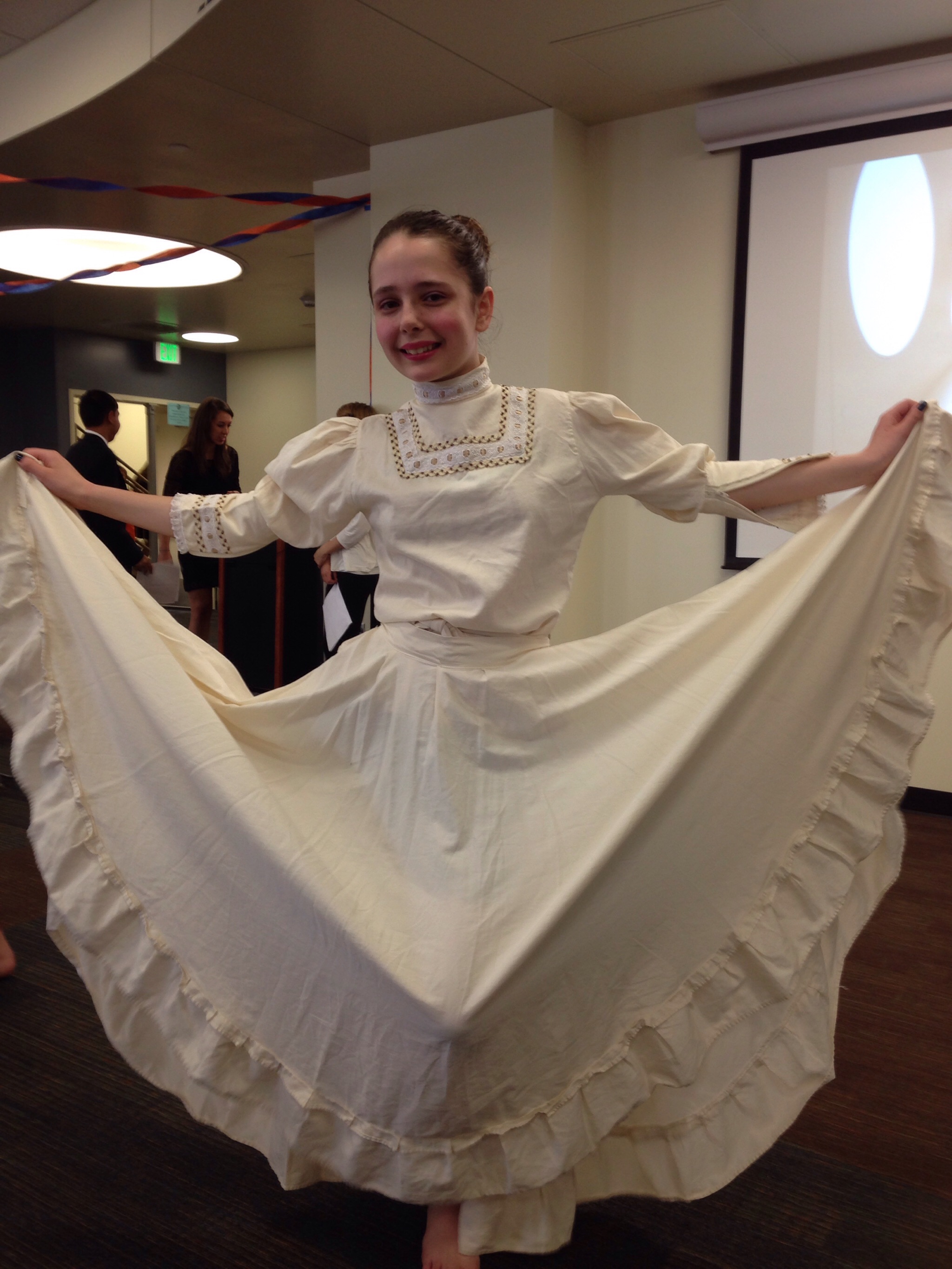
 and her Latin American dress spinning out from under
 a tunnel of happiness
 
 there is no way
 no possible way
 my phone could have captured
 the enraptured joy of that moment
 of the confidence instilled back into my
 fifth-grade-turned-sour timid child
 who has found her place
 
 in the oft-militaristic
 ever-loving ever-respectful
 intensity of love
 that is this school
 
 and when i see those
 bright twelve-year-old eyes
 shining back at me
 because she knows i know
 (to pain and back, we’ve been)
 
 it is that moment of parenthood
 that reminder of why we are parents
 why we bring them into this world
 and spend our Saturday nights inside a school
 eating foods from around the world
 listening to the intricate threads that sew together our humanity
 
 why we love
 why we live
 why we still hope
 for a better tomorrow


La Guitarra de España

a lasting impact:
 two years after Spain living
 she still shows interest
 
 group culture project
 acoustic guitar homeland
 plays her hand at chords
 
 yes, they were too young
 to fully understand Spain
 what it could offer
 
 but joy of bragging
 piques her cultural interest,
 memories’ high rates
 
 in the end, worth it
 an investment that pays back
 one strum at a time