This Is Not Another Zucchini Post

I want this post to be about this zucchini. About this pathetic, limp, underdeveloped zucchini. The singular zucchini that grew in my garden this year.

That’s right. That’s accurate. And for any renowned gardeners, for any beginner gardeners, for anyone with a handful of zucchini seeds that sprout into the weed-like plant that I’ve always labeled zucchinis, for anyone who has, year after year, made enough zucchini bread to feed the entire nineteen-person English department and half of the block at Christmas, who has had enough zucchini to make pies and cakes and dinner every night for weeks, you could understand how painfully small and broken and brutally ugly this zucchini is.
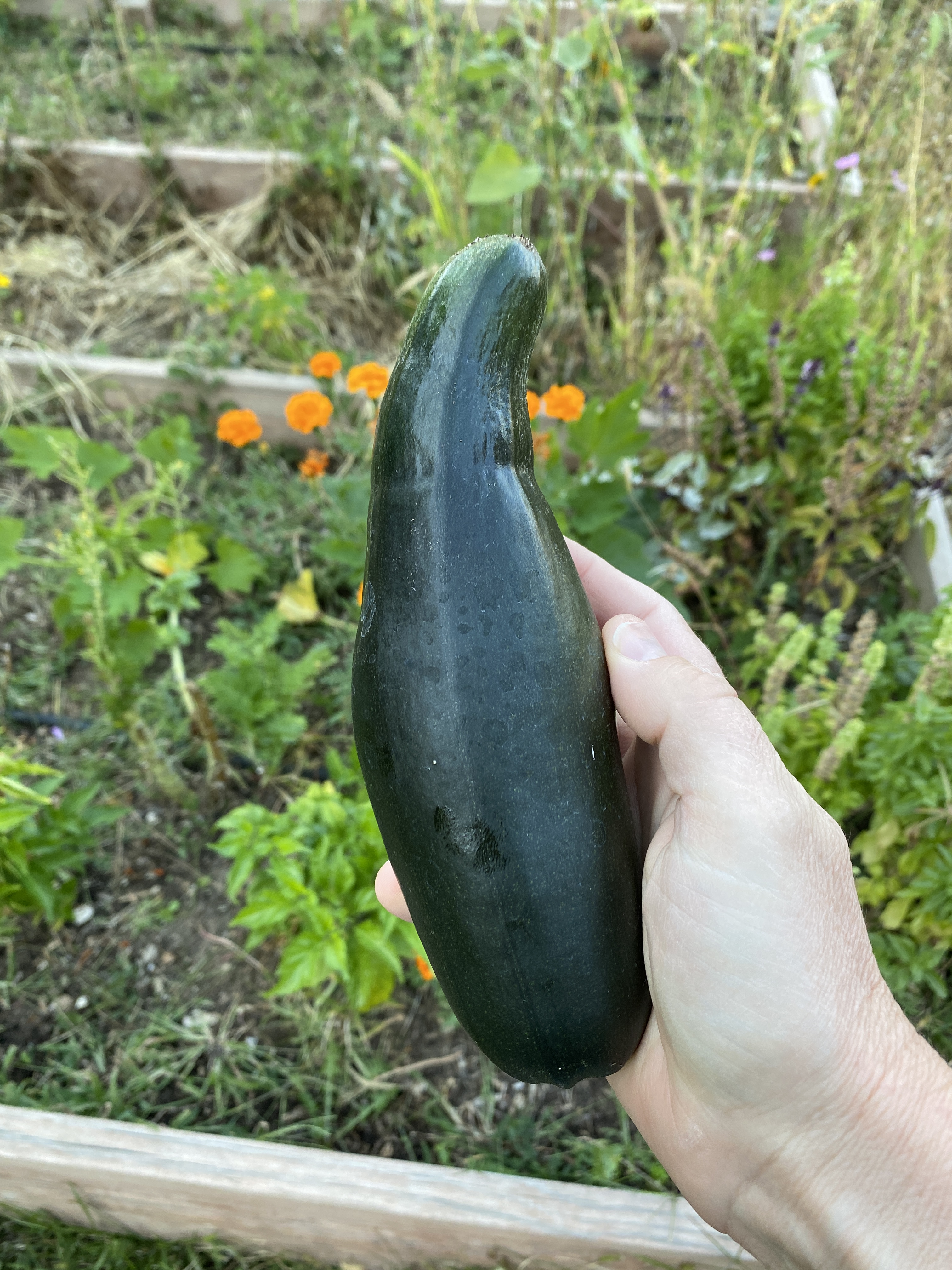
And can’t I just sit here for forty minutes on a Monday night and cry over the singular garden zucchini that I chopped up and put into chicken marsala tonight, its flavorless flesh still so perfectly adaptable to any recipe?

No, I cannot. I cannot cry about how much I failed in my garden this year no matter how perfectly this pathetic zucchini encapsulates how much I have failed in my life.

What I am really writing about, English-teacher-symbolism be damned, is parenting. Or lack thereof. Mental health. Or lack thereof. Pain so deep, so dark, even a limp zucchini is too weak to be an accurate representation.

Oh no, you’re not gonna do this. You’re not gonna put that up for the whole world to see, are you?

I can already hear the critics. Like voices in the back of my brain, like cobwebs in the corner, telling me that We don’t talk about this.

And isn’t that the problem? Isn’t that exactly the whole problem? That it’s a secret? That it’s a faux pas? That we can’t say it out loud? That we can’t take that damn zucchini and throw it out into the middle of the street, ready for the next set of tires to splatter it, to expose its soft center and ready-for-next-spring seeds?

When they were little, and something broke like their finger nail or their Polly Pocket head or their sister’s promise to share, when they came to us crying, we knew just what to do. Trim the finger nail. Reattach the doll’s head. Have a conversation with their sister.

What about now? What about pandemic-social-media-climate-crisis-humanitarian-crisis-societal-collapse-adolescent-angst NOW?

Can we even say the words aloud, on a page, to each other?

What do you do when the one who is hurting your daughter is herself? With her thoughts, with a razor, with words on a page, with repeated mantras in her mind?

What do you do with yourself, Mama? How many times will you think, “If I had said this… If I had done this differently… If we weren’t in this situation… If I had listened… If I had stopped…” The ‘What-Ifs’ will haunt you worse than a Shel Silverstein poem.

But we’re no longer reading children’s poetry. We’re listening to screaming-guy music and painting our eyes as black as night and hiding in our rooms and holding dark secrets and shaking with bad news and confronting no one.

Especially ourselves.

Until someone confronts us.

I don’t have a picture of the courtroom. I don’t have a snapshot of me standing at my door at 2:30 in the morning last Friday, my husband out on a call for a telecommunications emergency while I dealt with the emergency that is my household, five and a half hours after calling 911, and the police officer bluntly telling me that a protection order against a juvenile is not likely to be approved in court, that I could invite him in for a criminal investigation if we’d like to file criminal charges, that if we miraculously got the order approved, then his job would be to protect and enforce it, that I could find the paperwork online, that

this

is

our

life

now.

I don’t have a picture of Monday morning, of how surprising it is how many people are out to breakfast in this diner downtown two blocks from the courthouse. Our consolation breakfast. Our after-filing-for-a-protection-order-against-one-of-her-best-friends breakfast.

Where did it start, and when? March 13, 2020, when we were all sent home for eighteen months of remote learning nightmares? The day we moved our kids away from everything they knew and placed them in a not-so-friendly classroom in Spain? The day we moved back? The moment she started high school? The moment she met this girl? The moment she stopped reading books in favor of Instagram? The day her period began?

This is my child:

This is my child:
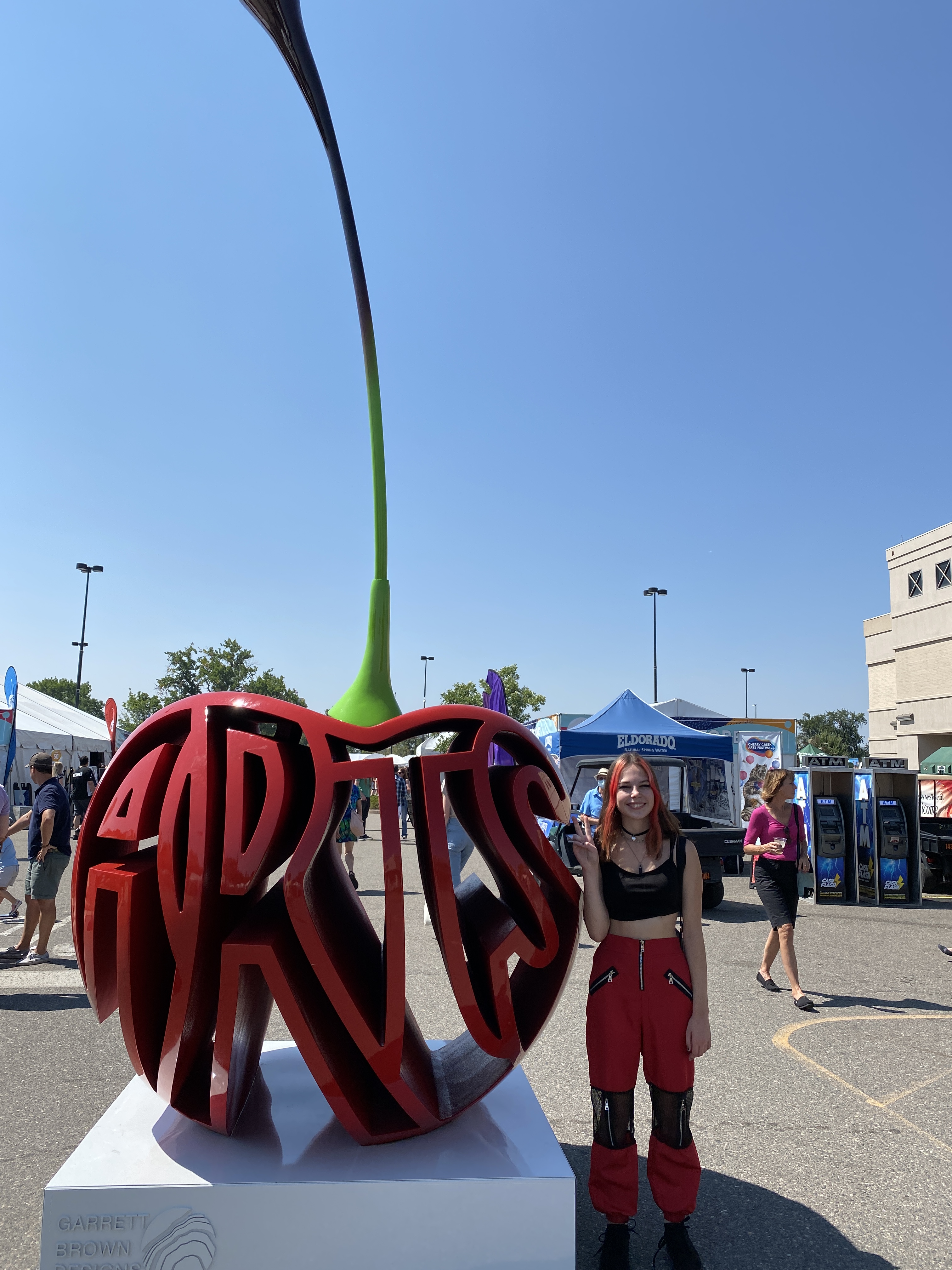
This is my child.

And I want the world to know that I can grow zucchini. That I can have three beds overflowing with enough zucchini to feed the neighborhood. That it will fill every plate and erase the stress of holiday gift-giving, that it will easily blend in to any meal.

And that I can raise a child who isn’t lost, hurt by herself and others, threatened by the world in which we live.

That maybe I can’t. That maybe my garden and my parenting have failed me. That maybe I have failed her in a way I can never understand nor take back.

And that maybe, just maybe, the soil wasn’t right this year. The sun was too hot, the sky too dry. Maybe my daughter made the wrong friend. Maybe all of this is out of my control, and even though I only dug up one zucchini, and even though she’s lost, she’s not alone. She’s going to therapy and making progress. She’s smiling more. She’s setting boundaries with friends who she knows aren’t good for her. She’s saying no. She’s standing up. She’s not using the razor and instead finding her voice.

And maybe I fixed up her favorite meal tonight, chicken marsala, said zucchini still inside, and even though she had to work, I packed it up and put it in her black lunch bag with an apple and her favorite yogurt and a napkin and a fork and a spoon and no note.

Because she doesn’t need a note to know how much I love her. To know how much I feel her pain and want to take it from her. Every ounce. Every last seed.

And I want to plant it and start again. I want a new garden. A new tomorrow. Enough zucchinis for Kingsolver’s ‘Zucchini Larceny.’

Because we’ve been robbed. But we are not thieves. We are not victims.

We are gardeners. And someday soon, we will bloom again. And you won’t even be able to count how many loaves we will bake.
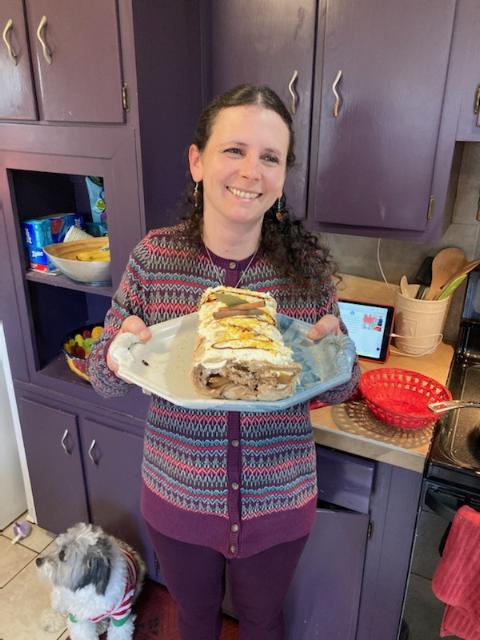
Christmas Roulade

rolled in this meringue:

apples, mascarpone cream,

burnt honey. ’20.

baked in this Roulade:

my student’s home-raised hen eggs

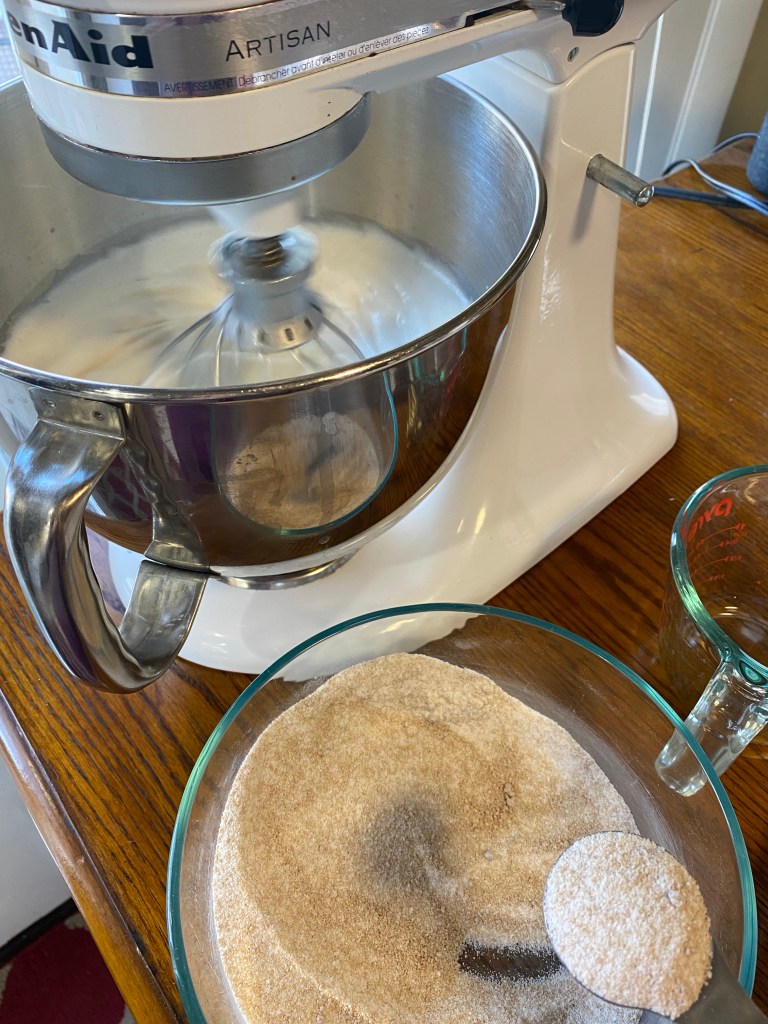
ready to be whipped

folded in this bake:

some precious moments of peace

so hard sought, well earned

masked in this meringue:

a year of bittersweet loss

melted into joy

Coronavirus Pie Recipe

Ingredients:

Four months of news stories and 4,300 worldwide deaths.

Social media memes and accusations.

Schools filled with unimpacted children who put their hands everywhere.

Understaffed schools that can’t keep up with soap consumption.

Homeless and hungry children who find their only two meals a day here.

Immigrant children who come anyway because this is nothing like escaping extreme poverty and war.

Directions:

Preheat hope to 375 degrees. Maybe it will be hot enough to kill something.

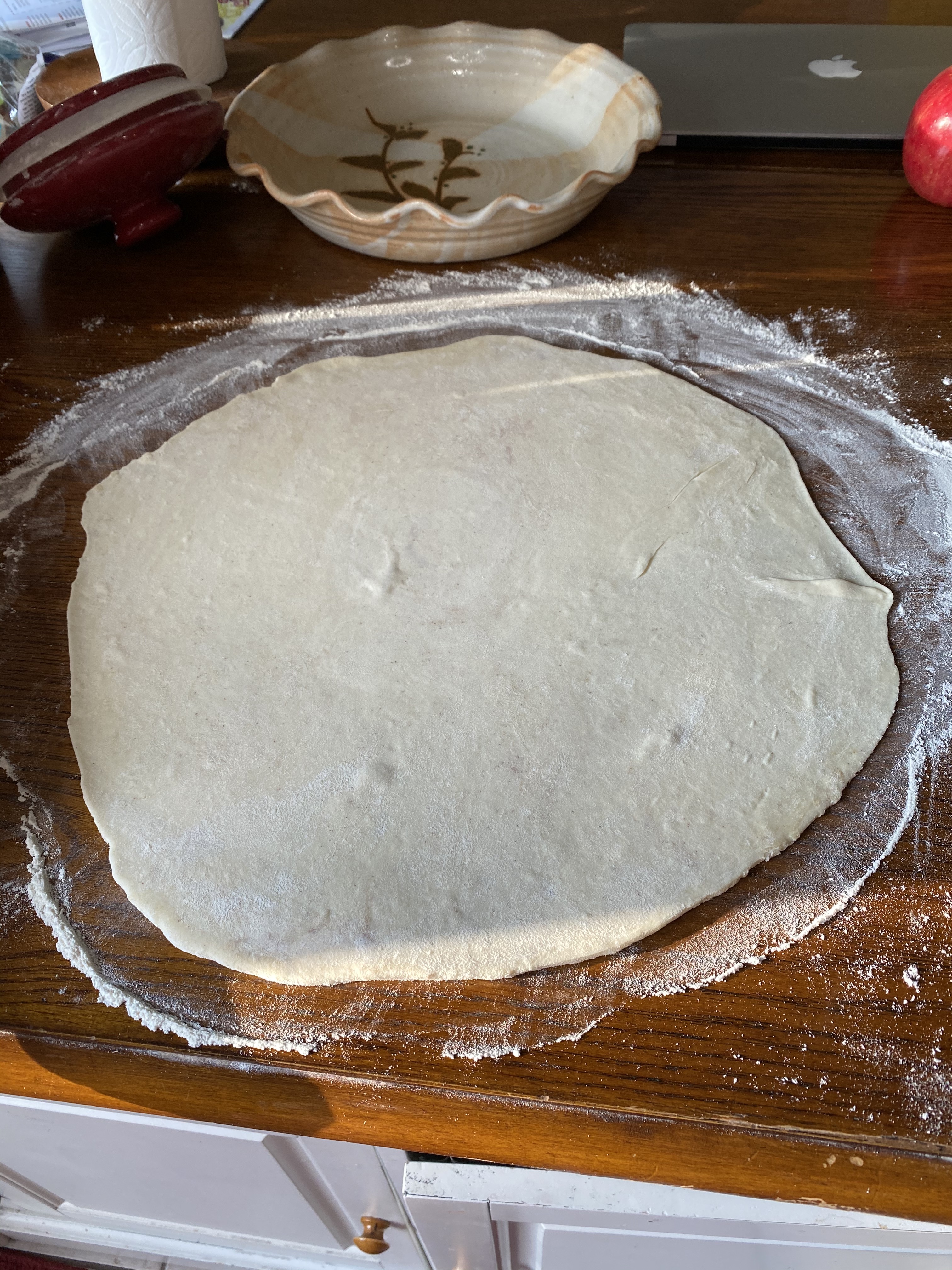
Put every worry and frustration into the rolling out of dough. Tough and round, an imperfect circle, wide enough to cover the whole belly of the beloved dish.

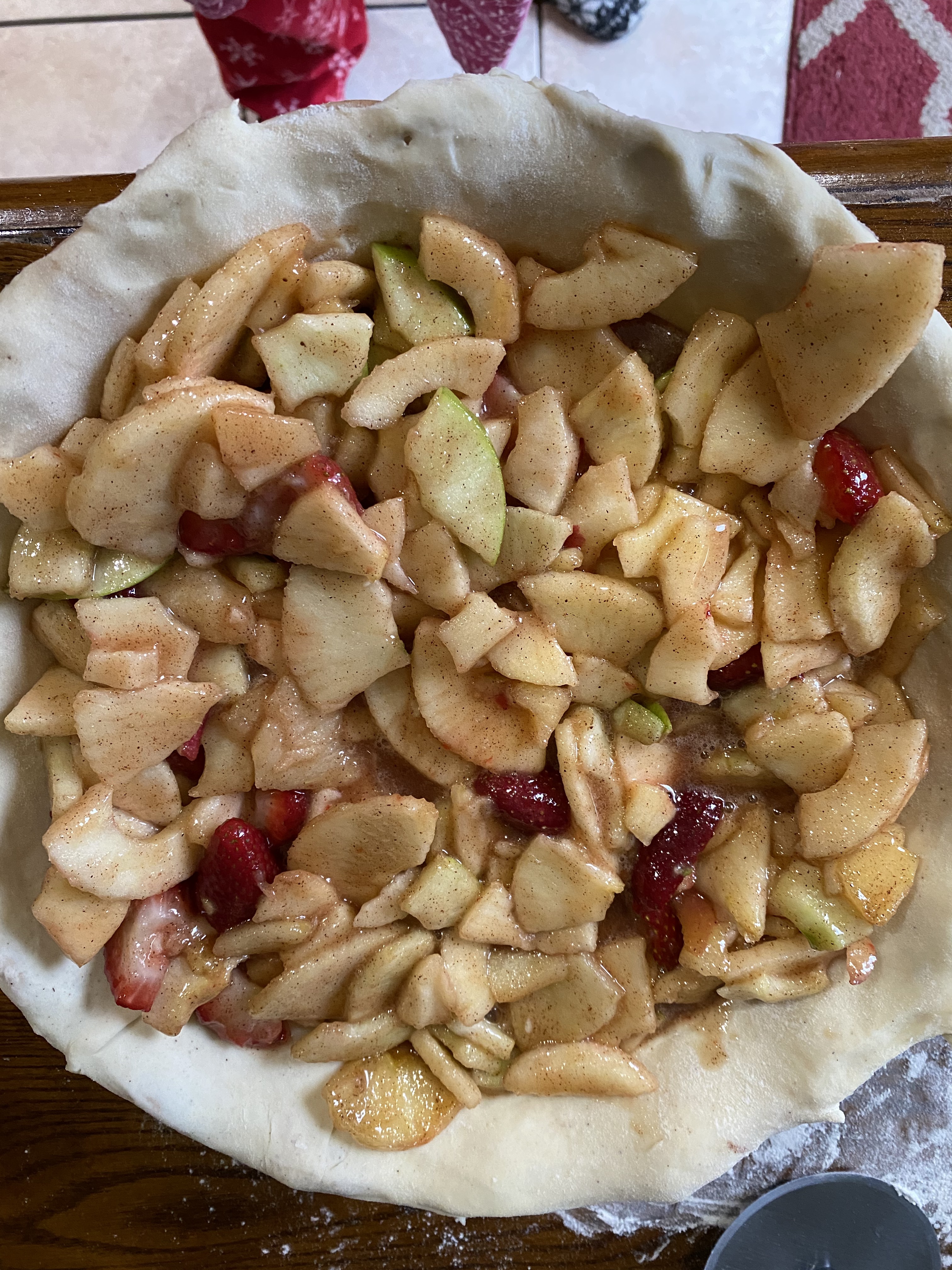
Spin and skin the apples until they are nothing but spirals of juicy love, bittersweet and crunchy and soon-to-be-soft, soon-to-be-coalesced inside a cinnamony mix of something sweeter. More hopeful.

Slice slivers into the top crust. Each piece is a taste of our world, cutting out the healthcare most of us don’t have, carving lines into the economic burden, trying to cover up the death toll.

Place the pre-cooked apple concoction into the lower crust belly, its syrup soaking through the floury dough, waiting to be better.

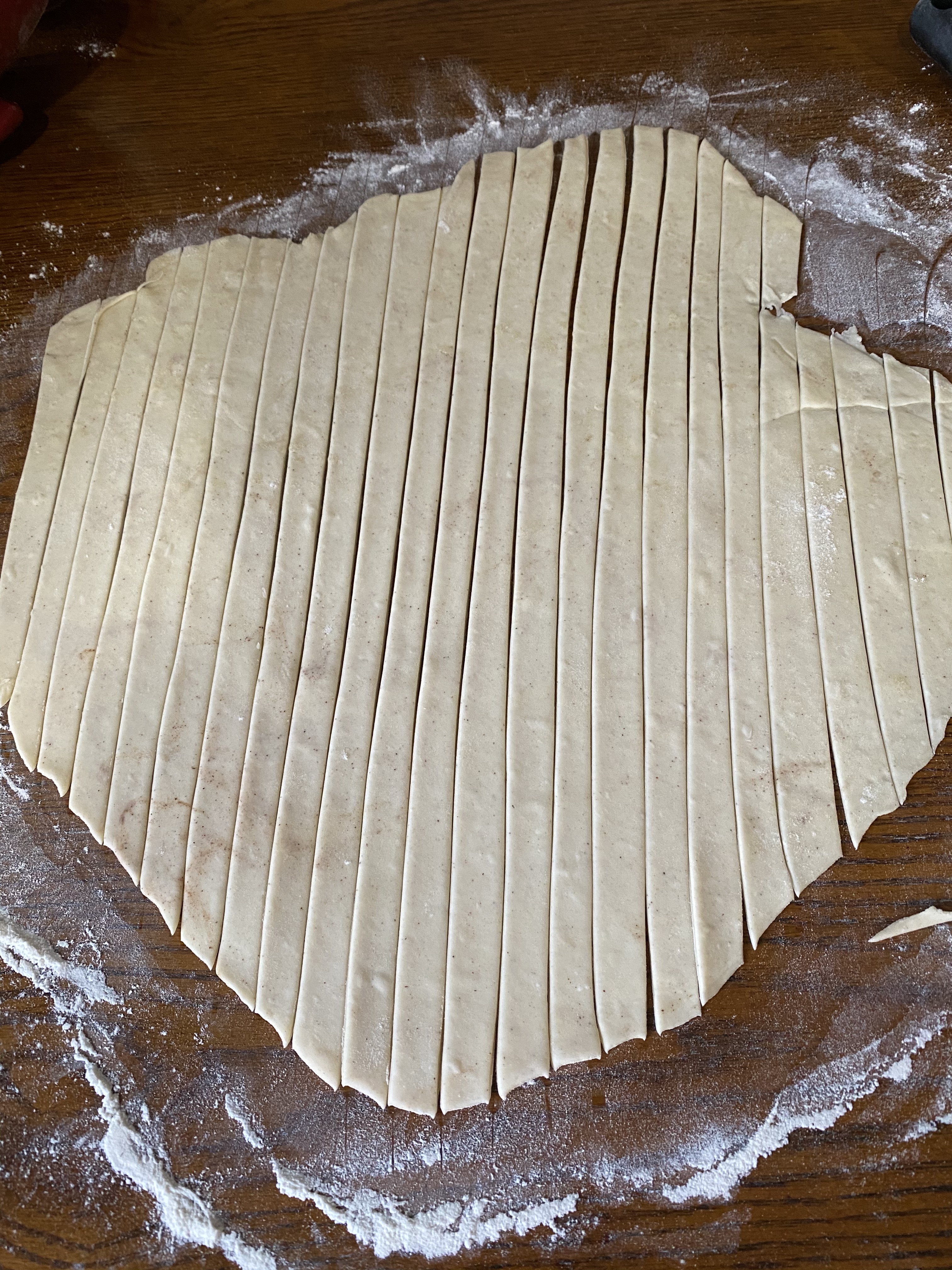
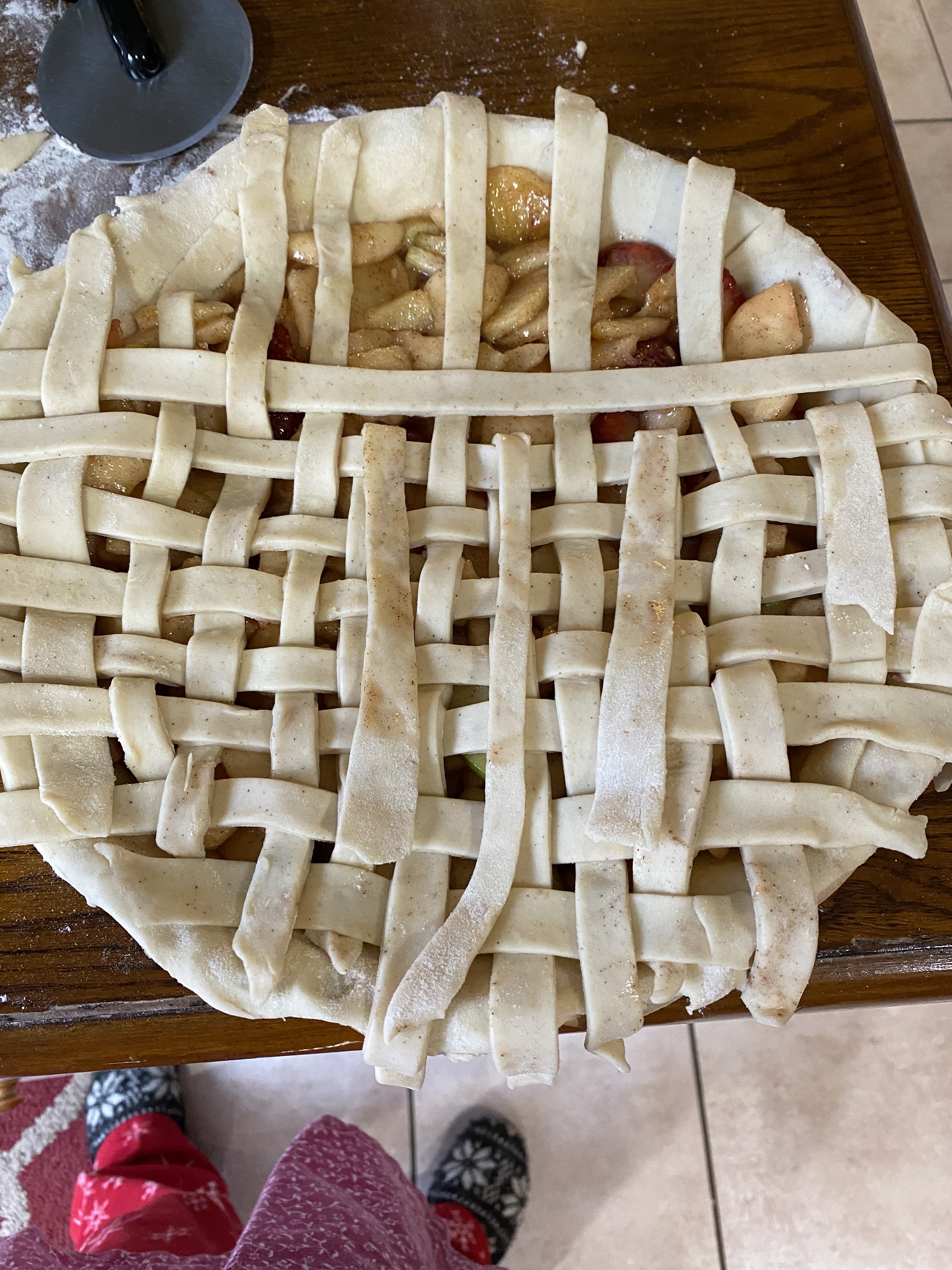
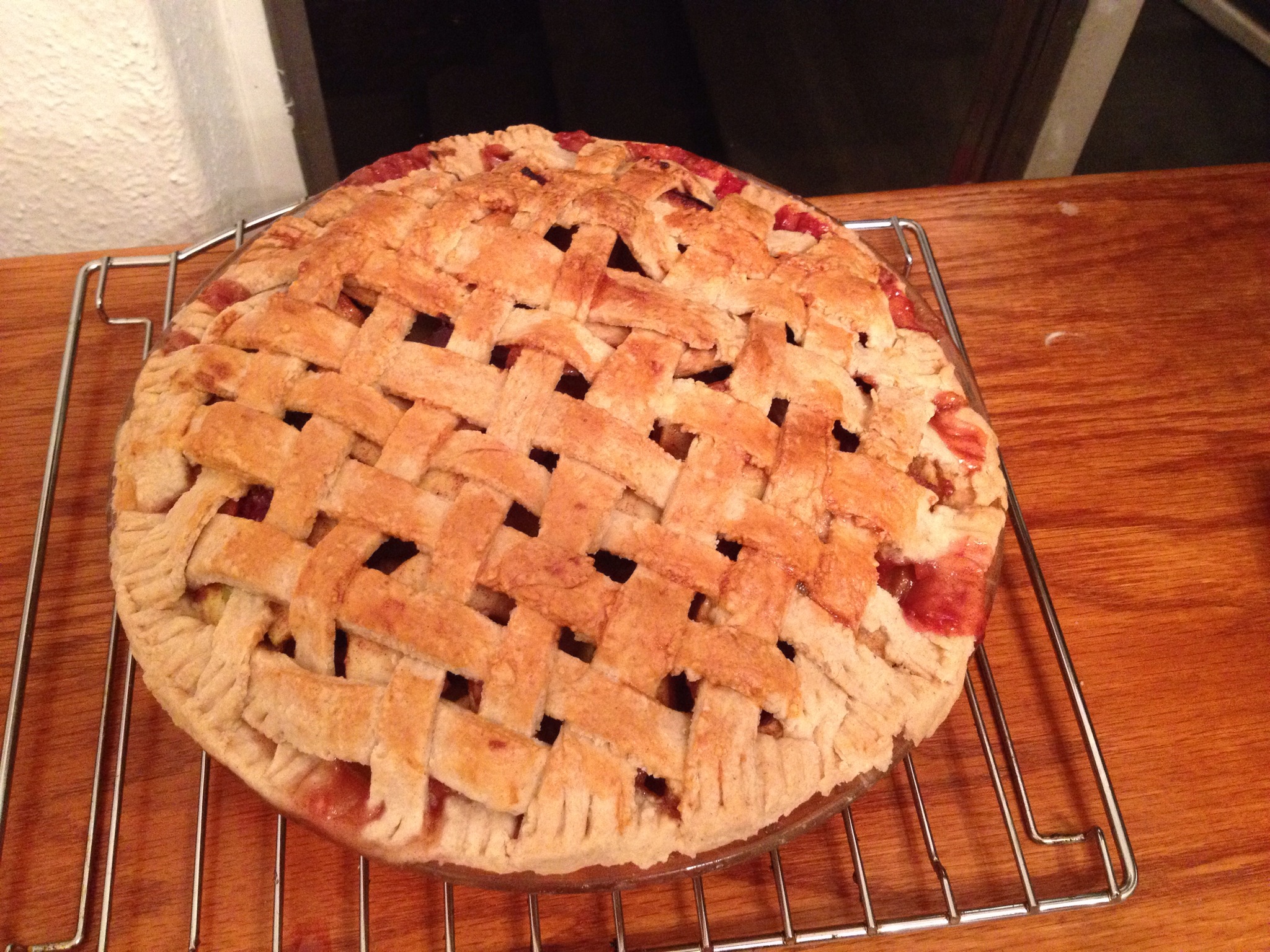
One by one, lay the lattice. Say a prayer, ask for something better, hope to God this will come together perfectly in the end. One by one, lay the lattice. Take your time. Gather your patience. Think of your children. All of your children.

Press the two parts of the world together: the bottom crust which opens its arms to everything that will fit; the top lattice which opens its door for all the cursed steam to escape, to prevent overflowing, to make a perfect pie.

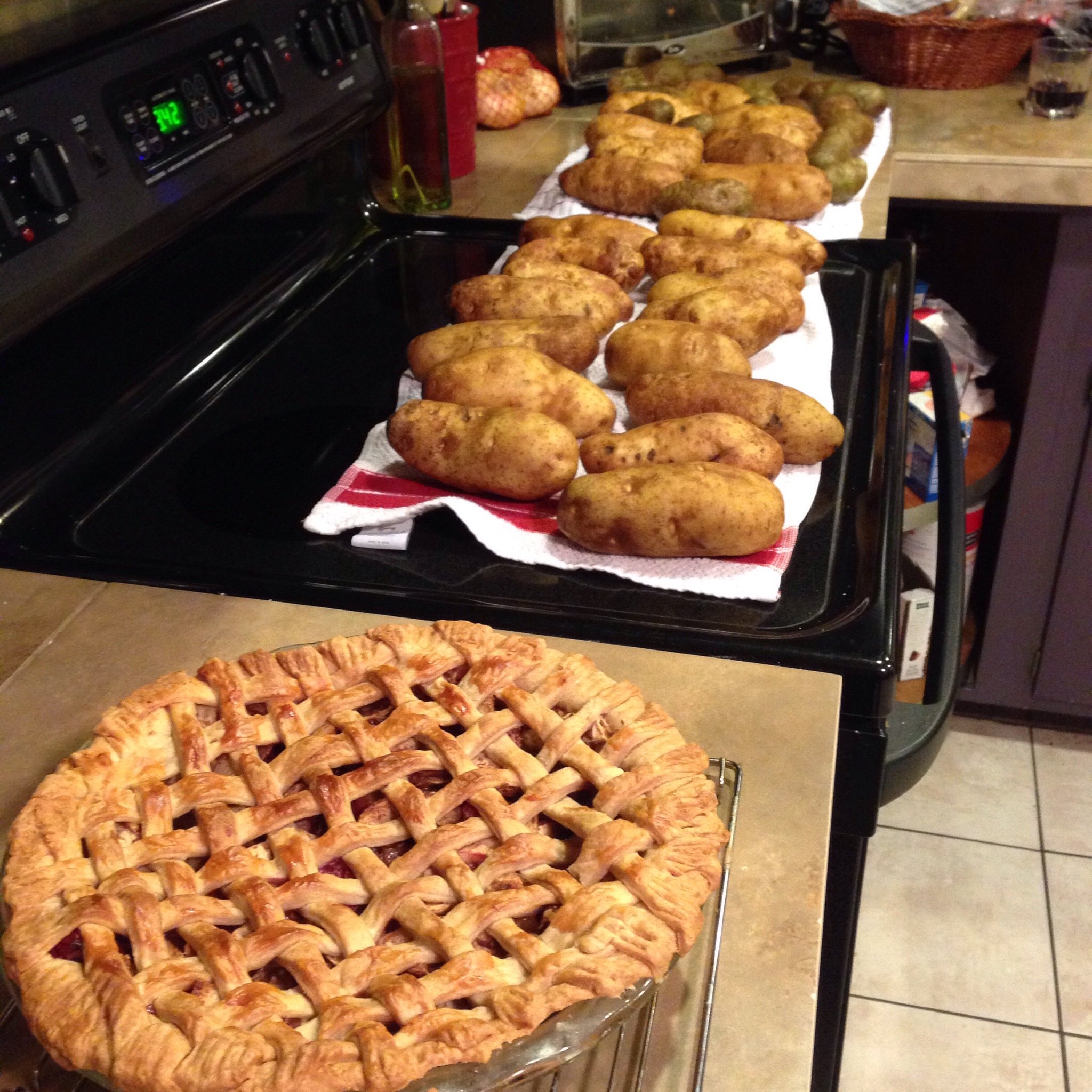
Bake your pie. Bake, bake, bake your pie. Know that, after the timer beeps, after you have scrubbed flour powder into the compost, after you have soaped the dishes, after your pie has rested on its stinging-hot shelf, everything will taste oh. So. Sweet.

Teach your students how to say “crust” before they bite in tomorrow, before you won’t see them for three weeks, before the actual Pi Day.

And hope for many more Pi Days with oh-so-many pies as perfect as this one.

Baked. Ready.

pie makes a Friday
 shopping done, party waiting
 seems so worth it now


Testing, Testing…

four hours of tests
 in this windowless hell fest
 Spanish comes to mind
 
 lunch union meeting
 complaints about white privilege
 first world problems
 
 (i want to tell them
 comparison is joy’s thief
 but they won’t listen)
 
 afternoon calls home
 to parents of failing kids
 Spanish practice dos
 
 then video view
 lesson to evaluate
 slim chance at progress
 
 audio walk home
 on a windswept cloudy March
 words too fast to grasp
 
 (Alice wonders why–
 in Carroll’s Spanish version
 –so many choices)
 
 then daughters’ chess meet
 and oldest’s plea for pi day
 (dough pulled from freezer)
 
 kitchen now stolen
 by eggs, bowls and pastry cream
 we drive to Wahoo’s
 
 kids eat free tonight
 run wild while hipsters drink

 (we rush home to bake)


 tripod ends my night
 (yoga the only answer
 to this chaos)
 
 and now i’m writing
 resolution of ideas
 not broken by tests

Proximity

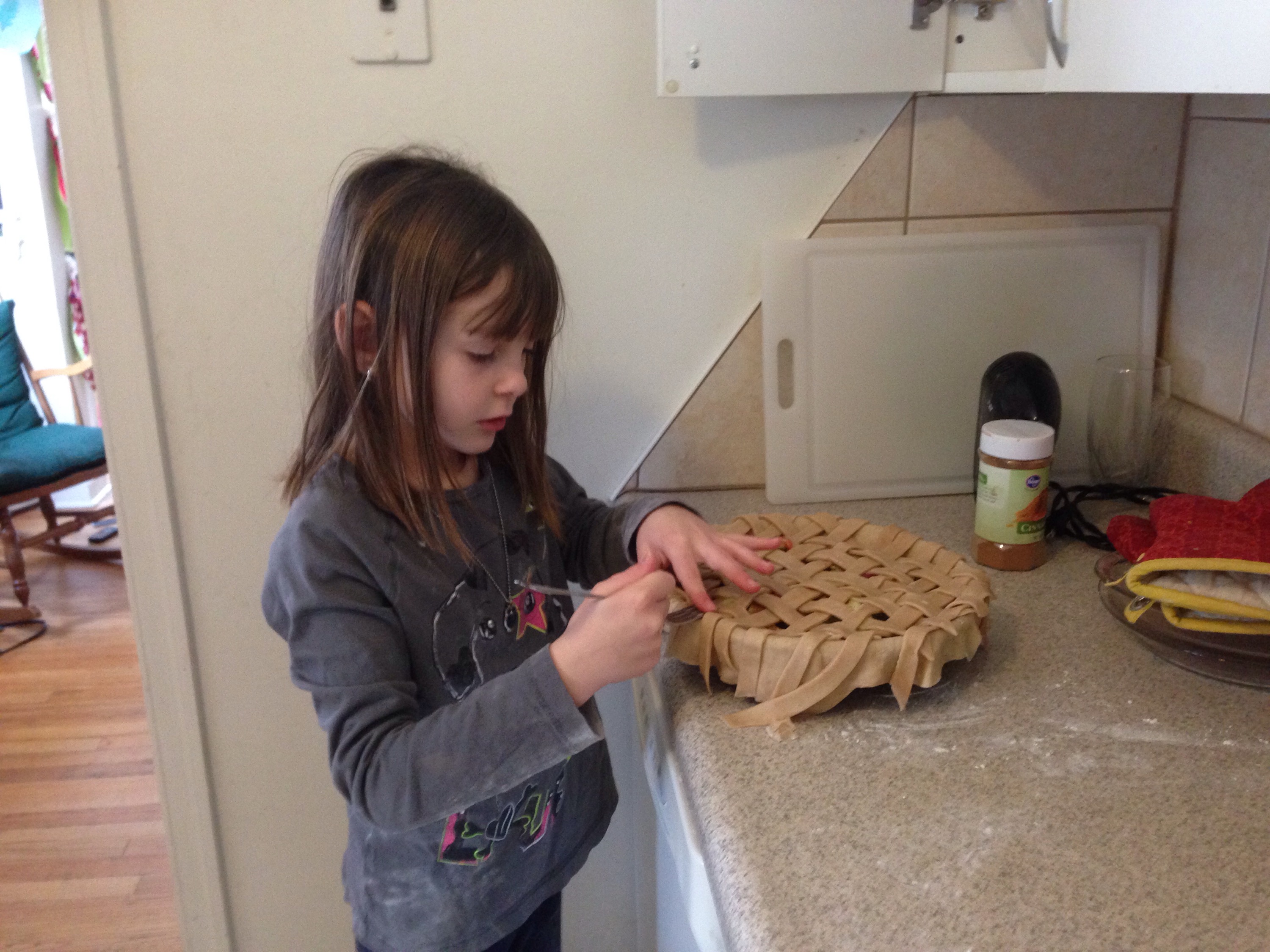
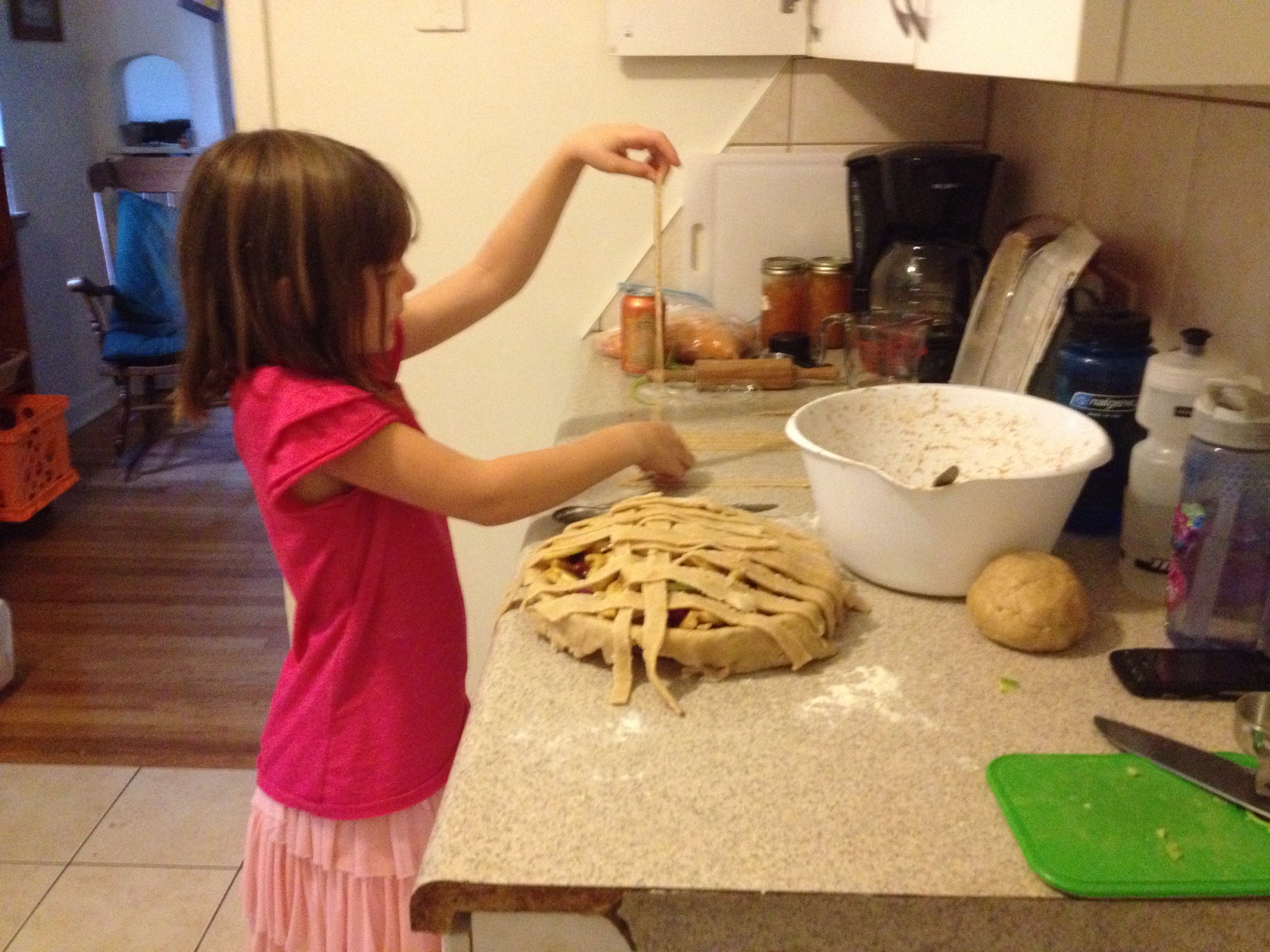
lattice top apple
laid by a baking expert
five years of hard work

culinary school?
kitchens of Denver and Spain
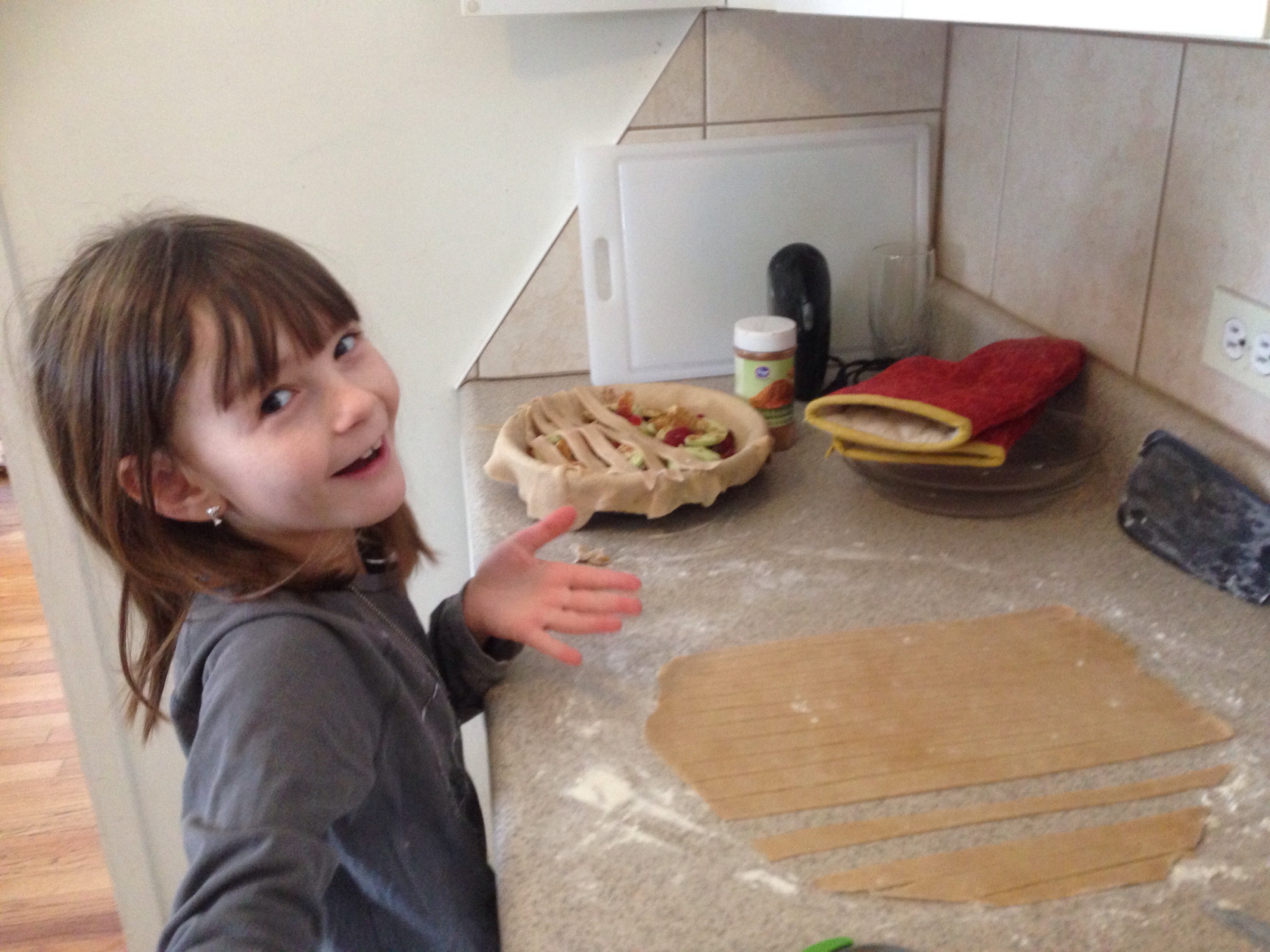
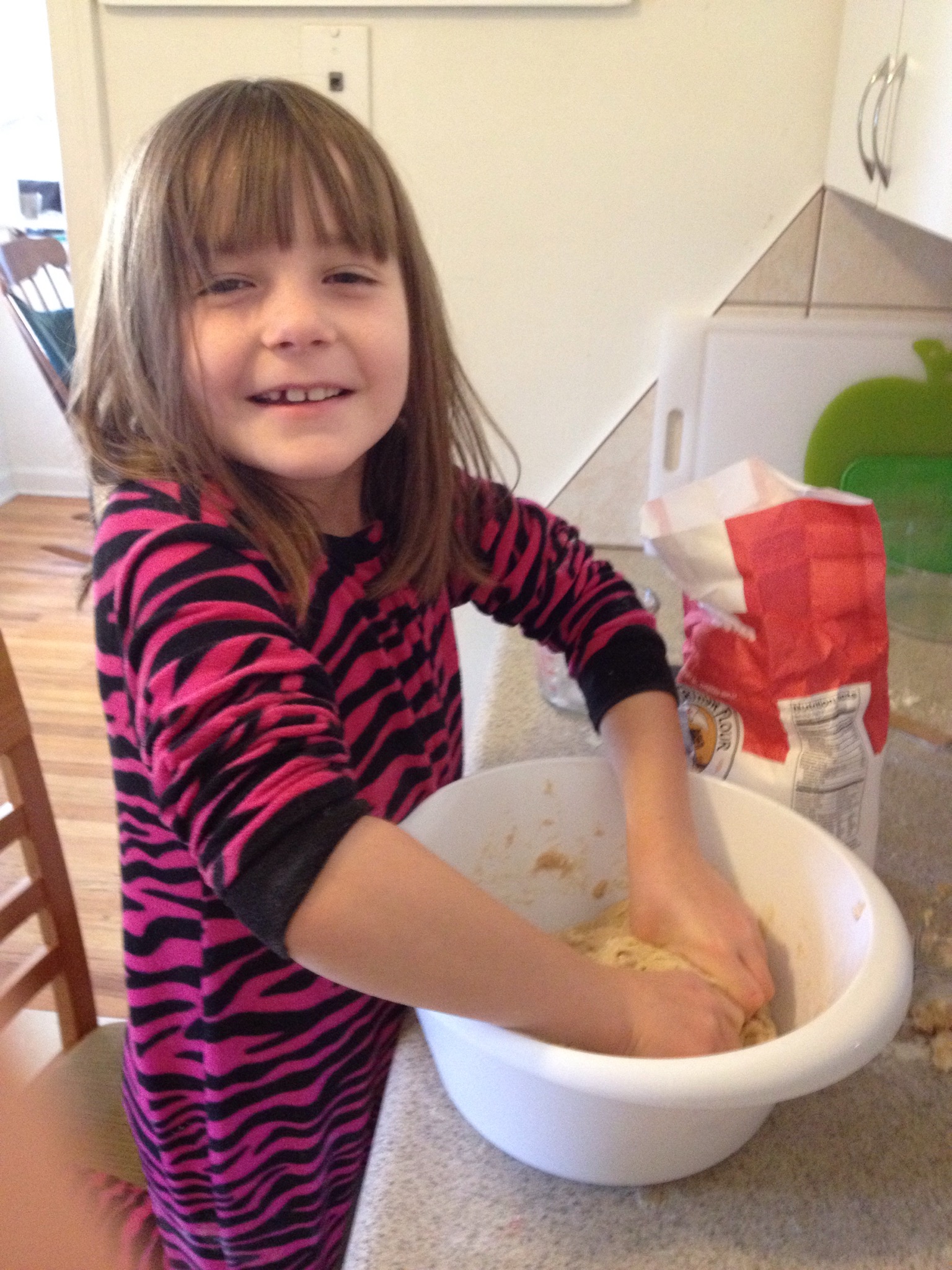
dough soft as her cheek

yes, she was just three
her first try in our kitchen
all to be near me

i can’t buy her dreams
or make Santa come to life
but i’ll give her that

/home/wpcom/public_html/wp-content/blogs.dir/80f/11233611/files/2014/12/img_6802.jpg

/home/wpcom/public_html/wp-content/blogs.dir/80f/11233611/files/2014/12/img_6804.jpg

/home/wpcom/public_html/wp-content/blogs.dir/80f/11233611/files/2014/12/img_6809.jpg

Happiness. Baked.

When I read that post, its remnants sticking to my mind through every one of five hours of punching, sifting, salting, sugaring, and rolling, it feels like I wrote it yesterday. About a time that must have been a million years from today.

This is what a pie is: Something you search for. You don’t settle for the red-and-white cookbook recipe. You listen to your grandmother’s whispers and buy the best flour. You find the words straight from a famous chef’s mouth and shape them into your own, one melted-butter beating at a time. You might have to freeze that pastry for ten minutes or pound it till it listens, but that smooth stretch over nine inches of glass, your daughters laying out lattice and shaping a thumb-and-pinkie catch? Nothing is more beautiful than that.

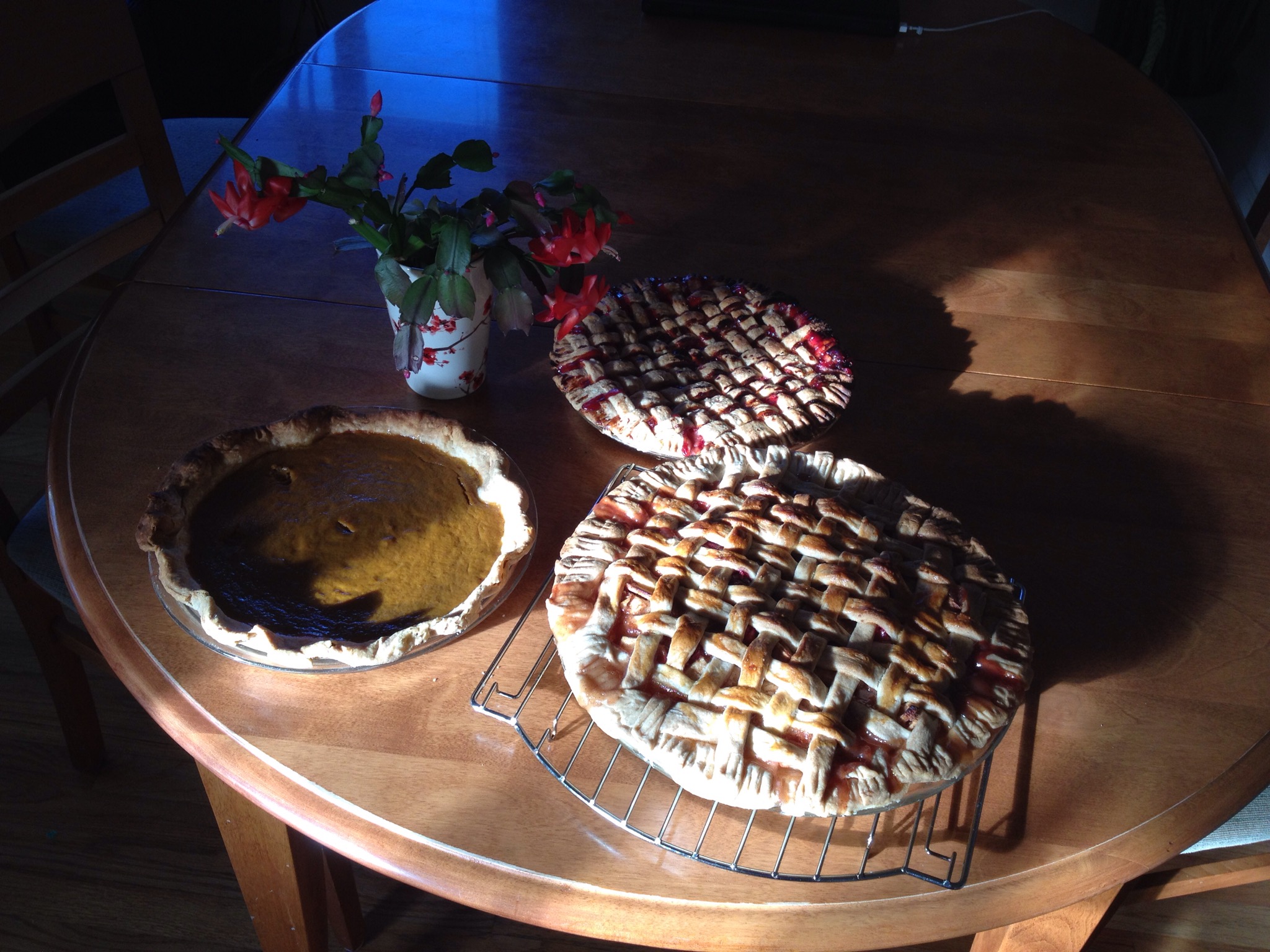
This is what a pie is: Thanksgiving. Because you clear out your everyday items on the counter to make room for its presence on your holiday table. Because you wait the whole year to spend five hours in this tiny kitchen measuring flour, slicing apples, and cooking up hand-picked, July-we-lost-you cherries (frozen and saved by your mother for this moment) to place this gratitude upon your table.

This is what a pie is: An imperfect crust. Your magazine chef keeps telling you that it should flake, not melt. That it should lie flat, not be perfectly stretched across the bottom and sides of your pie pan. That you should freeze it for two hours before you touch it. You don’t listen. You melt butter, your eight-year-old cuts diagonal lattice strips, your eleven-year-old melts the crust with her hot cherry pie mix, your ten-year-old gives up on shaping her open-topped pumpkin, which melts into a misshapen goo anyway. And yet, they still scramble for scraps to dip in cherry juice and apple-cinnamon deliciousness. So not what it should be. And so what it is.

This is what a pie is: Love. When you don’t have it to make, you long for it. When the year has passed and summer months in an un-air-conditioned home make the idea of turning on an oven for a day unbearable, you look forward to the fall. When the year rolls back around to our national holiday, your tongue lingers on the hope that its crispy, smooth, cinnamon sweetness will hold you for as long as you promised your heart. You love that pie. You admire its beauty, its ability to bring your three getting-too-big girls into your kitchen, begging to be first to make their own, to fight for their chance to pound, roll, spread.

This is what a pie is: Happiness. Baked.

IMG_6640.JPG

IMG_6639.JPG

IMG_6641.JPG

IMG_6643.JPG

IMG_6657.JPG

IMG_6645.JPG

IMG_6651.JPG

IMG_6649.JPG

Endlessly

with golden eyelashes he sleeps
after telling the Martian story
to which only Mythili would listen
black and dark makeup-less beauty
that none of us can understand,
the one who said three months back
that she’s most like me
(all i thought of were the endlessly
imaginative doll stories, and how i hated
dolls) only to realize that
my most responsible proactive middle child
had me pegged

and how can i sum up an August Friday?
it would begin with carrying
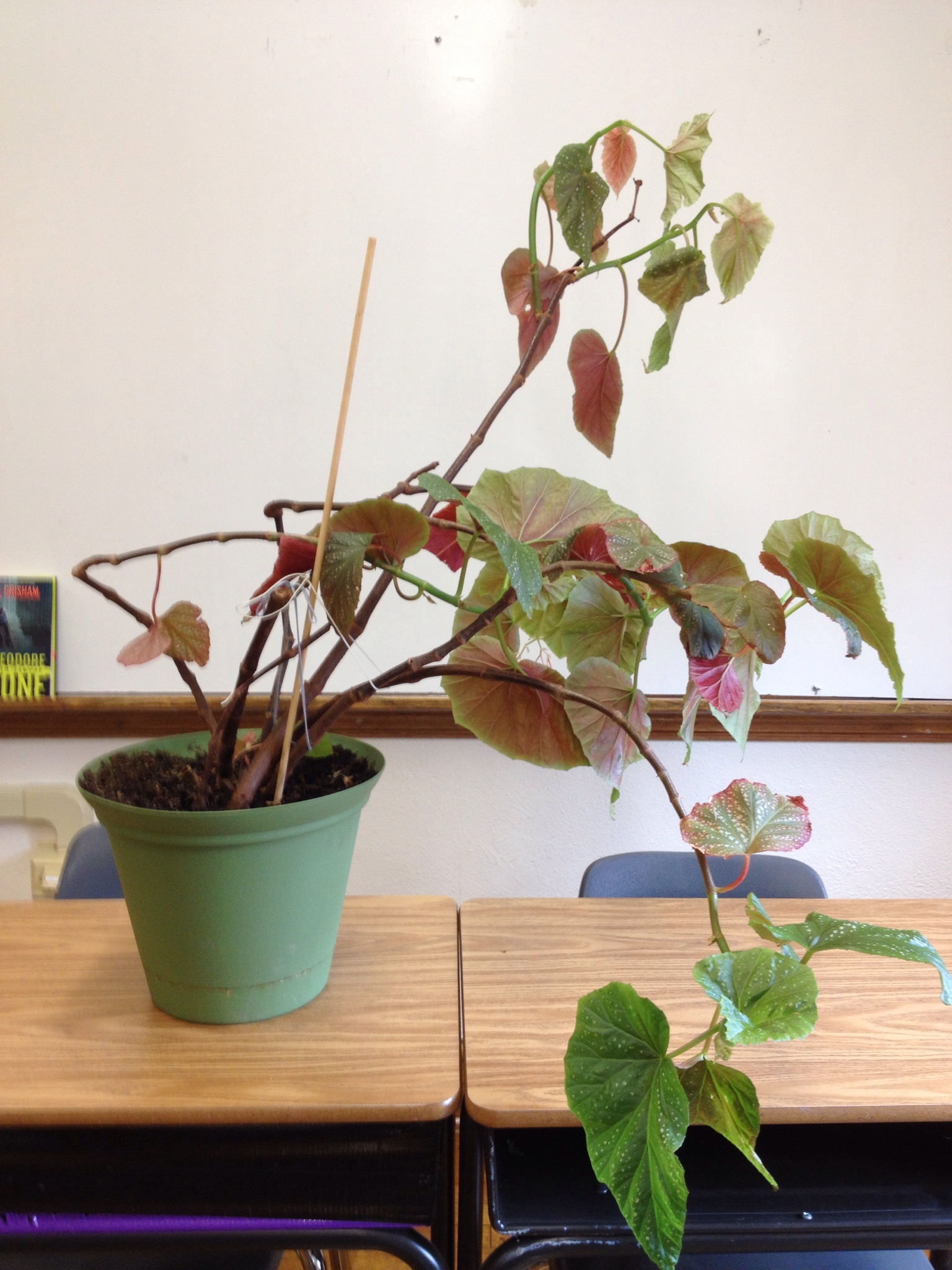
an ever-bending begonia
through three hallways
and six sets of stairs
my endlessly flamboyant classroom colleague
holding the admin parking door open
to ask
why are women so needy?
is this why i don’t like them?

before the sun has even completely
emerged from Colorado clouds

it would end with pumpkin pie
burning up my no-a/c house
and my baby’s hands weaving
bits of crust
over her apple pie dream
as expertly as she did at age three
when Thanksgiving meant more to me
than any other holiday

in the middle, with my middle child?
school posters and schedule nightmares,
the signage of every teacher,
where i walk into that school
and every capillary in my body
is pumping blood for students
i haven’t even met

a meeting, a speech that makes me
want to hug my enemy
and wish that last year
could have been mine
ours
and the end-of-day email
blasting me
in ALL CAPS
for putting my students first
even if HE WOULDN’T

Mythili, Mythili, Mythili
who was born a writer like me
a crone before her time
whose head turned towards me on day two
how could i not know
after the
twin-in-looks-forever-defiant-Izzy
and
shy-as-a-cactus-in-December Riona
how could i not see myself in her?

the pie is in the oven
and 24 people will populate
the space between an 1864 ditch
and the playground of my youth
before i can even blink
my baby has turned 8

and we will have pie.
apple. lattice top composed
by nothing-like-me Riona.
pumpkin. requested by
my twin, Mythili.
whipped cream. to spray
in mouth of endlessly-flamboyant Isabella.

tomorrow? we will party in the park,
forget that there’s no cake.
or that schedules aren’t students.
and remember how much,
how painfully much,
we love each other.

IMG_6199.JPG

IMG_6198.JPG

IMG_6206.JPG

IMG_6208.JPG

IMG_6209.JPG

IMG_6200.JPG

IMG_6196.JPG

IMG_6210.JPG

Teacher-Mother Pie

back to old routines
information overload
do as i say, not…

day’s success stories
vary, depending on view
mine: crosses they’ll bear

now for new nightmares
first-day jitters springing up
fan fires sun’s laugh

bring on my Friday:
arrange, plan, copy, paste, bake:
teacher-mother pie

always a puzzle
time for nothing but my kids
theirs and mine: ours

IMG_6193.JPG

IMG_6192.JPG

IMG_6191.JPG

An Imperfect Crust

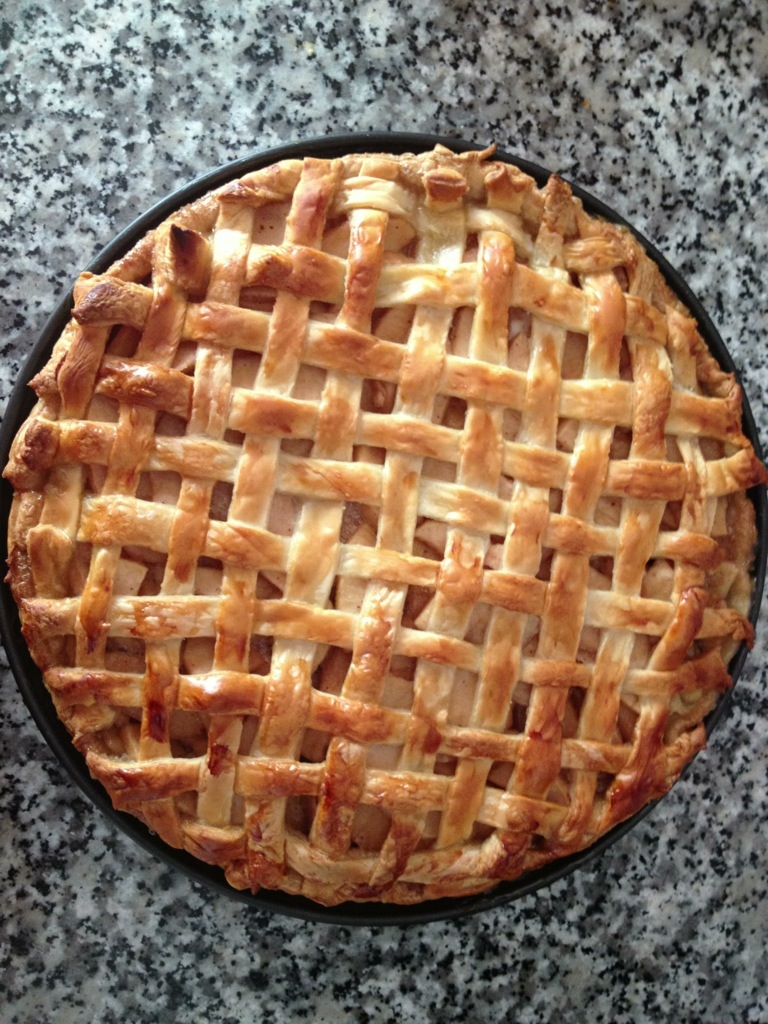
I have this apple pie recipe. It is almost as good as my brownie recipe, perhaps a bit better, because it is so time-consumingly tedious to make that its appearance on our table occurs twice, perhaps three times (for extra-special people or occasions), a year. The recipe begins with a crust that is both sweet, flaky, and crispy. The bottom of the pie is lined with a pastry cream so thick and delicious you’d wish you had a bowl to scoop it out and eat it with a spoon. Of course there are apples, the apples of my youth, Granny Smiths grown on the Western Slope of Colorado.
I think about this recipe today as I lay out the refrigerated pie crust on my small Spanish counter. The recipe sits in the room in the basement of my house back in Colorado, the room that hovers like a ghost in the attic of my mind. Ten by ten. Green carpet. One tiny window. All the junk, from sleeping bags, toys, a television that’s not even ours, to cups, magnets, and recipes, that we couldn’t bring to Spain.

Here we are, three months later, living our lives without these things. Without the books I’ve collected for my girls in my ten years of being a parent. Without the tent we would never use. Without my favorite coffee mug, fifteen years back bought at Christmas from Starbucks, Van Gogh’s Starry Night a blur of beauty on my early mornings. Without my recipes.

We have had a functioning oven for two days. I was planning, until now, to let slide my favorite holiday, to give in to the holidays of Spain–the next saint’s day, school break, or puente, and forget that I look forward to Thanksgiving for the whole year. After all, how could I bake a pie without an oven? Without my recipe?

As all things seem to work out in 2012, life of Karen Vittetoe, the oven arrived in our lives just in time. I could make my pie, we could make our Thanksgiving dinner, but at what cost? Moving here, our kitchen contained many items, but not a pie pan, a roasting dish, or a 9×13 baking dish for brownies or candied yams. They don’t sell pure vanilla extract in stores; rather, aroma of vanilla and pure vanilla bean; the combination of buying cocoa, the varieties of vanilla, and chocolate chips, of buying two baking dishes and a pie pan? Our spending money for the week is demolished. Not one penny left for a rolling pin that, perhaps, will never be used again.

So this is why I’m crying now as I lay out the rectangular, store-bought pie crust, as I cut it into strips to make my lattice top, hopefully creating the appearance of beauty for my sub-par pie. The crust is malleable, easy to stretch, more perfect than I could ever have mixed together myself, and yet I despise it. It will not be mine, just as the holiday that has already past is not mine.

Yet, somehow, as my girls will in a moment burst in from their school day, see the piles of leftover crust and take them into their small hands, scrubbing the bottom of the apple-cinnamon-sugar bowl with delicious bits of crust, just as I did when I was a girl, I know that my pie will be fine. It may have an imperfect crust, but it will be just as beautiful, taste just as amazing with its lining of pastry cream, the Spanish apples brought down from the north, and the sweetness carried across the sea to Europe for a holiday that is the same in every language.

20121123-150058.jpg