Broken Blossoms

life lived in moments

from crises to remedies

(one day’s event course)

broken cars and drains

cannot break twenty-one years

of kept promises

so let’s build fires

to burn the losses of life

and collars of hope

because even pup

knows how to tolerate pain

as peonies pop

Pre-de-Bugging

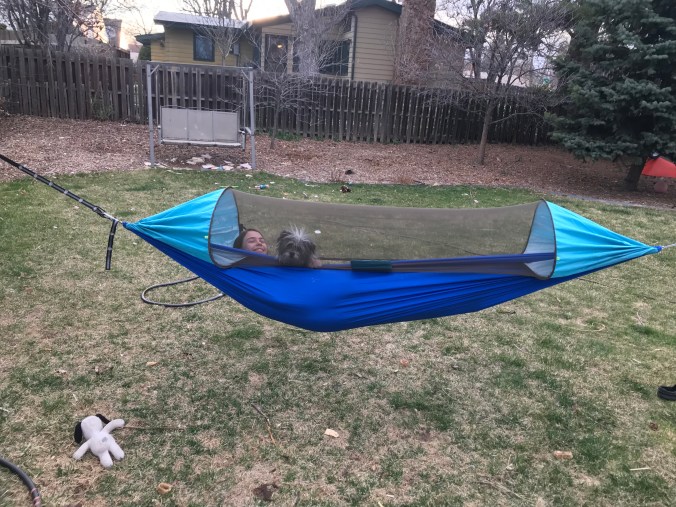
our netted hammock:

plan for mosquito summer

in Minnesota

Catch Me a Breeze

a sunny Sunday

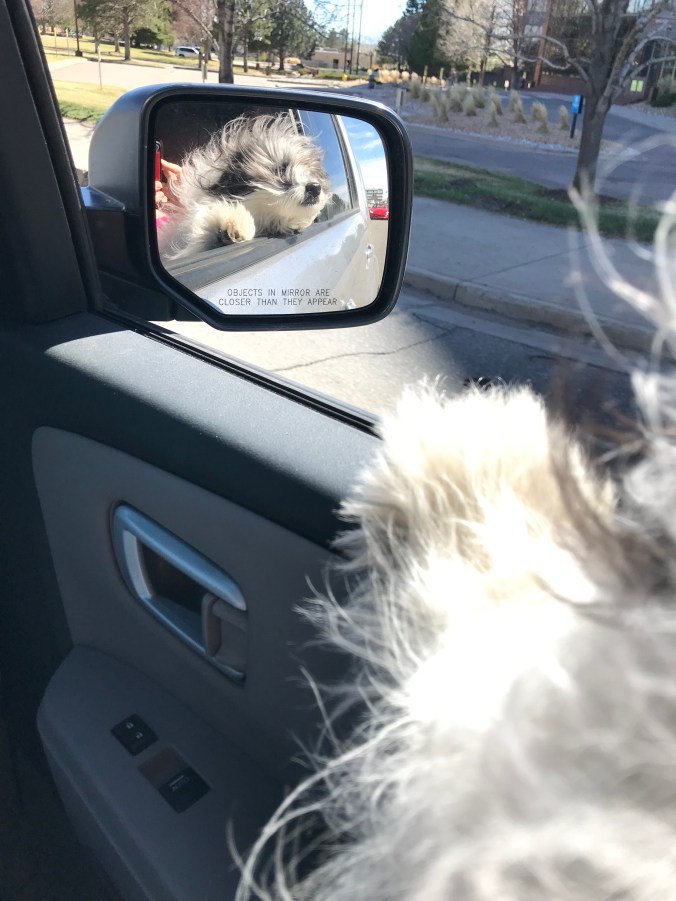
is made for panting puppies

searching for blue skies

My Chauffeur

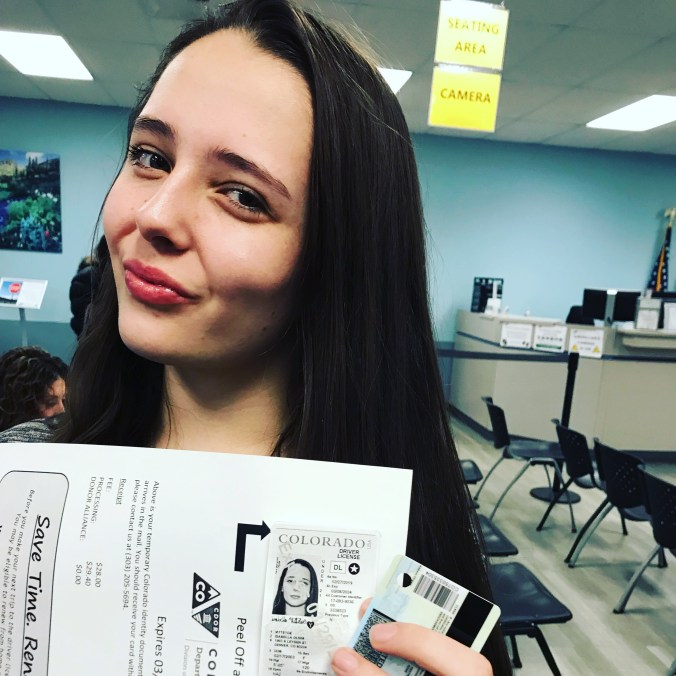
a milestone reached
after sixteen years a mom
she earns her license
D84468B8-C96F-4A10-BB1A-F73FF9775E76

My Polo Ralph Lauren Purse

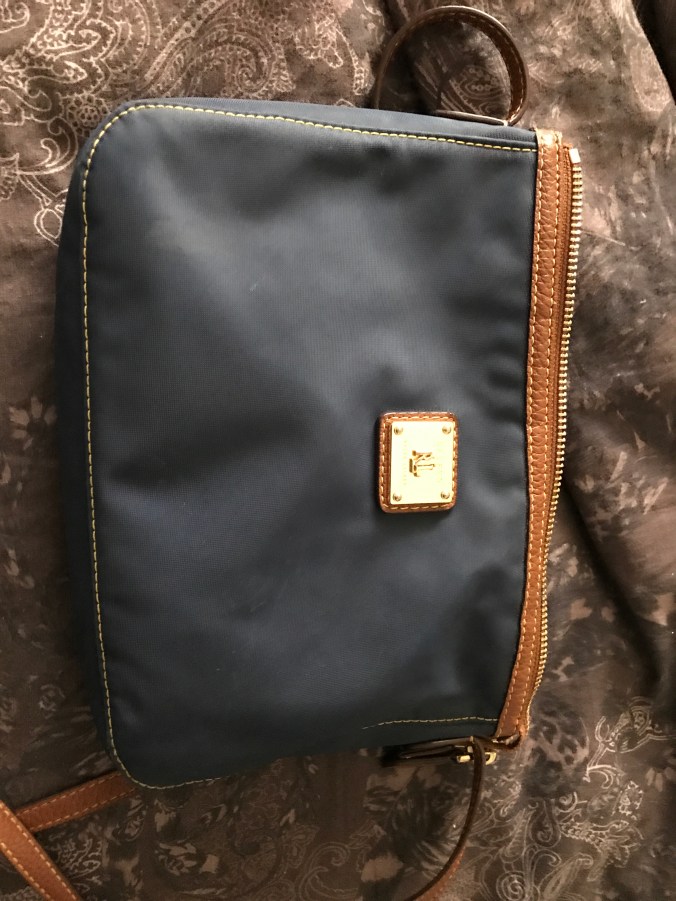
A few years ago, in search of something smaller to carry on road trips, I went to my typical “fashion” store, the Goodwill, and came across a perfectly small, just-big-enough-for-a-phone-and-some-gum, Polo Ralph Lauren purse. For $2. I popped it into my cart with my typical Goodwill assortment of work blouses and pants, and have been using it ever since. It fits perfectly into the console of my Pilot, can easily be crammed inside a carryon bag to bring onboard for a weekend getaway, and is light on my shoulder. It is the first, and last, “designer” purse I will ever own, and it is nothing special. It’s made from variations of polyester inside and out, though it has a reliable zipper. Compared to other, cheaper purses I’ve had over the years, I wouldn’t put my money on designer brands.

851779DF-AF95-4D92-97E3-1BC8F90E4520

I suppose this purse, in retrospect, has now cost me 105 euros and two nights with very little sleep.

Because it was the purse, my Polo Ralph Lauren purse, that caught the eye of a petty thief as it sat blatantly (blatantly empty, I might add), on the passenger seat of our rental car while we carried seventy pounds of luggage into our latest Spanish apartment in Huelva.

Everyone has told me this. Passersby watching my two younger daughters scramble to lay on layers of packaging tape over the small triangle of broken glass at 20:30 on a Saturday night when we were supposed to go to dinner (it turns out dinner in Spain is an hour later anyway, so by the time we arrived in the restaurant at 21:00, we actually beat the long line of hungry customers that would soon make its way down the parkway). “¿Que pasó? ¿Ocurrió aquí? ¿Que tuviste adentro?¨ I heard the same questions when I texted Andrea, the Airbnb caretaker who assured me that this area is ¨muy tranquilo¨and nothing like this has ever happened before, and what did I have inside the car to grab a thief´s attention?

B84E00C3-88D0-42B1-A46F-FA09E13A71E6.jpeg

Where did we get the packaging tape at 20:15 on a Saturday night? A small detail of my travels in Spain: having lived here for a year has helped me tremendously with tiny bits of knowledge that are crucially important for moments like this—bazars, or more commonly called chinos—are Chinese-run everything stores that are even open on Sundays when the entirety of Huelva is camped out on the five-mile beach.

13C01316-A57E-479E-8B5A-E9813766EF81.jpeg

I speak enough Spanish to ask for tape, for scissors, to explain to the passersby that it was my Polo Ralph Lauren purse that the thief could see. I speak enough Spanish to explain the whole situation to Andrea, but I am lacking one word as to why I don’t have insurance that will cover this: what’s the difference between a lease and a rental?

I speak enough Spanish to text the owner of the apartment later and tell him the pilot light is out on the natural gas water heater, but even after he texts me photo-supported directions, I can’t seem to light the flame. He calls and coaches me through in such rapid-fire Castellano that I become flustered and am unable to explain what I have done wrong, so, alas, Andrea saves the day for me once again, walks over and lights the flame within seconds.

I speak enough Spanish to understand that on Sunday, everything is closed, and the only thing we can put our money towards are some tapas y postres, not window glass. Mythili and I make our way back to the bazar to find their version of Drano after I have spent half the morning trying to unclog the kitchen sink with a tiny and handy plunger kept under the sink because I can’t bear to make another report about something else gone wrong.

I speak enough Spanish to hear the word cerveza from the man walking up and down the beach with an ice cream cart, and I buy three because the sun is kind in the late afternoon, the beach is full of shells, and Mythili, the only child who would step out of the apartment with me today, is having great conversations with me about how much weddings cost and what types of jellyfish exist in the world and how many shells she thinks she can collect by the end of the week.

I speak just enough Spanish to explain to Jose, Andrea’s friend and owner of the ironically-named CarGlass shop (Andrea tripped over this title many times when she was explaining the location of the shop), that I have an arrendamiento (thank you Google translate), not a rental, that they wanted to charge me 3000 euros for insurance, and can I just pay for it myself?

I speak enough Spanish, with a few stops and bouts of “más despacio”, to sign the paperwork Jose lays out for me, to shell out another 105 euros, to praise the good lord that, once the thief broke the window and saw only a selfie stick inside my Polo Ralph Lauren purse, he decided not to take anything at all. Not even the purse. (He probably realized it was just crap polyester like everything else on this godforsaken planet).

But I don’t have the words, in any language, to describe how challenging traveling with my three girls has been this year. They have reached the tipping point of childhood exuberance melted into adolescent angst, and nothing, it seems, is quite what they want to do.

I have no other adult in the house to help me light that llama, no one to plunge the sink, no one to commiserate with me at 4:00 a.m. when my oldest wakes me by talking to her boyfriend back home, no one to wash up Riona’s puke from eating mussels before the sun rises on a Sunday morning. No one to stand by my side and say, “We didn’t fly across the world for you to sit in an apartment all day and night.”

That little triangle of broken glass has brought fear and doubt to a trip that is already plagued by fear and doubt. While at the beach, I tell Mythili I am afraid to go in the water with her and leave our stuff, because what if someone steals it? “Don’t turn into that, Mama. No one ever steals anything from you, as you always say, case in point with the purse.”

But I speak enough Spanish to understand Jose, when he arrives at his shop at 8:52 on a Monday morning and I am already waiting, come right up to me and say, “Ud.  Es Karen, la amiga de Andrea?” Because yes. We are already friends.

I speak enough Spanish to read the bar-coded descriptions of historical points in Huelva as I pull them up on my phone, learning about Cristobal Colon, ship building, and industry while treating myself to pretty views of modern architecture, shady parks, and perfectly placed fountains.

I speak enough Spanish to navigate another day here, to order goat cheese with honey AND jam, to laugh with Mythili at the botched menu translation of squid meatballs as “squid balls.”

The words I need to find, words that could never fit in my car, my Huelvan apartment, my Polo Ralph Lauren purse, are the words of a lonely traveler, a neglected mother, one who just wanted one last glorious summer with her girls before they got too big, only to realize and accept, nearly home by now, that they are already too big.

I still have my Polo Ralph Lauren purse. My selfie stick. My gum. Jose is fixing my CarGlass, so by 18:00, the girls and I can pile in the Peugeot and arrive at the beach well before sunset and late enough to “not have to swim or get sandy.”

I still have the Spanish words I will need to navigate the next two weeks.

I still have the three girls with me, moody or not, and I know in my heart that they will one day look back at this crazy Spanish adventure and be grateful for it.

And no matter what fears and doubts have traveled with me across the world, I still have these views, and they are worth more than the price of broken glass, a Polo Ralph Lauren purse, a scam of an arrendamiento.

No thief or child could take them from me.


A Few English Words

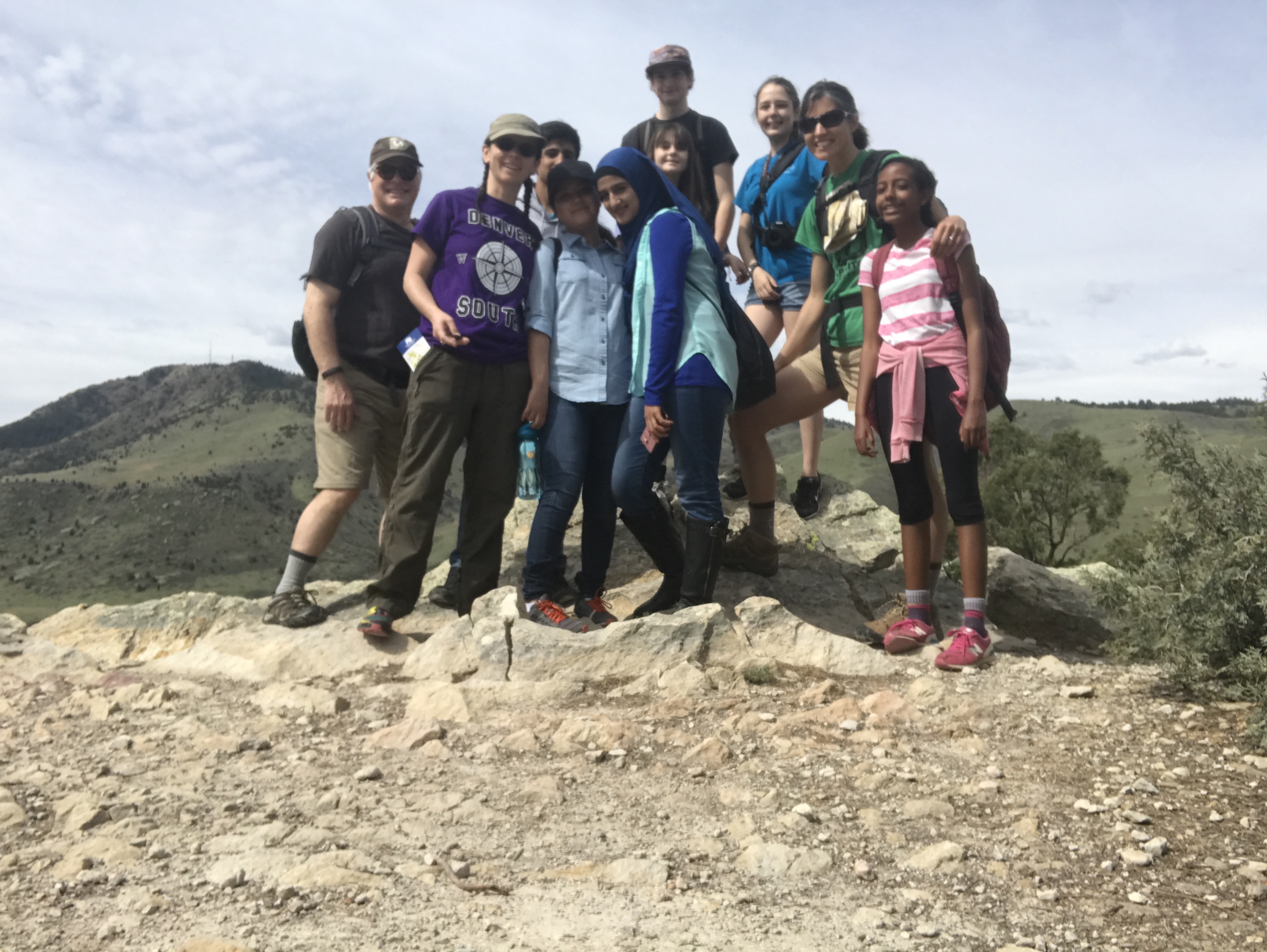
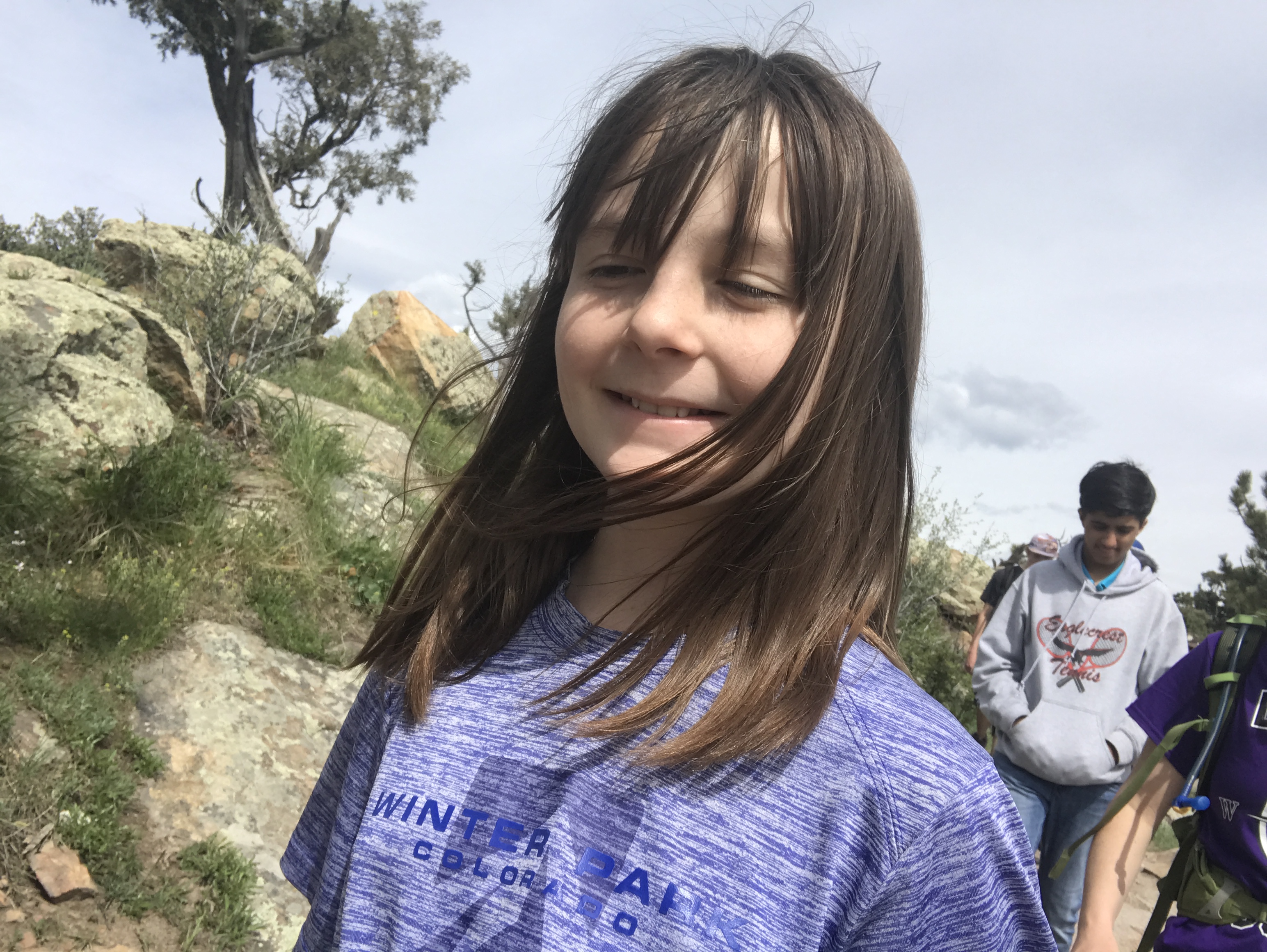
We took three Afghani students to the foothills today. They have been here for less than a year, so they learned a few English words today: Hike. Trail. Juniper. Ponderosa. Colorado=red rocks. View. 

I tried to ask what it was like for them back home, but they only knew a few English words to describe it: Danger. No school. Grandparents. Parents here in Colorado. All kids–brother, sister, other brother–in Afghanistan. 

Each time I asked if they wanted to continue down the trail or turn around, the most confident girl, the hijab girl, kept insisting we go on. She had no desire to go back to whatever life she had outside of that blue-sky hike, her knee-high boots and sweaty face no hindrance to her joy. She just wanted to walk. To escape. To be on that mountain.

When we were at the top, she leaned in to take a selfie with me, and then one with my youngest daughter whose experiential-learning school had just visited the same location, whose quiet voice shared with us the details of the sedimentary rock layers, the lichen, the igneous and metamorphic. This was a perfect match–the low-English Afghani and my quiet youngest–smiling shyly for a photo, a perfect frame of world peace.

With a walk like this, we step towards empathy. Understanding. Gratitude. We know that things could be worse, that they are worse, for so many people in the world.

But it doesn’t stop me from feeling the pain, the loss that I feel now. For feeling gypped, for feeling like nothing I do, nothing my husband and I ever do, will be good enough to make our lives easier.

Perhaps it’s the curse of Spain. Six years ago, after welcoming two Spaniards into our home, after asking practically nothing for rent, after offering them my car for months when theirs broke down (I rode my bike to work 25 miles a day for three months), after hosting parties for their friends, babysitting their friends’ kids, driving them to South Dakota, after everything, we went to Spain and never heard from either of them again. In addition to the nightmare that that year in Spain was for us, with its broken promises, broken paychecks, and lost jobs, they had to twist the knife right into our backs by acting like they never knew us.

And now we’ve planned a redo. Twentieth wedding anniversary. Fortieth birthdays. Three years into living like kings for the first time in our marriage, with two steady, well-paying jobs, great benefits, and our dream house that we opened up to friends of ours, six of them, rent free for two months because they were down on their luck, and Spain has cursed us again. Our six-week vacation that is 90% bought and paid for, that I have spent over forty hours meticulously planning every last expenditure and activity, will be marred by a pending layoff, loss of benefits, and a mortgage we simply cannot afford on a teacher’s salary.

Let me tell you about that teacher’s salary. Let me tell you about the master’s degree plus thirty credits I have. Let me tell you about all the school events I attend, the lunch meetings, the hours before and after school I work, the summer workshops, the home visits, the dance chaperoning, the sporting events, the class coverage, the every last everything I do to work, to earn an extra buck, to make it. Let me tell you about the eight years we lived on a $48,000 frozen salary.

Let me tell you about my childhood. Parents with bachelors’ degrees in journalism working for a small town newspaper and barely making it. Powdered milk. Ten-year-old, rusted-out Datsun. Ancient house with windows so thin that ice collected on the glass. My mother scraping together a $20 bill for my eleventh birthday and me looking at it holding back silent tears because I already knew that it was equivalent to two and a half hours of her work, and my father was failing his master’s program, and we were moving to Denver for a better life, and everything was crashing down at once.

Let me tell you about contract work, the only kind of work Bruce was able to find when he left the Air Force. No guarantee. No health insurance. No paid time off. No holidays. No sick leave. And when it ends? No unemployment checks.

Let me tell you about health insurance. Let me tell you about the two children I have given birth to without having health insurance because it was a pre-existing condition, and the near $10,000 we paid for those births.

Let me find a few English words to explain to these students from Afghanistan: American Dream. Housing. Insurance. Education. SCAM.

Let me tell you about what we have done to avoid bankruptcy: No car payments. No student loans. No credit card debt. Two properties. Saving and spending. Buying a house only when we were ready, when we could afford it. Saving up for a cursed redo of Spain. Road trips staying with family and camping to save money while traveling. One computer for the whole family. Still driving my 1998 Hyundai Accent.

Let me tell you how I know what poverty is. I know what sacrifices are. I have made them.

Let me find a few English words to say: Fuck this country. Fuck this Trumpian tax cut that cuts workers while CEOs live like kings. Fuck this blue-sky day. Fuck my husband’s military sacrifice, his months in the desert, his sold-his-soul-to-boot-camp commitment, his veteran status that has given us NOTHING.

Let me be twenty years into my youthful marriage and not have to feel like I’m just twenty minutes in. Let me keep my dream house. Let him keep his union (that screwed him) dream job. Let my kids feel like there’s a future here for them and that with two degrees they won’t be buying powdered milk.

Just. Let me be. I’ve had enough.

Drifters for a Day

from desert to sea
 in a day’s drive through one state
 (miracles exist)
 
 rainforests between
 to prove heaven lives on earth
 (nature is my god)
 
 we found our daddy
 after cherry shopping; lake;
 beyond evergreens
 
 a driftwood dinner
 no one could have predicted
 in another life
 
 yet here we’ll find sleep
 all together in one room
 at earth’s clouded edge


Views from the Road

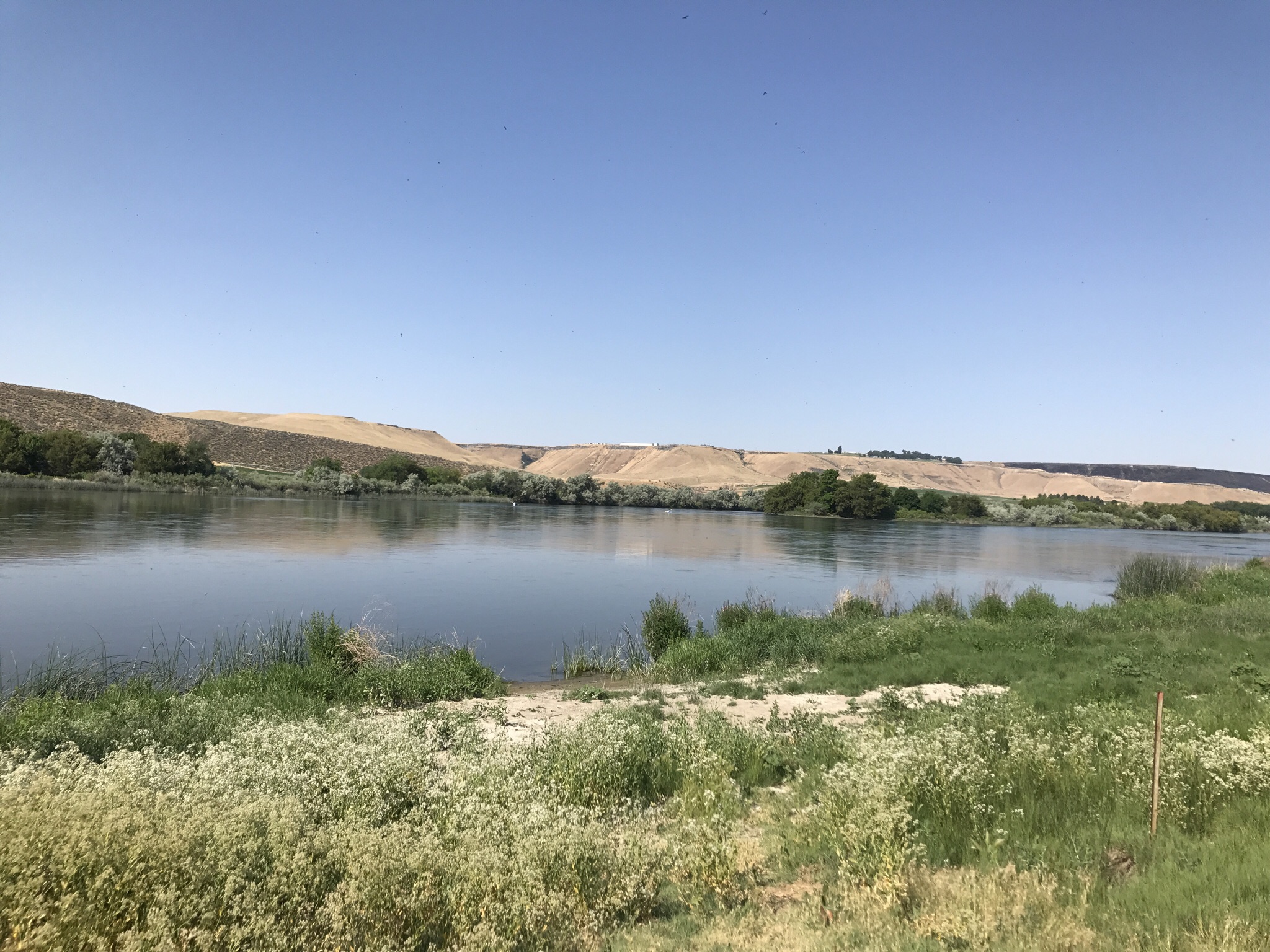
The beauty of the road is so much more than views. It is the elevation loss and gain that sneaks up on you as quickly as the road snakes its way along the Snake River.

It is the surprise of the desert that has made its rural-America mark in southeastern Oregon.

It is the spontaneity of stopping at state parks for a peek at history and scenery so breathtaking you feel you’ve stepped into a mini Grand Canyon.

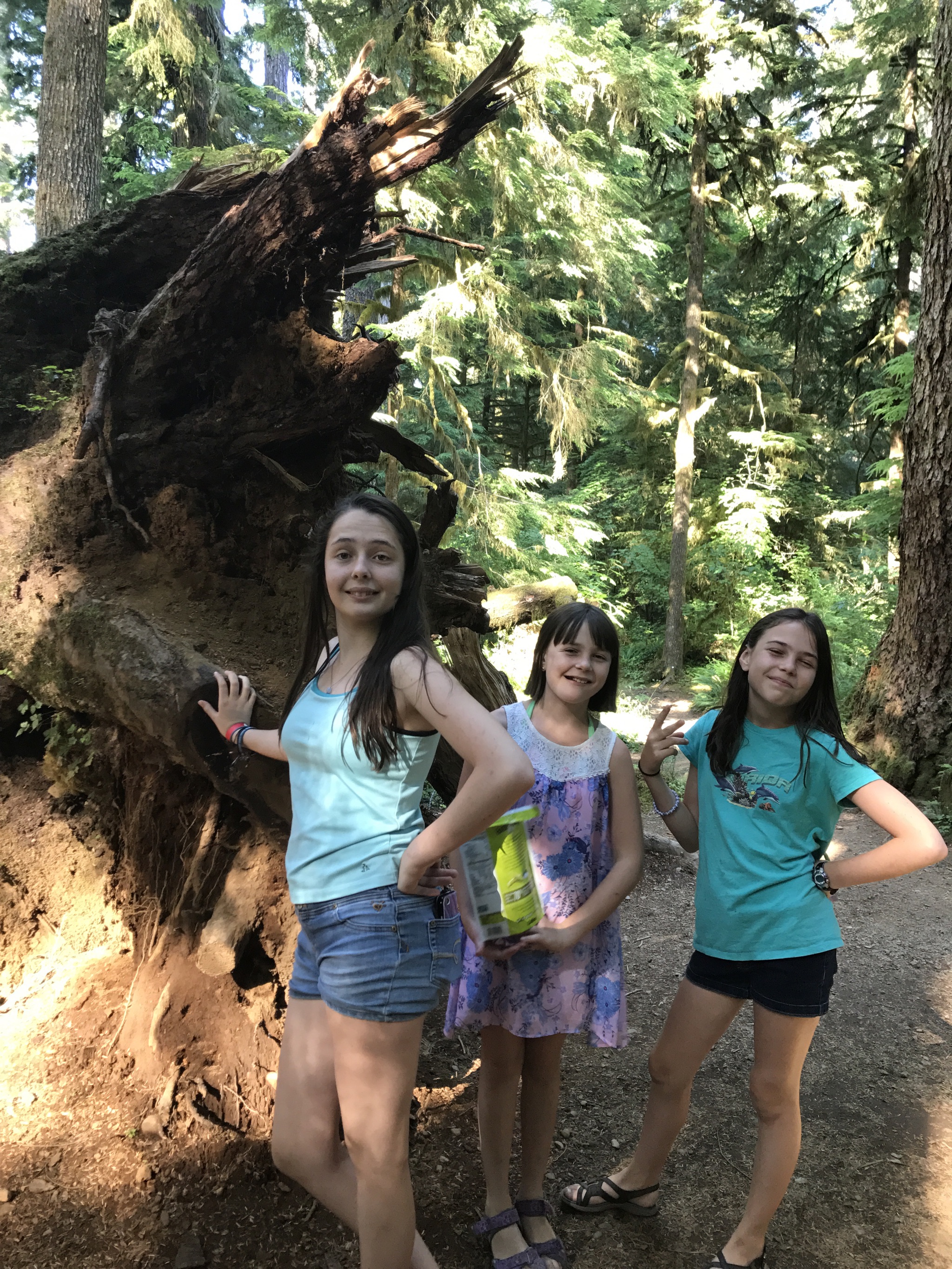
It is the trail our ancestors walked upon that you place your weary soles on now, however twisted and stolen it may be. It is still a silent beauty resting behind a sleepy Americana town, waiting for rediscovery and firsthand learning for three young women.

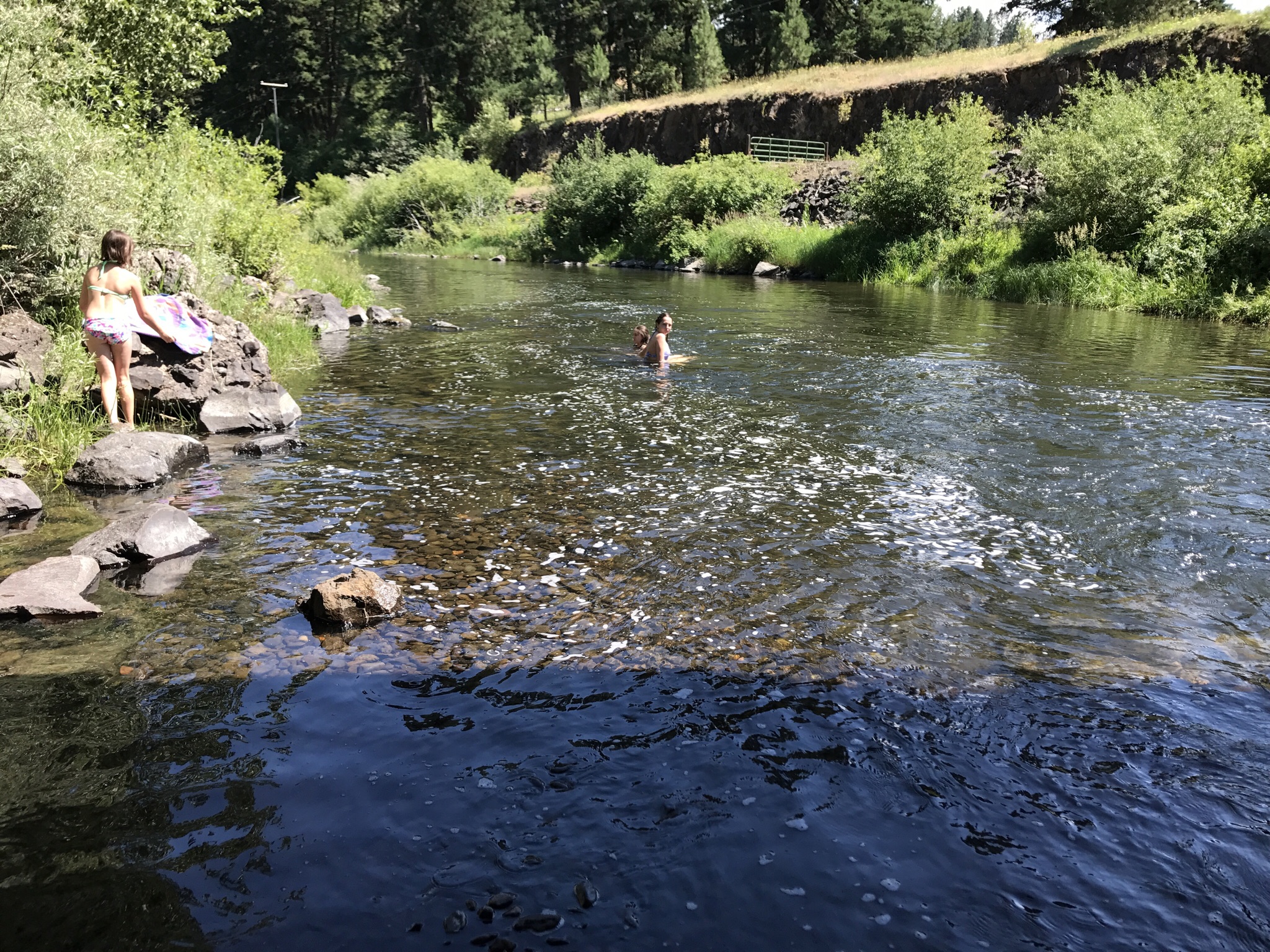
It is the creek sparkling in the hotter-than-expected northwestern sun, and the quick dip that makes an afternoon sparkle just as brightly.

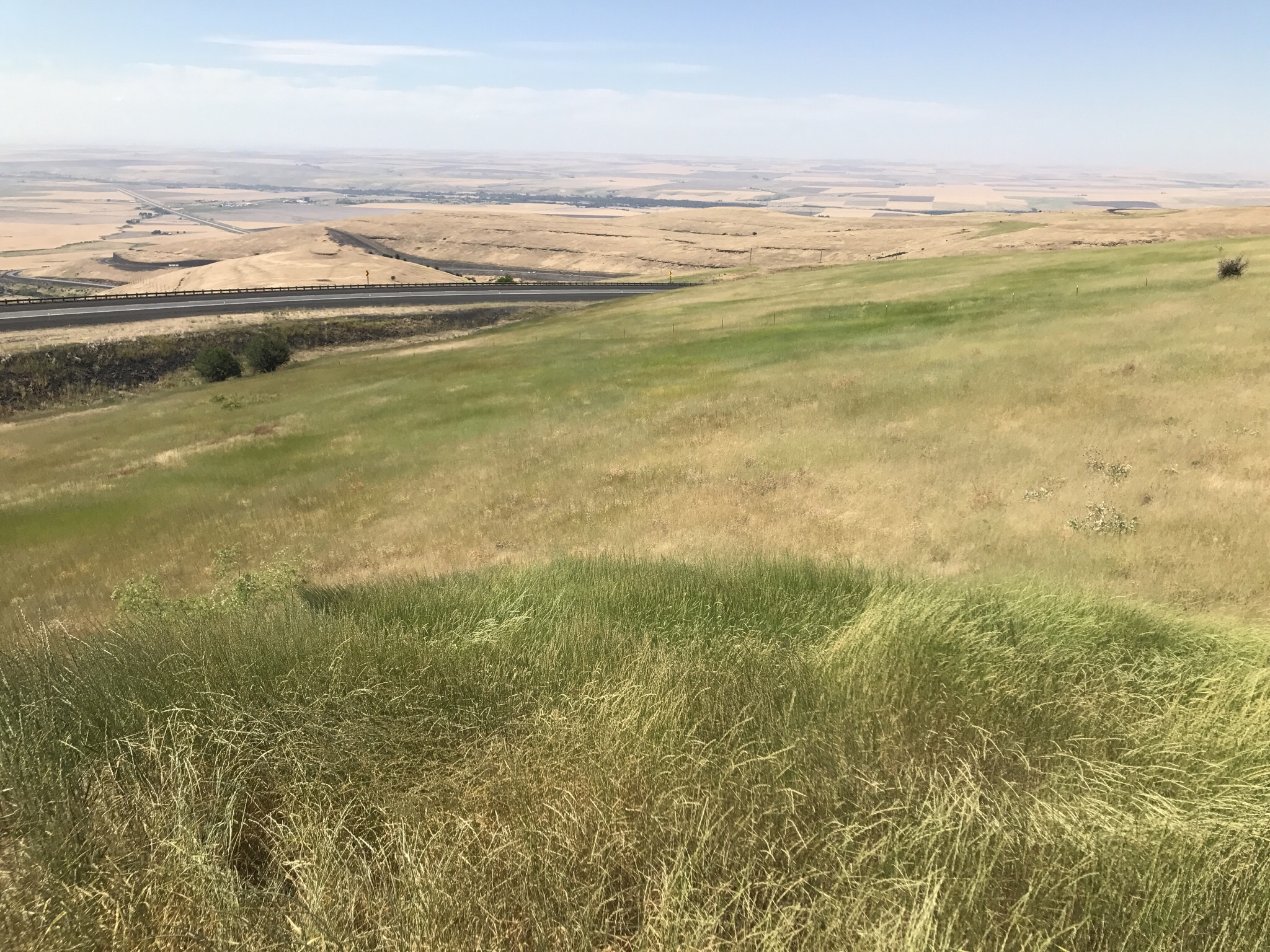
It is the curve that moves from summit to limitless landscapes, to the expansive end of the Oregon Trail, played out in a quilt of farm fields, and the hope they held for a better life.

The road brings beauty, and within this beauty lies everything you’d expect and wouldn’t expect: children bickering, bits and pieces of trash and clothing piled up in the backseats, state lines that bear no stoppable signs, audiobooks and downloaded movies, snapshots taken from a moving vehicle, trucks that hog both lanes, treeless mountains and endless vineyards, poverty and wealth found behind fences and up on winery hilltops.

The road brings more than views of tall pines, sagebrush-only molehills, and sleepy rivers. It brings us all a new world view where we search for ourselves and find ourselves in each other. Where children find joy in only their siblings’ company, where the road promises a pool at the end of the day and a reality check about small city poverty to remind us of what we have.

Can you see it from an airplane, from a train ride, from a walk down the block?

Never quite like the views you’ll find when you hit the open road. The views of nature, of civilization… of yourself.

You just need one set of keys, a whole lot of gumption, and a pair of soul-searching eyes, and you can find yourself a whole new world view.

All of Me… for All of Us

The email arrives at 2:18, one minute before the last bell and the rush to professional development that will rob me of my time and steal what little time is left to revise my latest paperwork dilemma (the endless paperwork dilemma of being a teacher in the twenty-first century).

This is the rush, the constant rush, that is my afternoon: students stopping me in the hallway to ask what they missed when they were gone, teachers commenting on the lack of grammar present in all writing and instruction, a line for the only staff bathroom nearby, a snakelike maneuver through the after-school net of kids clinging tightly to the last moments of the school day, a quick conversation in the shared bathroom about a shared student who told a teacher my class is his favorite, the rush back to my room to pack up my bag, gather my things, and make it to the classroom on the other end of the third floor.

All in ten minutes.

All after giving up nearly my entire block of planning to meet with a student and her family about an IEP, after waiting for a translator who never showed up, after discussing her math skills, her joy of writing, her absenteeism, her prom dress (donated by a kind soul who managed to find a sheer blue scoop neck that was made for her).

And after an hour of mindfulness with a video that has scared the shit out of me about my failure to raise teens in this day and age, about the addictiveness (equivalent to alcohol) of phones and social media, I must begin my afternoon rush: late to pick up my youngest, a dash across town to gather up the carpool, a dash back to discover two unpaid water bills by our tenants, to receive two flustered calls from the insurance agent about the dent in my Pilot, to break up three arguments over whose doll is whose, and to finish that damn SLO data nightmare before my midnight deadline.

All in sixty minutes.

I have ten papers for my online class that I must grade by Saturday. I have twenty emails I haven’t checked. I have a stack of paragraphs waiting for editing. I have dinner to cook and children to coerce into completing chores and finishing homework.

And I don’t have time for this.

But I do it anyway. I place the delinquent bill on top of our MacBook for Bruce to see. I finish my tea. I gather my keys. I call my girls. The oldest defiantly stays, but the younger two join me for the trek back.

We stop for fast food noodles and make it in time to see the art show. Riona googles over the sculptures, the pottery, the mixed media. Mythili eyes the graphic arts.

And then the choir concert. The show begins with all the choirs onstage singing a song from five decades ago, and Riona comments (quite accurately) that they must have picked a song from when the choir teacher was little. I can almost feel a collective groan building up inside us all as the song nears its end. But then I notice how many of my students are on stage, and I simmer down, because they are why we are here.

The cute emcees crack song-related jokes between each song. And what follows is nothing shy of amazing.

Soloist after soloist take the stage with voices as smooth and luxurious as anything you’d hear on the perfect pop radio station. A mix of modern and foreign, old and new. Belting out all ranges of the scale from the highest soprano to the lowest baritone.

As I sit with my wiggling girls in the front row, screaming and clapping when they hit those high notes, tears are ever present. I let them fall only two times–when the smaller-than-the-rest special needs student sings a solo in the choir’s interpretation of “Bohemian Rhapsody”, and when PoeMuLayLo takes the stage.

Hers was the paragraph I put up on my screen for the past two days as one to model, one to look up to.

Hers was the voice I heard singing in Karen last week, the lilting pain of persecution so clear even if I couldn’t understand the foreign words.

She has been in my class for three years, with her bright eyes, her kind smile, her desire to bring every piece of writing to perfection, to never put up with anything but the best from even her seat partner, to quietly be a calming presence that no one would ever think to cross.

And here she stands, her accent gone, the American song spilling out of her as if she wrote the words herself, and I can do nothing but try to capture one last piece of this magic before I have to say goodbye to her forever.

I’m not thinking about the emails. The papers to grade. The endless tasks that make up my afternoons of teacher-motherhood.

I’m thinking about only her luxurious voice, about the music that connects us all, about how much I will miss her.

“She’s leaving, isn’t she, Mama?” Riona whispers to me, seeing the tears linger on my cheeks.

MuLai belts out the chorus of “All of Me” one last time as I nod my head, unable to answer.

Right now, in this moment, there is no rush. No snakelike maneuvers. No wishing to be somewhere else.

There is only her voice. John Legend’s song. And All of Me.

Here.


Are You Hungry?

My day begins before it begins. With a late-night text, a non-response, and a warning. With cats scratching me awake as the sun just enters the sky. With the complexities of parenthood that bring joy and turmoil to each and every day.

Me: “Hope you’re having fun! Please be home by 8:45 so that we can deliver the cookies to the food bank.”

Two hours later:

Two hours and thirty seconds later: “If you are not home by 8:45, you are grounded for a month. We have been planning this for three months. Please do not ignore my texts.”

Two hours and forty-five seconds after first text: “OK.”

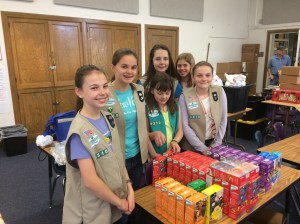
Even as I type the words, I know they are too harsh. And when she cycles around the corner at 8:42 in the bright morning sun, her eyes puffy from lack of sleep, I just want to scream. She goes straight upstairs to change clothes. I bring her her Girl Scout vest, and she silently glares at me. She comes downstairs without wearing it, and I just about lose it.

The last words I heard her speak, after the flurried series of texts and phone calls the moment we arrived home yesterday, after my felt-like-a-migraine headache and hurried “yes” response to her sleepover, after I remembered, already under the down comforter, “You have to be home by 8:45 because we have to deliver the cookies,” were: “Why can’t the rest of the troop do it?” followed by a door slam.

The other three girls pile into the backseat of the Pilot, and I pile it into her. “You cannot have a phone if you refuse to respond to my texts. I’m taking it for at least a week.”

Her tears begin to fall.

“And I just can’t believe how selfish you are being right now. We are going to give cookies to people who DON’T HAVE FOOD. And you’re mad at me for making you come home from an unplanned sleepover at the time we agreed to go?”

“I thought—”

“You didn’t think. Why didn’t you respond to my text?”

“I thought it was just for information.”

“It was. But do you remember the last words you said to me as you left?” (I’m thinking of the pounding headache, the echo of the wooden door slamming). I remind her.

“If you can’t respond to texts, you can’t have a phone.”

Her tears swallow her words now. She swallows them in the brief moments between my harshness and our arrival. The others are already there, waiting for us.

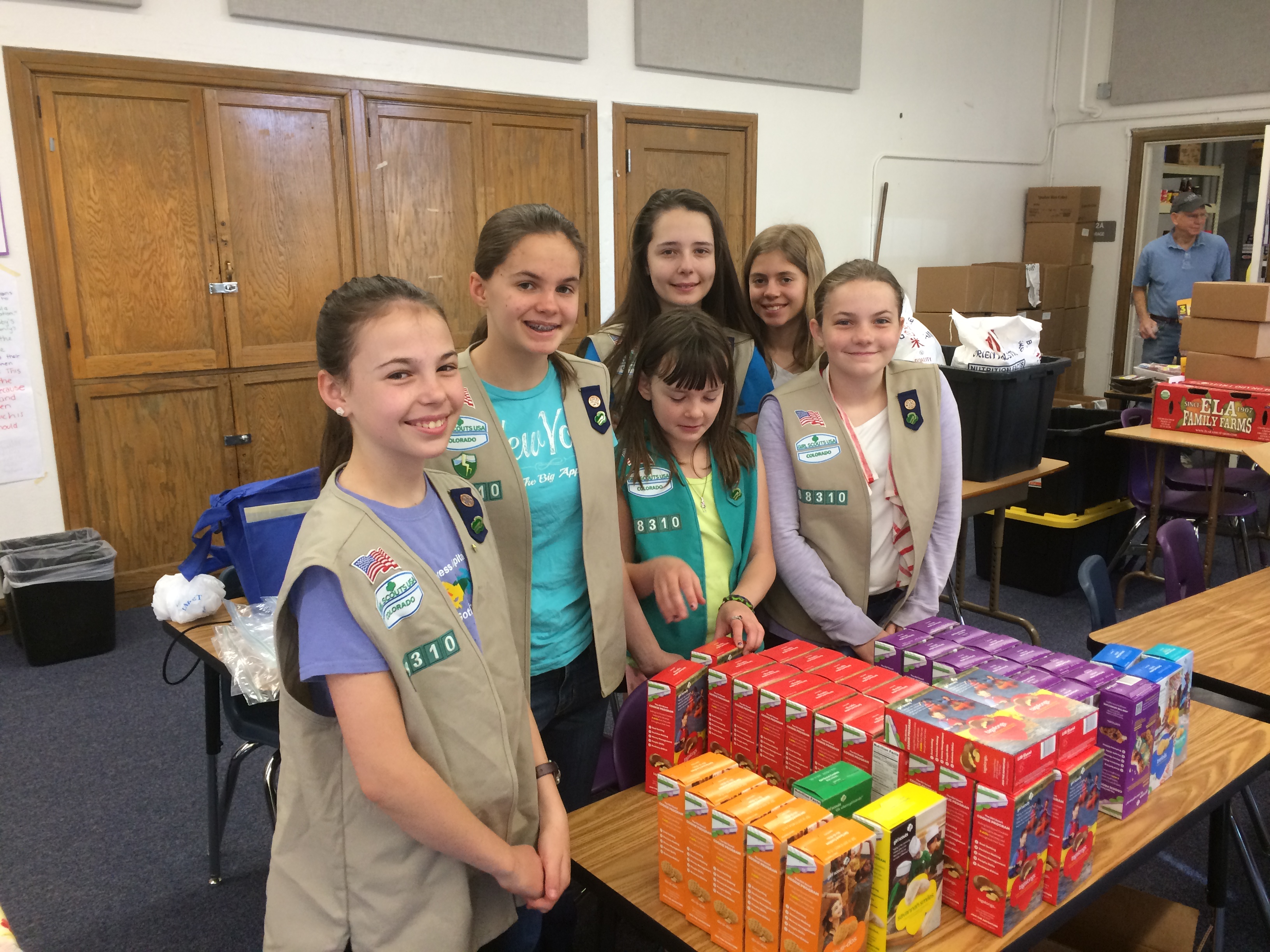
We carry and roll the 43 boxes of leftover Girl Scout cookies into the school. Jacklyn is waiting for us, her heart so big that she practically offers a hug to each and every one of these girls she doesn’t know.

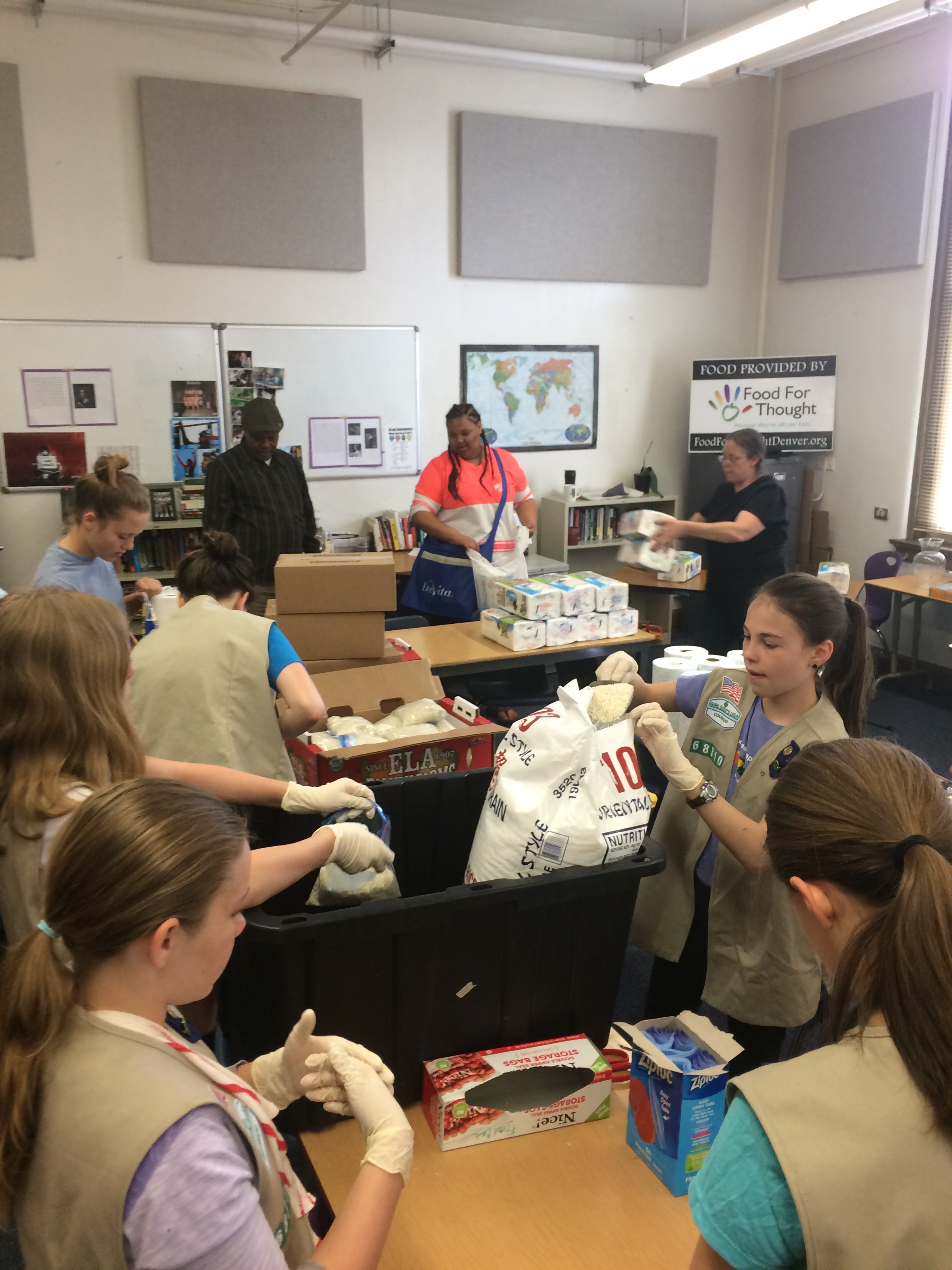
“We’re so happy to have you here! Let me give you a tour.” She points to a girl who is filling bags with loaves of bread. To the tables stacked with clothes. To the halal chicken she found especially for our Muslim students. To the shelves and shelves of canned goods. To the two hundred pounds of rice, the stacks of towels, the cabinets filled to the brim with more for next week.

A man enters, having seen the temporary “Food Bank” sign on the door. He is as small as my twelve-year-old, wearing glasses and a hopeful grin. She immediately welcomes him in her cheery voice, explaining that the food bank is for the students’ families, but he can surely have some Girl Scout cookies and a snack.

“Are you hungry?” She asks him. It is a question that all of us say every day, never even thinking about its weight. Its weight presses against me now as my oldest wipes away the last of her tears and smiles at him.

“Yes.”

Jacklyn hands him apples, the last box of Thin Mints, and before he leaves, he has an entire box of food in his hands because her heart is too big to say no.

Families trickle in, and it turns out I know almost all of them. The mother and younger siblings of Isra, who’s graduating this year after four years of being a shining star in my classroom. Her tiny sister, her purple niqab as bright as her eyes when she picks out cookies for each of her siblings. The father of Ana Maria, whose mother took time out of her busy life to help me improve my Spanish, who spent the day with my girls and I last spring break, who recently left for Mexico and risked everything, even walking, to get back here.

Jacklyn greets them each with a hug, a reference to their last visit, a cooing comment about their beauty, their students, the exciting availability of Girl Scout cookies. Her warmth bubbles up all around her, and I feel my harsh comments and my daughter’s shaky responses melt away into the reality that fills these bags with food and hope.

The girls busy themselves filling quart-size bags with rice, and Izzy perks up enough by the end of the hour to speak to me in a normal, and kind, voice.

Just before leaving, one of the newcomers arrives with a small black backpack on. Jacklyn knows just how to speak to a student learning English. Slowly. Looking at his eyes. Using gestures. She learns that he arrived by bicycle, that he lives near Monaco, and that his bag is too small.

“You just fill up two boxes for your family. I’ll get a pen. You can write your address and we’ll bring you the food.”

Before I can surmise the legality, I mention that we live by Monaco and will bring it ourselves. Moments later, it becomes clear that he is unable to write his address. I hold up my hand in a cross. “You live on Monaco, do you know the cross street, the street that crosses Monaco?”

His eyes brighten. “Iliff.”

We gather our things. Four girls and the food pile into my co-leader’s car. He helps me remove the wheel from his bicycle so two girls, the bicycle, and he can fit into the Pilot. As we make our way eastward, I ask his name.

“Donald.” (only when he says it, it sounds like, Doh-nol-d).

“Hello, Donald. That is my husband’s name!” (Riona snickers, knowing he hasn’t used that name since the moment he was born). “And that is our president’s name.” At this, even Donald snickers, because even he, newly arrived from Malawi, knows that it’s a joke.

Ten minutes later, we drive past our house. I point it out to him. Not because he’ll ever go there. Because I want him to know that, if he needs to, he can. We continue to Monaco and Iliff, and he is able to tell me where to turn, when to stay straight, until we arrive at the apartment complex and gather the food, the girls, and the bicycle out of the two vehicles.

We carry the boxes to the door, and Donald enters with one of the boxes. We set another on a chair on the makeshift patio, and three small children emerge. A girl not older than three tries to lift the box, which is easily as tall as her torso, and then a mother and perhaps a father, emerge from the apartment to shake our hands and send us on our way.

“Every Friday, Donald, every Friday you can have food.” It is all I can think of to say.

It is just past 10 a.m., and I feel as if I have lived a year in these few hours. We return home, and Izzy is her cheerful old self. No dirty looks. No retaliation. She runs to jump on the trampoline at the neighbors’ house. She plays on the hammock. She makes a smoothie concoction and even washes the blender.

We continue with the exciting Saturday of double income, three kids: a dishwasher selection, grocery shopping, fixing lunch, returning library books, visiting the local coffee shop, soaking cedar planks for grilling salmon, sitting on the patio to soak up the mid-spring sun. The girls spend the entire day outside and between their troop members’ homes.

I tell the girls we’re going skiing tomorrow, and the younger two plead their case to stay home.

“Only if you call Grandma on your own and stay with her.”

I haven’t taken Izzy’s phone away yet, and I go upstairs just before dinner with a proposition and a promise: while the younger two are at Grandma’s, she can keep her phone if she goes skiing with me. But when I enter her room, she is dead asleep, light on, with the kitten, and I can do no more than take a picture of the beauty of that moment.

I want to tell her it is dinner time. I want to ask her, “Are you hungry?”

But I don’t. She already informed me, mid-afternoon, that she was up till 4:30 because she wanted to spend as much time as possible with her friends since she had to be home by 8:45.

I don’t wake her. I don’t need to ask my child, “Are you hungry?” because I know she isn’t.

I am quiet for once. I am thinking about Donald, who told me he’d never ridden a bike in Malawi, and now he even knows how to remove and replace a tire, to navigate across town on a Saturday morning even though he can’t write his address, to ask for food for a family of six living in a two-bedroom apartment less than a mile from my $400,000 home.

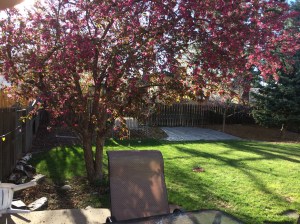
Instead, I sit on the patio with Donald Bruce and my two youngest, underneath the blooming crabapple tree. We eat cedar-grilled salmon, rice, tomatoes, and beans. We fill ourselves with stories and the evening breeze. I do the dishes for the fiftieth time in the six weeks since the dishwasher has been broken. I don’t complain, because I hate to admit that there is some satisfaction in completing the task by hand, in seeing your work, in soaping your hands.

And my day ends before it ends. With a full belly, a full plate, and this family.

With Jacklyn’s kind voice so much louder than my own, asking, “Are you hungry?” and knowing that all of us are hungry for something.

A text. A bicycle ride. A ski trip. A bright moment in a dark day.

My day begins before it ends. With a late-night silence. A sleeping child. A dish rack full of freshly washed dishes.

And a hunger for a better tomorrow.