Castellano

I’m thinking about Spain tonight. Not just because I’m already planning our summer road trip across the Iberian Peninsula. Not because Castellano is on the tip of my tongue–because it’s not.

I’m thinking about the garage full of trash bags that I gave to the Goodwill before we went to Spain. Old toys, books, clothes, unwanted small appliances, furniture, shoes, pillows… JUNK. About fitting our lives in five giant suitcases, five backpacks, and an airplane across the sea. About coming back to all of our items left in our house… that was no longer ours.

The piano. The maple nightstands that stood on either side of my parents’ bedroom in that custom-built two-story in upstate New York. The dining set we picked out soon after our wedding, its oak pedestal and matching chairs a testament to the solidity of our marriage. The most comfortable recliners a body could rest in.

Our beds. Our patio set. Our entertainment center. Every last comfort, joy… empty from our rental house upon our return.

How we begged and borrowed items to make a home once we returned from Spain. How we spent the “advance” of my first salary to buy double-over-double bunk beds so that our girls might share a room.

How, when we went there, with everything packed in luggage, we had to adapt to uncomfortable furniture, to a mattress on the floor for a bed, to no closets, no bath, no extra bathroom, no dryer, no dishwasher, no place to fit our lives into.

And how our girls… adapted. How they made friends, made paper cutouts to decorate the walls, painted ceramic eggs from the “Chino” to hang on the tiny plastic Christmas tree we found in the wardrobe, sat next to one of the space heaters during rainy winter months when the wind whipped through the frail windows, learned how to wash dishes and wait hours for clothes to dry and speak Castellano more fluently than me by year’s end.

And the aftereffects of Spain, of moving out… and moving back. Of trying to pick up the pieces of the life we’d left, trying to reposition ourselves amongst our friends, our family, our view of the world, trying new careers and new colleagues and a new house that was ours… and wasn’t ours.

That is why. Spain is why, five years later, we can make space in our two-bathroom, five-bedroom home for six other people. Why when I drove a couple miles today to pay a neighbor $80 for an extra refrigerator, her jaw dropped when I said what it was for, her “For Sale” sign in the yard of a house just like mine because she, her husband and two boys “just need more space.” Why, after sharing one bedroom for a year and one bathroom and one suitcase full of clothes, my girls could move things over, purge, split their beds, their time, their Americanness, to make room for a whole other family in our home.

I may not have learned Castellano. I may not have r’s rolling off of my tongue. My girls may not remember more than what a croqueta is.

But they know what it means to make a sacrifice. To give up a piece of themselves. To move. To transition. To lose and gain friends. To try new foods and new schools and new sleeping arrangements.

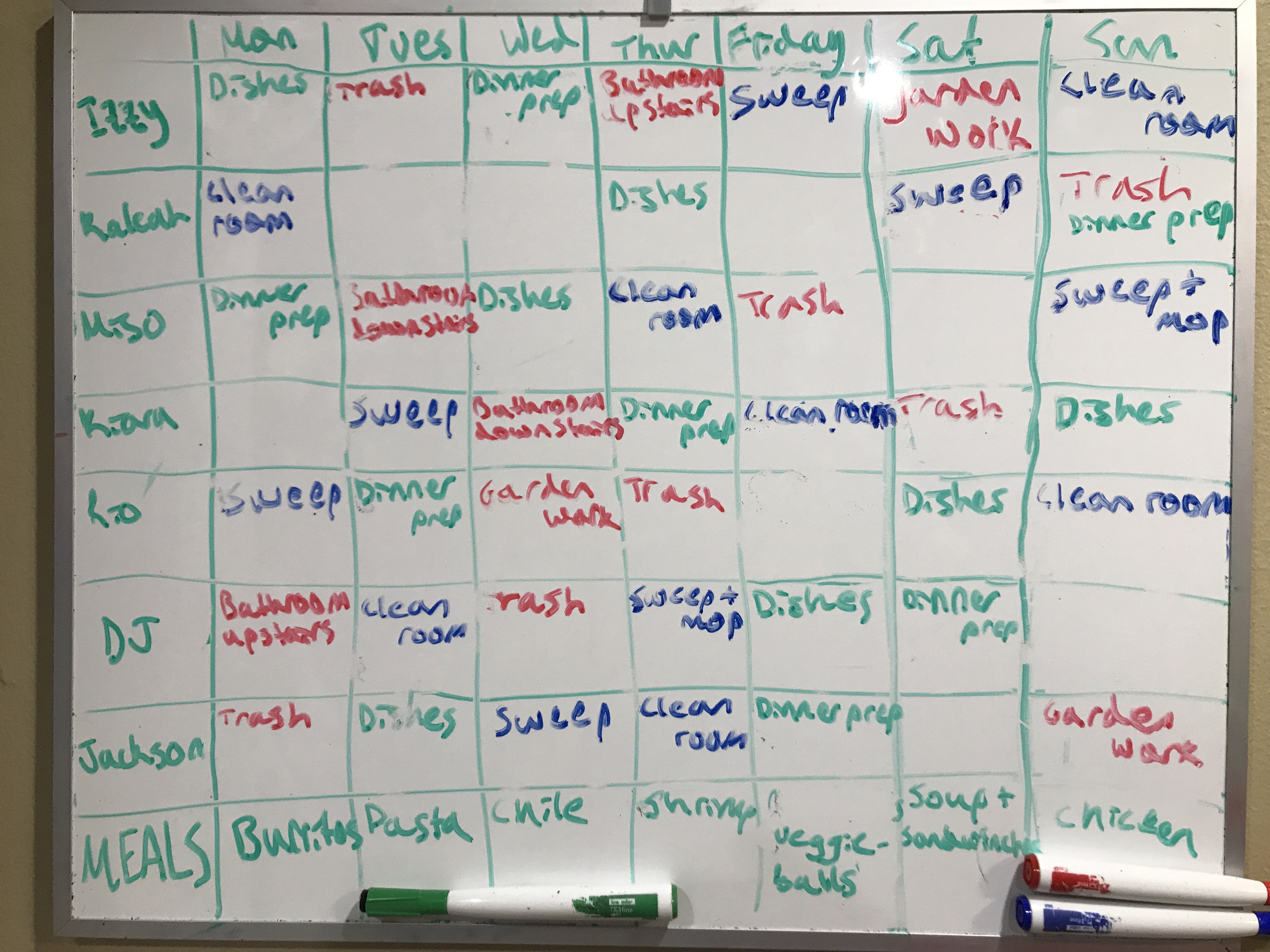
That is why this revised chore chart, designed by Mythili and with input from six other voices, is my picture for today.

There is beauty in those three Expo colors. Compromise. Adjustment. Initiative.

Adaptability. With a little bit of gumption and Castellano on the side, just for good measure.

From Age Five

From age five, they were in love. It was meet-the-teacher night, and school hadn’t even started yet. We meandered through the hallways and classrooms of the school we’d chosen, hoping for Spanish immersion and IB education. They were the two oldest daughters of three siblings, and they chatted, did cartwheels, and were holding hands before the night was over.

Her tall and slender, long-lashed mother quietly commented, “You see? They’re already best friends.”

And so, nine years later, when I texted my daughter to make room in her drawers and space in her bed for a loooong sleepover, her only, immediate, obvious response was, “REALLY!!!!!! OMG THIS IS AMAZING!!!!”

Because when you’re in love, when you have a connection, it does not matter if six extra people are going to live in a house built for… five?

Because when you make a fast friend at age five, when emotions are so visceral and honest, it’s probably something worth cherishing.

Because when you have a bonus-five-bedroom dream house, why not share the dream?

Because if the situation were reversed, wouldn’t we all, minute by minute, hand in hand, reach out and make the world just slightly better, one soul, one family at a time?

Because what makes a family?

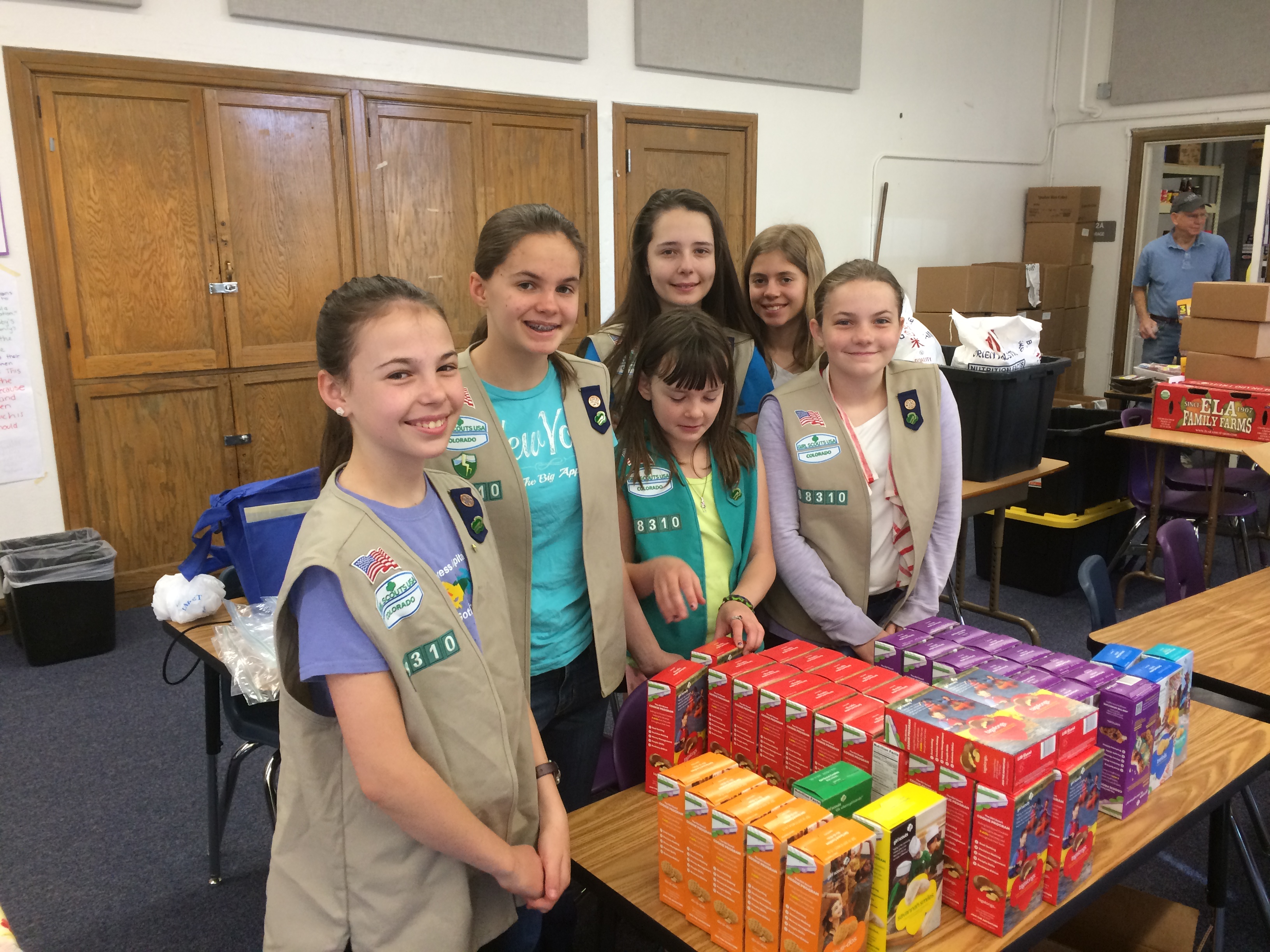
Girl Scouts. Trials and tribulations. Cookie selling. Lost money. Lost causes. Frustrations. And so much fun you would laugh until you nearly peed your pants, all in the snow on a bitter cold January night. Bridging ceremonies, brownies, a baby brother in tow on camping trips.

Backyard barbecues. Eating meat or not eating it. Sharing our sad stories. Telling the truths we were never able to tell in the schoolyard, at our jobs, in our “real lives,” but that slid so easily from our mouths in the comfort of our back patio.

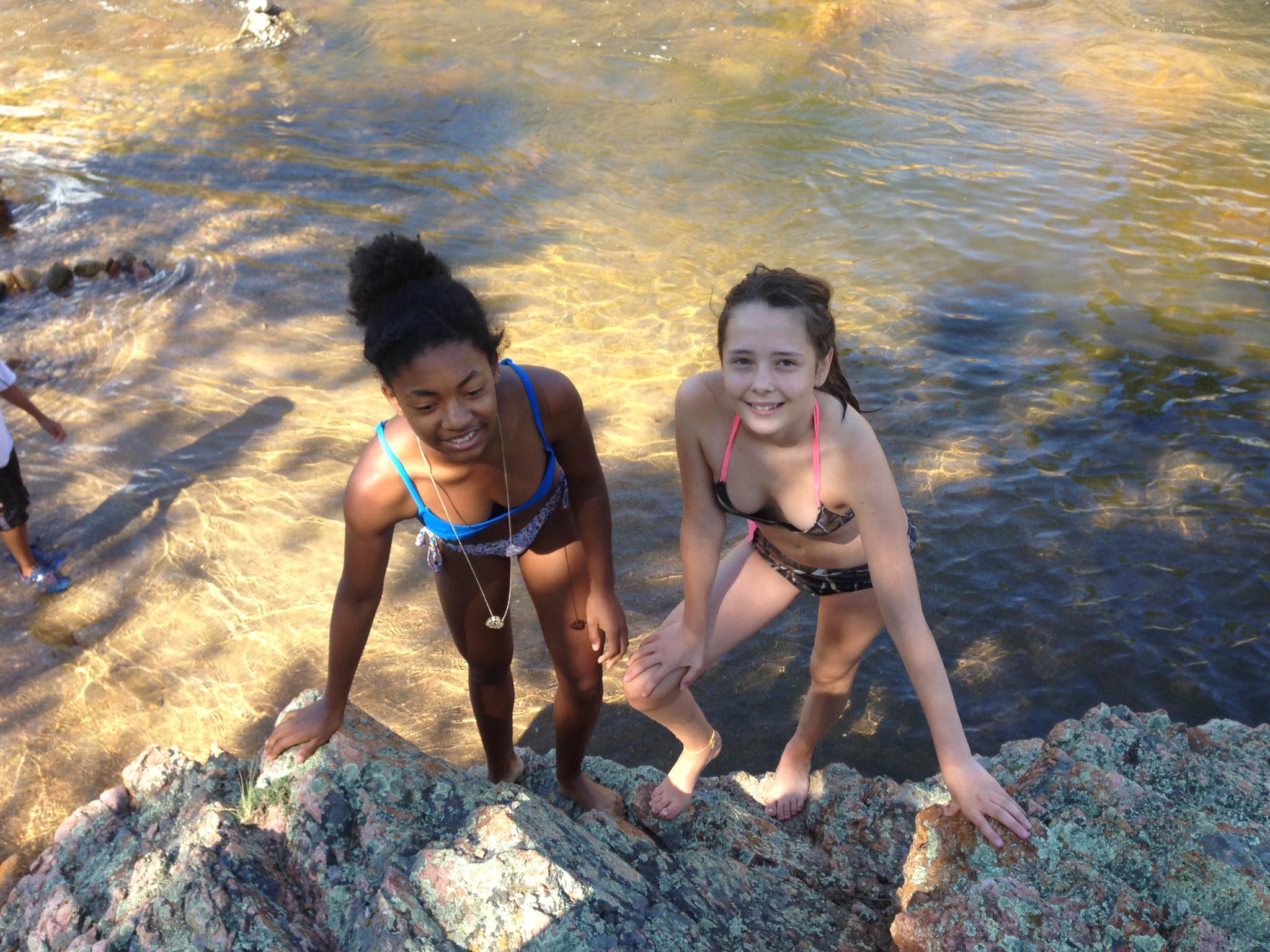
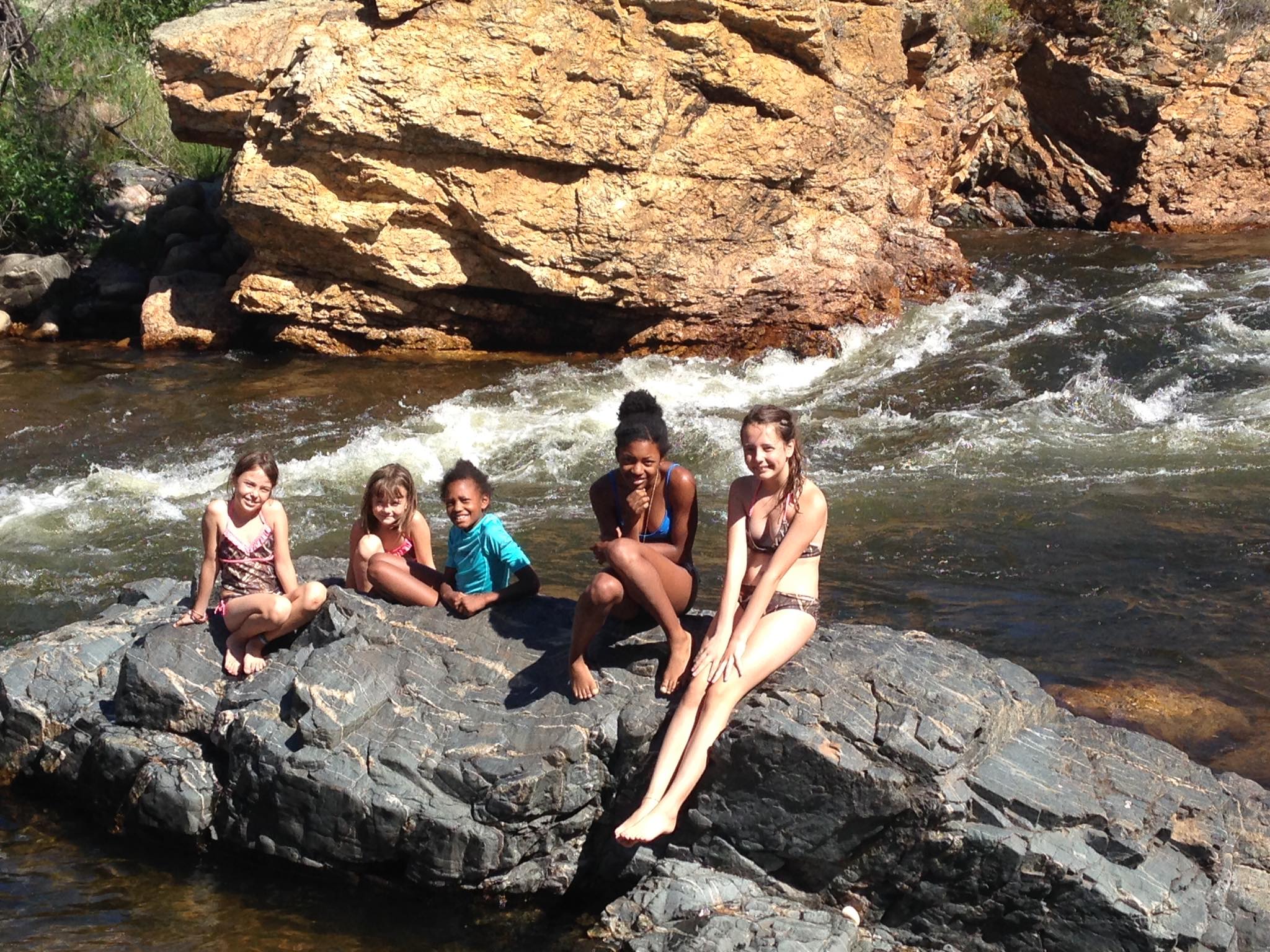
Camping trips. Sharing pies and drinks and a bite of an ice-cold river. And again, laughing until we cried under a hazy moon and starlit sky.

Sleepovers. Girls screaming into the night, little brothers trying to keep up and eating two giant waffles before ten a.m., before they were even ten years old.

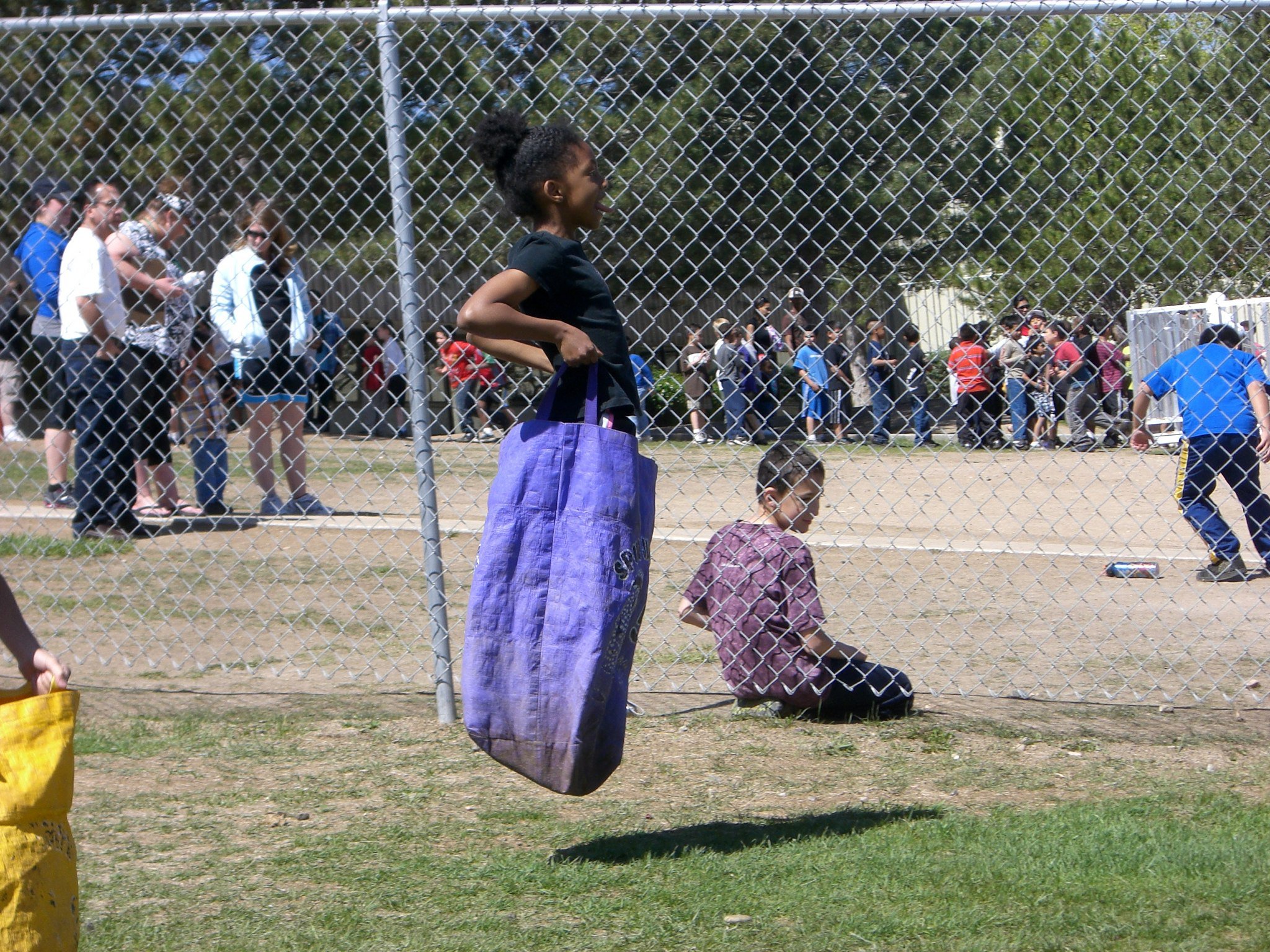
School. The daily ins and outs, friends come and gone, field days and jumping into the sky as if you were jumping right up into heaven. Teachers we loved and hated and commiserated. Our shared experience.

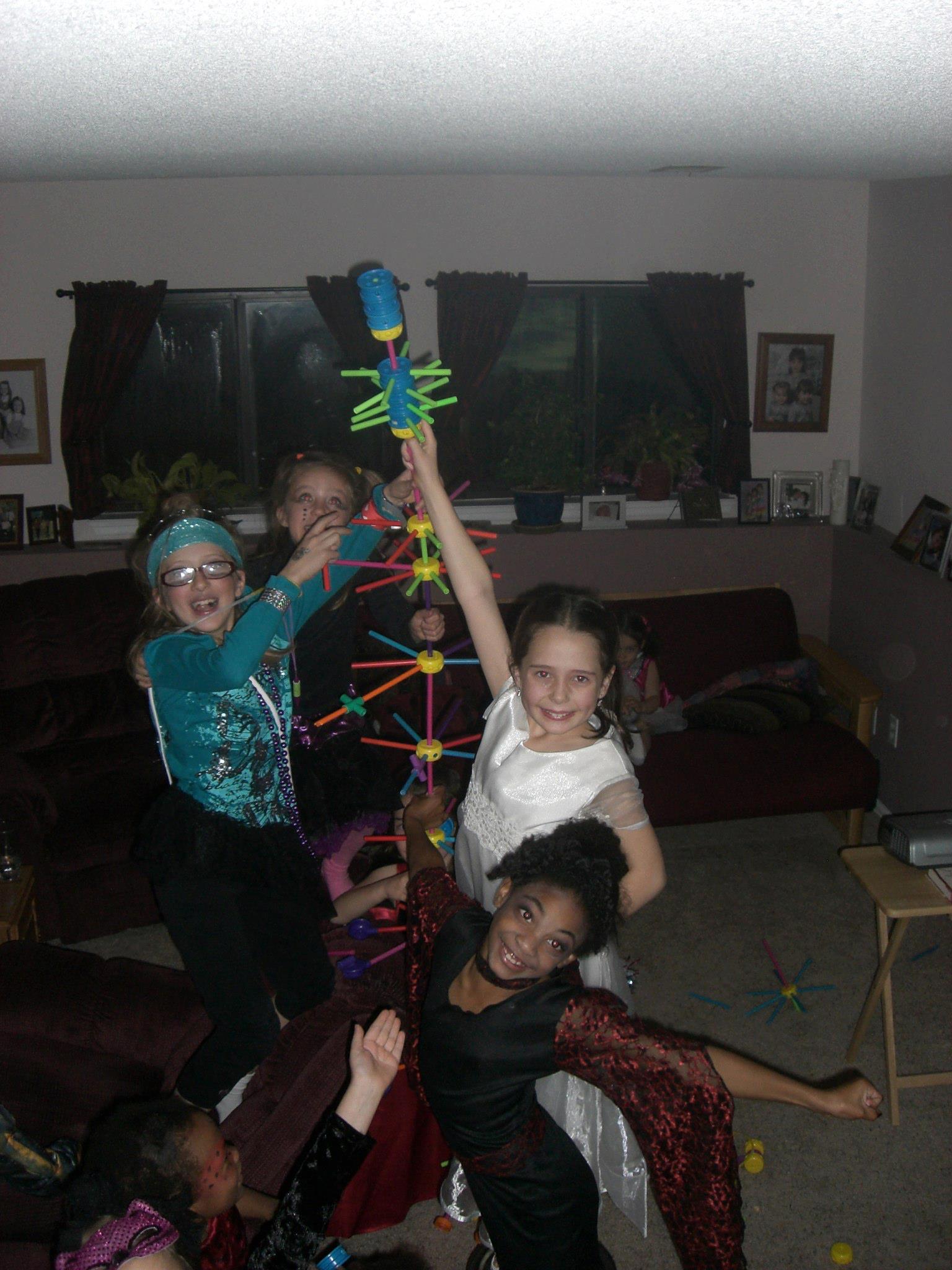
Family parties. Little girls in pretty dresses pretending to drink tea. Everyone, kids and parents, gathering household items to make a Halloween-happy costume. Parents gathering in the kitchen to catch the scene and capture a moment of each other’s joy, each other’s sadness. The connection found in youth, in young parenthood, in the heavy task of raising young people to become wise people.

Because… from the age of five, they were in love. Look how they’ve grown. Look at the young women they have become. Look at the family they have made for themselves.

That is why we can add six people to our five-person house. Because from age five, these girls have carried us into the home we call home. It began with a smile, a cartwheel, a hug.

That, and rearranging some beds, is about all it takes.


Closed House

When I was a child, I always looked forward to my elementary school’s open house night. We would spend time in class creating artwork and projects showing off our classwork for our parents to see. Someone would make cookies to be laid out on plastic tables along the hallway. The teachers would get all dressed up, and they would be waiting happily at their classroom doors to meet and greet the parents.

I was always so excited to hold my parents’ hands, pull them through the hallways, and show them my desk. On it would be a writing sample, a math test, a piece of macaroni art. On the walls would be more displays of student work. The teacher would meander in and out of the room, casually chatting with parents or answering questions like, “What will the next unit be?” or, “How did you come up with the idea to have them make planetary mobiles out of different sized sports balls?”

There was no PowerPoint. There was no outlined agenda. There was not a four-page handout justifying the use of technology, the rigor of content, the guidelines for being prepared in ___th grade. There were no parents giving speeches about fundraising, principals introducing them and cheering them on. There was no gathering in the gym to brag about why this school is different and better than all the others because of this population of students, that method of math, these test scores, this money raised.

The open house, or when I moved to Denver, the back-to-school night, was simply a chance for parents, non-hovering, working (class) parents, to enjoy a small sample of what their children’s schooldays were like, to put a face to a name of the teacher their kids were talking about.

I sit here now at the first of three back-to-school nights of the year. I have just finished my first full day in the classroom, my first full day of balancing between teaching three overcrowded classes, observing three other teachers, covering a class, and having an after-school meeting where I was told, once again, that my ESL students will not continue to receive the support they so desperately need because my course isn’t required for graduation.

I sit here now in a two-hour sit-and-get presentation following (already completed) twenty pages of paperwork stating the same information, following daily e-mails about everything my daughter is and is not doing.

My child was not allowed to come.

I sit here now thinking of all the papers I need to grade for my second job; of my oldest daughter who started high school yesterday and is no longer speaking to me because everyone she’s met so far has asked her to follow them on Snapchat and I won’t allow her to have Snapchat; of my husband’s (so rare) harsh words about a carpool miscommunication that we were forced to exchange in the rush out the door, the rush to get three kids to three schools because “school choice” matters; of the letter Oh Nih Shar wrote to me about how she made bad choices in high school just like I did (as I confessed in my letter to my students)–and how grateful she’d been two years ago when I sent students to track her down and tell her (in cards and letters) we loved her even if she had to marry at fourteen.

I sit here now thinking that everything in this PowerPoint is information I’ve already heard in the paperwork and the forced (or your wait list spot will be lost) parent orientation in the spring, and didn’t I CHOOSE this school, and do you need to further convince me of its value?

I sit here now as a twenty-first century parent, a twenty-first century teacher, wondering, for the love of God, what have we done with our world?

Whatever happened to hands-on projects and cookies in the hallway and simply putting a face to a name?

To kids being accountable for their own work without us helicoptering over daily e-mails?

To teachers dressing up, slapping on a smile, and just offering a casual, kind word?

I sit here now in this closed house we call a school. This place where we’ve set impossible expectations for our students and their families. Where we are strapped not only with too much homework for sixth grade, but also too many technological addictions that leave our kids feeling left out, where schools only feed the fire by providing them with one-to-one technology.

This is the first of three for me. It is the second day of school. I am not home to fully (with text citations, I promise!) explain to my daughter why she can’t have Snapchat. To mull over TEN late-night emails and calls about my middle child’s detention, later cancelled, for our second school of choice. To make sure my youngest has packed her spork and sleeping bag for her upcoming camping trip.

My daughter is not pulling me down the hallway, excited to show me her pastel drawing. She, like the rest of us in this inundated-with-endless-information society we have created, is probably at home playing a video game or we-chatting with her friend in China or trying to figure out her standards-based math problem on Google Classroom.

And I am not there. I am here, in this closed school, wishing that a two-hour PowerPoint justification could transform into a two-minute meet and greet. That we could just trust that our children’s teachers are doing the right thing. That they could just trust us to raise them with the best intentions.

Wishing that we could have an open house. Not a closed society where choices burn us and bore us and take us away from things that truly matter:

Our time.

Our children.

Our happiness.

Views from the Road

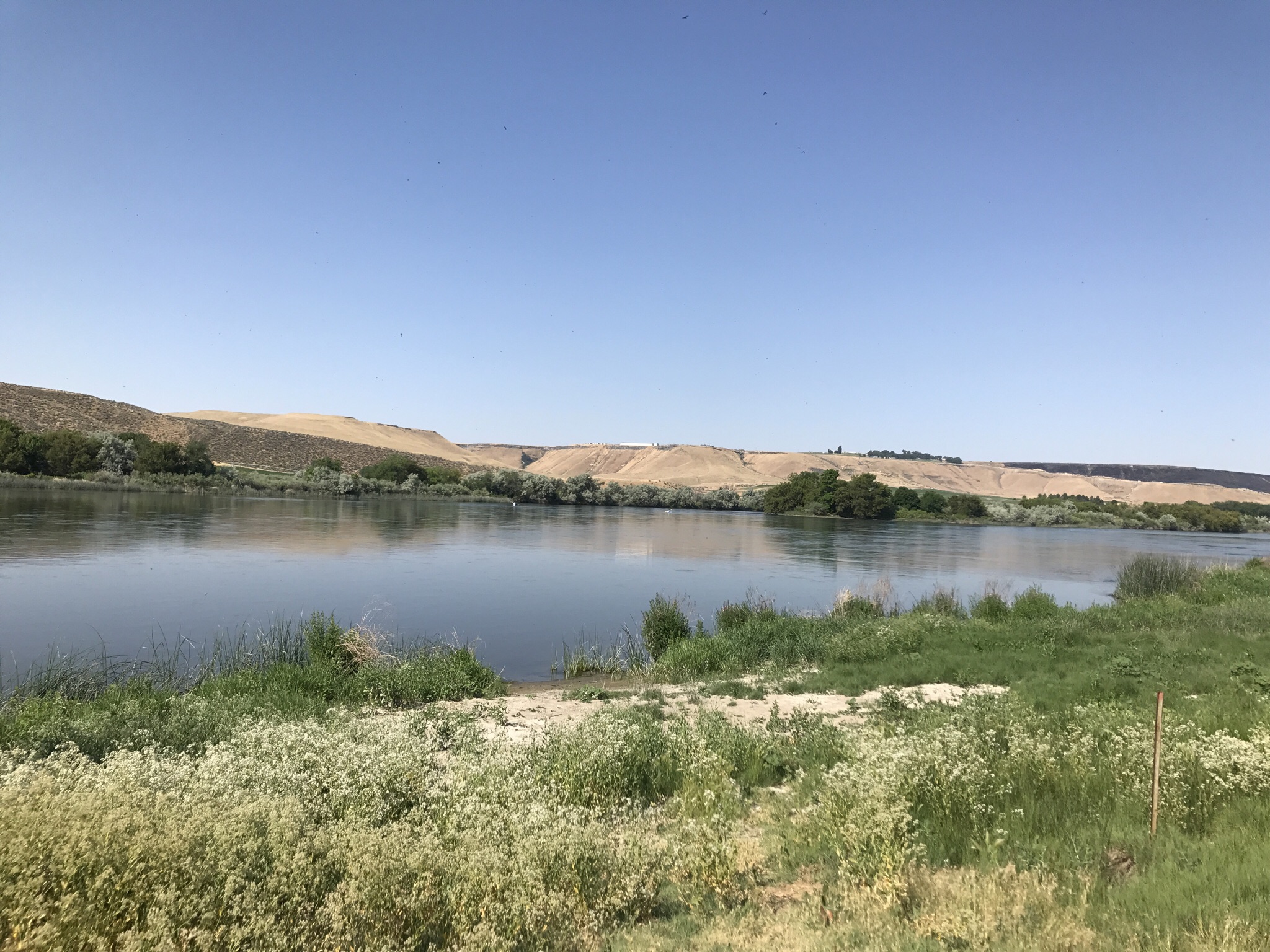
The beauty of the road is so much more than views. It is the elevation loss and gain that sneaks up on you as quickly as the road snakes its way along the Snake River.

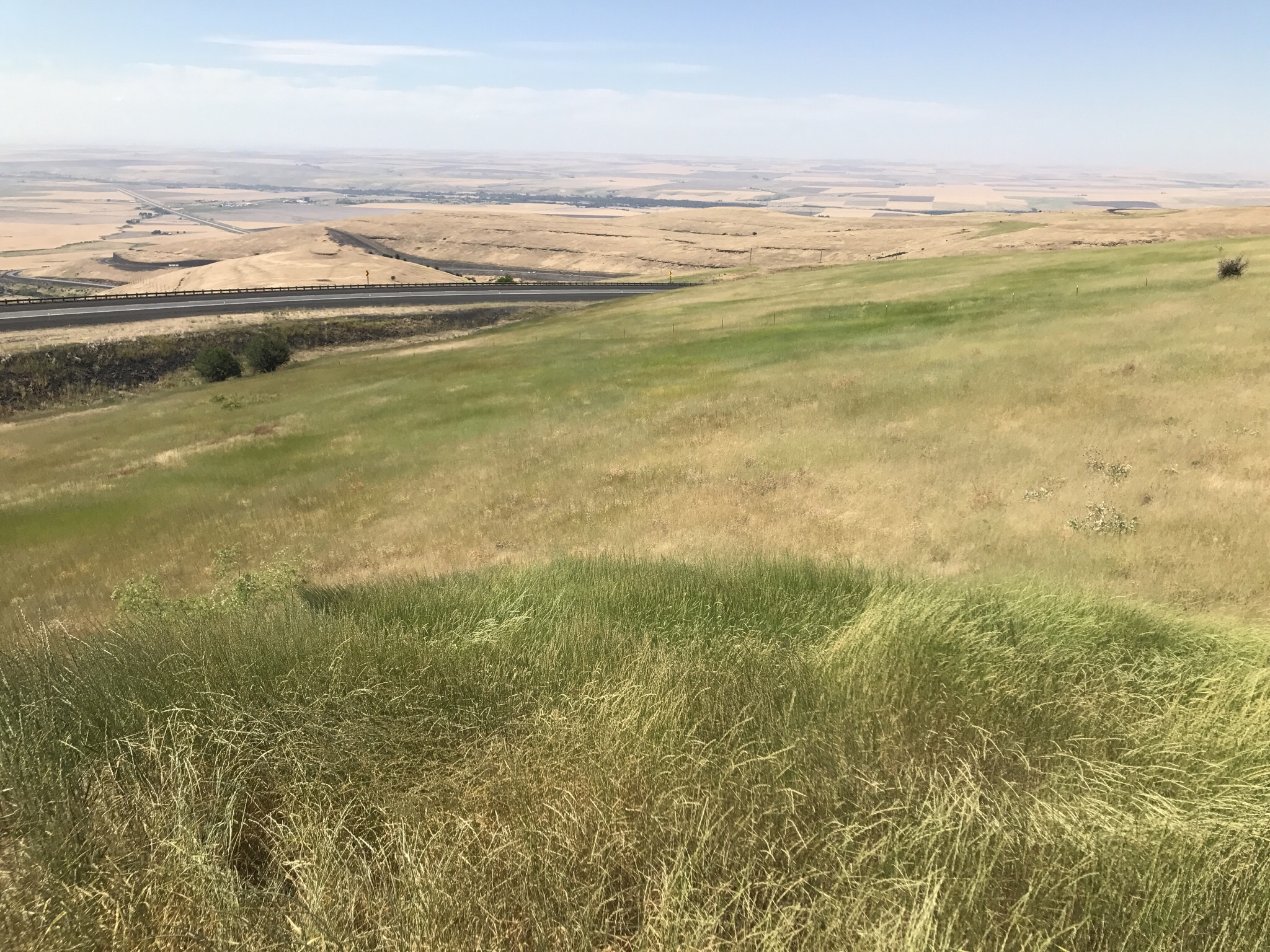
It is the surprise of the desert that has made its rural-America mark in southeastern Oregon.

It is the spontaneity of stopping at state parks for a peek at history and scenery so breathtaking you feel you’ve stepped into a mini Grand Canyon.

It is the trail our ancestors walked upon that you place your weary soles on now, however twisted and stolen it may be. It is still a silent beauty resting behind a sleepy Americana town, waiting for rediscovery and firsthand learning for three young women.

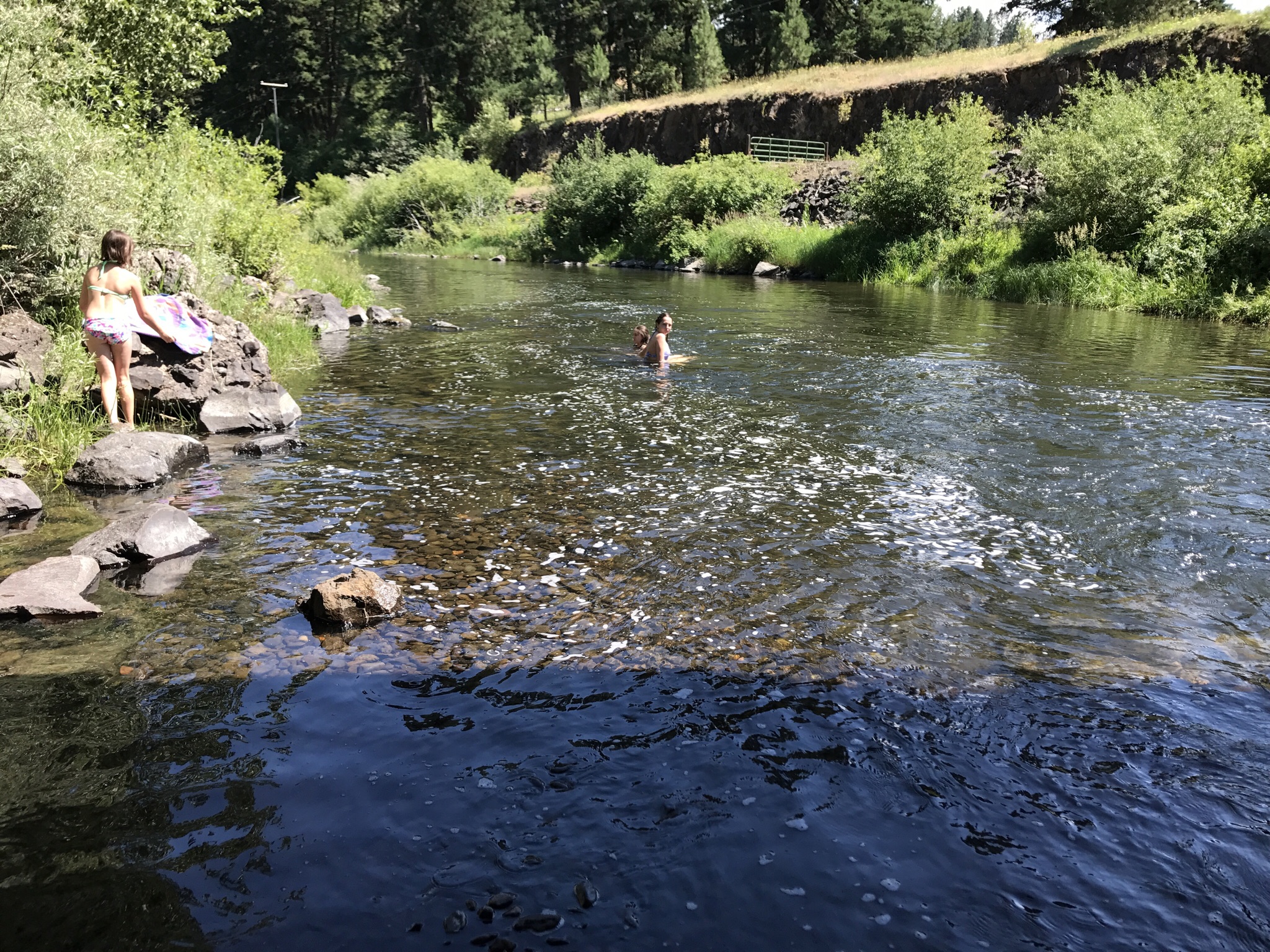
It is the creek sparkling in the hotter-than-expected northwestern sun, and the quick dip that makes an afternoon sparkle just as brightly.

It is the curve that moves from summit to limitless landscapes, to the expansive end of the Oregon Trail, played out in a quilt of farm fields, and the hope they held for a better life.

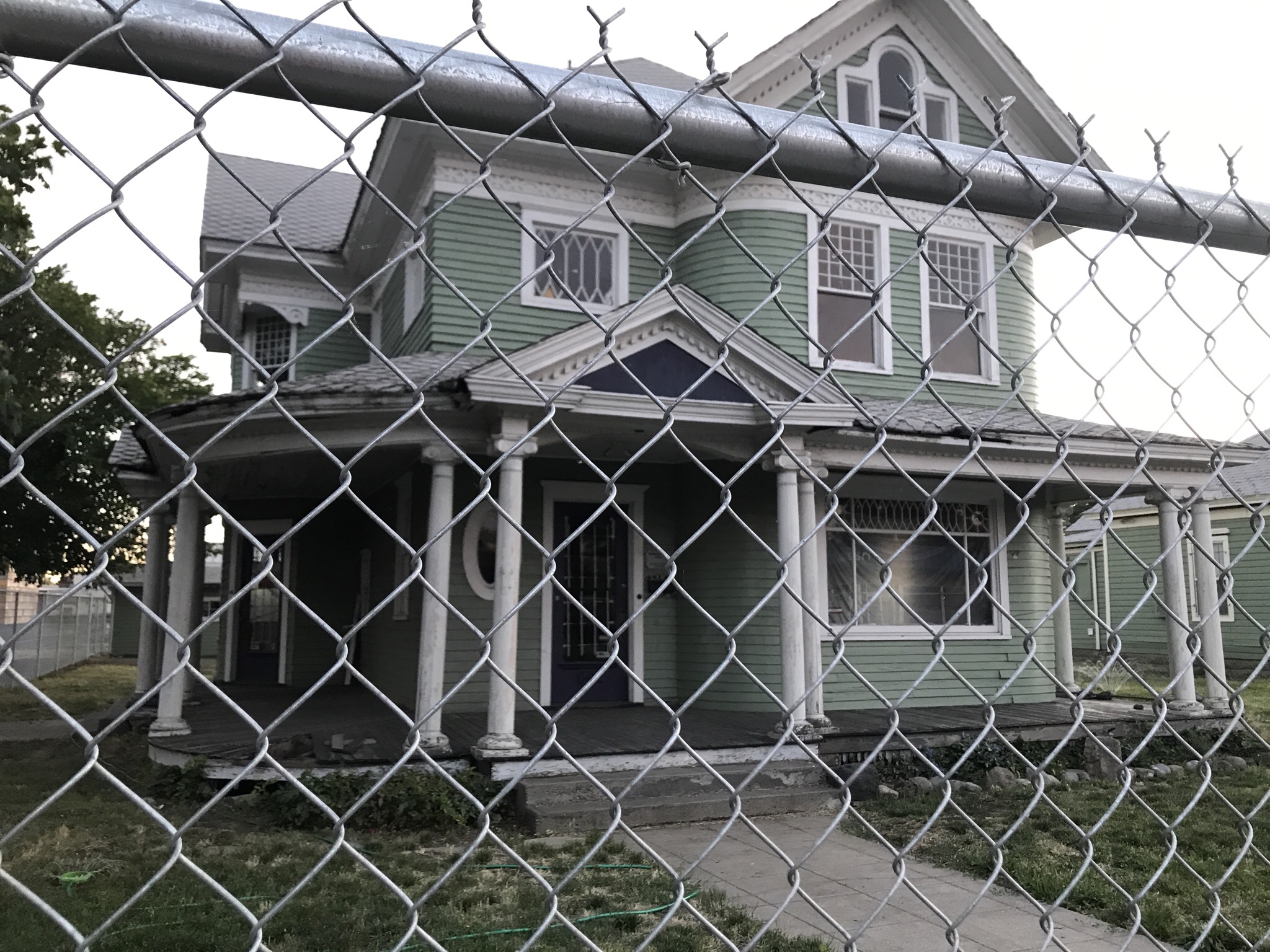
The road brings beauty, and within this beauty lies everything you’d expect and wouldn’t expect: children bickering, bits and pieces of trash and clothing piled up in the backseats, state lines that bear no stoppable signs, audiobooks and downloaded movies, snapshots taken from a moving vehicle, trucks that hog both lanes, treeless mountains and endless vineyards, poverty and wealth found behind fences and up on winery hilltops.

The road brings more than views of tall pines, sagebrush-only molehills, and sleepy rivers. It brings us all a new world view where we search for ourselves and find ourselves in each other. Where children find joy in only their siblings’ company, where the road promises a pool at the end of the day and a reality check about small city poverty to remind us of what we have.

Can you see it from an airplane, from a train ride, from a walk down the block?

Never quite like the views you’ll find when you hit the open road. The views of nature, of civilization… of yourself.

You just need one set of keys, a whole lot of gumption, and a pair of soul-searching eyes, and you can find yourself a whole new world view.

I Cry for his Loss

i cry for the card, for his loss,
 for his Iraqi-Syrian past,
 for all the burning hours of summer school
 where he committed himself
 to finishing high school in three years.
 
 i cry for his words, for his loss,
 his inescapable self that has hidden
 a kind face in a chaotic classroom,
 his sly smile catching my every
 snuck-in witty remark
 (even when no one else could).
 
 i cry for the system, for his loss,
 shuffled by our government’s wars
 between homelands that stole his home,
 for his pride in Iraqi architecture
 that he may never see again.
 
 i cry for his future, for his loss,
 for how unequivocally kind his soul remains
 after all he has witnessed in twenty-one years,
 for his brothers who wait under his watchful shadow,
 for our country to give him a chance.
 
 i cry for his words, for my loss,
 to not have his presence in my classroom,
 to have the nicest thing anyone’s
 ever written to me
 disappear with a graduation ceremony.
 
 i cry for the world, for their loss,
 for robbing refugees of their rights,
 for keeping the beauty that is him,
 that is within all of them,
 from sharing their strength
 with all of us, inshallah,
 for a brighter tomorrow.
 

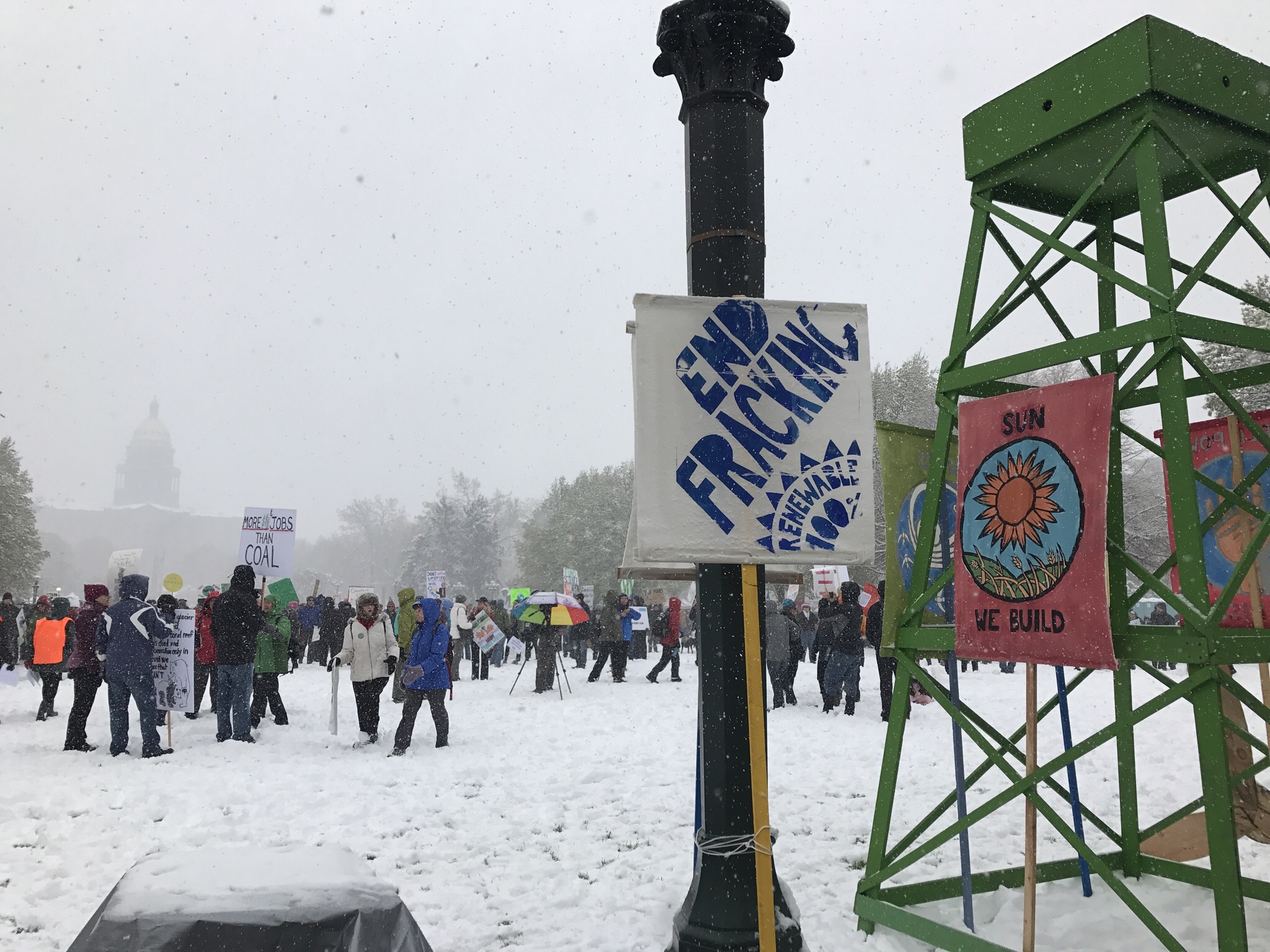
Snow March

because we need this:
 desertification looms
 just beyond the bend
 
 (Trump looms there as well,
 where the ninety-degree March
 made some record highs)
 
 and so? a snow march
 to keep precipitation
 where it belongs: Earth
 

Where Is My Grandparents’ America?

In the middle class houses all being scraped
to build mansions no one can afford?
In the stagnant salaries that ask us to
work harder for less money?
In the moms working two jobs,
the dads unable to keep up?

Where is my Italian grandmother’s dream
of a better tomorrow, a house she and her
Irish husband built and paid for
before they retired?

It is not my dream.
It is not our dream.

I am the working mother,
the disappearing middle class,
I am the two-incomes-barely-making it generation,
the strapped-with-student-loans
cause-we-thought-it-mattered generation,
the trapped in social media comparison
of who has the best selfie, the best vacation,
the best life?

Where is my grandparents’ America,
who came back from the war and
built from the ground up those tiny homes
that we can’t wait to tear down?

Where are the housewives who can sew clothes
and cook duck a’l’orange for a Wednesday evening?
Who are there when their children come home?
Whose husbands could buy pay for this house
on just one salary?

I am Generation X, torn between Baby Boomers
who raised us to be independent
and Millennials who can’t do anything for themselves.
I am the white woman who can never decide
between what is fair for her and fair for everyone.

Where is my grandparents’ America?
In the broken corporate ladder,
in the endless need for greed,
in the generations lost between yesterday and tomorrow.

In the hope lost between King’s improvised speech
and Trump’s rampant ignorance,
in a land I barely recognize,
in the rubble of torn-down houses,
torn-down American dreams.

(NOTE: Inspired by “Let America Be America Again” by Langston Hughes)

Are You Hungry?

My day begins before it begins. With a late-night text, a non-response, and a warning. With cats scratching me awake as the sun just enters the sky. With the complexities of parenthood that bring joy and turmoil to each and every day.

Me: “Hope you’re having fun! Please be home by 8:45 so that we can deliver the cookies to the food bank.”

Two hours later:

Two hours and thirty seconds later: “If you are not home by 8:45, you are grounded for a month. We have been planning this for three months. Please do not ignore my texts.”

Two hours and forty-five seconds after first text: “OK.”

Even as I type the words, I know they are too harsh. And when she cycles around the corner at 8:42 in the bright morning sun, her eyes puffy from lack of sleep, I just want to scream. She goes straight upstairs to change clothes. I bring her her Girl Scout vest, and she silently glares at me. She comes downstairs without wearing it, and I just about lose it.

The last words I heard her speak, after the flurried series of texts and phone calls the moment we arrived home yesterday, after my felt-like-a-migraine headache and hurried “yes” response to her sleepover, after I remembered, already under the down comforter, “You have to be home by 8:45 because we have to deliver the cookies,” were: “Why can’t the rest of the troop do it?” followed by a door slam.

The other three girls pile into the backseat of the Pilot, and I pile it into her. “You cannot have a phone if you refuse to respond to my texts. I’m taking it for at least a week.”

Her tears begin to fall.

“And I just can’t believe how selfish you are being right now. We are going to give cookies to people who DON’T HAVE FOOD. And you’re mad at me for making you come home from an unplanned sleepover at the time we agreed to go?”

“I thought—”

“You didn’t think. Why didn’t you respond to my text?”

“I thought it was just for information.”

“It was. But do you remember the last words you said to me as you left?” (I’m thinking of the pounding headache, the echo of the wooden door slamming). I remind her.

“If you can’t respond to texts, you can’t have a phone.”

Her tears swallow her words now. She swallows them in the brief moments between my harshness and our arrival. The others are already there, waiting for us.

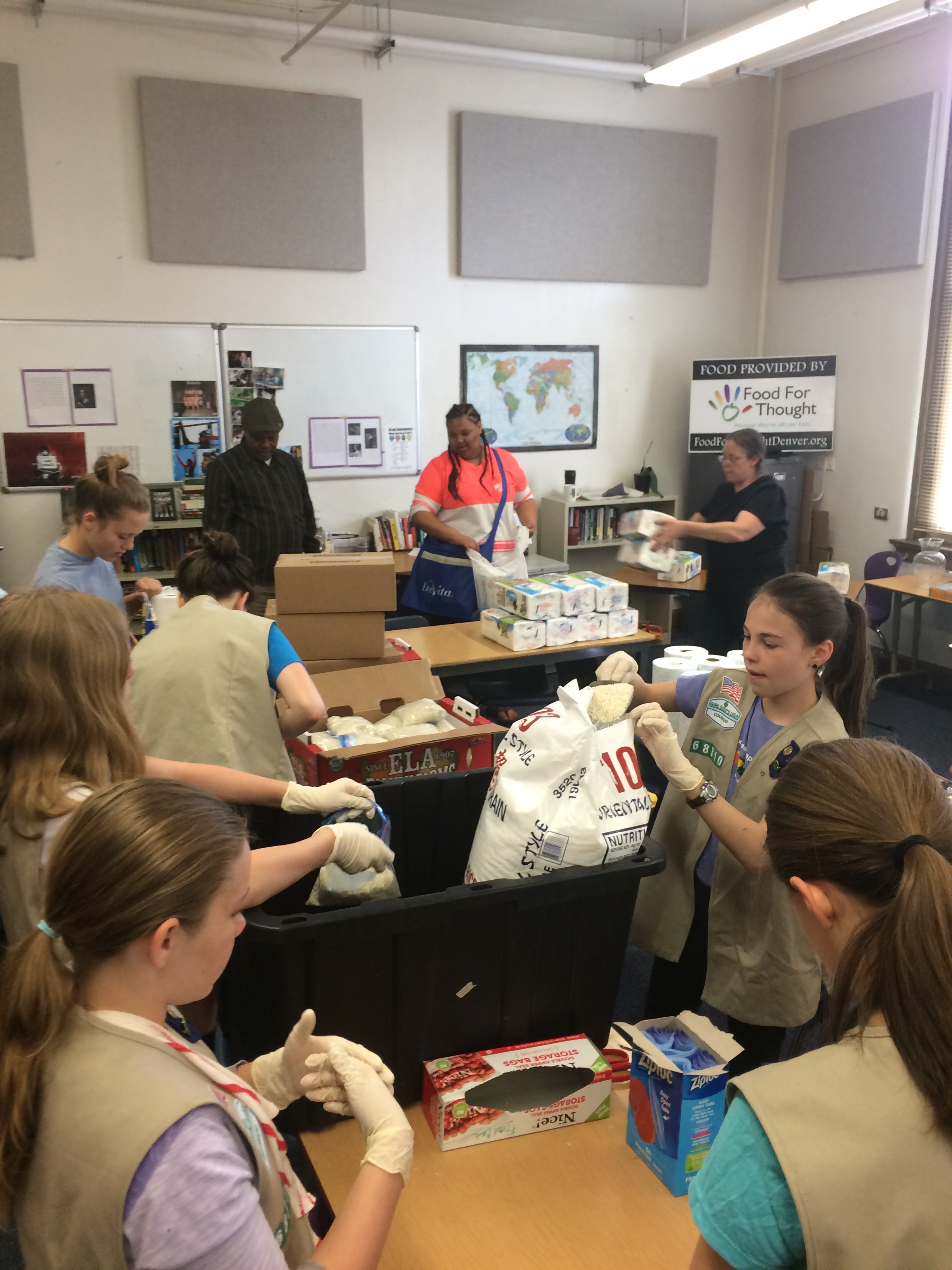
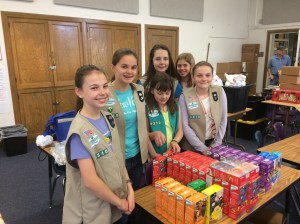
We carry and roll the 43 boxes of leftover Girl Scout cookies into the school. Jacklyn is waiting for us, her heart so big that she practically offers a hug to each and every one of these girls she doesn’t know.

“We’re so happy to have you here! Let me give you a tour.” She points to a girl who is filling bags with loaves of bread. To the tables stacked with clothes. To the halal chicken she found especially for our Muslim students. To the shelves and shelves of canned goods. To the two hundred pounds of rice, the stacks of towels, the cabinets filled to the brim with more for next week.

A man enters, having seen the temporary “Food Bank” sign on the door. He is as small as my twelve-year-old, wearing glasses and a hopeful grin. She immediately welcomes him in her cheery voice, explaining that the food bank is for the students’ families, but he can surely have some Girl Scout cookies and a snack.

“Are you hungry?” She asks him. It is a question that all of us say every day, never even thinking about its weight. Its weight presses against me now as my oldest wipes away the last of her tears and smiles at him.

“Yes.”

Jacklyn hands him apples, the last box of Thin Mints, and before he leaves, he has an entire box of food in his hands because her heart is too big to say no.

Families trickle in, and it turns out I know almost all of them. The mother and younger siblings of Isra, who’s graduating this year after four years of being a shining star in my classroom. Her tiny sister, her purple niqab as bright as her eyes when she picks out cookies for each of her siblings. The father of Ana Maria, whose mother took time out of her busy life to help me improve my Spanish, who spent the day with my girls and I last spring break, who recently left for Mexico and risked everything, even walking, to get back here.

Jacklyn greets them each with a hug, a reference to their last visit, a cooing comment about their beauty, their students, the exciting availability of Girl Scout cookies. Her warmth bubbles up all around her, and I feel my harsh comments and my daughter’s shaky responses melt away into the reality that fills these bags with food and hope.

The girls busy themselves filling quart-size bags with rice, and Izzy perks up enough by the end of the hour to speak to me in a normal, and kind, voice.

Just before leaving, one of the newcomers arrives with a small black backpack on. Jacklyn knows just how to speak to a student learning English. Slowly. Looking at his eyes. Using gestures. She learns that he arrived by bicycle, that he lives near Monaco, and that his bag is too small.

“You just fill up two boxes for your family. I’ll get a pen. You can write your address and we’ll bring you the food.”

Before I can surmise the legality, I mention that we live by Monaco and will bring it ourselves. Moments later, it becomes clear that he is unable to write his address. I hold up my hand in a cross. “You live on Monaco, do you know the cross street, the street that crosses Monaco?”

His eyes brighten. “Iliff.”

We gather our things. Four girls and the food pile into my co-leader’s car. He helps me remove the wheel from his bicycle so two girls, the bicycle, and he can fit into the Pilot. As we make our way eastward, I ask his name.

“Donald.” (only when he says it, it sounds like, Doh-nol-d).

“Hello, Donald. That is my husband’s name!” (Riona snickers, knowing he hasn’t used that name since the moment he was born). “And that is our president’s name.” At this, even Donald snickers, because even he, newly arrived from Malawi, knows that it’s a joke.

Ten minutes later, we drive past our house. I point it out to him. Not because he’ll ever go there. Because I want him to know that, if he needs to, he can. We continue to Monaco and Iliff, and he is able to tell me where to turn, when to stay straight, until we arrive at the apartment complex and gather the food, the girls, and the bicycle out of the two vehicles.

We carry the boxes to the door, and Donald enters with one of the boxes. We set another on a chair on the makeshift patio, and three small children emerge. A girl not older than three tries to lift the box, which is easily as tall as her torso, and then a mother and perhaps a father, emerge from the apartment to shake our hands and send us on our way.

“Every Friday, Donald, every Friday you can have food.” It is all I can think of to say.

It is just past 10 a.m., and I feel as if I have lived a year in these few hours. We return home, and Izzy is her cheerful old self. No dirty looks. No retaliation. She runs to jump on the trampoline at the neighbors’ house. She plays on the hammock. She makes a smoothie concoction and even washes the blender.

We continue with the exciting Saturday of double income, three kids: a dishwasher selection, grocery shopping, fixing lunch, returning library books, visiting the local coffee shop, soaking cedar planks for grilling salmon, sitting on the patio to soak up the mid-spring sun. The girls spend the entire day outside and between their troop members’ homes.

I tell the girls we’re going skiing tomorrow, and the younger two plead their case to stay home.

“Only if you call Grandma on your own and stay with her.”

I haven’t taken Izzy’s phone away yet, and I go upstairs just before dinner with a proposition and a promise: while the younger two are at Grandma’s, she can keep her phone if she goes skiing with me. But when I enter her room, she is dead asleep, light on, with the kitten, and I can do no more than take a picture of the beauty of that moment.

I want to tell her it is dinner time. I want to ask her, “Are you hungry?”

But I don’t. She already informed me, mid-afternoon, that she was up till 4:30 because she wanted to spend as much time as possible with her friends since she had to be home by 8:45.

I don’t wake her. I don’t need to ask my child, “Are you hungry?” because I know she isn’t.

I am quiet for once. I am thinking about Donald, who told me he’d never ridden a bike in Malawi, and now he even knows how to remove and replace a tire, to navigate across town on a Saturday morning even though he can’t write his address, to ask for food for a family of six living in a two-bedroom apartment less than a mile from my $400,000 home.

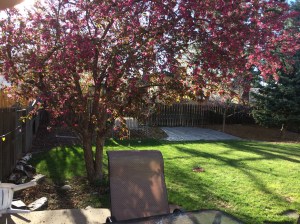
Instead, I sit on the patio with Donald Bruce and my two youngest, underneath the blooming crabapple tree. We eat cedar-grilled salmon, rice, tomatoes, and beans. We fill ourselves with stories and the evening breeze. I do the dishes for the fiftieth time in the six weeks since the dishwasher has been broken. I don’t complain, because I hate to admit that there is some satisfaction in completing the task by hand, in seeing your work, in soaping your hands.

And my day ends before it ends. With a full belly, a full plate, and this family.

With Jacklyn’s kind voice so much louder than my own, asking, “Are you hungry?” and knowing that all of us are hungry for something.

A text. A bicycle ride. A ski trip. A bright moment in a dark day.

My day begins before it ends. With a late-night silence. A sleeping child. A dish rack full of freshly washed dishes.

And a hunger for a better tomorrow.
From the Once Uninsured, an Ode to Trumpcare

health insurance rules
for relieving years of pain
please don’t take it back

Cheers to Tears

on Monday, a beer
because the cafe was closed
and i needed one

it was a sports bar
and the tears she shed were mine
in goodbye moments

(i didn’t share them–
not then, not out on the street–
only in words. here.)

because i’ve been there.
we have all been there. mothers.
sisters. wives. children.

i should have seen it.
the comings, goings of days,
built on loss and fear.

her tears were my tears.
her daughters were my daughters.
we are all the same.