flamenco infused
melancholic peace river
horse drawn romance muse


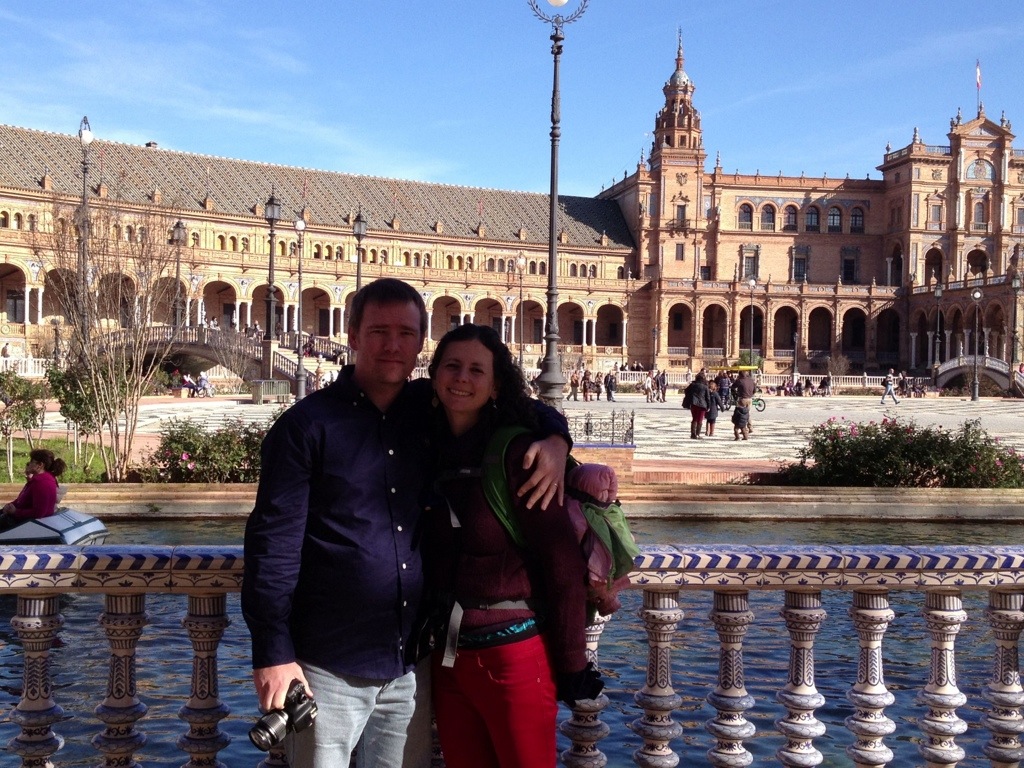

flamenco infused
melancholic peace river
horse drawn romance muse
There are no substitute teachers in Spain. When teachers have to miss school, another teacher in the building must cover their classes. Since they have to do this, then they are not required to actually teach, as it is technically their planning time. Because they are not required to teach, the students automatically feel that this period is then free time. Their behavior and attitude change tremendously, so that they think they should do nothing in these circumstances.
While this does discourage absenteeism on the part of teachers, what a pain in the ass! What a loss! I know many good teachers back in the States who reiterate the importance of quality behavior for substitutes, leave behind valuable lesson plans, and make sure that their students don’t miss an entire day of learning when their teachers are absent. Not only that, but think of all the people on the substitute list who are at least partially gainfully employed. There are so many unemployed people in Spain who could qualify as substitutes. They could kill three birds with one stone.
Sometimes the logic here seems backwards. They sacrifice so many things because they think they don’t have the money, when it is obvious that the majority of the government’s money comes from sales tax. The more people who have jobs, the more things they buy… it seems like a simple formula to me. I know it’s more complicated than that, but they could really change their educational system just a bit. Substitute teachers can continue on with the much-needed education, and students would then benefit, teachers would feel less stressed, and others would be employed.
Just another reason for me to be grateful for what I have… back home.
I’m old. That is pretty much my realization at this point of my year in Spain. I was thinking about my horrific schedule, and reading about all the employees who had to work on Black Friday, and even Thanksgiving this year (GAG!!), and then I started chiming in about my movie theatre days, when I never knew my schedule from week to week, always had to work holidays, and had no benefits. Thinking about this brought my mind around to college in general, where my schedule obviously changed from one semester to the next, with classes on varying days and hours with irritating middle-of-the-day breaks.
Only then, those breaks weren’t irritating. I used them to catch up on homework, chat with friends, or go home to see Bruce on his days off.
I rode home today during my intermittently-interrupted “three-hour” break (with a tutoring session scheduled smack dab in the middle), and of course I had to work during my free time on my University of Phoenix class, part-time job number three.
But it occurred to me, when I was telling the students in Spain about Black Friday, when I was reminiscing those glorious movie theatre days when I got “promoted” to assistant manager and all the employees called in on Christmas Eve and Christmas Day, leaving us three managers standing with lines out the door because everyone in America had to see The Green Mile rather than having a conversation with their family members on a sacred holiday, that I have done this before.
And I can do it again.
Sure, stack on the responsibility of caring for three children… but I can do this. I can piece together three part-time jobs to somewhat fill in the gaps of a severely minimal salary. I did it before, worked my way through college, not a penny of debt trailing behind me, and I can damn well do it again.
However, when I was trying to say to Bruce tonight, “That wasn’t that long ago… I mean, I just did that!” I realized that it was thirteen-fifteen years ago… man I’m old. This is why all the other auxiliares are twenty, why they don’t blink for a moment when they pile on extra tutoring sessions or weave their way between parties and bars. They are young, with raw desire for what the world can still offer them, the inconvenience of an erratic schedule just that… an inconvenience.
But as I sat at home this afternoon, thinking, Wow, if my school actually had functioning Internet, I could just stay there and do this Phoenix work, I cut myself short. I came home to Bruce who fixed tea for my aching throat, piled high scrambled eggs with sour cream and salsa, Spanish bread on the side, just exactly how I like them, and my legs were still burning from my quick uphill ride, a few extra miles of back-and-forth commuting tucked under my belt, and I knew, I just knew, I had reached a turning point.
I’ve done it before, and even if I am as old as a bat, I damn well know I can do it again!
bizcocho in bed
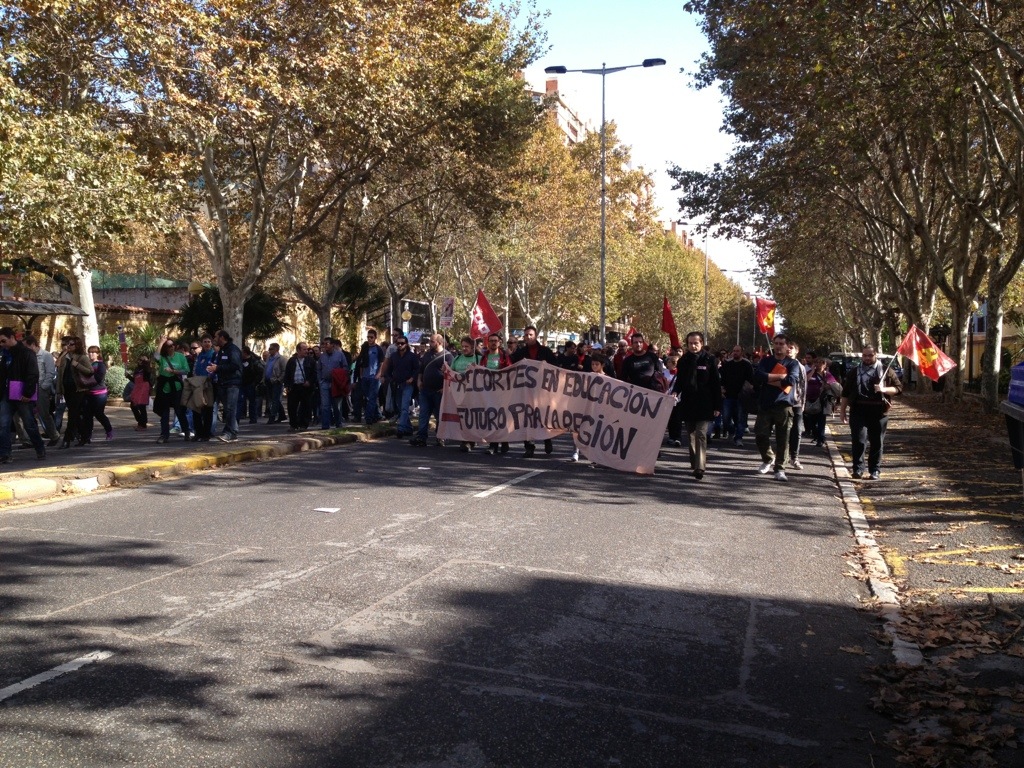
Spanish huelga on the streets
sunny ‘snow day’

we have a car
but are now so accustomed
to walking
that it sits in front of our building
we move across town,
the streets as familiar
as the smiles on their faces.
we order beer, wine,
and a baklava-like mirengue-topped
pastry that tastes like s’mores
and is gobbled up in two minutes
they stand in front of the circus sign
and we make our way across the bridge,
Reina Victoria in our back pocket,
coupons ready
for the first time we witness
the financial crisis
that weighs heavily on
the drooping blue tents,
kids as young as five performing,
throwing in camels, pythons,
and even Monster High,
holding up a sign at the end,
¡Viva El Circo!
while two-thirds of the seats
are vacuous reminders
of where people are
on a Saturday night
best. circus. ever.
is what my girls say,
never complaining once
about the long walk home
but all i can hear,
all i can see
as we move along rain-washed sidewalks,
their tiles as slippery as death,
is the American song,
“Unbreak My Heart”
whose Spanish rendition
and brightly-lit acrobatic act
brought tears to my eyes
the words
though they didn’t belong
the seats
though mostly empty
trampled out the desperation
that sits unspotlighted
in the back of every
slightly drooping circus tent
You are so lucky!! I have always known this, and tried not to take advantage of your wealth. I mean it. We don’t have all the typical luxuries that many Americans have, especially in the past 9.5 years of having children and only one salary to support them, one TEACHER’S salary. But still. Now that I’ve been here, I realize day in and day out how SPOILED we are. We have a huge home with a huge yard, two cars, the ability to go anywhere at any time, and jobs that ROCK!
Let me tell you about what it’s like to be a teacher in Spain. To be a student in Spain. You will have, more or less, the same hours as in America. But the similarities end there. Students, you have to buy, and carry across town, all your textbooks. Your parents will put forward 300€-400€ every year just for this. Teachers, you can say goodbye to the dream of having your own classroom. You’ll move around all day, toting books and supplies, to white-walled, un-air-conditioned, packed-to-the-gills classrooms with teenage body odors seeping into every moment. And just when you thought you could make an amazing presentation to your students on the first day of school with the PowerPoint you spent hours preparing, filled with special effects and links to important sites crucial for their understanding? Sorry! There is not a computer here. Not a projector. Not even an old-fashioned, transparency-laden, ten-years-back projector, nor a screen! (Don’t even MENTION a document camera, please, or I might die!) A whiteboard? Please, a whiteboard? Of course not! Everyone loves the feeling of dry chalk dust on their palms for the rest of the dashing-through-hallways day! (Just in case you were under the impression that you could tote your Mac and projector from America and use Wifi to access everything you ever needed–God forbid you have such an idea!–I might add that Wifi pretty much doesn’t exist here, and if it “does” it’s a lie, sham, scam, and disappointment, because you might wait five minutes for one page to open!)
A couple of hours will pass, and it feels like it ought to be lunch time. A siren announces that it’s… not lunch time. Oh, I’m sorry, your parents can’t afford to feed you? Sucks to be you, no free-and-reduced lunch forms to fill out here! No cafeteria! Perhaps your parents packed you some pan and you can wander around the school for thirty minutes counting down till your main meal at 3:30, after the last bell.
If you’re a student and you need special services, such as, um, Spanish as a second language? Special education? A teacher might just come and pull you out of class every day with a small group of other students, a mixture of all types of needs, and you will neither know why nor have a single phone call or form sent home to your parents.
I know what you’re thinking, America. Sounds a lot easier, doesn’t it? There’s no stress about decorating classrooms, arranging desks in a special way, filling out paperwork and attending IEP/ELLP/MEETINGS! But come on! Just try it for one day, and you will be forever grateful for what you may have thought was a desperate situation, a no-respect, get-me-out-of-this-profession situation. Trust me. One day in a Spanish school, and you will learn to LOVE your job, your board of education, your rights, your Americanism!!
And that, over everything, I think, is why I’m here. 🙂
Yes, I know, walking down these brightly lit, tiled-sidewalk streets with the happening cafes, shops, and panaderias, you think you have it all. But are you forgetting about your poor people who can’t afford to pay 653€ for a stroller? There are people here without jobs, and your solution is to raise taxes on children’s textbooks and raise gas prices?
I have a better idea. Why don’t you copy America and sell things. USED.
Yes, I know it’s a foreign concept (hence the America part). But my husband and I went into the only two shops in this city we could find that offer used products, what we would call back home pawn shops, and were able to buy a like-new scooter for our girls for 9.50€, when we saw the exact same one at the Chinese store for 28€! Why would anyone in their right mind pay 28€ when they can pay 9.50€?
But that isn’t the point. The point is, that pawn shop was PACKED. Every time we’ve walked by, when it’s closed, people are waiting outside for it to open. And everyone in Spain was there this morning trying to find something used. Or sell something to make a little extra money.
These people have a plan, but it isn’t complete. I know you’re obsessed with your clothing here (don’t tell me different–I’ve seen the coordinated, designer-clad two-year-olds walking about), but it’s time to market that desire. Have you ever heard of a consignment shop? A used furniture store? Play-it-Again Sports? You people are missing out on a market that could turn this country around!! Everyone benefits! People sell, people buy, the business takes a cut, we all get a good deal and have more money to pour into your small cafes, panaderias, and the like.
Forget your government corruption, your doomed banks. Find some savvy investors and open just one shop. Start with baby and children’s items. It’s a win-win. Everyone here loves families, and everyone here wants a bargain. I guarantee that within a few months you’ll turn a beautiful profit, enough to open an adjacent shop selling clothing… you get the idea. Screw your instability. As we always say in teaching, no sense in reinventing the wheel. It wouldn’t be the first time you copied an idea from America, nor the last…
Hey, I’m no business major, but a girl’s gotta survive. A country’s gotta survive. What do you think, España??
We walked the four miles it takes to make it down to the harbor and back. So easy of a commute for adult legs, so arduous with three girls in tow. No one who ever wrote an expatriate web site, who ever published an expatriate book, who offers advice for traveling across Europe, who romanticizes the reality of everyday life, gave up a steady job, a home with a yard, and a debt-free life for one year in Spain with an English-only husband and three daughters in tow.
Let me write the blog post for you. The book for you. It will begin with staying up late and sleeping in, like all Spaniards do. We might throw in a siesta strewn with screaming girls who are today fighting over the fort they are wholly incapable of completing without our assistance, who beg to go on a bike ride, to go to the park where the three small boys in matching outfits will chase them and call them “ingleses“.
We will have a Spanish tortilla for dinner, made in our newly-purchased 10€ sarten, and eat at the usual hour of Americans after our four-mile journey to the center of town where we thought we were witnessing a children’s festival and came across, instead, a Lion King-esque display of Roman dressed tribes holding up babes in togas, presentations to the emperor and empress, the formal announcement of each family like a baptism of a new generation that we can’t quite understand or be a part of.
There were no bouncy castles. No face painting. Just women presenting gift baskets of fruit, throwing candy that my nine-year-old snatched up and filled her pockets with, asking me later how to say candy in Spanish so she could offer it to the four-year-old boy on the playground. We are reminded, again, that we don’t have a car, that we can’t pile in and own our weekend, but must give in to what this city has to offer us, whether it be a strange historical reenactment, a walk that six small legs no longer endear to endure, or an evening where we settle in, once again, to the solitude of this life we have chosen, no friends, no family outside the small circle we create for ourselves in the midst of a language none of us wholly understand.
This is my Spanish Sunday. It ends with me listening to a book so descriptive of a white Christmas that I ache for this endless summer to be over, the hot drought of Colorado bleeding through to palm trees and no breeze on a late September Spain, the beach like a taunting ghost, hovering before us but not quite within our reach as we stand before the replica of the first ship to circumnavigate the world, our feet foreign, our faces, hands, mouths foreign, in a place we have chosen to make our home.

My daughter, Mythili, has come home from school for two days with tears streaming down her face. She has locked herself in her room, needing a while to adjust to what the afternoon, and its homely comforts, could offer her. Yesterday she cried because she wasn’t returning the homework due, and her teacher stood outside of the school and told me that she needed to bring it, and that she didn’t seem particularly happy at the school, though he’d seen her sisters adjusting quite well. Today, it was his insistence on her using cursive for writing out her numbers, a form of writing that is foreign to her. Kind of like the language that is foreign to her.
We are in Spain. I have picked up my family and moved in the opposite direction of progress, to a country with a 20% unemployment rate and a government that can’t decide what to do with itself. Mythili, like me, is struggling with understanding all that is asked of her, and just like I couldn’t get the phone line installed when I wanted, she didn’t know when to turn in her homework.
These moments that I have omitted from my Facebook posts, that I have mostly kept quiet, these are the moments that I think about my grandmother’s story. She told it to me more than once, a bright line from Heaven shining down on her faith, her childhood, her way of looking at this world.
There are so many things that I could write about my grandmother. It could begin with the two weeks we used to spend with her every summer, where she’d take us to the beach (we all had to carry a chair and a towel, to take turns holding handles of the cooler), to the bargain shops to pick out new outfits for school, to church where she would pray and introduce us to her priest, to the small pond in Bethany where we swam and played on the playground. Those visits were the highlight of my childhood summers, and as an adult, when I planned visits, she still did everything in her power to make it special, calling me a week in advance to ask what meal she should prepare, asking me what show in New York we should go see, driving across states to visit Bob or Willow.
But it is the childhood stories, the ones she told me on long road trips or train rides, that I will remember most distinctly. To this day, I cannot allow my children to carry a spoon, a stick, a straw, or anything in their mouths as they walk around, for pure fear of what might happen to them as my grandmother reiterated many times the tragic loss of her twenty-one-month-old baby sister, who died from an infection in her throat after tripping with a lollipop stick in her mouth. The time when she went with her father, at age nine, to go look for an apartment across town because her mother was so heartbroken over losing her baby that she couldn’t live there any more. I can still hear my grandmother’s voice: “I looked out the window of the apartment down below. There was an empty lot. And a little boy was taking his car and making tracks in the dirt. He looked up for just a moment and waved at me… that was the first time I saw your grandfather.”
The story that stands out the most for me I have replayed in my mind many times over the past five months. In a period of two days, I found out that I was accepted into a teaching program in Spain, that my grandmother was entering hospice care, and that I would have to quit the job that I loved so much rather than taking a leave of absence.
I kept thinking about my grandmother’s childhood journey, and the one of her mother before her, coming to a country she’d never seen. My grandmother told me that when she came back to the United States at age eight, even though she’d been born in America, she only spoke Italian. She had much difficulty understanding English in school. All the kids at school picked on her and called her a guinea. She talked about how her father, “in his broken English,” went down to the school and told the teachers that they needed to help her, but that no one would help her.
At her wit’s end, she went to church. She knelt on a pew and prayed to God to help her, to help her learn English so that she could be a part of her new country, so that she could be educated. She prayed and cried, and soon a nice Irish woman came over to her and asked her what was wrong. She tried to explain, and the woman took her in, helped her learn English, introduced her to the man that she would one day marry. “And I knew,” she told me, “I knew that God had heard me, and that God was looking out for me.”
I will never forget those words and what the story meant to my grandmother. Her experiences, her stories, have trickled down four generations, and I feel my family living a life very similar to hers now. All along this arduous journey of sacrifice I have made to bring my family to Spain and fulfill a lifelong dream, I have thought about what my grandmother would have told me to do. And what my grandmother’s parents did; the risks they took.
So when I see my daughter step into her room and cry because she is so frustrated, because she doesn’t quite fit in, because everyone in her class knows her name though she knows none of theirs (“Why do they know your name?” “Because they talk about me all the time since I’m American,” she replies), I think about my grandmother. I think about her story, about her struggles growing up in the Depression, and then moving on to a better life, raising the four children she loved so much, doting on the seven grandchildren whose visits she cherished.
I will always remember our visits. The memories will dance like a filmstrip through my mind, sweet and melodic. But it is her words, her stories, that will trickle down and make me, and all the generations her soul has touched, the people that we were meant to be.
Yes, this is surreal to me. For how long have I pictured my life like this, my family in a situation that is both wholly unique and someone daunting with each moment? Doubt, like the Queen’s Guards, has stood stolidly by my side from the moment I accepted this position. Now it hovers only lightly, more of an irritating mosquito buzzing about my ears at night, continuously waking me and yet impossible to find, to squash. I am here, and things are going well, better than I could have dreamed, with tutoring positions so easy to find that I am at the point of working well into the night (“You know, we Spaniards like to go to bed at twelve or one”) or having to turn people away. So we’re safe, secure, in a better position than we have been in months. We can stop the ticking on our credit card bill, pay for the necessities of life, perhaps even have a bit extra for a weekend trip to Barcelona or a day trip in a rental car to the beach.
It’s the small things, the GIANT small things, that get in the way. My girls’ school, my last choice, with the bars on the windows, the gate that keeps out outsiders, my oldest getting top scores in science and math on day four in a country where the language isn’t her native tongue?? The looks that cross others’ faces when I say the name of the school. When I tell them the part of town we live in. Irony is my best friend. After nine years of teaching ESL to poor immigrants who can’t afford to live in a nice neighborhood, own a car, or go to the best school, I am now one of those poor immigrants. I walk with the “Moors” (as they DO call them here) to the school. I try to argue with the Spaniards about Arabic/Mideastern students I’ve had in the States, how respectful they are, how dedicated to their studies. But no, not these, they respond. These people are poor, uneducated, don’t know Spanish, making the whole school have to dumb everything down… Boy have I heard that one before. Sounds a little like the world works the same no matter where you go. But what, at this point, can I do? Am I putting my girls in a bad situation where they will lose a year of good education? Should I still search for a different school and then lay down another exorbitant stash of cash on books I cannot afford?
Then remorse creeps up… I think about my last month at home, my sheer panic of unemployment, my frantic search for online jobs… that I wasted, all for naught. All the things I could have been doing, the people I could have spent my time with… sometimes I let my inherent sense of responsibility and control get the best of me. But then I play devil’s advocate for myself when I think, I did this to my family, and I had to find a way to make it work… I just wish I could have seen into the future, to know that things would be OK. I didn’t realize I’d be about the only American to step into this city where no one has even HEARD of Colorado, and are all in love with the idea of having an American teach them English!
And fear, fear stands by my side even as I walk around a new block, take in the view of a new apartment building that faces the mountains, see a new beauty I didn’t see the day before… fear is always there. Who is here to be at our back, to look out for us when we’re sad, to catch us when we’re ready to fall? We have done this almost wholly on our own from day one, and it hasn’t been easy. With me being the only one able to communicate, and my Spanish being nowhere near the level it needs to be to complete the most important tasks of setting up a home and getting my children properly educated, I fear what will come next as new challenges creep up. How alone will we find ourselves as time goes on?
I have so many emotions standing by my side, hovering around me as I face the world with the happiness and relief that are also there. All I can hope, as I go through each day, is that the exuberance, the surrealism, will never wear off, that I can pounce out my doubt, remorse, and fear and make this into the dream it was meant to be.
 Step Write Up