Cussing Colloquialisms

At the elevator, brace still on, crutch still under his arm, he tells me he thinks that a good return-to-work date would be June 4, five days before we leave for Spain. He seems optimistic as he hobbles down the tiled hallway, as we enter the carpeted office, as we check in and he holds the door open for a woman with a walker, pointing out, “It’s kind of strange they don’t have an automatic door in the orthopedic’s office,” to which she adamantly agrees.

On the plastic, paper-coated bed, he hands me the folder while the PA takes him for x-rays. After just a few minutes, the doctor enters with the films. He has photographs of the entire procedure. He intricately describes the meniscus (intact), the bones (drilled into), the ACL (torn and then repaired). Bruce and I lift our eyebrows at each other, barely able to distinguish the tiny details he points out in each picture.

In his cozy spinning chair, the doctor is also optimistic. “I think you can ditch the brace right now and ditch the crutches by Friday. Use the stationary bike on Sunday. By Monday, you should be walking around the block. Maybe driving.”

From the green paper folder, I begin to pull out the forms. First: short-term disability approval. A list of lines with dates, surgery and medication verification. Affably, he takes them in stride: “I’ll be sure to get these to the right people to fill them out.” Because he has people. Because he charged the insurance company $36,000, more than half of what I earn in a year, for an outpatient surgery that took less than 90 minutes. Because we live in the land of the free.

From the green paper folder, I continue to pull out forms. Bruce begins to tell him–without ever being able to finish because of the doctor’s rambling explanations, the doctor’s defense of his procedures, the doctor’s justification for not filling out anything–about wanting to return to work before Spain. I pull out The Form, the one that CenturyLink requires for him to be able to work: a release of liability for driving a company vehicle, an “if-something-happens-it’s-not-on-us, your-injury-better-not-affect-your-work” form.

From his throne, he glances at the wording. He throws in more anecdotes peppered with cussing colloquialisms. “In twenty-six years of doing this, I have never seen a company require a form like this. What if you’re a shitty driver? How can I, as your medical doctor, determine if you’re OK to drive? I won’t sign a form like that. If you get in an accident and hurt someone and I’ve signed this form, then it’s all on me.”

From my plastic chair, I listen to the tone of my twenty-years-spouse change from respectful to grainy. I can almost feel the lump at the back of his throat as he tries to go on. “Well, my supervisor is willing to let me come back on light duty…”

From his throne, the doctor interrupts: “What you’re going to be dealing with is HR, not your supervisor, and if HR says you can’t work, that’s where things get muddy when I start putting my name on these forms.”

From my plastic chair, I am counting down the hours in my mind until the moment I can let these tears actually fall. First I have to continue listening to this white-haired, privileged surgeon continue rambling on about lawsuits. Then, we have to make Bruce’s appointments for physical therapy. Next, we have to drive home and track Mythili’s progress on her bicycle, as I had no way to pick her up today. After that, I have to take her to her doctor’s appointment, where they will make commentary about how my thirteen-year-old hasn’t had her period yet.

From my plastic chair, I am frozen and without words. The doctor turns to me. “You look frustrated.”

Is that the word you would use? Do you think frustration sums up the past six weeks of my life?

“The thing is…” Bruce begins, “… I’m probably going to get laid off on July 30.”

The doctor has finished listening. “That’s why we have to be so careful when filling out these forms. This happens all the time, when companies decide you can’t work.”

“No, it’s unrelated…” he begins again, that painful lump sitting on top of his beautiful, sexy voice.

“Are you really not going to fill out the form?” is the only thing I can muster. The doctor hands it back to Bruce, asks if there’s anyone he can call, anyone he can talk to, any way he can go back to work without it.

From the tiny patient meeting room, he stands. He shuffles us out the door. He guides us to his people who will make the next appointment. I place The Form neatly back inside the green paper folder.

I think of a few cussing colloquialisms I could shout. I think of hindsight, all of it. Of next year’s ski passes we wasted $2300 on. Of the thousands we’ve already spent in this office. Of the four weeks at seventy-percent-pay he’ll get for short-term disability. Of the thousands we’ve spent on Spain that is gone and tarnished before boarding the plane.

But I have no words in these moments when I have bowed down to our litigate society, our corporations’ fear of liability, our doctors’ refusal to help the little man other than spurting cussing colloquialisms while trying to relate to us.

At the elevator, his brace in my hand, crutch still under his arm, I don’t speak. Picking up Mythili, exhausted from her bike ride, I don’t speak. At the following doctor’s appointment, where, as usual, we only get to see the PA, I cross my arms and don’t speak, forcing Mythili to respond to questions about who she lives with, how she likes her sisters, what kinds of food she eats.

From my recliner at home, I do have a few cussing colloquialisms for the orthopedic surgeon. I could spout them all day, all night, every waking moment of the past twenty years of marriage, every waking moment of my life as a not-quite-middle-class American who just needs A GODDAMN FORM SIGNED SO WE HAVE A FEW PENNIES TO OUR NAME…

From my recliner at home, the words are useless. All the words, all the work, all the life we have put into living, everything feels useless.

And there is no cussing colloquialism that will bring me that doctor’s signature, bring my husband his job, bring me some peace. So why bother spouting them at all?

 

An Educational Cocktail

You can enter any cafe in Spain and you will probably find the same two drinks: cheap Pilsner beer and local wine (OK, you can at least choose between red and white!). The Spanish palette for mixed drinks is limited to adding liqueur to coffee, it seems, and their availability of decent beer choices is abominable. But when it comes to education, Spaniards love a good cocktail.

Here are some instructions for making an educational cocktail, shaken, not stirred.

Ingredients:

1. Homogeneous groups of students segregated by ability who remain together all day long for years at a time, and are allowed to choose their own seats.
2. Heterogeneous teachers who range in age, management, and educational methodology.
3. A school building that does not provide resources such as technology, textbooks, government-funded lunch, or air conditioning.

Instructions:

1. Place all students in one classroom. Wait for intermittently ringing bells that will shake them up out of their seats while teachers dance through hallways crowded with other teachers and random students who have PE that period, to arrive and wrap the students up in a somewhat-chilled glass with a pinch of salt along the rim.
2. Spend three hours each week trying to settle the above shaking, using the cold stirrer of the teacher’s little authority to embed knowledge enough of one subject area to make a decent mixed drink, full of flavor and memorable enough to spill out onto the streets with jubilation.
3. Subdue them on four occasions per trimester with exams that make up the stark majority of their grades, consisting of arduous essay questions, but only about ten per exam. Their flavors will bleed through classes so that they will begin to taste more like eraser remnants than a decently mixed drink.
4. Shake up the cocktail a little just when the school year is getting cold by surprising only select groups of students in one grade of primary and one of secondary with the annual government test, whose topics, flavors, and question amounts you will never know or begin to be able to prepare for, similar to visiting the cafes in every city in Spain who may or may not have a menu, use local vocabulary non-translatable in any software to identify food items, and whose waiters never return after bringing you your order. (Surprise, surprise, we all like to guess what it is we’re bringing to our lips!)
5. If the cocktail spills, you may clean it up and refill it once, for free, but only once. After that, you will be run dry and stuck in the same situation as the rest of the third world: working shit jobs for little pay.

Alas, you can always look back at your educational experiences and say that you had the best mixed drink of all time: moving through the school system in Spain!

From Age Five

From age five, they were in love. It was meet-the-teacher night, and school hadn’t even started yet. We meandered through the hallways and classrooms of the school we’d chosen, hoping for Spanish immersion and IB education. They were the two oldest daughters of three siblings, and they chatted, did cartwheels, and were holding hands before the night was over.

Her tall and slender, long-lashed mother quietly commented, “You see? They’re already best friends.”

And so, nine years later, when I texted my daughter to make room in her drawers and space in her bed for a loooong sleepover, her only, immediate, obvious response was, “REALLY!!!!!! OMG THIS IS AMAZING!!!!”

Because when you’re in love, when you have a connection, it does not matter if six extra people are going to live in a house built for… five?

Because when you make a fast friend at age five, when emotions are so visceral and honest, it’s probably something worth cherishing.

Because when you have a bonus-five-bedroom dream house, why not share the dream?

Because if the situation were reversed, wouldn’t we all, minute by minute, hand in hand, reach out and make the world just slightly better, one soul, one family at a time?

Because what makes a family?

Girl Scouts. Trials and tribulations. Cookie selling. Lost money. Lost causes. Frustrations. And so much fun you would laugh until you nearly peed your pants, all in the snow on a bitter cold January night. Bridging ceremonies, brownies, a baby brother in tow on camping trips.

Backyard barbecues. Eating meat or not eating it. Sharing our sad stories. Telling the truths we were never able to tell in the schoolyard, at our jobs, in our “real lives,” but that slid so easily from our mouths in the comfort of our back patio.

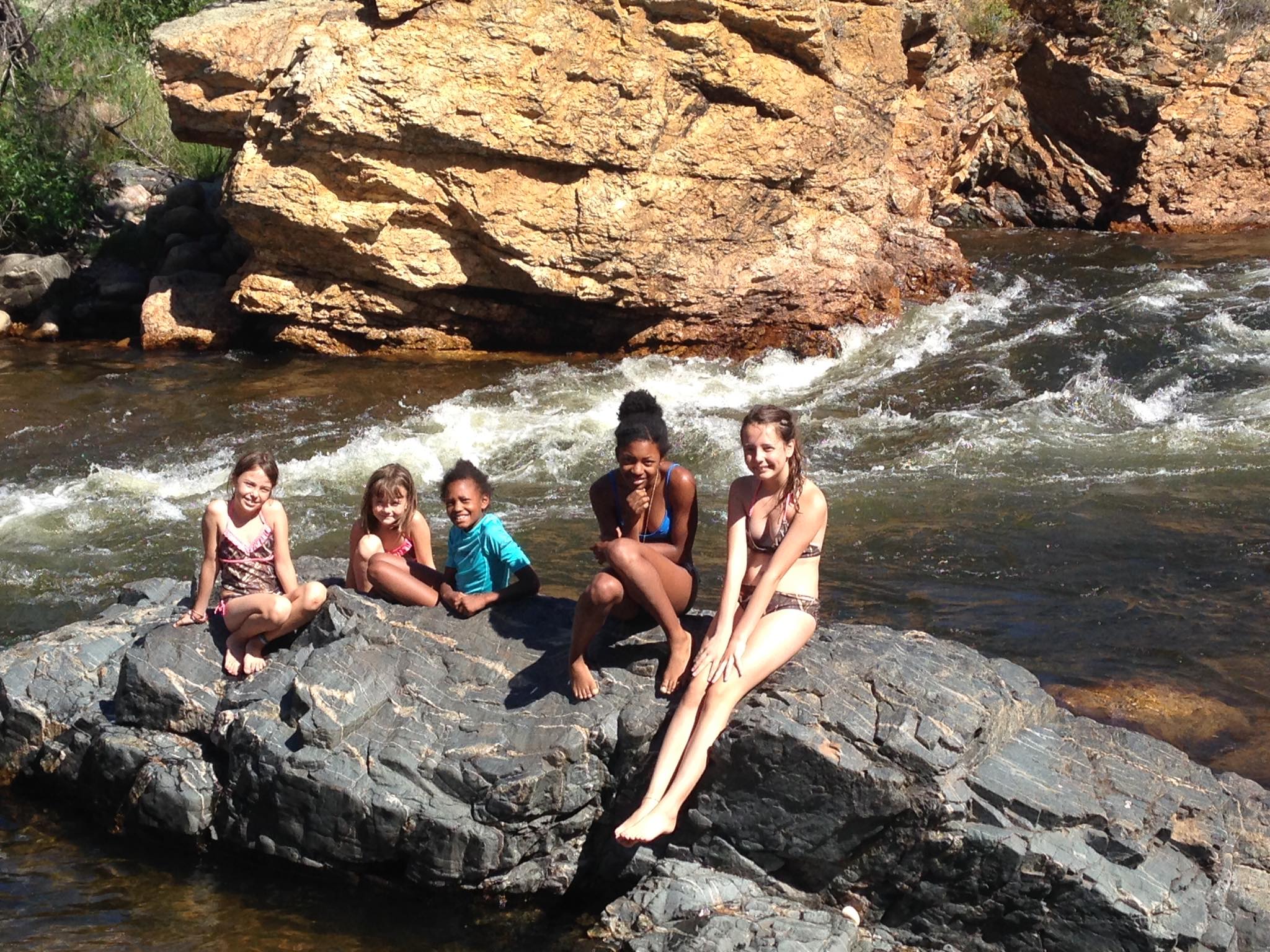
Camping trips. Sharing pies and drinks and a bite of an ice-cold river. And again, laughing until we cried under a hazy moon and starlit sky.

Sleepovers. Girls screaming into the night, little brothers trying to keep up and eating two giant waffles before ten a.m., before they were even ten years old.

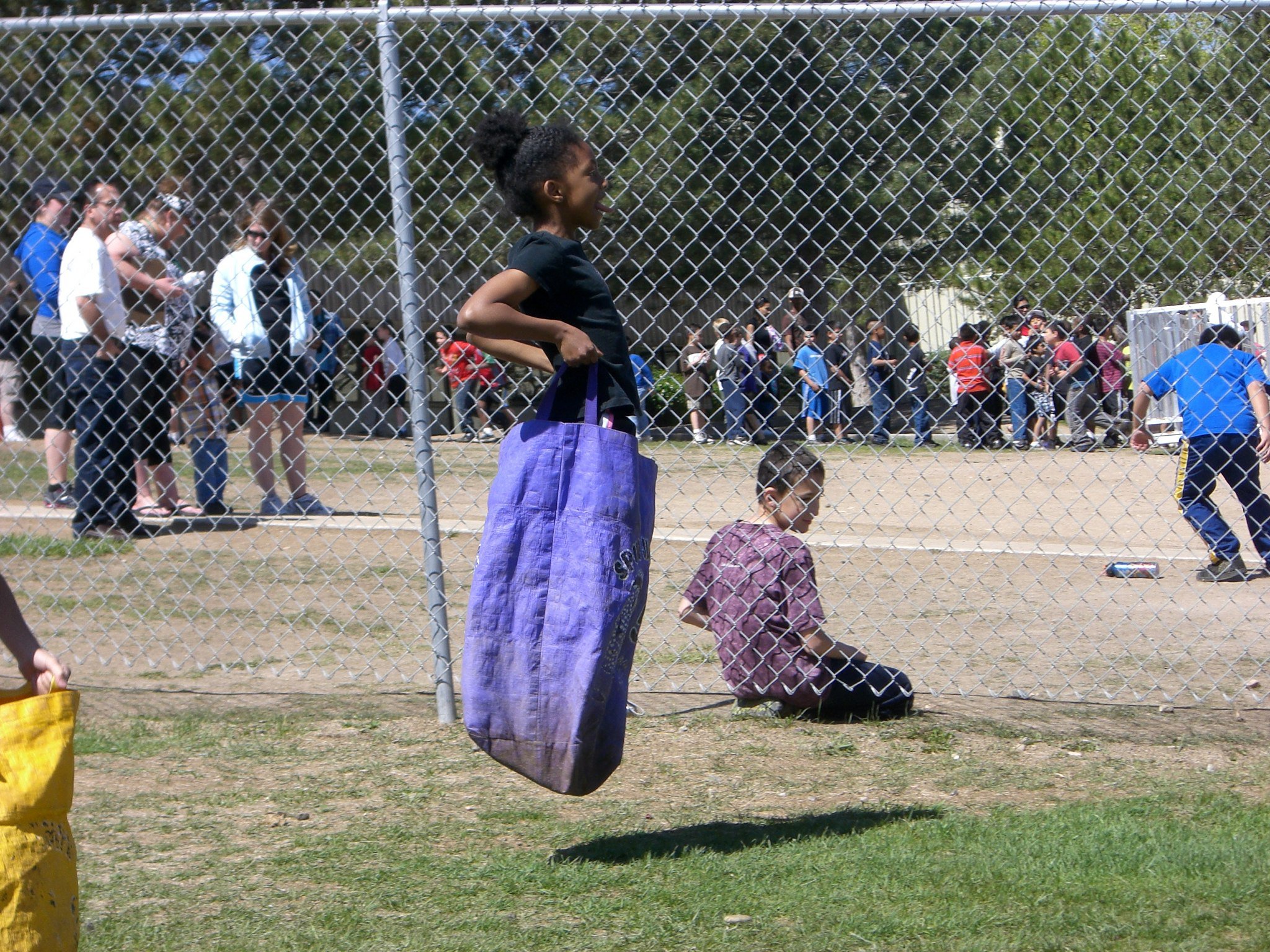
School. The daily ins and outs, friends come and gone, field days and jumping into the sky as if you were jumping right up into heaven. Teachers we loved and hated and commiserated. Our shared experience.

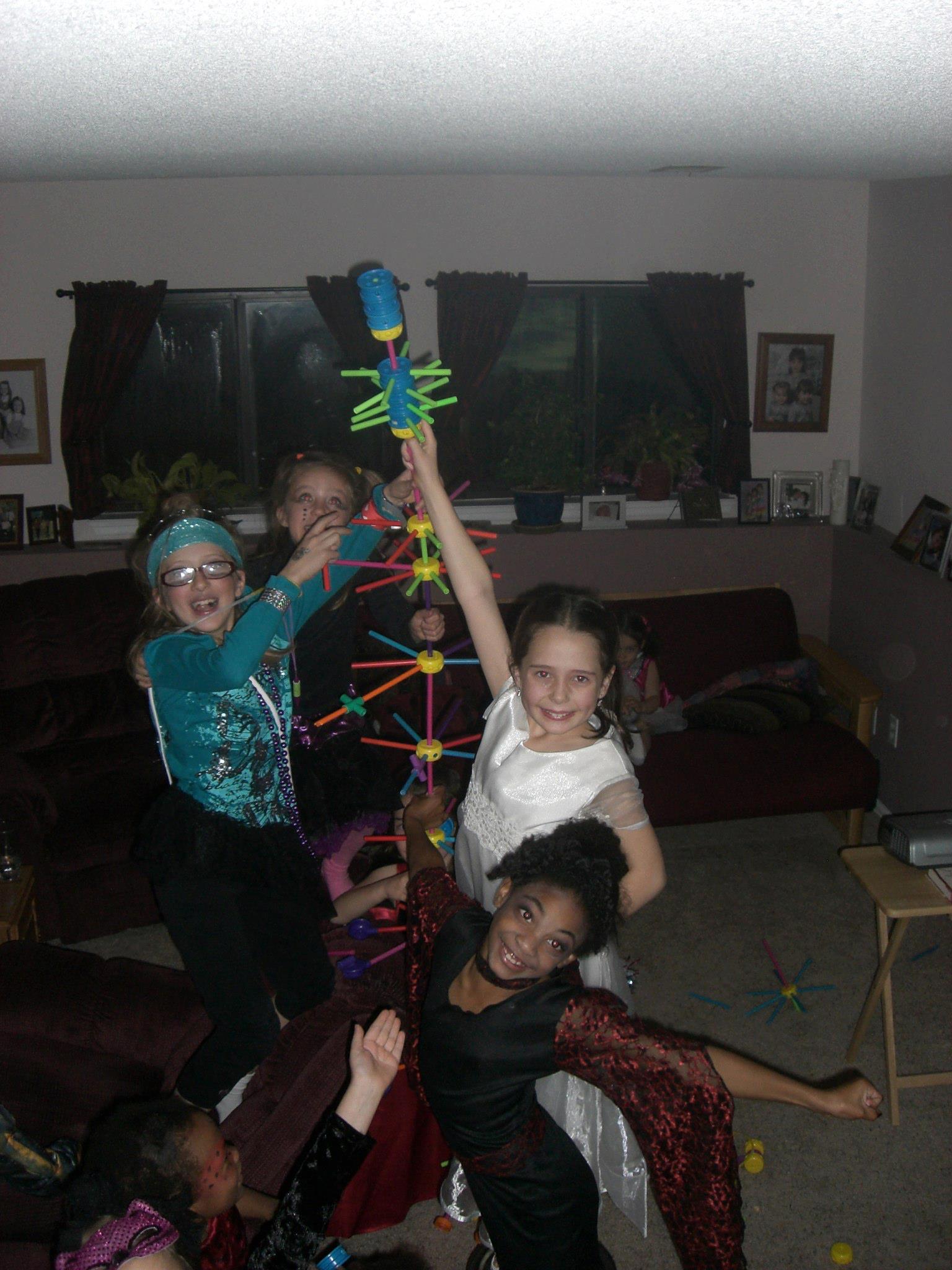
Family parties. Little girls in pretty dresses pretending to drink tea. Everyone, kids and parents, gathering household items to make a Halloween-happy costume. Parents gathering in the kitchen to catch the scene and capture a moment of each other’s joy, each other’s sadness. The connection found in youth, in young parenthood, in the heavy task of raising young people to become wise people.

Because… from the age of five, they were in love. Look how they’ve grown. Look at the young women they have become. Look at the family they have made for themselves.

That is why we can add six people to our five-person house. Because from age five, these girls have carried us into the home we call home. It began with a smile, a cartwheel, a hug.

That, and rearranging some beds, is about all it takes.


Drifters for a Day

from desert to sea
 in a day’s drive through one state
 (miracles exist)
 
 rainforests between
 to prove heaven lives on earth
 (nature is my god)
 
 we found our daddy
 after cherry shopping; lake;
 beyond evergreens
 
 a driftwood dinner
 no one could have predicted
 in another life
 
 yet here we’ll find sleep
 all together in one room
 at earth’s clouded edge


What Sundays Have Become

Nearly nineteen years into our marriage, it is time for new furniture. A friend came over the other night, and as the girls piled onto my lap on the sofa claiming their right to me, the wooden leg busted underneath, exposing the reality of its twenty-year-old, hand-me-down state.

Hence, Bruce and I spent four hours today driving between stores, researching cat-scratching deterrents, and deciding on a leather reclining non-power furniture set… that we didn’t buy.

Instead, we continued our twenty-first century journey to the grocery stores. We bought the usual to feed our family of five: avocados and cilantro for our weekly need for fresh guacamole, bananas, apples, and clementines to fill lunch bags, chicken and sushi to make our dinners.

And something more: a stockpile of nonperishables. Beans. Pasta sauce. Brown rice. Cans of soup. Tea. Flour. Canned tomatoes.

Yesterday, my husband of nearly nineteen years and the man so nonviolent that he cringed at the idea of actually killing an elk the one time he went hunting, told me he thought it might be time to buy a gun.

Today, we decided to save our $2000 on furniture because we might need it to stock up on food and provisions before the coming of the war that inevitably will destroy our democracy.

This is what Sundays have become. There is no joy in errand-running, no hope for a new living room set. There is the impending doom of a future that none of us can predict nor look forward to. There are three girls in our home whom I fear will not have a future at all. There are tweets and executive orders and absent investigations and jaw-dropping obstruction.

Soon there will be food shortages. Rations. Militia.

It is all around the bend as we navigate from city to suburb to city on the highways brought to us by progressivism, searching for what we need today, for what we might need tomorrow.

This is what our Sundays have become: me sitting in my nearly-nineteen-year-old recliner, hoping this marriage, this world, my children, will live to see another nineteen years.

This is All I Have For Now

Hope for today: a new student came to my advisory. A Syrian refugee who has been here for 20 days. He could not communicate very well in English, but another newcomer from El Salvador who’s been here for a few months was able to help him with signs and support. He also took pictures on his tablet of everything I handed out and was able to run the words through an app that translated the words to Arabic. And, through the tablet translation, proudly told me at the end of class that he speaks three languages: Arabic, Turkish, and Kurdish.

I wonder what else he has stored behind those questioning eyes? I can’t wait to find out. And I’m so glad he made it through the Trumpocracy.

#standwithrefugees #standwithimmigrants

Make My Marade

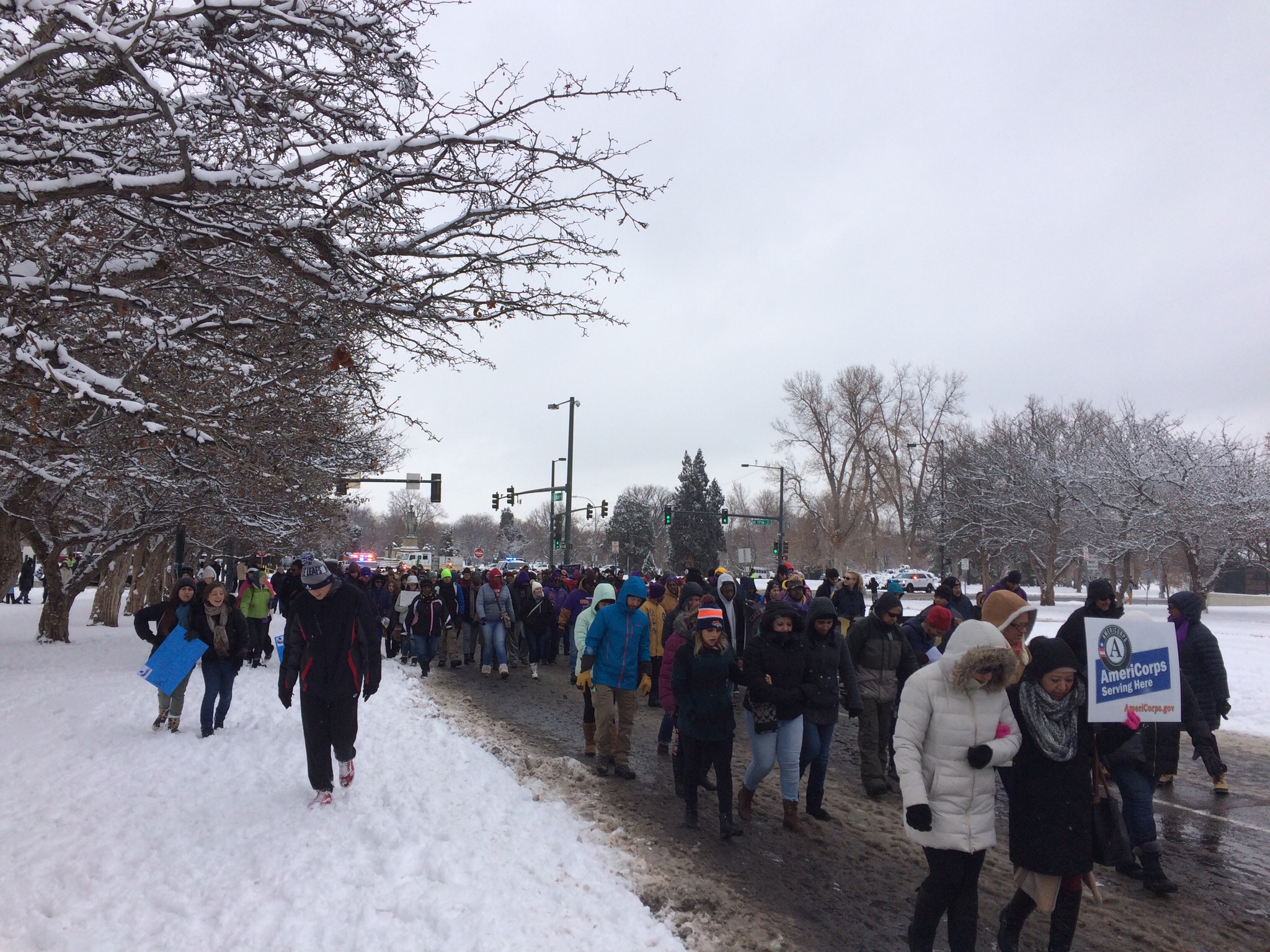
annual Marade
 frosted with ice (years without)
 but now winter’s here–
 
 in Trump’s dark shadow
 we march for all we have lost,
 all there is to lose.
 
 we resist snowflakes
 that try and fail to stop us
 from the truth we seek
 
 we fight the good fight
 in songs, in signs, in speeches
 (and one day we’ll win)


Return of the Jedi

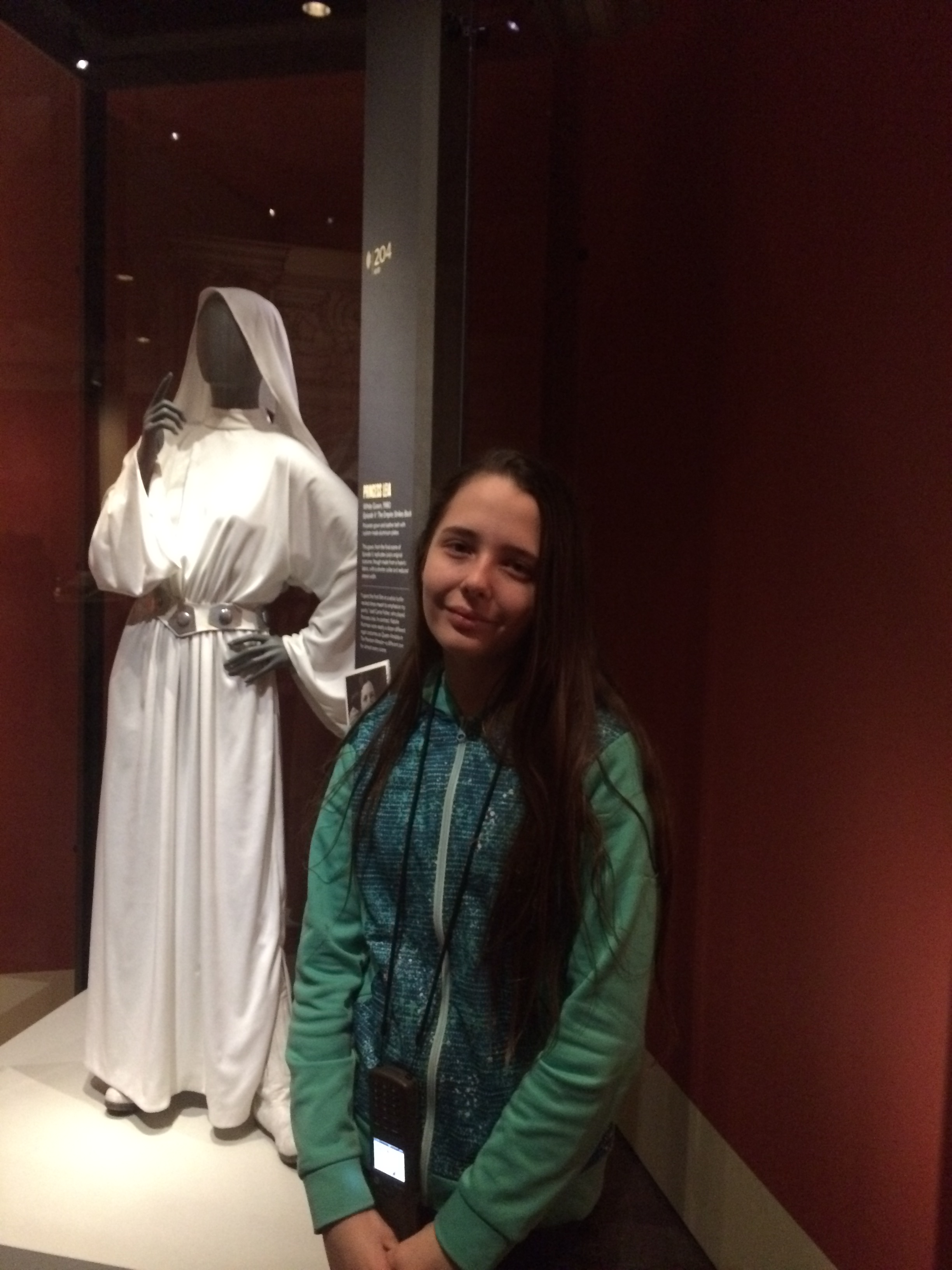
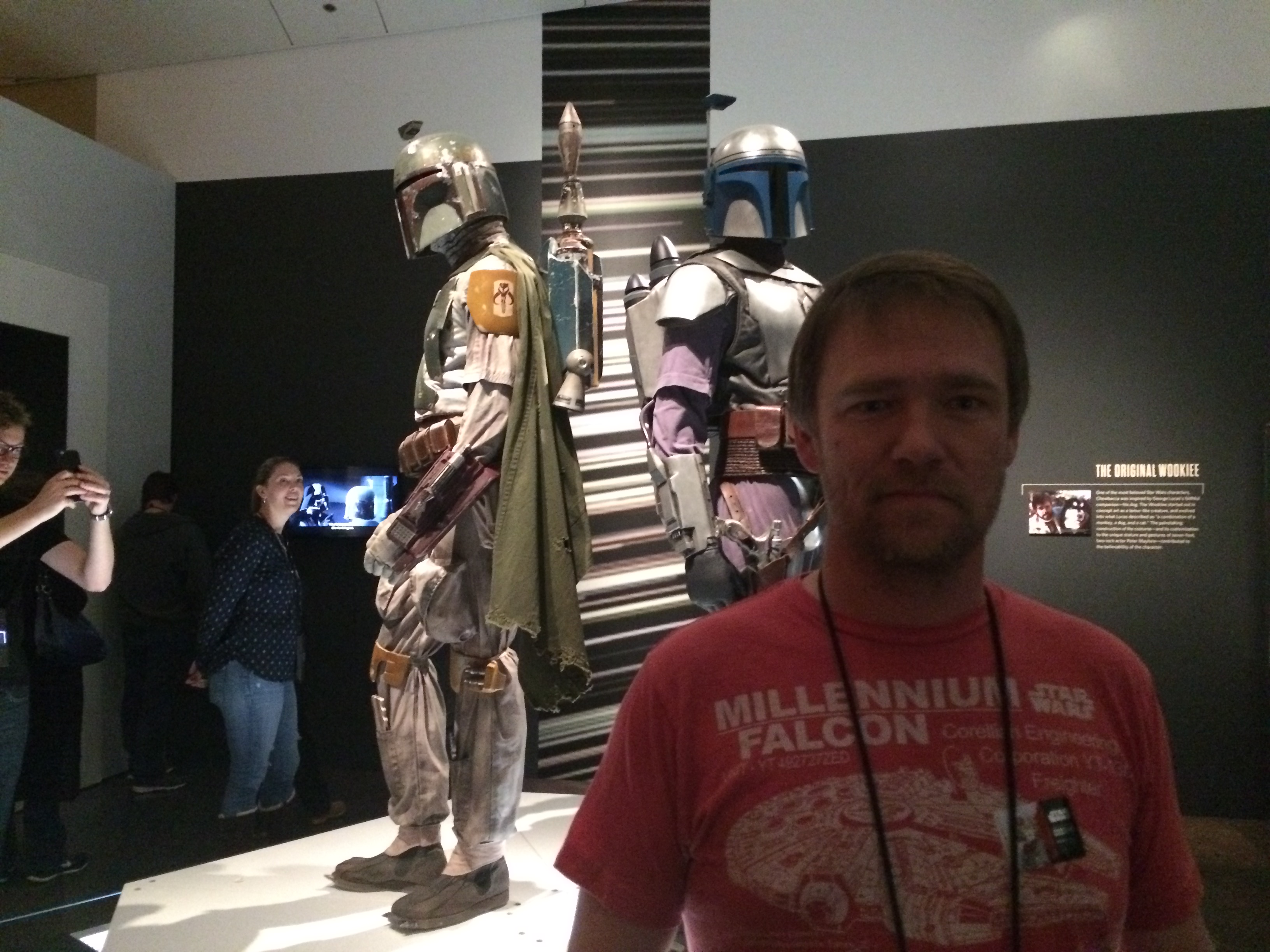
Star Wars costume show
followed by our nation’s truth:
the stench of failure

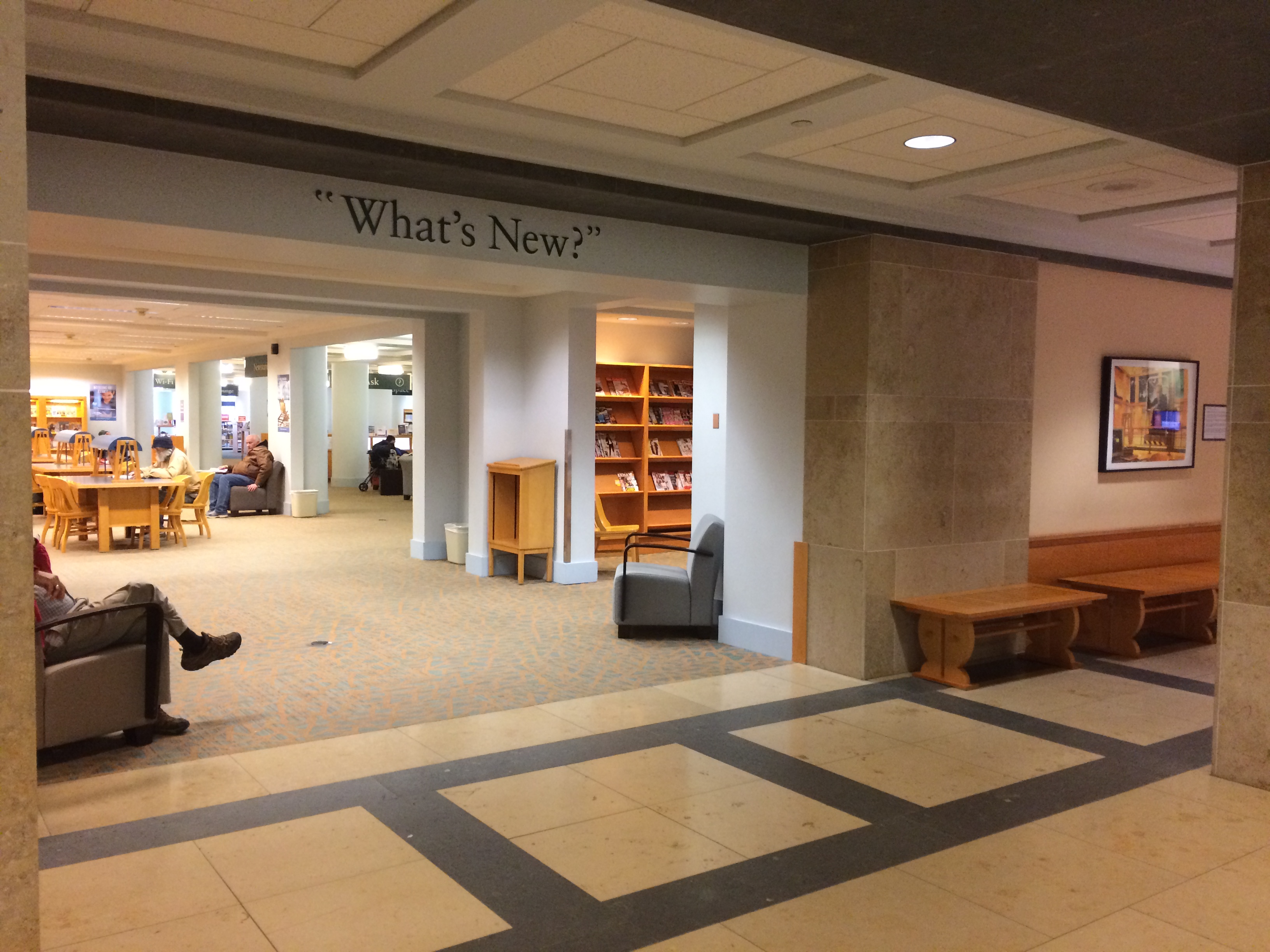
it seeps through the stacks
into our souls’ library:
let’s check ourselves out

depression so rank
we can’t even choose a book
from our city’s shelves

soon we will rise up
upon realization
of Trumpocracy

but it will take faith
beyond what fits in a poem
to fight the Dark Side

img_5011

img_5014

img_5019

img_5034

To Laugh Until I Cry. To Live Until I Die.

In the crook of early January, three weeks since seeing my students, on a cold wintry Saturday morning I shlep across town to make lesson plans with three other colleagues.

Later I will heat water for hot tea and curl in my recliner with a book, wishing I could write a novel as lyrically beautiful as Caramelo as my children wander in and out of rooms, in and out of our house and the neighbor’s, in and out of wanting to be near their dear old mom.

This after two attempts to jumpstart the old Hyundai whose lights I left on in our trek to the grandparents’ house last night.

This after listening to dating tales and math updates and wondering what it would really be like to be a single woman in modern America.

This after coloring intricate books with the girls in the brief time between our latest tech argument and the neighbor’s reemergence.

So is our Saturday, chicken defrosting in the sink, chores done and Echo playing my Pandora playlist to suit the color of my mood.

No dog to walk, no true purpose to the day other than making plans for a class no one really wants to teach.

What sits in the back of my mind is how easily I want to be able to relax. To have a deep and thought-provoking conversation that is justifiably, blood-burningly exciting. To laugh until I cry. To live until I die.

To take these lonely household moments and flip them over or back or somewhere else, when my children were small and my Chihuahua never left the warmth of my leg, when my marriage was young and everything we thought and did was about each other, not some game or book or phone or faraway friend.

In the crook of early January, holidays left out on the curb waiting for a second chance at life (mulch me till I can be reborn!), the cold of winter settles into my bones. The winter of this year, of my children’s childhood, of my marriage, nineteen years in the making.

Even with the beauty of the flakes that fall, their demise lies in slushy streets and icy black pavement, ready to trick any masterful driver, so used to winter but not its ugly, dry-grassed truth that lies beneath the surface.

In the crook of early January, I wait for the sun to rise high in the sky. For the snow to melt. For the tree to be taken. For the hollowness that hides inside this nook to break open in me a new way of looking at the world. For the bend of this season to straighten out into a road I can see, wide and clear and as questionless as a summer’s day.

But in the crook of January, there are no summer days. There are only questions.

Cloud Walking

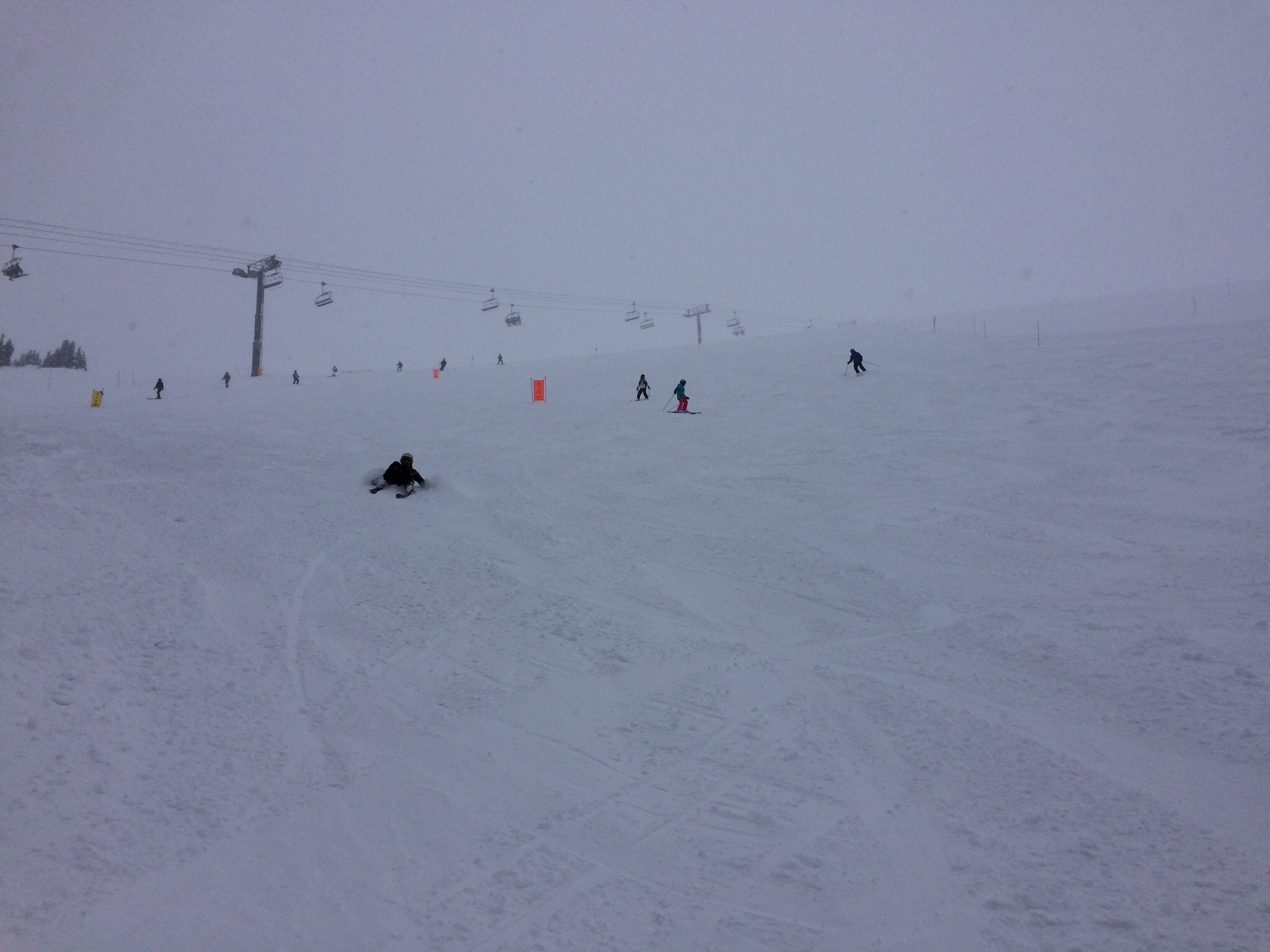
clouds came in last night
 Siri warned of “bad weather”
 (she’s not a skier)
 
 twenty new inches
 of fresh powder, soft as silk,
 came from those “bad” clouds
 
 we floated ten runs
 clouds above us, below us,
 this heaven on earth