My Livelihood is ‘Political Theater’

I have twenty-eight students with one to two essays due EACH WEEK in my new University of Phoenix class, my second job that pays $225/week on the occasional basis that I am granted a class.

I haven’t taught this particular class in over two years, so of course, they’ve changed the entire syllabus, I have to read two different textbooks, and I need to update all my rubrics. Also, all of the online discussion questions have changed, so I will need to respond to thirty different questions with a new set of thirty 200-300-word responses.

Part of the reason I keep this job is that it’s online, and I can squeeze it into (every possible free moment of) my day.

Another reason I have kept it, at the moment, is to fund the $2000+ I’m paying, in addition to doing hundreds of hours of work, to try to obtain my National Board Certification, which is the only possible way to get a raise at this point in my career without investing thousands of dollars and hours in another degree (I am MA+30).

The disheartening reality of what every teacher I know does to survive, every teacher who isn’t lucky enough to marry rich, or at the very least marry someone with guaranteed job opportunities and a forever-steady income, is that we must jump through every hoop imaginable to make ends meet.

We teach summer school. We do home visits. We spend our own money on advanced degrees and credits with the hope of improving our instruction and earning mediocre raises.

This is on top of the fifty or more hours a week we spend planning lessons, grading papers, counseling students in trauma at lunch and after school, attending meetings, sports events, professional development, and student recruitment events (because we have to sell our schools now).

So when my state, my “blue” but really purple (perhaps leaning red) state, calls us actors on a “political theater” stage, I am at my wit’s end:

“Criticizing the most recent teacher pay bargaining session as ‘political theater,’ the head of the Colorado Department of Labor and Employment urged the Denver school district and its teachers union Monday to work harder to find common ground — even as he expressed skepticism that the two sides would reach a deal” (Chalkbeat).

Was it theatrical that we gave up the tenth evening in as many weeknights to wait for our district to come to the table with an actual proposal rather than a cost-of-living increase already in the budget?

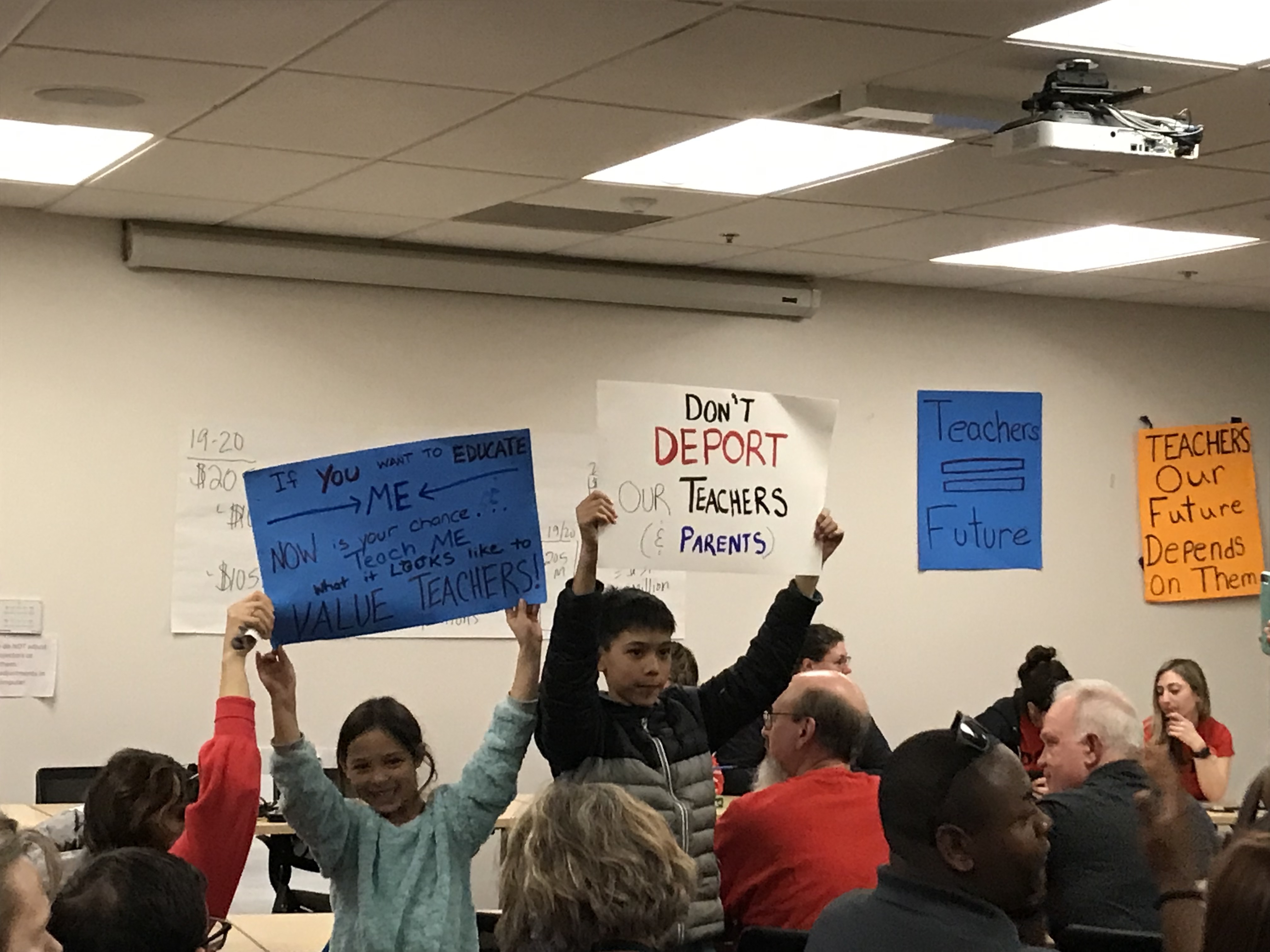
Was it theatrical that young children stood behind the fraudulent superintendent with signs begging her not to deport our teachers after the HR department more or less threatened their right to work?

Was it theatrical that we have negotiated for fifteen months, yes over “philosophy disagreements” because the PHILOSOPHY OF OUR DISTRICT IS TO SHUT DOWN PUBLIC SCHOOLS, TAKE OPPORTUNITIES AWAY FROM STUDENTS OF COLOR, AND GENTRIFY EVERYTHING FROM NEIGHBORHOODS TO CURRICULUM?

And. Just. Like. That.

All the hours. All the years. All the goddamn blood, sweat, and tears have been put on stage for the world to see, chart-paper and all, chants in the background, livelihoods on the line.

For political theater of the worst show you will ever wish you didn’t buy a ticket to see.

Fifteen Reasons Why: We Deserve More, DPS

Denver Public Schools has filed a request for state intervention to prevent the teachers’ union from striking next week. In the 19-page file, Superintendent Susana Cordova and her school district legal team have laid out reasons A-O (fifteen reasons) why the state should intervene.

Fifteen reasons why we, the teachers, deserve to be paid a fair, living, predictable wage.

Fifteen reasons why schools are targeted as the saviors of society in the same moment that teachers are vilified by the press and the public.

Fifteen reasons why we need a strike: let’s draw national attention to our plight, to the plight of a society that devalues education and the teachers who work to change the world.

Below, I have copied and pasted the fifteen reasons with haikus that represent teachers like me who have dealt with every one in some form or fashion:

A. Loss of Instructional Time from Teachers on Strike:
six hours a day
with every kid, every need
(and six more at home)

B. Students with Special Needs:
making learning plans
for families who need voices,
for inclusive rights

C. English Language Learner Students:
try writing our wrongs
again: try righting our wrongs
to build fluency

D. Potential Denial of H1-B Visas:
immigrant teachers:
First Amendment denial
(freedom, too, revoked)

E. Students Enrolled in Affective-Needs/Autism Center Programs:
routine disruption
tears students from what they need:
teachers who love them

F. Students Receiving Mental Health Services:
so much more than school
SSPs save our students
(sometimes from themselves)

G. Students Receiving Medical Care Services:
our school nurse gives them:
medicine, patience, advice,
hope for the future

H. Students Dependent on Schools for Food and Nutrition:
every teacher here
has given to the food bank
(lunch is not enough)

I. Students Dependent on Schools for Shelter from the Elements:
the prison pipeline
could stop with these school buildings
and a teacher’s love

J. Gifted and Talented Students:
let them be leaders
led by those who see their light
(you guessed it–teachers)

K. Student-Athletes Seeking Scholarships:
cultural veto:
to remove a student’s chance
of avoiding loans

L. Students Taking Concurrent College Classes:
what teachers give them:
highly-educated guides
for college keenness

M. Financial Hardship on Families:
double-income trap
means no parent waits at home
(they need our service)

N. Absence of Childcare for Families:
after all, aren’t we
glorified babysitters
asking for too much?

O. Fewer Resources for New American Families:
I beg taxpayers:
come visit our newcomers
to grasp sacrifice

Fifteen reasons why we fight every day for our students’ needs. Our society’s needs.

Thank you, DPS, for laying out our reasons. For proving to our country how badly we need to strike. For creating a legal request to clarify how heavily we carry the weight of the world.

For showing us all how little we earn as we carry it.

This Is Why I Will Strike

I just want to think about how hard-won this moment is. This day. This five of us skiing down a mountain together. This money we didn’t have before that we have now.

This fresh powder.

This view. Could you beat that view if you went anywhere else in the world? Well, could you?

I don’t want to think about the five years we, a family of five, lived on a frozen, constituents-unwilling-to-vote-on-a-mill-levy teacher’s salary of $48,000. The $10,000 out-of-pocket expenses we paid to give birth to our third child. The penny-pinching. The laying-out-$400-every-three-months to earn those goddamn fifteen credits so I could get a raise if I … changed school districts.

I don’t want to think about how Spain screwed me out of a decent salary and we came home afterward with $19,000 in debt, more than any we’ve had as a married couple.

I don’t want to think about the TWO 1998 cars we have outside our house right now, car-payment free.

I don’t want to think about a teacher’s strike. I don’t want to think about my refugees trekking across town on two buses and being huddled into the auditorium to wait, without teachers, the long seven hours until they trek back, because if they don’t wait, they might not have a meal that day.

About the hundreds of hours I, and every teacher I know, has put into grading, planning, meeting, educating (ourselves and them), in the ten months between August and June. Hundreds of hours outside our contract day listening to students tell us their traumas that are greater than any soul could bear, listening to our admin and school district rate us as failures when we wake before dawn and go home after dusk to bring our best selves into that classroom every day, listening to our coworkers decide between renting a slumlord shithole or buying a house an hour away…

Listening.

I don’t want to think about the thousands of union workers who died for this day. For this choice. For a society where corporate greed is not the only answer.

I just want to see my husband and my three girls gliding down this Colorado slope, this Colorado hope.

I want to ski. To smile. To rejoice.

I don’t want to go on strike.

But I will.

Just like I walked in and out of Manual High School in 1994 when my teachers asked me to support them.

Just like I lived on pittance pay for the early part of my children’s lives.

Just like every other union member everywhere who’s looking to find empathy in the eyes of the corporate monsters that rule our society.

I will strike.

And I will ski.

And we will win ourselves a bluebird day.

My Polo Ralph Lauren Purse

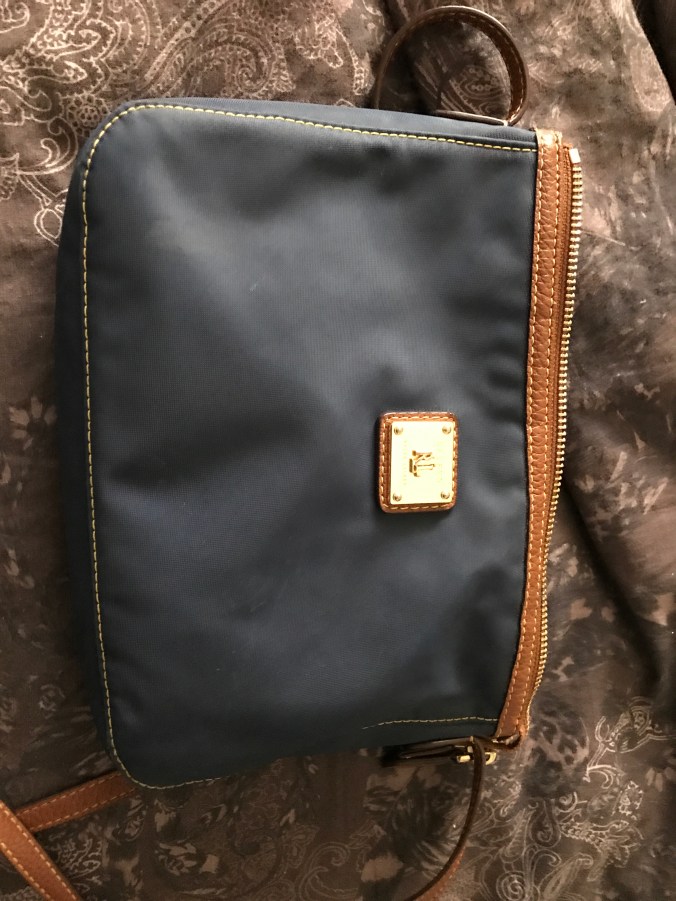
A few years ago, in search of something smaller to carry on road trips, I went to my typical “fashion” store, the Goodwill, and came across a perfectly small, just-big-enough-for-a-phone-and-some-gum, Polo Ralph Lauren purse. For $2. I popped it into my cart with my typical Goodwill assortment of work blouses and pants, and have been using it ever since. It fits perfectly into the console of my Pilot, can easily be crammed inside a carryon bag to bring onboard for a weekend getaway, and is light on my shoulder. It is the first, and last, “designer” purse I will ever own, and it is nothing special. It’s made from variations of polyester inside and out, though it has a reliable zipper. Compared to other, cheaper purses I’ve had over the years, I wouldn’t put my money on designer brands.
851779DF-AF95-4D92-97E3-1BC8F90E4520

I suppose this purse, in retrospect, has now cost me 105 euros and two nights with very little sleep.

Because it was the purse, my Polo Ralph Lauren purse, that caught the eye of a petty thief as it sat blatantly (blatantly empty, I might add), on the passenger seat of our rental car while we carried seventy pounds of luggage into our latest Spanish apartment in Huelva.

Everyone has told me this. Passersby watching my two younger daughters scramble to lay on layers of packaging tape over the small triangle of broken glass at 20:30 on a Saturday night when we were supposed to go to dinner (it turns out dinner in Spain is an hour later anyway, so by the time we arrived in the restaurant at 21:00, we actually beat the long line of hungry customers that would soon make its way down the parkway). “¿Que pasó? ¿Ocurrió aquí? ¿Que tuviste adentro?¨ I heard the same questions when I texted Andrea, the Airbnb caretaker who assured me that this area is ¨muy tranquilo¨and nothing like this has ever happened before, and what did I have inside the car to grab a thief´s attention?

B84E00C3-88D0-42B1-A46F-FA09E13A71E6.jpeg

Where did we get the packaging tape at 20:15 on a Saturday night? A small detail of my travels in Spain: having lived here for a year has helped me tremendously with tiny bits of knowledge that are crucially important for moments like this—bazars, or more commonly called chinos—are Chinese-run everything stores that are even open on Sundays when the entirety of Huelva is camped out on the five-mile beach.

13C01316-A57E-479E-8B5A-E9813766EF81.jpeg

I speak enough Spanish to ask for tape, for scissors, to explain to the passersby that it was my Polo Ralph Lauren purse that the thief could see. I speak enough Spanish to explain the whole situation to Andrea, but I am lacking one word as to why I don’t have insurance that will cover this: what’s the difference between a lease and a rental?

I speak enough Spanish to text the owner of the apartment later and tell him the pilot light is out on the natural gas water heater, but even after he texts me photo-supported directions, I can’t seem to light the flame. He calls and coaches me through in such rapid-fire Castellano that I become flustered and am unable to explain what I have done wrong, so, alas, Andrea saves the day for me once again, walks over and lights the flame within seconds.

I speak enough Spanish to understand that on Sunday, everything is closed, and the only thing we can put our money towards are some tapas y postres, not window glass. Mythili and I make our way back to the bazar to find their version of Drano after I have spent half the morning trying to unclog the kitchen sink with a tiny and handy plunger kept under the sink because I can’t bear to make another report about something else gone wrong.

I speak enough Spanish to hear the word cerveza from the man walking up and down the beach with an ice cream cart, and I buy three because the sun is kind in the late afternoon, the beach is full of shells, and Mythili, the only child who would step out of the apartment with me today, is having great conversations with me about how much weddings cost and what types of jellyfish exist in the world and how many shells she thinks she can collect by the end of the week.

I speak just enough Spanish to explain to Jose, Andrea’s friend and owner of the ironically-named CarGlass shop (Andrea tripped over this title many times when she was explaining the location of the shop), that I have an arrendamiento (thank you Google translate), not a rental, that they wanted to charge me 3000 euros for insurance, and can I just pay for it myself?

I speak enough Spanish, with a few stops and bouts of “más despacio”, to sign the paperwork Jose lays out for me, to shell out another 105 euros, to praise the good lord that, once the thief broke the window and saw only a selfie stick inside my Polo Ralph Lauren purse, he decided not to take anything at all. Not even the purse. (He probably realized it was just crap polyester like everything else on this godforsaken planet).

But I don’t have the words, in any language, to describe how challenging traveling with my three girls has been this year. They have reached the tipping point of childhood exuberance melted into adolescent angst, and nothing, it seems, is quite what they want to do.

I have no other adult in the house to help me light that llama, no one to plunge the sink, no one to commiserate with me at 4:00 a.m. when my oldest wakes me by talking to her boyfriend back home, no one to wash up Riona’s puke from eating mussels before the sun rises on a Sunday morning. No one to stand by my side and say, “We didn’t fly across the world for you to sit in an apartment all day and night.”

That little triangle of broken glass has brought fear and doubt to a trip that is already plagued by fear and doubt. While at the beach, I tell Mythili I am afraid to go in the water with her and leave our stuff, because what if someone steals it? “Don’t turn into that, Mama. No one ever steals anything from you, as you always say, case in point with the purse.”

But I speak enough Spanish to understand Jose, when he arrives at his shop at 8:52 on a Monday morning and I am already waiting, come right up to me and say, “Ud.  Es Karen, la amiga de Andrea?” Because yes. We are already friends.

I speak enough Spanish to read the bar-coded descriptions of historical points in Huelva as I pull them up on my phone, learning about Cristobal Colon, ship building, and industry while treating myself to pretty views of modern architecture, shady parks, and perfectly placed fountains.

I speak enough Spanish to navigate another day here, to order goat cheese with honey AND jam, to laugh with Mythili at the botched menu translation of squid meatballs as “squid balls.”

The words I need to find, words that could never fit in my car, my Huelvan apartment, my Polo Ralph Lauren purse, are the words of a lonely traveler, a neglected mother, one who just wanted one last glorious summer with her girls before they got too big, only to realize and accept, nearly home by now, that they are already too big.

I still have my Polo Ralph Lauren purse. My selfie stick. My gum. Jose is fixing my CarGlass, so by 18:00, the girls and I can pile in the Peugeot and arrive at the beach well before sunset and late enough to “not have to swim or get sandy.”

I still have the Spanish words I will need to navigate the next two weeks.

I still have the three girls with me, moody or not, and I know in my heart that they will one day look back at this crazy Spanish adventure and be grateful for it.

And no matter what fears and doubts have traveled with me across the world, I still have these views, and they are worth more than the price of broken glass, a Polo Ralph Lauren purse, a scam of an arrendamiento.

No thief or child could take them from me.
 

Beyond the Bars

To avoid pouring water down the drain, I spend ninety minutes washing dishes in two pans, running water out to my new mulch to dump, and putting everything away while Bruce researches home equity loans and Trump tax cuts that hurt, rather than help, our current situation.

Behind the bars of my security door, I take this picture of the sewer company’s progress replacing a portion of our main drain.

Behind the bars of this security door, I hide from the American Dream. The one that we are all promised and few of us ever attain. The one where we could afford to buy a house, afford to deal with that house’s expenses, afford to send our children to college or even pay off the loans we might still have from our own degrees.

I hide from the dream of all of my grandparents, a combination of immigrants and endlessly American, one grandfather with an eighth grade education, one with a high school diploma, who were able to raise large families and pay off mortgages well before retirement. On ONE income.

I hide from the audacity of insurance that we carry on our homes, our health, our lives. From the premiums we pay that won’t cover pre-existing conditions (like pregnancy!) or pre-existing problems on our properties (like drains), or pre-existing hope–from all the thousands and thousands of dollars we pour into these plans that leave us empty, behind bars, unable to operate a backhoe.

I hide from the for-sale houses in my neighborhood that are now so outrageously priced that my family, and none of the other families on my block, would ever be able to afford to buy the homes we stand in.

Behind the bars of my security door, I am as insecure as everyone in my generation. The generation that faces housing costs that are equivalent to more than fifty percent of what we earn in a month. The generation of debt that is impossible to avoid even with the best budget. The generation that has made the choice to bring children into this world only to constantly think: why would I bring children into this world? Children I feel inadequate to provide for, children who will face even higher college costs, children who will be straddled with debt for their entire adult lives?

Behind the bars, I cannot see the buyers of the $769,000 remodel on the next block. Where they come from. What jobs they have. What magical formula they applied for that allowed them to take a mortgage that costs more than what our two incomes bring home in a month.

Behind the bars, I hear the Spanish language spilling from the mouths of the workers who have to dig a hole in a yard on a holiday. With perfect efficiency, they have repaired a ten-foot section of pipe within two hours, and they will move on to the next family’s crisis, and the next, and the next, before going home to houses on the other side of town that they also likely can barely afford, because we all know that the $6000 we just paid for that pipe is lining the pockets of a white, male, English-only CEO.

Behind the bars, I live in my dream house, my four-bedroom, two-bathroom, beautiful-garden dream house that we waited seventeen years to purchase. I raise a family of three daughters whose pay may never match their male counterparts but, despite this, whose intelligence and candor will allow them to live the life of their dreams. I share my meals, my home, and my love with my husband who has managed our finances to such perfection that we have flawless credit, making an application for an equity loan for both our properties (because nothing can just happen to this house–both need new main drains), virtually seamless. We both work hard at our dream jobs–teaching and telecom–in order to make this picture perfect.

With the door open, before they rebury the dirt, I snap a picture of our pretty kitty hiding behind my glass of stress wine.

I sit on our paid-for leather recliner and feel the cool breeze of early summer and think about my students who have crossed the world to be a part of this American Dream, and how hard they work to make that dream possible, to learn English and learn how to navigate the complexities of our society that sometimes make us feel like we’re all going down the drain. I think of how hard my husband and I have worked to make this day possible–to give my girls a summer trip to Spain, a year in Spain, to see nearly all fifty states–because of how careful we have been with our money. I think of the health insurance that paid for most of my husband’s surgery and how my grandmother’s baby sister died of a simple infection in her mouth after tripping up on a wooden popsicle stick, all because they couldn’t afford a doctor.

With the door open, we host family friends who make us laugh until we cry, whose daughter will join us in Spain, whose presence makes us appreciate what we have surrounding us in life–a life filled with laughter, love, support.

With the door open and the Spanish-speaking workers gone, the Siberian iris frames my kitty, my pet, my perfect yard. I know that I have given so much to get to this picture, and I know I still have more to give. I have daughters who are lucky enough to have access to all the technology, diversity, and coursework that comes from an urban education, and who will enter their adult lives with an open-minded understanding of the world. I have a house that we can afford and enjoy without feeling like our money is going down the drain. I have a job that brings the global perspective to every choice I make in one of the most beautiful buildings our city has to offer. I have a marriage that has lasted from childhood to adulthood, with all the post-adolescent turmoil and trauma, all the sorrow and joy, that comes with making it work for twenty years.

With my door open, I wait for the American Dream. Somehow, some day, some way, I will see how it is both easy and difficult to achieve. If I would learn to always open the door and move beyond the bars, I would see that not everything is going down the drain. I would see the beauty in every choice, the brutality in every loss, and find a way to make a set of silver linings sweeter than a sip of stress wine.

I would be the wife, the teacher, the mother of that perfect picture. That perfect picture would be me.



Cussing Colloquialisms

At the elevator, brace still on, crutch still under his arm, he tells me he thinks that a good return-to-work date would be June 4, five days before we leave for Spain. He seems optimistic as he hobbles down the tiled hallway, as we enter the carpeted office, as we check in and he holds the door open for a woman with a walker, pointing out, “It’s kind of strange they don’t have an automatic door in the orthopedic’s office,” to which she adamantly agrees.

On the plastic, paper-coated bed, he hands me the folder while the PA takes him for x-rays. After just a few minutes, the doctor enters with the films. He has photographs of the entire procedure. He intricately describes the meniscus (intact), the bones (drilled into), the ACL (torn and then repaired). Bruce and I lift our eyebrows at each other, barely able to distinguish the tiny details he points out in each picture.

In his cozy spinning chair, the doctor is also optimistic. “I think you can ditch the brace right now and ditch the crutches by Friday. Use the stationary bike on Sunday. By Monday, you should be walking around the block. Maybe driving.”

From the green paper folder, I begin to pull out the forms. First: short-term disability approval. A list of lines with dates, surgery and medication verification. Affably, he takes them in stride: “I’ll be sure to get these to the right people to fill them out.” Because he has people. Because he charged the insurance company $36,000, more than half of what I earn in a year, for an outpatient surgery that took less than 90 minutes. Because we live in the land of the free.

From the green paper folder, I continue to pull out forms. Bruce begins to tell him–without ever being able to finish because of the doctor’s rambling explanations, the doctor’s defense of his procedures, the doctor’s justification for not filling out anything–about wanting to return to work before Spain. I pull out The Form, the one that CenturyLink requires for him to be able to work: a release of liability for driving a company vehicle, an “if-something-happens-it’s-not-on-us, your-injury-better-not-affect-your-work” form.

From his throne, he glances at the wording. He throws in more anecdotes peppered with cussing colloquialisms. “In twenty-six years of doing this, I have never seen a company require a form like this. What if you’re a shitty driver? How can I, as your medical doctor, determine if you’re OK to drive? I won’t sign a form like that. If you get in an accident and hurt someone and I’ve signed this form, then it’s all on me.”

From my plastic chair, I listen to the tone of my twenty-years-spouse change from respectful to grainy. I can almost feel the lump at the back of his throat as he tries to go on. “Well, my supervisor is willing to let me come back on light duty…”

From his throne, the doctor interrupts: “What you’re going to be dealing with is HR, not your supervisor, and if HR says you can’t work, that’s where things get muddy when I start putting my name on these forms.”

From my plastic chair, I am counting down the hours in my mind until the moment I can let these tears actually fall. First I have to continue listening to this white-haired, privileged surgeon continue rambling on about lawsuits. Then, we have to make Bruce’s appointments for physical therapy. Next, we have to drive home and track Mythili’s progress on her bicycle, as I had no way to pick her up today. After that, I have to take her to her doctor’s appointment, where they will make commentary about how my thirteen-year-old hasn’t had her period yet.

From my plastic chair, I am frozen and without words. The doctor turns to me. “You look frustrated.”
Is that the word you would use? Do you think frustration sums up the past six weeks of my life?

“The thing is…” Bruce begins, “… I’m probably going to get laid off on July 30.”

The doctor has finished listening. “That’s why we have to be so careful when filling out these forms. This happens all the time, when companies decide you can’t work.”

“No, it’s unrelated…” he begins again, that painful lump sitting on top of his beautiful, sexy voice.

“Are you really not going to fill out the form?” is the only thing I can muster. The doctor hands it back to Bruce, asks if there’s anyone he can call, anyone he can talk to, any way he can go back to work without it.

From the tiny patient meeting room, he stands. He shuffles us out the door. He guides us to his people who will make the next appointment. I place The Form neatly back inside the green paper folder.

I think of a few cussing colloquialisms I could shout. I think of hindsight, all of it. Of next year’s ski passes we wasted $2300 on. Of the thousands we’ve already spent in this office. Of the four weeks at seventy-percent-pay he’ll get for short-term disability. Of the thousands we’ve spent on Spain that is gone and tarnished before boarding the plane.

But I have no words in these moments when I have bowed down to our litigate society, our corporations’ fear of liability, our doctors’ refusal to help the little man other than spurting cussing colloquialisms while trying to relate to us.

At the elevator, his brace in my hand, crutch still under his arm, I don’t speak. Picking up Mythili, exhausted from her bike ride, I don’t speak. At the following doctor’s appointment, where, as usual, we only get to see the PA, I cross my arms and don’t speak, forcing Mythili to respond to questions about who she lives with, how she likes her sisters, what kinds of food she eats.

From my recliner at home, I do have a few cussing colloquialisms for the orthopedic surgeon. I could spout them all day, all night, every waking moment of the past twenty years of marriage, every waking moment of my life as a not-quite-middle-class American who just needs A GODDAMN FORM SIGNED SO WE HAVE A FEW PENNIES TO OUR NAME…

From my recliner at home, the words are useless. All the words, all the work, all the life we have put into living, everything feels useless.

And there is no cussing colloquialism that will bring me that doctor’s signature, bring my husband his job, bring me some peace. So why bother spouting them at all?


An Educational Cocktail

You can enter any cafe in Spain and you will probably find the same two drinks: cheap Pilsner beer and local wine (OK, you can at least choose between red and white!). The Spanish palette for mixed drinks is limited to adding liqueur to coffee, it seems, and their availability of decent beer choices is abominable. But when it comes to education, Spaniards love a good cocktail.

Here are some instructions for making an educational cocktail, shaken, not stirred.

Ingredients:

1. Homogeneous groups of students segregated by ability who remain together all day long for years at a time, and are allowed to choose their own seats.
2. Heterogeneous teachers who range in age, management, and educational methodology.
3. A school building that does not provide resources such as technology, textbooks, government-funded lunch, or air conditioning.

Instructions:

1. Place all students in one classroom. Wait for intermittently ringing bells that will shake them up out of their seats while teachers dance through hallways crowded with other teachers and random students who have PE that period, to arrive and wrap the students up in a somewhat-chilled glass with a pinch of salt along the rim.
2. Spend three hours each week trying to settle the above shaking, using the cold stirrer of the teacher’s little authority to embed knowledge enough of one subject area to make a decent mixed drink, full of flavor and memorable enough to spill out onto the streets with jubilation.
3. Subdue them on four occasions per trimester with exams that make up the stark majority of their grades, consisting of arduous essay questions, but only about ten per exam. Their flavors will bleed through classes so that they will begin to taste more like eraser remnants than a decently mixed drink.
4. Shake up the cocktail a little just when the school year is getting cold by surprising only select groups of students in one grade of primary and one of secondary with the annual government test, whose topics, flavors, and question amounts you will never know or begin to be able to prepare for, similar to visiting the cafes in every city in Spain who may or may not have a menu, use local vocabulary non-translatable in any software to identify food items, and whose waiters never return after bringing you your order. (Surprise, surprise, we all like to guess what it is we’re bringing to our lips!)
5. If the cocktail spills, you may clean it up and refill it once, for free, but only once. After that, you will be run dry and stuck in the same situation as the rest of the third world: working shit jobs for little pay.

Alas, you can always look back at your educational experiences and say that you had the best mixed drink of all time: moving through the school system in Spain!

From Age Five

From age five, they were in love. It was meet-the-teacher night, and school hadn’t even started yet. We meandered through the hallways and classrooms of the school we’d chosen, hoping for Spanish immersion and IB education. They were the two oldest daughters of three siblings, and they chatted, did cartwheels, and were holding hands before the night was over.

Her tall and slender, long-lashed mother quietly commented, “You see? They’re already best friends.”

And so, nine years later, when I texted my daughter to make room in her drawers and space in her bed for a loooong sleepover, her only, immediate, obvious response was, “REALLY!!!!!! OMG THIS IS AMAZING!!!!”

Because when you’re in love, when you have a connection, it does not matter if six extra people are going to live in a house built for… five?

Because when you make a fast friend at age five, when emotions are so visceral and honest, it’s probably something worth cherishing.

Because when you have a bonus-five-bedroom dream house, why not share the dream?

Because if the situation were reversed, wouldn’t we all, minute by minute, hand in hand, reach out and make the world just slightly better, one soul, one family at a time?

Because what makes a family?

Girl Scouts. Trials and tribulations. Cookie selling. Lost money. Lost causes. Frustrations. And so much fun you would laugh until you nearly peed your pants, all in the snow on a bitter cold January night. Bridging ceremonies, brownies, a baby brother in tow on camping trips.

Backyard barbecues. Eating meat or not eating it. Sharing our sad stories. Telling the truths we were never able to tell in the schoolyard, at our jobs, in our “real lives,” but that slid so easily from our mouths in the comfort of our back patio.

Camping trips. Sharing pies and drinks and a bite of an ice-cold river. And again, laughing until we cried under a hazy moon and starlit sky.

Sleepovers. Girls screaming into the night, little brothers trying to keep up and eating two giant waffles before ten a.m., before they were even ten years old.

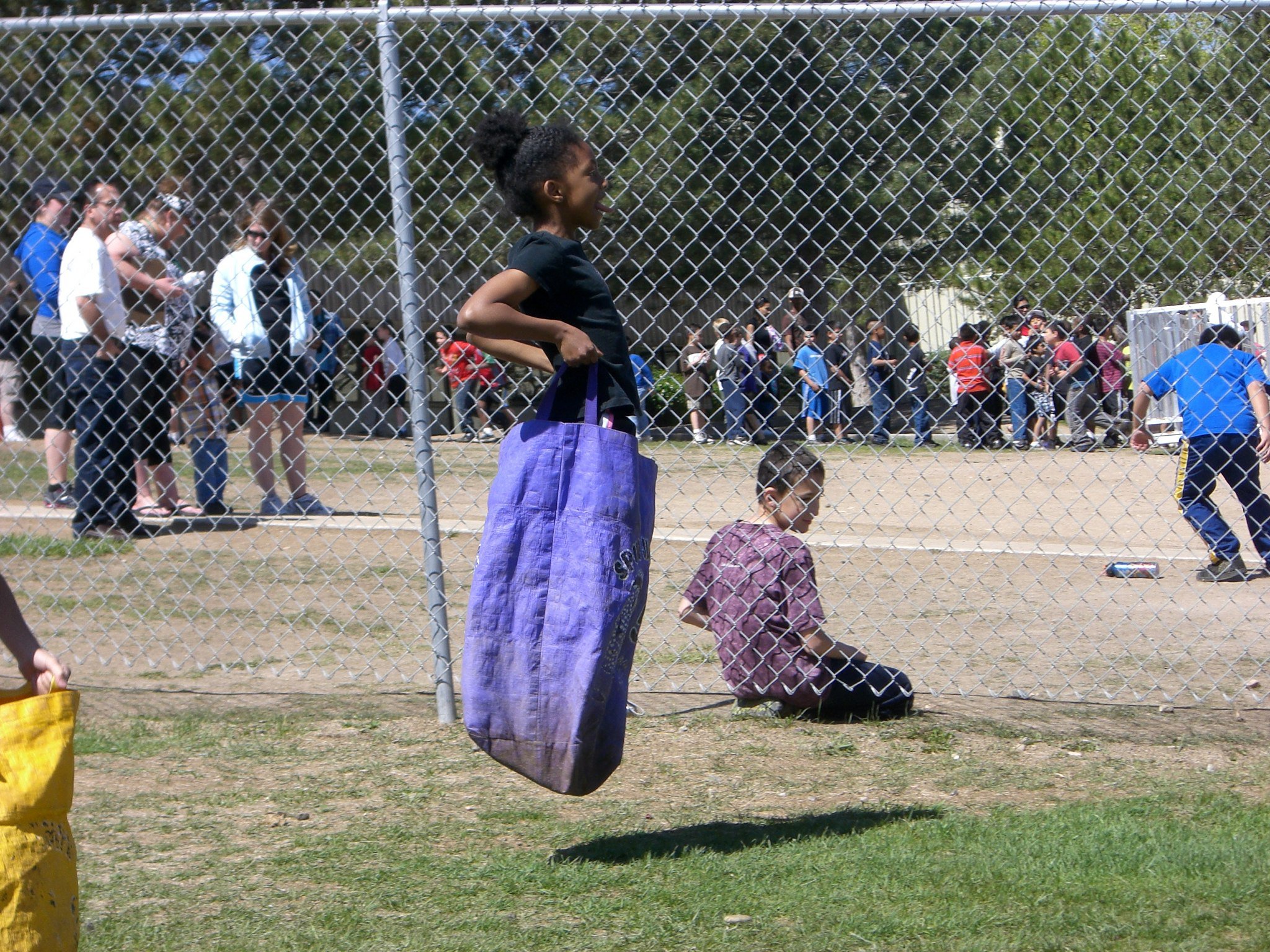
School. The daily ins and outs, friends come and gone, field days and jumping into the sky as if you were jumping right up into heaven. Teachers we loved and hated and commiserated. Our shared experience.

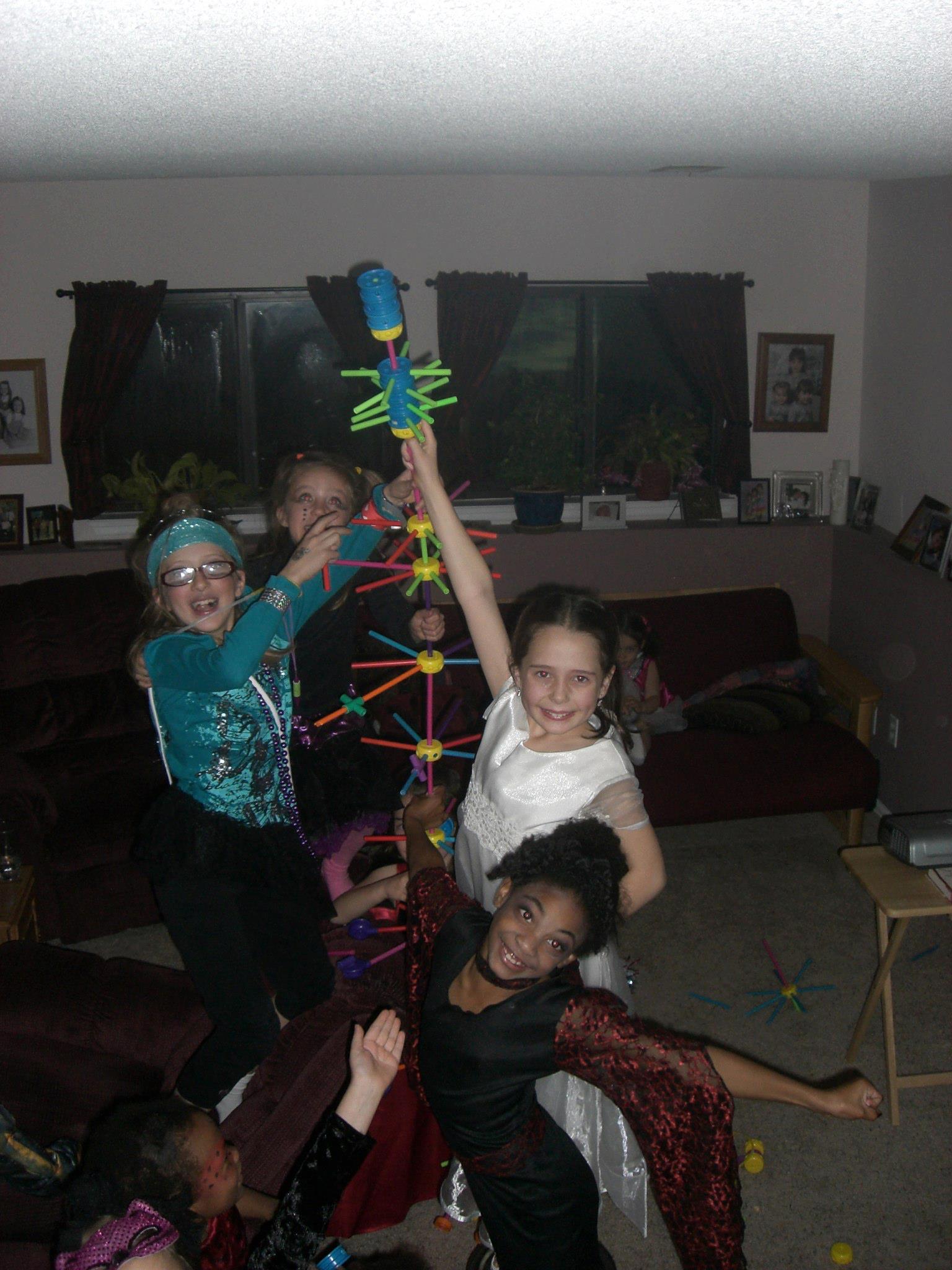
Family parties. Little girls in pretty dresses pretending to drink tea. Everyone, kids and parents, gathering household items to make a Halloween-happy costume. Parents gathering in the kitchen to catch the scene and capture a moment of each other’s joy, each other’s sadness. The connection found in youth, in young parenthood, in the heavy task of raising young people to become wise people.

Because… from the age of five, they were in love. Look how they’ve grown. Look at the young women they have become. Look at the family they have made for themselves.

That is why we can add six people to our five-person house. Because from age five, these girls have carried us into the home we call home. It began with a smile, a cartwheel, a hug.

That, and rearranging some beds, is about all it takes.


Drifters for a Day

from desert to sea
 in a day’s drive through one state
 (miracles exist)
 
 rainforests between
 to prove heaven lives on earth
 (nature is my god)
 
 we found our daddy
 after cherry shopping; lake;
 beyond evergreens
 
 a driftwood dinner
 no one could have predicted
 in another life
 
 yet here we’ll find sleep
 all together in one room
 at earth’s clouded edge


What Sundays Have Become

Nearly nineteen years into our marriage, it is time for new furniture. A friend came over the other night, and as the girls piled onto my lap on the sofa claiming their right to me, the wooden leg busted underneath, exposing the reality of its twenty-year-old, hand-me-down state.

Hence, Bruce and I spent four hours today driving between stores, researching cat-scratching deterrents, and deciding on a leather reclining non-power furniture set… that we didn’t buy.

Instead, we continued our twenty-first century journey to the grocery stores. We bought the usual to feed our family of five: avocados and cilantro for our weekly need for fresh guacamole, bananas, apples, and clementines to fill lunch bags, chicken and sushi to make our dinners.

And something more: a stockpile of nonperishables. Beans. Pasta sauce. Brown rice. Cans of soup. Tea. Flour. Canned tomatoes.

Yesterday, my husband of nearly nineteen years and the man so nonviolent that he cringed at the idea of actually killing an elk the one time he went hunting, told me he thought it might be time to buy a gun.

Today, we decided to save our $2000 on furniture because we might need it to stock up on food and provisions before the coming of the war that inevitably will destroy our democracy.

This is what Sundays have become. There is no joy in errand-running, no hope for a new living room set. There is the impending doom of a future that none of us can predict nor look forward to. There are three girls in our home whom I fear will not have a future at all. There are tweets and executive orders and absent investigations and jaw-dropping obstruction.

Soon there will be food shortages. Rations. Militia.

It is all around the bend as we navigate from city to suburb to city on the highways brought to us by progressivism, searching for what we need today, for what we might need tomorrow.

This is what our Sundays have become: me sitting in my nearly-nineteen-year-old recliner, hoping this marriage, this world, my children, will live to see another nineteen years.