A national emergency is a series of hurricanes on one coast and as many fires on the other coast, the direct results of climate change that our country chooses to ignore. A national emergency is the healthcare crisis, where we can’t get prosthetics if we’re missing a limb or pay for cancer treatment even if we’re dying. A national emergency is CEO pay which has multiplied exponentially for five decades and left the common worker with a salary too low to buy a house, buy eggs, or pay rent.
There is no national emergency at our border. There are millions of people, despite all of our national emergencies, who have faced far worse: farms that can no longer grow coffee due to climate change, dictatorships that have taken away all rights, medical care that includes fewer options for cerebral palsy or cancer than we have here.
Their emergencies trail behind them, left in their home countries weeks, months, or years ago, and like that train that they cling to carrying them across Mexico, they hope never to see again.
They are here now, families in tow, babies in tow, ready to work, ready to enroll their children in school and provide jobs for teachers like me, ready to take into their hands the American Dream that you have declared doesn’t exist for them.
They are not criminals.
They are not illegal.
They are not a national emergency, an executive order you’ve used to circumvent Congress on your first day in office.
They pick your food and clear your sidewalks after snow and build your roofs and work in your restaurants and run your factories and teach your children and make you rich. They are professors and lawyers and engineers and mechanics and everything in between.
They are human.
And after more than four hundred years of forced colonization and enslaved labor indoctrinated in our blood by imperialists like you, the only national emergency is how far back we’ve moved the dial of progress, and for how long we will make Suffering the motto of YOUR AMERICA.
The Atlantic and many other news sources have recently reported that students at elite colleges can’t even finish a book, and probably only read one book in high school, if that. The article focuses on the inability of students at elite universities who are struggling more than ever because of their lack of focus and literacy.
As a twenty-two-year veteran English teacher, I can verify that much of this argument is true. I have seen the curricula of high school English shift from reading novels to focusing on shorter, nonfiction texts since Common Core was implemented soon after I started teaching. So, yes, in school, students aren’t reading many books. But what about the rest of their time? Are they playing sports, playing on their phones, playing with drugs, or all of the above?
As my career has shifted from a typical English classroom to a Newcomer classroom, I am challenged with many more pressing issues. Students who don’t know how to cope with the trauma they have experienced. Students who only went to school sporadically at best or not at all. Students who have never held a pencil and students who have witnessed gang or war violence all of their lives.
In my attempt to teach them functional English–everything from the 44 phonemic sounds of our English alphabet to how to ask for directions–I must also teach them about the way our world works… or, at least, how to function in this new country.
When I find out that one of my students is pregnant, I feel it’s my fault because I didn’t tell that shy, sweet child to walk downstairs to the clinic and get the free birth control Colorado provides.
When I find out one of my students doesn’t only speak Sango but Ngama and was forced to attend school in Chad where everything was taught in French, I know I need to find more resources for her family so she can finally learn to read… in English, her fourth language.
When I find out one of my student’s stepfather is abusing his mother, after they crossed the Darién Gap together and weathered the immigration storm only to discover things aren’t much better here, I know I need to connect him to housing resources and domestic violence shelters.
When I discover that none of my students has ever read a book and can barely read the ten-page phonics stories in our weekly reading groups, but stumble through every word in their attempt to learn English, I think about what a waste our world’s resources are. We have the richest country in the world and public libraries every half a mile, and as usual, teachers are blamed because students can’t read, even these elite students who have the world’s books at their fingertips.
These “elite” students can’t get through a novel, and sometimes I feel like I can’t get through a day. Maybe they feel the same way, but I don’t know why. I don’t know why our government doesn’t open its arms to welcome the burning desire that every immigrant I’ve ever met has had to work and be a part of something that they couldn’t find elsewhere.
Instead, Trump comes to my town and tells his followers, all from a luxurious resort with six restaurants and an indoor water park, that immigrant gangs are ruining our city.
My classroom is mostly Venezuelan, and most Venezuelans are the most literate and hardworking students I have. He doesn’t know a goddamn thing about why they’re here or what they’re doing or where they’re living or what they have to offer. Just like those elite university students who can’t get through a novel, he couldn’t possibly survive a day in their shoes or stand at the front of my classroom trying to convey the cultural nuances of this country while also bridging the gaps between what they know and what they have to learn.
Now, who should we be more worried about–the elite students who don’t have the stamina to finish a book, the candidate who has likely never read one, or the immigrants whose lives are already more traumatic than any novel, and are here to tell their story and make this country part of it?
You tell me… if you’ve had the stamina to read this.
A color printer for my classroom so I can make posters pop for my Newcomer students. Eighteen credits at ISU so I can try to earn a livable wage with a salary lane change. A week in a hotel for one of my students and his family who were out on the streets.
What can you buy with $1000?
The last shred of dignity that DPS promised on our September paychecks. You said you kept your promise with extra pay for hard-to-serve positions and bonuses, a 2.06% raise, and $1000.
But guess what? We didn’t receive the $1000 that you are holding because our union wants arbitration against your broken promise. We only got the watered-down raise.
Where is it? Where is the 5.2% COLA raise that you agreed to?
When my student’s family was living in a tent, I asked my English colleagues at South for as much money as they could spare. Within a day, I had collected more than $1000 to keep this family off the street for a week. Why did I ask when we’re all strapped for cash, when gas and food prices and mortgage interest rates keep so many of us from paying our bills?
Because that is what I do. I teach Newcomers who came here for a better life. I work with generous colleagues who would reach into their nearly-empty pockets to come up with $1000 because it matters to a student. A family. A life.
How else can I earn $1000, or a real raise? From my second job as an adjunct professor, where, if the classes don’t get canceled before they begin, I might earn $1000 extra a month to make up for the gaps in my DPS paycheck? From teaching summer school, doing ISA paperwork, coaching, directing, or after-school supervision?
Why isn’t what I do in a day, in a school year, enough to earn $1000 of your respect? To earn 5.2% of your respect?
I plan lessons and grade papers for four preps. I have a classroom of students who just arrived from all over the world and speak seven different languages. I engage them in English, help them cope with trauma, show them where our food bank is, take them on excursions across the city, teach them about cultural norms, and communicate with their families about their never-ending physical and emotional needs. I have kids who have never held a pencil and don’t know their letters in their home language and kids who could write a novel in Spanish, and I work my ass off to meet all of their needs, even if it means giving them $1000.
What I don’t have is a salary proving that DPS believes that what I do is respectable and professional. What I don’t have is my promised COLA.
DPS, you agreed to support your teachers with a real raise, and you couldn’t even give us $1000. If a picture is worth 1000 words, I hope my words are worth at least $1000.
If you had another job, you would be so annoyed by the coworker who couldn’t piece together fiber or the project manager who doesn’t know how to manage, and your day might be temporarily ruined. You would miss your lunch hour redoing someone’s work or you wouldn’t be able to tell your boss your exact opinion of his golf vacation in the midst of your short-staffing issue.
If you had another job, you would spend your lunch hour cutting fibers or sending emails or catching up on a spreadsheet, hoping for a break or a promotion or … anything else.
Anything but this.
If you had another job, you wouldn’t stop in your tracks in the middle of a lesson to let a severe-needs child work his way to his seat, an admin begging you to give him a pencil and a blank piece of paper because maybe if he could draw a basketball, he would stop rocking on his heels and shouting the word across the room for all the world, all your classroom of recent immigrants, to witness.
If you had another job, when the siren makes your phone and the PA system and the whole world bleep and vibrate, you wouldn’t be thinking about the announcement (seeking the nurse) at lunch. You wouldn’t be sending your middle daughter to investigate the health of your colleague whose life was already threatened more times than the number of weeks in this school year, only to hear this report: “There were people everywhere and a kid on the floor. The security guards were surrounding the whole scene. We couldn’t see anything.”
If you had another job, you’d see everything. The botched fibers. The boss’s vacation. The spreadsheet that tells you exactly what you’ve done right and exactly why you don’t belong here.
But you don’t have that job.
You have this one. And despite the pull of this dog lying on your calves with the persistence of a love so divine you couldn’t measure it, this morning or in any other moment, you are here now.
And you look at your refugees and think about the Afghan girl and the Afghan para, who both stood on that tarmac eleven months back in a country that will no longer allow them to attend school, let alone show their faces, and are up in the tech office trying to get a new computer while you stand here, trying to explain without Dari or Pashto words,
“It’s a lock… out. There is a problem outside of the school. Not here. Do you understand me?”
And all the while you are thinking about your colleague whose student yesterday held a girl at her throat and sprayed her with dry erase cleaner, now imagining that at lunch that kid was under the security guards’ hands, and that he escaped, and that he “is a suspect in the perimeter.”
And that your colleague could be gone. And that your daughter was braver than you, walking down there to report on truths that can’t be reported.
And that you have to teach a lesson about the BE verb and all its uses and “Yes/No” questions such as,
“Are you happy?”
Yes, I am.
No, I’m not.
And the boy who can’t read or write or take total control of his body won’t stop talking about basketball, and then soccer, and then eating, and his paraprofessionals finally come, and the Afghan para and the Afghan girl return unscathed, and when you look into her young and beautiful eyes and ask her to say, in Dari and Pashto, “Please tell the students that the danger isn’t here. It’s a danger outside of the school,” they all shout, “We understand you, MISS!”, and even after her translation, her reassuring interpretation of your words,
You’re. Still. Not. Sure.
And let’s make contractions out of these “Be” verb conjugations, my students! (He + is = He’s. You + are = You’re.)
If you had another job, you wouldn’t have to wait until the passing period to see the text from your threatened colleague.
“I’m OK. A kid passed out in my room during lunch. I don’t know about the lockout.”
You wouldn’t have to wait. You’d be sending emails, repairing fibers, or working your way through a mountain of paperwork.
You wouldn’t be standing in front of these kids who are trying to piece together the parts of a sentence and the parts of their lives that were left in another country.
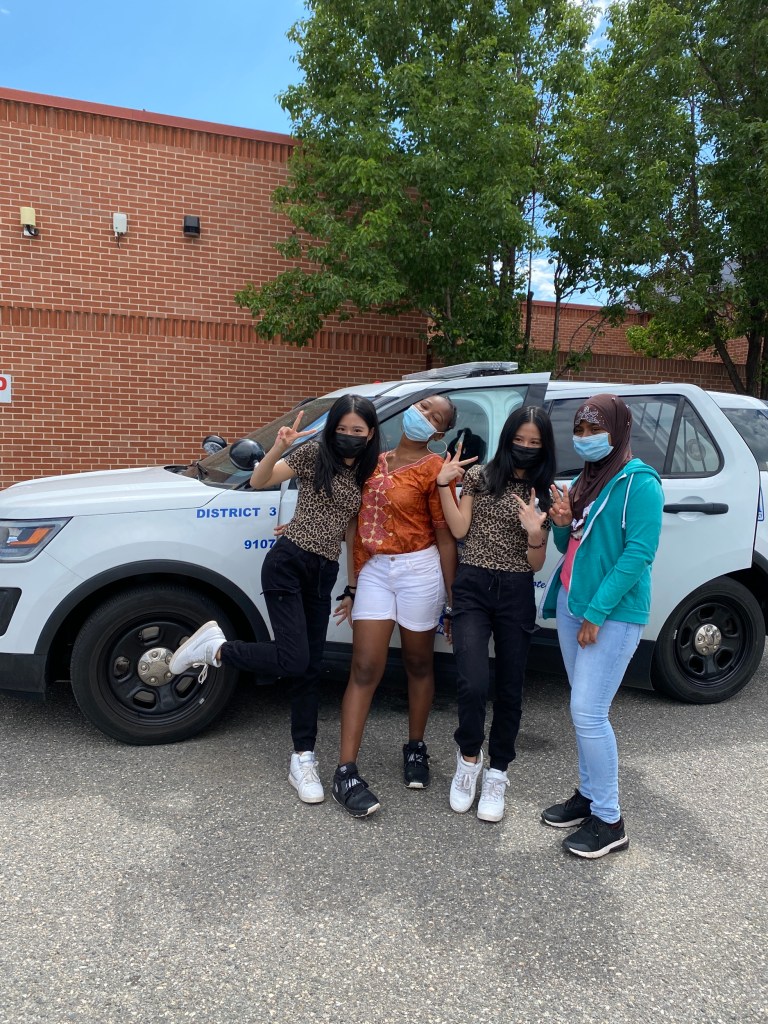
My husband finishes work at 16:00, but he invited me to dinner in the cool uptown neighborhood where he works tonight. Because he had to “flip a switch”, as the four of us girls teased him, at exactly 18:00, and he couldn’t be late.
And we won these smiles.
Vittetoes Do Campfire
Someone with a camera (my camera) took our photo. A nice white woman with a GoldenDoodle sitting next to us. On a Tuesday in May that should have been eighty degrees but it was only fifty and threatening rain.
Threatening.
But it wasn’t a real threat. It wasn’t an 18-year-old one of my students who walked into an elementary school in Texas to kill three teachers and EIGHTEEN 2nd-4th graders.
Nope. That life, that teacher life, is for tomorrow morning.
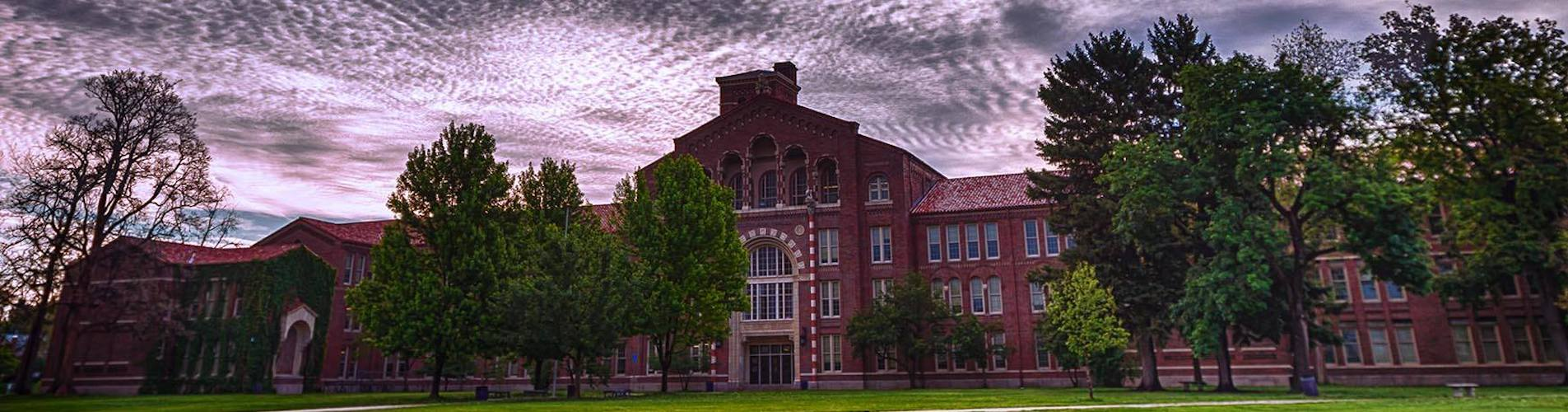
Tomorrow morning, I will rise at dawn, or just when the bluejays call me awake. I will walk my dog two miles through my Denver neighborhood. I will kiss my blue-collar husband goodbye and let my baby daughter drive me to the high school where we live/work. And we will walk into the Italian-brick-National-Historic-Monument of a high school and pretend that we don’t know the kid who could walk into an American gun store and kill the next generation in ninety minutes.
And I have worked for twenty years in this profession where my heart breaks every GODDAMN DAY in an attempt to keep that kid from doing that.
And you know what?
Tomorrow morning, I am going to see my recently-arrived refugee students who spent thirteen years on a list or thirteen harrowing months waiting in line or thirteen lifetimes waiting to come to the savior that is America, and try to explain to them, in my broken Dari/Spanish/Arabic/Pashto… that we are just as broken as them.
Tomorrow morning, I will rise at dawn after a night without sleep, and I will be there for them, trying to convince the boys that the gun store doesn’t exist and the girls that they have a future that includes educational advancement, no forced marriages, and a life that they can create.
And look at my girls.
Let them rule.
Just take a look at the three girls I have raised who have to face this.
Tomorrow morning.
And Biden, you’re going to give a speech? And Governor Abbott, and Donald FUCKING Trump, you’re speaking at the NRA convention this Friday, I hear?
And what the FUCK are you going to say? Thoughts and prayers?
Are you going to be there tomorrow morning, when the blood of eighteen elementary students is still staining our hands? Are you going to walk into that high school tomorrow morning, having that conversation with the kid whose negativity has walked him into the free-for-all, no-accountability gun store that is our nation? Are you going to sit by my side tomorrow morning as I try to make it through another day in a profession that vilifies and disgraces me with false promises and broken souls? Are you going to tell my Newcomers tomorrow morning that this really is the American FUCKING Dream?
No. You are not.
Tomorrow morning, before the alarm goes off, I will be awake. I will take my broken salary, my broken heart, and I will hug my kids. The only gun I will carry, the only bullets out of my mouth, are these words:
I am here.
I am here now. I am here later. I am here tonight.
H was in a mood today because she wasn’t feeling well, and we all suffered. She called out her former friend and said she wouldn’t participate in the therapy session (though she did) during the first class, and in the second class, she sat in the corner and wrote in her journal and did her work without a word.
When it was time to visit the school food bank before trekking home on the train, she was definitely not up to it. I looked at my recently-arrived Afghan girl whom H has been escorting to and from school every day, and H looked right back at me. They were both standing in Stairway F, not Stairway R, the one that leads to the food bank.
“Well… are you going to wait for R to go to the food bank?” (H’s sister and brother had already fled the premises and were five blocks down Louisiana Avenue, halfway home).
“We’re going home. She can’t go home alone.” It might have been a dirty look H gave me, an exhausted look, a middle-child look.
H is from Sudan and doesn’t speak R’s language. But she lives five blocks away from her, and even though the train takes an hour to bring them both to my school, I convinced R’s caseworker that it was worth her staying, that we have a food bank and a newcomer program with three hours of English and two hours of math and a summer program and therapists and patience, and this Sudanese family that lives five blocks away who could show her how to take the train… But what they wanted was an escort, a female escort, who would make sure that she would be safe.
(When we were learning past tense verbs yesterday via a story about a man who had a bad day, my para talked H through her horrible story about her bad day, where, just like the man in the story who missed his bus, she missed her train because R was late. And H is never, never late. And she nailed those past tense verbs, her long braids that her sister entwined spilling down her back like a river of emotion.)
I had to let them walk down Stairway F. (It was just a few years back that I discovered how many stairways are in our building. They go all the way up to X, if you were wondering how a school built a hundred years ago with three additions tries to fit the world into its walls. Stairway X is in the 1987 addition with the new gym and its fancy foyer and its secret passage up to the third-floor batting cage.)
I digress.
I let them go, and I walked the rest of my class down the second-floor hallway to Stairway R, to the food bank where my most-recently-arrived Afghan boy told me the whole story, through his broken English and broken heart and the translator app on his phone, about the series of scarred slashes on his arm.
“The Taliban?”
Scars so deep that they are still pink, as if cut by a suicidal knife, as if done yesterday. He has photos on his phone from the day of the event, less than a year back, when he was working in a pharmacy that the Taliban decided to bomb, shattering the glass on all the windows, sending the glass into his forerarm, his shoulder, his soul.
“Can you walk with me through the food bank and show me how to get the food?”
The patient Wash-Park mother was making a list of new students. He didn’t know just how to add his name, but his verbal skills are over-the-top amazing. “How many people are in your house?” I asked because the form asks.
“Twelve. In two rooms,” he informed me, holding up two fingers to prove to me he understood.
“How many children? Adults?”
“Eight children and four adults.”
And before we had walked through, before we had picked out chai tea and lentils and halal meat and handfuls of fresh vegetables, filling not one or two, but three bags for him to carry across the city on two city buses, H appeared in front of me, cutting the line with R, exhausted and sick and putting her arm around her, making sure that she had as many bags of food that she could carry home to her huge family, and…
That is what it is like to teach Newcomer English. Find your H, take the right stairway, and fill your bags with food and hope.






 Step Write Up