Stamina

The Atlantic and many other news sources have recently reported that students at elite colleges can’t even finish a book, and probably only read one book in high school, if that. The article focuses on the inability of students at elite universities who are struggling more than ever because of their lack of focus and literacy.

As a twenty-two-year veteran English teacher, I can verify that much of this argument is true. I have seen the curricula of high school English shift from reading novels to focusing on shorter, nonfiction texts since Common Core was implemented soon after I started teaching. So, yes, in school, students aren’t reading many books. But what about the rest of their time? Are they playing sports, playing on their phones, playing with drugs, or all of the above?

As my career has shifted from a typical English classroom to a Newcomer classroom, I am challenged with many more pressing issues. Students who don’t know how to cope with the trauma they have experienced. Students who only went to school sporadically at best or not at all. Students who have never held a pencil and students who have witnessed gang or war violence all of their lives.

In my attempt to teach them functional English–everything from the 44 phonemic sounds of our English alphabet to how to ask for directions–I must also teach them about the way our world works… or, at least, how to function in this new country.

When I find out that one of my students is pregnant, I feel it’s my fault because I didn’t tell that shy, sweet child to walk downstairs to the clinic and get the free birth control Colorado provides.

When I find out one of my students doesn’t only speak Sango but Ngama and was forced to attend school in Chad where everything was taught in French, I know I need to find more resources for her family so she can finally learn to read… in English, her fourth language.

When I find out one of my student’s stepfather is abusing his mother, after they crossed the Darién Gap together and weathered the immigration storm only to discover things aren’t much better here, I know I need to connect him to housing resources and domestic violence shelters.

When I discover that none of my students has ever read a book and can barely read the ten-page phonics stories in our weekly reading groups, but stumble through every word in their attempt to learn English, I think about what a waste our world’s resources are. We have the richest country in the world and public libraries every half a mile, and as usual, teachers are blamed because students can’t read, even these elite students who have the world’s books at their fingertips.

These “elite” students can’t get through a novel, and sometimes I feel like I can’t get through a day. Maybe they feel the same way, but I don’t know why. I don’t know why our government doesn’t open its arms to welcome the burning desire that every immigrant I’ve ever met has had to work and be a part of something that they couldn’t find elsewhere.

Instead, Trump comes to my town and tells his followers, all from a luxurious resort with six restaurants and an indoor water park, that immigrant gangs are ruining our city.

My classroom is mostly Venezuelan, and most Venezuelans are the most literate and hardworking students I have. He doesn’t know a goddamn thing about why they’re here or what they’re doing or where they’re living or what they have to offer. Just like those elite university students who can’t get through a novel, he couldn’t possibly survive a day in their shoes or stand at the front of my classroom trying to convey the cultural nuances of this country while also bridging the gaps between what they know and what they have to learn.

Now, who should we be more worried about–the elite students who don’t have the stamina to finish a book, the candidate who has likely never read one, or the immigrants whose lives are already more traumatic than any novel, and are here to tell their story and make this country part of it?

You tell me… if you’ve had the stamina to read this.

$1000

What can I buy with $1000?

A color printer for my classroom so I can make posters pop for my Newcomer students. Eighteen credits at ISU so I can try to earn a livable wage with a salary lane change. A week in a hotel for one of my students and his family who were out on the streets.

What can you buy with $1000?

The last shred of dignity that DPS promised on our September paychecks. You said you kept your promise with extra pay for hard-to-serve positions and bonuses, a 2.06% raise, and $1000.

But guess what? We didn’t receive the $1000 that you are holding because our union wants arbitration against your broken promise. We only got the watered-down raise.

Where is it? Where is the 5.2% COLA raise that you agreed to?

When my student’s family was living in a tent, I asked my English colleagues at South for as much money as they could spare. Within a day, I had collected more than $1000 to keep this family off the street for a week. Why did I ask when we’re all strapped for cash, when gas and food prices and mortgage interest rates keep so many of us from paying our bills?

Because that is what I do. I teach Newcomers who came here for a better life. I work with generous colleagues who would reach into their nearly-empty pockets to come up with $1000 because it matters to a student. A family. A life.

How else can I earn $1000, or a real raise? From my second job as an adjunct professor, where, if the classes don’t get canceled before they begin, I might earn $1000 extra a month to make up for the gaps in my DPS paycheck? From teaching summer school, doing ISA paperwork, coaching, directing, or after-school supervision?

Why isn’t what I do in a day, in a school year, enough to earn $1000 of your respect? To earn 5.2% of your respect?

I plan lessons and grade papers for four preps. I have a classroom of students who just arrived from all over the world and speak seven different languages. I engage them in English, help them cope with trauma, show them where our food bank is, take them on excursions across the city, teach them about cultural norms, and communicate with their families about their never-ending physical and emotional needs. I have kids who have never held a pencil and don’t know their letters in their home language and kids who could write a novel in Spanish, and I work my ass off to meet all of their needs, even if it means giving them $1000.

What I don’t have is a salary proving that DPS believes that what I do is respectable and professional. What I don’t have is my promised COLA.

DPS, you agreed to support your teachers with a real raise, and you couldn’t even give us $1000. If a picture is worth 1000 words, I hope my words are worth at least $1000.

Tuesday Truths

But what if the new student I got yesterday is the brother who was left behind? What if he doesn’t have her sass, her grit, her audacity? What if the Afghan-Qatar-Chicago-Denver move took too much out of him, and he can’t learn?

But what if the first student today, soul scarred by the Taliban, here without services, without a caseworker, without parents, without a car, without a word of English, could get a car service? What if I send an email and see if I can also find food for him and his 20-year-old brother/parent?

But what if the second new student today, Salvadoran, has never seen or used a computer? What if she doesn’t know that the birthdate here is listed month, day, year, not day, month, year, and if I say, “Pon tu fecha de nacimiento”, she’ll start with the DAY? What if my other Salvadoran is in my other class, and never with her, because there are so many students coming in that I’m running out of space?

But what if my student who started last week, who can only understand a bit of French and only if Google Translate verbalizes it, because she can’t read or write, can’t find her way to the next class? What if she has pictures on her phone of all the places she has to navigate, along with 1,900 other students, because she can’t distinguish the numbers? What if anyone here or any translator could speak Pulaar, from Mauritania, and ask her why her parents pulled her out of school seven years ago?

But what if… what if it were Friday, and not just… Tuesday?

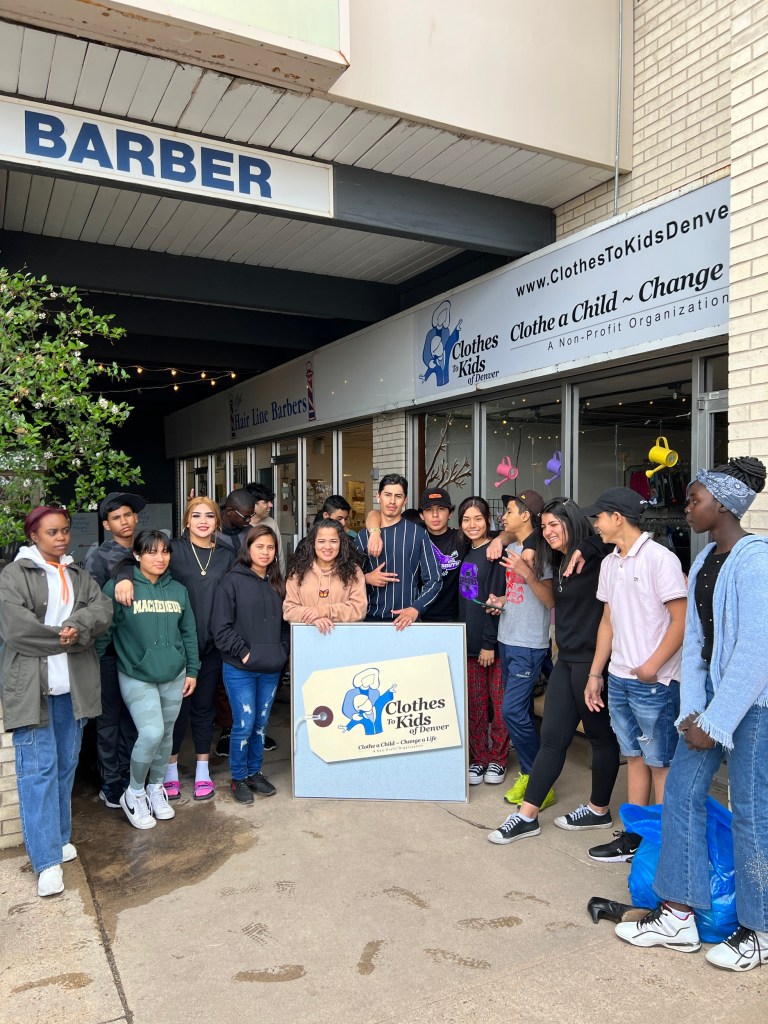
Clothe Our Kids

it began with needs
now they’ve met one hundred K
and brought these smiles

First Day of Year Twenty-one

with my one freshman 
on the freshman-only day
Pashto English mix

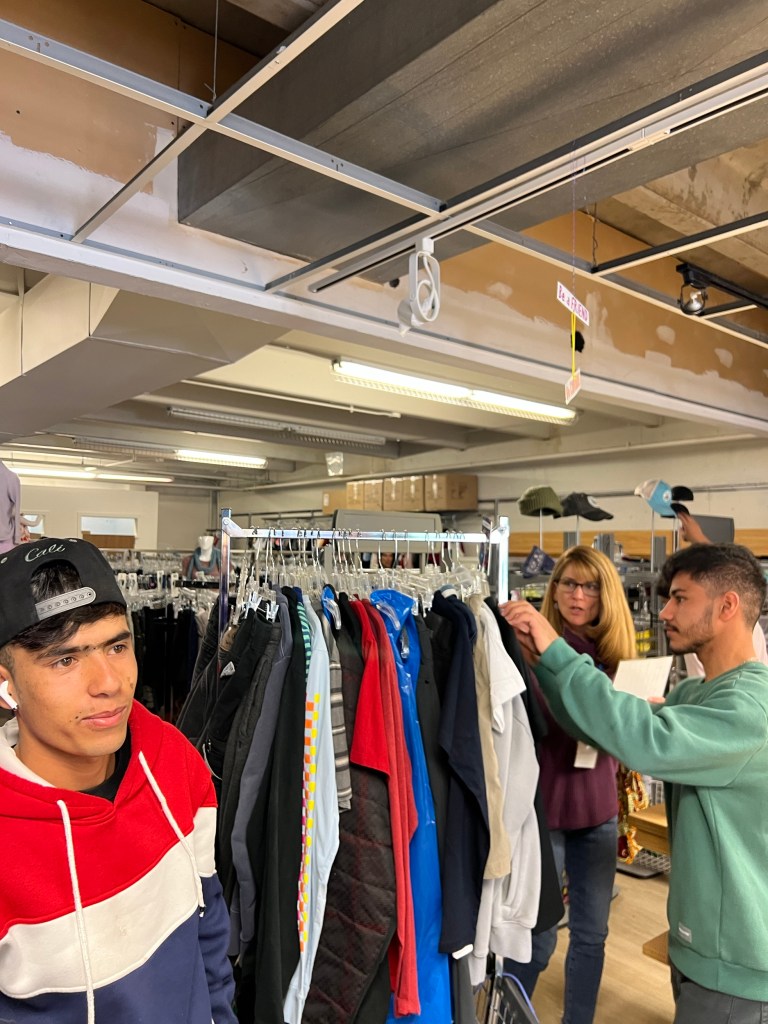
Clothed in Gratitude

my students need clothes
and “generosity lives”
is this store’s motto

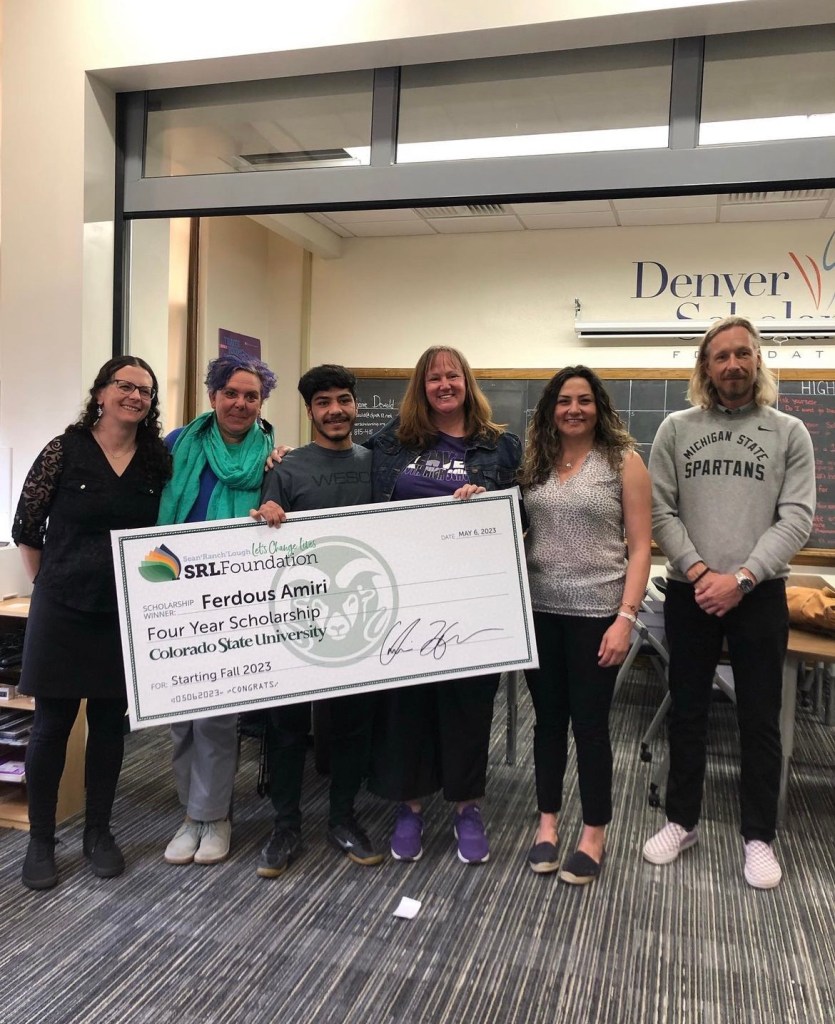
Full Ride All the Way from Afghanistan

sometimes we need hope
when the world feels hopeless
this student brings it

What I Would Say If I Could

What you took away with your error:

Trust. Friendship. Education. Love. Accountability. Faith.

What you didn’t hear:

Danger. Toxicity. Neglect. Ignorance. Hate tactics.

What we have lost:

The connection of the Kabul airport that they shared. The trauma of it–of suddenly being ripped from the only home they had ever known, of fearing the Taliban would come for them next, or their mother, their father, their faith in humanity. The collective trauma that bonded them together and allowed them a communication that none of us could fathom. A connection, through Dari, Islam, and kindness, brought to her by her paraprofessional interpreter. A confessional for her to share how horrid her foster mother was. An English classroom where all her friends are, where her teacher loves her and wants to help her. The relationships with her peers who now can’t understand the reasons behind her choice.

YOU are the reason behind her choice. You broke your professional commitment to a system we have in place that is meant to protect children, and you gave power to the toxicity of a human not fit to be a mother to anyone, let alone a fragile, motherless child. You sided with lies instead of the truth, and everyone will suffer because of it. Especially her. Especially this girl whose mother was murdered by the Taliban, whose foster mom has stripped her of her religion, language, and connection to her culture, who has manipulated and molded her to be a completely different human being because she was too fragile to say no to her.

I will never forgive you for all those hours you spent in my house, looking me in the eye, holding my foster son accountable, asking me point blank if I’d had enough, listening to me, trusting my judgment, only for, one year later, for you never to trust me again.

I have been teaching for more than twenty years. I have seen belt marks on children. I have heard stories of sexual abuse. I have called to report starvation, emotional abuse, neglect, alcoholism, and drug addiction. I have done my job to protect the children who shuffle in and out of my life year after year.

And I thought you could do yours.

YOUR JOB IS TO PROTECT CHILDREN.

So is mine.

Only one of us is doing it right today.

And it is not you.

Tiresome Tuesday

Bites and Pieces

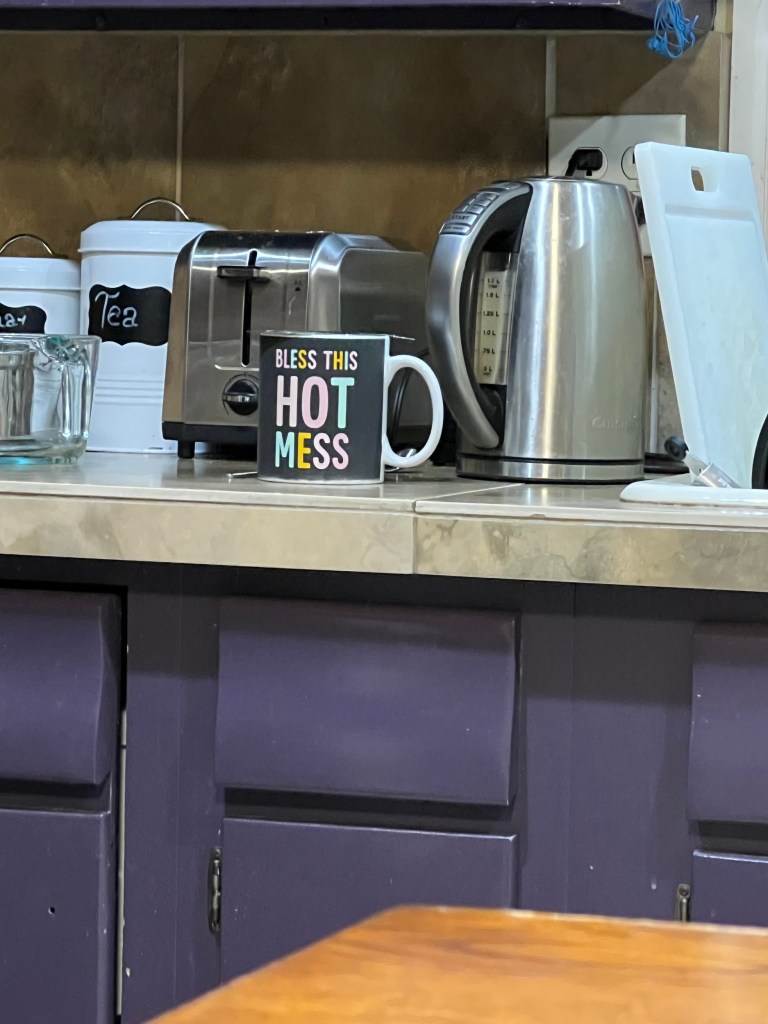
There isn’t a photo today, unless my mantra-cup, “Bless This Hot Mess” can be my actual mantra. There is a meal, a beautiful meal that New York Times Cooking thinks a regular person can make in forty-five minutes. A meal that involves chopping then roasting cashews, skinning then mincing fresh ginger, garlic, chopping a bell pepper into bits, washing rice, slicing two-inch sections of green onions, and preparing cilantro. Also cutting and cooking chicken before the oven part. I don’t have a photo of my youngest and my husband and me, making a mess of this kitchen before I cleaned it, trying to make this meal in forty-five minutes between the three of us.

I just have this. This meal to eat while we listen to and argue about Bruce Springsteen (The BOSS) and discuss our days.

Oh, our days. Bruce was under pressure to change a card (a card as big as a board game and twice as heavy), Rio was under pressure to meet her social and familial weekend obligations, me under the pressure of society to not tell a student’s caseworkers that her foster mother isn’t good enough because.

Because there are no more foster mothers available. Because it isn’t horrible enough that her mother was murdered by the Taliban, and that she’s living in a home that doesn’t recognize or celebrate her culture or speak her language, because she may never see her brothers and father and baby sister again.

It isn’t enough. It is never enough. The crying, the screaming, the desire to be perfect, the accusations, the pain that seeps through every word, the trauma that breathes through every breath.

I wish I could just change a too-heavy card, or balance my sleepover with my obligation to my grandparents, or just be a kid or just be a human who doesn’t have to carry the weight of all these humans.

But I can’t. I can’t cook this meal in forty-five minutes, NYT Cooking, and you should stop lying to people. You can’t bring your mother back, and you should stop lying to people. You shouldn’t make false accusations, and you should stop lying to people.

People who could lose their jobs, their lives, and all the love they’ve given in twenty years of carrying the weight of these kids. People who put on a musical rehearsal of Beauty and the Beast just so my poor kids could see it. People who spend half of their summer taking your kids to every place they could ever imagine because they couldn’t see those places otherwise. People who love your kids as fiercely as you do and for some reason you can’t see it,

You can’t see me.

What does it mean to be a teacher in the twenty-first century? It carries a weight that you can’t imagine carrying because nothing, nothing is more enticing than a 24/7 entertainment device that every kid carries in their pocket. Nothing is more enduring than teenage love or parental defense. Nothing matters more than a grade. Nothing compares to the TikTok video or Instagram caption–not a cultural connection, a passion for language, or a pile of free clothes.

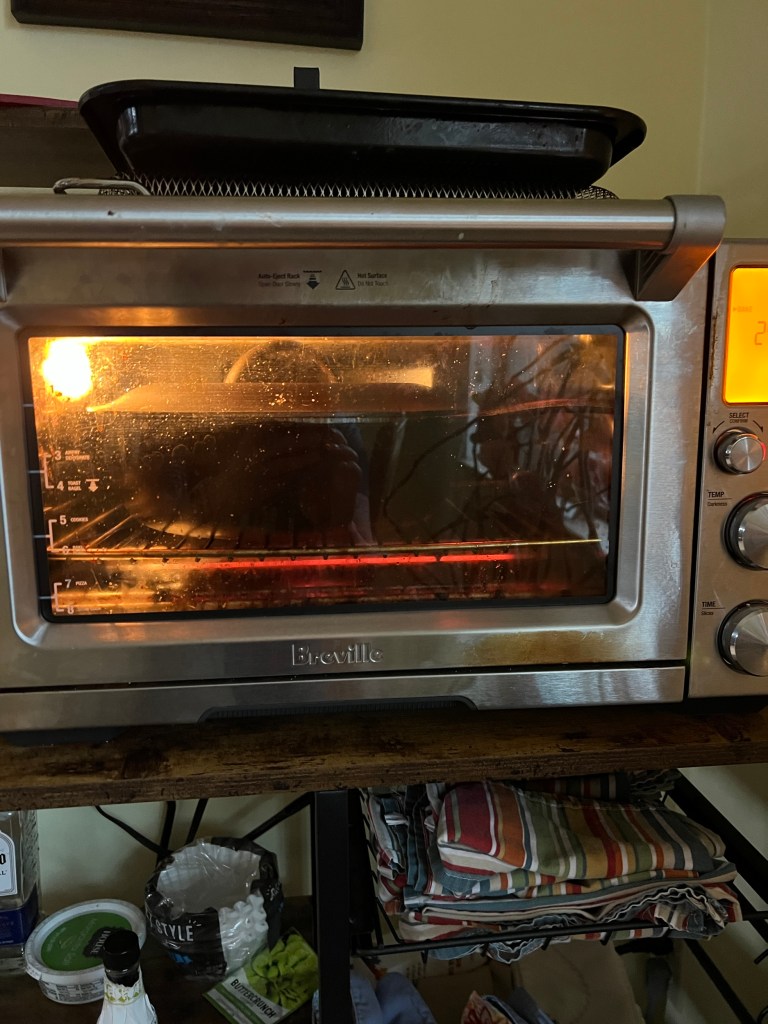
It is like this meal. Sticky rice coconut chicken. It has everything: cilantro, ginger, coconut milk, basmati rice, a yellow bell pepper, garlic minced to perfection, chicken broth, scallions, hot sauce, a dutch oven pan that fits into the best-ever toaster oven, a bubbling bite with perfect spice… Everything.

But it’s a lie. It’s not a Wednesday night meal. It does not take forty-five minutes to prepare.

It takes years, twenty years of patience and a pinch of forgiveness to make this possible.

And you can taste it in every bite. Every bite that you put in your mouth and every bite that bites you back.

Taste it. The creamy coconut, the sriracha, the beauty of the world swirling in the rice.

And bite back.