Your Words

A few days after she was born, my mother held Mythili in her arms, Mythili with her ever-open eyes, her neck craning for me or for another look at the world, and my mother said to me, “This one has been here before. She has lived another life.”

Without the spiritual background that is ever-present in so many lives, but not our life, I was surprised by these words from my mother, a second-time grandmother with her second-born granddaughter. But not shock-surprised. Just surprised. And yet, I knew she was right. Mythili had a presence about her from the moment she entered the world, an energy, an awareness of her environment that was never so obvious in my other two girls.

Mythili looked around at the world and immediately questioned it, even from birth. Where’s the milk? (Colostrum delays). Where’s my sister? Where’s my Daddy? Most importantly, Where’s my Mama? She observed, dissatisfied, her mostly-immovable state.

“You have one of those babies who hates being a baby,” the midwife told me at our six-week checkup. “Once she can sit up at about six months, you’ll see a total change in her.”

Mythili, who craned her neck from birth to search for a view of whoever was walking into the room, knew that her surroundings, and the people within them, meant everything in the world to her.

And you asking her to do this meant everything in the world to me.

I know it was you because I searched the crowd after, my face stained in tears, my hands still shaking, my heart still leaping with pride and disbelief. I found her counselor who told me it was your idea, your encouragement, your words that convinced her.

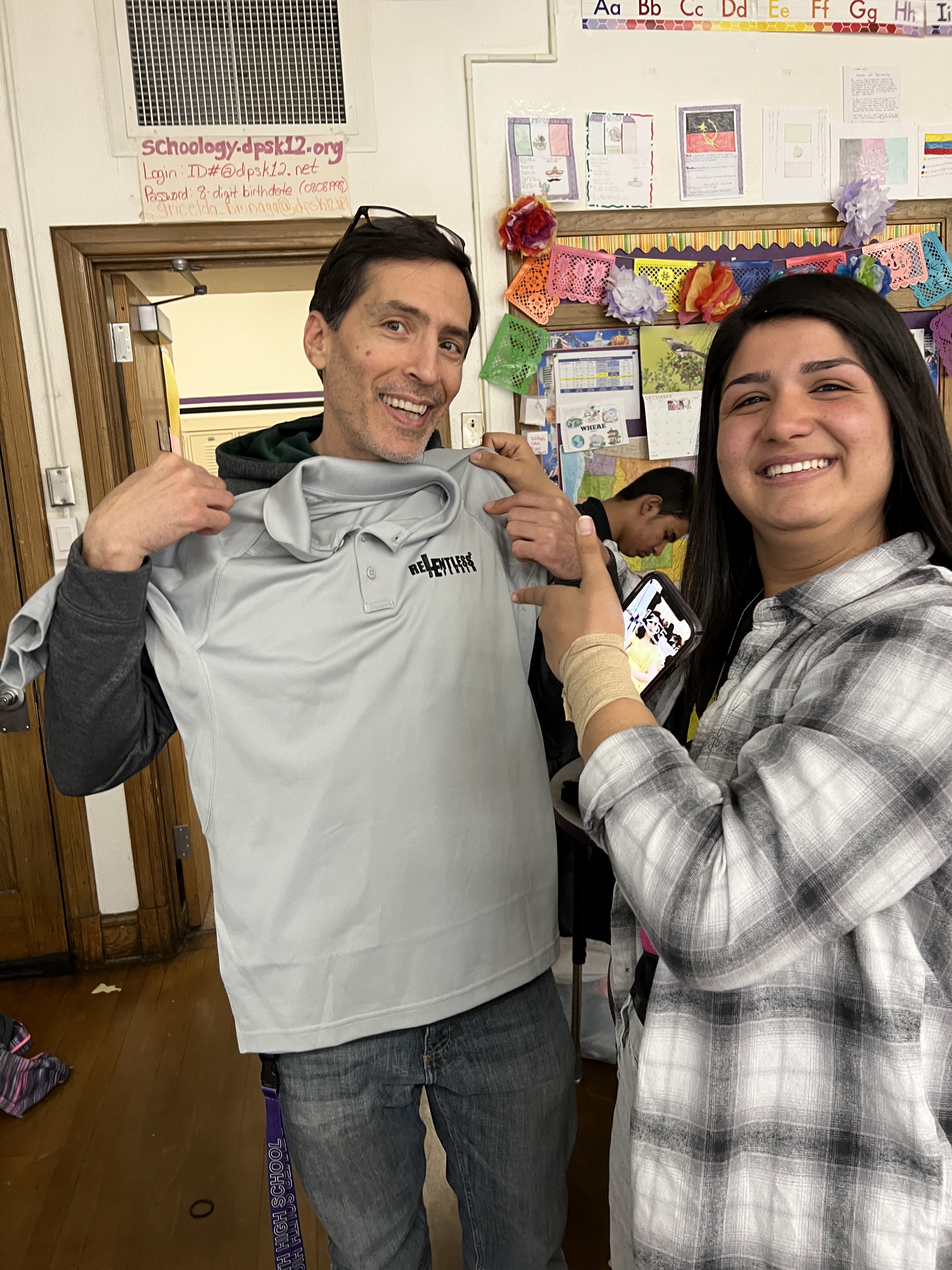
And it was only a moment out of a thousand moments in my daughter’s life. My daughter’s life that has been filled with happy memories and tainted with sadness these past few years. My daughter, who attended the high school where I teach, where I’m given the privilege of seeing one set of graduates after another pass through this gym before the ceremony. My daughter, who was hiding, sitting by herself at the top of the bleachers, all of her Class of 2023 friends gone, chatting amongst themselves, because of grief, loss, rivalry, meanness, jealousy, bitterness… death. My daughter who took this selfie with me but kept the speech a secret.

My daughter, who during the COVID lockdown, when one of her beautiful art pieces was being featured on the school TV show, couldn’t be convinced, not with note cards, not with me filming an example, not with any words, to record a 20-second video to describe her talent and inspiration.

My daughter took your words and put them into her heart, stood upon the stage in front of a thousand people, and honored me, honored the friend she lost, and most importantly, honored herself.

For a decade I have watched my students, my refugees and immigrants, enter this stage and share their 15-second speeches about how Denver South helped them form a new life in America. I have watched as struggling American students, those lost in the crowd, those never-valedictorians, those never-heard-of students, had a moment of glory.

And I can never thank you enough for giving me this moment of glory in my daughter’s life. For giving her your words so that she could find her own.

Thank you for giving my daughter her words with your words. Thank you for giving me this moment with your words.
Thank You (In Every Language)

There aren’t enough words, in English or Dari, Pashto, Spanish, Arabic, Tigrinya, Romanian, Swahili, Kinyarwanda, or the twenty-three languages of Guatemala, to express my gratitude today.

Today was EXHAUSTING. It started with the first time this semester that I drove my car to work. Yes, I have been walking in the snow and ice that has stolen Denver’s mild winter this season. Yes, I have ridden my bike all of seven times. No, I haven’t driven my gas-guzzling car even once.

Until today.

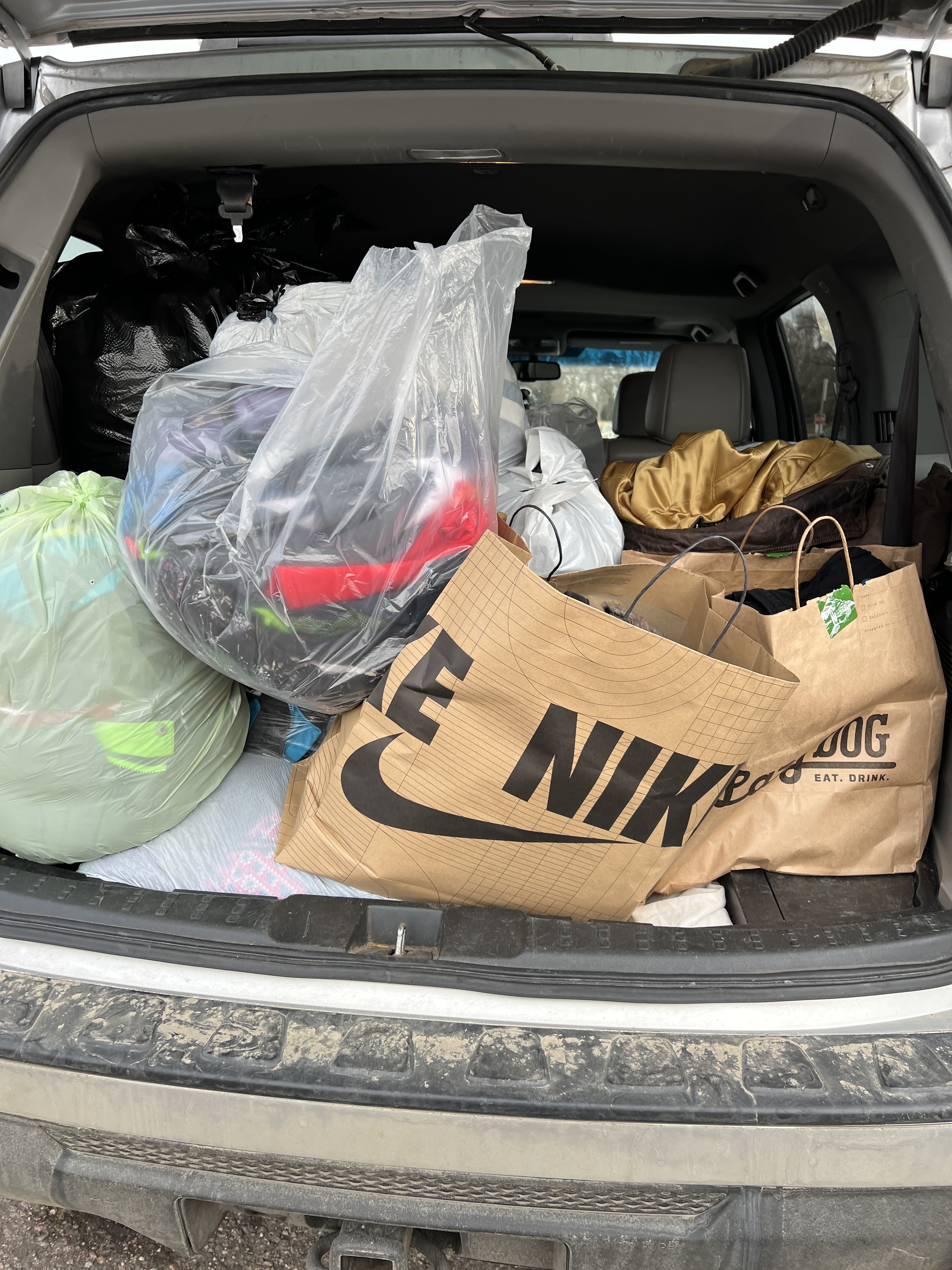
It was supposed to snow today (again), so it was a good day to drive. My eight-passenger car was filled to the brim with clothes you gave to us.

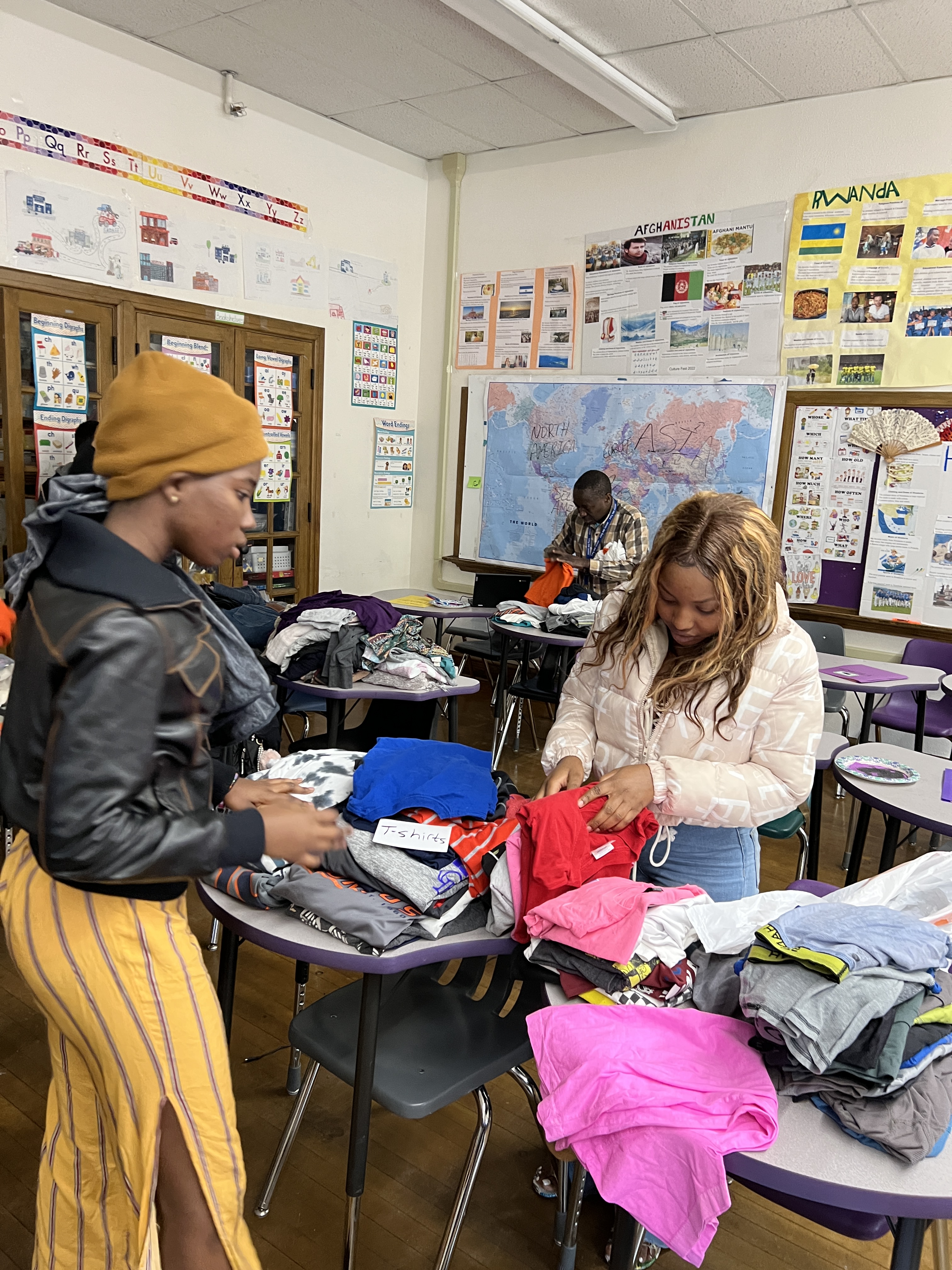
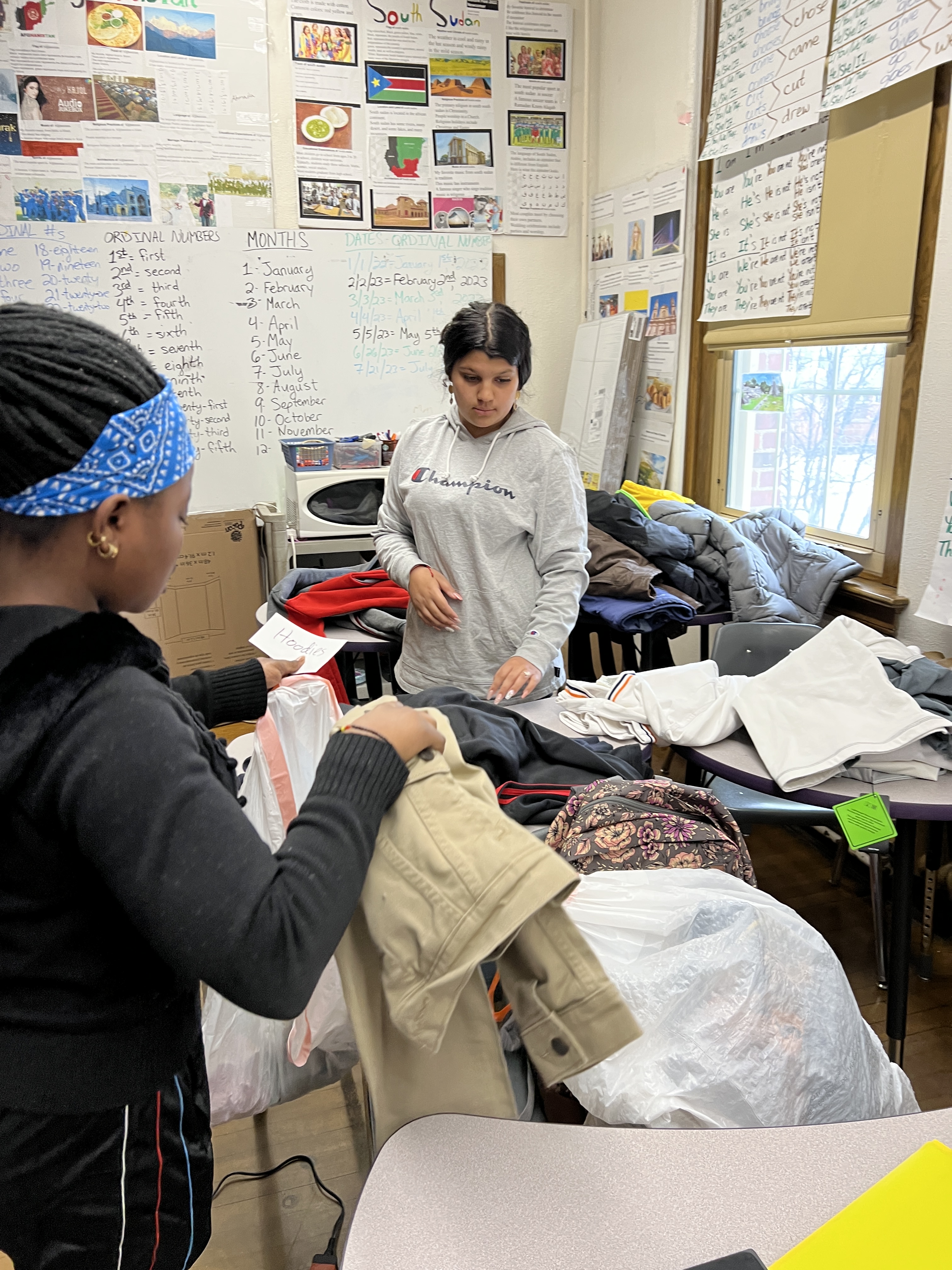
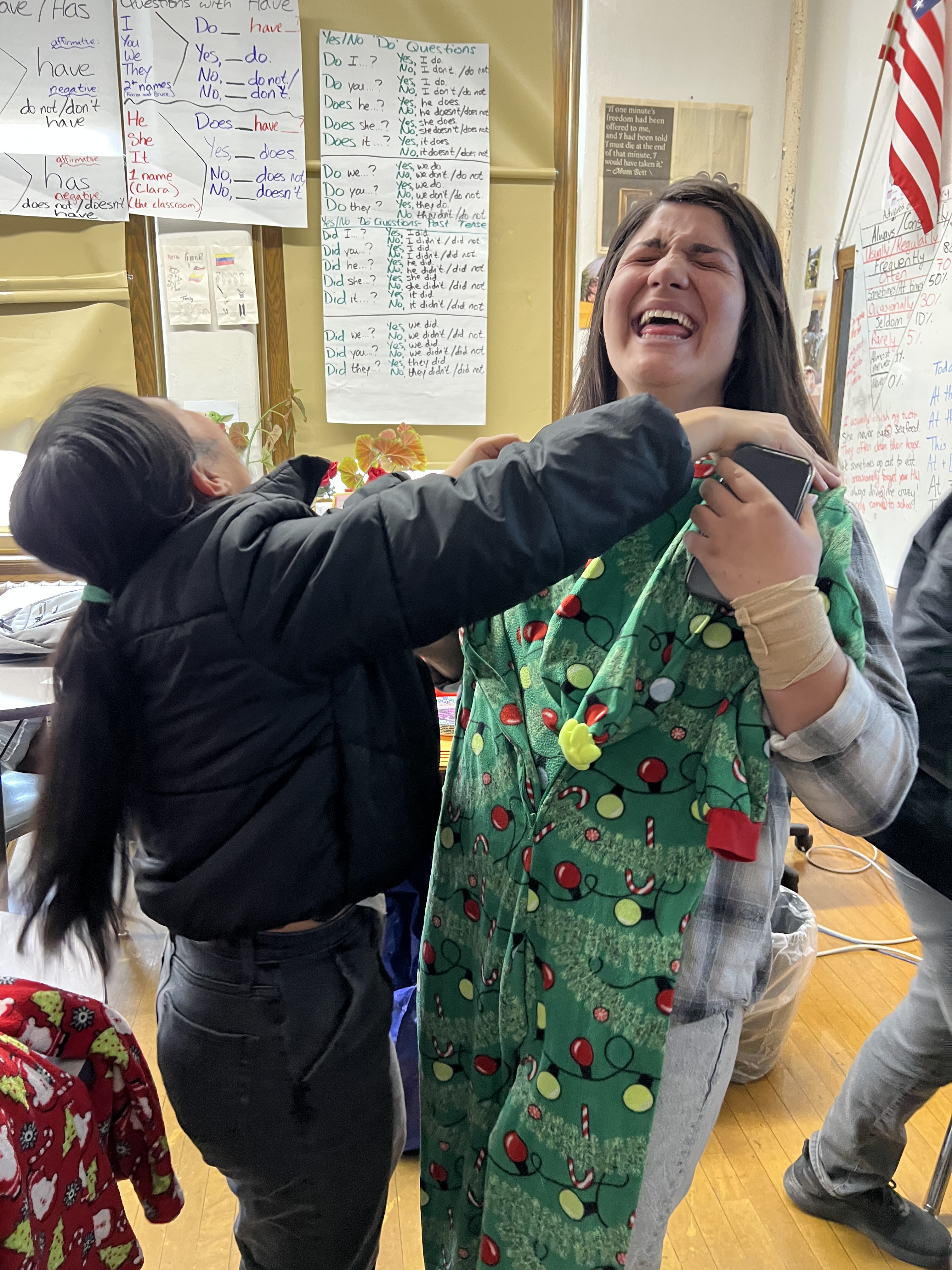
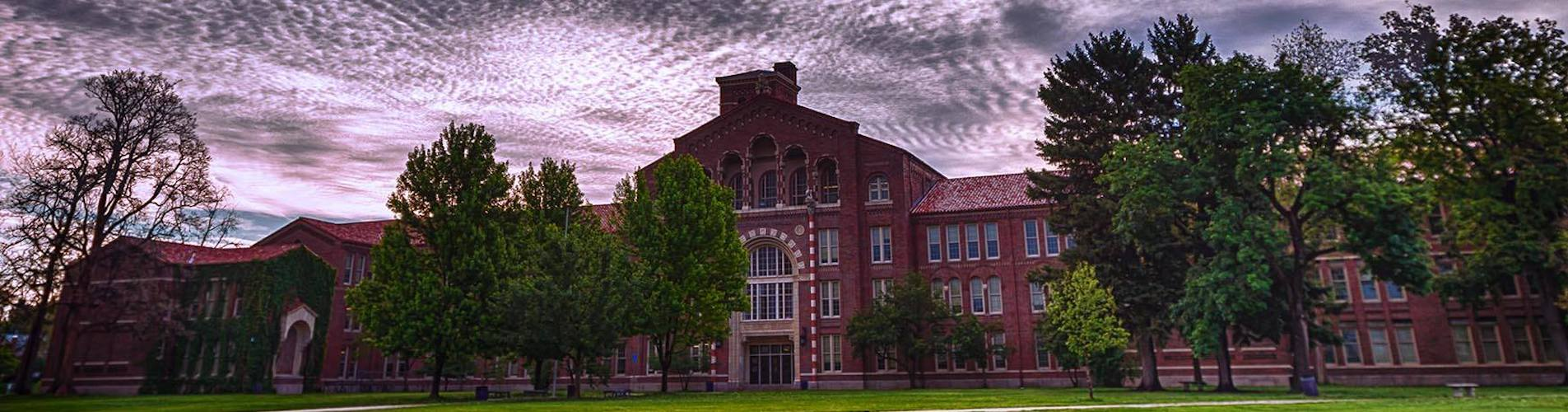
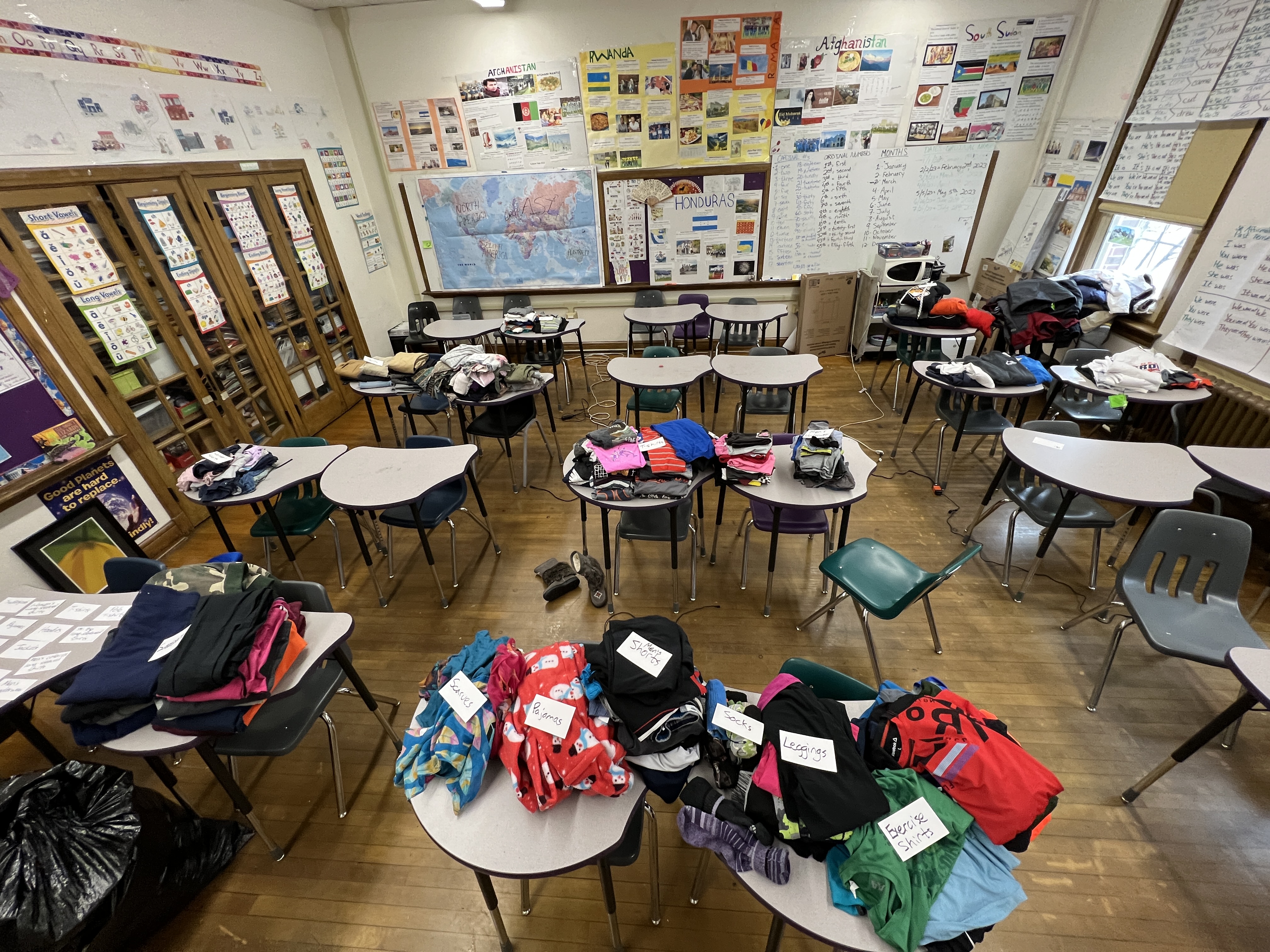
My colleague, my two daughters, and several of our students marched back and forth from the long sidewalk of our 100-year-old school to the parking lot. Back and forth, breaking our backs, to bring this to them. My colleague and I spent the entirety of our ninety-minute planning period sifting through and organizing the clothes, planning a lesson that should have happened three months, three years back… but there is so much to teach them in the time they put their faces in front of us. From the only-in-English auxiliary verb ‘do/does’ that exists in nearly every question and EVERY negative answer to how to navigate our complex transportation system to how to cope with the fact that they witnessed a pregnant woman murdered in front of them in the Kabul airport and don’t know how to calm their nerves for three hours with me every day.

But they find a way.

We find a way.

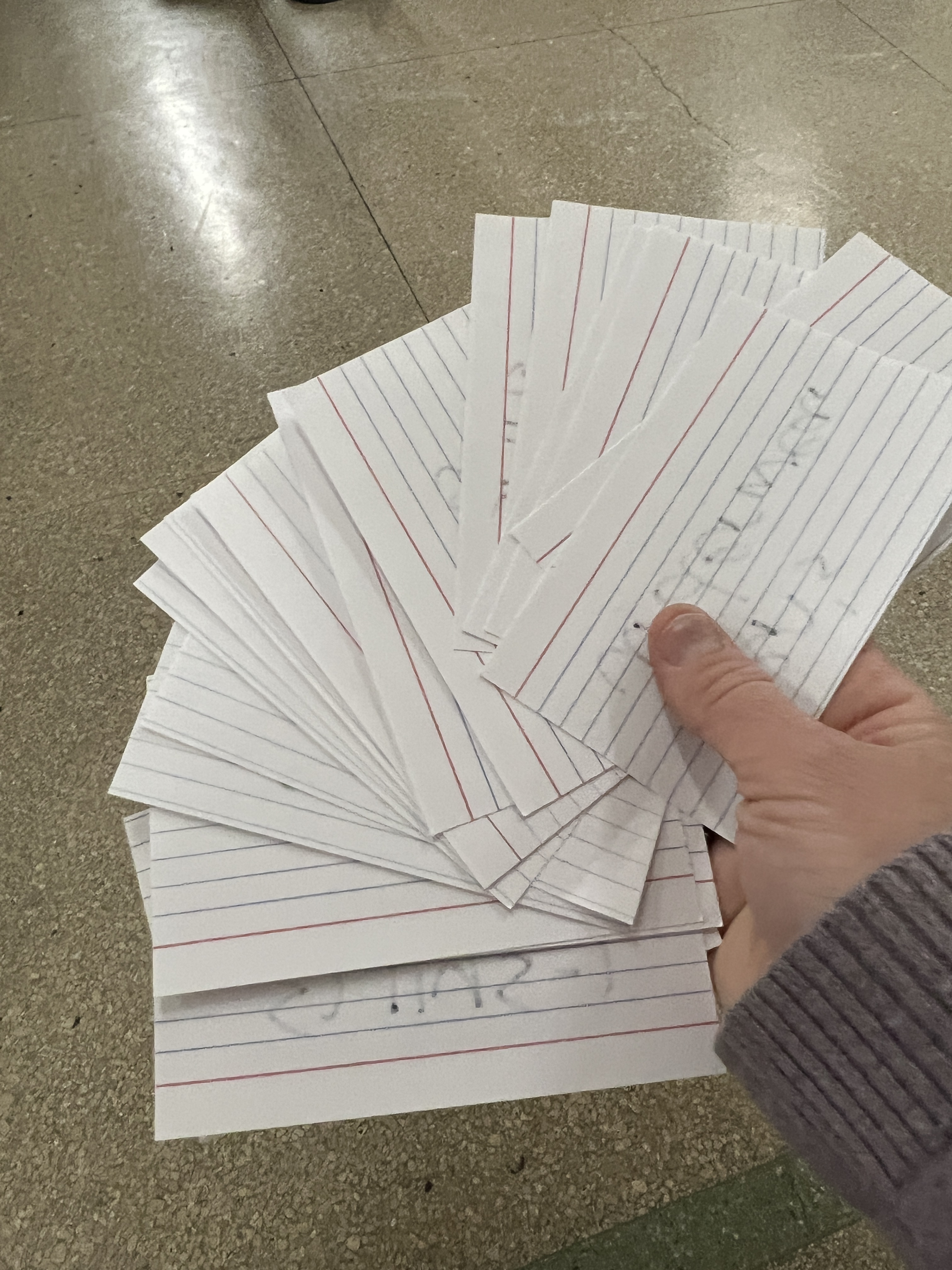
Today’s way was labeling the piles with notecards and making copies of said cards for these students to pick up as they walked in the door.

“Let’s continue to practice with present-tense verbs. What clothing do you need? When I say you, I mean your whole family. For example, you could answer, ‘I need exercise shirts’ or, ‘My brother needs hoodies.'(always an emphasis on that final ‘s’)”

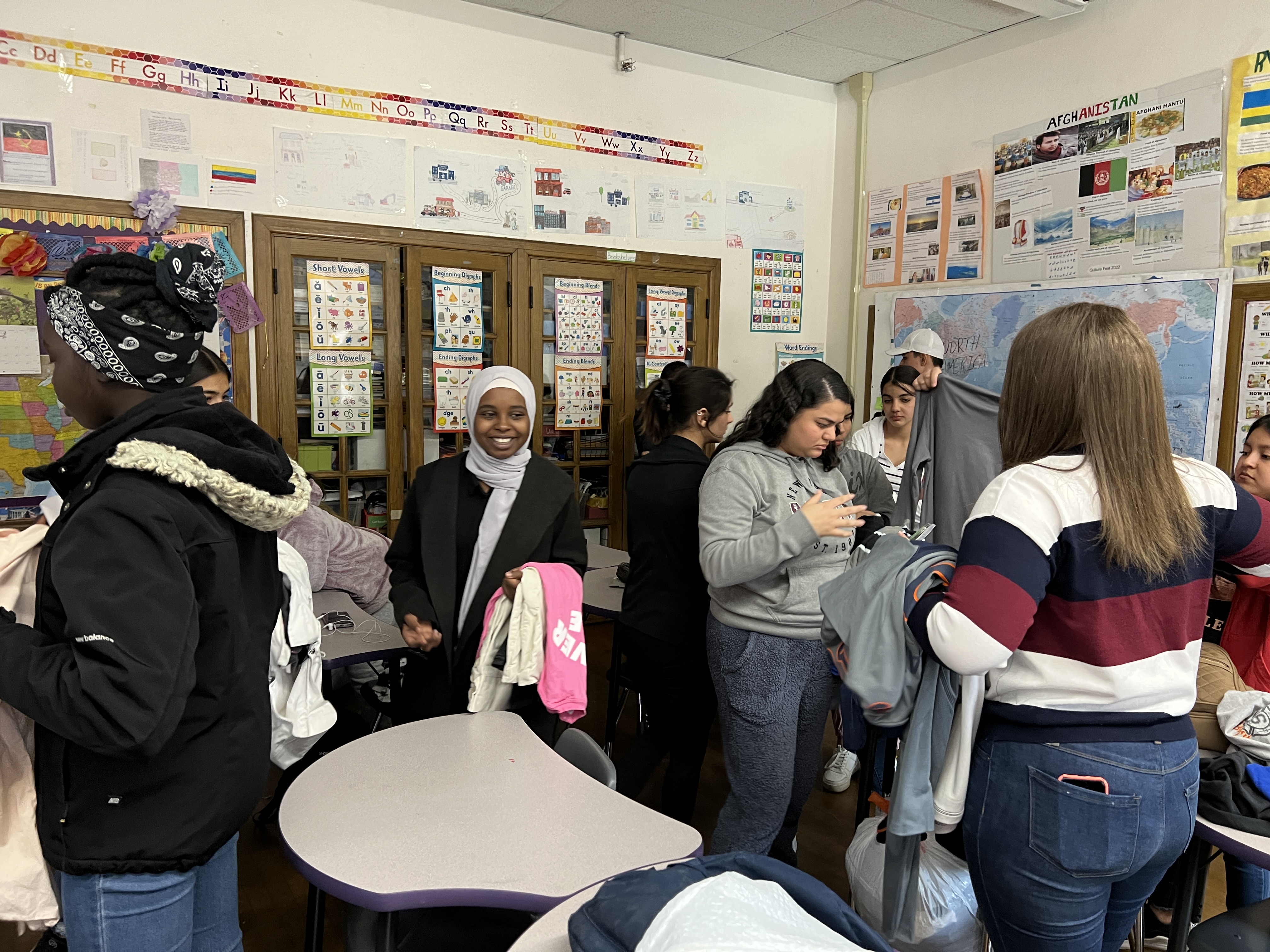
They held up their cards. They looked around the room at the piles of clothes that surrounded them. They asked their paraprofessional interpreters what the words meant. What this day meant. What craziness, what generous craziness, lay before them in perfect piles.

And they recited their sentences. They practiced their English. They learned what a hoodie was. The English word for scarf. For long sleeves. For T-shirts. For little brother (there was an entire bag of clothes for little brothers; another for little sisters).

I met you twenty years ago, my friend, in my first nightmare year of teaching. When it was so hard and they crammed thirty-eight of these kids in my room and I didn’t know if I could handle it, and you stayed at that high school way longer than me (I gave in to pregnancy rather than facing it), but ultimately you left the profession. Yet I know your heart is still there. Your heart is still here with me in this classroom of Newcomers.

You gave me a lesson today, you and your friends and your book club and your kind-heartedness.

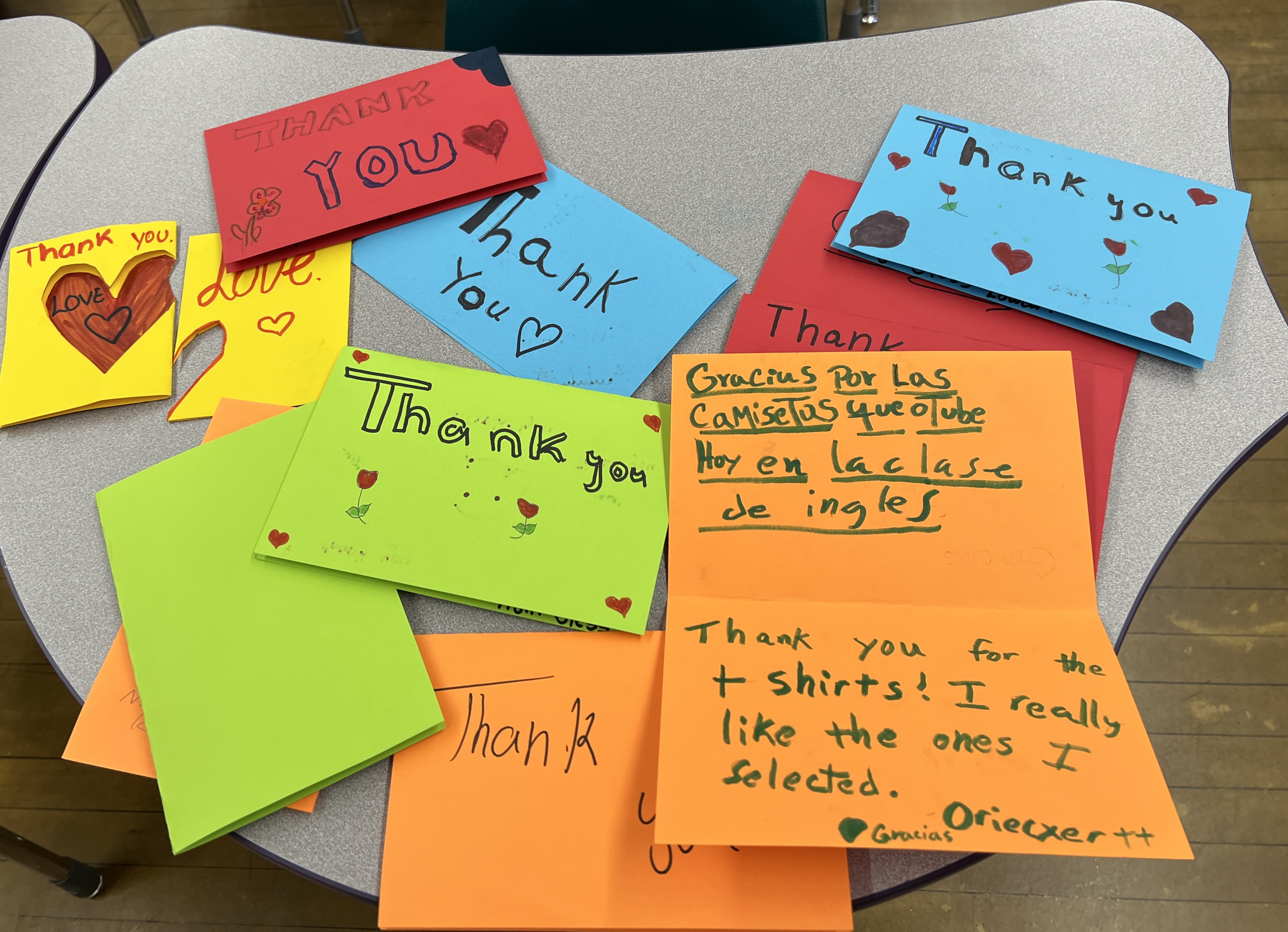
You gave us a lesson today: in English vocabulary–everything from learning the names of clothes to how to write a Thank-you card (“Miss, what is this ‘Dear’ meaning at the beginning?”) to what it is to be human.

And it’s in all their faces. Their joy. Their gratitude, their hope in an America that you have given to them today.

Thank you. Gracias. Mulțumesc. شكرًا لك. له تاسو مننه. متشکرم. የቕንየለይ. Asante. Murakoze. Thank you.

Mustering Monday

A Boy of Eighteen Years

So many nights of no sleep lost to you. It’s all I can think about on this rainy Wednesday, my mother’s birthday, a cool rain that kept me awake with the endless thoughts of your cold cell, your cold refusal, and my cold ignorance.

Here I sit in my mostly empty classroom, the students done for the year, or done till Monday for me, when I give up three weeks of my summer to give my Newcomers a chance to see the city, learn how to fill out a job application, make a budget, make a meal together.

Remember last year when I tried to get you to come to the program and you blew it off half the time, arrived late when you came, never took notes, and flirted with all the girls instead of paying attention?

You were like that from the beginning. When I called Bruce and asked him if I could bring you home two and a half years ago, he said to me, “But you barely know the kid… and how do you know what he’s really like?” And my gut sank, and I sucked in my breath because you had been nothing but apathetic, misbehaving trouble from the moment you walked in. But I didn’t tell Bruce that. Because you were a boy of eighteen years, and you needed a chance, a home, and someone to believe in you.

I just got into an argument with a colleague about this intuition I have which he claims can’t be true: that I almost always can tell just who a person is within one or two meetings, and I am almost always right.

I was right about you and wrong about myself, and I sacrificed more than two years of my family’s happiness trying to show you that you could take hold of a different way of looking at the world.

But all you wanted was that damn car, that speed, that recklessness that drives so many young boys into cells and gun stores.

And who’s to stop them?

When my husband donned his high school cap and gown after a tumultuous educational experience, having been held back in second and fifth grades then promoted halfway through seventh and barely passing eighth, he walked right across that stage and across our country to San Antonio, just down the road from Uvalde, to don a uniform and learn how to shoot a rifle in the Air Force and begin a career that he would later abandon.

He was a boy of eighteen, just like you were when you came to my house, just like Salvador Ramos, Payton Gendron, Ahmad Al Aliwi Al-Issa, all the boys whose faces I feel I have somehow met in my classroom or otherwise, but he didn’t join the military so he could blow things up and learn how to shoot.

He enlisted because he wanted a future for himself that didn’t involve working in his daddy’s shadow at the cotton mill, because he couldn’t see himself in college, because he wanted the safety and security that so many of us crave.

And is he so different now, twenty-six years later, the father of my three children, the detail-oriented Airman First Class who checks our credit score with the regularity of the rising sun?

Older, yes. Jaded, a little. More liberal? Of course (he’s married to me).

But he is still that boy who knew better than to argue with a cop or buy a gun or bully girls on the Internet.

And he didn’t have your background, and we can all blame these backgrounds till we’re blue in the face. But what of the backgrounds of the two boys who started this sickness, Dylan Klebold and Eric Harris, who came from the perfect middle-class life?

What possesses an 18-year-old boy to choose to forgo a decent future for a life of crime, or worse, death by mass shooting?

I was thinking about all these boys, all these shooters, before you called me from jail the other day. And I know that you think I shouldn’t compare you to them, but I can’t help it. Not because I think you would do that, but because I’m afraid you will.

You have the same tendencies. Resistance to authority. Self-entitlement. High-school burnout. Internet addiction. Recklessness. Ingratitude.

Maybe, just like those boys, you would claim that no one has ever loved you. Or that every adult in your life has failed you. Or that you’re better now than you were when you were younger.

I don’t know what your reasons are. I will never know. I will never understand how an eighteen-year-old boy can walk into a gun store and buy 362 rounds of ammunition to kill fourth-graders just as well as I will never understand how after more than two years of me trying to guide you, love you, offer you safety and security and a home and a future, you lit it all on fire in a matter of months, burning through money, burning through your next two homes, burning fuel into three other states till you found yourself in jail, penniless, without your precious phone, knowing only my number.

I hate myself today, this rainy day in June, for knowing your number, and not just saying no. Because no matter what happens to you, no matter what anyone says to me about how “this isn’t your fault”, I will always carry the burden of failure, of not following my gut, of giving you a chance you never wanted to have.

I met my husband when I was nineteen and he had just turned twenty, and we married each other within a year. He hasn’t changed much; nor have I. And even though you are no longer a part of our lives, we are still going to be the good people we were when we were young.

And you are still going to be the same person I met two and a half years ago.

And I want you to go on with your life. Stop calling me. Give me my life so that I can take my Newcomers to the zoo, to Red Rocks, to the museum, to all the places you never wanted to go. So that I don’t have to hear my girls complain about how you treated me.

So that I never lose another night of sleep trying to make you a better person.

Stairway F

H was in a mood today because she wasn’t feeling well, and we all suffered. She called out her former friend and said she wouldn’t participate in the therapy session (though she did) during the first class, and in the second class, she sat in the corner and wrote in her journal and did her work without a word.

When it was time to visit the school food bank before trekking home on the train, she was definitely not up to it. I looked at my recently-arrived Afghan girl whom H has been escorting to and from school every day, and H looked right back at me. They were both standing in Stairway F, not Stairway R, the one that leads to the food bank.

“Well… are you going to wait for R to go to the food bank?” (H’s sister and brother had already fled the premises and were five blocks down Louisiana Avenue, halfway home).

“We’re going home. She can’t go home alone.” It might have been a dirty look H gave me, an exhausted look, a middle-child look.

H is from Sudan and doesn’t speak R’s language. But she lives five blocks away from her, and even though the train takes an hour to bring them both to my school, I convinced R’s caseworker that it was worth her staying, that we have a food bank and a newcomer program with three hours of English and two hours of math and a summer program and therapists and patience, and this Sudanese family that lives five blocks away who could show her how to take the train… But what they wanted was an escort, a female escort, who would make sure that she would be safe.

(When we were learning past tense verbs yesterday via a story about a man who had a bad day, my para talked H through her horrible story about her bad day, where, just like the man in the story who missed his bus, she missed her train because R was late. And H is never, never late. And she nailed those past tense verbs, her long braids that her sister entwined spilling down her back like a river of emotion.)

I had to let them walk down Stairway F. (It was just a few years back that I discovered how many stairways are in our building. They go all the way up to X, if you were wondering how a school built a hundred years ago with three additions tries to fit the world into its walls. Stairway X is in the 1987 addition with the new gym and its fancy foyer and its secret passage up to the third-floor batting cage.)

I digress.

I let them go, and I walked the rest of my class down the second-floor hallway to Stairway R, to the food bank where my most-recently-arrived Afghan boy told me the whole story, through his broken English and broken heart and the translator app on his phone, about the series of scarred slashes on his arm.

“The Taliban?”

Scars so deep that they are still pink, as if cut by a suicidal knife, as if done yesterday. He has photos on his phone from the day of the event, less than a year back, when he was working in a pharmacy that the Taliban decided to bomb, shattering the glass on all the windows, sending the glass into his forerarm, his shoulder, his soul.

“Can you walk with me through the food bank and show me how to get the food?”

The patient Wash-Park mother was making a list of new students. He didn’t know just how to add his name, but his verbal skills are over-the-top amazing.
“How many people are in your house?” I asked because the form asks.

“Twelve. In two rooms,” he informed me, holding up two fingers to prove to me he understood.

“How many children? Adults?”

“Eight children and four adults.”

And before we had walked through, before we had picked out chai tea and lentils and halal meat and handfuls of fresh vegetables, filling not one or two, but three bags for him to carry across the city on two city buses, H appeared in front of me, cutting the line with R, exhausted and sick and putting her arm around her, making sure that she had as many bags of food that she could carry home to her huge family, and…

That is what it is like to teach Newcomer English. Find your H, take the right stairway, and fill your bags with food and hope.

Gratitude/Gratitud/يشكر

I was searching for a knife and I found myself standing in the ceramics room of chaos, otherwise known as Art Room Lunch.

Don’t worry. The knife was for a pie, not anything sinister. And it was a butter knife covered in clay, easily washed off in one of the many sinks, ready to cut through my store-bought pumpkin pie.

Yes, I wrote the words. Store-bought.

I cringe to even think of the admission. At least my cranberry sauce was homemade because God forbid I sell my entire soul to consumerism and mediocrity.

It was in the ceramics room, searching for and washing the knife, that I had a conversation with myself. Not my actual self, of course. My colleague. My friend. My self of fifteen years ago, when I had three tiny girls at home and it seemed all they did was scream… or, at least, cry to spend more time with me. When I couldn’t talk to my husband without a child between my legs, clinging to my breast, or pulling at my shirttail.

And it was so hard.

And here I am now, searching for a knife because between my two jobs and four teens I can’t seem to remember to bring one. My baby drove me to work this morning. My BABY. Fifteen, prepared to be the first of three to get her license on her sixteenth birthday, nine months out. My baby who, when I used to come home from work, wouldn’t let me leave the couch for a good ninety minutes. She needed to cuddle. To read stories. To nurse. To pet the kitty and the puppy. To be wholly mine since I took myself away from her for nine hours a day.

And now? She needs me to “chill” when I gasp at a too-sharp turn of the wheel. To allow her sleepovers on a whim and cash for shopping whenever I have it. To be sure I mention her name whenever I say that my daughters bake the Thanksgiving pies.

But most of the time, as with the other three, she is in her room. I hardly see her. She is FaceTiming friends or watching Friends. My middle is working or Instagramming. My oldest is away at college. And the boy we’ve taken in? He’s on the phone in his room.

There is no screaming. No clinging. If I want to have a conversation with my husband, I don’t have to call him on the way home from work, as my colleague told me today. I can just shut the door to our bedroom. No one will open it. Or we can talk while we walk the dog. We can take a tiny trip to Estes Park. We can talk in the morning, hours before our teens pop their eyes open, and no one will ever know.

No one will ever know how lonely it can be, without the screaming. The crying. The needing.

But I can’t say this to her. She is giving me a knife, and I have a pie to cut. Carne asada, tacos al pastor, shawarma, arepas, patacones, lasagna, and the life I live are waiting for me back in my own classroom.

Yet my lunchtime conversation is just what I needed. I needed to see a roomful of kids trying to shape ferns and mushrooms out of balls of clay. A distraught mother trying to navigate the work/life balance. The vibrant life of humans humming and thinking and creating and loving.

Living.

Because sometimes it feels like it’s just me. Just them. Just all of us. Alone in our rooms with the doors shut.

And sometimes, all we need is a butter knife and a slice of pumpkin pie, store-bought or not, to bring some gratitude to this Thanksgiving table.

This Thanksgiving life.

Scenes from a Marriage

Dear One,

You can try to call me out, but it will never work. I have been doing this for as long as you have, if not more. I know the rules. The laws. The disappointment is just another capillary in the bloodstream of America, and I have swallowed it wholeheartedly.

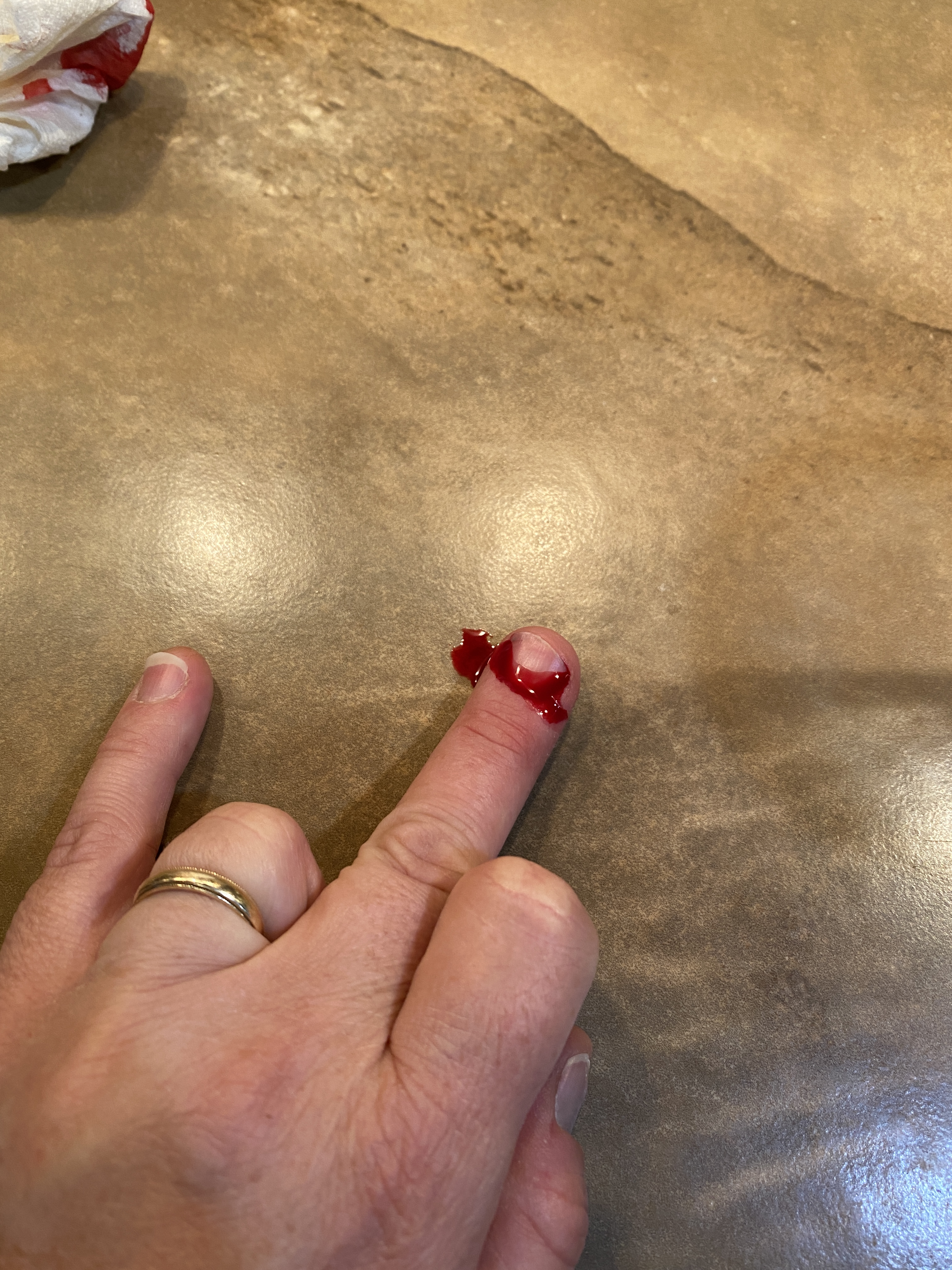
You have not swallowed it. You gave up after twenty-some years and didn’t take this picture.

To you, it’s just a middle-aged man at a sink, exasperated with his wife. I know. I know.

Exasperated with my need to document everything. Even a bleeding finger. To post it. To show the world: this is what life is ACTUALLY like. It’s not a picnic, a corn maze, a perfect autumn afternoon.

It bleeds.

But you wouldn’t let it bleed. You wanted to stop it too soon, to pull away the paper towel and slap on the band-aid. Never mind what a doctor would tell you, a marriage doctor.

Hold it above your head. Apply pressure. Replace the paper towel five times. Have the peroxide and neosporin ready. Yet, don’t remove the paper towel, the pressure, all the pressure of the world telling you not to, before the blood stops.

Just.

Wait.

And in the waiting, you will take the time to study the video. To read every law ever written about what we can. Do. About how horribly our immigration system has failed these children who stand before us.

And if you just waited? And if you let it bleed? And if you understood?

Then you would have this pic. And a chrysanthemum for a background, filled with color. And you wouldn’t have quit. You would have taken a snapshot of twenty-three years of marriage instead.

And you would understand where I am coming from.

But instead?

Let me just post my Scene from a Marriage.

Unlike HBO, this is not a Scene from a Divorce.

Because I see the beauty in making things work, even if the law, the world, the society tells me otherwise.

Bull-Hearted

like this worn-out dog
i have nearly given up…
yet, i’m a Taurus.
and so i garden
though it, too, is a failure
stolen by flowers
this year’s loss, in pics:
weeds and grass and tearing out
for one little heart

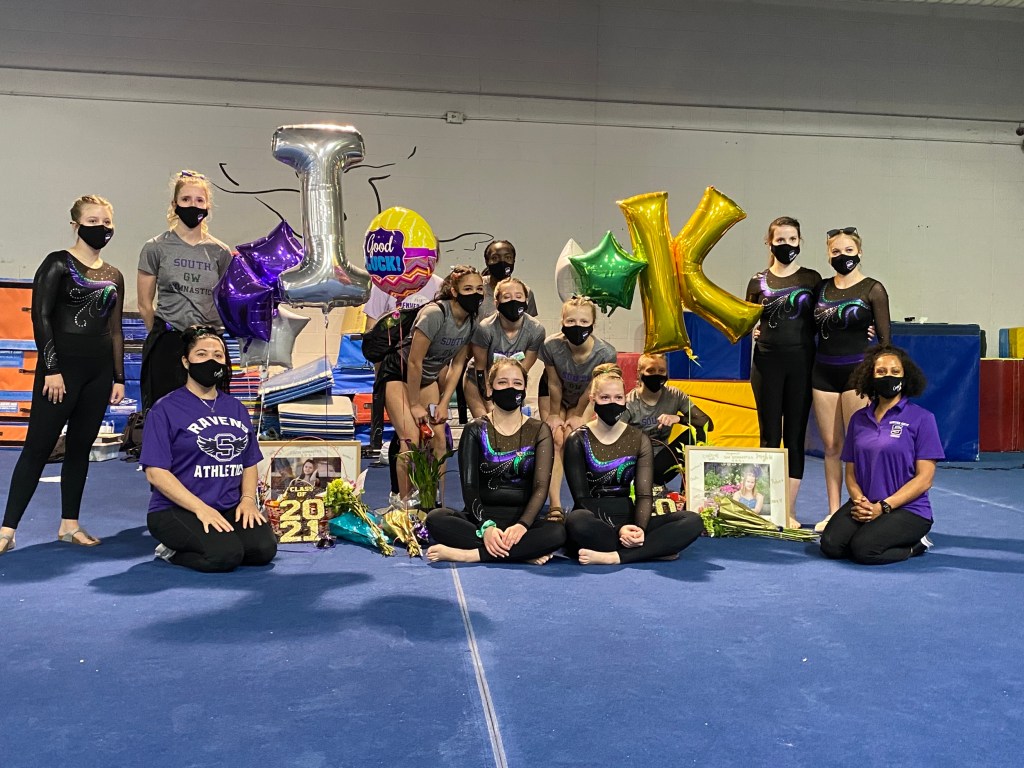
Fly High, My Girl

her last big event
for her high school gymnastics
in a pandemic
no medals for her.
just bravery: a new sport
and some kind teammates

Heartbreak #109 for Year 2020

arriving today:

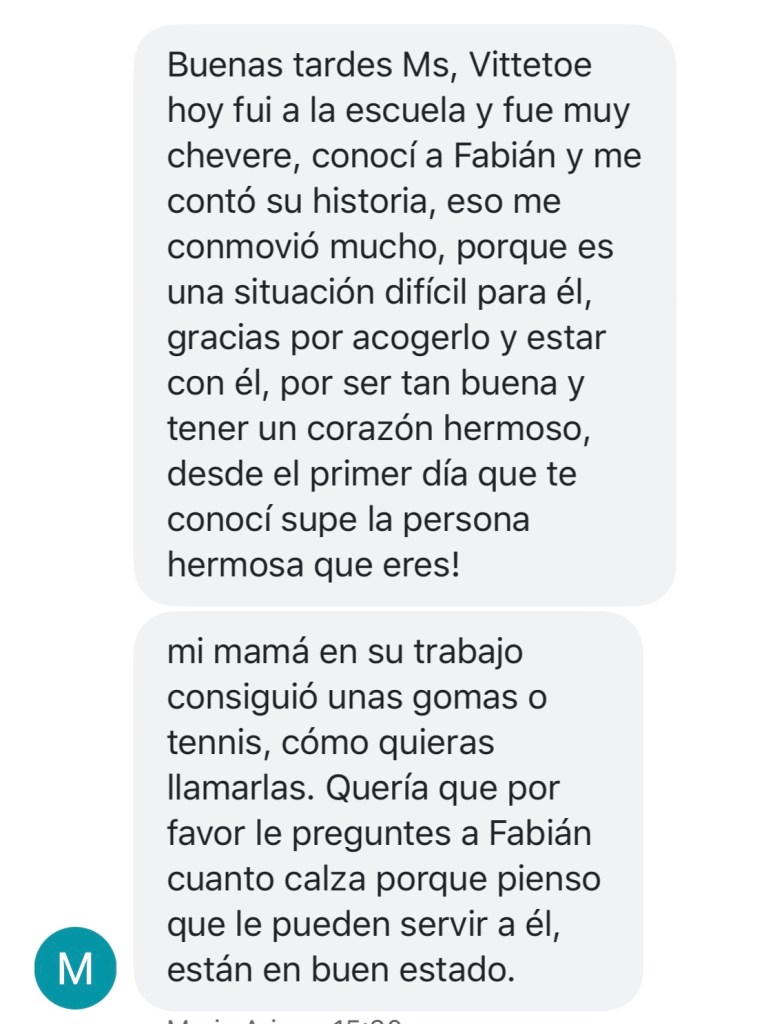
my kids who text me daily

my kids, yes, my kids

did she read my words?

did she see what i just wrote?

alas, i’m tired

i want to see them

just as he does, biking there

in the midst of lunch

seeing their faces,

having a conversation

without this damn screen