no. we won’t shut up.
no, thank you. we won’t sit down.
we’re here. we’re watching.
we’re ready to strike.
we’re ready to fight for them.
we’re ready to win.

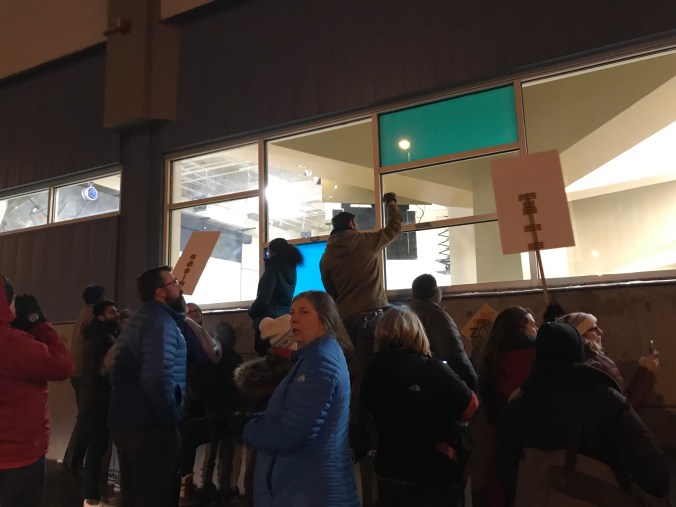

no. we won’t shut up.
no, thank you. we won’t sit down.
we’re here. we’re watching.
we’re ready to strike.
we’re ready to fight for them.
we’re ready to win.
Denver Public Schools has filed a request for state intervention to prevent the teachers’ union from striking next week. In the 19-page file, Superintendent Susana Cordova and her school district legal team have laid out reasons A-O (fifteen reasons) why the state should intervene.
Fifteen reasons why we, the teachers, deserve to be paid a fair, living, predictable wage.
Fifteen reasons why schools are targeted as the saviors of society in the same moment that teachers are vilified by the press and the public.
Fifteen reasons why we need a strike: let’s draw national attention to our plight, to the plight of a society that devalues education and the teachers who work to change the world.
Below, I have copied and pasted the fifteen reasons with haikus that represent teachers like me who have dealt with every one in some form or fashion:
A. Loss of Instructional Time from Teachers on Strike:
six hours a day
with every kid, every need
(and six more at home)
B. Students with Special Needs:
making learning plans
for families who need voices,
for inclusive rights
C. English Language Learner Students:
try writing our wrongs
again: try righting our wrongs
to build fluency
D. Potential Denial of H1-B Visas:
immigrant teachers:
First Amendment denial
(freedom, too, revoked)
E. Students Enrolled in Affective-Needs/Autism Center Programs:
routine disruption
tears students from what they need:
teachers who love them
F. Students Receiving Mental Health Services:
so much more than school
SSPs save our students
(sometimes from themselves)
G. Students Receiving Medical Care Services:
our school nurse gives them:
medicine, patience, advice,
hope for the future
H. Students Dependent on Schools for Food and Nutrition:
every teacher here
has given to the food bank
(lunch is not enough)
I. Students Dependent on Schools for Shelter from the Elements:
the prison pipeline
could stop with these school buildings
and a teacher’s love
J. Gifted and Talented Students:
let them be leaders
led by those who see their light
(you guessed it–teachers)
K. Student-Athletes Seeking Scholarships:
cultural veto:
to remove a student’s chance
of avoiding loans
L. Students Taking Concurrent College Classes:
what teachers give them:
highly-educated guides
for college keenness
M. Financial Hardship on Families:
double-income trap
means no parent waits at home
(they need our service)
N. Absence of Childcare for Families:
after all, aren’t we
glorified babysitters
asking for too much?
O. Fewer Resources for New American Families:
I beg taxpayers:
come visit our newcomers
to grasp sacrifice
Fifteen reasons why we fight every day for our students’ needs. Our society’s needs.
Thank you, DPS, for laying out our reasons. For proving to our country how badly we need to strike. For creating a legal request to clarify how heavily we carry the weight of the world.
For showing us all how little we earn as we carry it.

I am begging you, as a father, a son of a teacher, and a former superintendent, not to intervene in the possible teacher strike at Denver Public Schools.
DCTA has been negotiating with DPS for fifteen months. All we are asking is for a transparent salary schedule similar to every other school district in the state, not one plagued with unfair bonuses given to some teachers and MANY administrators. We are asking for deep cuts to central administration, where millions of dollars are wasted on positions for non-student-facing employees. We are asking for a salary that will help us pay the exorbitant healthcare costs this district offers (I’m talking $12,000 deductible for a family of four!!).
We have already had a mediator who used to be the head of the Colorado Department of Labor. We have done everything we are supposed to do to make fair proposals and meet the district at the bargaining table in good faith.
We need your support, not your intervention.
We give our lives for our students. But all of us will leave this district–this profession–if we must face a future where we are vilified by the press and our superintendent, where we are not paid adequately for our high levels of education and certifications, and where our governor doesn’t support us.
You have the chance as our new governor to show the world where you stand as a human being. Rather than giving into the corporate greed of charterization, I’m begging you to support the faces who face those children, who love those children, for more hours than anyone could ever put a dollar to.
Please, Governor Polis. Show us who you really are, and who you really aim to be as the leader of my home state.
our union may vote
to strike down inequity
would anyone care?
I wish I could write you a letter.
But I have.
And sometimes it hurts to BREATHE.
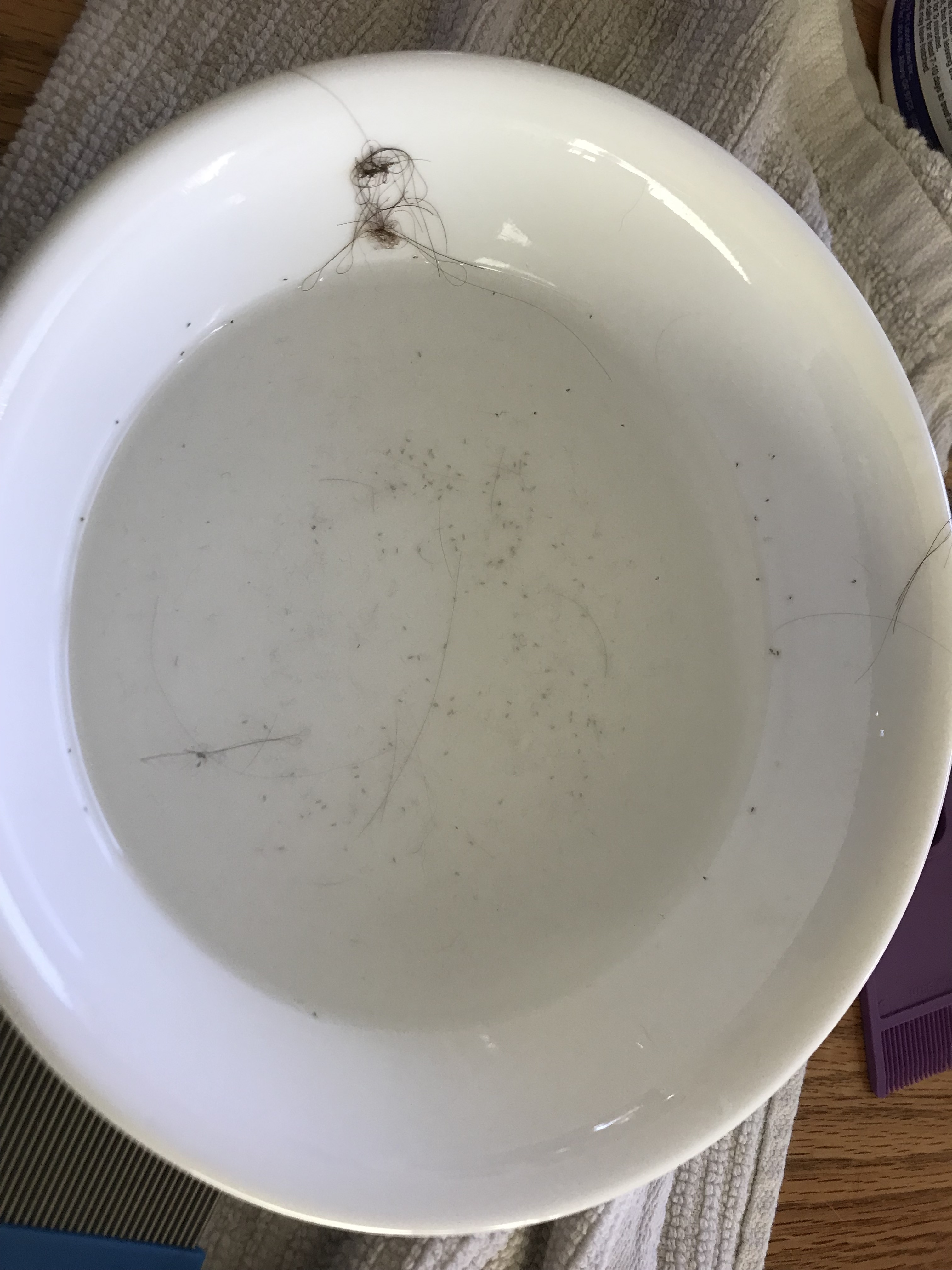
To know the truth of the world we live in. To face the daily struggle that is parenthood in all its lice-ridden, ailing-dog, money-stealing reality.
To know that Failure begins with a capital F and follows me every turn I take. A teacher, a mother, a wife, a leader, a human.
Why is it so hard to be a human?
That’s all for today. And some lice and torn-ACL puppy pics for good measure.


At the elevator, brace still on, crutch still under his arm, he tells me he thinks that a good return-to-work date would be June 4, five days before we leave for Spain. He seems optimistic as he hobbles down the tiled hallway, as we enter the carpeted office, as we check in and he holds the door open for a woman with a walker, pointing out, “It’s kind of strange they don’t have an automatic door in the orthopedic’s office,” to which she adamantly agrees.
On the plastic, paper-coated bed, he hands me the folder while the PA takes him for x-rays. After just a few minutes, the doctor enters with the films. He has photographs of the entire procedure. He intricately describes the meniscus (intact), the bones (drilled into), the ACL (torn and then repaired). Bruce and I lift our eyebrows at each other, barely able to distinguish the tiny details he points out in each picture.
In his cozy spinning chair, the doctor is also optimistic. “I think you can ditch the brace right now and ditch the crutches by Friday. Use the stationary bike on Sunday. By Monday, you should be walking around the block. Maybe driving.”
From the green paper folder, I begin to pull out the forms. First: short-term disability approval. A list of lines with dates, surgery and medication verification. Affably, he takes them in stride: “I’ll be sure to get these to the right people to fill them out.” Because he has people. Because he charged the insurance company $36,000, more than half of what I earn in a year, for an outpatient surgery that took less than 90 minutes. Because we live in the land of the free.
From the green paper folder, I continue to pull out forms. Bruce begins to tell him–without ever being able to finish because of the doctor’s rambling explanations, the doctor’s defense of his procedures, the doctor’s justification for not filling out anything–about wanting to return to work before Spain. I pull out The Form, the one that CenturyLink requires for him to be able to work: a release of liability for driving a company vehicle, an “if-something-happens-it’s-not-on-us, your-injury-better-not-affect-your-work” form.
From his throne, he glances at the wording. He throws in more anecdotes peppered with cussing colloquialisms. “In twenty-six years of doing this, I have never seen a company require a form like this. What if you’re a shitty driver? How can I, as your medical doctor, determine if you’re OK to drive? I won’t sign a form like that. If you get in an accident and hurt someone and I’ve signed this form, then it’s all on me.”
From my plastic chair, I listen to the tone of my twenty-years-spouse change from respectful to grainy. I can almost feel the lump at the back of his throat as he tries to go on. “Well, my supervisor is willing to let me come back on light duty…”
From his throne, the doctor interrupts: “What you’re going to be dealing with is HR, not your supervisor, and if HR says you can’t work, that’s where things get muddy when I start putting my name on these forms.”
From my plastic chair, I am counting down the hours in my mind until the moment I can let these tears actually fall. First I have to continue listening to this white-haired, privileged surgeon continue rambling on about lawsuits. Then, we have to make Bruce’s appointments for physical therapy. Next, we have to drive home and track Mythili’s progress on her bicycle, as I had no way to pick her up today. After that, I have to take her to her doctor’s appointment, where they will make commentary about how my thirteen-year-old hasn’t had her period yet.
From my plastic chair, I am frozen and without words. The doctor turns to me. “You look frustrated.”
Is that the word you would use? Do you think frustration sums up the past six weeks of my life?
“The thing is…” Bruce begins, “… I’m probably going to get laid off on July 30.”
The doctor has finished listening. “That’s why we have to be so careful when filling out these forms. This happens all the time, when companies decide you can’t work.”
“No, it’s unrelated…” he begins again, that painful lump sitting on top of his beautiful, sexy voice.
“Are you really not going to fill out the form?” is the only thing I can muster. The doctor hands it back to Bruce, asks if there’s anyone he can call, anyone he can talk to, any way he can go back to work without it.
From the tiny patient meeting room, he stands. He shuffles us out the door. He guides us to his people who will make the next appointment. I place The Form neatly back inside the green paper folder.
I think of a few cussing colloquialisms I could shout. I think of hindsight, all of it. Of next year’s ski passes we wasted $2300 on. Of the thousands we’ve already spent in this office. Of the four weeks at seventy-percent-pay he’ll get for short-term disability. Of the thousands we’ve spent on Spain that is gone and tarnished before boarding the plane.
But I have no words in these moments when I have bowed down to our litigate society, our corporations’ fear of liability, our doctors’ refusal to help the little man other than spurting cussing colloquialisms while trying to relate to us.
At the elevator, his brace in my hand, crutch still under his arm, I don’t speak. Picking up Mythili, exhausted from her bike ride, I don’t speak. At the following doctor’s appointment, where, as usual, we only get to see the PA, I cross my arms and don’t speak, forcing Mythili to respond to questions about who she lives with, how she likes her sisters, what kinds of food she eats.
From my recliner at home, I do have a few cussing colloquialisms for the orthopedic surgeon. I could spout them all day, all night, every waking moment of the past twenty years of marriage, every waking moment of my life as a not-quite-middle-class American who just needs A GODDAMN FORM SIGNED SO WE HAVE A FEW PENNIES TO OUR NAME…
From my recliner at home, the words are useless. All the words, all the work, all the life we have put into living, everything feels useless.
And there is no cussing colloquialism that will bring me that doctor’s signature, bring my husband his job, bring me some peace. So why bother spouting them at all?

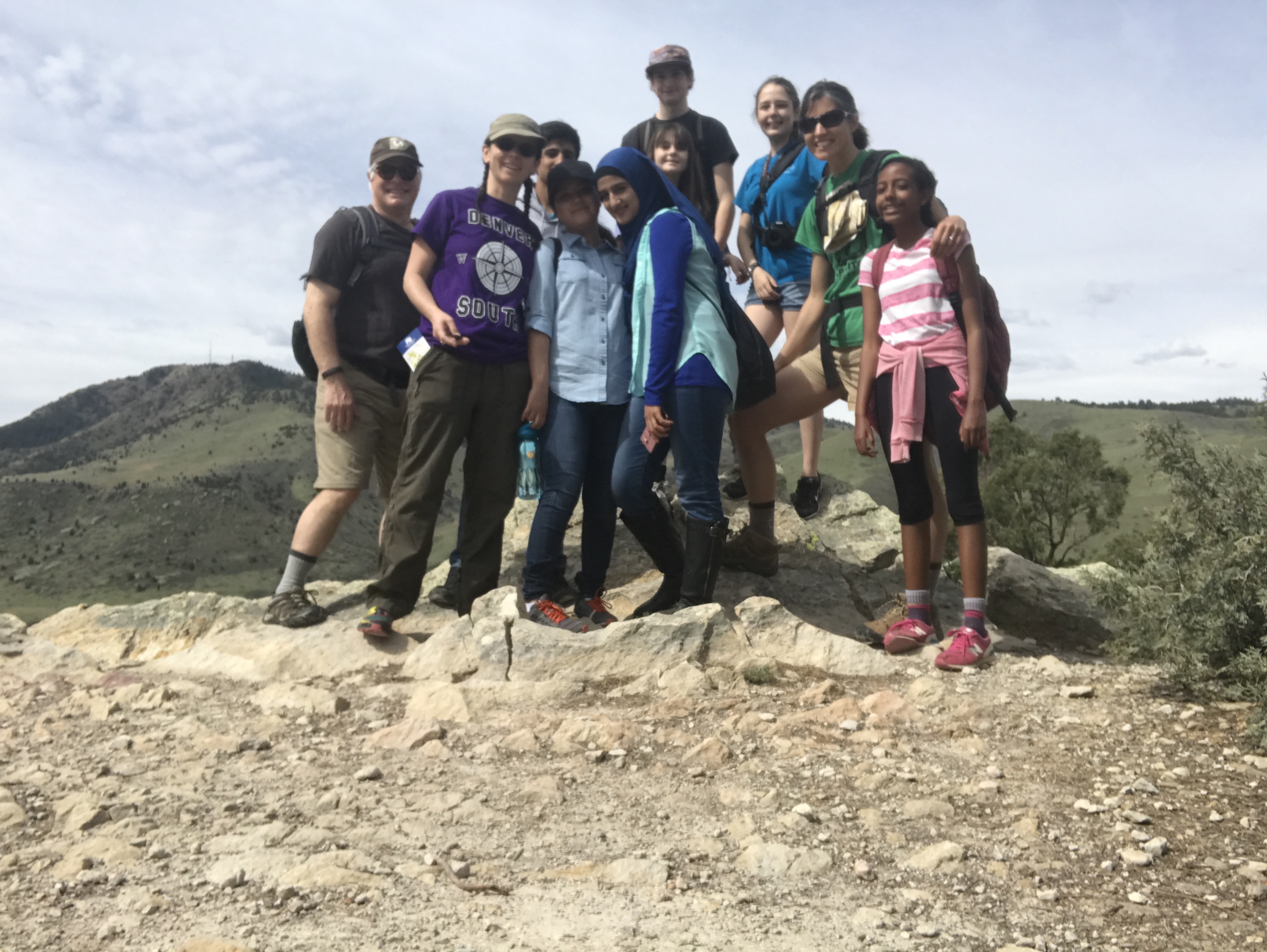
We took three Afghani students to the foothills today. They have been here for less than a year, so they learned a few English words today: Hike. Trail. Juniper. Ponderosa. Colorado=red rocks. View.
I tried to ask what it was like for them back home, but they only knew a few English words to describe it: Danger. No school. Grandparents. Parents here in Colorado. All kids–brother, sister, other brother–in Afghanistan.
Each time I asked if they wanted to continue down the trail or turn around, the most confident girl, the hijab girl, kept insisting we go on. She had no desire to go back to whatever life she had outside of that blue-sky hike, her knee-high boots and sweaty face no hindrance to her joy. She just wanted to walk. To escape. To be on that mountain.
When we were at the top, she leaned in to take a selfie with me, and then one with my youngest daughter whose experiential-learning school had just visited the same location, whose quiet voice shared with us the details of the sedimentary rock layers, the lichen, the igneous and metamorphic. This was a perfect match–the low-English Afghani and my quiet youngest–smiling shyly for a photo, a perfect frame of world peace.
With a walk like this, we step towards empathy. Understanding. Gratitude. We know that things could be worse, that they are worse, for so many people in the world.
But it doesn’t stop me from feeling the pain, the loss that I feel now. For feeling gypped, for feeling like nothing I do, nothing my husband and I ever do, will be good enough to make our lives easier.
Perhaps it’s the curse of Spain. Six years ago, after welcoming two Spaniards into our home, after asking practically nothing for rent, after offering them my car for months when theirs broke down (I rode my bike to work 25 miles a day for three months), after hosting parties for their friends, babysitting their friends’ kids, driving them to South Dakota, after everything, we went to Spain and never heard from either of them again. In addition to the nightmare that that year in Spain was for us, with its broken promises, broken paychecks, and lost jobs, they had to twist the knife right into our backs by acting like they never knew us.
And now we’ve planned a redo. Twentieth wedding anniversary. Fortieth birthdays. Three years into living like kings for the first time in our marriage, with two steady, well-paying jobs, great benefits, and our dream house that we opened up to friends of ours, six of them, rent free for two months because they were down on their luck, and Spain has cursed us again. Our six-week vacation that is 90% bought and paid for, that I have spent over forty hours meticulously planning every last expenditure and activity, will be marred by a pending layoff, loss of benefits, and a mortgage we simply cannot afford on a teacher’s salary.
Let me tell you about that teacher’s salary. Let me tell you about the master’s degree plus thirty credits I have. Let me tell you about all the school events I attend, the lunch meetings, the hours before and after school I work, the summer workshops, the home visits, the dance chaperoning, the sporting events, the class coverage, the every last everything I do to work, to earn an extra buck, to make it. Let me tell you about the eight years we lived on a $48,000 frozen salary.
Let me tell you about my childhood. Parents with bachelors’ degrees in journalism working for a small town newspaper and barely making it. Powdered milk. Ten-year-old, rusted-out Datsun. Ancient house with windows so thin that ice collected on the glass. My mother scraping together a $20 bill for my eleventh birthday and me looking at it holding back silent tears because I already knew that it was equivalent to two and a half hours of her work, and my father was failing his master’s program, and we were moving to Denver for a better life, and everything was crashing down at once.
Let me tell you about contract work, the only kind of work Bruce was able to find when he left the Air Force. No guarantee. No health insurance. No paid time off. No holidays. No sick leave. And when it ends? No unemployment checks.
Let me tell you about health insurance. Let me tell you about the two children I have given birth to without having health insurance because it was a pre-existing condition, and the near $10,000 we paid for those births.
Let me find a few English words to explain to these students from Afghanistan: American Dream. Housing. Insurance. Education. SCAM.
Let me tell you about what we have done to avoid bankruptcy: No car payments. No student loans. No credit card debt. Two properties. Saving and spending. Buying a house only when we were ready, when we could afford it. Saving up for a cursed redo of Spain. Road trips staying with family and camping to save money while traveling. One computer for the whole family. Still driving my 1998 Hyundai Accent.
Let me tell you how I know what poverty is. I know what sacrifices are. I have made them.
Let me find a few English words to say: Fuck this country. Fuck this Trumpian tax cut that cuts workers while CEOs live like kings. Fuck this blue-sky day. Fuck my husband’s military sacrifice, his months in the desert, his sold-his-soul-to-boot-camp commitment, his veteran status that has given us NOTHING.
Let me be twenty years into my youthful marriage and not have to feel like I’m just twenty minutes in. Let me keep my dream house. Let him keep his union (that screwed him) dream job. Let my kids feel like there’s a future here for them and that with two degrees they won’t be buying powdered milk.
Just. Let me be. I’ve had enough.

“This is an FBQ conversation,” she begins. And her artistry, backed by data, emphasizes the urgency.
The urgency. It is mid-October, and I’ve seen my principal cry too many times in the course of twelve months.
The urgency of children who have escaped a war zone, who have traveled on three city buses to escape their neighborhood school, who have escaped poverty with our food bank, to be on the tips of our tongues as we sit in the come-down-to-Jesus choir room, AKA, staff meeting with bad news.
This isn’t the day after the election when our hijab-wearing girls were too fearful to take a bus to school, when our students of color were threatened by now-openly-racist citizens, when we were lost souls in a city school surrounded by bigotry.
This isn’t the almost-there rating of last year when we met in our usual fourth floor, everything’s-going-to-be-fine lunchroom location.
This is a Friday-the-thirteenth, tell-it-like-it-is, FBQ meeting. The urgent meeting.
We face ourselves and then each other. Is it you? Is it me? Is it them? Is it us?
We argue in the hallway after, fuck the contract hours on a Friday afternoon when we’re supposed to be at FAC. “You know those charter schools eliminate kids left and right. One infraction, gone. SPED? Gone. Detention for forgetting a pencil and you don’t show up? Gone. Charter schools in the poor neighborhoods? Don’t even try to argue, I looked at all the scores last night. RED.”
We are ourselves, wholly ourselves, and we promise to honor her FBQ request.
But this room will be on our minds for the weekend, for the week, for the rest of the year. This conversation, this seeking of solutions. This, what-did-we-do-wrong-this-time question that sits at the back of our minds every damn day when kids don’t show up, when kids say, “Fuck this class,” when kids come crying about their dying mothers, their far-from-home brothers, when kids wish nothing more than one percentage point higher than what they have earned.
“Can we turn the qualitative values of this school–I mean, look how many of you are wearing purple today–into something quantitative?”
FBQ: Family, Be Quiet.
I want to stand up and shout: You can’t measure this. You can’t quantitatively, statistically, mathematically, measure the amount of emotion that drips down her cheeks, that causes me to clench my fists and hold back my own tears, that makes us question the very effort and belief system we put in place with every moment of every lesson we work so hard to place before them.
You cannot measure, quantitatively, LOVE.
Family, Begin Questioning.
Start with:
1) Why do we vilify teachers?
2) Why do we blame students?
3) Why do we quantify humans?
I want to change her acronym. I want to change them all. To mesh the SLO with the CLO, to move LEAP into SIOP, to blend FAC with FBQ. I want to change colors from yellow to green to the beautiful blue sky that hovers over my beautiful school, with its red-yellow leaves just making that blue pop like a world you’ve yet to see.
It’s Friday.
Be Qualitative.
Because you can’t quantify love. And isn’t that what matters?

Nearly nineteen years into our marriage, it is time for new furniture. A friend came over the other night, and as the girls piled onto my lap on the sofa claiming their right to me, the wooden leg busted underneath, exposing the reality of its twenty-year-old, hand-me-down state.
Hence, Bruce and I spent four hours today driving between stores, researching cat-scratching deterrents, and deciding on a leather reclining non-power furniture set… that we didn’t buy.
Instead, we continued our twenty-first century journey to the grocery stores. We bought the usual to feed our family of five: avocados and cilantro for our weekly need for fresh guacamole, bananas, apples, and clementines to fill lunch bags, chicken and sushi to make our dinners.
And something more: a stockpile of nonperishables. Beans. Pasta sauce. Brown rice. Cans of soup. Tea. Flour. Canned tomatoes.
Yesterday, my husband of nearly nineteen years and the man so nonviolent that he cringed at the idea of actually killing an elk the one time he went hunting, told me he thought it might be time to buy a gun.
Today, we decided to save our $2000 on furniture because we might need it to stock up on food and provisions before the coming of the war that inevitably will destroy our democracy.
This is what Sundays have become. There is no joy in errand-running, no hope for a new living room set. There is the impending doom of a future that none of us can predict nor look forward to. There are three girls in our home whom I fear will not have a future at all. There are tweets and executive orders and absent investigations and jaw-dropping obstruction.
Soon there will be food shortages. Rations. Militia.
It is all around the bend as we navigate from city to suburb to city on the highways brought to us by progressivism, searching for what we need today, for what we might need tomorrow.
This is what our Sundays have become: me sitting in my nearly-nineteen-year-old recliner, hoping this marriage, this world, my children, will live to see another nineteen years.
 Step Write Up