after everything
he asked if he could stay here
with his new family
after everything
he asked if he could stay here
with his new family
This evening, though it took him three times to ask me the question in his perfect Spanish due to my completely butchered understanding, I think I was able to answer him with a too-easy level of coherence.
“Why in that one class did we have to climb under the desks and turn off the lights?”
“Welcome to America, the land of the free, the land where gunmen enter classrooms and kill students and we have to spend our lives practicing for the possibility of that moment.”
“But couldn’t a gunman just blow open the door?”
The irony of everything is in his words.
Couldn’t we just pass gun control laws or have background checks instead of practicing lockdowns?
Couldn’t we have immigration policies that wouldn’t leave 17-year-old refugees in homeless shelters?
Couldn’t we raise our sons to be like this one, so grateful that in the course of seventeen days, he has completely changed our lives and filled our home with laughter and love, instead of raising sons who think the only solution to life’s problems is to shoot someone?
He is here now, in my house, safe after his first American lockdown. What else will he see in a year, in a lifetime, as he adjusts to this new world? As he tries his best to catch up with a semester of learning English that he missed, where we started with the alphabet and now are writing sentences that he struggles to understand, relying on the other Hondurans in the class to translate? As he sits in my ninth-grade advisement class listening to me ramble on about graduation requirements that all of us know are inaccessible to him?
What else might he write, between now and when he leaves our house, that could be more beautiful than these crumpled-up words that we threw into the basket, a silly icebreaker activity that was designed to help the students get to know each other and that completely failed in my ever-introverted advisement class?

The task was to read the messages aloud and try to guess who the author was.
But I couldn’t read his words aloud. Not after the lockdown. Not in my broken translation. Not for this emotionless class to hear.
Because I wanted to feel those words deep in my soul, how beautifully imperfect and ever-so-perfect.
Just five minutes after crumpling the paper back to him, the dean came to the door asking for him and his backpack. My blood turned to ice in an instant. I have been teaching for far too long to know what the combination of those words means.
What could have happened between when I saw him getting his coffee from our kitchen this morning and that moment? What could they be looking for? How could they be so wrong?
Every question in the world popped into my brain, and I held back his three friends to ask what had happened in period 2. I told them how scared I was about the backpack request in particular, and they all responded, “No te preocupes, Miss, nada pasó.”
The next seven minutes became my own terrifying lockdown. Because he is not just one of the hundreds of kids they have pulled out of my class in the past sixteen years.
He is my kid.
When he returned during passing period, I couldn’t even let him go to math class without giving him a hug of one hundred percent relief after he told me that his social worker had picked up all his documents from the homeless shelter, and he needed to bring his backpack to keep them safe.
Tonight, I could have told him, if I were less opinionated, that we have lockdowns to keep us safe.
But when you’re in a lockdown, you’re not thinking about safety. You’re thinking about your life. All you’ve been through, all you might never see. You’re thinking about all the kids’ faces, all the struggles of the world, everything bundled up into the silent, dark corner of a classroom, the silent, dark corner of our society.
You’re thinking about the people you love. The people who write kind words on soon-to-be-crumpled paper. The social worker who texted her gratitude one last time right after meeting with him. The family surrounding you who took him into their lives without a second thought.
“Look, Miss,” his friend grinned at lunch, gesturing towards him in the hallway. “No necesitaba preocuparte… Su hijo está bien.”
Yes. Both of our lockdowns have been lifted.
And my son is just fine.
It was cruelty that put him here. The cruelties of poverty, of corruption, of one governmental thievery after another. Our government to theirs. Their government to their people.
It was cruelty that put him in a cage, that gave him no choice but to keep on keeping on, train after train, burnt house back home, left-behind baby sisters, parents unable or unwilling to give him what he really needed, really wanted in life.
It was cruelty that led him to my classroom and into the basement “bedroom” of our home.
But today, there was no cruelty. Only the miracle of another turn around the sun. And this eighteen-year milestone is so much more than the tres leches cake my youngest prepared, so much more savory than the two pot roasts we spent half the day cooking, more than the intricately-decorated banner, the piñata he never could hit as a kid.
Today, there was only humanity.
The humanity that bleeds through the cruelty even when you think it isn’t there. In programs established by past presidents that a team of social workers, caseworkers, and even a famous poet worked tirelessly to get him into before his eighteenth birthday, when suddenly, and for completely arbitrary reasons, our government labels young boys adults.
The humanity in lawyers working day and night, in the middle of Christmas and New Year’s while visiting family, who are willing to send emails and make phone calls and answer every stupefied gringo-I-don’t-know-the-law question.
PRO BONO.
The humanity in my friends who sent gift cards, cash, and prayers, to thank me for bringing this boy home.
Cruelty brought him here. But humanity has won.
If you combine C & H, you’ll have nothing but sugar. Pure sweetness.
And that is what I want you to taste as you read this post, as you click on these links. The sweetness of humanity. It may seem to be hiding behind the C, but without it, what would we have?
Certainly not a game of spoons. A party of smiling teenagers. An artist’s pencil.
Or a speck of hope.
Blow out these candles with us. Sing this song in broken Spanish. And relish these sweet dreams. They are yours. They are his. They are all of ours.
And they are sweeter than any cruelty you could imagine. Just taste them. Take a moment to taste how sweet our world could be.


new year refinance
to close out our former life
as we take this step
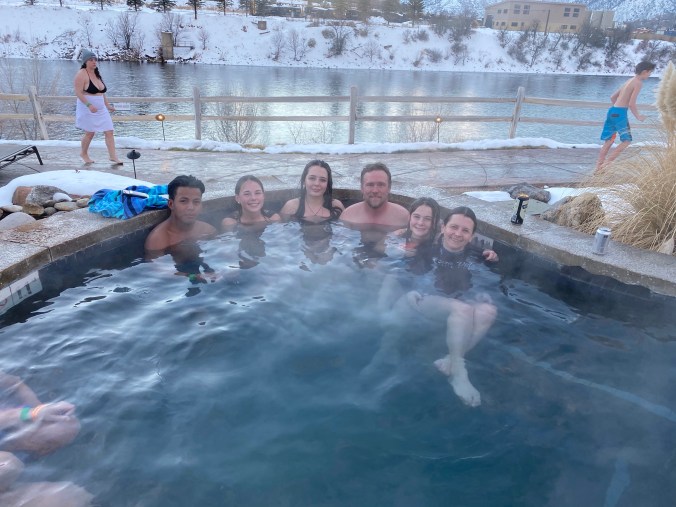
what really matters
is that he enjoys hot springs
to fit in with us

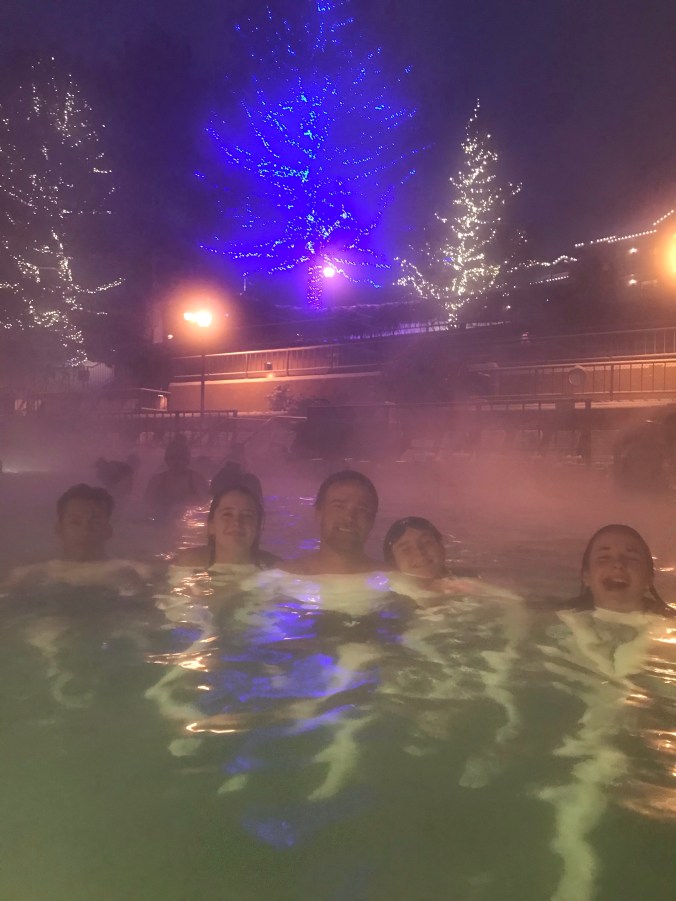
in 2019
Bruce learned to ski from up high
into a new life

in 2019
a drain drained our resources
and worsened our debt
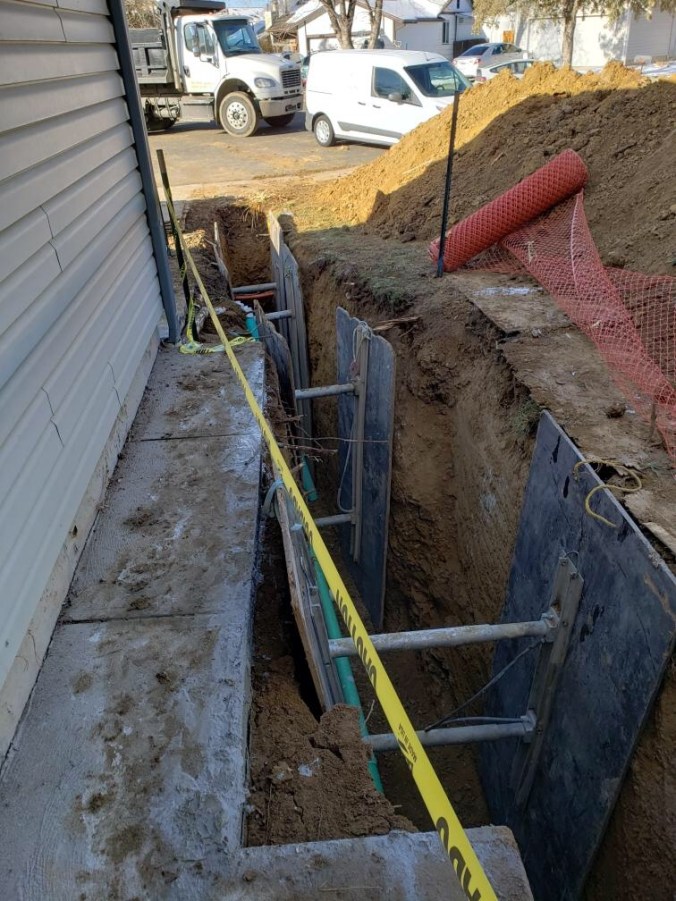
in 2019
my girls adjusted again
to life’s challenges
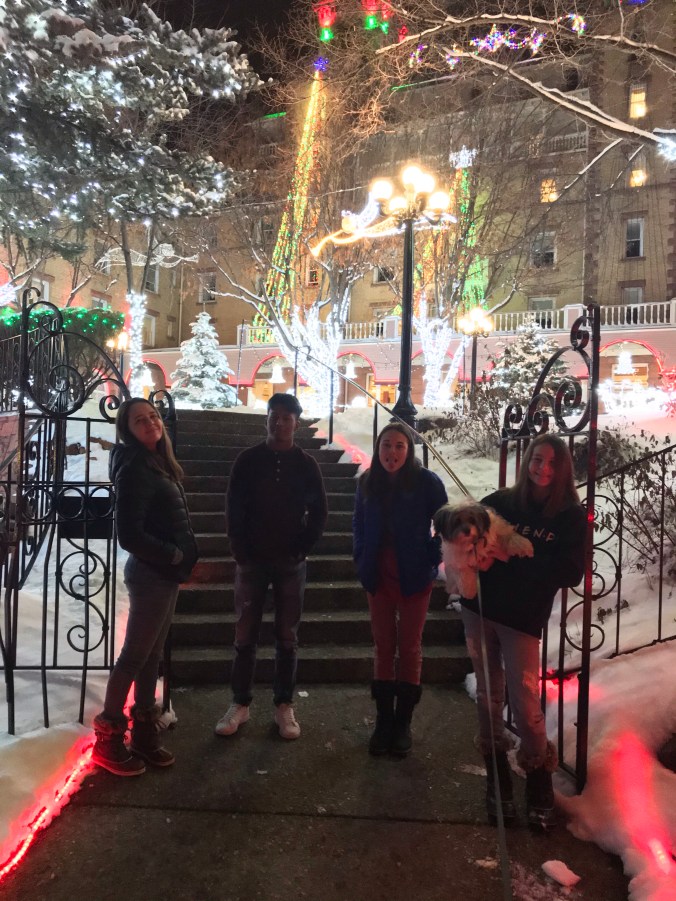
in 2019
we were given the rare chance
to make a difference
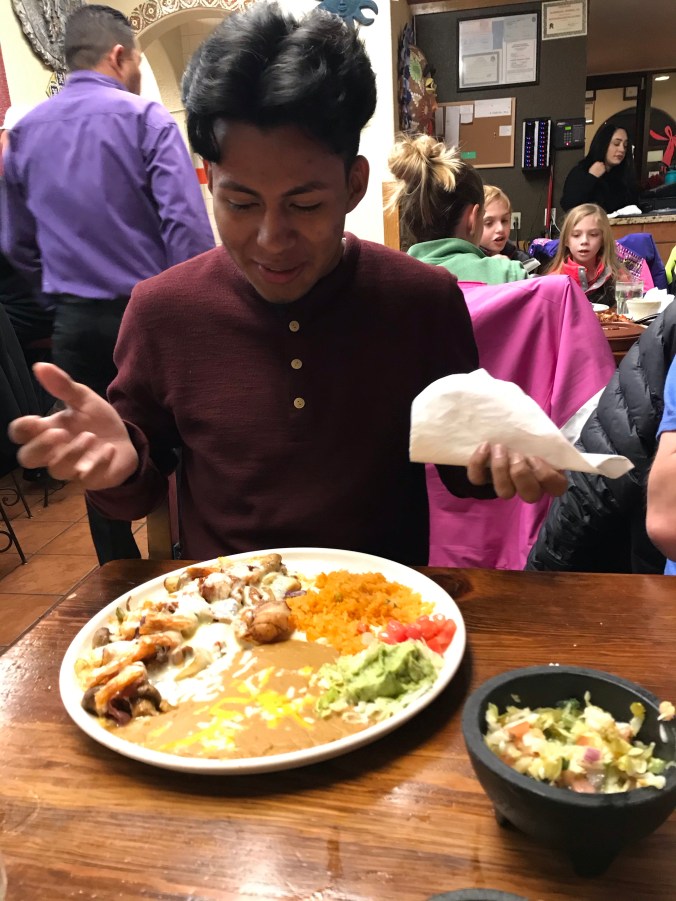
in 2019
we traveled through the country
searching for ourselves
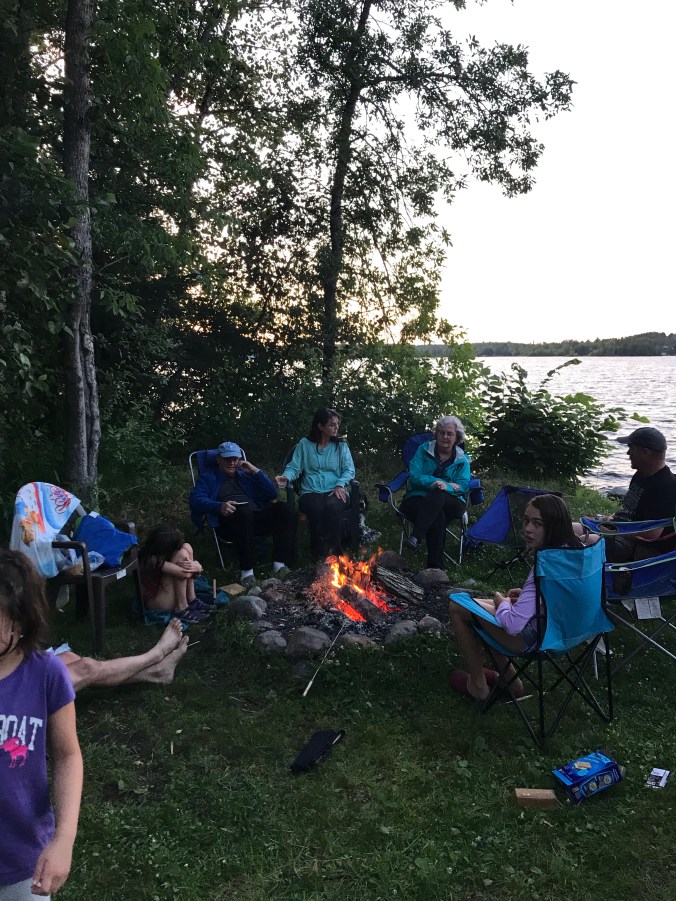
in 2020
we’ll make a better life
everywhere we go

My creative writing teacher (I will always refer to her as such even though I graduated nearly twenty-five years ago) asked us (her forever students) to send her a quick email about an important gift we gave or received this holiday.
Maybe I could snap a quick pic from the tree on Christmas Eve, filled with makeup, watercolor markers, jeans, and long-sleeved blouses for my three teenage daughters. Or of Christmas morning with the magical Apple Watches, so coveted by my Apple-only family.


Or the earrings my mother made me or the gift card to Colorado Gives from my sister.
Maybe I could capture a quick pic of my 2019 accomplishments: Writing about, and participating in, a teachers’ strike that led to a life-changing raise.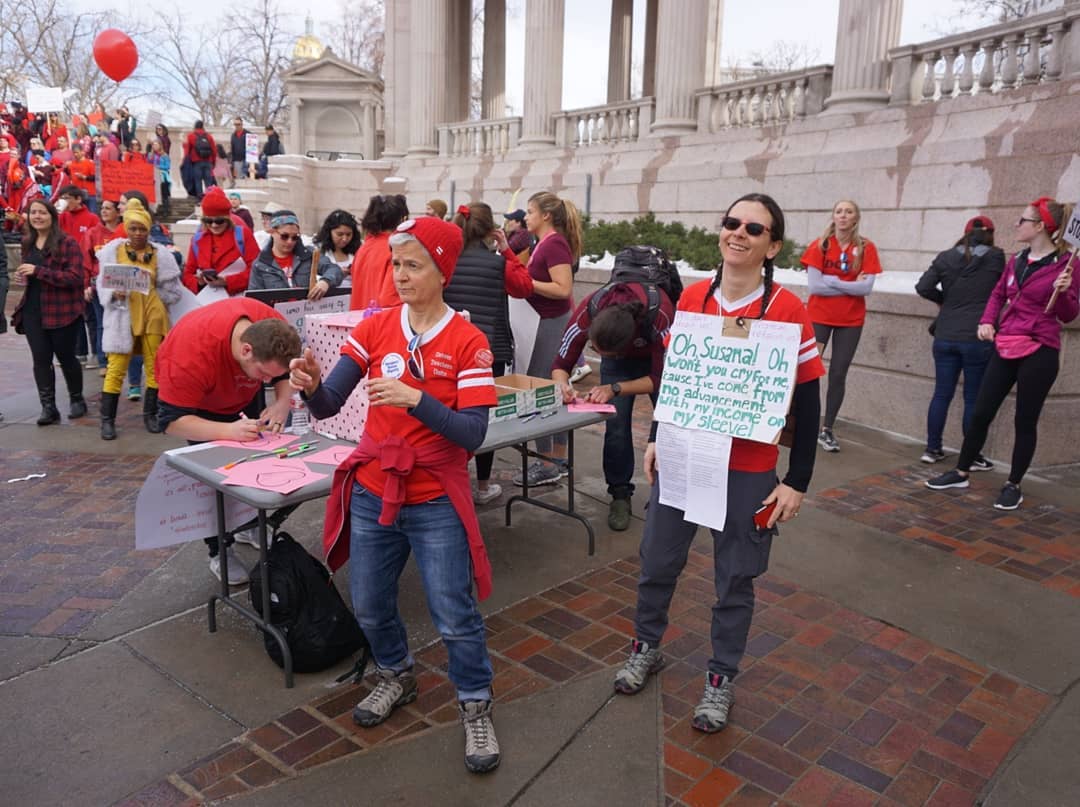
My first paid-for post. My hundreds of hours of work wrapped up in a National Board Certification. My ever-intricately-planned summer road trip across seven states.
But none of these things could begin to compare with the gift that this year has given me. The gift of this man in my life who would do anything, anything to prove his love to me. Marry me when I was just a baby. Follow me to Spain. Learn how to ski nine months and one lesson after tearing his ACL. Read every post. Drive overnight through the midwest so the entire family could sleep.
Take into our house a boy who doesn’t belong to us and in every way belongs to us.
You have watched the news. You have seen the stories. You have donated money. You have screamed in frustration at the cruelties and injustices inflicted on others by our government. By ourselves.
But have you stood in front of fourteen Newcomers and come to understand how brightly they still see our country? Have you had a hallway conversation with a boy who informs you that, after five days of walking, twenty-five days of train-hopping and pigeon-killing, two days of washing windshields in Mexico City, five days waiting to cross the Rio Grande in the middle of the night on a raft, one week in a detention center and four months in a home for unaccompanied minors, and four months in a homeless youth shelter, he is still looking for a home?
And that, no matter what, he cannot, will not, return home?
What would you do? What might you ask your husband to do? Your three ever-spoiled, ever-adaptable, ever-loving teenage daughters?
Would you keep scrolling past the images of children under space blankets on concrete floors?
Or would you realize that this boy is standing in front of you, in your school, in your class, in your life, without a home? A family? And do something? Anything?
I cannot take a quick pic of the past two weeks, the entire time that has passed between my knowledge of his status and his soon-to-be permanent placement in our home. The phone calls, the emails to every last human I could think of who might help him. The two-hour meeting with the Department of Human Services, his Honduran father on the line, ready to relinquish all rights. The background checks, fingerprints, home visits, all within a day. His arrival to my home with three garbage bags filled with clothing and no coat. The shy first meal that he took to the basement to eat. Alone. His quick smile and ever-present hope that this place must be a better place. His immediate love of our three pets.
I cannot send Mrs. Clark a quick email about my gifts this year. There are too many to count, they are the uncountable nouns I teach my Newcomers: love, hope, future, desire.
They are all in this union that the caseworker asked about today: “Married for almost twenty-two years? Tell me, how do you do it?” “Patience and love. Patience and love.”
They are here, in this boy, unwrapped, ready to be our brother, our son, part of our world.
These are my gifts. I’m sorry this is such a long email, Mrs. Clark.
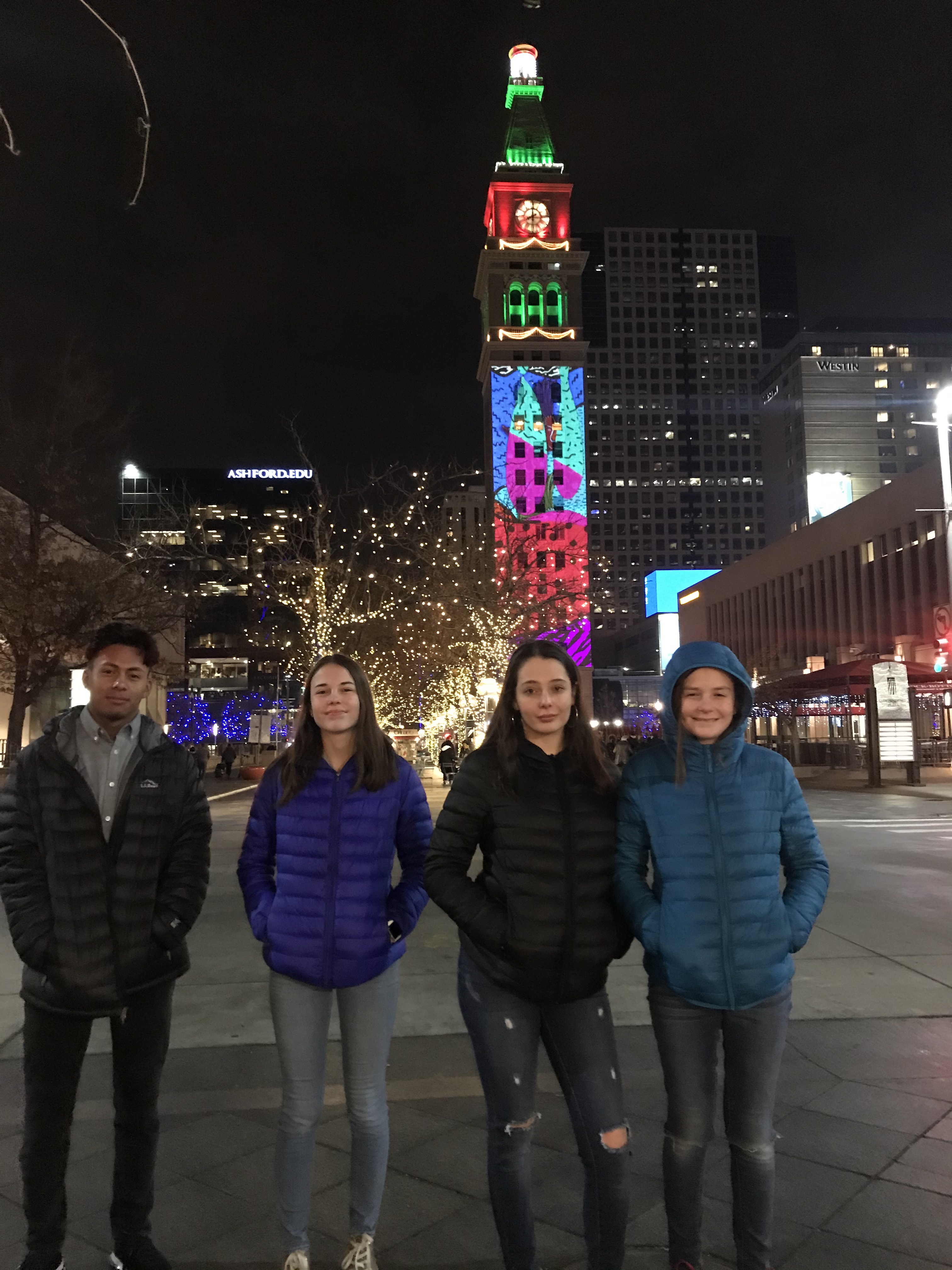

our preparations
for this moment of our lives
go beyond torrejas

beyond this sweet sauce,
this Christmas stocking for you,
beyond this moment
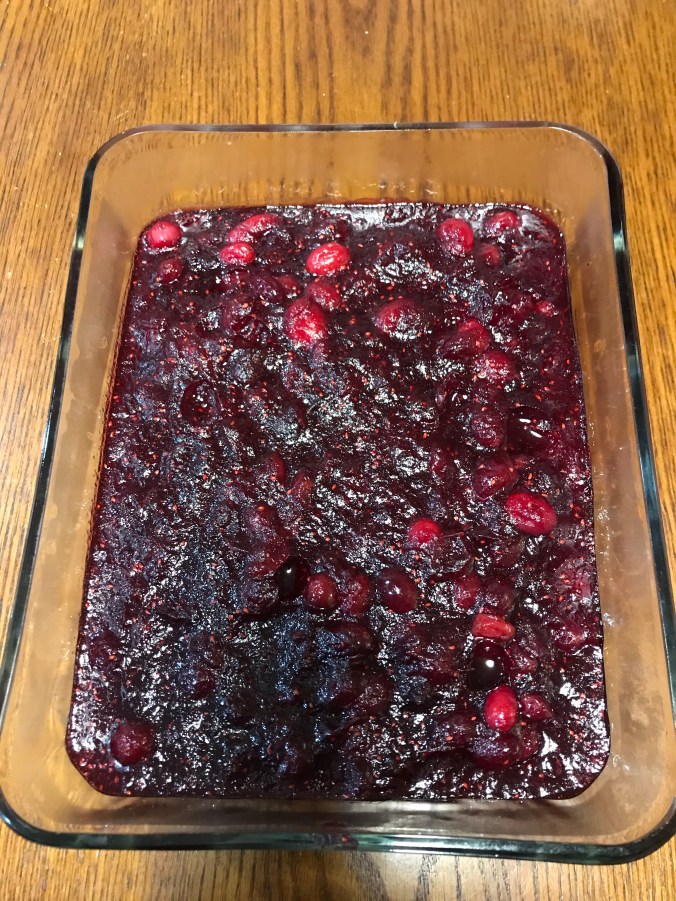
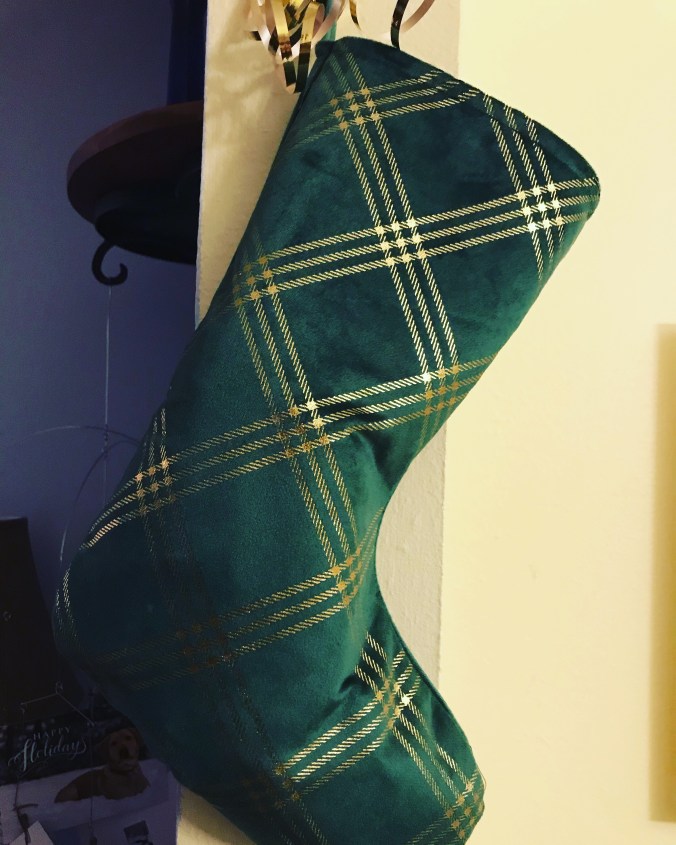
our preparations
go beyond twenty-two years
when we were babies
when we were in love
as only the young can be
and he promised me
what promise, you ask?
to open our home with love
when it is needed
I tried to be an immigrant once. I failed miserably because I’m too damn American. A privileged white woman. And because it was so fucking easy just to come home after a year.
In the attempt, I cried for months. I wrote constantly about the struggle of it all. The relinquishment of our family home. The endless paperwork. The cancellation of a dream job for something that was meant to barely sustain a recent graduate, not a family of five. Saying goodbye to the colleagues and collegiality I had shared for seven years. Saying goodbye to my family, my friends.
But it was just a farce, really. I didn’t fully fulfill my lifelong dream of Spanish fluency because I spent the majority of my days teaching English and the remainder speaking to my English-speaking family. And the money? The dream? The travels across Europe?
Nothing, I learned in those magical ten months, compares to human relationships. The relationships we’d just begun to develop with my clients, my colleagues, my friends in Spain before we had to board a plane and return to our “life.”
I tried to be an immigrant once, to step into the shoes of someone who has to drive across the country for a visa. To find an apartment. A phone plan. A rental car. A school for their children. In their second language.
I failed.
I bought five plane tickets and flew us back to America before we could blink.
Wouldn’t that be nice? To determine, after a time, that it’s just not right? That you could more or less return to your life and be the better for it? That you could pick up right where you left off, master’s degree in hand, Skype-interview-secured position waiting, to the life that you thought you wanted to leave behind?
Well, my students don’t have that choice. They have witnessed everything you can imagine and everything you couldn’t begin to imagine. They have come here with a singular thought: I cannot, I will not, return. I have stepped on that plane, that train, that three thousand miles of pain, to make this dream a reality.
They come here to relinquish everything about what has shaped them as human beings. Their language, lisping and loving. Their food, aromatic and elegant. Their weather, pungent and tropical, arid and hot. Their religion, every day and every way. Their families. Their communities. Broken or torn, perfect or imperfect, but never enough.
And they know that they cannot look back. That, no matter the circumstance (murdered parents, no literacy, shadows of abuse, a $10,000 bail set on a cousin who came to rescue them from a detention center only to be placed in one himself), they are here. To stay.
They are the brown faces you see on every block building your garages. Hammering your roofs. Serving your dinner. Teaching your children Spanish. Driving your Uber. Replacing your sewer line. Packing your meat. Running your school district.
Their children are your children. Impatient. Anxious. Determined.
They have come here, across the border, across the sea, across their history, to be reborn. They are no longer Hondureños, Salvadorans, Congolese, Burmese, Asian, Mexican, Iraqis.
They are intertwined into the fabric of our country, building the bridges, picking the food, bringing us hope.
And they’re not in the market to give up. To buy a plane ticket home.
To be me.
How humbling that is, to think of staying, of giving up everything for a different life. Of never being able to return.
Of never wanting to return.
Can you imagine?
And this is why my daughter has made this card.  Why I have spent my evening in Walmart searching for gifts that will never replace a loving family. And why I am so heartbroken and so grateful that my students will never be me.
Have you ever tried to be an immigrant? It is impossible to imagine. To describe. To understand.
All we can really do, as her smile suggests, is build a bigger table. Open our hearts. And welcome those who may never have the privilege to look back.
“Did you see that three blocks down, they’ve torn down a house and are building a mansion just like this one?” I complain on the drive up Florida Ave., noticing another mansion in place of a 1940s war home. “It’s happening. Right in our neighborhood.” Our neighborhood of 1960s NON-war, perfectly-good homes.
“Mama, all you do is complain. Do you realize that? You complain about everything.”
I think for a moment. We’ve been in the car for five minutes, and this is my first complaint. Give me SOME credit.
***Three hours later.***
My youngest has her exhibition night. She presents a video with her BFF about the endlessly inevitable impacts of Westward Expansion on Native peoples. She has drawn a calming coloring page with polygons for her math class. She has developed a filter to determine how best to eliminate toxins from drinking water.
And now she is participating in a Socratic seminar, sitting in a circle with her classmates, discussing “technology,” the parents hovering on the outskirts.
In the blink of an eye, the topic moves from the dangers of texting while driving to the dangers of guns. A very well-spoken and adamant eighth grader sitting two seats down retorts, “Guns don’t kill people. People kill people. My father is in the military, and soldiers have learned how to handle guns respectfully. With control.”
It is 19:22 on a Thursday night. I have sat through two 90-minute classes and two meetings and one long-short drive, fixed a put-together-leftover-dinner, walked the dog, walked to this “perfect” school, and begged my husband to join me for this one last event, only to realize the intense permeation of these ideas.
***Three hours earlier***
“Do you see it, girls? Right there. The original house is gone. Only the scaffolding for a mansion in its place.”
“And what’s wrong with that?” my oldest, money-hungry oldest, demands.
“The best part of living in this neighborhood is how real the people are. How middle class they are. NOT rich. Not taking everything out from under the rest of us.”
But all the people taking everything out from under the rest of us actually surround us. They are in my youngest’s classroom. They are five miles away, intentionally driving an RV into a hijabi woman, mother and aunt to the most precious students one could ever imagine the joy of having in a classroom. They are this thirteen-year-old’s mother, who intervenes in the Socratic seminar when some students suggest that in other countries, there are no school shootings. That in America, maybe we should focus on mental health rather than providing guns to all citizens.
A bulldog, she shadows her daughter, raises her voice, raises her hefty body in a darkened stance, and indirectly threatens the eighth graders. “We as human beings… We are ALL human beings, right? You as a human being have the responsibility to get help if you have mental issues. You have the responsibility. No one else. Guns don’t kill people. People kill people.”
I have to turn away. Suck in my breath. Stare at the wall. Clench my fists. Her teacher visibly notices my discomfort, walking towards me but not saying a word.
When I arrive home, all the news of the day is a heavy weight. My two girls who graduated nineteen months ago, who walked across Eritrea for fear of persecution, leaving their parents and home behind in search of a better life, who came to our country because their aunt lived here, who couldn’t tell me till the end of the year that the words of The Good Braider were so true for them, the protagonist counting her minutes on her cell phone, working extra hours to buy more minutes, were so true to them because they had to do the same to call home to their mother… And now?
And now some bastard who saw a hijabi Black woman walking home in the middle of a Wednesday from an ENGLISH CLASS rushed across two lanes to murder her?
But guns don’t kill people. People kill people, right?
“You’re not friends with that girl, are you?” I ask my baby daughter.
“God, no, Mama, she’s just awful.”
“OK, I’m just making sure because …” And I begin my rant about guns, the same rant they’ve heard their whole lives, the same rant that causes my middle child to hold up her hand and shout, “Enough with your opinions, Mama, it doesn’t really matter,” and then I hold up my ever-evil, ever-heartbreaking social media page where my close high school friend has to report that her Muslim son was threatened by a classmate to be shot that very afternoon, and I shout back, “It ABSOLUTELY matters, and this is why.”
It’s true. I complain about everything. I complain about injustice, and I will complain about it every minute of every day until the day I die. Injustice in the distribution of wealth. In immigration atrocities. In gun violence. In violent death from the gun of a soldier in the Middle East to the tires surrounding me in ever-so-fucking-golden-Denver.
I wish I could buy more minutes, too, just like Viola in The Good Braider. Just like Jumea and Salihah, who crossed mountains and oceans and discrimination to be given a chance that has been taken from them.
I wish I could buy more minutes of their smiles. Of how hard every immigrant I know works to build those mansions. To make this American Dream a reality. To put this darkness into perspective.
These are my minutes for today. My notes. They may sound like complaints, but they are tinged with the hope that someone will listen. Someone will donate. And someone will see that people don’t have to kill people.
 Step Write Up