on a bluebird day
my oldest learned to snowboard
by a lesson’s luck
(we three skied all day
basking in twenty degrees
of fresh powdered sun)

on a bluebird day
my oldest learned to snowboard
by a lesson’s luck
(we three skied all day
basking in twenty degrees
of fresh powdered sun)
It’s not like when they were little. When getting the Christmas tree brought all the joy and excitement of the season. When they would clamor over each other, fighting for their chance to be the one to put the angel on the advent calendar on Christmas day. When nothing mattered more than preparing for the joys of the season.
Now, lethargically, with little effort and a few forced smiles, they give up on decorating the tree halfway through the ornaments.
“It looks good enough,” they whine. “Can we be done?”
I see that all the large paper and playdough ornaments still sit in the box, their imperfect candy-can cut-outs laying on top of the crumbling Christmas-tree dough.
“But what about these? Your preschool ornaments that you made?”
“They’re too big. They’re not as nice as the other ornaments. They don’t matter.”
“They don’t matter? But you made them for us when you were…”
But I can’t finish. Mythili cuts me off. “We’re not getting rid of them, Mama. Don’t freak out. We’re just keeping them in the box.”
We’re just keeping them in the box. We’re just pretending to smile. We’re just going through the motions of the “magic.”
I don’t even like this holiday. How could I? I wasn’t exactly raised a Christian. I’ve just gone through the motions myself all these years. The lights, the tree, the advent calendar (homemade), the decorating of cookies, the baking of zucchini bread, the holiday cards, the portraits with matching outfits, the pies, the hours waiting in line to waste money on Santa pics, the presents.
Trying to build traditions. Memories. A family.
But now, not even grown, not even gone, they are boxing up their childhoods, their simple joys, their everything I’ve tried to build for them.
No one will ever tell you how hard parenting is because it is impossible to describe. From the midnight collicky cries to the ambivalent teen and everything in between, it is a constant struggle to raise a well-balanced, sentimental, sweet, and loving set of small human beings.
Yet, we keep trying. We keep putting up trees and stringing lights and playing Christmas music and baking cookies and trying to take every ornament out of the box.
We keep hoping that they’ll remember this. These small moments, these annual events, these attempts to win their love.
We keep hoping that they won’t leave us in a box as they grow.
But it is only a small hope. 


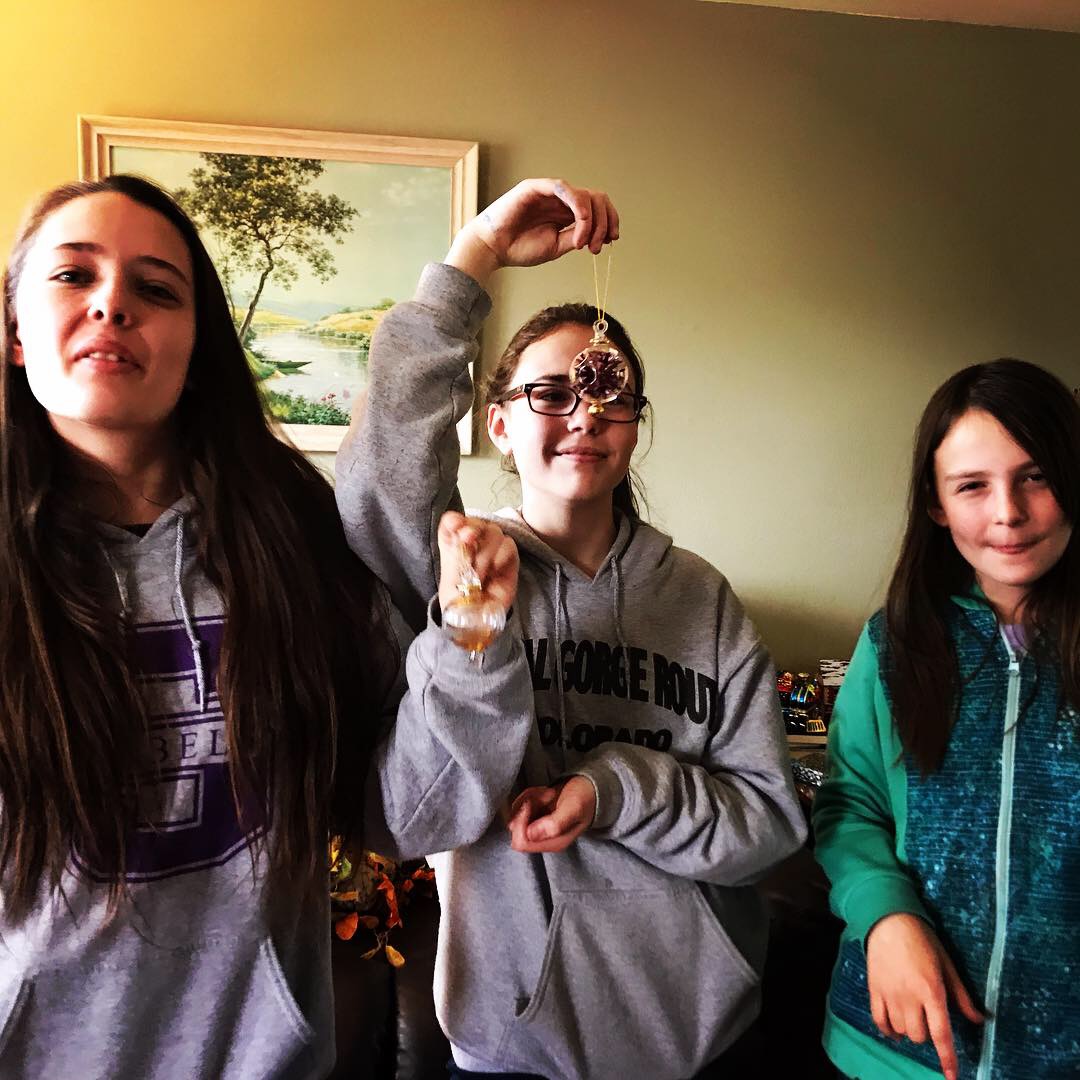
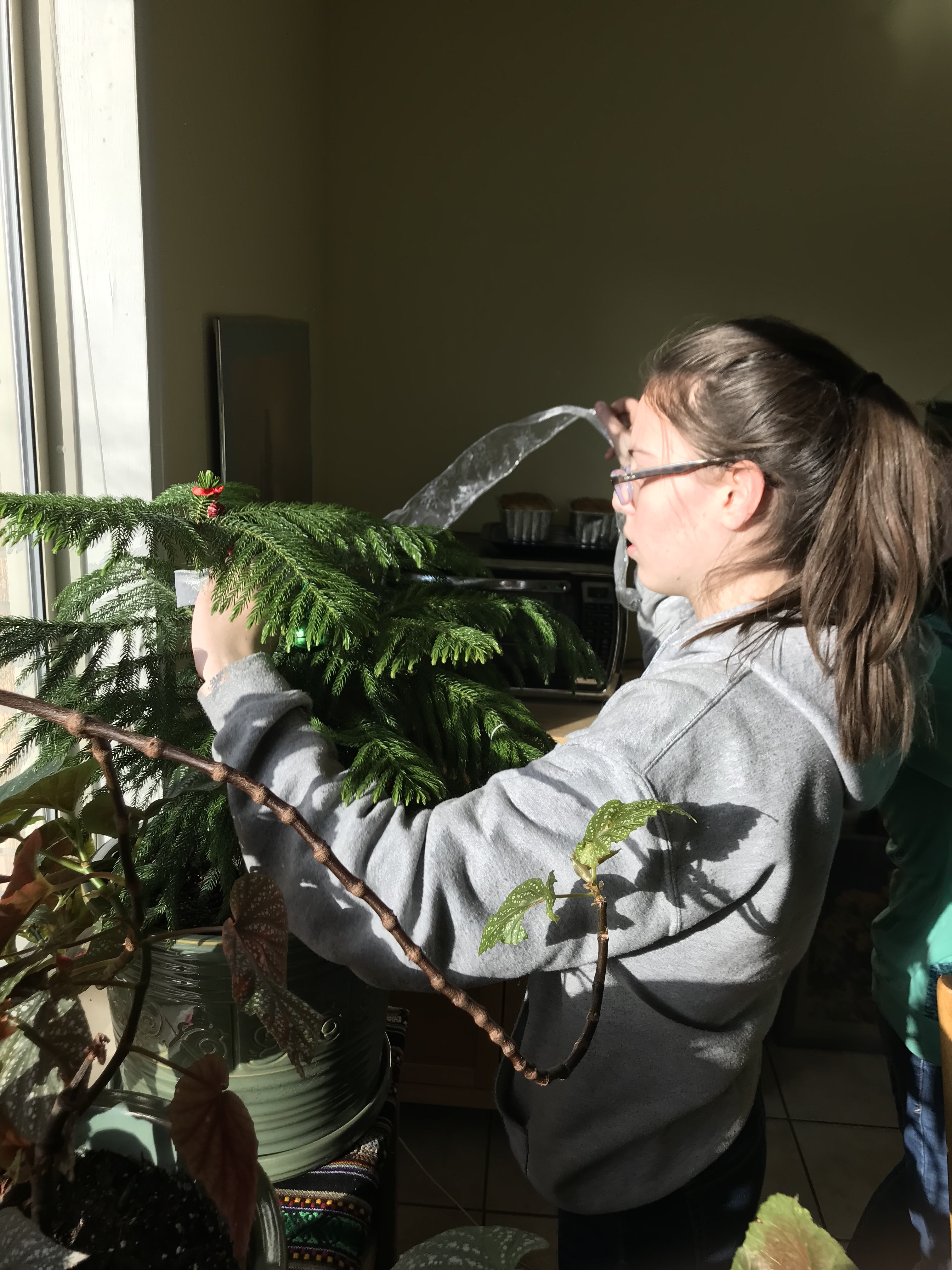
once just a baby
now serves us lunch from her job
how did it slip by?

The day begins with tweaking. That is all that life is, really. Just one small tweak in a different direction and the result could be completely the opposite. If my daughter tweaks that steering wheel just a little more to the left, we could have a head-on collision. If I tweak my reaction to her left-leaning grip to a scream instead of a stifled breath, the whole day could be doomed by her admonishment of my “criticism.”
If you could just tweak your lesson by a few words, you could build up the academic vocabulary.
If you could just tweak your email a little bit, I would actually understand the task you are asking me to accomplish by the end of tomorrow.
If you could just tweak the fuck out of this pay scale, maybe I could afford to breathe.
The day ends with tweaking. Eighteen months into planning a trip with one of these multi-million-dollar scams to take some students to Costa Rica to complete sixteen hours of service, to have a purpose for their privilege, the rep from the company calls to inform me that no one else signed up for the service trip for that week, that we won’t be able to take that tour, that we will have to do the normal tour, pay a bit more, add an extra day, horseback ride, visit a national park, see the sea, be the fucking privileged bastards that we are, never making even the least bit of a positive mark on this cursed world.
“Are there any other options?” I ask after she has already said to me, “Was it your personal preference to do service or a school district requirement?”
I should have said school district requirement. I should have gathered up the words I have in my heart now, about how hard this has been to organize, how few students I’ve recruited, how my colleague can’t even come because we don’t have enough, how angry I am that after all this time, NOW, now I find out that I can’t even do the one thing I wanted to do? Teach English to small kids? Clean up a littered beach? Build a latrine? Something that makes a difference?
I should have tweaked my words, my never-present verbality incomparable to print, to thought, to hours later and all the tweaks I need to fuck this day.
During first period on a 90-minute-class block day, the few of us who had planning should have been feeling pumped. No students yet. No admin. No meetings. Just a moment to think about what we could do, what minds we could shape, what students would be there and what students we hoped wouldn’t.
And what did we discuss? A broken-down car, an Uber driver who saved the moment and makes more money than us in a day. Dog walking that pays double our salary. Being a trainer for Lowe’s. The emotional drain of being asked to please one hundred students, at least half of their parents, all of the admin, all of the district, all of the “failed” test scores, all of the data-driven nightmares, all in a day’s work.
It was a short discussion. We returned to our paperwork nightmare, our school district applications that freeze without warning on cheap PCs that break without warning, our plans that get interrupted by ten passes in a period, phone calls asking about missing students, requests for kids to attend assemblies, students who leave to pray, students who leave to get chips from the vending machines, students who won’t put their phones away, strings of emails five miles long trying to help the students who won’t help themselves, strings of want five miles long that stretch between breaks that, without, we’d utterly fail.
Could I tweak this? Could I just change five minutes of this lesson to ignore my Syrian refugee whose question (directly related to our reading, I promise) breaks me down to my core?
“Miss, why do white people think that they need guns? Who are they trying to kill?”
What academic vocabulary can I infuse into my white-supremacist rant, my explanation of three hundred years of slavery and colonization that we are just now taking the first steps to recover from, what words can I tweak to make her understand the weight of my response?
The weight of her question?
The weight of it all. The weight we carry with their questions, their presence… their absence.
My Honduran beauty, quiet as a field mouse, who ran away for ten days, scaring the shit out of all of us, her stepsister coming in teary-eyed and disheveled, whispering about the police, the older boyfriend, the fear. And when she miraculously reappeared after the break, I couldn’t do anything but wrap my arms around her, to tell her that everything was going to be OK, even though she knows I’m lying, that she has already flown across this border to live with a mostly-unknown father and stepmother, her mother back home working to her bones under the brutality of gang violence.
Could I tweak my interaction with this child, teach her how to take the SAT to the satisfaction of my school district?
Could I tweak this day, this or that news, this or that email, this or that career, to make all of it feel like it’s worth my time? My soul-bearing, heart-breaking time?
“If only I could write,” one of the teachers said this morning. “Maybe I could get some books published, make some money, get out of this.”
And she’s only five years in. Maybe she could find her words, find her magic, and escape the hell that we go through each day.
But then she wouldn’t have the stories. Those kids, they burn us and break us and… save us.
“This is my favorite class, Miss,” a boy with a 42% tells me after school, begging for work before the semester ends. “You are fun, and you make me work so hard.”
Not hard enough, I think. Could I have tweaked my thirty-person ELD class to differentiate for his specific needs?
I have a million messages from parents and students and admin and I shouldn’t be taking the time to write this post.
But no matter how much I try to tweak it, the work of a teacher never ends.
And no matter how much I try to tweak it, the love for teaching never ends.
And that is why I will rise tomorrow and face the same battles. The emails. The absences. The presence. The questions. The turns. The work.
With a little tweaking, maybe I can turn this work into a life. It’s only a matter of turning the wheel.
To avoid pouring water down the drain, I spend ninety minutes washing dishes in two pans, running water out to my new mulch to dump, and putting everything away while Bruce researches home equity loans and Trump tax cuts that hurt, rather than help, our current situation.

Behind the bars of my security door, I take this picture of the sewer company’s progress replacing a portion of our main drain.

Behind the bars of this security door, I hide from the American Dream. The one that we are all promised and few of us ever attain. The one where we could afford to buy a house, afford to deal with that house’s expenses, afford to send our children to college or even pay off the loans we might still have from our own degrees.
I hide from the dream of all of my grandparents, a combination of immigrants and endlessly American, one grandfather with an eighth grade education, one with a high school diploma, who were able to raise large families and pay off mortgages well before retirement. On ONE income.
I hide from the audacity of insurance that we carry on our homes, our health, our lives. From the premiums we pay that won’t cover pre-existing conditions (like pregnancy!) or pre-existing problems on our properties (like drains), or pre-existing hope–from all the thousands and thousands of dollars we pour into these plans that leave us empty, behind bars, unable to operate a backhoe.
I hide from the for-sale houses in my neighborhood that are now so outrageously priced that my family, and none of the other families on my block, would ever be able to afford to buy the homes we stand in.
Behind the bars of my security door, I am as insecure as everyone in my generation. The generation that faces housing costs that are equivalent to more than fifty percent of what we earn in a month. The generation of debt that is impossible to avoid even with the best budget. The generation that has made the choice to bring children into this world only to constantly think: why would I bring children into this world? Children I feel inadequate to provide for, children who will face even higher college costs, children who will be straddled with debt for their entire adult lives?
Behind the bars, I cannot see the buyers of the $769,000 remodel on the next block. Where they come from. What jobs they have. What magical formula they applied for that allowed them to take a mortgage that costs more than what our two incomes bring home in a month.
Behind the bars, I hear the Spanish language spilling from the mouths of the workers who have to dig a hole in a yard on a holiday. With perfect efficiency, they have repaired a ten-foot section of pipe within two hours, and they will move on to the next family’s crisis, and the next, and the next, before going home to houses on the other side of town that they also likely can barely afford, because we all know that the $6000 we just paid for that pipe is lining the pockets of a white, male, English-only CEO.
Behind the bars, I live in my dream house, my four-bedroom, two-bathroom, beautiful-garden dream house that we waited seventeen years to purchase. I raise a family of three daughters whose pay may never match their male counterparts but, despite this, whose intelligence and candor will allow them to live the life of their dreams. I share my meals, my home, and my love with my husband who has managed our finances to such perfection that we have flawless credit, making an application for an equity loan for both our properties (because nothing can just happen to this house–both need new main drains), virtually seamless. We both work hard at our dream jobs–teaching and telecom–in order to make this picture perfect.
With the door open, before they rebury the dirt, I snap a picture of our pretty kitty hiding behind my glass of stress wine.

I sit on our paid-for leather recliner and feel the cool breeze of early summer and think about my students who have crossed the world to be a part of this American Dream, and how hard they work to make that dream possible, to learn English and learn how to navigate the complexities of our society that sometimes make us feel like we’re all going down the drain. I think of how hard my husband and I have worked to make this day possible–to give my girls a summer trip to Spain, a year in Spain, to see nearly all fifty states–because of how careful we have been with our money. I think of the health insurance that paid for most of my husband’s surgery and how my grandmother’s baby sister died of a simple infection in her mouth after tripping up on a wooden popsicle stick, all because they couldn’t afford a doctor.
With the door open, we host family friends who make us laugh until we cry, whose daughter will join us in Spain, whose presence makes us appreciate what we have surrounding us in life–a life filled with laughter, love, support.
With the door open and the Spanish-speaking workers gone, the Siberian iris frames my kitty, my pet, my perfect yard. I know that I have given so much to get to this picture, and I know I still have more to give. I have daughters who are lucky enough to have access to all the technology, diversity, and coursework that comes from an urban education, and who will enter their adult lives with an open-minded understanding of the world. I have a house that we can afford and enjoy without feeling like our money is going down the drain. I have a job that brings the global perspective to every choice I make in one of the most beautiful buildings our city has to offer. I have a marriage that has lasted from childhood to adulthood, with all the post-adolescent turmoil and trauma, all the sorrow and joy, that comes with making it work for twenty years.
With my door open, I wait for the American Dream. Somehow, some day, some way, I will see how it is both easy and difficult to achieve. If I would learn to always open the door and move beyond the bars, I would see that not everything is going down the drain. I would see the beauty in every choice, the brutality in every loss, and find a way to make a set of silver linings sweeter than a sip of stress wine.
I would be the wife, the teacher, the mother of that perfect picture. That perfect picture would be me.
At the elevator, brace still on, crutch still under his arm, he tells me he thinks that a good return-to-work date would be June 4, five days before we leave for Spain. He seems optimistic as he hobbles down the tiled hallway, as we enter the carpeted office, as we check in and he holds the door open for a woman with a walker, pointing out, “It’s kind of strange they don’t have an automatic door in the orthopedic’s office,” to which she adamantly agrees.
On the plastic, paper-coated bed, he hands me the folder while the PA takes him for x-rays. After just a few minutes, the doctor enters with the films. He has photographs of the entire procedure. He intricately describes the meniscus (intact), the bones (drilled into), the ACL (torn and then repaired). Bruce and I lift our eyebrows at each other, barely able to distinguish the tiny details he points out in each picture.
In his cozy spinning chair, the doctor is also optimistic. “I think you can ditch the brace right now and ditch the crutches by Friday. Use the stationary bike on Sunday. By Monday, you should be walking around the block. Maybe driving.”
From the green paper folder, I begin to pull out the forms. First: short-term disability approval. A list of lines with dates, surgery and medication verification. Affably, he takes them in stride: “I’ll be sure to get these to the right people to fill them out.” Because he has people. Because he charged the insurance company $36,000, more than half of what I earn in a year, for an outpatient surgery that took less than 90 minutes. Because we live in the land of the free.
From the green paper folder, I continue to pull out forms. Bruce begins to tell him–without ever being able to finish because of the doctor’s rambling explanations, the doctor’s defense of his procedures, the doctor’s justification for not filling out anything–about wanting to return to work before Spain. I pull out The Form, the one that CenturyLink requires for him to be able to work: a release of liability for driving a company vehicle, an “if-something-happens-it’s-not-on-us, your-injury-better-not-affect-your-work” form.
From his throne, he glances at the wording. He throws in more anecdotes peppered with cussing colloquialisms. “In twenty-six years of doing this, I have never seen a company require a form like this. What if you’re a shitty driver? How can I, as your medical doctor, determine if you’re OK to drive? I won’t sign a form like that. If you get in an accident and hurt someone and I’ve signed this form, then it’s all on me.”
From my plastic chair, I listen to the tone of my twenty-years-spouse change from respectful to grainy. I can almost feel the lump at the back of his throat as he tries to go on. “Well, my supervisor is willing to let me come back on light duty…”
From his throne, the doctor interrupts: “What you’re going to be dealing with is HR, not your supervisor, and if HR says you can’t work, that’s where things get muddy when I start putting my name on these forms.”
From my plastic chair, I am counting down the hours in my mind until the moment I can let these tears actually fall. First I have to continue listening to this white-haired, privileged surgeon continue rambling on about lawsuits. Then, we have to make Bruce’s appointments for physical therapy. Next, we have to drive home and track Mythili’s progress on her bicycle, as I had no way to pick her up today. After that, I have to take her to her doctor’s appointment, where they will make commentary about how my thirteen-year-old hasn’t had her period yet.
From my plastic chair, I am frozen and without words. The doctor turns to me. “You look frustrated.”
Is that the word you would use? Do you think frustration sums up the past six weeks of my life?
“The thing is…” Bruce begins, “… I’m probably going to get laid off on July 30.”
The doctor has finished listening. “That’s why we have to be so careful when filling out these forms. This happens all the time, when companies decide you can’t work.”
“No, it’s unrelated…” he begins again, that painful lump sitting on top of his beautiful, sexy voice.
“Are you really not going to fill out the form?” is the only thing I can muster. The doctor hands it back to Bruce, asks if there’s anyone he can call, anyone he can talk to, any way he can go back to work without it.
From the tiny patient meeting room, he stands. He shuffles us out the door. He guides us to his people who will make the next appointment. I place The Form neatly back inside the green paper folder.
I think of a few cussing colloquialisms I could shout. I think of hindsight, all of it. Of next year’s ski passes we wasted $2300 on. Of the thousands we’ve already spent in this office. Of the four weeks at seventy-percent-pay he’ll get for short-term disability. Of the thousands we’ve spent on Spain that is gone and tarnished before boarding the plane.
But I have no words in these moments when I have bowed down to our litigate society, our corporations’ fear of liability, our doctors’ refusal to help the little man other than spurting cussing colloquialisms while trying to relate to us.
At the elevator, his brace in my hand, crutch still under his arm, I don’t speak. Picking up Mythili, exhausted from her bike ride, I don’t speak. At the following doctor’s appointment, where, as usual, we only get to see the PA, I cross my arms and don’t speak, forcing Mythili to respond to questions about who she lives with, how she likes her sisters, what kinds of food she eats.
From my recliner at home, I do have a few cussing colloquialisms for the orthopedic surgeon. I could spout them all day, all night, every waking moment of the past twenty years of marriage, every waking moment of my life as a not-quite-middle-class American who just needs A GODDAMN FORM SIGNED SO WE HAVE A FEW PENNIES TO OUR NAME…
From my recliner at home, the words are useless. All the words, all the work, all the life we have put into living, everything feels useless.
And there is no cussing colloquialism that will bring me that doctor’s signature, bring my husband his job, bring me some peace. So why bother spouting them at all?

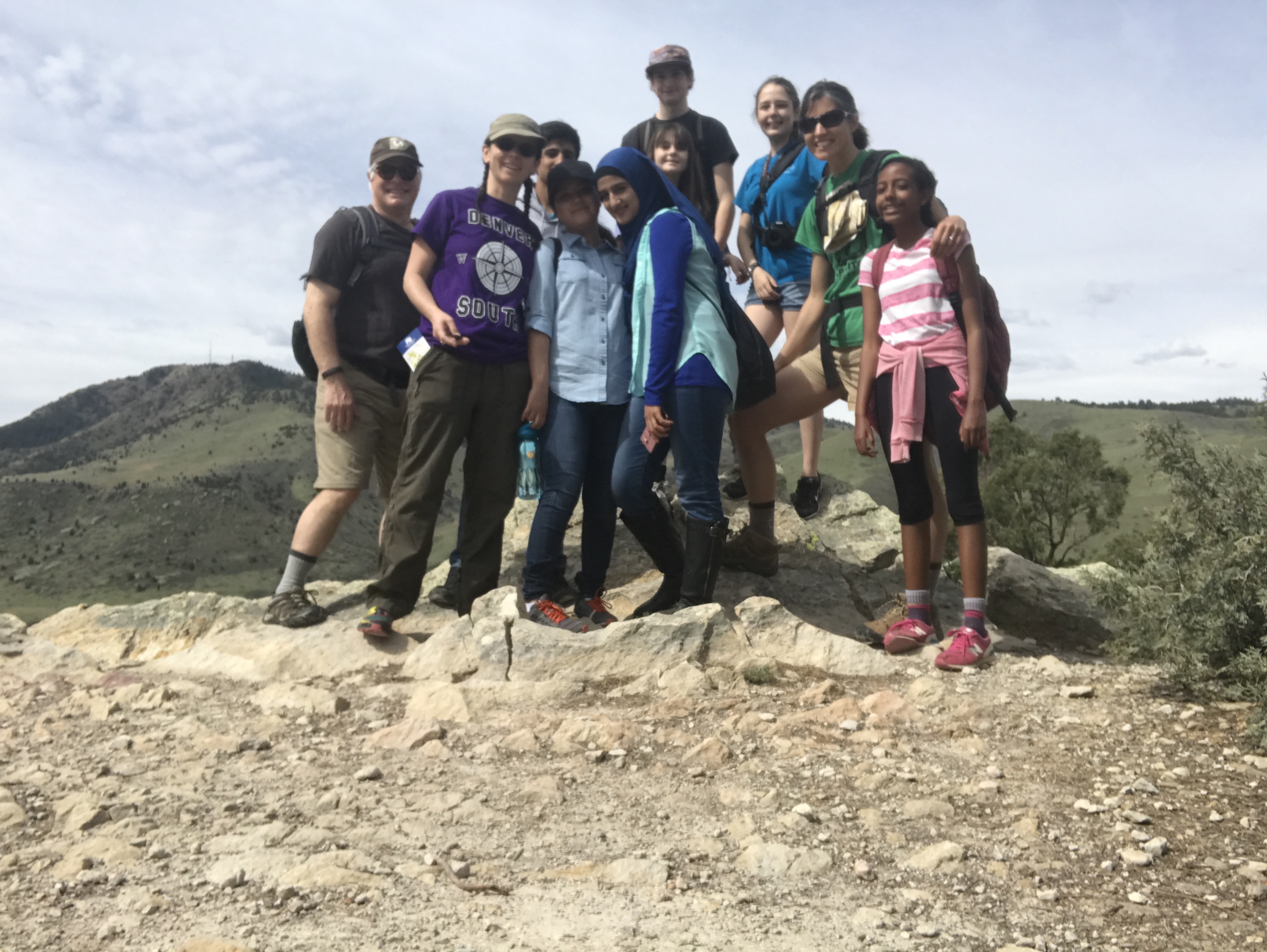
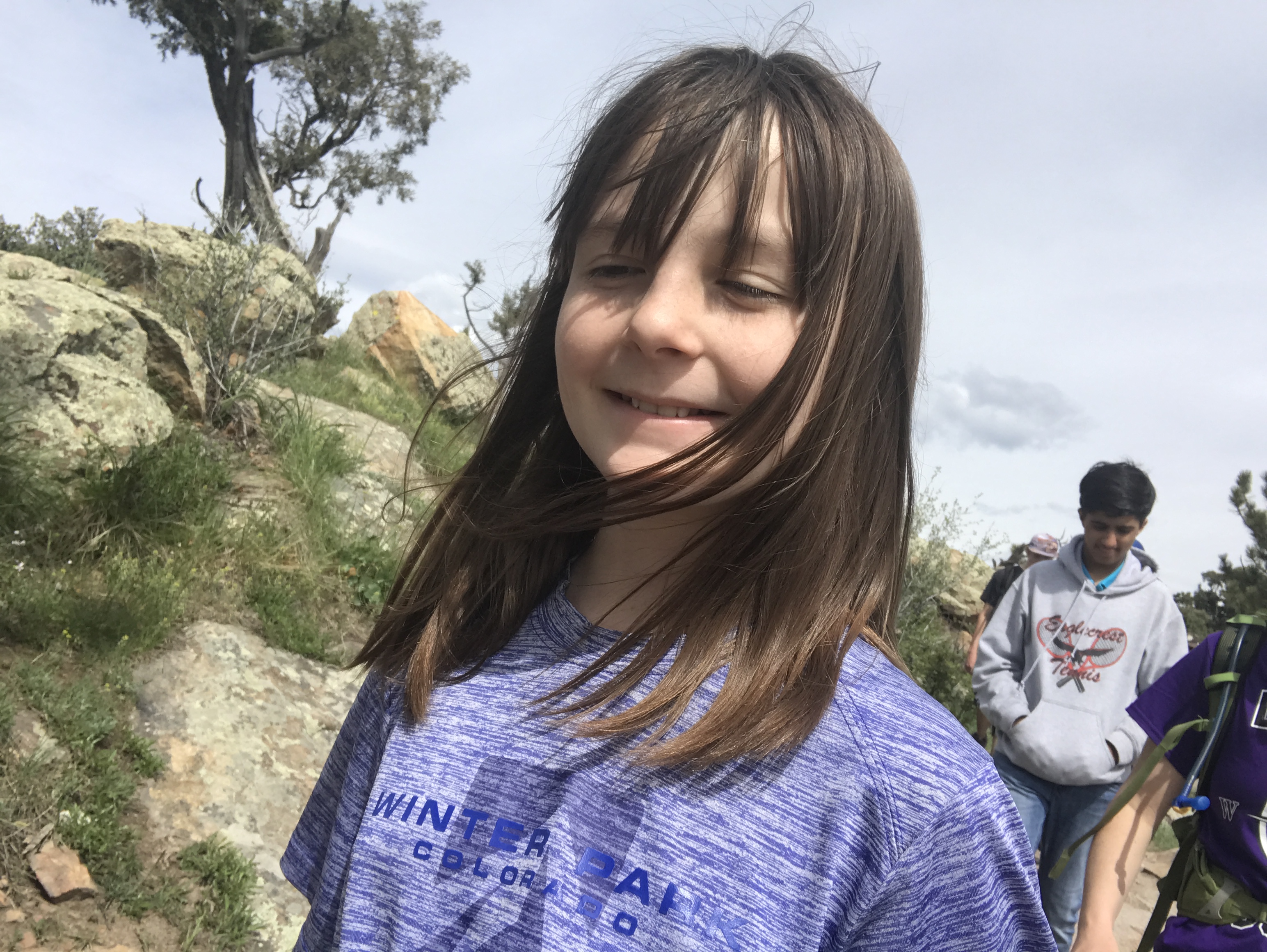
We took three Afghani students to the foothills today. They have been here for less than a year, so they learned a few English words today: Hike. Trail. Juniper. Ponderosa. Colorado=red rocks. View.
I tried to ask what it was like for them back home, but they only knew a few English words to describe it: Danger. No school. Grandparents. Parents here in Colorado. All kids–brother, sister, other brother–in Afghanistan.
Each time I asked if they wanted to continue down the trail or turn around, the most confident girl, the hijab girl, kept insisting we go on. She had no desire to go back to whatever life she had outside of that blue-sky hike, her knee-high boots and sweaty face no hindrance to her joy. She just wanted to walk. To escape. To be on that mountain.
When we were at the top, she leaned in to take a selfie with me, and then one with my youngest daughter whose experiential-learning school had just visited the same location, whose quiet voice shared with us the details of the sedimentary rock layers, the lichen, the igneous and metamorphic. This was a perfect match–the low-English Afghani and my quiet youngest–smiling shyly for a photo, a perfect frame of world peace.
With a walk like this, we step towards empathy. Understanding. Gratitude. We know that things could be worse, that they are worse, for so many people in the world.
But it doesn’t stop me from feeling the pain, the loss that I feel now. For feeling gypped, for feeling like nothing I do, nothing my husband and I ever do, will be good enough to make our lives easier.
Perhaps it’s the curse of Spain. Six years ago, after welcoming two Spaniards into our home, after asking practically nothing for rent, after offering them my car for months when theirs broke down (I rode my bike to work 25 miles a day for three months), after hosting parties for their friends, babysitting their friends’ kids, driving them to South Dakota, after everything, we went to Spain and never heard from either of them again. In addition to the nightmare that that year in Spain was for us, with its broken promises, broken paychecks, and lost jobs, they had to twist the knife right into our backs by acting like they never knew us.
And now we’ve planned a redo. Twentieth wedding anniversary. Fortieth birthdays. Three years into living like kings for the first time in our marriage, with two steady, well-paying jobs, great benefits, and our dream house that we opened up to friends of ours, six of them, rent free for two months because they were down on their luck, and Spain has cursed us again. Our six-week vacation that is 90% bought and paid for, that I have spent over forty hours meticulously planning every last expenditure and activity, will be marred by a pending layoff, loss of benefits, and a mortgage we simply cannot afford on a teacher’s salary.
Let me tell you about that teacher’s salary. Let me tell you about the master’s degree plus thirty credits I have. Let me tell you about all the school events I attend, the lunch meetings, the hours before and after school I work, the summer workshops, the home visits, the dance chaperoning, the sporting events, the class coverage, the every last everything I do to work, to earn an extra buck, to make it. Let me tell you about the eight years we lived on a $48,000 frozen salary.
Let me tell you about my childhood. Parents with bachelors’ degrees in journalism working for a small town newspaper and barely making it. Powdered milk. Ten-year-old, rusted-out Datsun. Ancient house with windows so thin that ice collected on the glass. My mother scraping together a $20 bill for my eleventh birthday and me looking at it holding back silent tears because I already knew that it was equivalent to two and a half hours of her work, and my father was failing his master’s program, and we were moving to Denver for a better life, and everything was crashing down at once.
Let me tell you about contract work, the only kind of work Bruce was able to find when he left the Air Force. No guarantee. No health insurance. No paid time off. No holidays. No sick leave. And when it ends? No unemployment checks.
Let me tell you about health insurance. Let me tell you about the two children I have given birth to without having health insurance because it was a pre-existing condition, and the near $10,000 we paid for those births.
Let me find a few English words to explain to these students from Afghanistan: American Dream. Housing. Insurance. Education. SCAM.
Let me tell you about what we have done to avoid bankruptcy: No car payments. No student loans. No credit card debt. Two properties. Saving and spending. Buying a house only when we were ready, when we could afford it. Saving up for a cursed redo of Spain. Road trips staying with family and camping to save money while traveling. One computer for the whole family. Still driving my 1998 Hyundai Accent.
Let me tell you how I know what poverty is. I know what sacrifices are. I have made them.
Let me find a few English words to say: Fuck this country. Fuck this Trumpian tax cut that cuts workers while CEOs live like kings. Fuck this blue-sky day. Fuck my husband’s military sacrifice, his months in the desert, his sold-his-soul-to-boot-camp commitment, his veteran status that has given us NOTHING.
Let me be twenty years into my youthful marriage and not have to feel like I’m just twenty minutes in. Let me keep my dream house. Let him keep his union (that screwed him) dream job. Let my kids feel like there’s a future here for them and that with two degrees they won’t be buying powdered milk.
Just. Let me be. I’ve had enough.

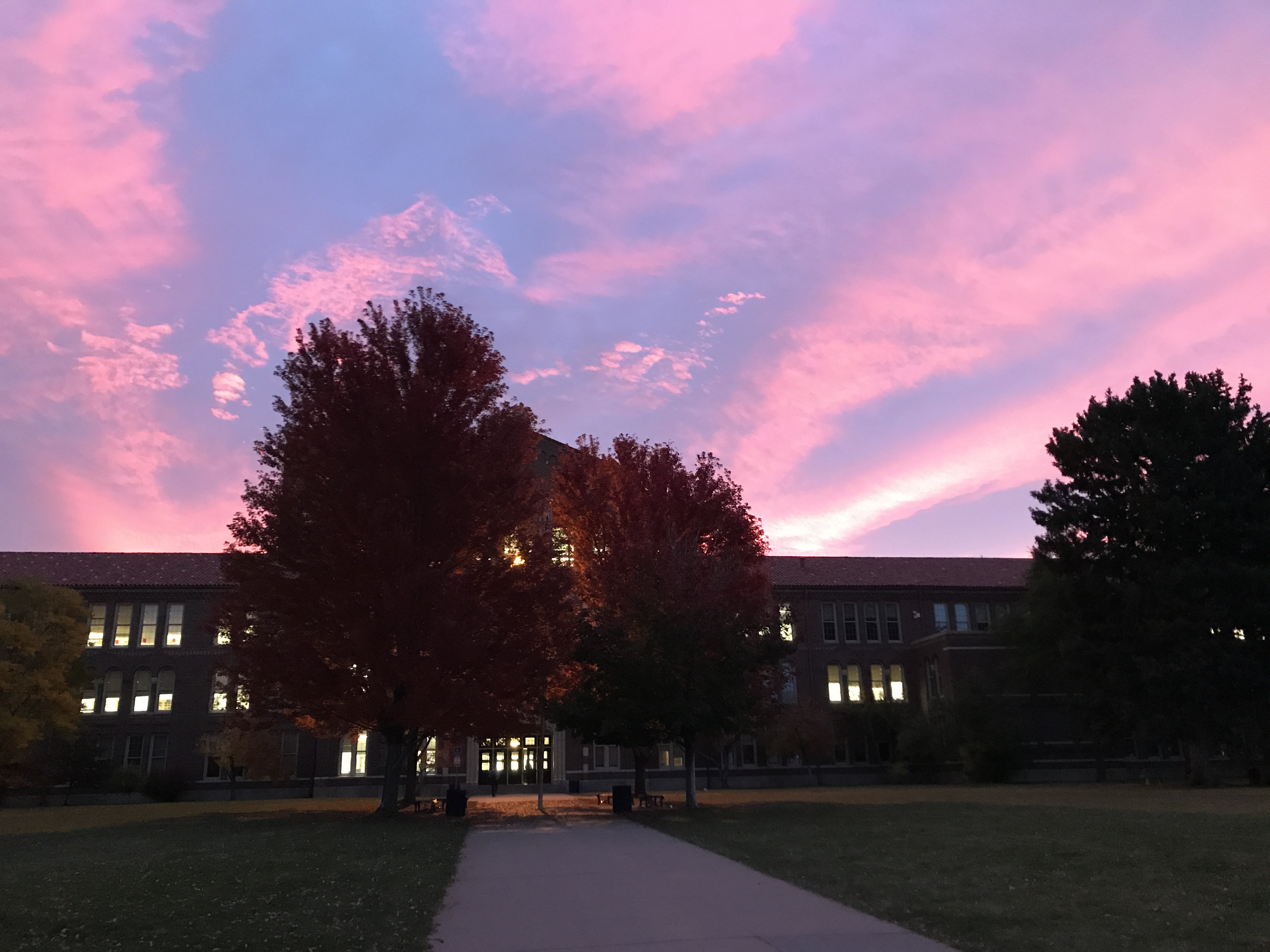
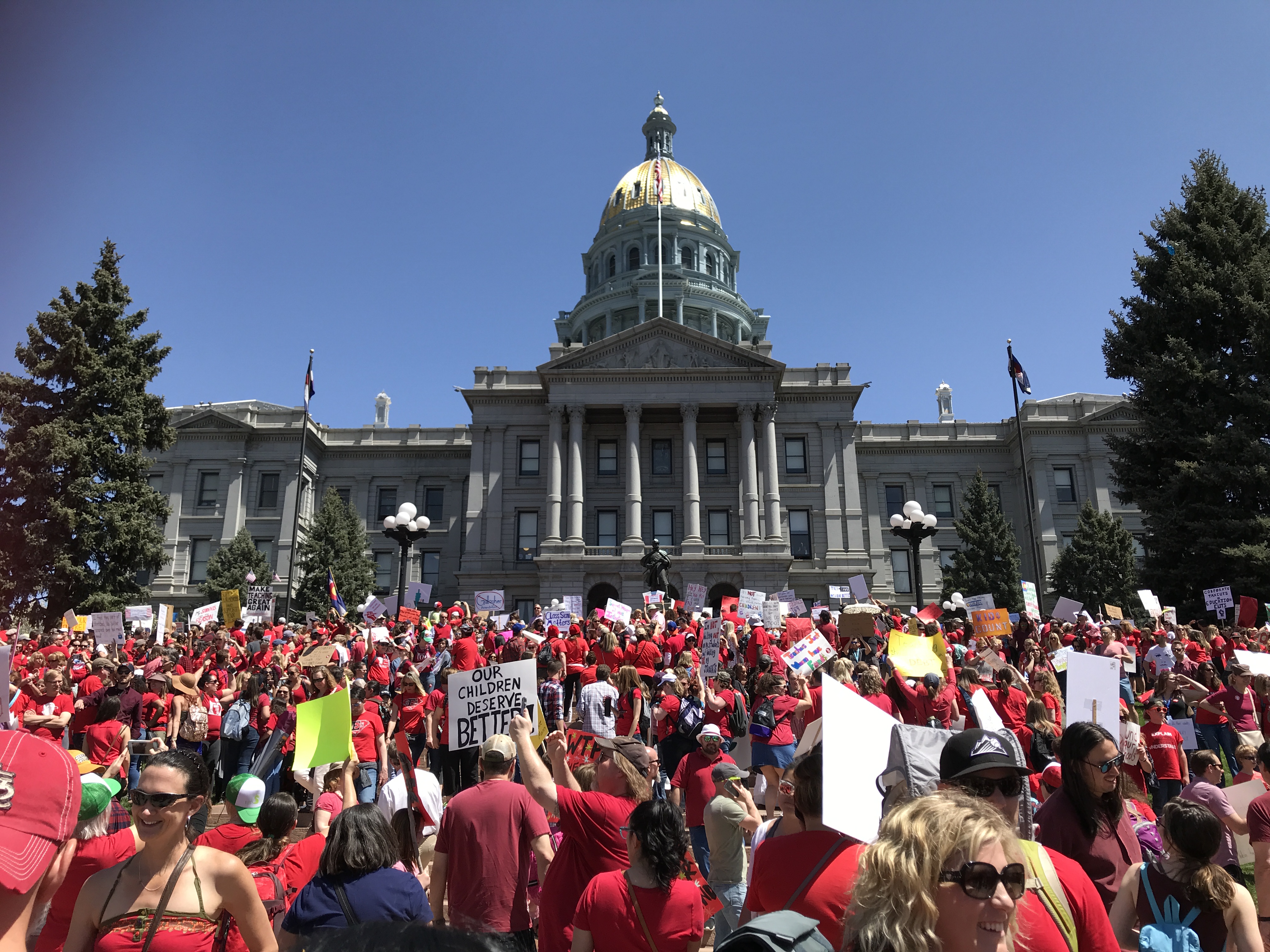
My fortieth April comes to an end with pink flowers and red shirts. Both images are equally beautiful and painful–fuchsia tinted with the blood, sweat, and tears we put on the line every day for a society that vilifies us and threatens us with jail time for shutting down schools for a singular day–when that same society has worked to shut down schools for decades.

My fortieth April is these nachos–too damn big to consume, too impossible to say no to–because sometimes life just feels like a challenge we must at least attempt to make a mockery of.

My fortieth April means my parents are in Paris, on their way to only four months in Europe because I begged them not to totally leave me, sell the house, and disappear from our lives when I’ve just lost my father-in-law and every remnant of parenthood on my husband’s side of the family.

My fortieth April brings the beginning of the end of my children’s childhoods–no more towing them in the bike trailer, no more feeding them from rubber spoons, no more shuttling them to elementary school–instead, the hard reality that they will ride their own paths, make their own decisions, and quite often, leave me behind.

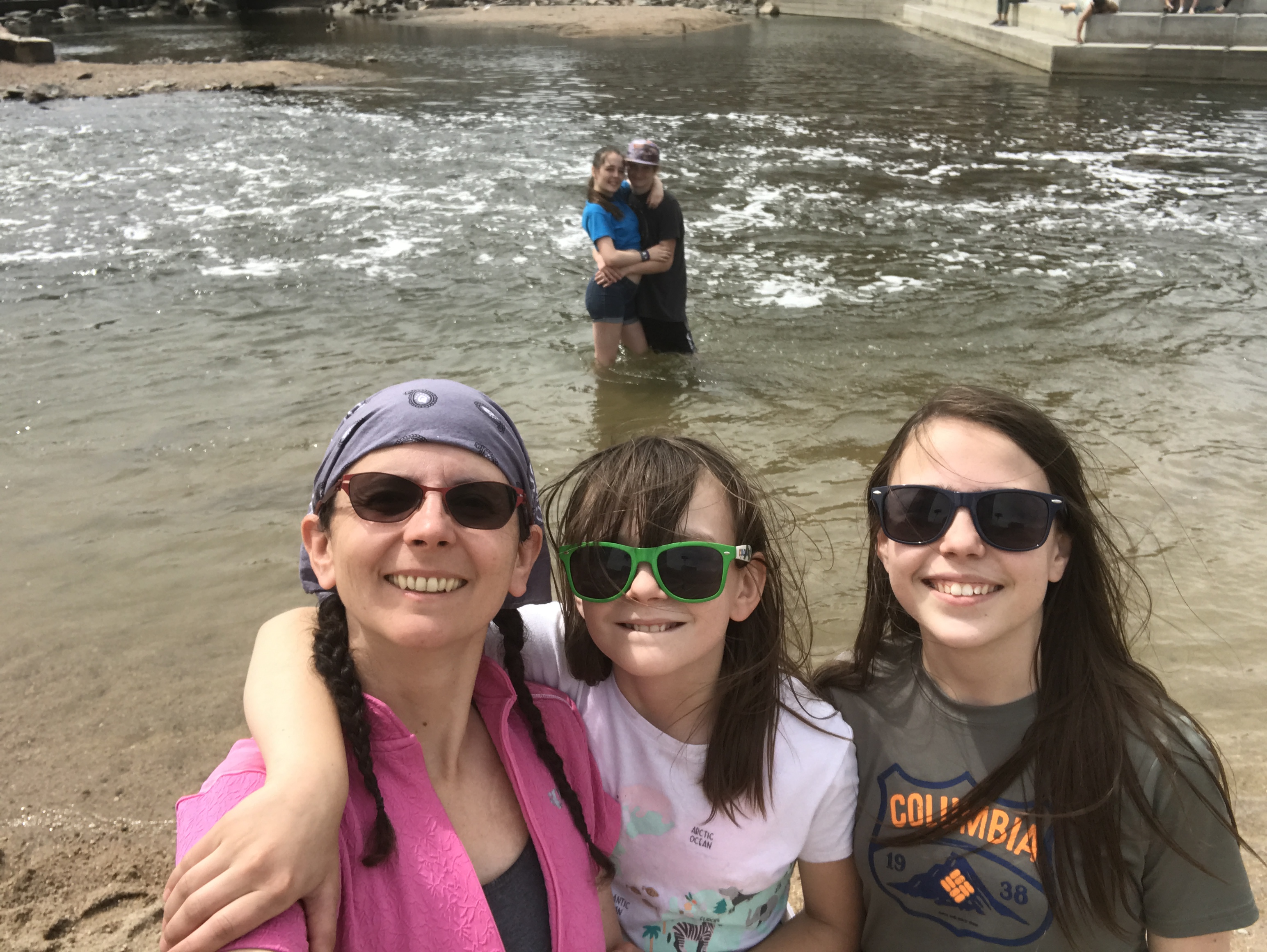
My fortieth April means half of my life has been in the warmth of this man’s arms, this man who flew alone to Tennessee to bury his father while I made a mockery of life with nachos, this man who has never done a thing but work to please the people in his life, who speaks so little but whose actions speak volumes… volumes of loving and giving.

My fortieth April has been hell. Our school district has desks twenty years old and teacher salaries to match. My husband is in a union job that will likely screw him out of one because of seniority. My oldest daughter’s first words to me on my fortieth birthday were, “Can I have my phone back?” My beloved father-in-law died. My parents boarded a plane. My school district’s open enrollment healthcare plan is $1000 a month with a $3500 deductible and $12,700 out-of-pocket maximum. We have bought and paid for six weeks in Iberia and are beginning to wonder why.
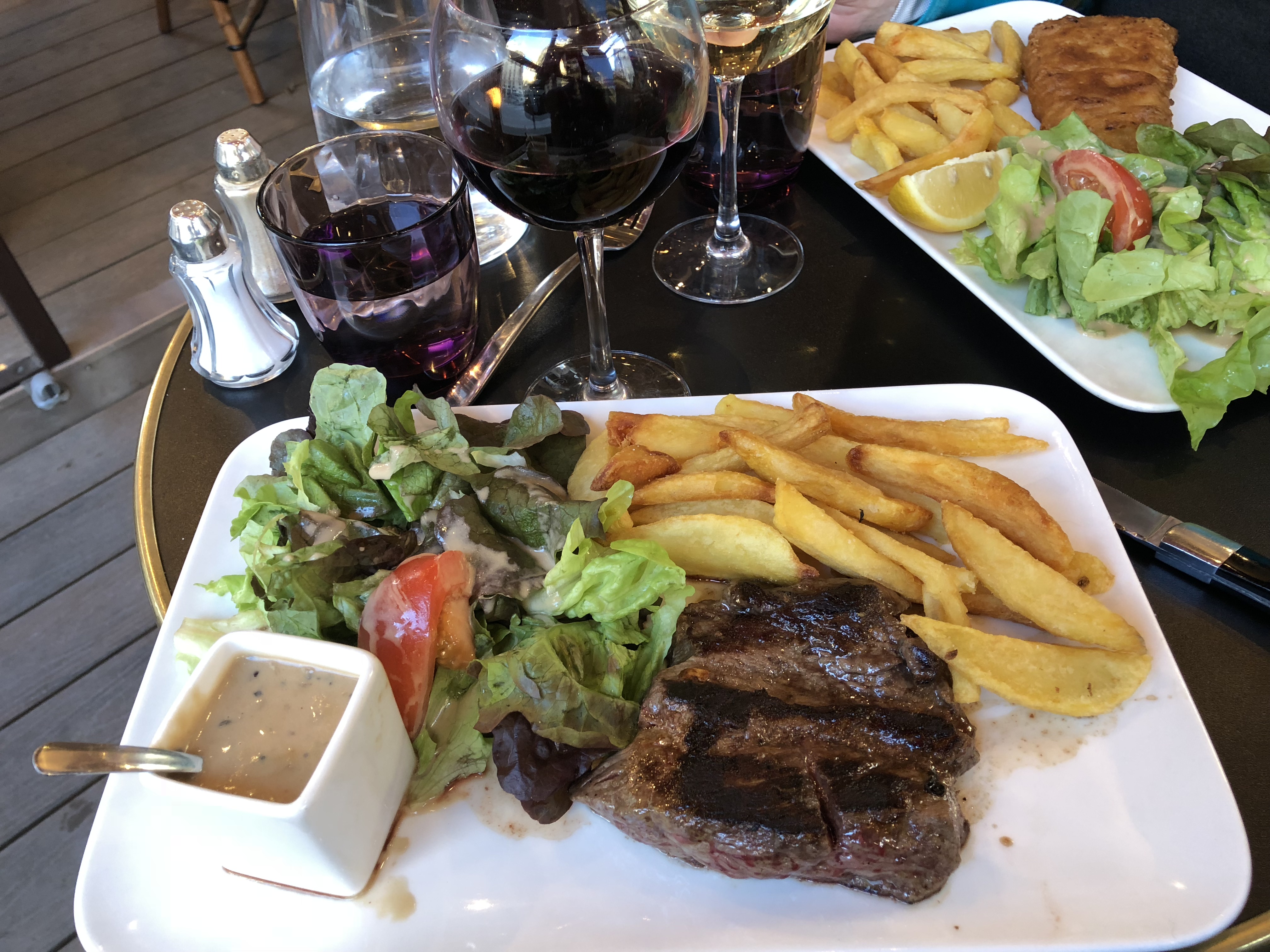
My fortieth April is these blue skies. These smiling faces. This willingness to stand up to the truth behind teachers’ vilification. These parents eating French fries in France. This beautiful set of girls we have somehow managed to raise, healthy and unscathed. This fuchsia bleeding into red shirts at Casa Bonita, making a mockery of all that is pain, all that is life.



My fortieth April comes to an end with pink flowers and red shirts. Because we’re all a little bruised after forty years on this Earth. Because the blood, sweat, and tears that go into living this life are as beautiful as the laughter, mockery, and joy.
My fortieth April is the middle of spring. And just like all the other springs that have made up my life, it is time to spring forward, time to smile, time to move on.
Because it’s April–it snows and burns a crisp on our necks within the same week–and we must learn that even the red scars of sunburn will eventually fade into the soft petals of fuchsia.
I’m thinking about Spain tonight. Not just because I’m already planning our summer road trip across the Iberian Peninsula. Not because Castellano is on the tip of my tongue–because it’s not.
I’m thinking about the garage full of trash bags that I gave to the Goodwill before we went to Spain. Old toys, books, clothes, unwanted small appliances, furniture, shoes, pillows… JUNK. About fitting our lives in five giant suitcases, five backpacks, and an airplane across the sea. About coming back to all of our items left in our house… that was no longer ours.
The piano. The maple nightstands that stood on either side of my parents’ bedroom in that custom-built two-story in upstate New York. The dining set we picked out soon after our wedding, its oak pedestal and matching chairs a testament to the solidity of our marriage. The most comfortable recliners a body could rest in.
Our beds. Our patio set. Our entertainment center. Every last comfort, joy… empty from our rental house upon our return.
How we begged and borrowed items to make a home once we returned from Spain. How we spent the “advance” of my first salary to buy double-over-double bunk beds so that our girls might share a room.
How, when we went there, with everything packed in luggage, we had to adapt to uncomfortable furniture, to a mattress on the floor for a bed, to no closets, no bath, no extra bathroom, no dryer, no dishwasher, no place to fit our lives into.
And how our girls… adapted. How they made friends, made paper cutouts to decorate the walls, painted ceramic eggs from the “Chino” to hang on the tiny plastic Christmas tree we found in the wardrobe, sat next to one of the space heaters during rainy winter months when the wind whipped through the frail windows, learned how to wash dishes and wait hours for clothes to dry and speak Castellano more fluently than me by year’s end.
And the aftereffects of Spain, of moving out… and moving back. Of trying to pick up the pieces of the life we’d left, trying to reposition ourselves amongst our friends, our family, our view of the world, trying new careers and new colleagues and a new house that was ours… and wasn’t ours.
That is why. Spain is why, five years later, we can make space in our two-bathroom, five-bedroom home for six other people. Why when I drove a couple miles today to pay a neighbor $80 for an extra refrigerator, her jaw dropped when I said what it was for, her “For Sale” sign in the yard of a house just like mine because she, her husband and two boys “just need more space.” Why, after sharing one bedroom for a year and one bathroom and one suitcase full of clothes, my girls could move things over, purge, split their beds, their time, their Americanness, to make room for a whole other family in our home.
I may not have learned Castellano. I may not have r’s rolling off of my tongue. My girls may not remember more than what a croqueta is.
But they know what it means to make a sacrifice. To give up a piece of themselves. To move. To transition. To lose and gain friends. To try new foods and new schools and new sleeping arrangements.
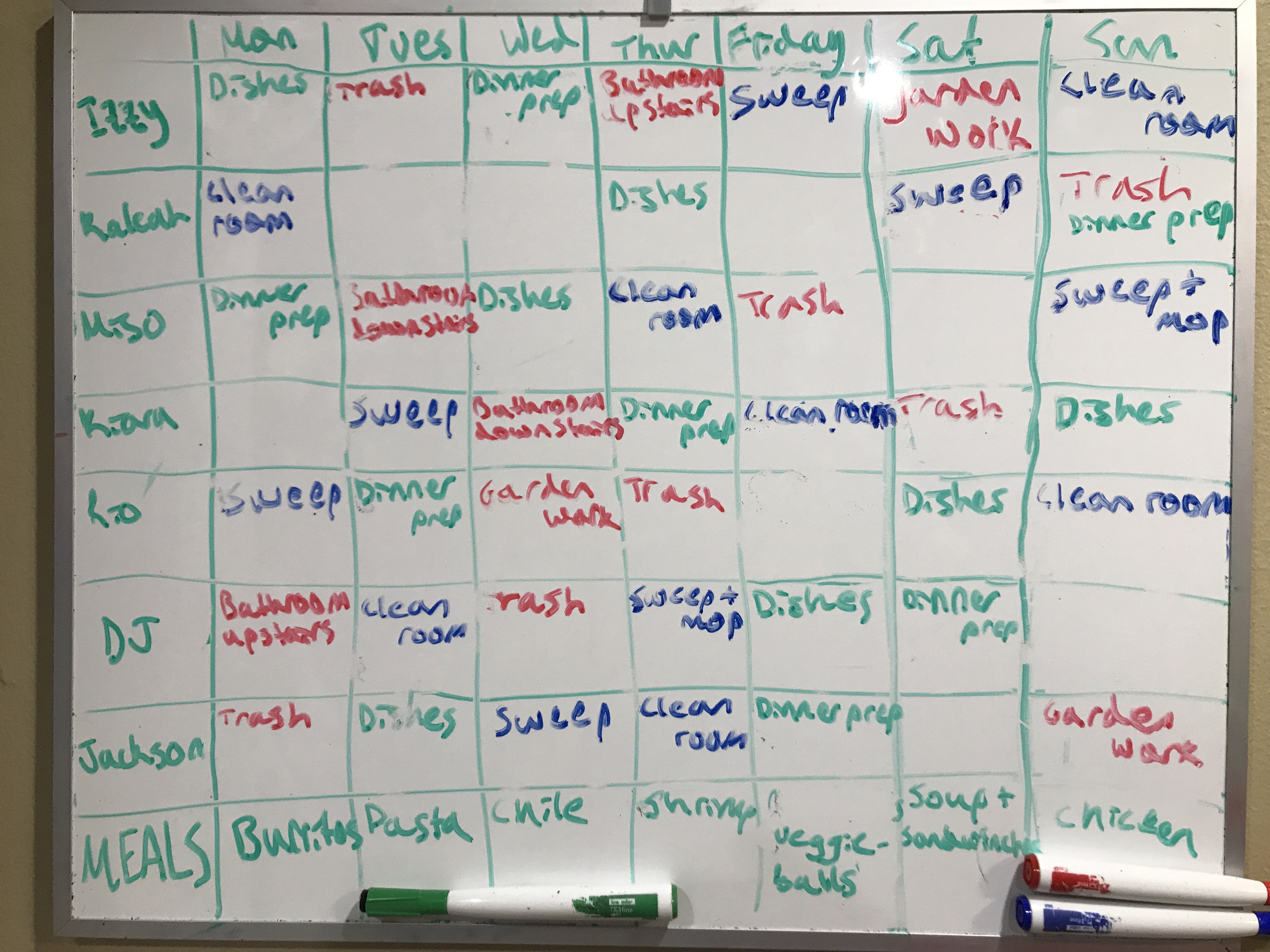
That is why this revised chore chart, designed by Mythili and with input from six other voices, is my picture for today.
There is beauty in those three Expo colors. Compromise. Adjustment. Initiative.
Adaptability. With a little bit of gumption and Castellano on the side, just for good measure.
From age five, they were in love. It was meet-the-teacher night, and school hadn’t even started yet. We meandered through the hallways and classrooms of the school we’d chosen, hoping for Spanish immersion and IB education. They were the two oldest daughters of three siblings, and they chatted, did cartwheels, and were holding hands before the night was over.
Her tall and slender, long-lashed mother quietly commented, “You see? They’re already best friends.”
And so, nine years later, when I texted my daughter to make room in her drawers and space in her bed for a loooong sleepover, her only, immediate, obvious response was, “REALLY!!!!!! OMG THIS IS AMAZING!!!!”
Because when you’re in love, when you have a connection, it does not matter if six extra people are going to live in a house built for… five?
Because when you make a fast friend at age five, when emotions are so visceral and honest, it’s probably something worth cherishing.
Because when you have a bonus-five-bedroom dream house, why not share the dream?
Because if the situation were reversed, wouldn’t we all, minute by minute, hand in hand, reach out and make the world just slightly better, one soul, one family at a time?
Because what makes a family?
Girl Scouts. Trials and tribulations. Cookie selling. Lost money. Lost causes. Frustrations. And so much fun you would laugh until you nearly peed your pants, all in the snow on a bitter cold January night. Bridging ceremonies, brownies, a baby brother in tow on camping trips.
Backyard barbecues. Eating meat or not eating it. Sharing our sad stories. Telling the truths we were never able to tell in the schoolyard, at our jobs, in our “real lives,” but that slid so easily from our mouths in the comfort of our back patio.
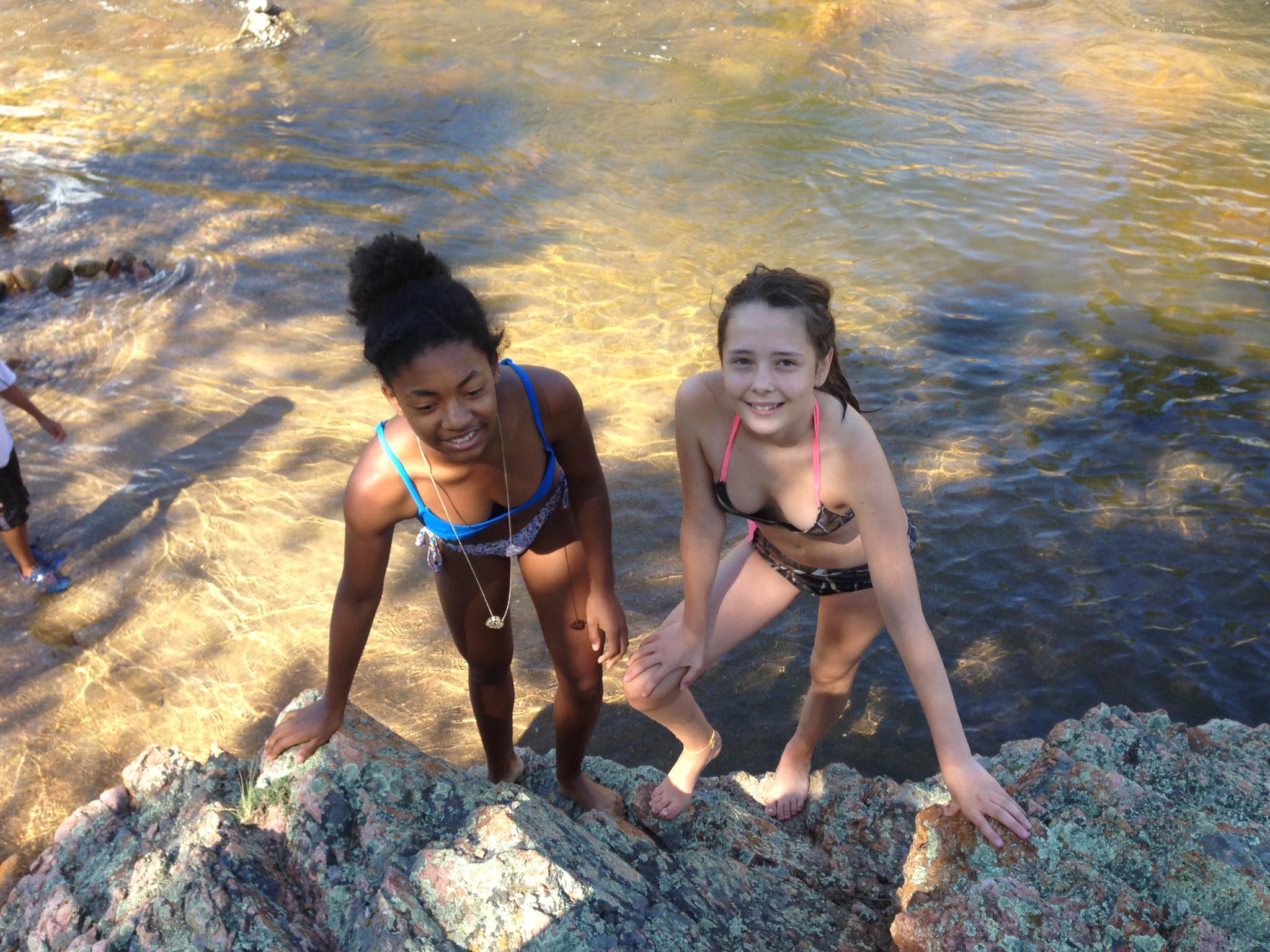
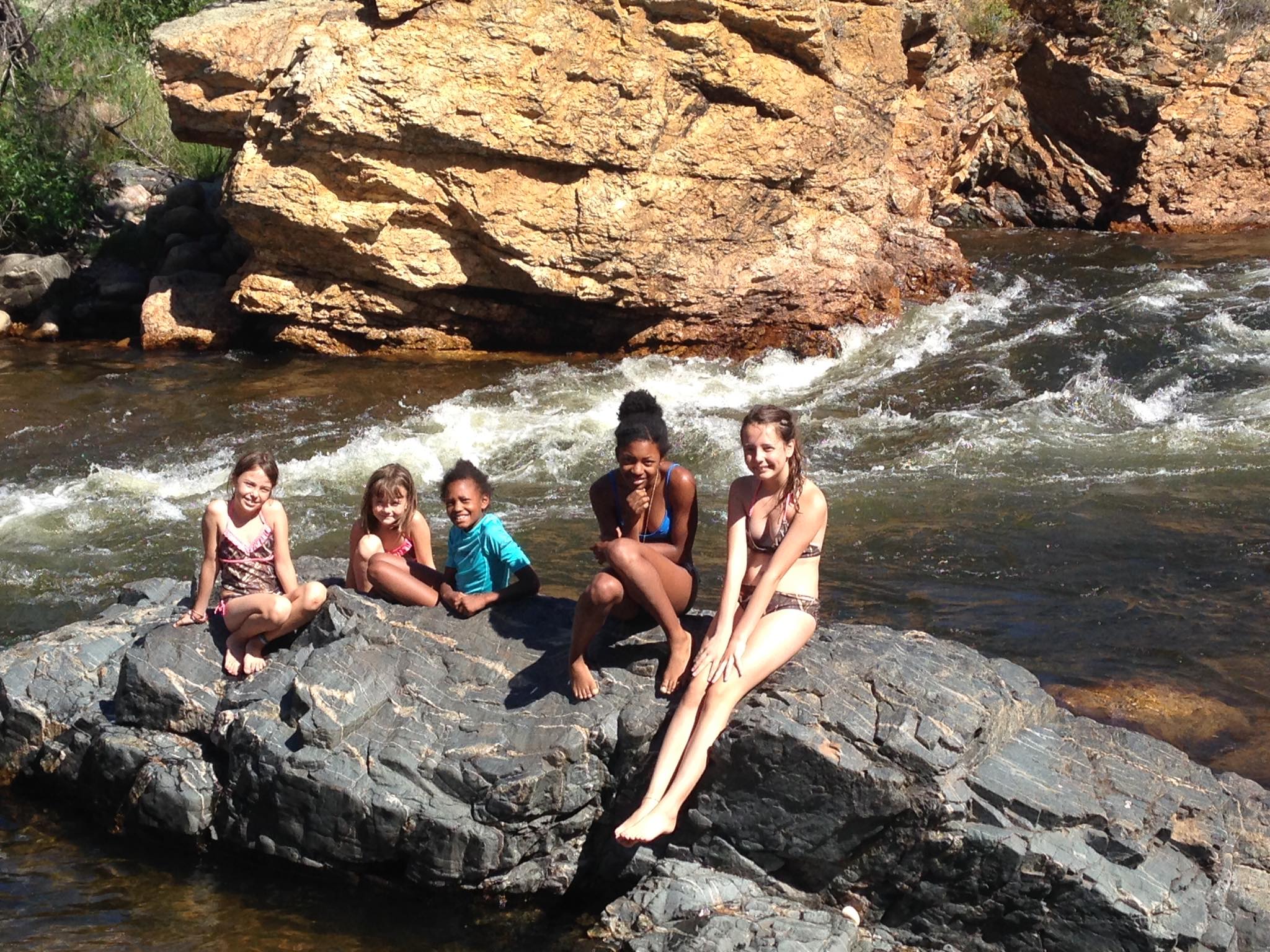
Camping trips. Sharing pies and drinks and a bite of an ice-cold river. And again, laughing until we cried under a hazy moon and starlit sky.
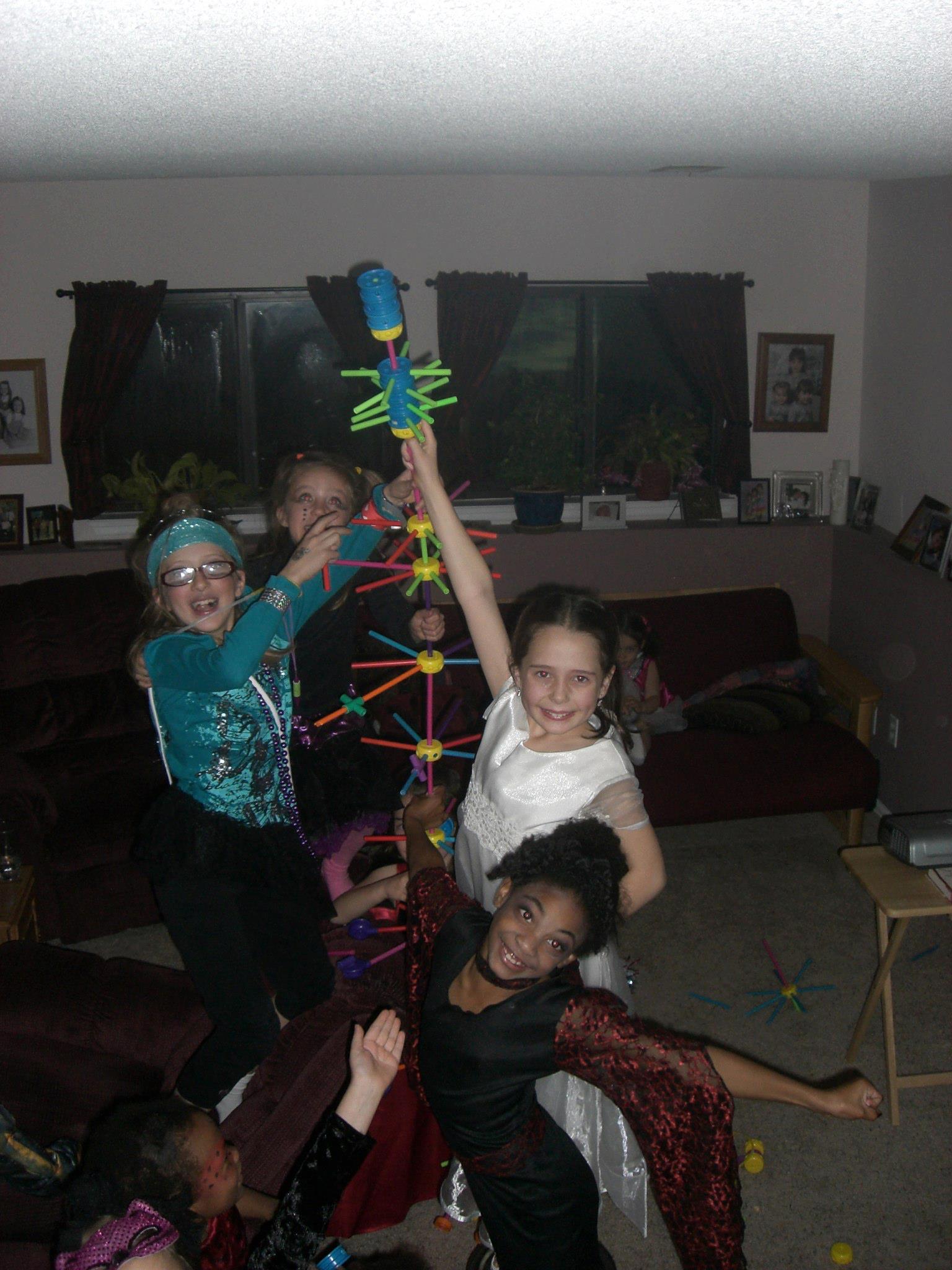
Sleepovers. Girls screaming into the night, little brothers trying to keep up and eating two giant waffles before ten a.m., before they were even ten years old.
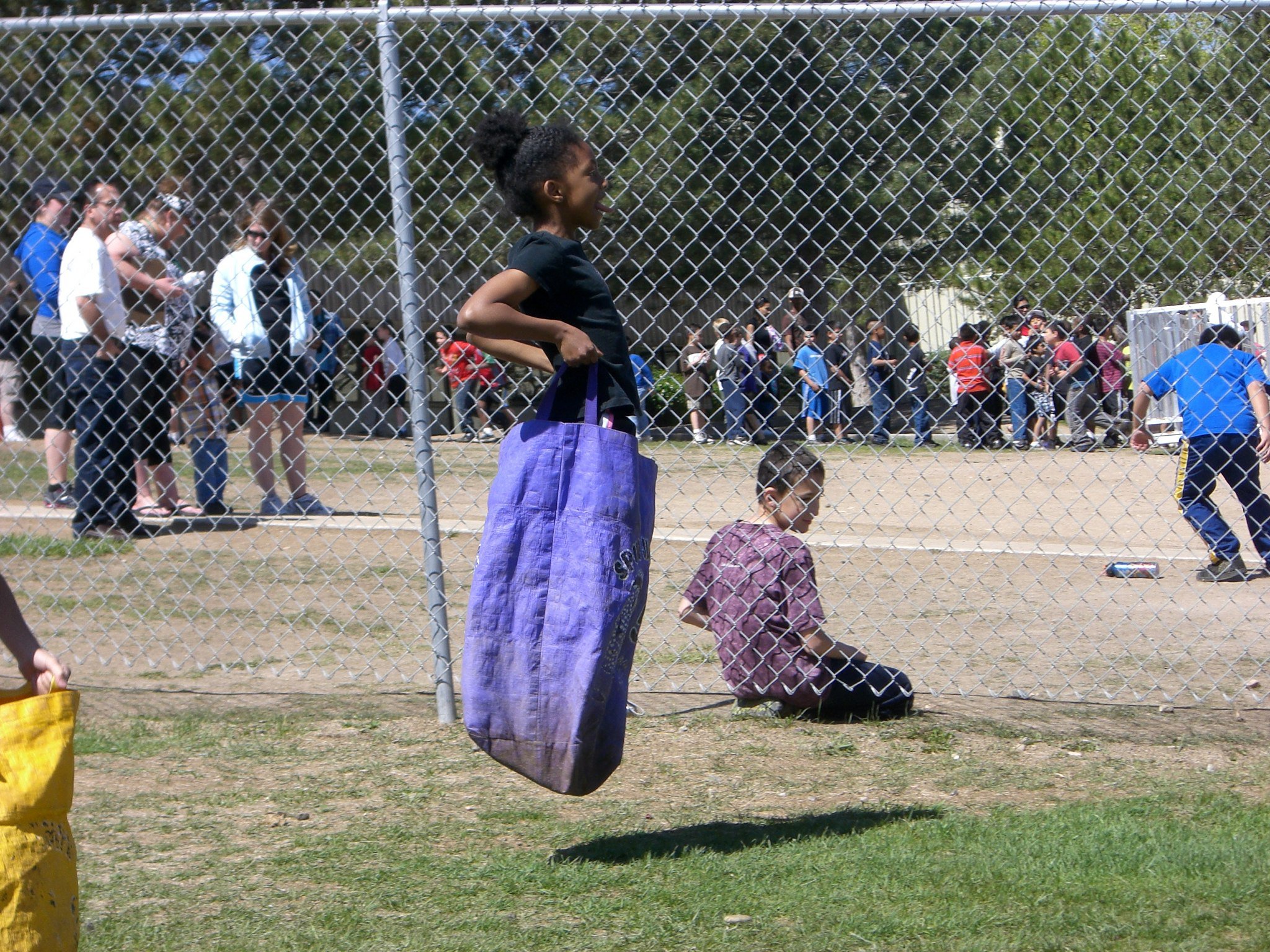
School. The daily ins and outs, friends come and gone, field days and jumping into the sky as if you were jumping right up into heaven. Teachers we loved and hated and commiserated. Our shared experience.
Family parties. Little girls in pretty dresses pretending to drink tea. Everyone, kids and parents, gathering household items to make a Halloween-happy costume. Parents gathering in the kitchen to catch the scene and capture a moment of each other’s joy, each other’s sadness. The connection found in youth, in young parenthood, in the heavy task of raising young people to become wise people.
Because… from the age of five, they were in love. Look how they’ve grown. Look at the young women they have become. Look at the family they have made for themselves.
That is why we can add six people to our five-person house. Because from age five, these girls have carried us into the home we call home. It began with a smile, a cartwheel, a hug.
That, and rearranging some beds, is about all it takes.