

Thank You (In Every Language)
There aren’t enough words, in English or Dari, Pashto, Spanish, Arabic, Tigrinya, Romanian, Swahili, Kinyarwanda, or the twenty-three languages of Guatemala, to express my gratitude today.
Today was EXHAUSTING. It started with the first time this semester that I drove my car to work. Yes, I have been walking in the snow and ice that has stolen Denver’s mild winter this season. Yes, I have ridden my bike all of seven times. No, I haven’t driven my gas-guzzling car even once.
Until today.
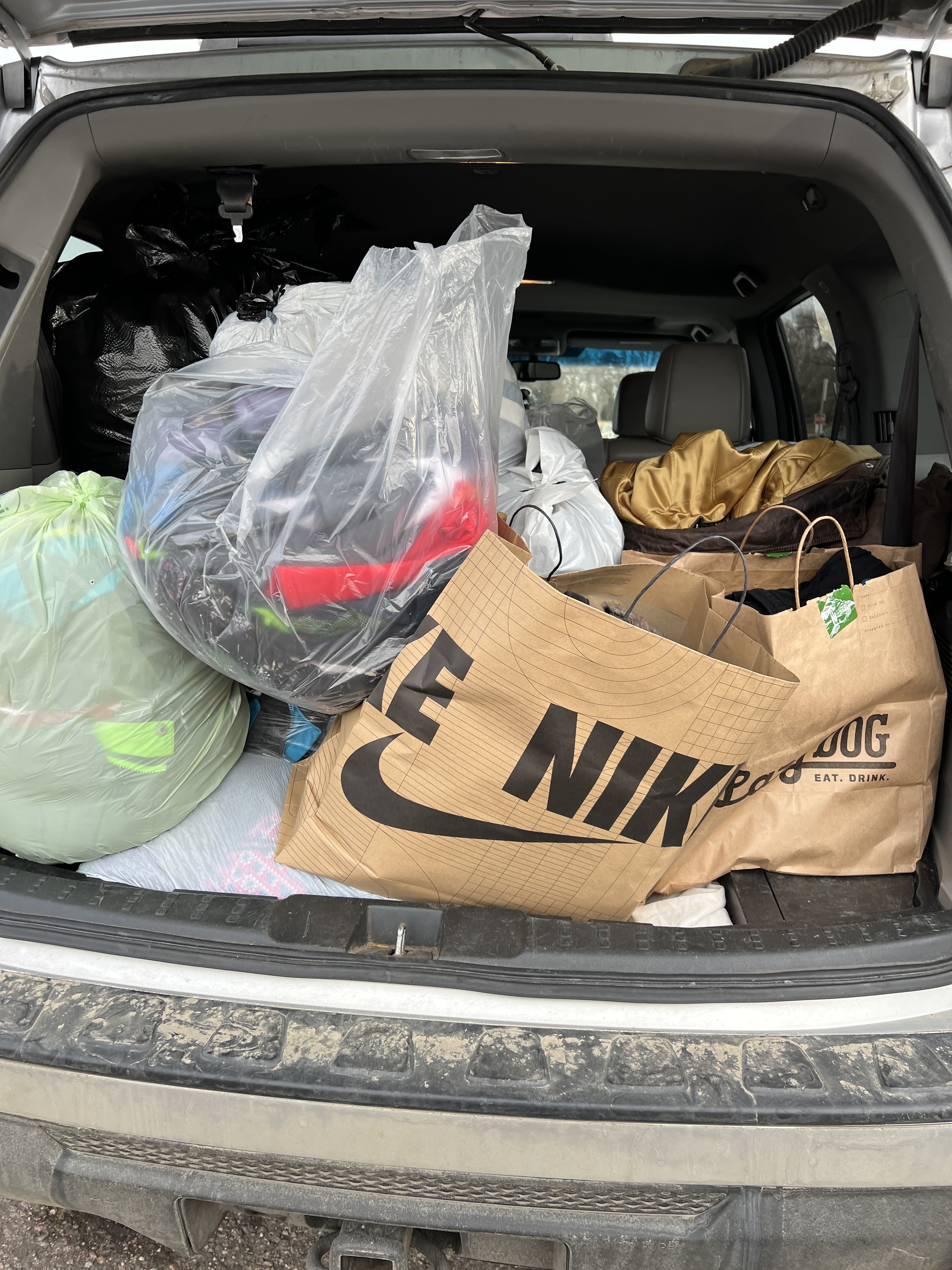
It was supposed to snow today (again), so it was a good day to drive. My eight-passenger car was filled to the brim with clothes you gave to us.
My colleague, my two daughters, and several of our students marched back and forth from the long sidewalk of our 100-year-old school to the parking lot. Back and forth, breaking our backs, to bring this to them. My colleague and I spent the entirety of our ninety-minute planning period sifting through and organizing the clothes, planning a lesson that should have happened three months, three years back… but there is so much to teach them in the time they put their faces in front of us. From the only-in-English auxiliary verb ‘do/does’ that exists in nearly every question and EVERY negative answer to how to navigate our complex transportation system to how to cope with the fact that they witnessed a pregnant woman murdered in front of them in the Kabul airport and don’t know how to calm their nerves for three hours with me every day.
But they find a way.
We find a way.
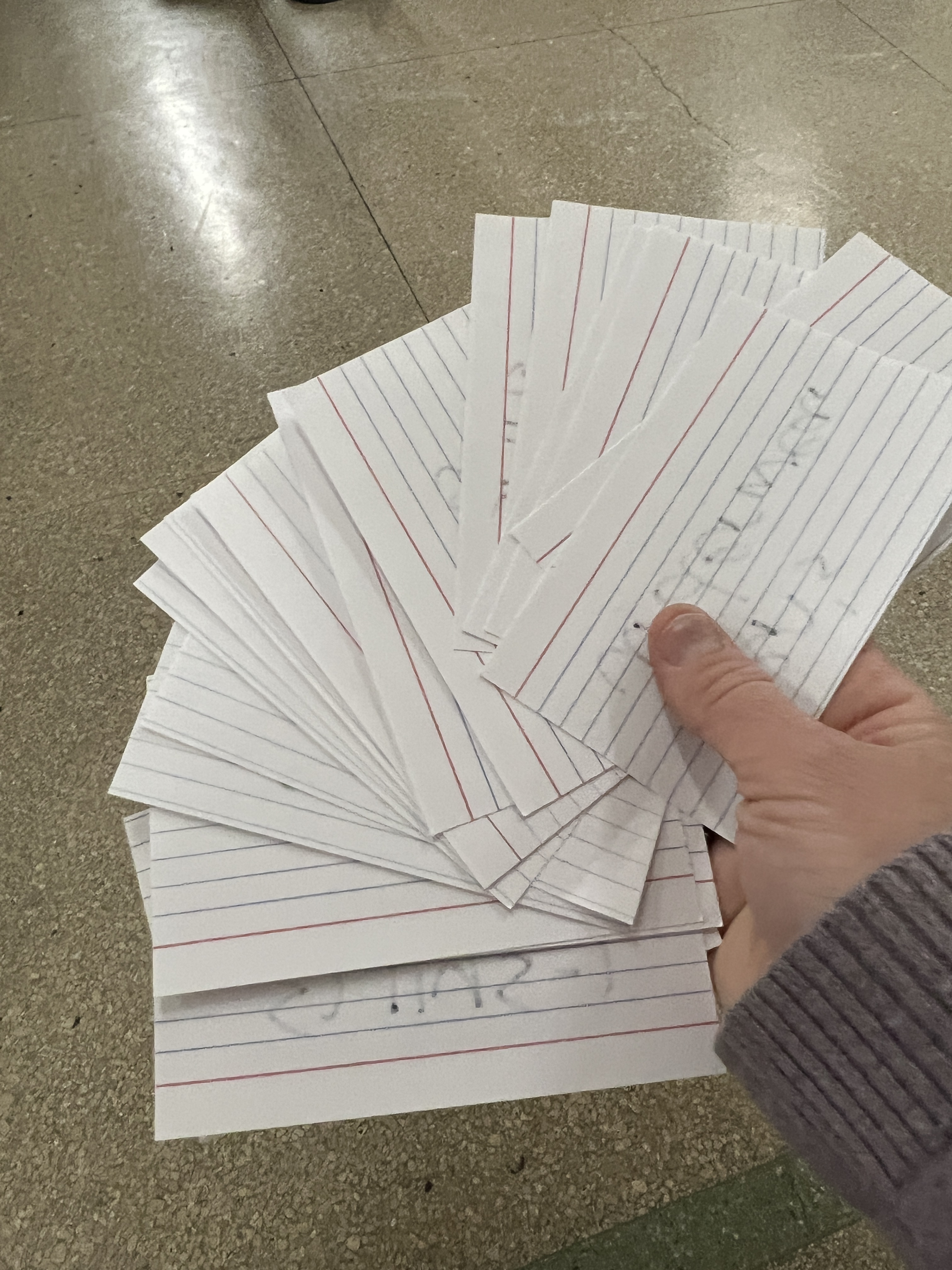
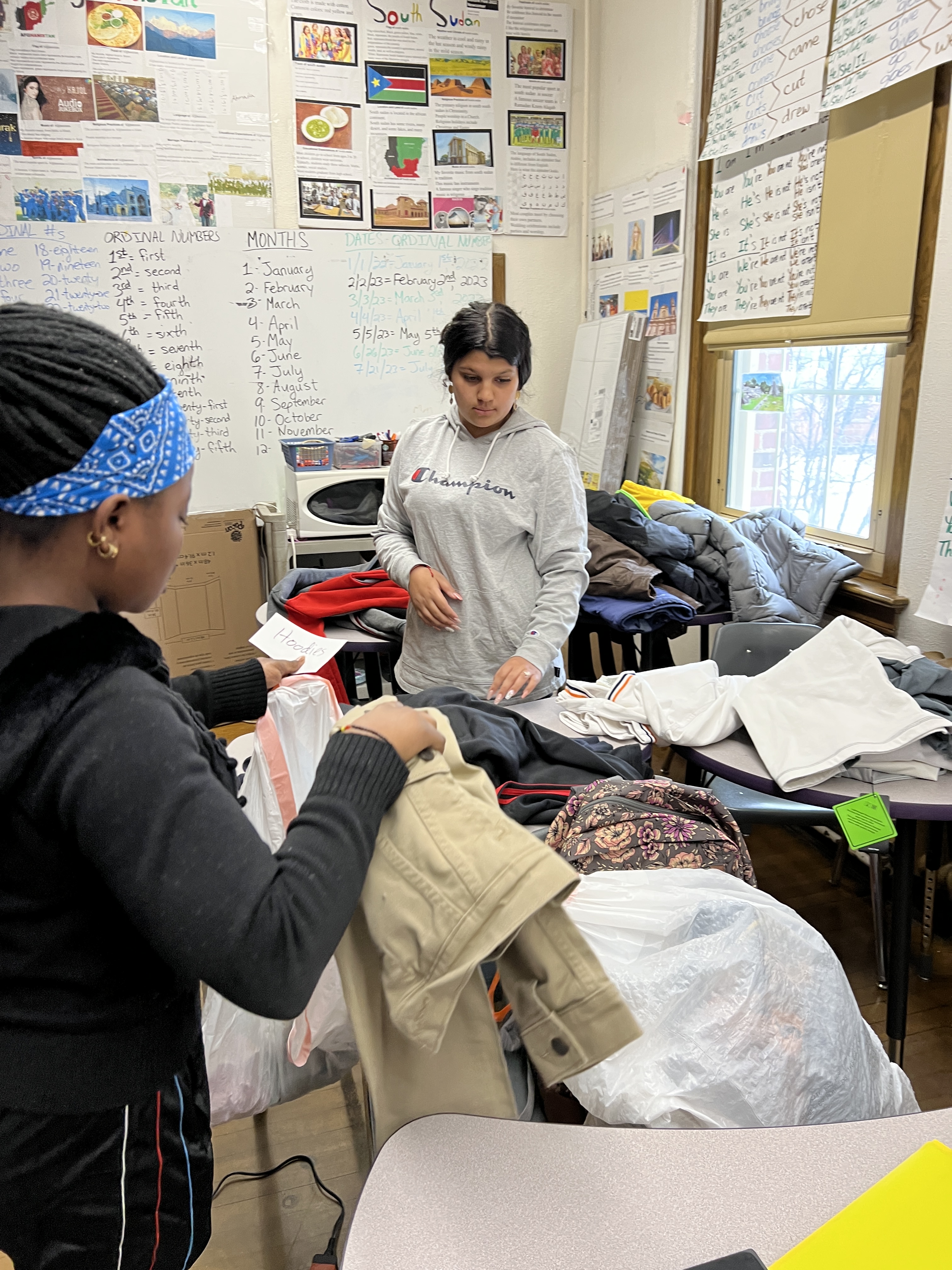
Today’s way was labeling the piles with notecards and making copies of said cards for these students to pick up as they walked in the door.
“Let’s continue to practice with present-tense verbs. What clothing do you need? When I say you, I mean your whole family. For example, you could answer, ‘I need exercise shirts’ or, ‘My brother needs hoodies.'(always an emphasis on that final ‘s’)”
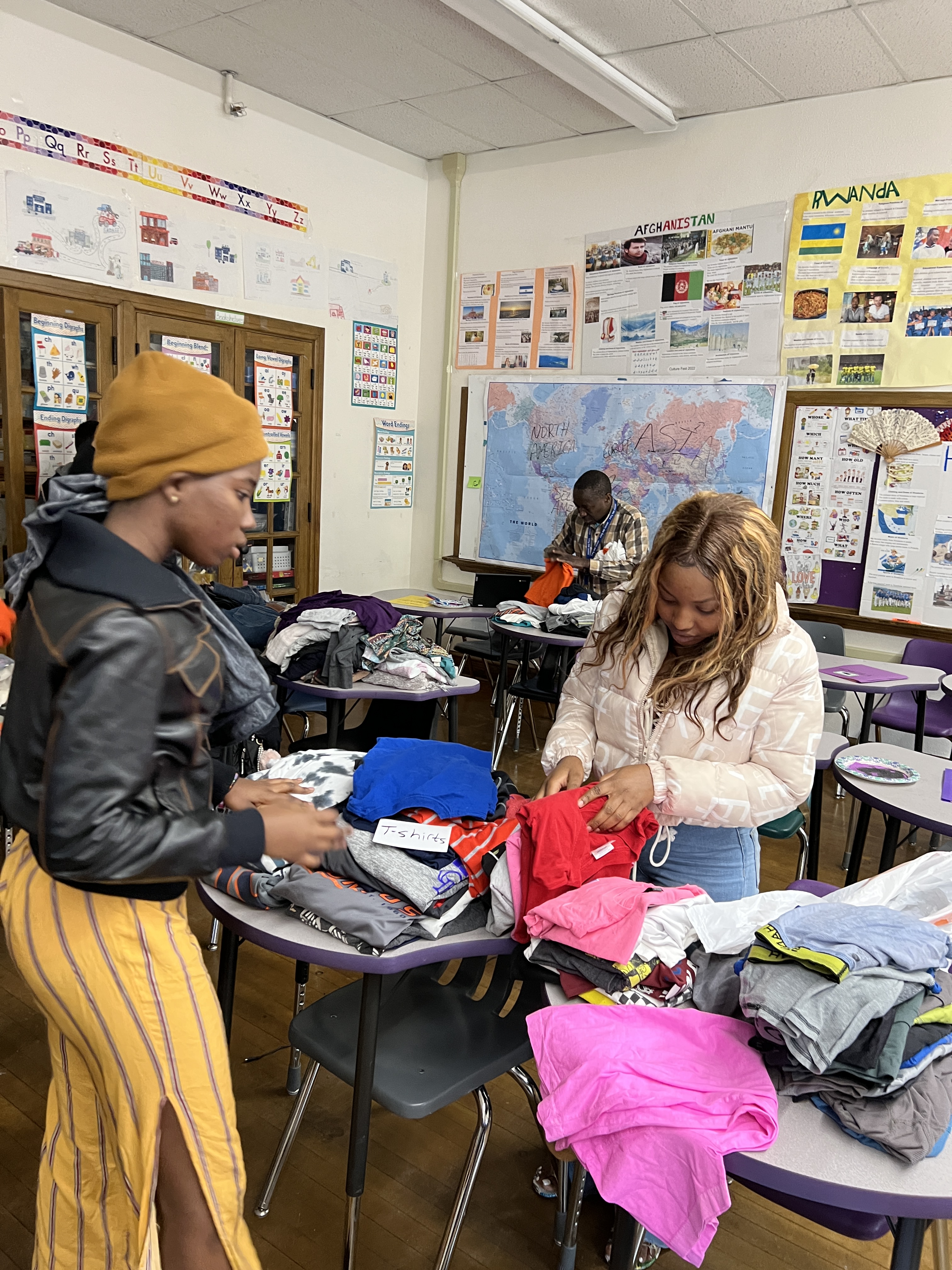
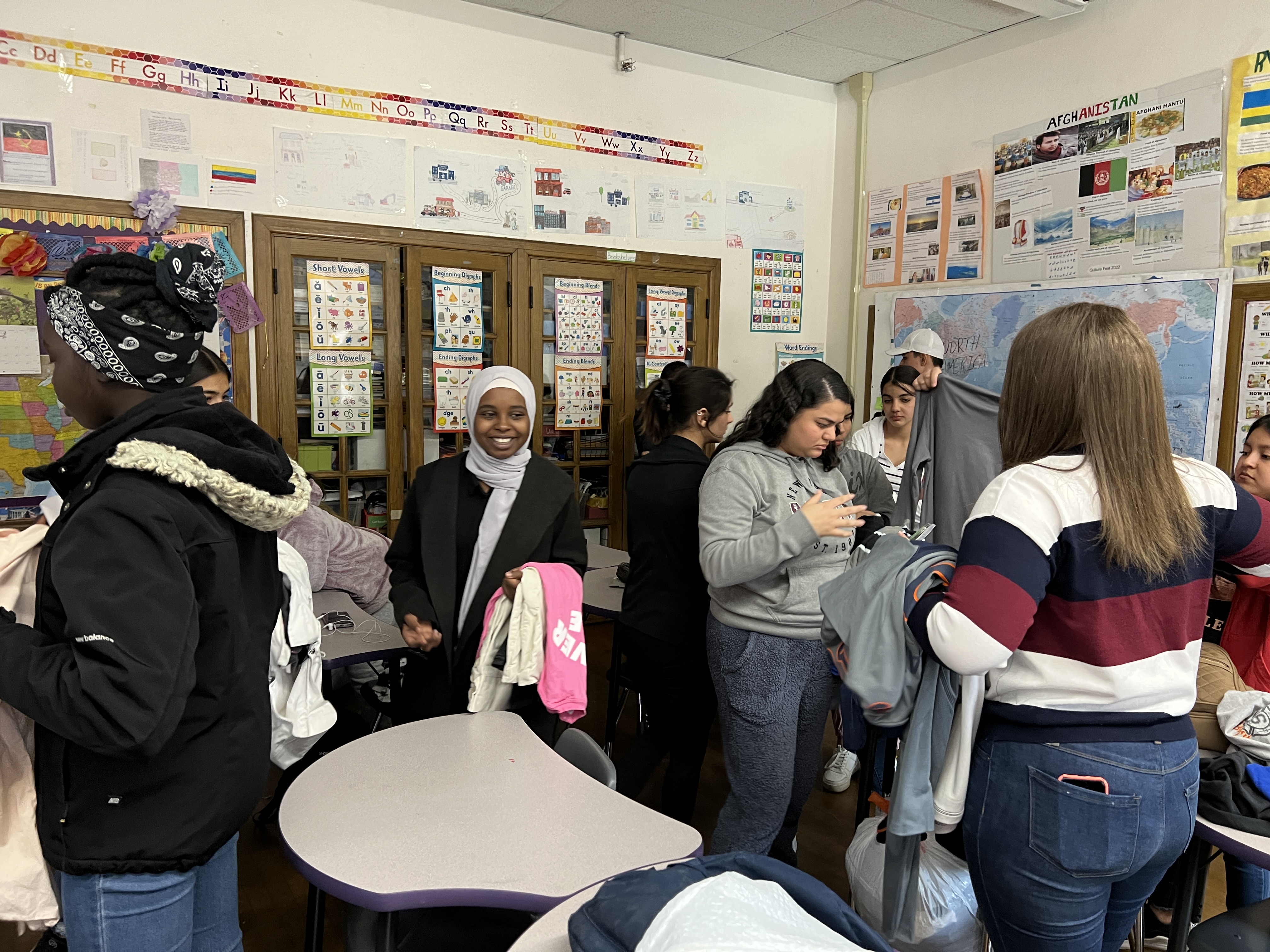
They held up their cards. They looked around the room at the piles of clothes that surrounded them. They asked their paraprofessional interpreters what the words meant. What this day meant. What craziness, what generous craziness, lay before them in perfect piles.
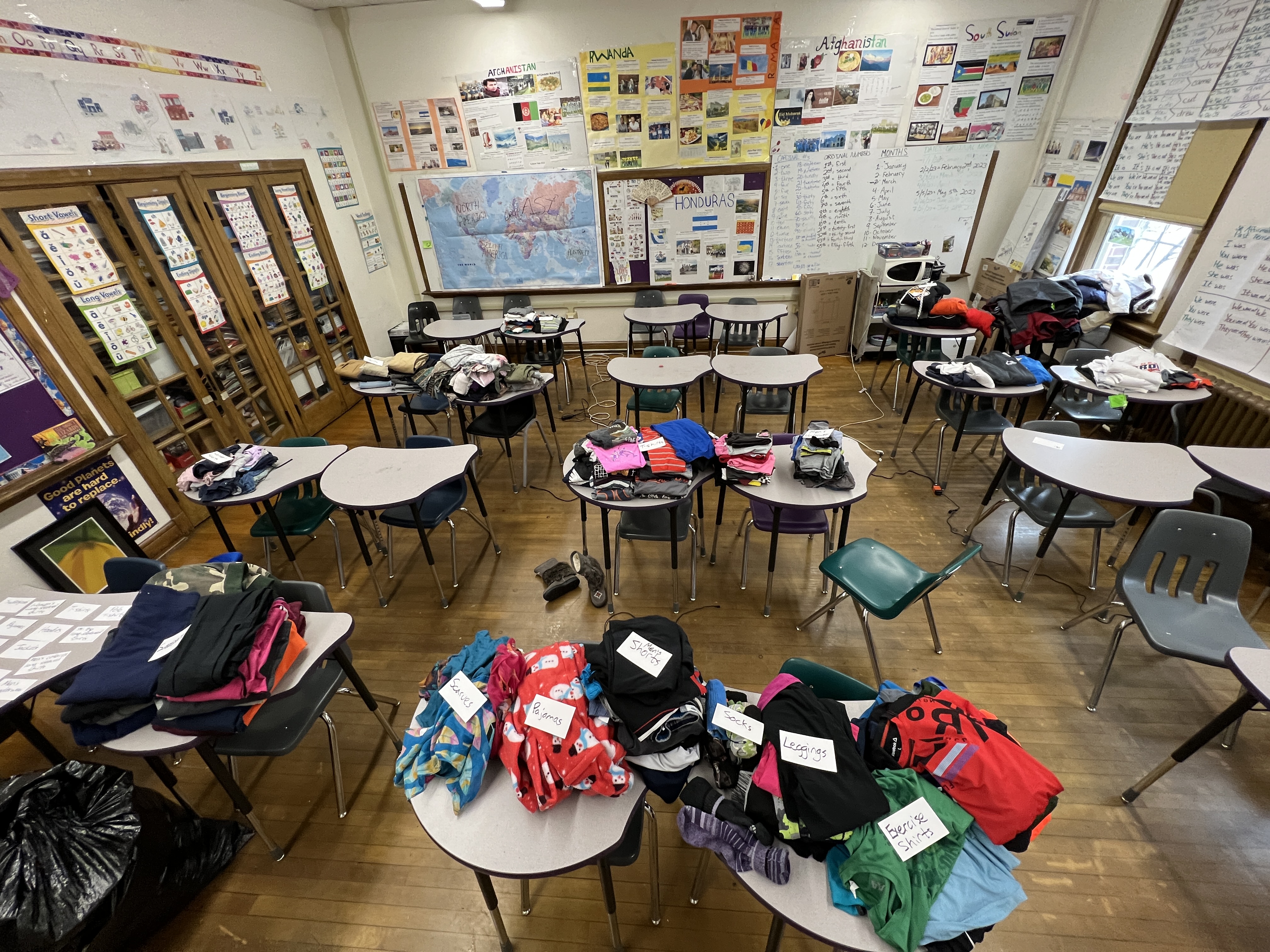
And they recited their sentences. They practiced their English. They learned what a hoodie was. The English word for scarf. For long sleeves. For T-shirts. For little brother (there was an entire bag of clothes for little brothers; another for little sisters).
I met you twenty years ago, my friend, in my first nightmare year of teaching. When it was so hard and they crammed thirty-eight of these kids in my room and I didn’t know if I could handle it, and you stayed at that high school way longer than me (I gave in to pregnancy rather than facing it), but ultimately you left the profession. Yet I know your heart is still there. Your heart is still here with me in this classroom of Newcomers.
You gave me a lesson today, you and your friends and your book club and your kind-heartedness.
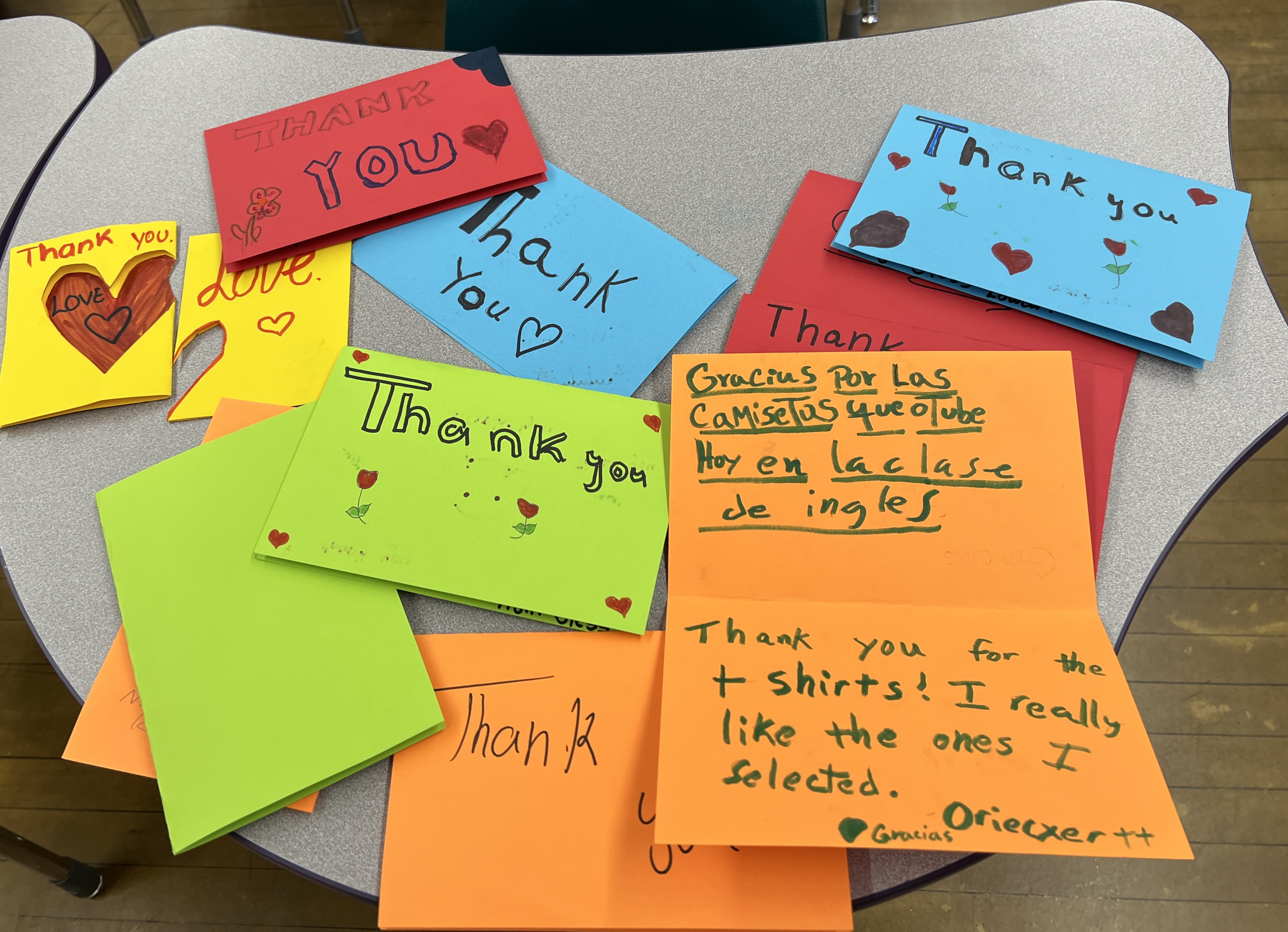
You gave us a lesson today: in English vocabulary–everything from learning the names of clothes to how to write a Thank-you card (“Miss, what is this ‘Dear’ meaning at the beginning?”) to what it is to be human.
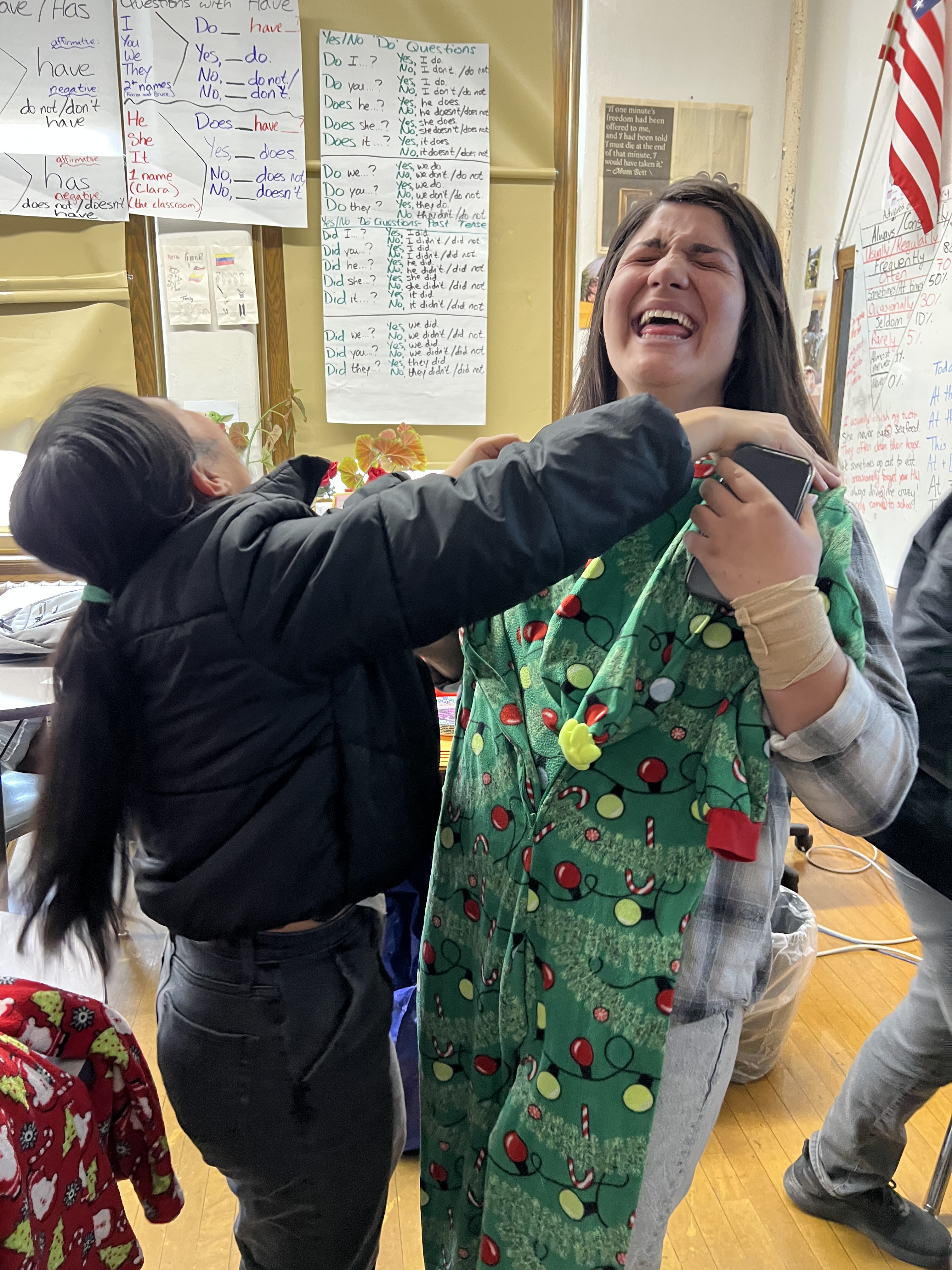
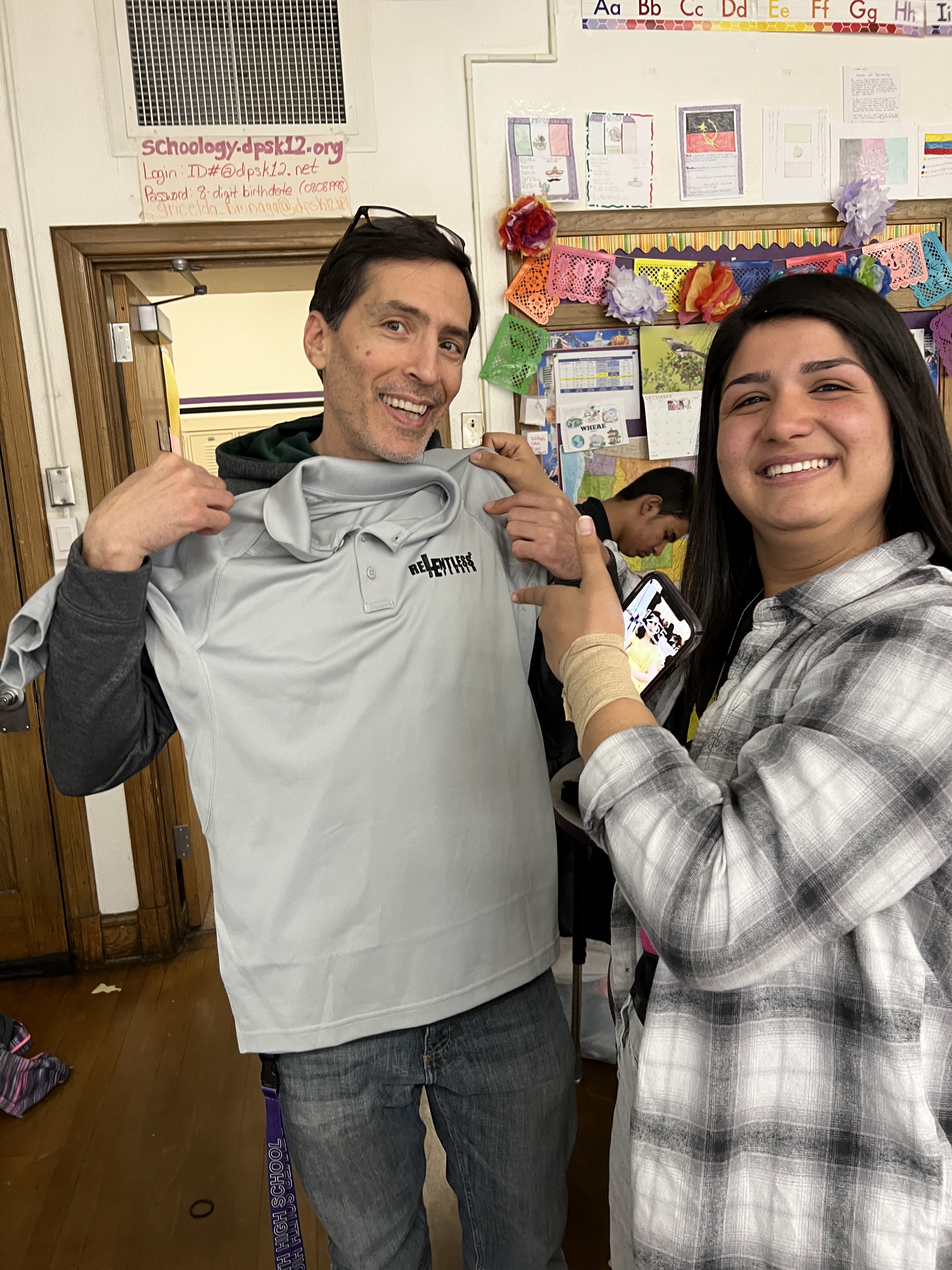
And it’s in all their faces. Their joy. Their gratitude, their hope in an America that you have given to them today.
Thank you. Gracias. Mulțumesc. شكرًا لك. له تاسو مننه. متشکرم. የቕንየለይ. Asante. Murakoze. Thank you.












 Step Write Up