rough waters ahead
but my blue sky school background
will keep us afloat

rough waters ahead
but my blue sky school background
will keep us afloat
let’s not forget art
whether painted by god’s hands
or written by us
whether found in words
from teens’ broken-hearted hugs
on our Challenge Day
or in the small space
when the night meets the morning —
let’s not forget art
Red hair, green eyes, tall and sure of himself, he peeks into my room, searching for a familiar face after lunch. I have seen this look before, as my students often seek their native-language counterparts.
“Who are you looking for?” I ask, the after-lunch crowds raucously meandering around our conversation.
“I am looking for you. I am a new student.” His accent is smooth and meticulous, genteel and articulate.
“Oh, OK. What’s your name?”
“Arvin.”
“Where are you from?”
“Iran.”
“Iran? … And… how did you get here??” But I have to look away because the tears are already in my eyes.
“I boarded the plane on Friday morning. I was in the last group of Iranians to come.”
I want to continue the conversation, but I can’t. I can’t because the tears will fall. I can’t because I have to teach for the next ninety minutes. I can’t because every waking moment of my life since this election, since this inauguration, have become a cycle of servitude. Of serving this need or the next, of wishing for this and receiving that, of hoping for the best and seeing the worst.
Instead I tell him where to sit and hand him a hard copy of I Am Malala. We will listen to the lilting Pakistani accent from Audible today as we continue to highlight human rights violations from the Universal Declaration of Human Rights (we will highlight thirteen incidents in three chapters; we will connect media suppression and fascism and women’s rights to an education too closely to our lives; we will hear Fazlullah’s rants with an American accent).
My weekly volunteer returns from the library after a time with a group of students. She meets with my Iranian student to explain to him his role in the group as they create posters connecting Malala’s experiences to the UDHR. He fits in well and tells the group he cannot draw very efficiently, so can he please have the role of interpreting the quotation from the chapter and connecting it to the UDHR document?
He has been here for five days. He got in on the LAST PLANE.
After class, my retired-white-woman volunteer asks, “If he just got here from Iran, how come he can speak English?”
And that is when I decide.
I have to start here. Right in this moment. With this woman who drives one mile from her upscale mansion in Cherry Creek North to “make a difference.”
“Pretty much all of the students who come here learned English before they came. Usually only the refugees have interrupted schooling. But most countries start teaching English when the kids are in kindergarten.”
I swear her jaw drops ten inches. She wants to say something, but she doesn’t have the words to describe her ignorance.
“Oh…”
And now you know, I want to say. But I don’t. I don’t cry when I want to, because I have to be strong for them. I don’t tell her that Trump’s America is not my America, not Arvin’s America. I don’t tell her that the combination of students in this room represents the values of our country better than most Americans I know. That a red-headed Iranian entering my classroom five days past an executive order banning Muslims is as beautiful to me as Ziauddin’s tears in the New York Times documentary as he sees Swat for the first time in three months (which we watch at the end of class).
Instead, I say, “Thank you for your help. I’ll see you next Wednesday.”
And that is all I can do to resist.
All for today.
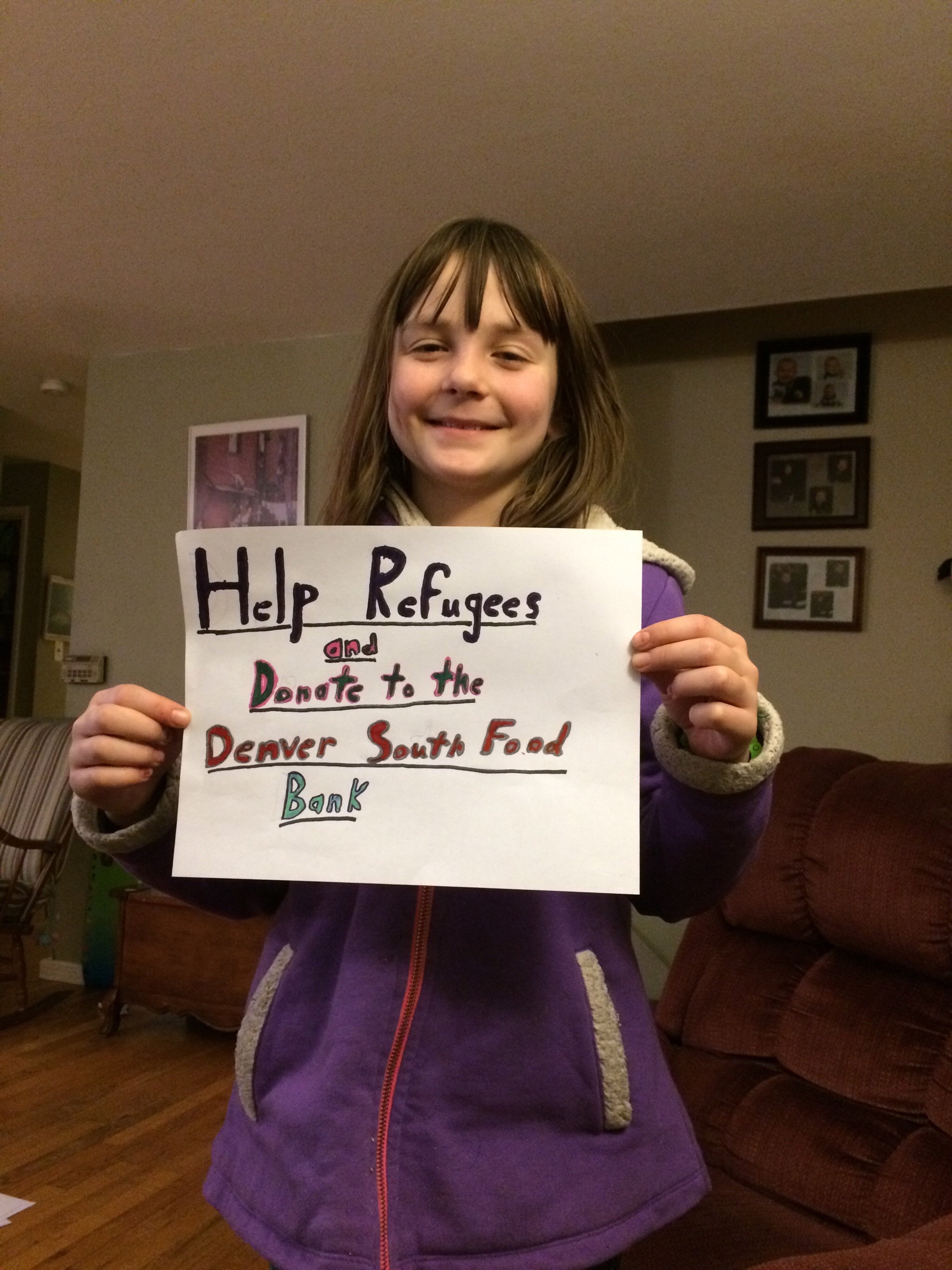
just a taste of hope
sweeter than a Samoa
my small activist
For today, I met with 27 students from Somalia, Sudan, Iraq, and Iran to tell them that they probably shouldn’t leave the country or they might not be readmitted.
“Thank you, Ms., thank you for telling me.” Relief as transparent as grief in their eyes.
For today, first Trump said this about the Holocaust: “In the name of the perished, I pledge to do everything in my power throughout my Presidency, and my life, to ensure that the forces of evil never again defeat the powers of good. Together, we will make love and tolerance prevalent throughout the world.”
THEN he said this as he signed the executive order banning refugees from Muslim countries: “We don’t want them here.”
For today, I told my colleagues in our district-mandated common planning, after twenty-seven minutes of discussing Socratic seminars, student placements, and teaching methodology, “Please let your students know about the recommendation from many aids groups and human rights lawyers: students and their families should not leave the country.”
For today, the ONE DAY that a district minion came to “observe,” his title Data Culture Specialist, not a day older than twenty-five and only experience in a Teach for America charter school network, writes: “Strength: The team was considering how current events impact student lives in a meaningful way (Executive Actions). They are team most impacted by these events as they have the most ELA/Refugee students.
Next Step: Continue to push the conversation to be about instruction or student learning/outcomes.” (n.a. Source unknown)
For today, I want to push the conversation: “Do you think my INSTRUCTION is more IMPORTANT than my STUDENTS’ LIVES?
For today: Student learning outcomes? Do you think they will LEARN ANYTHING if they are deported?
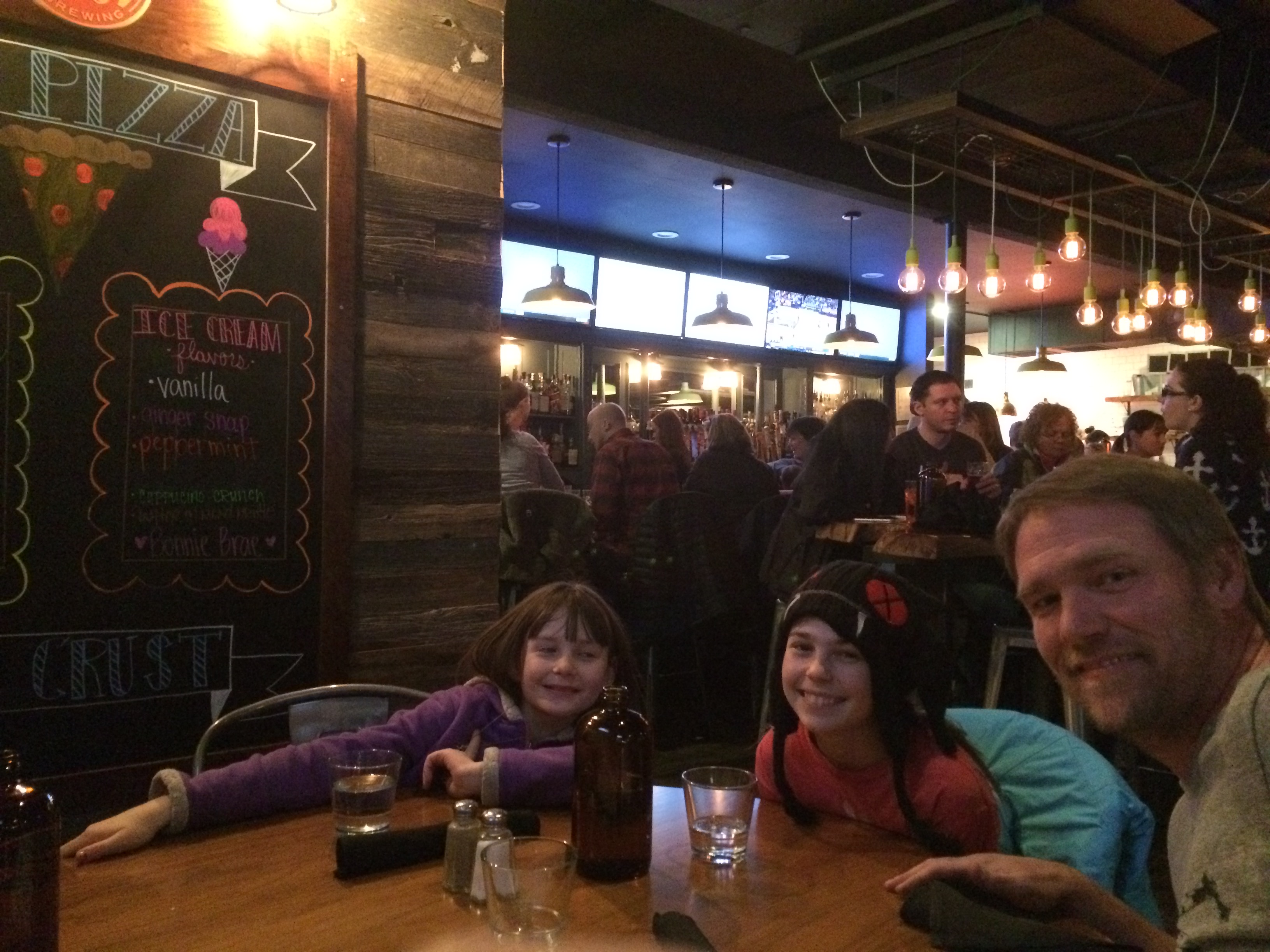
For today: I share all of this at dinner in the too-crowded local pub. My husband, my daughters, ages twelve and ten.
For today: My ten-year-old replies, “Mama… he must have been a Republican.”
For today: One. Small. Win.
Wednesdays have turned into a ritual for Riona and I, as the older two get a ride home from the carpool and she has joined in with her expertise at helping me go grocery shopping (if expertise means begging me for Cheez-its, Naked juice, and blueberries…).
On this Wednesday, five days into Trumpocracy, the weight of it all is heavier than ever before. The two stores, the lines of people at guest services while I wait to buy bus passes, the shuffling of semi-broken carts, the weaving in and out of crammed-too-full aisles filled with Valentine’s candy and magazines and gift cards and everything, it seems, except the food I need to feed my family.
The knowledge that I carry with me now, of stripped healthcare, border wall building, claims of voter fraud, Muslim refugee bans, women’s healthcare denials, mortgage fees reinstated… It makes even the mundane tasks of finding the right brand of almond milk, of selecting a new variety of potatoes, of giving in to the Cheez-it bid, seem heavy and dark and worrisome.
How long will this variety of foods be here? I begin to wonder. How long will this variety of people be here? My darker self asks, as I hear a series of languages and see every skin tone meander through this shared space, this shared ritual of finding food.
At the second store, after I’ve sent Riona off on her own to fulfill half the list while I buy the bus passes, we count our items in the small cart to see if we can shimmy into the “About 15 Items” line behind four other groups. We stand behind them like a crooked tail as carts shuffle past, and slowly move forward to the monotonous beep of the register. As we pile our goods atop the belt, I’m proud of her ability to stick to the list. “Good, you got just the almond milk I like,” I smile down at her, and she grins back, “Of course, Mama. I’m not Daddy.”
A tall blond woman rings us up in a slow, methodical fashion. Riona, who has just finished checking off the last item on the iPhone grocery list, proudly clicks the phone shut and begs to put my credit card into the chip reader. “How does it work, exactly?” she asks excitedly, wholly unaware that my usual no has slipped into a dull yes because my mind is on all my Muslim students from all those countries on his list who will likely never see their extended families again (and not on who’s putting my card in the chip reader).
“Awww,” the cashier coos, “I wish I could be a kid again… although, I had a terrible childhood.”
I look up at her, the pale blue eyes, the straight blond hair, and the hint of an accent. She knows she has my attention now, though of course a line of people still waits impatiently in this express lane, wanting to check out, to go home, to pop open a beer and drink this day away.
“Have you ever heard of the Bosnian genocide?” she asks, and my mind flashes back to my first year of teaching when I had a student whose letter of introduction to me was, when I asked about his childhood, “Only an American would ask about that. Because my childhood was shit. My childhood was war.”
“Yes… I have had students who were from Bosnia,” I reply to the cashier.
“Oh, where do you teach?” she asks excitedly.
“South High School.”
“My sister went there!”
I’m reminded again of how connected our humanity is. She hands me my receipt, I tell her what a great school it is, and I grab the hand of my ten-year-old, whose childhood still lights up by the sushi we always share (unbeknownst to her sisters) before we drive home. Whose childhood is road trips and living in Europe for a year and grandparents who are right down the road and two loving, living parents.
We make our way across the parking lot, and she rams the cart into the speed bump. The eggs tumble to the ground and she frantically looks up at me, ready for the annoyance that would normally be present on my lips.
But I am crying because I don’t care about the damn eggs. I care about the millions of refugees, just like that girl in the grocery store, who won’t be coming here. About the thousands who have come. And the thousands who have been left behind. About the impotence I feel, the numbness that creeps into the corners of my days, as I face this new regime.
“What is it, Mama?” she asks, taking my hand again. I tell her what the girl said about the Bosnian genocide. About the papers Trump is ready to sign. About my first-year-of-teaching student.
We open our crunchy California roll and I put all the wasabi on one piece. She smiles, holding up the bottle of water for me, wanting me to douse it out. “Not this time,” I say, “I want to feel all that fire in my mouth.”
I want to feel something. To feel like I can go to the grocery store without crying. To feel like we live in a place where everyone is welcome, everyone is loved, and everyone is free. Where everyone has the chance to have a happy childhood.
Halfway home, she asks, “Can I have the last piece?”
“Of course.”
She pops it into her mouth and squirms in her seat. “Don’t worry, Mama, I’ll throw the package away before the sisters find out.” She hops out of the car and dances across the lawn towards the outside trash can. “It’ll be OUR secret.”
As usual, she is as happy as a clam. She doesn’t carry the weight of the media, the weight of the presidential pen, the weight of a genocide, as she goes through her days.
She has the gift of a happy childhood. And for now, that is the only weight I want her carry.
“We’ll never tell,” I smile back, the spicy wasabi still sticking to my tastebuds. I can feel the fire in my mouth. And for this moment, at least, I am only thinking about how happy she is.
About how glad I am to have my girls, my home, my school that is a safe haven for all the refugees, for the grocery store filled with a microcosm of the world where a refugee now works, and all the food our family will need.
Because it is something. It is enough. Enough for today.
empowered futures
begin with activism
when necessary
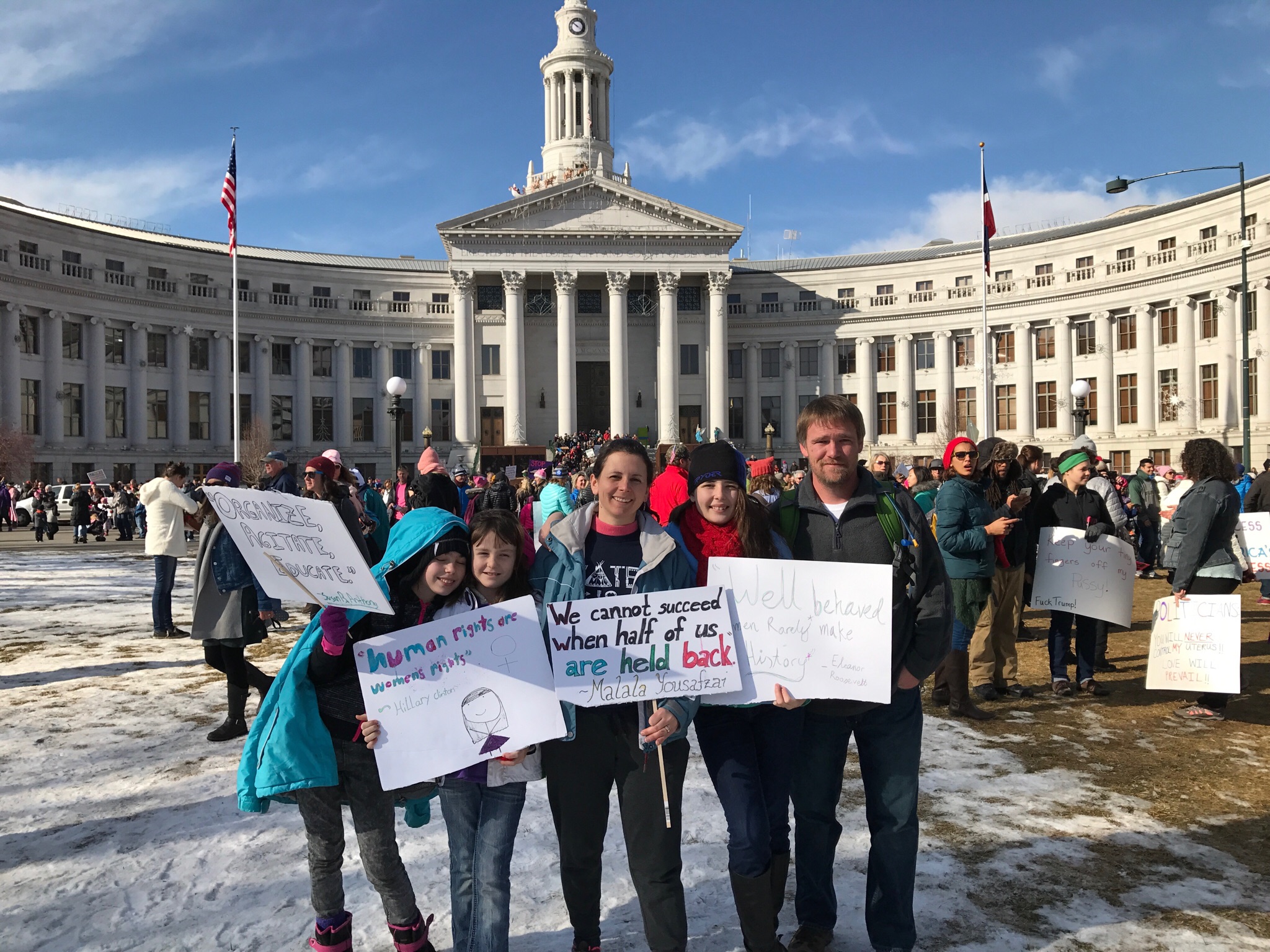

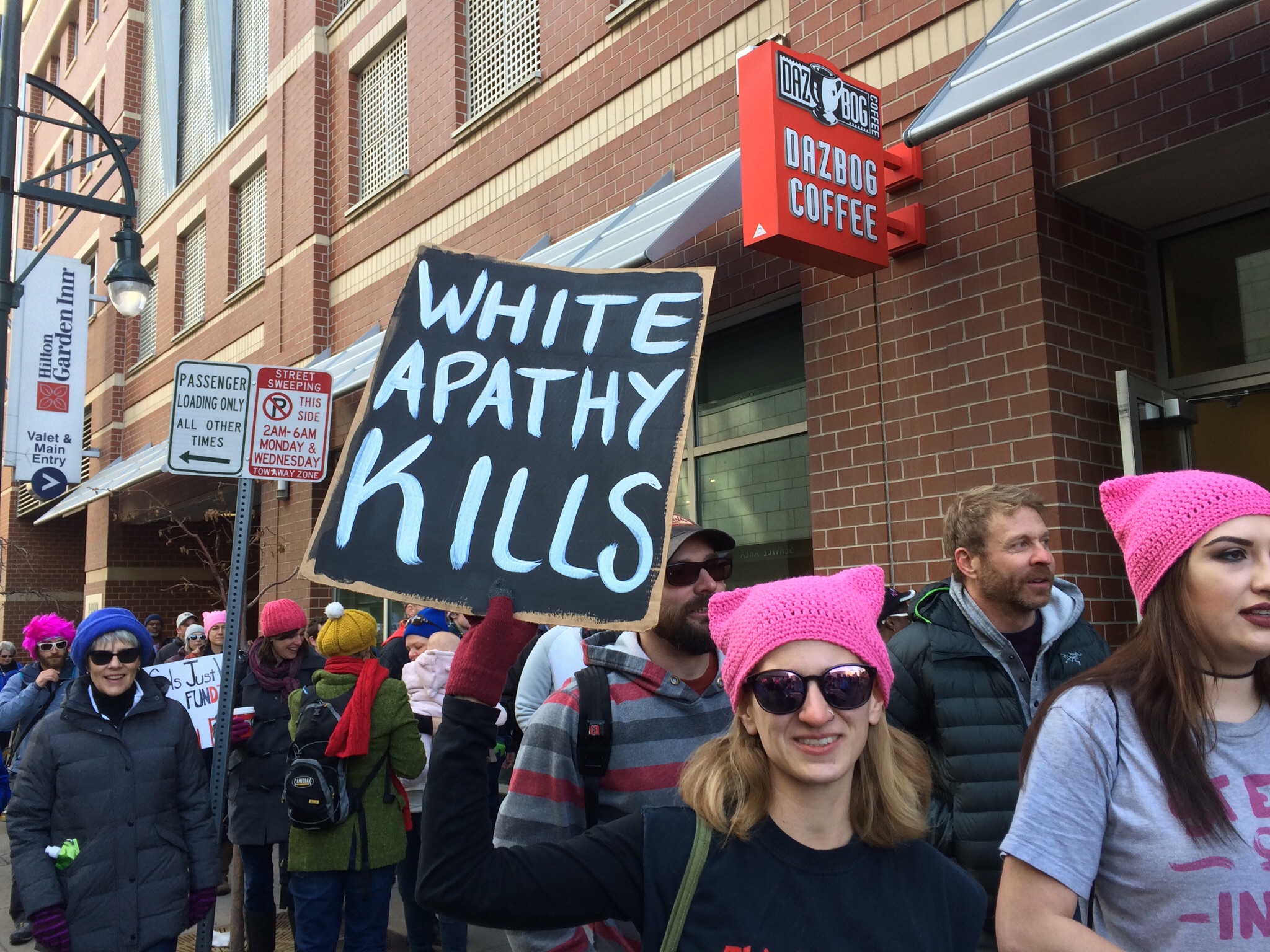
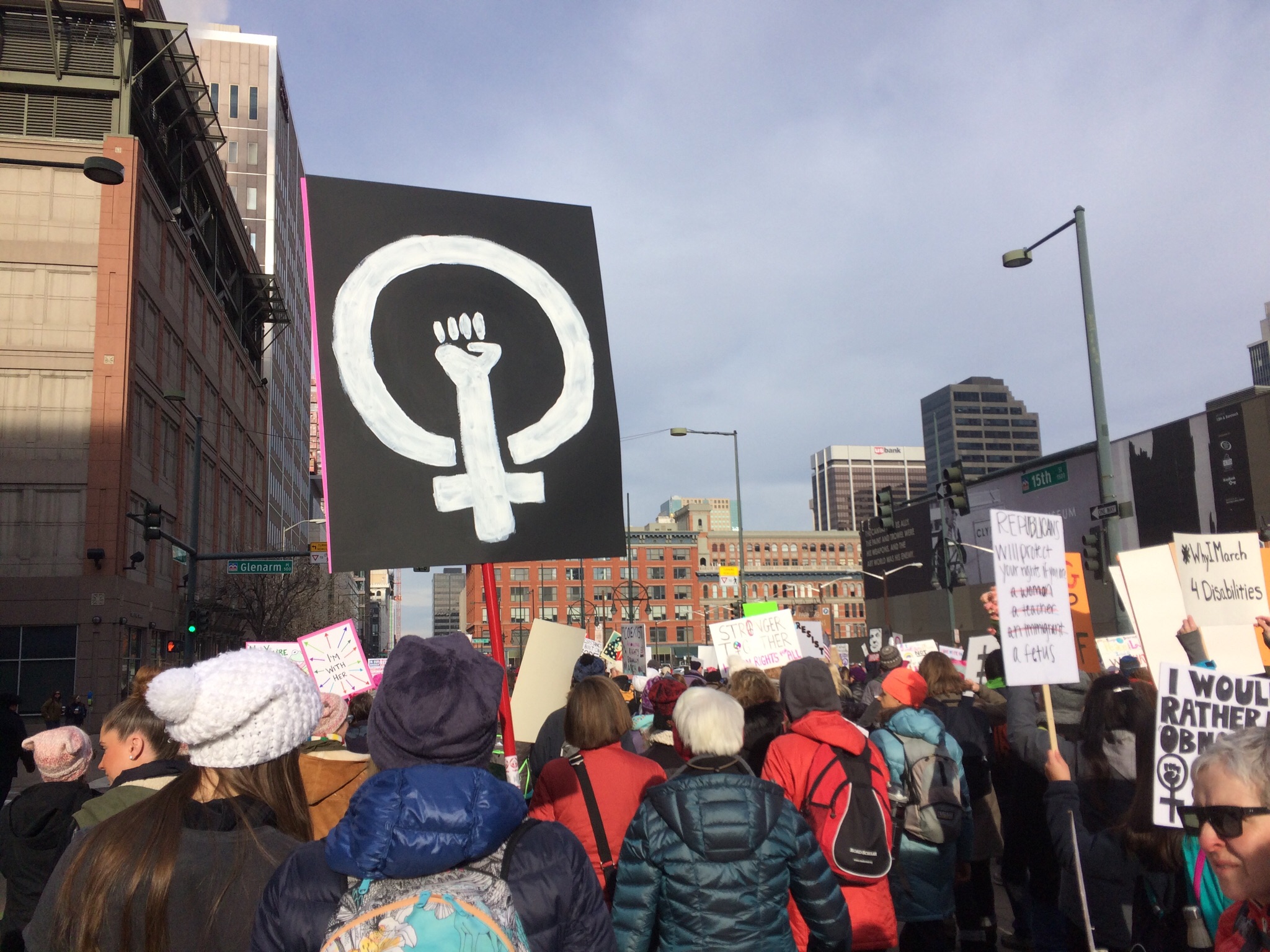

annual Marade
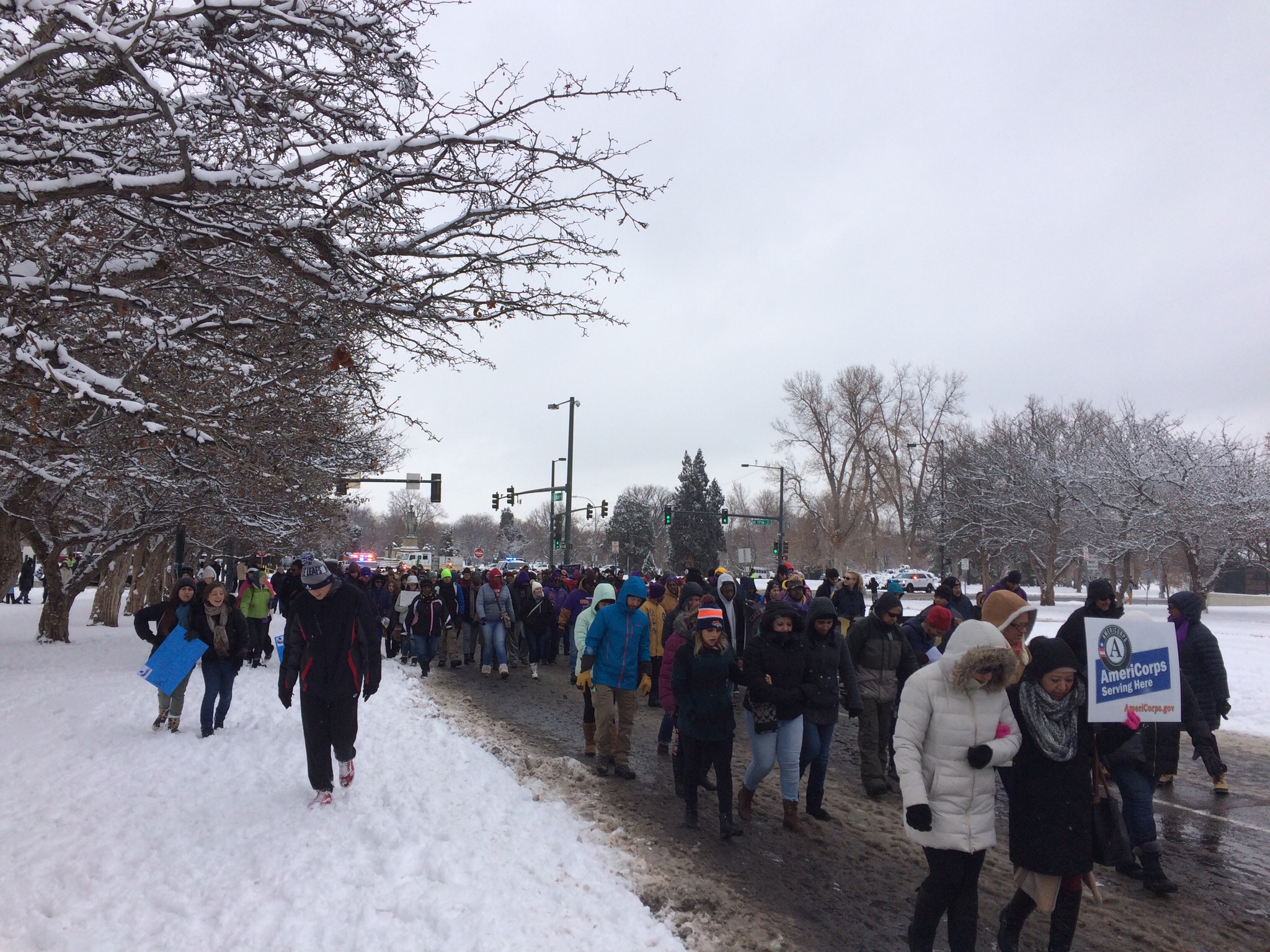
frosted with ice (years without)
but now winter’s here–
in Trump’s dark shadow
we march for all we have lost,
all there is to lose.
we resist snowflakes
that try and fail to stop us
from the truth we seek
we fight the good fight
in songs, in signs, in speeches
(and one day we’ll win)


since the election,
somehow my days have become
a cataclysmic mix of mundane chores
and tearing my hair out over
what we’ve done to our democracy
it’s the gut wrenching choice
Travis must make as Riona and I
grapple with Old Yeller-–
do I shoot my best friend
or suffer the same fate?
only—
our fate is sealed, well after
the roan bull has staggered onto our property… and Yeller?
his last howl hovers over
a hydrophobic nation
God save us all.
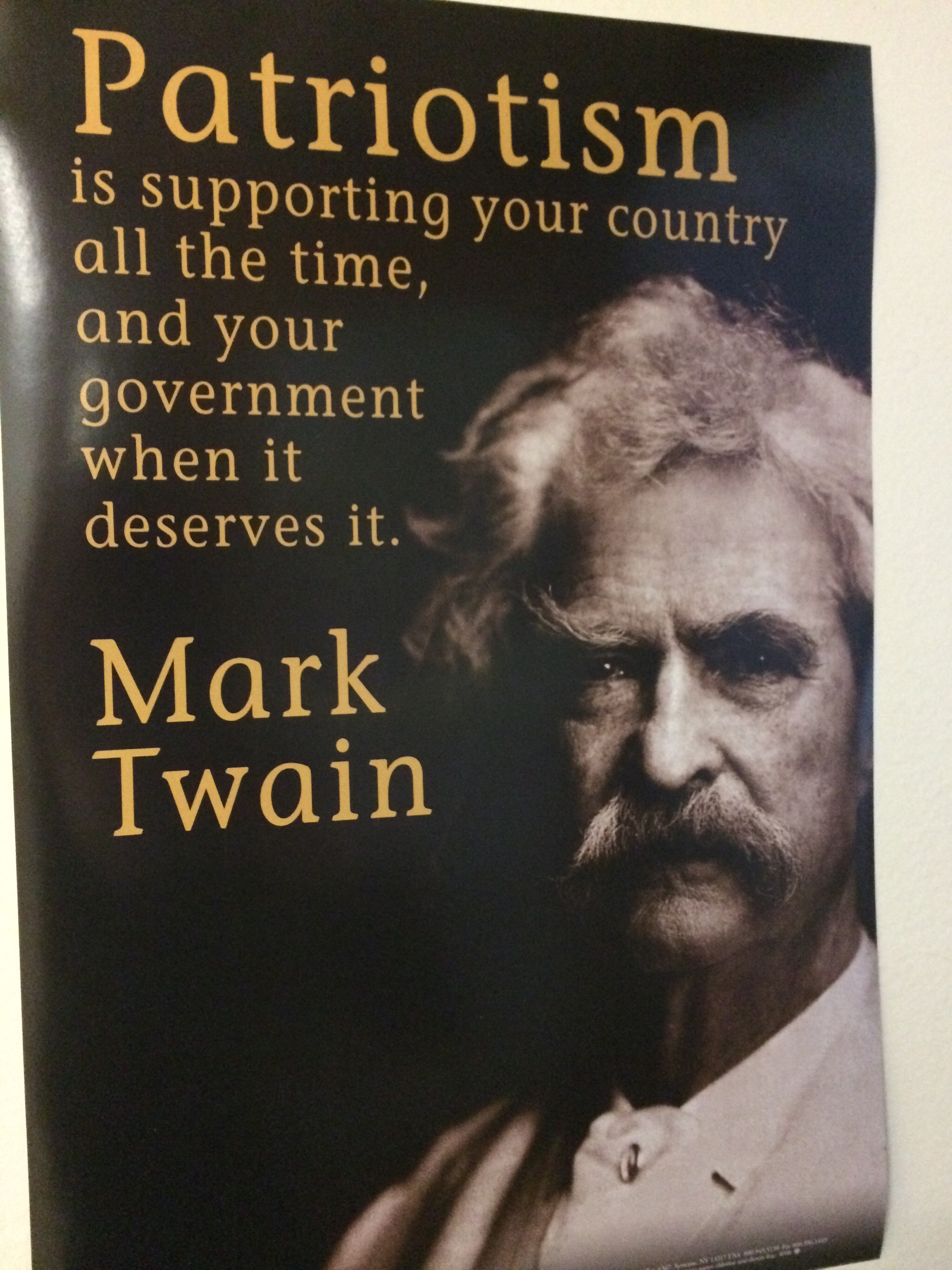
ready to make change
with posters, books, and writing
with hope in our schools


 Step Write Up