After the Funeral

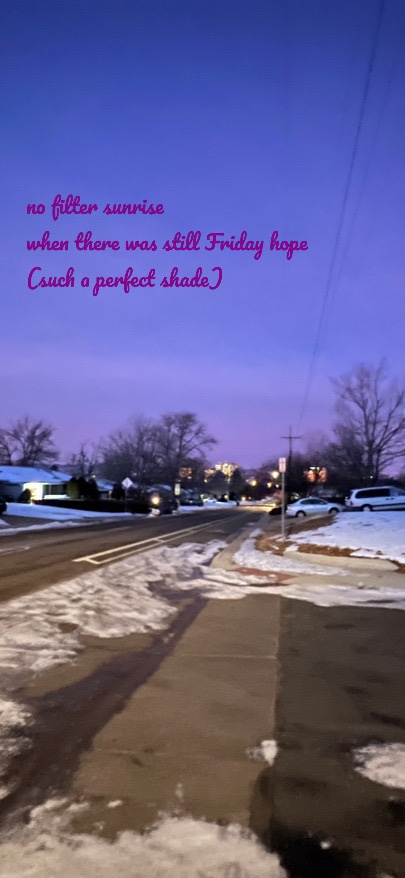
After the funeral, we stand on the side of the road, the airport train bulleting past as January exposes itself in its bitter, beautiful glory: soft flakes fall from the silent sky, casting a quiet shadow on the muffled wails of all the mourners.

After the funeral, I hug a few former students and a few current ones. I praise one for his brief eulogy, ask him what he’s doing now. “Working, Miss, always working.” My current student scans the crowd for the other teacher who came here today, searching for a hug, for a morsel of hope.

After the funeral, I drive across slick streets to my parents’ house which is halfway between the mortuary and my home. We sit for hours discussing everything from senseless acts of violence to my children’s future to an upcoming family vacation.

After the funeral, I come home to my husband, fresh off his on-call work, and hear about his morning of installing and repairing fiber optics. My girls are all gone, one at college, one at work, one at her boyfriend’s house. The house, looking out on the snow that keeps falling from the sky but won’t cover the streets with its quiet beauty, feels empty, lonely, and just. Wrong.

But… I still have my life after the funeral. I still have all three girls. My husband. My country. My culture. My home. My place in this world.

I didn’t travel across half of Africa and then all the way across the world to save my family from a civil war so that they could have a better life, only to lose my eldest child to American violence years later. I didn’t leave behind my ailing mother, my grandparents, my religious practices, my native foods, the soil under the house I built.

And today, the snow seems hopeless. It doesn’t bring me the renewal that it usually brings. It doesn’t feel like a new beginning when a family so close at hand has been stripped of every new beginning.

A young man. A student. A basketball player. A brother. A son. A grandchild. A caregiver.

They were only allotted two hours in the mortuary. The line of people never stopped for the duration. The door never closed. With every seat taken, bodies had to line up and down every aisle, along the back of the room, along the front of the room, blocking the windows, next to the casket, sitting on the floor, holding small children in laps, comforting babies, comforting wailing women, trying to find comfort.

All four surviving siblings spoke, their voices cracked with a painful mixture of grief, anger, and remorse. And then they opened the mic, and we all stood as one after another human–former teammates, church leaders, cultural elders, friends, classmates, aunties, uncles, cousins–got up to repeat the same message: Giving. Kind-hearted. Generous. “Give you the shirt off his back.” Loving. “My best friend.” Funny. Down-to-earth. Direct.

All the qualities you’d want in a person, a friend, a son, a brother.

We could have stood there for eight hours, but the time was limited, the mic dropped, and the wailing women crept their way out into the snow.

After the funeral, for as long as I live, I will carry her guttural clench of despair in my ears, my heart, my memory. The sound of a mother, bent over her son’s open coffin, crying out to God and all of South Sudan and all of America and all of us: “Why? Why must I bury my son?” Heard not in words but in sounds, deep, unearthly sounds escaping from the depths of the hell that she is living in right now.

After this funeral, I will never be the same.

I have spent most of my adult life trying to welcome these immigrants into a country that robs them of everything. Even life.

After the funeral, no matter how horrible I feel about the hopelessness that is America, I will never, ever feel the loss that she feels: so profound, so innate, so impossible to overcome.

So impossible to overcome.

As Bright As Snow

Ski Reverie

ski day reverie
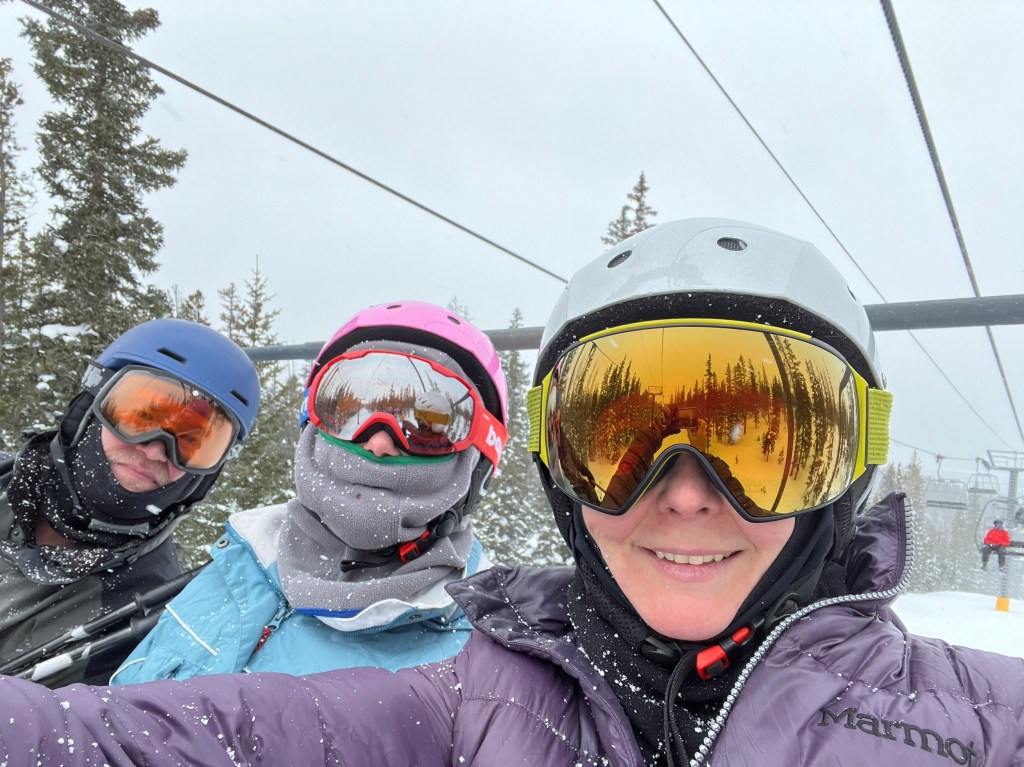
filled with powder grins,
soft turns, silent flakes
always a long day
yet happiness takes its time
falling from the sky

Bright, Beautiful, Blighted

Ski Religion

She’s Off

the break feels shorter
as my oldest leaves again
bavk to college life

The Scrapping-Together-Book

so different from your sister's
when i spent many joyful hours 
piecing together the photos of her youth

your youth is marred, robbed, broken
and i don't know why
i don't know why

and it might be the not knowing
that will take us both

Girls’ Weekend

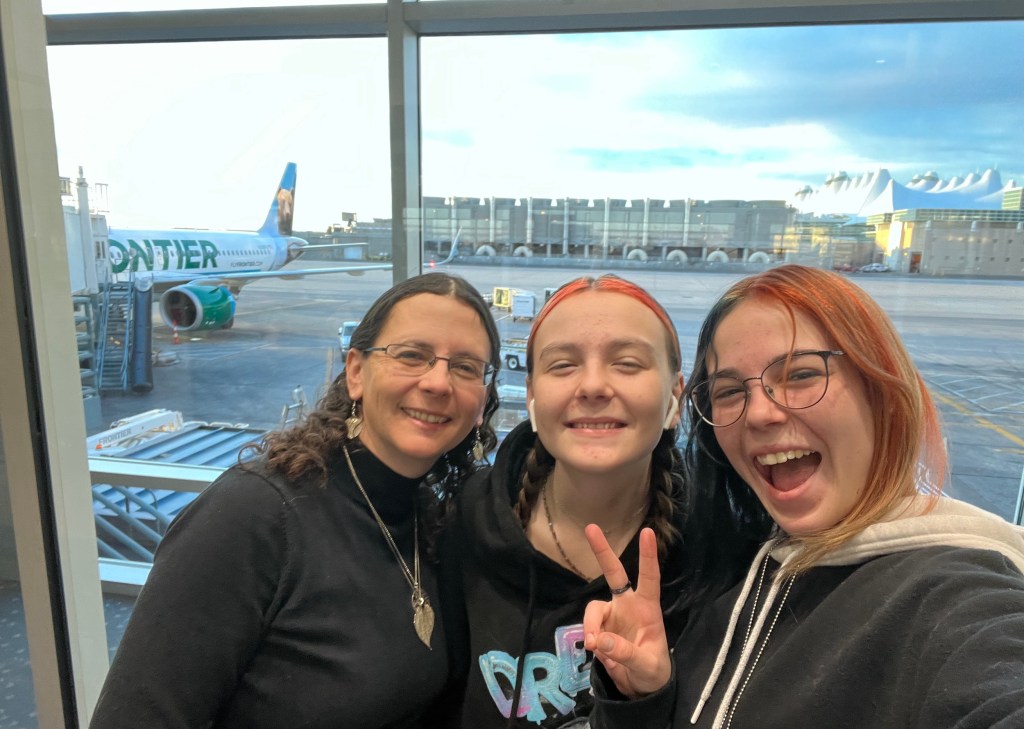
post-pandemic flight
the first for me; with my girls
to steal a weekend
beautiful DC:
the center of our country,
sordid past exposed
a bar mitzvah morn
in year five-seven-eight-three
from our first beliefs
a city forest
walking distance from temple
Shabbat salom. Peace.
my happy daughters
finding books, happiness, love
on our girls’ weekend

More than a Milestone

getting her to here
after COVID/grief trauma?
a grin worth winning

Not Here.

If you had another job, you would be so annoyed by the coworker who couldn’t piece together fiber or the project manager who doesn’t know how to manage, and your day might be temporarily ruined. You would miss your lunch hour redoing someone’s work or you wouldn’t be able to tell your boss your exact opinion of his golf vacation in the midst of your short-staffing issue.

If you had another job, you would spend your lunch hour cutting fibers or sending emails or catching up on a spreadsheet, hoping for a break or a promotion or … anything else.

Anything but this.

If you had another job, you wouldn’t stop in your tracks in the middle of a lesson to let a severe-needs child work his way to his seat, an admin begging you to give him a pencil and a blank piece of paper because maybe if he could draw a basketball, he would stop rocking on his heels and shouting the word across the room for all the world, all your classroom of recent immigrants, to witness.

If you had another job, when the siren makes your phone and the PA system and the whole world bleep and vibrate, you wouldn’t be thinking about the announcement (seeking the nurse) at lunch. You wouldn’t be sending your middle daughter to investigate the health of your colleague whose life was already threatened more times than the number of weeks in this school year, only to hear this report: “There were people everywhere and a kid on the floor. The security guards were surrounding the whole scene. We couldn’t see anything.”

If you had another job, you’d see everything. The botched fibers. The boss’s vacation. The spreadsheet that tells you exactly what you’ve done right and exactly why you don’t belong here.

But you don’t have that job.

You have this one. And despite the pull of this dog lying on your calves with the persistence of a love so divine you couldn’t measure it, this morning or in any other moment, you are here now.

And you look at your refugees and think about the Afghan girl and the Afghan para, who both stood on that tarmac eleven months back in a country that will no longer allow them to attend school, let alone show their faces, and are up in the tech office trying to get a new computer while you stand here, trying to explain without Dari or Pashto words,

“It’s a lock… out. There is a problem outside of the school. Not here. Do you understand me?”

And all the while you are thinking about your colleague whose student yesterday held a girl at her throat and sprayed her with dry erase cleaner, now imagining that at lunch that kid was under the security guards’ hands, and that he escaped, and that he “is a suspect in the perimeter.”

And that your colleague could be gone. And that your daughter was braver than you, walking down there to report on truths that can’t be reported.

And that you have to teach a lesson about the BE verb and all its uses and “Yes/No” questions such as,

“Are you happy?”

Yes, I am.

No, I’m not.

And the boy who can’t read or write or take total control of his body won’t stop talking about basketball, and then soccer, and then eating, and his paraprofessionals finally come, and the Afghan para and the Afghan girl return unscathed, and when you look into her young and beautiful eyes and ask her to say, in Dari and Pashto, “Please tell the students that the danger isn’t here. It’s a danger outside of the school,” they all shout, “We understand you, MISS!”, and even after her translation, her reassuring interpretation of your words,

You’re. Still. Not. Sure.

And let’s make contractions out of these “Be” verb conjugations, my students! (He + is = He’s. You + are = You’re.)

If you had another job, you wouldn’t have to wait until the passing period to see the text from your threatened colleague.

“I’m OK. A kid passed out in my room during lunch. I don’t know about the lockout.”

You wouldn’t have to wait. You’d be sending emails, repairing fibers, or working your way through a mountain of paperwork.

You wouldn’t be standing in front of these kids who are trying to piece together the parts of a sentence and the parts of their lives that were left in another country.

You wouldn’t be you.

If you had another job.