was this small reward
worth 200 work hours?
yes, yes, yes, fuck yes.

was this small reward
worth 200 work hours?
yes, yes, yes, fuck yes.
The suits came by this afternoon. We were in the midst of discussing our fears, which in a Newcomer classroom involves many pictures, much acting out, my modeling of three circled fears, and quite a bit of screaming along the decibel lines so that they could understand the subtle differences between a little scared, a lot, and TERRIFIED.
These fears would go into their Bio Poems, every English teacher’s favorite go-to poem, which seemed so much easier during my last fifteen years of teaching and seems ever-so-complicated now that I have to find emojis and facial expressions to visually demonstrate a range of emotions from happy to angry to guilty for line six, “Who feels…(list three emotions) today”.
The suits heard me scream. They peeked over the students’ shoulders for the entirety of their five-minute, who-knows-why visit. They thanked me in their usual ever-polite way and walked towards their next classroom visitation.
We get a lot of visitors. A white woman just like me and nothing like me wrote a book about our Newcomer Center, and everyone now wants to partake, to drink in her words, their struggles, and culturally tour what it’s like to learn English when your background is anywhere from illiterate in your native language to I-understand-everything-Ms.-says-but-refuse-to-verbally-communicate.
To simplify fears, I asked my students to circle their top three from a photo-supported list of superstitions, animals, insects, arachnids, the open sea, death, crowds, public speaking.
“Are you afraid of dogs?” I asked one, trying not to laugh.
“No…”
“Say the whole sentence now.”
“No, I’m not at ull uf–ry–eed of dogs” came the reluctantly-read reply.
“Are you afraid of spiders?” I asked another.
“Yes, I’m terrif-eed of spee-ders.”
With every sentence comes a retracing of steps, a pronunciation clarification, a pointing to the word, the picture.
And with every sentence, their silent fears hung in the room waiting for the words they don’t yet know to formulate in their minds. More than death, more than the open sea, more than flying or walking under a ladder.
They fear those adults walking into our room. What are they looking for? They fear they will never see their homelands, their aunts, uncles, grandparents, ever again. Some fear they’ll never see one or the other or both parents, the ones they had to leave behind. They fear the next school year when they’ll have a full-on regular schedule and “grade-level work, as all students deserve rigor” and won’t be with me or each other for the majority of the school day. They fear their citizenship status, their asylum status, their social status in a country too complex to summarize in a few Thanksgiving lessons.
Am I imagining these fears? Am I putting words into their mouths, thoughts into their heads?
And this was just one line of our poem.
It took us two hours to write a ten-line, sentence-framed bio poem. The suits didn’t see the real struggle, the re-explanation of vocabulary such as siblings, daughter, What I miss most… They didn’t see how easily some students filled in the blanks, how carefully others penned their cardstock, how reluctantly they read aloud their poems to their partners.
They didn’t read the lines that could break their hearts. So simple, language. So complex.
In five minutes, in ten lines, in two hours, could one write a life story? Could they insert their biographies into the blank spaces so that we could all understand where they’re coming from? Could they explain to me, to the world, the fears that they carry?
No. Bio poems aren’t enough. Suits visiting for five minutes is not enough. This post is not enough.
Only their words, their many, many words in so many languages hidden behind these lines, and their faces, their multi-colored, multi-emotional faces, could begin to capture what is missing from their words.
But the suits didn’t stay to see any of that. I hope that you will stay. I hope that you will see them for who they are and not just peek over their shoulders, unaware. I hope that you will listen and take their fears right off of this page and into a better future.
I hope that you will take their fears, your fears, all of our fears, and turn them into something more than words. Something powerful. Something that we can shape into a better bio poem for all of us.
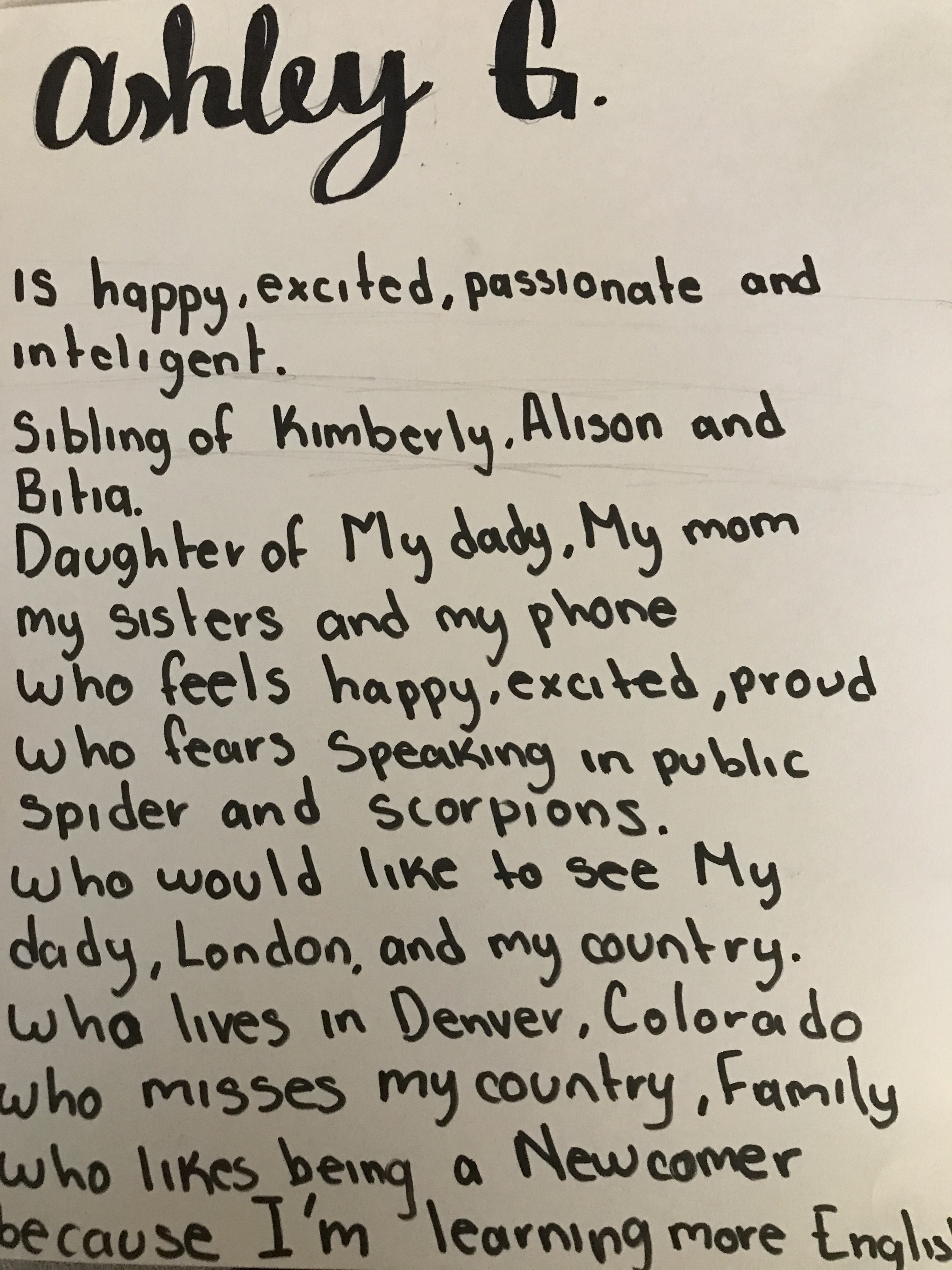
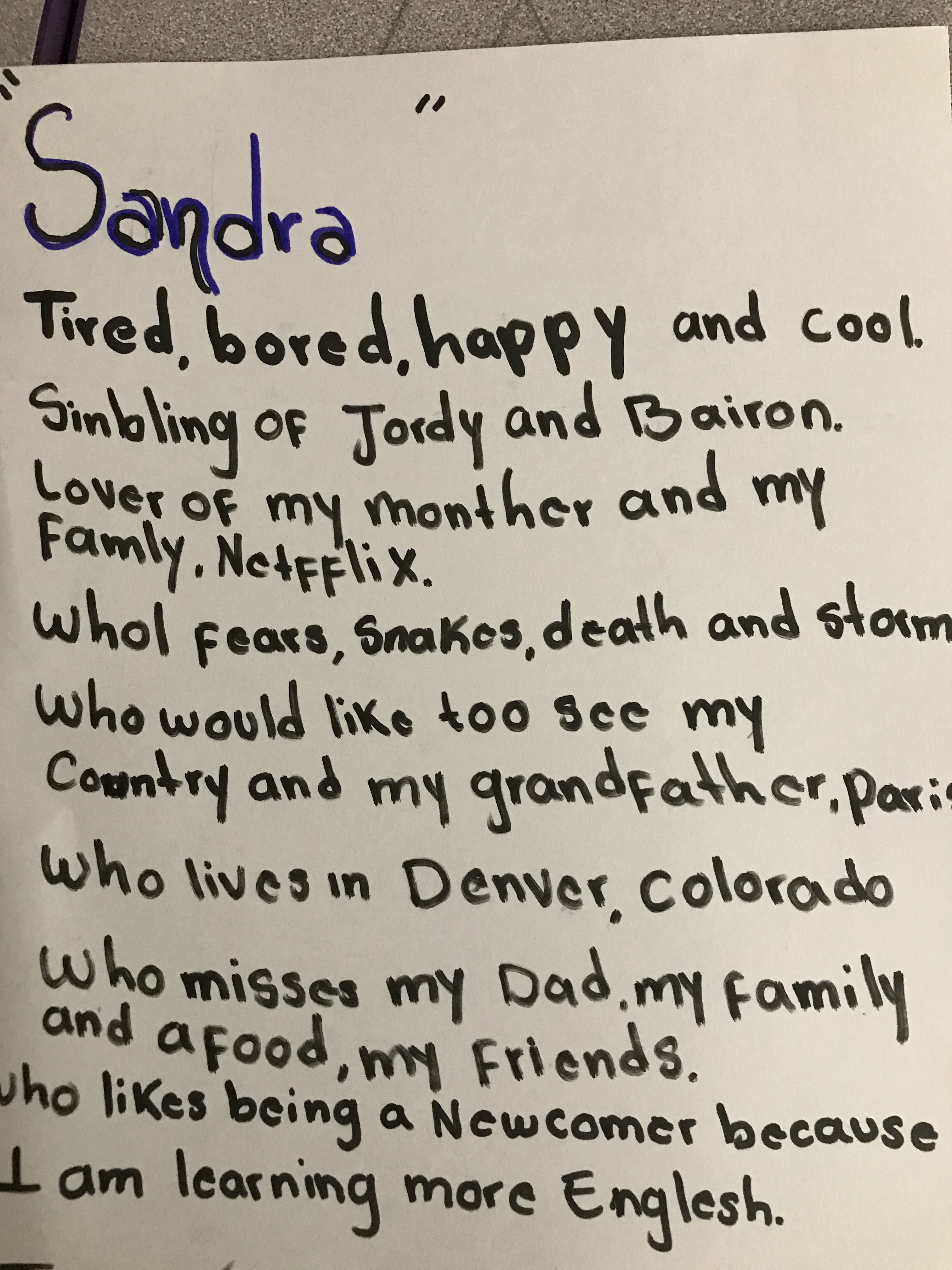


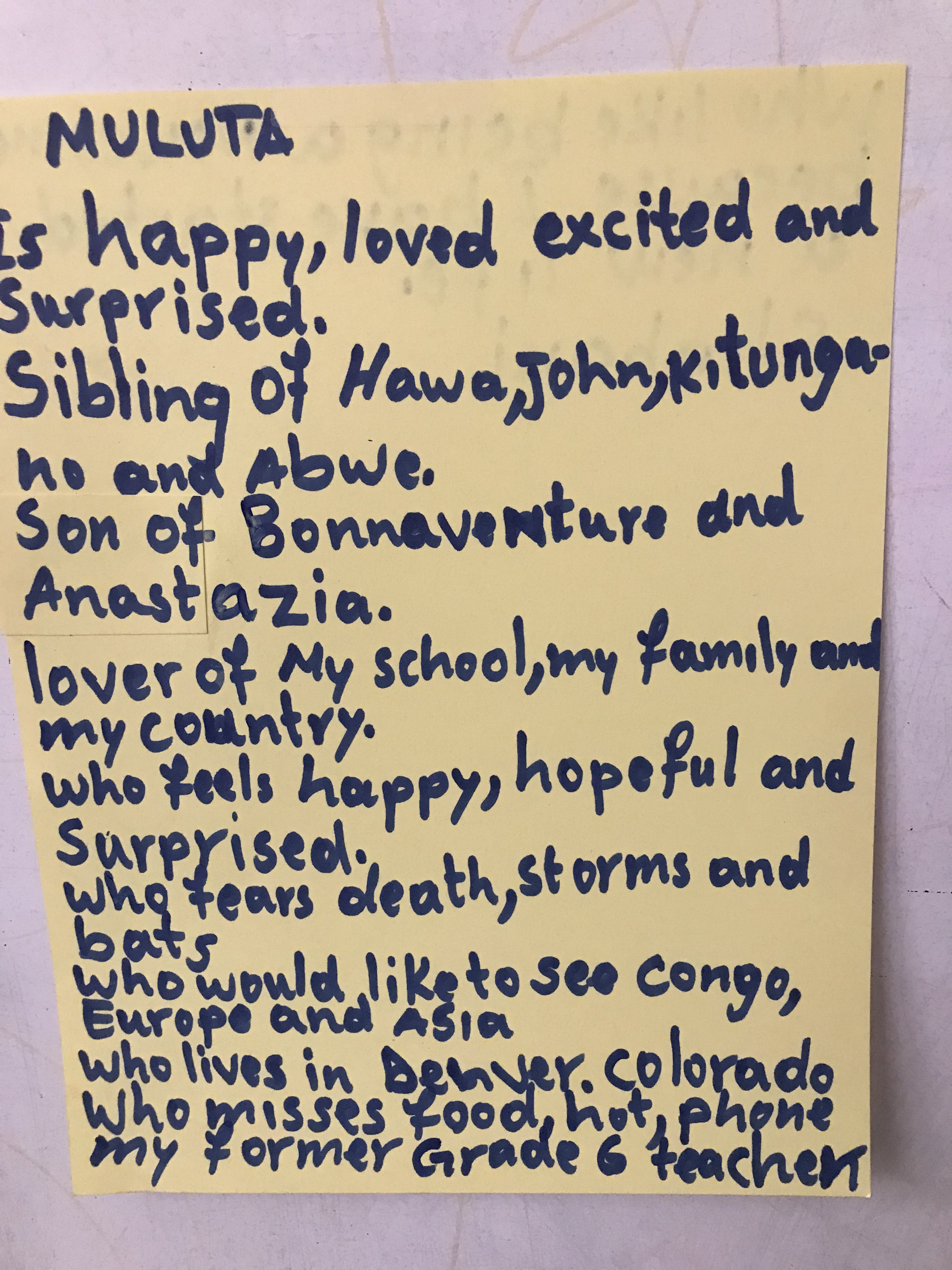

I have a data tracking problem. It starts with the word itself which is used to put a number, instead of a face, on my students. Data. A Star Trek android. A mathematician’s daily routine. A financier’s dream.
Here is my data problem. It starts with the word itself. From Latin dare, “to give” to Latin datum, “something given.”
We ask them to give us everything. Their trauma (trainings throughout the year on the various levels of trauma which range from a singular event to chronic abuse to historical-impossible-to-erase-racial bias), their educational history, or lack thereof, their familial and cultural belief systems, their languages, their motivation (impacted by anything that ranges from zero to a thousand), their futuristic ambitions.
We ask them for everything. We ask them for themselves.
And they bring themselves, each little datum, into my room each day. They bring themselves to my meetings with colleagues when, upon realization during our DDI analyses, my co-teacher informs me that the majority of an entire section of her course can’t even read the sentence, “The cat sat upon the mat and spat,” let alone correctly analyze an SAT passage for grammatical inconsistencies.
“And how am I supposed to teach them how to read?” she ponders, a high school teacher for twenty-five years.
And how am I supposed to categorize my students’ data by skin color, as my school asks me to, to close the gap between my three-years-here Iraqi refugee whose favorite English words are cusses, who has adeptly adapted to U.S. culture so fluently that he can identify how absurd it is when people come up to him on the street, assume he’s Latino, and start rambling in Spanish, with the Rohingya Muslim who just entered my room from a refugee camp where the militia taught him a great deal of verbal English, but who has never spent a day in school, saw his parents murdered by this same militia, and can’t even read or write in Burmese, let alone English?
Or should I include the datum of A who spent five months trying to cross the border and another five months in three American detention centers with limited food, clothing, blankets, toothbrushes, or hope, only to be “adopted” by a white American suburban family, more or less ex-communicating his entire Honduran upbringing and culture because “it must be better here”?
Should I include each individual datum of the paraprofessionals who translate information for these students? Who have mostly arrived here as refugees themselves, but lost everything in war-torn, conflict-bound transport, including degrees in education, civil engineering, law, and decency, to get paid $15 an hour to translate to my kids the silly little things their crazy teacher says?
Should my, could my, data include my school district, that spends millions of dollars a year purchasing curricula that neither reflects my students’ faces or experiences nor is adequate enough to meet the various cultural and linguistic needs of every kid who walks into my classroom anxious to learn? My school district that employs and perpetuates incompetent leaders who have never taught an ELD course in their lives, let alone learned a second language, but choose inadequate resources for my students because THEY LINED THEIR POCKETS WITH GREED?
Should my data include what my Newcomers scored on their practice PSAT 9 test? Do you think that after two months of learning how to pronounce “th” and practicing “There is/there are” verbal phrases, they can accurately and beautifully read 500-word passages and correctly choose the best College-Board-meant-to-cherry-pick-college-bound-geniuses analyses?
Should my data include my professional development leadership meetings, where they show me every week, rather than asking me how it’s going, rather than ever once visiting my data meeting and giving me feedback, rather than taking a moment to understand what it’s like to be an English Language Learner, how to run a data meeting?
One that includes disgruntled teachers. One that includes major gaps. One that includes colonial white language and not the language of my students, and WHAT ARE YOU GOING TO DO TO FIX THAT, ESPECIALLY WITH THIS WHITE COLONIAL LANGUAGE WE THROW AT YOU WITH OUR “CURRICULUM”?
No.
My data is I. B. A. J. E. A. H. All their names. All their stories. All the letters of the alphabet (some of them just learned this alphabet from me, thank you very much).
My data is me talking to those two boys about how their counselor should have told them they didn’t have to take physics with the hardest teacher in the school, that they could have taken zoology and had a passing grade and the science credits they needed to graduate.
My data is every one of the dishes my Newcomers brought to the table after learning how to give directions, walking through the neighborhood and telling each other to turn left, stop at the light, learning how to bake brownies from scratch, learning that English verbs are actually quite simple, and they can explain to the entire class and the entire world how easy it is to make chapati, pupusas, patacones, flan.
My school, my school district, my world: they ask me for something given.
But what have they given to them?
Have they given them a better life? Have they given them words as powerful as redwoods, indestructible after a thousand years? Have they given them the hope they crossed the ocean, the river, the bitterness, to attain?
Have they given them the data that they will need to make their dreams a reality?
I have a data problem. It starts with the word itself. And it stops when I see their beautiful faces.
It stops here. Because they are all that matters. Not numbers. Not something given.
Something to give. Me to them. More than anything: them to me.

This is my seventeenth year of teaching, my seventh in this school district. I have taught seventh through twelfth grade English literature as well as English Language Development to every level of English Learners. I have co-taught seventh- and eighth-grade science and social studies courses, and I have even taught a computer applications middle school elective.
At this school, I have taught a new curriculum for at least one of my classes every. Single. Year.
This year, I have four preps. Every other year, I’ve had at least two, if not three.
In addition to these preps, I have to spend a minimum of five hours every week sitting in data meetings, leadership meetings, and planning meetings.
On top of these meetings, I have to make sure that my students understand enough English to be able to take the bus home. To find the food bank. To sift through the clothes in our donation closet for coats and gloves for a sudden October snow.
For the course I’ve been teaching consistently for the better part of seven years, I have worked tirelessly to build a curriculum when there was none. I have listened to my school, my neighborhood, my district, and my world tell me about how fucking important a grade-level standardized test is even if my students are still learning how to correctly form letters or decode words.
I have built assessments based on those standardized tests, based on the grade-level curriculum, but tapered down, sheltered, supported, for my students.
I spend anywhere between thirty and forty hours a week PLANNING the lessons for four preps, trying to teach my Newcomers everything from how to greet strangers to present progressive verb tenses to vowel-intensive phonics identification. Trying to teach my level 3 ELLs how to become fluent readers, how to effectively present information, how to listen to, write, and correct dictated sentences, how to create a cohesive paragraph supported by text evidence.
Do you give me time to meet with other ELD teachers?
Do you give me a curriculum that includes common assessments?
Do you visit my classroom and see that, oh, none of my Newcomers know how to write the letter ‘k’ because none of their languages use that letter, and maybe I should spend more time teaching them how to do this? Or see that my ELD Seminar kids spend each Tuesday sifting through grammatical rules to correctly identify their errors on their SAT-style assessments? Or see that every word I teach my kids, whether it be “north” or “however”, is built upon a concept or misunderstanding from a previous lesson?
Have you ever looked at–let me break some shocking barriers here–my GRADEBOOK? Do you think, just for a moment, that it is possible that I progress monitor my students there each week? That I look at their scores and determine what I need to reteach? That my students meet with me to retake quizzes and revise written work based on the scores that they receive, and that I endlessly allow this?
Oh. I forgot.
You don’t have time to visit my classroom.
You are running this and seven other meetings this week.
You are sharing SAT data with the entire staff.
You are making me fill out a graphic organizer that analyzes how blatantly biased standardized tests are against ALL OF THE KIDS I TEACH.
You are here to criticize what I HAVEN’T done. Not to offer:
This is my seventeenth year of teaching. I know I have taught longer than you, probably more than all of the admin team combined. I think I have an idea of how to monitor the progress of my students.
Do you have an idea of how to progress monitor your ability to listen? To support? To collaborate with those of us who are in the trenches?
I didn’t think so. This “meeting” is adjourned.
pooped out each morning
pup is tired of school days
only one month in!


My daughter’s face perfectly encapsulates my day, my motherhood, my career. Straining to run through the burning sun of a late summer day, pushing the limits of what she’s run before, and wishing for a closer finish line.
Disgruntlement at a too-hard, too-narrow concrete runway, making it nearly impossible, impassable.
Fear that her time will be worse than before, that the heat will beat her, that the world will beat her.
A sliver of hope for that final push, that final lap, that is just around the corner yet feels like twenty thousand steps too far.
In the background, teens cheer. “You got this!” “Just one more mile!” “Keep it up!”
Parents chase the runners, crossing the park’s midsection while they wrap their legs around its exterior shaded walkways. Parents trying to get the next best vantage point to capture that pic, that glimpse of angst that is in every athlete’s face.
Coaches stand on the sidelines, their own cheers tight with passion, with expectation and longing. “Lift your legs!” “Raise up those arms!” “Just like at practice!”
Her expression, their words, the globally-warmed, never-ending sun, beat down on the tumble of meetings that began and ended my day. The constant admonishments from my administration. The constantly shifting expectations and placement of people in power at my school district. The constant lack of a curriculum for the students who need it most and don’t have the right words, the right expression, to beg for that finish line. The constant task of preparing three hours of sometimes-failing lesson plans I must place in front of my Newcomers.
The rush–my god, the rush. Three weeks back, adding item number one thousand and seventy-three to our Google family calendar, Bruce rearranging his ever-strict hours to be able to make this meet, the shuffle of only-two cars, three girls in three activities with varying times, my after-work meeting, my cycle down the bike path, my fifteen-minute window to cross a park three times to gather this glimpse, my Torchy’s Tacos stop, bike locked and unlocked, bathroom locked and unlocked but only with a code, taco bag ripped on the rush up the elevator, only to find a buffet of snacks waiting in the final meeting room. My race to beat the moon home because it would never be light enough, our car in the shop for nearly six weeks, and I don’t even have time to fix the chain on my bike, let alone buy a decent headlamp.
All of this is in my daughter’s face. All the angst, the cheers, the backtalk, the doubts.
And just like her, I am racing to the finish line. It is never close enough, but both of us, somehow, have made it today. We have made one more race, one more step, towards what we hope will be better on the other side.
And that is enough. For today, it is enough. 
the small sentences
of my Newcomer student
make teaching worthwhile

with the alphabet
and a little translation
we learn a language
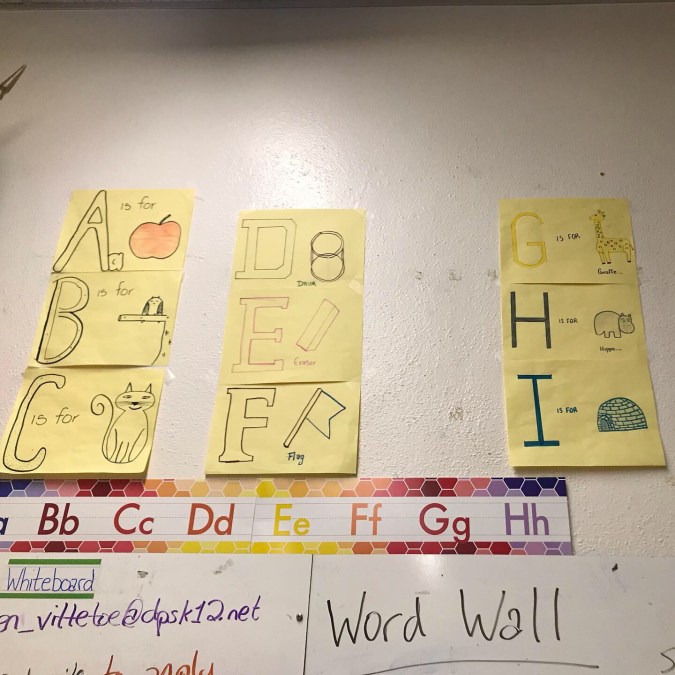

first Newcomer year
brings the joy of teaching back
at career’s midpoint


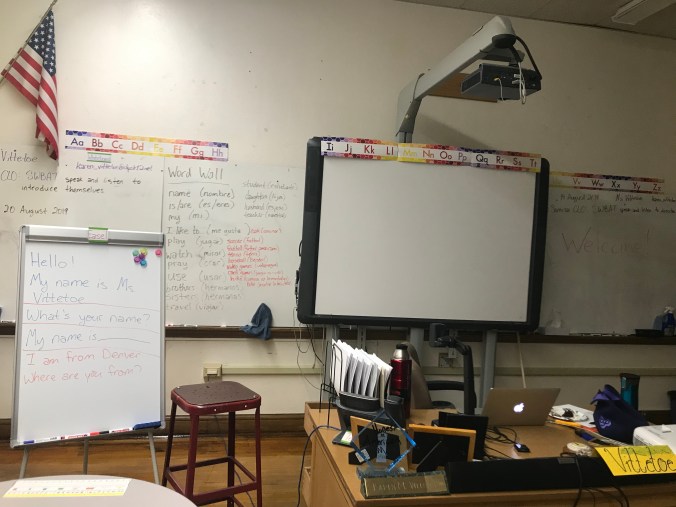

yes, i have a mouth
that detests these cubicles
because i teach. duh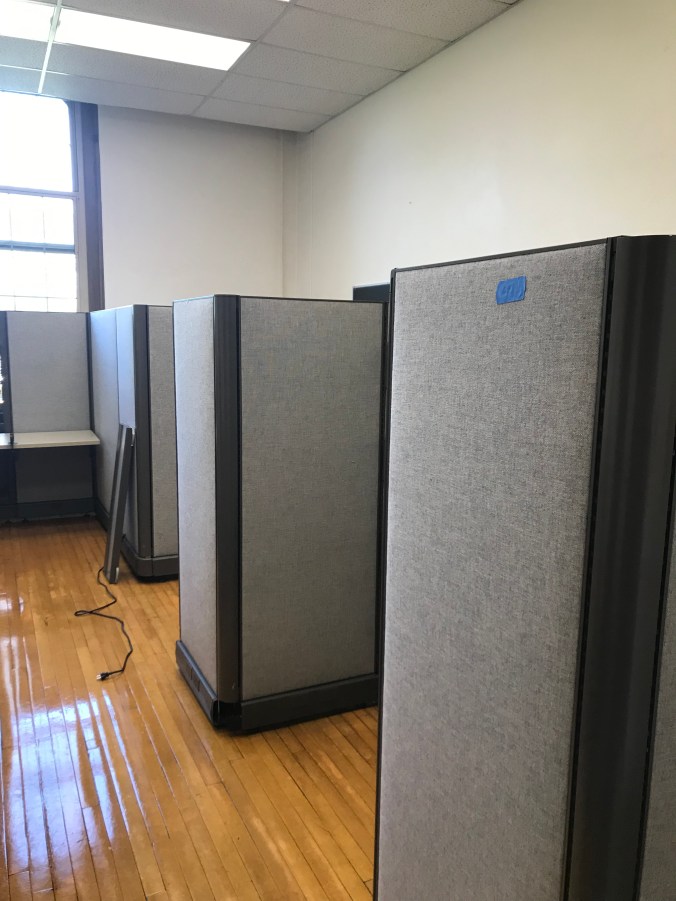
if i lose my job
because of my opinion
i will find a way
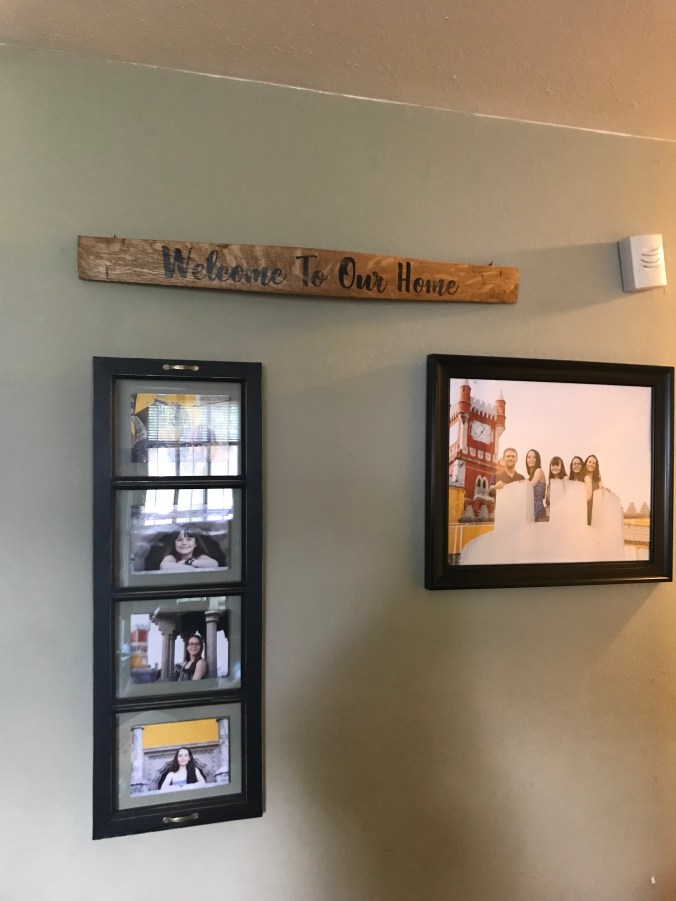
for people to see
that communication works
if you just try it.
 Step Write Up