I couldn’t create the perfect day, but I found one today, as fresh as a fried perch straight from the lake. True, it started with my dog kissing my face at 5:20 in the morning, but I was already awake. We walked along the lakeshore trail, still moist from twenty-four hours of rain, as the sun made its way into the sky despite the looming clouds.
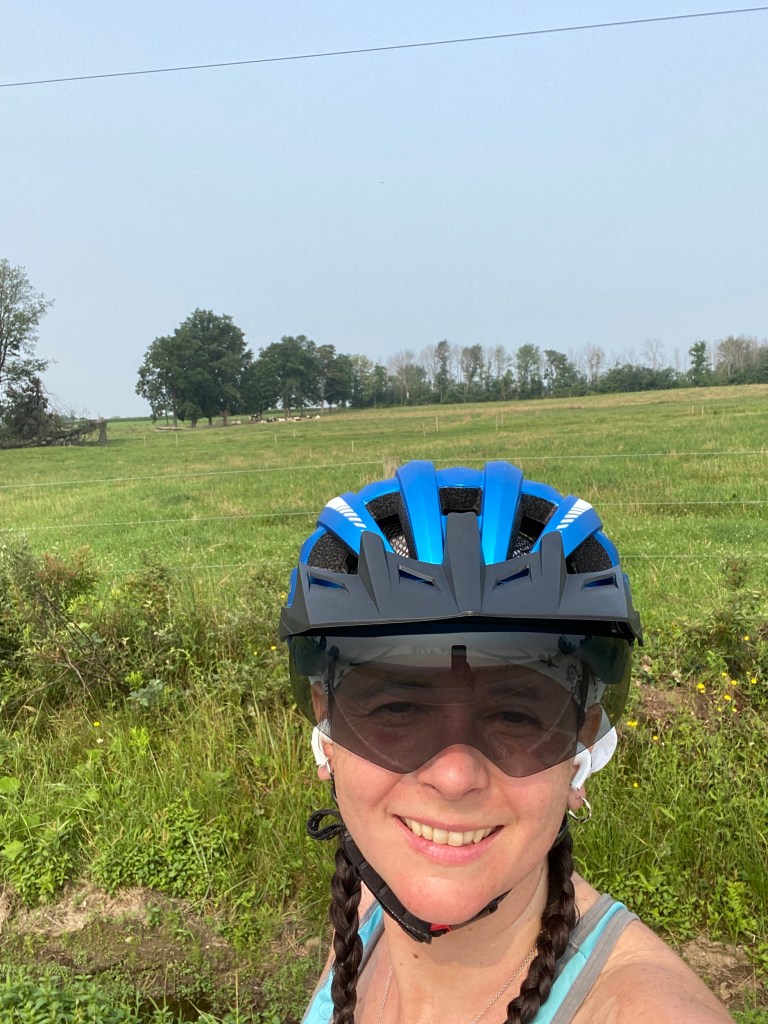
I fixed my tea and granola in this tiny cottage and put on my bike kit. Blue, blue, blue: helmet, jersey, bike—trying to fight those clouds. And though Google Maps has no idea what a hill looks like, promising me the ride would be “mostly flat”, I knew better. This is the same ride I did with my dad growing up, on my old BMX, my Huffy ten-speed, just nine or ten, and just like then, I pedaled my ass up and down the many hills on Lake to Lake Road.
Now, at forty-three, I can feel the weight of those hills. The weight of what is left behind at the lake or what waits before you when you make it home.
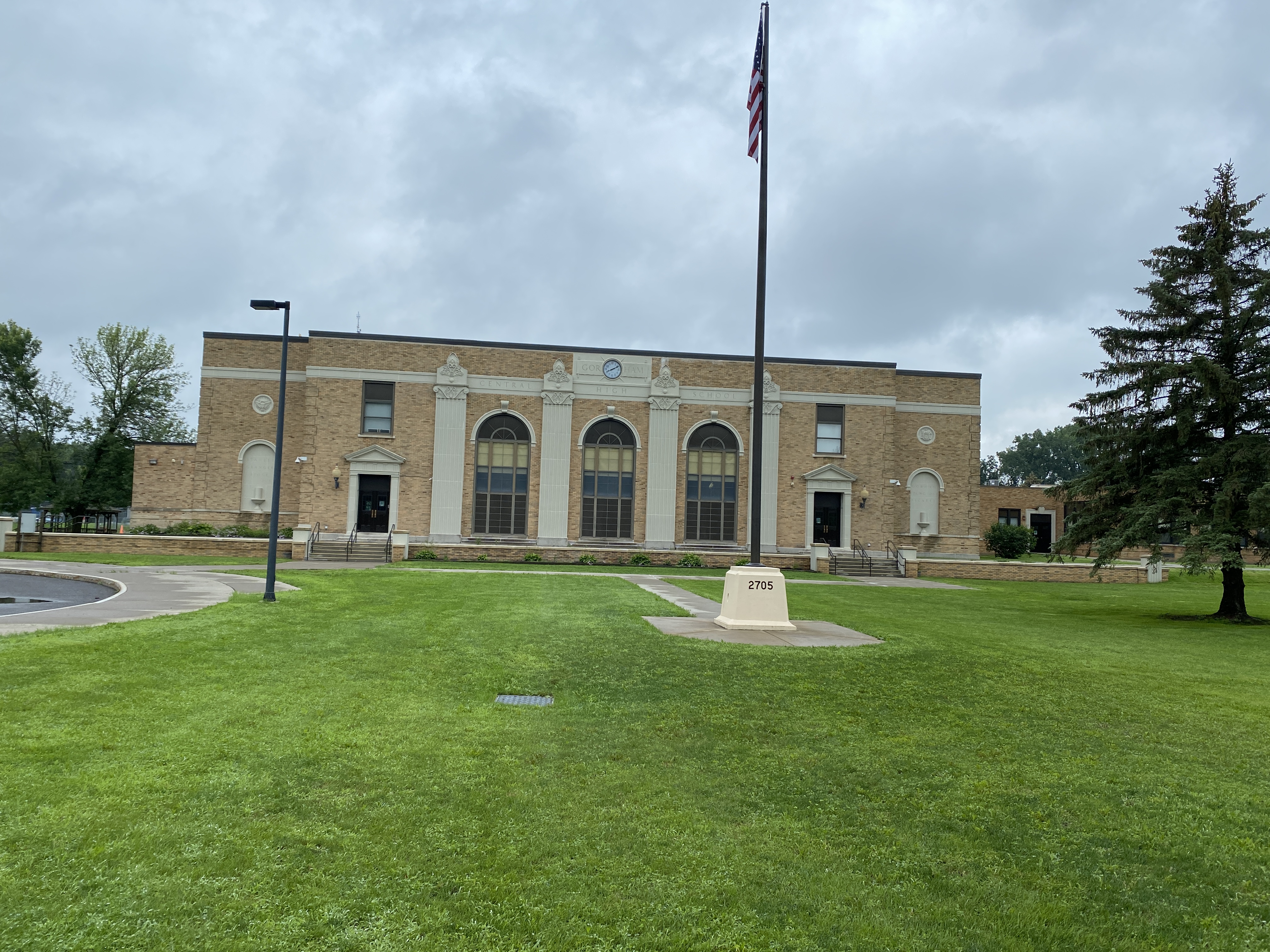
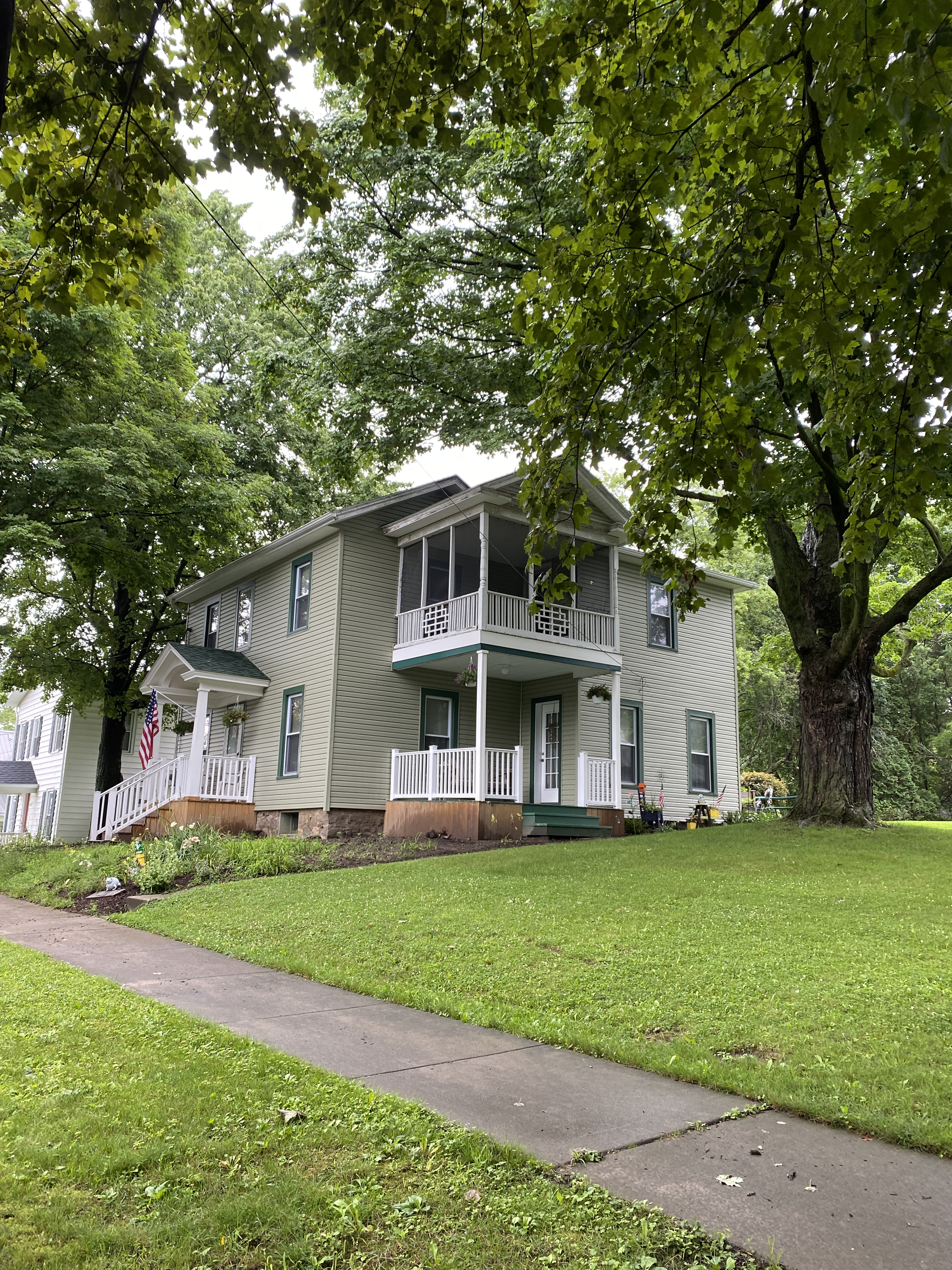
And I made it home. Though I have visited several times between moving to Denver at age eleven and today, this was the first time I came upon my tiny childhood town on a bicycle. On a bike, you can stop every ten feet. Every five feet. You can feel the mist in the air at the same moist moment that you feel the tears streaming down your face, so overwhelmed by how this little town is almost exactly, in every way shape and form, just as you remembered it. How you remembered walking up the hill to this elementary school built more than a hundred years ago. How your childhood was saving every last dime to buy a piece of 5-cent Bazooka gum or 10-cent fireball from this market. How the curve of the road meant the curve to Dewey Avenue, and this grandiose house built by the construction company two doors down that is Still. There.
How they painted it green now, how the tire swing is missing from the maple but the maple still stands, how the stone wall with the steps down to the street that froze over in the winter for a sledding hill will never be gone. How Flint Creek is as muddy as the day it was born, frozen in winter for ice skating, ripe with frogs and snakes in summer for endless wildlife fantasies.
And you could be here with me, reimagining those summer nights on the upstairs screened porch. Riding your bike up and down the hills, all the way to Canandaigua Lake. Living in a different time.
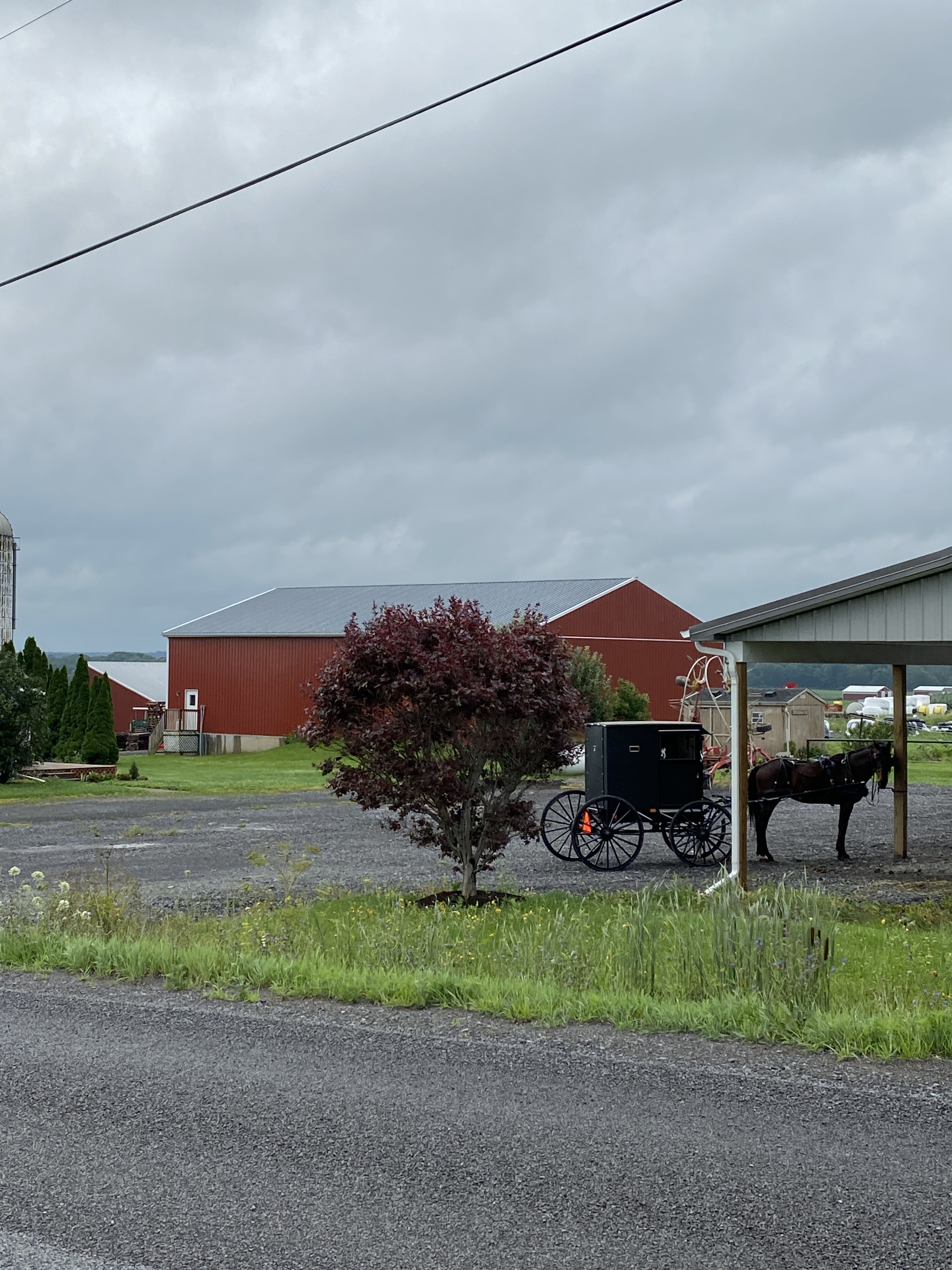
The perfect day doesn’t end at 9:00 a.m., when my teary-eyed, Amish-sighting bike ride concluded.
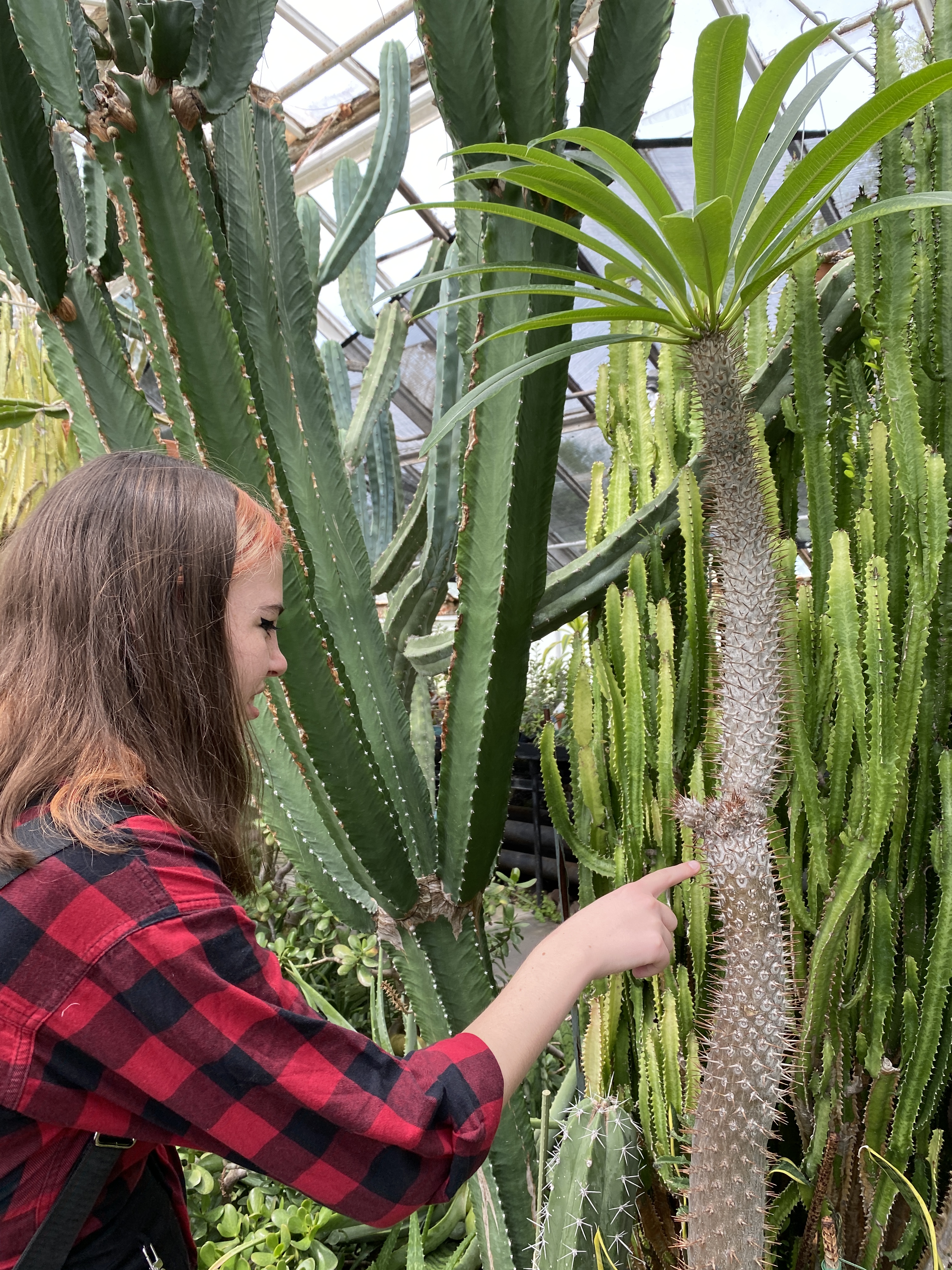
It continues with fresh biscuits and apple butter from yesterday’s farm stand. With my girls being agreeable with each other and today’s adventure: Sonnenberg (“sunny hill” in German) Gardens, another childhood favorite. With adventures through a Japanese, a pansy, a rock, an old-fashioned, a blue-and-green, garden.
Throw in a nineteenth-century mansion built by the founder of Citibank, and we have ourselves the perfect locale for beauty and peace, plants and prosperity.
On a road trip, they are together, not isolated in their rooms. They touch plants and share stories and talk, and it’s like they’re little even if we’re about to send one to college. And there is a magic in this walk that can’t be captured in a photo, in a blog post, but only in a grown-and-flown mama’s heart.
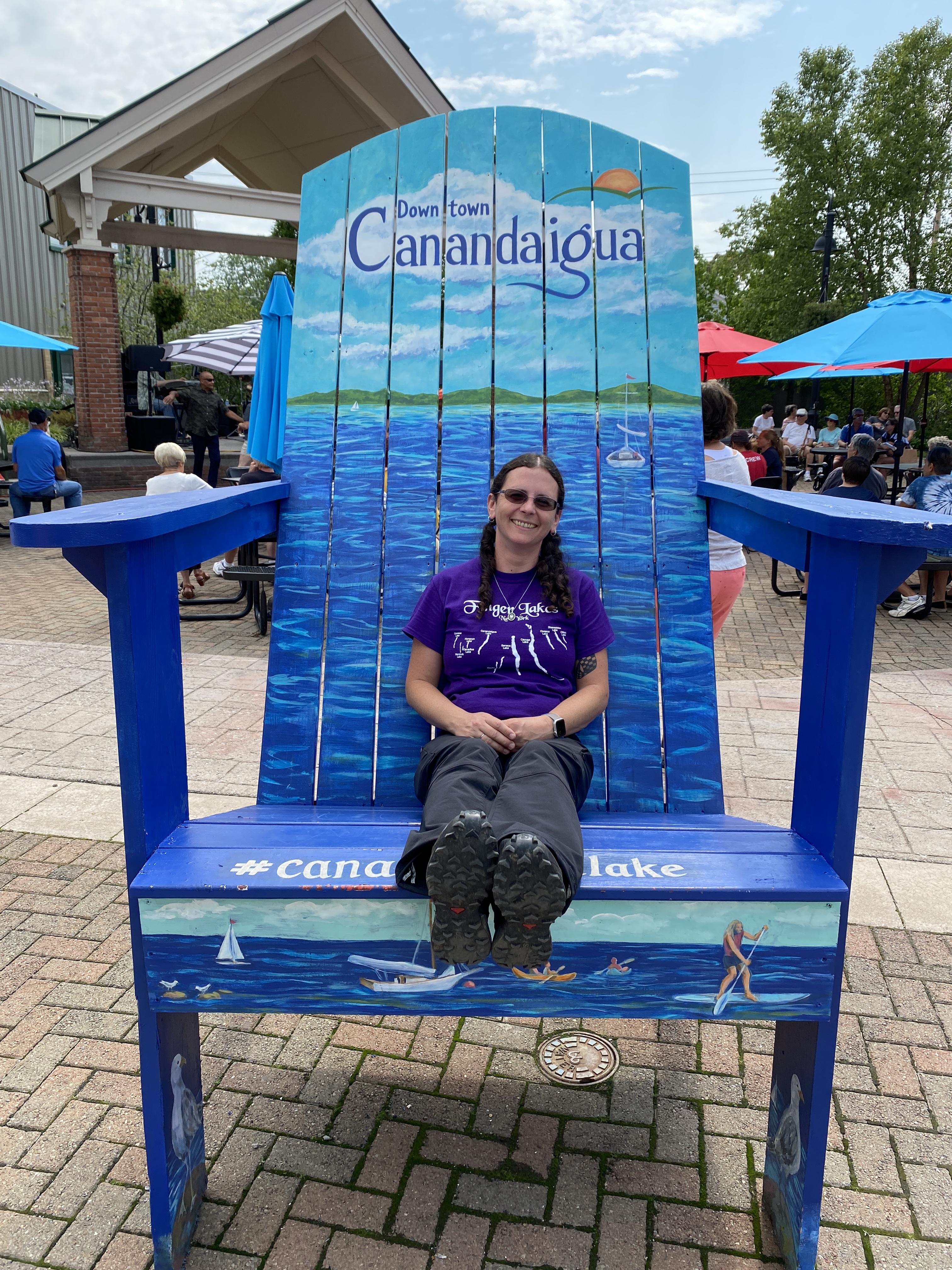
A magic that flowed through them as, surprise and joy to us all, we came upon a street fair in the center of Canandaigua. Mythili bought hand-made soap, Rio and Izzy found earrings, Bruce bought a new coffee mug, and I found the perfect wood-carved gift for Fabian. More than the gifts to local artists was the gift of a crowd. Post-COVID crowds, live music, the joy of being vaccinated and free from worry.
How hard it is to be an American, and how easy.
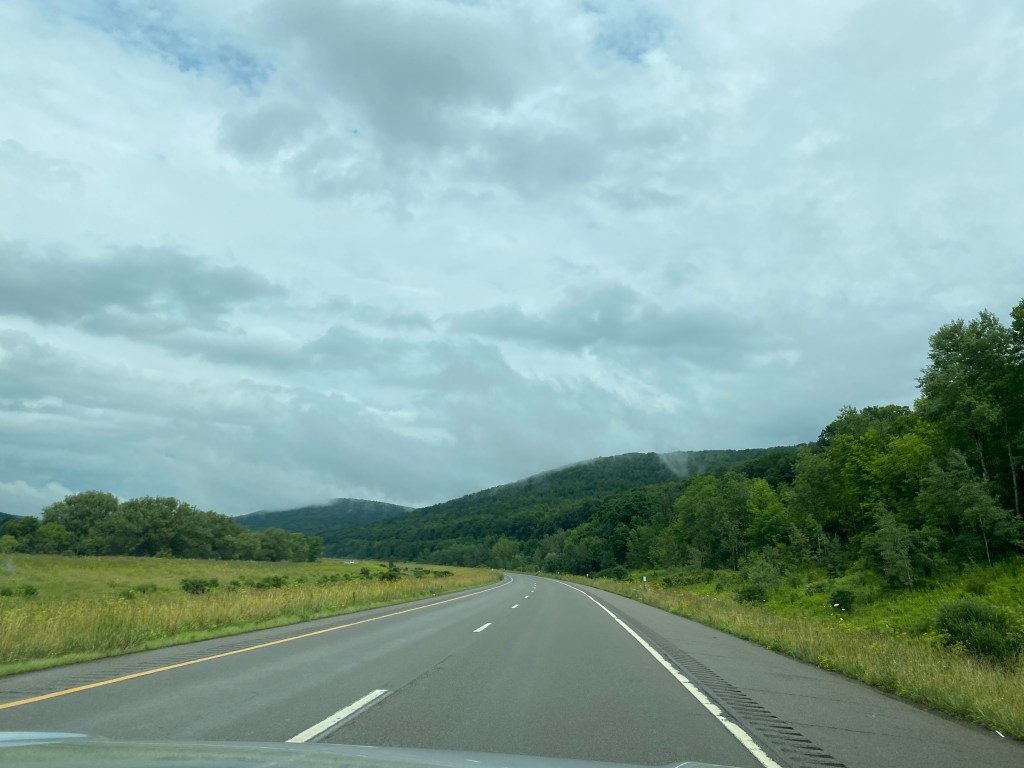
How simple, that within ten square miles, you can see scenes like this, tourist me, and scenes like this, Amish living their independent-yet-free lives.
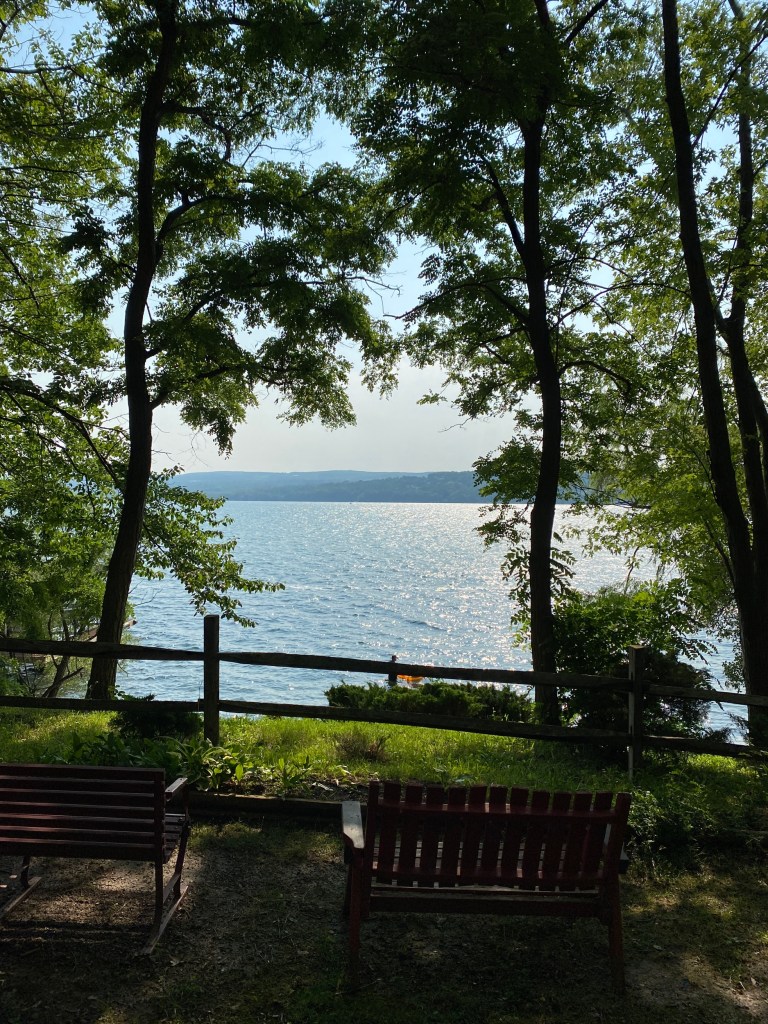
And that is not the end of my perfect day. My perfect day is this lake where my mother, afraid of water because her parents never taught her how to swim, signed me up for swim lessons at age four. Not in a pool. Not in a rec center. In Canandaigua Lake, where today, the clouds broke free and listened to my blue-morning-beckoning, and brought you this lake, this view, this seventy-five-degree perfection of glacial meltdown between these perfect hills, my childhood hills.
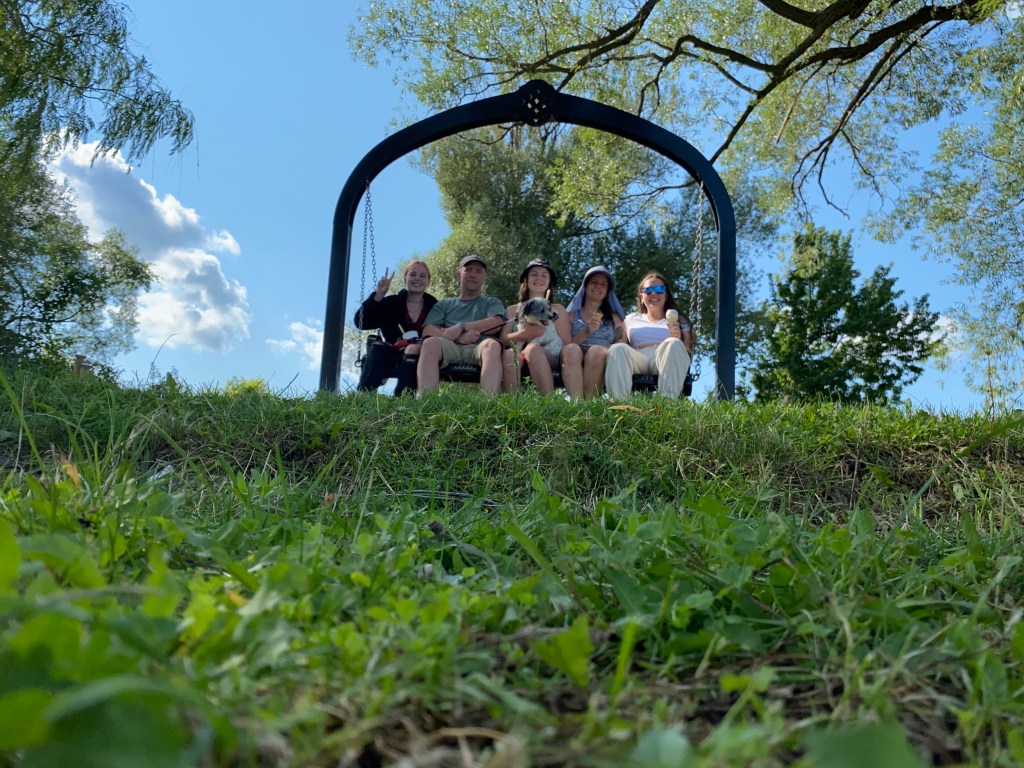
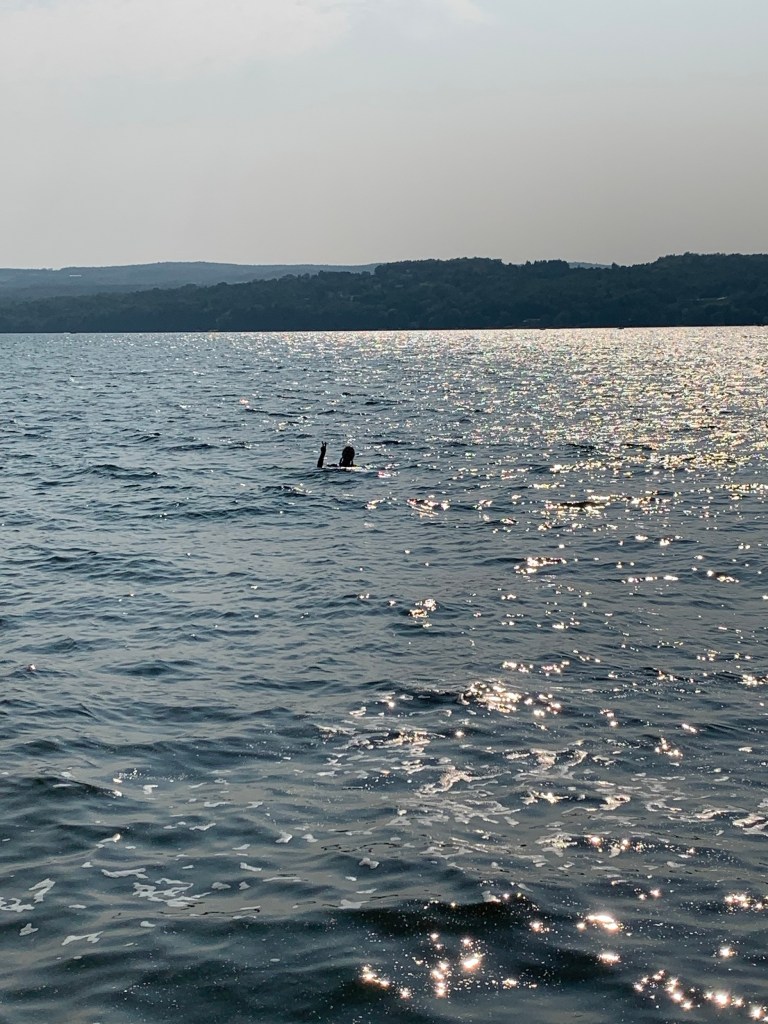
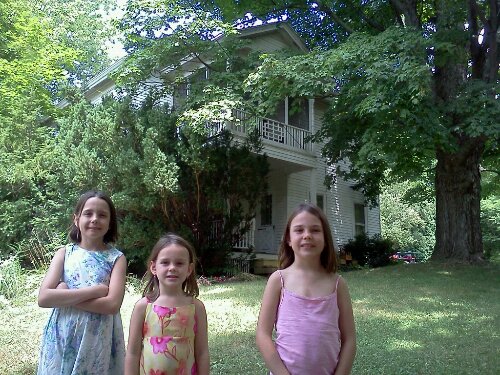
That is my middle child, offering her perfect smile on this perfect day.
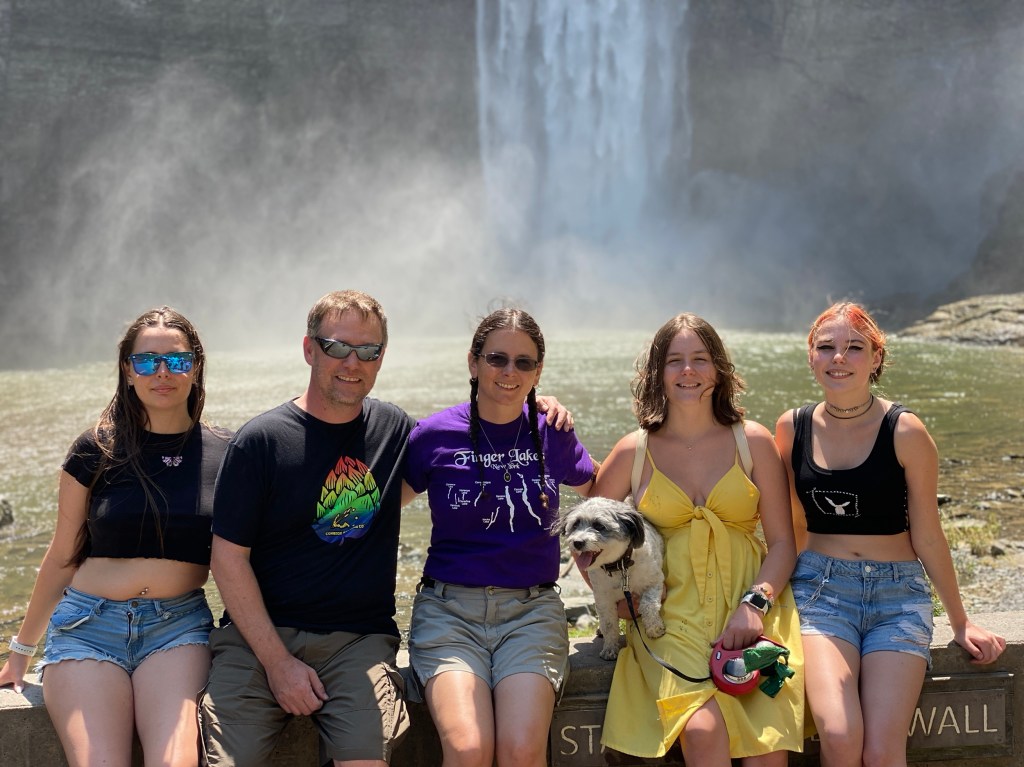
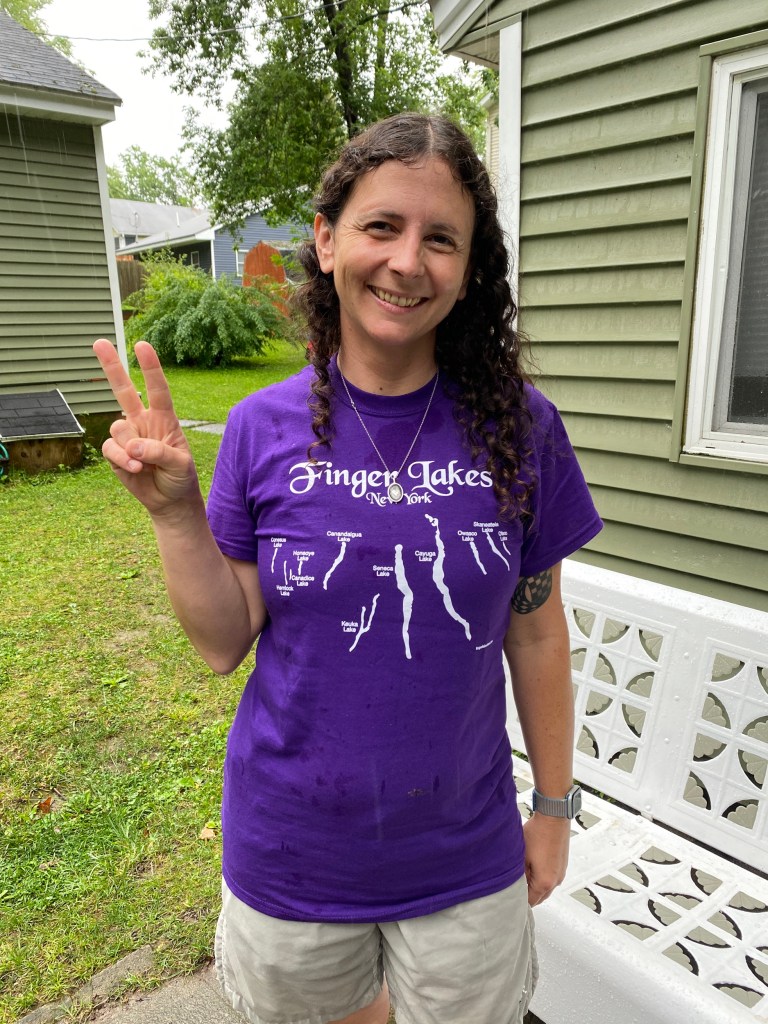
That is me, blue on blue on blue, offering my two fingers of peace from my Finger Lake, offering you this memory, this perfect day.
Take it. Tuck it away. Eat your Pontillo’s New York Pizza before it gets cold.
And travel the country, the world, while you still can, where you still can.
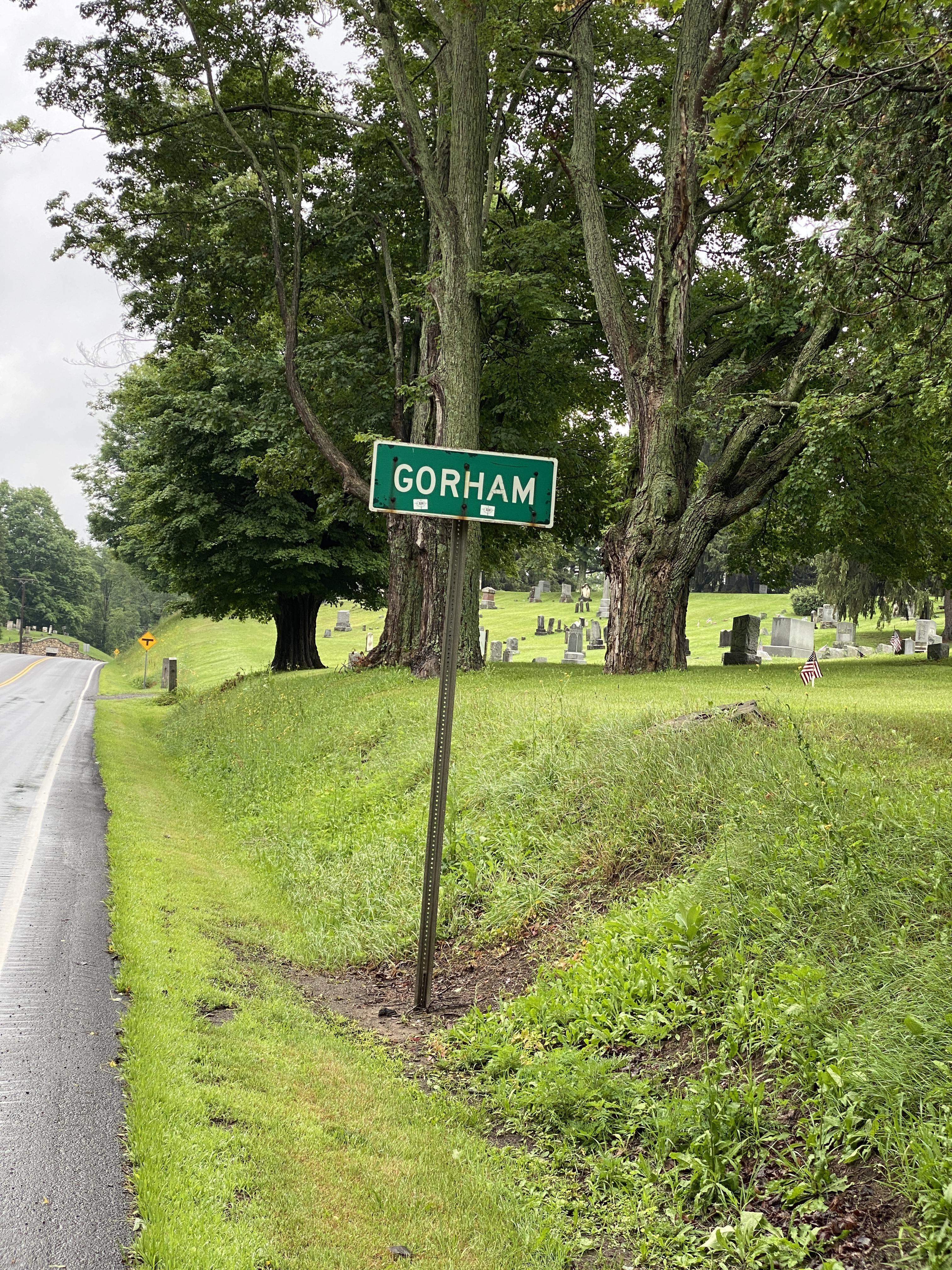
Growing up in a small town can have its magic moments of freedom, like never having to worry about locking your door, visiting the town store so many times that the owners know you by name, or being able to stay up until the bats come out while you play cops and robbers with the neighbors. But the excitement of crowds and city life always enticed me as a child, and it was something I rarely experienced firsthand, except just once a year, the most magical day of the year for my small town of Gorham, New York.
The Pageant of Bands.
This event encompassed my desires for thrills, happiness, and excitement so much that I would prepare for its arrival months in advance and still be talking about it for the rest of the summer. While I didn’t play any instruments myself, having all the high schools from the wider rural area come to our town for a parade/competition meant nothing less than a day of thrills. For once, our town had vendors come in selling everything I always wanted and my parents never bought for me: hot dogs, corn dogs, cotton candy, snow cones, ice cream, fried dough, nachos, curly fries smothered in cheese, and souvenir items like balloons, banners, and flags. To my town, my little Podunk town where the other most exciting event that occurred was the annual volunteer firehouse pancake raffle.
Each year, upon the approach of June, my neighbor, Jen and I would save every penny we could—we’d collect cans we found in alleys and ditches, turning them in for five cents apiece, save change left over from purchasing our lunch, and sacrifice our measly allowances, normally set aside for buying whatever allotments of candy and push-up ice creams they sold in the store, so that we would have money to spend at the annual Pageant of Bands.
The morning of the event, I’d be up at dawn, scouring the streets for any sign of life. As the school buses and event vans poured into town, parking in the school lot at the top of the hill on Main Street, I had my money and my autograph book ready. Jen and I would meander through the uniformed band members, admiring their bright gold medallions, their tassels of every school color ranging from hunter green to maroon, their hats that looked like white mockeries of top hats, their glistening leather boots and pants that appeared to be born perfectly folded, and collect signatures.
For some reason I had grown to love the band from Waterloo, and I always started with them. At age eight, I didn’t seem to grasp the fact that these bands represented high schools, or the age was far too distant for me to fathom, so I admired them as much as if they were Hollywood movie stars. Every year I was greeted with surprise bouts of glee as they signed my autograph book, and thinking back on it now, I don’t know who was happier about the whole thing, them or me.
After we’d made our rounds with the bands, we’d meander through the tables and stuff ourselves with the wares that were magical. My personal favorites were snow cones and cotton candy. I would suck all the juice from the snow cone and crunch on the ice as the bands began marching by, pounding on their drums, belting out glorious tunes on their trumpets, tubas, and trombones, and keeping the perfect alignment of steps as they smoothly made their way up the hill. By the end of the event, my snow cone had melted, and I would begin working on my cotton candy, pulling small tufts into my sticky fingers, creating little cubes and popping them into my mouth, luxuriating on the sweet, grainy satisfaction as the cotton slowly dissolved on my tongue.
The Pageant of Bands ended the school year and began my summer. It made me and everyone else I knew in the town feel that, for once, the spotlight was on us. Years later, after moving away and living the exciting city life that I’d always dreamed of as a young child, I can still hear the beat, feel the momentum building, and relish in the smooth movements of the bands as they marched up the hill, marking the new season and my heart with their music.


















 Step Write Up