The Swirling Reality of Everyday Life

img_5224
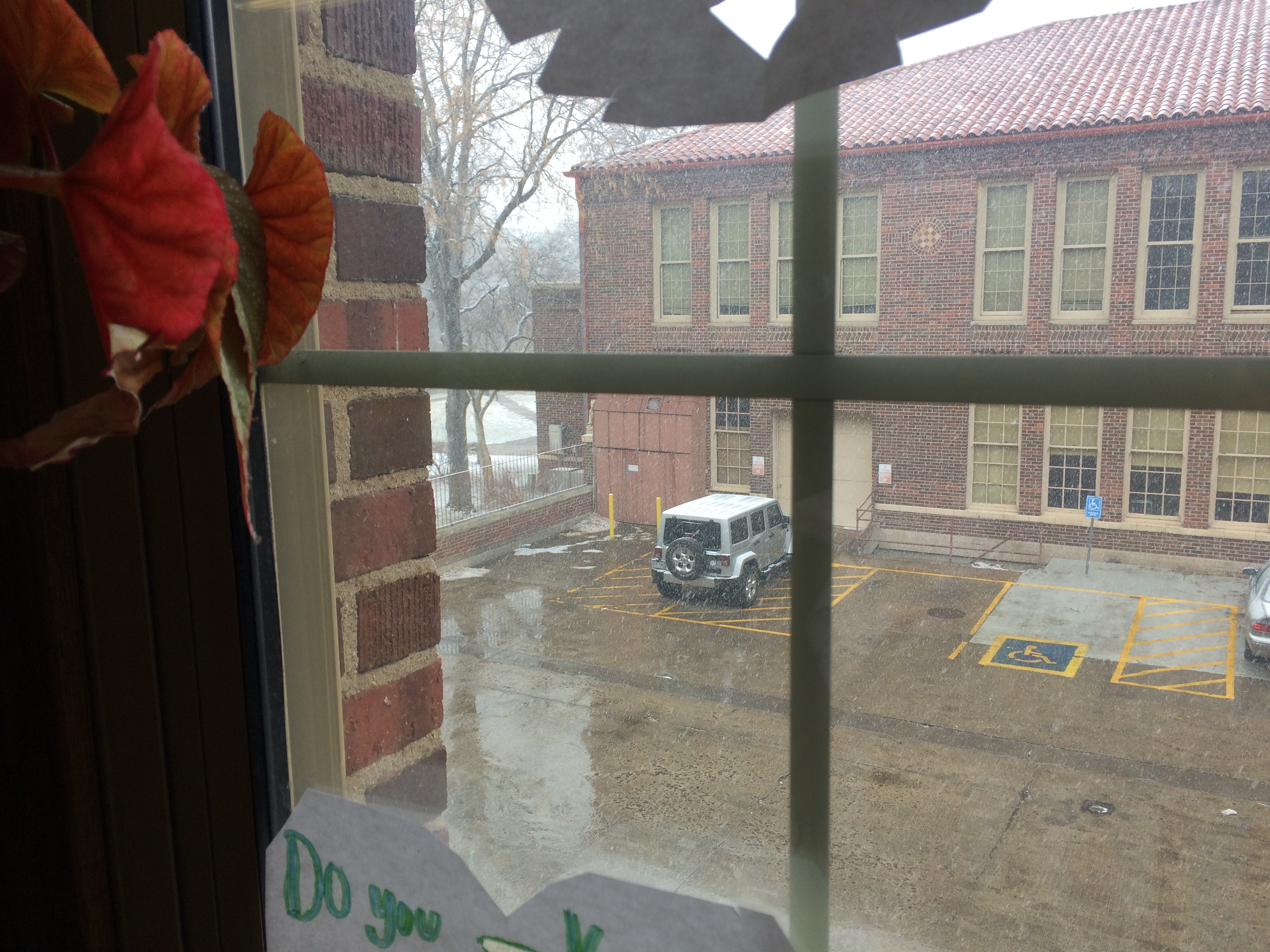
I watch the white world spin outside the third story window. Flakes, long absent, now twirl in a late winter dance, clinging to bare branches, reaching for a new hope.

I catch glimpses of the video–an analytical description of the autonomic nervous system. It is both too much and too little for me right now. The primitiveness of the hunt, the threat that is ever-present in our lives, has put me on this graph at full activation–State 1–always ready to react.

I want to be outside. To feel the flakes on my face. To bite the cold with shivering teeth. To pretend that winter will stay.

I want to be those bare branches, gathering snow in my arms, soaking up every last bit of moisture after too many days of drought.

The sky whitens as the swirls make their way across the city. The video provides a relatable example–how we react when we’re driving a car on a snowy evening and slide on a patch of ice. I giggle, minimally, and my co-worker turns her whole body towards me to be sure I see her how-dare-you? glare.

Does she not understand the irony? After a winter without snow, we’re watching a video with this particular example on a snowy afternoon?

Later, State 1 follows me as I rush out of the building, late to pick up my youngest. I find a parking spot half a block away and rush against the crowd of parents and children leaving the school. I stomp through the slushy parking lot and round the corner of the building as the first grade teachers close their doors. There she is, the final student standing in the cold, holding her hood around her eyes and huddling against the brick wall.

She asks for both of my gloves before we arrive at the car, blasts the heat, and turns on the heated seat, but she doesn’t complain. For once, she doesn’t complain, and I find myself breathing in, breathing out, like the wild animal described in the video, ready to let go.

But I can’t let go. It’s the drive on ice in swirling snow, the counting of thousands of cookie dollars when I get home, the friend over, the constant mess, the story told of the one day the older girls caught–and almost missed–two city buses, the trek across town to the bank, the grocery stop, the endlessness of the swirling snow and the swirling reality of everyday life.

Before I jolt across the parking lot that separates the bank from the grocery store, I hear the sirens. The sound of panic, the crashing of metal. The slipping on ice.

I grab the few frozen items I need off the shelves and make my way back into the snake of traffic. It twitches and slithers in the shadow of blinking red and blue lights. The accident, less than five minutes behind me, four cars splattered in pieces across the intersection, firefighters fighting the good fight.

That could have been me.

I think about the graph in the video, the curving line, the constant dip that we find ourselves trapped inside, unable to get over the hump that could save our lives.

The panic that sets in when our kids won’t listen, when we’re running late, when we fuck up an interview, when we slip. On ice.

I make my way into the snake. In slow motion, we weave through the mess of the accident. I breathe in. Breathe out. Think of the words I will write. Of the children I will hug.

Of the irony of this swirling reality of everyday life.

And I laugh.

(No one glares at me).

What Sundays Have Become

Nearly nineteen years into our marriage, it is time for new furniture. A friend came over the other night, and as the girls piled onto my lap on the sofa claiming their right to me, the wooden leg busted underneath, exposing the reality of its twenty-year-old, hand-me-down state.

Hence, Bruce and I spent four hours today driving between stores, researching cat-scratching deterrents, and deciding on a leather reclining non-power furniture set… that we didn’t buy.

Instead, we continued our twenty-first century journey to the grocery stores. We bought the usual to feed our family of five: avocados and cilantro for our weekly need for fresh guacamole, bananas, apples, and clementines to fill lunch bags, chicken and sushi to make our dinners.

And something more: a stockpile of nonperishables. Beans. Pasta sauce. Brown rice. Cans of soup. Tea. Flour. Canned tomatoes.

Yesterday, my husband of nearly nineteen years and the man so nonviolent that he cringed at the idea of actually killing an elk the one time he went hunting, told me he thought it might be time to buy a gun.

Today, we decided to save our $2000 on furniture because we might need it to stock up on food and provisions before the coming of the war that inevitably will destroy our democracy.

This is what Sundays have become. There is no joy in errand-running, no hope for a new living room set. There is the impending doom of a future that none of us can predict nor look forward to. There are three girls in our home whom I fear will not have a future at all. There are tweets and executive orders and absent investigations and jaw-dropping obstruction.

Soon there will be food shortages. Rations. Militia.

It is all around the bend as we navigate from city to suburb to city on the highways brought to us by progressivism, searching for what we need today, for what we might need tomorrow.

This is what our Sundays have become: me sitting in my nearly-nineteen-year-old recliner, hoping this marriage, this world, my children, will live to see another nineteen years.

Running Rabid

since the election,
 somehow my days have become
 a cataclysmic mix of mundane chores
 and tearing my hair out over
 what we’ve done to our democracy
 
 it’s the gut wrenching choice
 Travis must make as Riona and I
 grapple with Old Yeller-
 do I shoot my best friend
 or suffer the same fate?
 
 only—
 our fate is sealed, well after
 the roan bull has staggered onto our property… and Yeller?
 his last howl hovers over
 a hydrophobic nation
 
 God save us all.


Umbrella of Darkness

truth hides within signs:
 poverty, gluttony, sin
 (ready for taxes?)
 
 (redemption awaits
 in Jenny Craig’s Curves routine
 for those still searching)
 
 a grey November
 under Dollar Tree’s shadow:
 what our country’s worth
 

Floodletting

On my second daughter’s due date, I woke before dawn on that November Wednesday to check the state of affairs: had my labor begun? Had my water broken? Had Bush been reelected?

Only the third was true, and I waddled out of our mid-level bedroom (close to the bathroom) to trek down to the basement to tell Bruce. As soon as I stepped onto the thick, lush, high-quality carpet we’d spent thousands of dollars on that summer in our basement-finishing saga, I felt a soggy, foot-chilling squish.

And then I heard the water. No, not my water breaking. A pipe breaking. And my candidate losing. And my baby not coming. All on a dreary November morning twelve years back. And I spent the morning after election day carrying books from the basement to the second floor, shifting furniture, wishing for a different president and a drier basement. It was a disappointing day, but not a devastating one. Not a frightful one.

With Bush’s second term, we liberals held our breaths to see what might happen. The wars in Iraq and Afghanistan were in full force, and the ensuing investigations as well. We were three years past 9/11 and still reeling in its shadow. The economy was shaky at best, and its effects played out not long after Mythili (eleven days late) entered the world: Bruce was soon told his job as a contractor for AT&T could end at any moment; no other prospects were in sight; and my miniature in-home childcare “business” began to crumble before my eyes.

It was a tough time for us. For many Americans. Not long after, the housing market crashed around us thanks to limited regulations on banks and uneducated masses. Millions of people lost their homes, their jobs, their livelihood.

It was easy to blame Bush, though he couldn’t wholly be at fault.

Just like the other Americans I have lived amongst for my entire life, Bruce and I persevered. Since he couldn’t find work, I returned to teaching, leaving my two-and-a-half-year-old and nine-month-old daughters in his full-time care. I had just finished my master’s degree, and it was my third year of teaching, so we lived on $37,000 that first year. We had dial up internet, no cell phones, zero debt, used cloth diapers, breast-fed the baby, and never went out to eat.

It wasn’t the easiest of times, and Bush certainly wouldn’t go down in history as the worst president, nor the best. But with all the uncertainty that plagued his presidency, from September 11 to mideastern conflicts to crashing housing markets, I never, ever felt that our entire culture was at risk of losing itself. I brought my daughter into the world two weeks after he continued his presidency, and though I was disappointed at his leadership and frustrated with his international war-mongering, I was never truly afraid. I continued with my life, we continued our parenthood journey and brought our third daughter into the world in 2006, all before a candidate I admired had even mentioned his platform.

Now, here we are: 2016. My second child turns twelve next week, and another election cycle has reared its ugly head.

But this is not just another election cycle. It has been filled with conspiracies and vitriol on both sides. The Democratic party has been at near collapse, and the GOP has come up with a string of completely incompetent candidates, finally settling on the most frightening one of all: Donald Trump.

I am thirty-eight years old, and I have been following elections my entire life, thanks to highly informed and politicized parents (being born into a family of journalists led to this). I have seen negative campaign ads since I was young enough to wake on Saturday mornings to watch cartoons. I still remember campaign promises like, “Read my lips: I will not raise taxes” and my father’s fierce criticism when Bush Sr. was proven a liar once he became president. I participated in two mock elections in my elementary school in my small town in upstate New York: I was one of the five percent who voted first for Mondale and his female vice-president running mate, and one of the two percent who voted for Dukakis when he was up against Bush Sr.

I realized early on, listening to what my parents taught me, that it didn’t matter if no one around us really believed in the same things we did. What mattered was social justice. Equal rights for all people, LGBTQ, people from varying religions, and people of every race. What mattered was equal rights for women, especially in regards to education and career.

So, while I am not a career politician, I know politics. Liberal politics are in my blood, and as much a part of my core beliefs as anything else.

Yes, I am a bleeding heart liberal. That’s why I cried that day on my brand-new soggy carpet when my baby wouldn’t come and Bush was marking her entrance into the world. That’s why I proudly posted my Dukakis poster on the school bus window for the whole world to see, even when all the other kids laughed at me and told me Dukakis would never win.

I care about my candidates. But more importantly, I care about the issues that they represent.

And now we are in a new age of presidential candidacy. We have social media that blows everything out of proportion and turns father against son, sister against brother. We have minute-by-minute clips of every word every candidate ever spoke.

We hear it all. We hear a candidate suggest Muslims should be listed on a national registry. We watch him mock a disabled man. We hear him brag about assaulting women and grabbing them by the pussy. We hear degrading remarks about the way women look. We hear him ramble on in incomprehensible sentences. We hear him speak of deporting immigrants, of building walls against them, of claiming Mexicans are rapists and thieves. We hear him proclaim that the election system is rigged. That Obama is the worst president ever. That his opposing candidate should be imprisoned. We hear him say that climate change was created by the Chinese and is a scam.

Vitriol is the center of this campaign. It’s all over the media, all over social media, and all over the living, breathing world.

It is what my student hears while waiting at a public bus stop and two white girls first accuse her of being a Mexican who should go back to her country, and then, on further examination of her looks, determine she’s an Arab who is also a terrorist that President Trump will get rid of.

It is marked in neo-Nazi, pro-Trump graffiti within hours of his election.

It follows the next generation like a dark shadow, leaving them in shaking, fearful tears as they discuss the stripping of their LGBTQ rights at GSA club; as they wonder if their family will be one of the two million he plans to deport in the first 100 days of presidency; as they proclaim their gratitude for their parents still taking the risk to bring them to this nation that they thought was free; as they navigate the realization that at least half of the people they know now have a presidential voice to support and back their once-silent bigotry.

It follows the teachers, the public servants: We had a special faculty meeting today to help us help the students cope with their fear, their mourning, their plans for action–immigration lawyers, extra counselors, and mental health specialists are just a phone call away. Yeah, you heard me right–we had to bring in extra mental health specialists to help us cope with a man who was just elected president.

Twelve years into my daughter’s life, I am truly afraid for the first time of my decision to become a parent. I am afraid of what the world has become. I am afraid of what will happen to my students. I am afraid that all the steps we have made toward equal rights and protection of women will be destroyed. I am afraid for my friends of color, my Muslim friends, my LGBTQ friends.

I am afraid. I am not angry. I am not bitter.

I am afraid.

I am a bleeding heart liberal, born and bred. And my heart is beating too wildly this week. This month. These next four years.

There is no soggy carpet chilling my steps. There is no rebirth. I have the faces of three daughters whose lives I fear will be plagued with sexism or ended by policies against renewable energy. I have the faces of thousands of students shuffling through my mind who I fear will not have a future in my country.

I am afraid.

I am afraid.

We have just elected this man to be our president. The water has just broken on a new era in America: the era that openly accepts a bigoted leader. And I am drowning.

Please, someone, teach me how to swim.
American Doomsday

when i took this pic
 i didn’t know the sunset
 would be our sundown


And Then I Remember

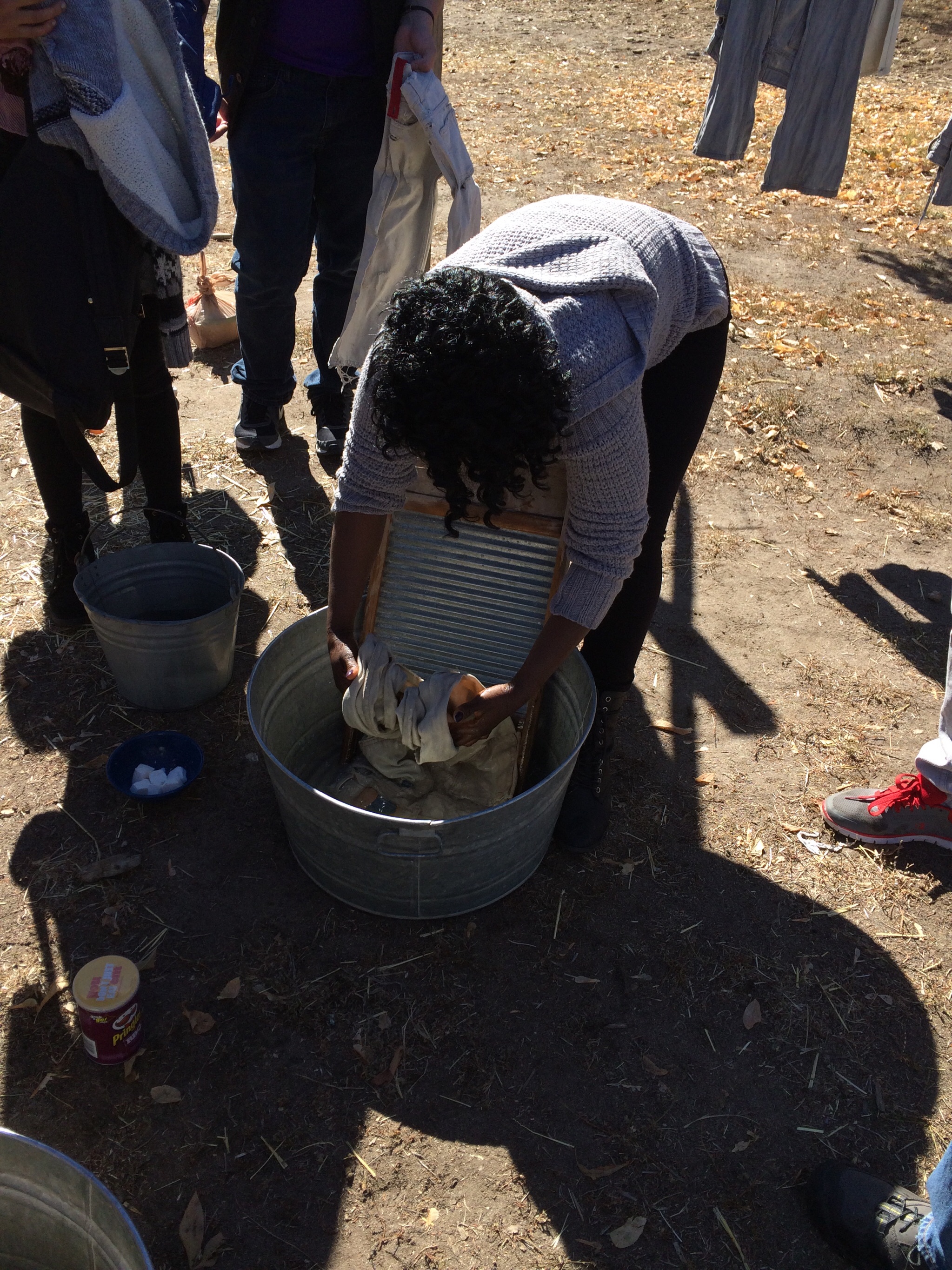
 This. This is why I teach. For three years she’s been in my class. She has gotten married. Had a baby. But she still can’t decode words. She still struggles with basic sentences. I know she has more going on in her mind than Bambara and Mali and motherhood, but I haven’t found a way to reach this girl. I haven’t been able to communicate with her in a way to help her understand. But “reliving” 1880s farm chores today, she said, “I got this. We do this in my country.” And today, today, today, she was the best at something. This. This is #whyiteach


A Few of My 57 Curriculum Training Haikus

8:15
 summer holidays:
 curriculum training hell
 for texts i won’t teach
 
 8:25
 at least we get paid
 for wasted time this Monday
 (planning my vacay)
 
 9:00
 psycho white girl texts
 with teen serial killers:
 way to start the year.
 
 9:13
 unit one: three essays?
 complex texts, presentations…
 for kids who don’t read
 
 10:02
 college and career:
 key words to pressure teachers
 to make miracles.
 
 10:48
 standards-based rulers
 measure how inadequate
 their understanding is
 
 11:21
 what the fuck is this?
 we’re making popcorn today?
 kernels are for birds
 
 11:35
 connect to their lives
 teen rebellion feeds us all
 and sucks life from us
 
 11:42
 i’ll catch you some notes:
 a real, low-level class–
 let’s try a scaffold
 
 11:49
 these questions lack hope
 for virtually all our kids
 we’re adding rigor?
 
 11:53
 curriculum rocks
 when i write it for my kids
 so why am i here?
 
 12:47
 can we read the texts,
 plan together with our teams,
 stop mindless bullshit?
 
 1:42
 anchor my thoughts, please:
 texts are not relatable
 to kids in my class
 
 2:24 (Heinz 57)
 i’m making ketchup
 though it sure as fuck needs spice
 just like this training

Tracks

I remember the first time I encountered poverty. I thought I’d encountered it when I was eight, in my grandmother’s kitchen. We’d just opened our Christmas gifts, and my cousins had their usual wealth of new skis, Patagonia sweaters, and trips to the ski slopes, when I heard my mother say to my father, “I wish we weren’t poor.”

But that wasn’t poverty. That was Christmas in Connecticut where my grandparents flooded us with what they could afford. Where we spent a day in New York standing under the giant tree that took up Rockefeller Center. Where the snow fell and the white, white Christmas shined crystal clear.

I did’t see poverty until three and a half years later, on a bus ride home from my middle school in Denver. And I know (now) it wasn’t the poverty of the third world, that it could have been so, so much worse. But it was as real for me then as it was today, twenty-six years later, walking across those same railroad tracks that I saw that day on that infamous ride home.

I was new to everything: the city, the diversity, the concept of extracurricular activites and late busses. After missing the correct bus home on the first day, I was anxious not to make the mistake again. But I didn’t think to ask anyone in my MathCounts group about the details of the after school activity bus, and three weeks into the school year, I hopped on to one of two busses thinking it didn’t matter.

As the yellow bus made its way across town, nowhere near a neighborhood that looked like mine, I began to hold in my heart a silent panic. I had followed my crush onto this bus, a boy named Schuyler whose name I wrote in my notebook for most of sixth grade. He chatted with friends as we moved from block to block, across rivers and bridges and a trainyard so large it could only have come from a downtrodden version of “The Little Engine That Could”, my favorite childhood book.

But this was no picture book. The houses became more decrepit, the neighborhoods transformed from treelined mansions into ramshackle shacks with dirt yards… And I was nowhere near home.

My “home” at the time being a two-bedroom apartment furnished with secondhand furniture and borrowed dishes while my parents spent their days searching for an opportunity in this city that had promised them the world.

I sat ten rows back from the driver, and as the time ticked by, my frightful silence pounded into my ears with a heart-throbbing vengeance. When the moment arrived for the tall, thin, dark-skinned driver to let out his last passenger, I knew I’d have to speak up. But my small-town New York voice didn’t want to. I wanted to go back to my small town, where my father had failed student teaching and wasted four years on a master’s degree that wouldn’t come to fruition; where my mother had supported us all on $6.25 an hour from the daily newspaper; where I could walk along the singular street that led from my elementary school to my home, and never feel like the village (city) idiot.

“Now, did you miss your stop?”

“I… ”

“Where do you live, honey?”

“I know my stop is Ogden and Ellsworth.”

“Well that was a whole other bus.”

He got on the radio. He made a plan. And I thought about him pulling up to my block of apartment buildings. About the little girl, Valerie Martinez, who had invited me over once and once only. “My mama gets paid on Fridays. Every Friday I get a treat. Last week it was a push pop. This week I might get a set of stickers.” She told me this from the tiny room she shared with her two brothers at the back of the apartment complex. She had a small desk where we played travel Sorry! and I scanned the walls that were filled with pictures torn from magazines and religious idols.

She had lived there her whole life.

I knew my placement in the apartment would be temporary. That my parents would find jobs (they did), that I would live walking distance from the school (I did), in a house we would own after selling our house in New York (we did). That my whole life would never be as dark, as frightening, as the bus ride home across the other side of the tracks. That I wouldn’t have to wait till Friday’s paycheck to get a silly little treat. Or share a room with two brothers for the rest of my life.

“You can tell me where you actually live, honey. You’re the only one left, and I plan on taking you all the way to your doorstep at this point.”

But I didn’t want him to know. That my parents had borrowed money from both sets of grandparents to make the trek across country. That we were living in that tiny, crappy place. That I’d seen the other side of the tracks, with gutted out cars and broken-in windows, and that I was scared. Scared shitless of what my life was at that moment, of what it could become.

I didn’t want him to know that I’d remember that day. How kind he’d been to me. How frightened I’d been. That I would keep track of those disturbing images of poverty like a prized collection at the back of my brain, unsure of what to do with it. That I would understand, years later, just how deep white privilege lies.

Underneath the snow. Between the tracks. Where my city has fallen not into the arms of an unforgiving God, but into the arms of a greedy monster of wealth. Where they have torn down every last remnant of what was real to build cookie-cutter apartments for hipsters overlooking those same tracks. Where the middle class has all but disappeared and I walk with my three girls through a world I couldn’t begin to describe to them because I don’t understand it myself.

Where I am just eleven years old, trapped on a bus, hoping the driver will take me to my stop.

Because without that hope, there is nothing. Just a blue-sky day in the middle of December, a long walk home across tracks I will continue to cross, and a world I am just now beginning to understand.


They Smile

The refugee question:

A firestorm all over social media. National media. International media. One that’s asking us to question our faith, that’s asking us to question our humanity. One that suddenly, after hundreds of years of terrorist violence from all corners of the globe, screams for an answer.

I have one.

First: open your eyes and call yourself a Christian. It starts first with forgiveness. With love. With hope. With faith. The same faith that these refugees have sought to protect for themselves. The same hope that they carried in rafts across the Mediterranean Sea at the risk of their tiny children being washed upon the shore, lifeless and in the arms of a forgiving God. The same love that ties together their families, that protects them from all that is evil in the world, the same love they see on those long walks across he Middle East and Europe, the love for the gift of another sunrise, the joy of another meal, the peace that comes from one set of open arms.

“And now these three remain: faith, hope, and love. But the greatest of these is love.” Corinthians 13:13

Second: Meet a refugee. A Muslim. Have you… Ever? Because I have a classroom full. Every day. They smile and call me by my full and formal name. They do their homework and ask to fix every error on every test they didn’t quite pass. They come before and after school for help. They smile. They thank me. They are polite and reserved, jubilant and chatty. When Denver Public Schools wouldn’t call a snow day and more than two thirds of my American-born students who live closer apathetically didn’t show up to show their consternation, my refugees took two or three busses from the suburb that had the most snow to be here. On time. Ready to learn. And every last one of them from a place where they’d never seen a snowflake before entering this country.

That’s how BRAVE they are. That’s how much they CARE. About everything. They will miss religious holidays, fast all day and finish projects, beg me for more work because they are so desperate to be as proficient in English as a native speaker…. Their parents will work in meat factories and drive taxis and pick up your garbage and do everything you never were willing to do because your American righteousness makes you too good for it…

And you haven’t even met one, have you? You’ve never even had a conversation, let alone spent an hour a day together for two or three years straight.

Third: Protect yourself. The hate that lives inside of you for people who are trying to flee to the promised land with nothing but the shirts on their backs is the SAME HATE the extreme terrorists carry inside themselves when they light the bombs that blow up everyone within their circle. Protect yourself. For you are the enemy: the enemy that lies within. Fear leads to anger. Anger leads to hate. Hate leads to evil. Evil leads to terrorism.

What are you afraid of? Hard work? Tenacity? Dedication? Faith? Hope?

Love?

Fourth: Open your mind. Your door. Your heart. Be the person who lights red, white, and blue across the sky to ask for a better world. The person who wants your children to be safe. Who wants a better tomorrow for everyone who ever set foot in or was born in this country… This world. Be the good you want to see in this world.

Be the smile. Because if you met one, you would know:

They smile.