Balancing My Burdens

As a high school English teacher, I have heard hundreds of stories, and I’m not just talking about the melodramatic novels, plays, and memoirs we are sometimes forced to share with our students.

The burden of our students’ stories is something that all teachers must carry when we enter this profession. We must balance this burden in the midst of administering tests during most of our planning days for a month, attending staff meetings where we are told that we don’t deal with student trauma well enough right after attending staff meetings where we are told we’re not pushing them towards the test fast enough, right after being in class with students who are off-the-walls doing handstands (literally) or thinking about suicide (literally), right before being in class with students who don’t speak a word of English and all my paras are–you guessed it–testing, and these new Arabic-only students have come here with hearing impairments, broken hearing aids, and no money.

I have tried to balance this constant bombardment of burdens with my other role, my most important role in this life: being a mother to three daughters who will soon fully enter the male-dominated maelstrom we call a society.

And?

Most days I feel I fail at both. Some days I drown the sorrow with wine. Other days all I can feel is the freezing fresh air of a ski slope and a million tears of joy. Every day I feel the comfort and strength of the man I love, one who doesn’t contribute to the maelstrom.

Today is definitely one of the darker days. One of the days when I know that I have brought more of a burden than the average teacher onto myself by taking in this beautiful, kind, brokenhearted boy, who, amidst a series of relatively good news in recent weeks, had to share his whole sordid life story with the immigration lawyer today, had to explain the scars on his wrist, his thumb, his forehead, and the weight of his mother’s words behind those scars, had to hear that seeking asylum is an unwinnable case (never mind that just before the meeting he showed me a video exposing his hometown as the most dangerous city in the world to live, overrun by gangs) and that it will be two years if he’s lucky, three if it all goes well, and a 20% chance of never, that he will get. A. Work. Permit.

Not a Green Card. Not a driver’s license. Not an invitation to take a citizenship test.

A work permit.

Then to drive this teary-eyed, always-singing boy home for him to play his Spanish love songs all night long, to pluck along with his new guitar (a gift from my father, another man who doesn’t contribute to the maelstrom), for him to happily heat up some of the sandwiches he collected from the food bank to fill his unfillable teenage-boy stomach.

Then to have my middle child walk into the kitchen after her babysitting job and burst into tears.

Not because the triplets were whiny, not because the three-year-old threw toys at her again, not because babysitting isn’t her favorite thing.

Because they told her, after three weeks and mostly taking over the job from her baby sister (who solicited it to begin with) while Rio has play rehearsal, that they no longer wanted Rio to do it because she’s better.

Because she and I, this middle Mythili, haven’t been getting along lately because she’s fifteen and hates her mother, because she’s been calling me out for being too loud, too embarrassing, too forward, too judgmental, too ME, and because in this moment of inconsolable tears over thinking about what to say to Rio, Mythili and I are on the same painful page.

Because Riona has been hearing her whole life that she’s… too quiet. Too afraid to try new things. Too low to be in the regular group but too high to qualify for services. Too old to learn how to walk. Too immature to fit in with her sisters. Too messy.

Because Riona, after two hours of play rehearsal after eight hours of school after walking to and from school after doing her chores, made this iconic picture of her favorite things: the TV show Friends, an artist’s brush, a sunset background, and six–not five–cats, each with a symbol inside representing the members of our family: a pot for our papa chef, a heart for her mama, a music note for our five-weeks-in singing son, a star for our oldest dancer/actor/gymnast Izzy, a pencil for her artistic Mythili, and a paint palette for herself, the aspiring art teacher.

This is just one day, one story. One of the hundreds of stories that will make their way in and out of this heart within this cat, this heart between Bruce and me.

And I wonder which one will break me. Crying over my kids. Or crying over my kids.

Sweeter than Baked Goods

most don’t write for me

it must be a blue moon day

and i am so blessed

A Quick Email to End 2019

My creative writing teacher (I will always refer to her as such even though I graduated nearly twenty-five years ago) asked us (her forever students) to send her a quick email about an important gift we gave or received this holiday.

Maybe I could snap a quick pic from the tree on Christmas Eve, filled with makeup, watercolor markers, jeans, and long-sleeved blouses for my three teenage daughters. Or of Christmas morning with the magical Apple Watches, so coveted by my Apple-only family.

Or the earrings my mother made me or the gift card to Colorado Gives from my sister.

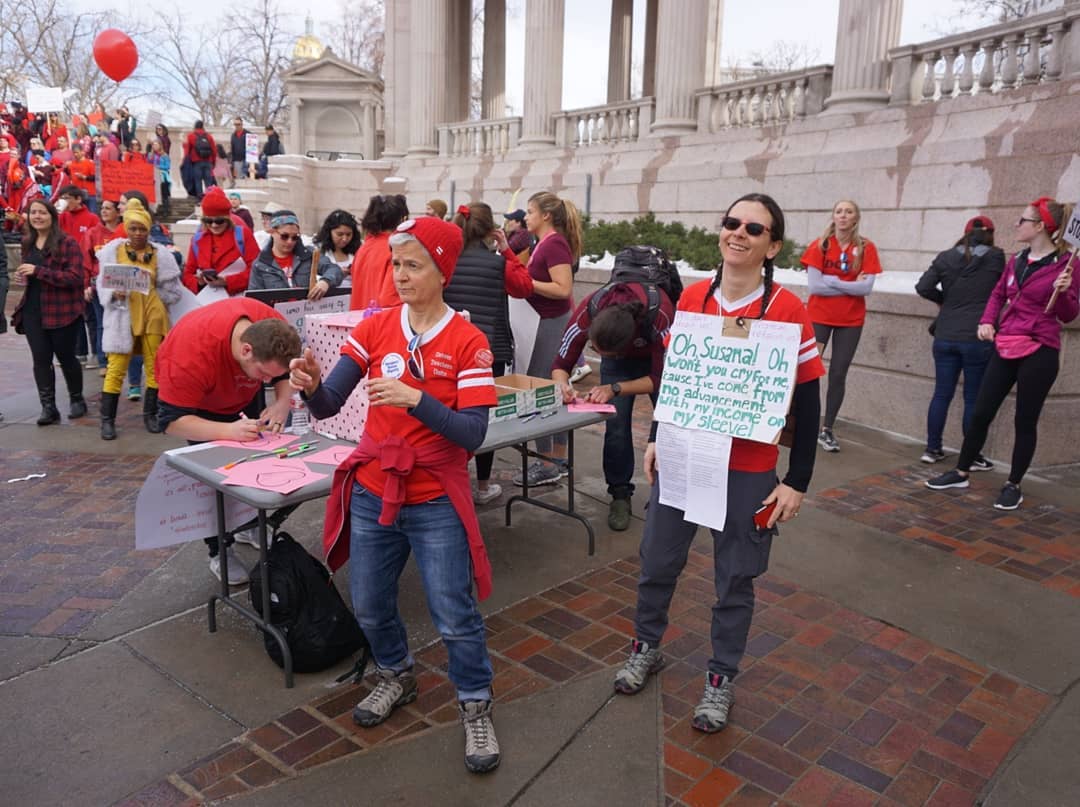
Maybe I could capture a quick pic of my 2019 accomplishments: Writing about, and participating in, a teachers’ strike that led to a life-changing raise.

My first paid-for post. My hundreds of hours of work wrapped up in a National Board Certification. My ever-intricately-planned summer road trip across seven states.

But none of these things could begin to compare with the gift that this year has given me. The gift of this man in my life who would do anything, anything to prove his love to me. Marry me when I was just a baby. Follow me to Spain. Learn how to ski nine months and one lesson after tearing his ACL. Read every post. Drive overnight through the midwest so the entire family could sleep.

Take into our house a boy who doesn’t belong to us and in every way belongs to us.

You have watched the news. You have seen the stories. You have donated money. You have screamed in frustration at the cruelties and injustices inflicted on others by our government. By ourselves.

But have you stood in front of fourteen Newcomers and come to understand how brightly they still see our country? Have you had a hallway conversation with a boy who informs you that, after five days of walking, twenty-five days of train-hopping and pigeon-killing, two days of washing windshields in Mexico City, five days waiting to cross the Rio Grande in the middle of the night on a raft, one week in a detention center and four months in a home for unaccompanied minors, and four months in a homeless youth shelter, he is still looking for a home?

And that, no matter what, he cannot, will not, return home?

What would you do? What might you ask your husband to do? Your three ever-spoiled, ever-adaptable, ever-loving teenage daughters?

Would you keep scrolling past the images of children under space blankets on concrete floors?

Or would you realize that this boy is standing in front of you, in your school, in your class, in your life, without a home? A family? And do something? Anything?

I cannot take a quick pic of the past two weeks, the entire time that has passed between my knowledge of his status and his soon-to-be permanent placement in our home. The phone calls, the emails to every last human I could think of who might help him. The two-hour meeting with the Department of Human Services, his Honduran father on the line, ready to relinquish all rights. The background checks, fingerprints, home visits, all within a day. His arrival to my home with three garbage bags filled with clothing and no coat. The shy first meal that he took to the basement to eat. Alone. His quick smile and ever-present hope that this place must be a better place. His immediate love of our three pets.

I cannot send Mrs. Clark a quick email about my gifts this year. There are too many to count, they are the uncountable nouns I teach my Newcomers: love, hope, future, desire.

They are all in this union that the caseworker asked about today: “Married for almost twenty-two years? Tell me, how do you do it?” “Patience and love. Patience and love.”

They are here, in this boy, unwrapped, ready to be our brother, our son, part of our world.

These are my gifts. I’m sorry this is such a long email, Mrs. Clark.


Inglorious Glory

As usual, one of my honors students has decided to try to evade work by commenting on how he has already written a personal essay for another class, and can’t he just use that one?

I don’t even try to hide my snarky rebuttal: “And I’ve written 2,200 blog posts, but I spent two hours searching for one and one hour revising it yesterday so that I could give you yet another exemplar.”

But he’ll do what he wants, as they all do. He’ll pretend to write tomorrow in class while the others snicker around him, falling out of chairs and posting immature comments on the class discussion thread, eating their lunch two hours too late, leaving torn bits of fast food wrappers littered on the floor as if there were no trash cans in the school.

It doesn’t matter that I have also spent hours planning and replanning each moment of these lessons, that I have begged and borrowed ideas from a colleague, that I have uploaded links and found beauty in words that some of them will never take the time to read aloud, to fit into their mouths and taste their glory. It doesn’t matter that I have a wealth of class activities that ask them to collaborate and ask them to be introspective and ask them to move around the room, and that I have thought about them in the predawn sleepless hours of my weekday mornings. It doesn’t matter that, unlike every teacher portrayal in movies and books, this isn’t the only lesson I planned today, that I also rushed to the copier this morning with a quick revision of my other class’s lesson because yesterday’s trial was such an utter failure that I wanted today’s students to have a better shot at comprehension.

They will do what they want. They will put little or no effort into a story about their lives and wonder why I put so much effort into the words describing mine. “2,200 posts?” another boy chimes in, calculator-phone in hand, “that’s like you’ve been writing every day for the past eight years straight.”

“That’s exactly what I have done.” And his eyes widen even more as he slips the phone back into his pocket.

“What could you possibly think of to write?”

How could I summarize it for him (how could I admit how many of them have been haikus?)? How could he possibly understand a passion so extreme that guilt rides my insomnia if I take even a day, let alone a week, a month, without writing?

How could I not write, when the world is filled with so many ideas, so much beauty and frustration and kids who drive me nuts and make me love them within the same seconds of the same inglorious day?

Like the Moroccan student who, after our ten-minute free-write, wouldn’t stop, who begs me to read through her words describing her journey into a country that threw hate talk and cuss words at her name (which means generosity), at her religion (which means peace), at the center of her beautiful soul.

Like the A students who put a stop, online, to the Nickelodeon banter on the class discussion.

Like the student (straight from Ethiopia) who has only been a presence in my room for a few months and stops by after school to tell me today, broken English and all, that his family has to move to Utah, and he wants to thank me for the “great much of knowledge” that I have given him.

Like the quiet persistence of the introverts whose words they share with me on shallow screens, turning their light just so, exposing their torn experiences with adolescence, with depression, with whatever shadows have followed them into this too-well-lit, too-hot classroom today.

Later, I think of what I should have said to the boy so caught up on my hours of writing: There is always a reason to write. There is always something you could think of to put into words. There is always a moment worth capturing, however painful, however disappointing, however uplifting, that I try to fit into seventeen syllables, an image, an essay. 

There is no glory in these inglorious moments of our day-to-day lives.

But there is glory in words.

And that is what I am searching for. Every. Damn. Day.


Ferocity (Revised and Reposted, as a Reminder)

What I want is to be able to write with the same ferocity I had at sixteen, when I would curl up and scribble twenty-five pages in my journal detailing every portion of my day, when I spun my bicycle tires through stop signs at the bottoms of hills, hands in the air, fearless as youth for the ferocious words I wasn’t afraid to spout out.

What I want is to come home and feel that young blood rushing through me, knowing I would have something amazing and important to say, even if my eyes would be the only ones to ever read it. To not have to hover in front of the fridge and feel the hollowness of hunger that comes from too many months of pittance, too many abrupt cancellations, too many days in a row of rain.

What I want is for people to see me. Not for who they think I should be but for the person I actually am. Professional? Yes. Hardworking? Yes. American? Of course. But so much more than that. There’s a reason, I want to shout, that I am your first American teacher who has never called in sick, that I will never be late, that I will ride my bike across town in a rainstorm and teach a lesson in clearly rain-soaked pants and shoes, the dark markings of humility as plain as the nose on my face, in front of a group of seventeen-year-olds whose names I’ll never know!

What I want is to shout, Because I’m not like you! Like the rest of them! Because when I say I’m going to do something, I do it. I don’t promise my children that we will move to Spain and then tell them, despite all signs saying otherwise, that we won’t go. I don’t shirk my duties at any job, no matter how small, because I know the value of work, of supporting a family and being the most responsible person imaginable–at a young age, my mother embedded these ideals into my daily life. And most of all, I DON’T LIE. What you see is what you get.

What I want is for them to really see this person who stands before them, who sits at this fluorescent-lit kitchen table in Cartagena writing these words. Even my husband who tells me, “Don’t do that again, just send them a text like they always do you. Cancel; call in sick.” I could do that. But it would be as bad as choosing not to write these words. It would be a lie. Irresponsible. Disrespectful. All the qualities I despise.

What I want is a job back home. Not the bitter, thankless job they hand me daily in Spain, where I’m as valuable as an appointment at the dentist, where my pay is put to the wayside and my hours are tossed away as flippantly as throwing out garbage. I want to work regular hours for a decent salary and know that if there’s a holiday coming up, I’m not out a day’s pay. I want to know that I am making a difference for young people, that they respect me, and I respect them, care about them, and know each. and. every. one. of. them. Even their names. ESPECIALLY their names.

What I want is to be human again. To accept that Spain is a true paradise if you’d like a relaxing, affordable vacation or retirement. And to know the difference between that paradise and the country I have lived in for this past year.

What I want is freedom. To find myself in a place where people have come to the same realization as me—the realization that we can be better. We just need to rattle our lives a little bit and find the ferocity of our sixteen-year-old selves, arms wide, tires spinning, ready to take on the world.

Essay This

writing for four weeks
 we’ve reached the final draft stage
 and i can sit down


The Swirling Reality of Everyday Life

img_5224
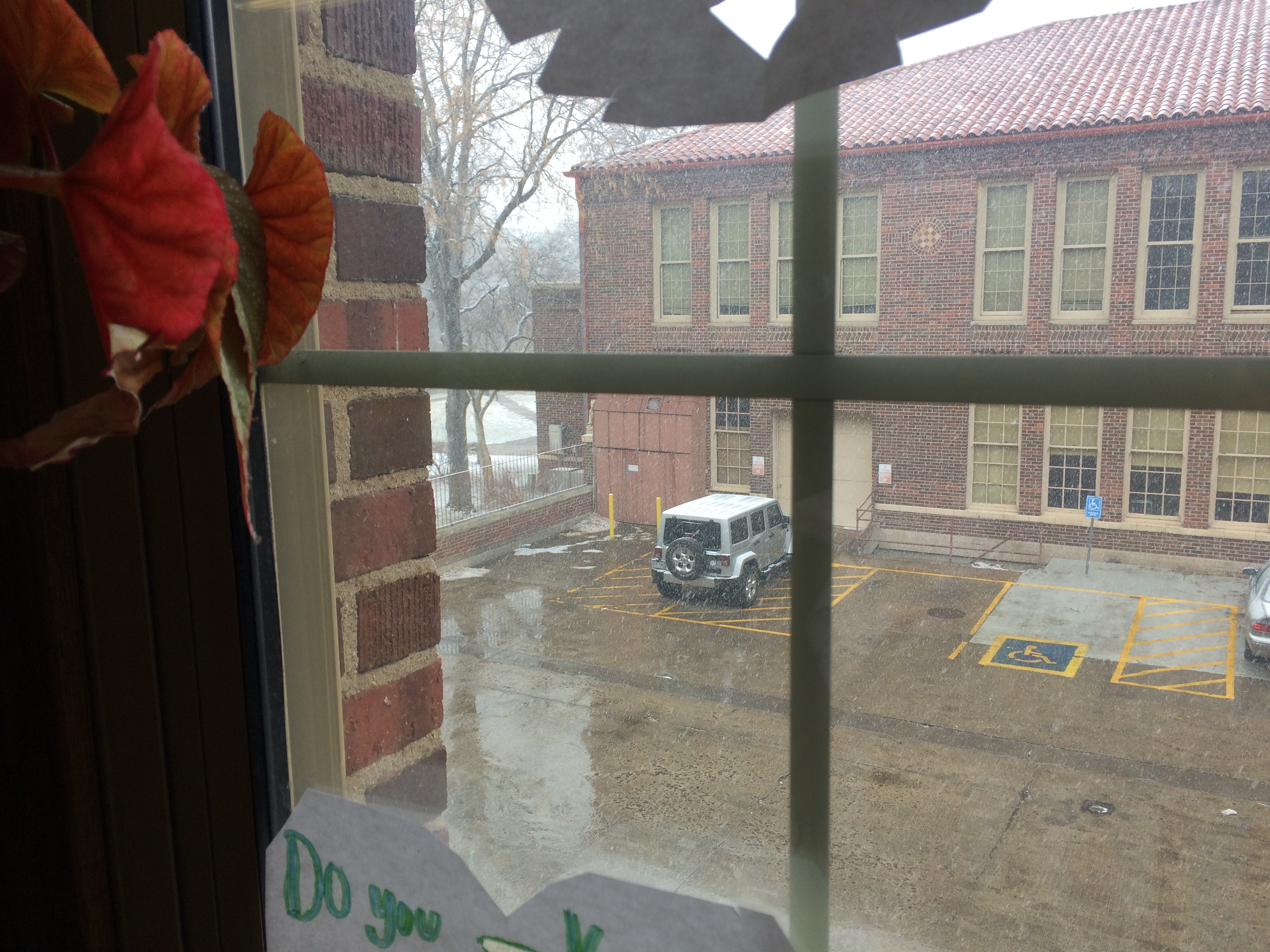
I watch the white world spin outside the third story window. Flakes, long absent, now twirl in a late winter dance, clinging to bare branches, reaching for a new hope.

I catch glimpses of the video–an analytical description of the autonomic nervous system. It is both too much and too little for me right now. The primitiveness of the hunt, the threat that is ever-present in our lives, has put me on this graph at full activation–State 1–always ready to react.

I want to be outside. To feel the flakes on my face. To bite the cold with shivering teeth. To pretend that winter will stay.

I want to be those bare branches, gathering snow in my arms, soaking up every last bit of moisture after too many days of drought.

The sky whitens as the swirls make their way across the city. The video provides a relatable example–how we react when we’re driving a car on a snowy evening and slide on a patch of ice. I giggle, minimally, and my co-worker turns her whole body towards me to be sure I see her how-dare-you? glare.

Does she not understand the irony? After a winter without snow, we’re watching a video with this particular example on a snowy afternoon?

Later, State 1 follows me as I rush out of the building, late to pick up my youngest. I find a parking spot half a block away and rush against the crowd of parents and children leaving the school. I stomp through the slushy parking lot and round the corner of the building as the first grade teachers close their doors. There she is, the final student standing in the cold, holding her hood around her eyes and huddling against the brick wall.

She asks for both of my gloves before we arrive at the car, blasts the heat, and turns on the heated seat, but she doesn’t complain. For once, she doesn’t complain, and I find myself breathing in, breathing out, like the wild animal described in the video, ready to let go.

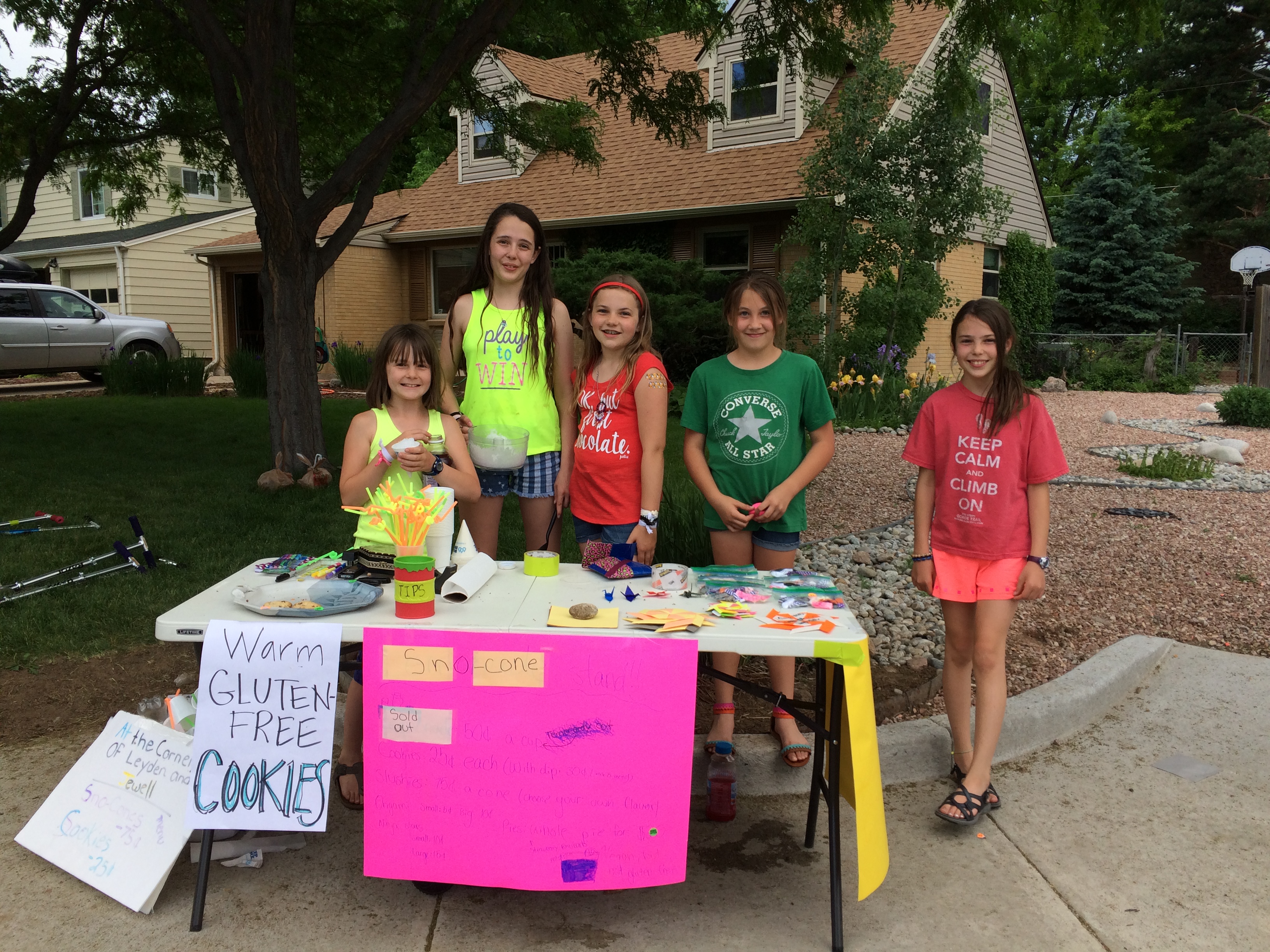
But I can’t let go. It’s the drive on ice in swirling snow, the counting of thousands of cookie dollars when I get home, the friend over, the constant mess, the story told of the one day the older girls caught–and almost missed–two city buses, the trek across town to the bank, the grocery stop, the endlessness of the swirling snow and the swirling reality of everyday life.

Before I jolt across the parking lot that separates the bank from the grocery store, I hear the sirens. The sound of panic, the crashing of metal. The slipping on ice.

I grab the few frozen items I need off the shelves and make my way back into the snake of traffic. It twitches and slithers in the shadow of blinking red and blue lights. The accident, less than five minutes behind me, four cars splattered in pieces across the intersection, firefighters fighting the good fight.

That could have been me.

I think about the graph in the video, the curving line, the constant dip that we find ourselves trapped inside, unable to get over the hump that could save our lives.

The panic that sets in when our kids won’t listen, when we’re running late, when we fuck up an interview, when we slip. On ice.

I make my way into the snake. In slow motion, we weave through the mess of the accident. I breathe in. Breathe out. Think of the words I will write. Of the children I will hug.

Of the irony of this swirling reality of everyday life.

And I laugh.

(No one glares at me).

Honesty. Squared.

It’s a Friday in January and my mouth is running rampant. She came, she asked, and I don’t lie.

I know that people hate the truth, and the truth hurts (me the most–sometimes I think this), but she wanted the truth, and had twenty different ways for us to share it with her, most of them anonymous.

But I said what I thought. What we all think. What needs changing. What already works. I had evidence and examples, just like I always tell my students to write in their ACEITCEIT paragraphs. And I splayed my soul in front of God and everyone–I got a 3 (7 is the best), and Nick was as honest as could be when he spoke to me, and said, ‘I sat in my garage for three hours last night in turmoil over this’–and that humanization of the score meant more to me than anything else. That humanization–that’s what teachers want. 

And do you know what they said (of course)? You let him give you a 3?

As if they hadn’t heard the whole conversation. As if it weren’t enough, the admittance, the heart on sleeve, the truth.

The, Why can’t you be a little more honest?

On with my day. Two more classes in the afternoon. Coming in a bit tired and a bit disgruntled about the first standardized test of the semester they took yesterday, but still willing to work for me. To discuss and argue about the validity of the Universal Declaration of Human Rights and try to decide which one they thought was most important, and write a paragraph about it (ACEIT today, just ACEIT).

If I’d known sophomore year was going to be all about paragraphs… one begins, unable to finish as she shakes her hands between sentences. But look at the progress you have made! I begin, but am interrupted by knock at the door number four for period five, with a para and a stack of papers three feet thick. Oh my God, what have I done? I start to ask, but cut myself off when I realize it’s the first four chapters of I Am Malala, copied times 160, because we still don’t have the books on our tablets.

You just saved my life, I whisper, and pile the pile on the desks.

Then, just after I thought my day was done after my sixth period valiantly pointed out a grammatical error on my sentence stem (Have you ever had an HONORS ELD course?? You should try it some time. Come by any day at 1:11), I remembered my ultimate task: covering the severe needs special education class. Seventh period. On Friday.

There is no amount of money in the world that could be a fair salary for what these women do every day. With needs that range from nonverbal to highly functioning, students who are obsessed with either Play-Doh or making sure my watch is exposed from under my long-sleeved shirt, to vacuuming relentlessly and walking around only on knees, to the computer dying mid-class and the wheelchair-bound girls moaning in distress, to the speech-language-pathologist teaching the alphabet to one girl for fifty minute straight, there. Is. No. Fair. Salary.

Before I left, I saw a man who I visited last summer during one of our home visits. He was chain smoking and playing violent video games in the projects, his tiny apartment nothing but white windowless walls. He was kind and adept, and described his rather difficult job of trying to keep severely autistic teenage boys from harming others. I suggested he apply at our school since his daughter would be attending there. You have a severe needs program there? I didn’t even know! Today I saw him for the first time, and we fist-bumped. You’re the reason I even have this job, he told me.

Best moment of my day.

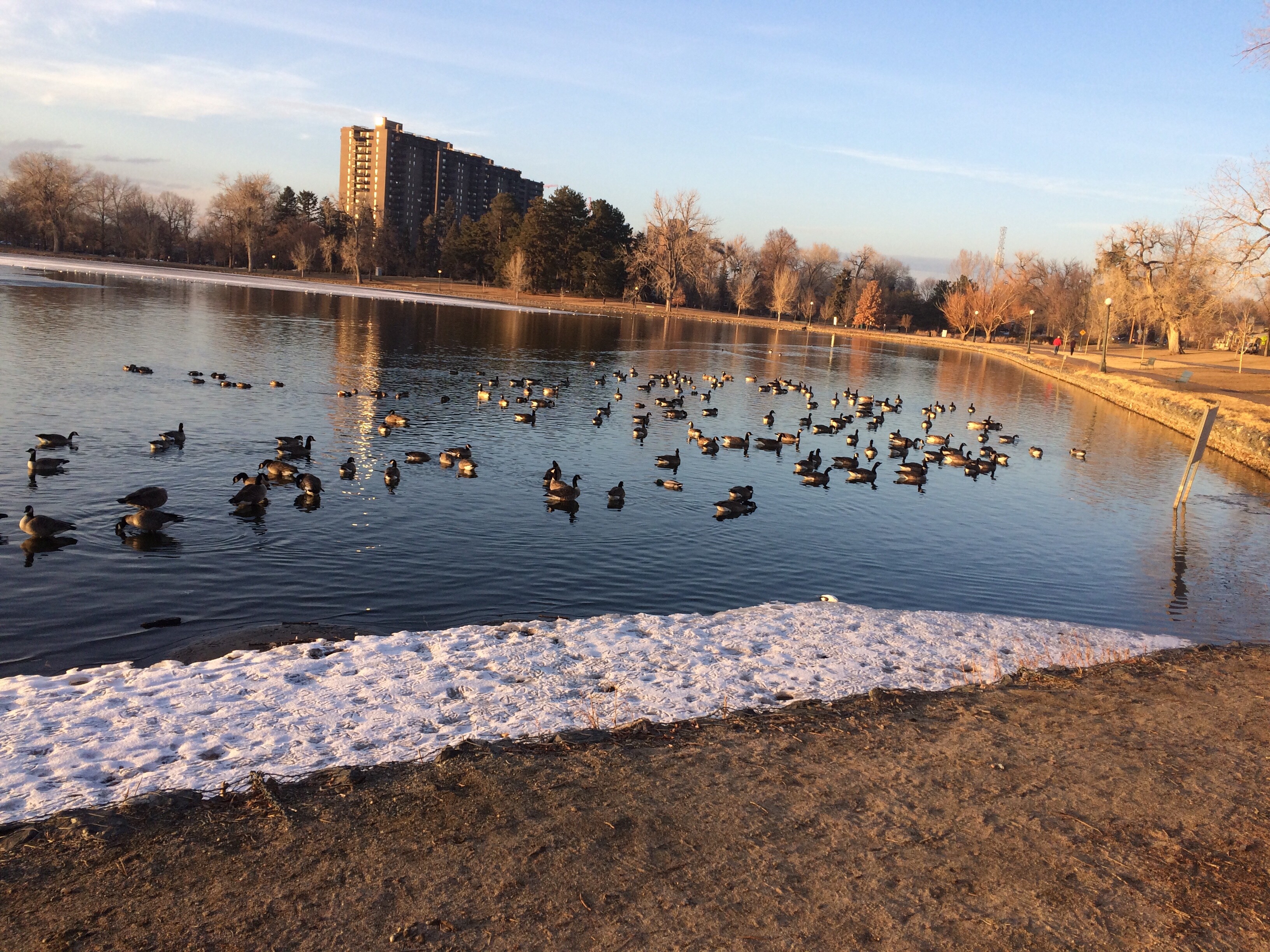
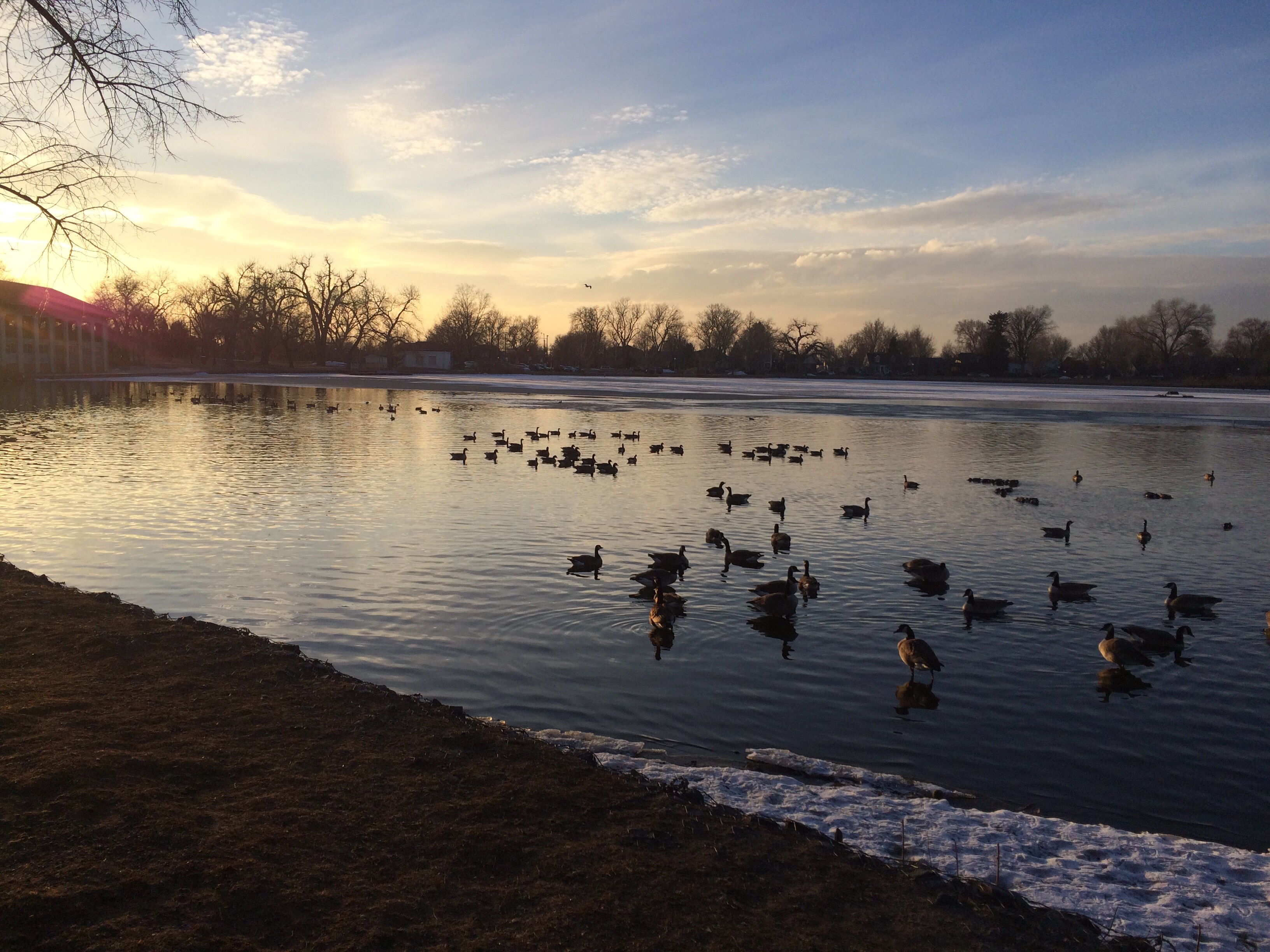
Or, the walk. Yes, I got in a walk after all that honesty and writing and chaos. Around the park with the little dog we’re watching. And the winter light sparkled just so on those geese, perfect silhouettes against the season.


These moments allowed to me before Izzy entered the car and spilled the entire sex ed story, provided by none other than Planned Parenthood and a literal wooden penis named Woody. Yes, they demonstrated how to put the condom on Woody. Yes, “Becca” taught them how to insert a female condom using only her fingers. Yes, they passed around an IUD and pressed it against their skin so everyone in the class could see what it felt like. Yes, the main way to prevent pregnancy is abstinence.

Yes, we live in Denver now, where it’s as liberal as it gets, apparently.

No, this is not the sex ed you remember.

I wonder why my almost-fourteen-year-old thinks nothing about telling me the whole sex ed story? Could it be that she’s my too-honest daughter?

No matter. We made it home and I made dinner. Or rather, I stuck some chicken and potatoes in the oven and called it dinner while I searched for ski condos in Crested Butte. (More than an hour later…) Dinner’s ready!!! Condo is booked!! Friday is done!!! 

It’s a Friday in January, and my mouth is running rampant. But at least I’m being honest about it.


Closing Thoughts on 2016

The year closes with a slew of celebrity deaths, a frightful president-elect, and the hovering window of how hopeless humanity can be as we watch the genocidal and refugee crises erupt around us without comment, without help.

The year closes in my personal life: a new principal at my school, the second daughter in middle school, the first daughter preparing for high school, the third daughter closing out our family’s elementary education. Tumultuous tumbles with family and friends that make me question everything: what I write, what I think, how I speak, how I feel about the issues surrounding me… and whether or not I should publish it “for all the world to see.”

The year closes on my habits: in many failed attempts at fulfilling resolutions, such as writing every day and ditching dairy, I have at least wholly committed to one–not a drink, not a drop, of alcohol for 2016.

And here I am, posting this. Am I an alcoholic? Are any of us? Would anyone be willing to admit it if they were?

Here are my haikus from 13 January 2016, in a moment of reflection and redemption:

reasons why i stopped:
one–brutal voice in writing,
uncensored anger

two–not much laughter,
too much crying to count
(my tear-stained regrets)

three–exhausted sleep
from too many restless nights
swimming in nightmares

four–so much good lost
on the desire to numb,
to not fully live

five–waste of money
in times when we had little,
in times when we’re rich

six–lust and lack of
mediocre love-making
blurred by consumption

seven–fat belly
of someone too far along
to give up this quick

eight–every bad choice
i have made as an adult
came from that bottle

nine–joy i once felt
disappeared on icy rocks
of my lost chances

ten–my daughters’ eyes
watching every move i make
(and i’m making… them)

The year closes with sadness, with darkness, with fear. I lost friends, I came to realize how few I have, and yet… hold them in such a greater light because of their proximity, their understanding of me. I reconciled with my sister and mother. I worked through difficulties in my marriage. I, as always, struggled through the intricacies of teaching teenagers and raising them. I got a new new kitten… and lost her a month later.

I watched the world witness the election of an evil demagogue.

I cried and I cried and I cried.

I wrote less and worried more.

But I didn’t drink. (I didn’t go to AA either. I didn’t need to.) I just wanted to see what the world was like again without the rose-colored glasses.

And the world is a hard, cold place. Filled with people who only think for themselves. Who send text messages to end friendships three years in the making. Who disregard human rights to save themselves a buck. Who turn their backs on those in need for political safety nets.

And the world is a bright and beautiful place. With young eyes that light up and demand that the future sees them for the beauty that they are: conservative Muslim, flamboyant LGBT, bleeding heart liberal, hopeful to no end. With city lights and mountain views, blue skies and snow. With full moons over lapping waves and pink sunrises over quiet urban neighborhoods. With ancient ruins and family freedoms. With girl power and urban schools. With everything that surrounds my bubble of humanity, my hope for human rights, my need to know that it. Gets. Better.
img_4893 img_4604 img_2952 img_4718 img_3649 fullsizeoutput_29 img_2193 img_4632

The year closes, and my eyes have opened. I have come to realize how infiltrated in our culture drinking is (this never quite occurred to me before) as I enter restaurants and am immediately offered cocktails or beer; as I go to book club and happy hour and parties and barbecues and hanging out at anyone’s house; as I navigate the simple sentence, “Water for me, thanks.”

The year closes, and I haven’t been numb. I have been fully awake, fully aware, of the pain that sneaks up when your youngest hasn’t done her math homework in three weeks, when your oldest can’t answer a question without a smirk, when your middle child talks back as easily as she grins, when students refuse to relinquish phones and family members whisper and rejection seems to lie behind every unopened door.

The year closes, and it may have many mistakes. It may have many moments of hollowness. But it does not have a single moment of regret.

Because it has been me, uncensored, unaltered me, in every last word, every last post, every last turn around the long journey through life.

The year closes, so let me hold up a glass: Cheers to a new year, a new tomorrow, a new hope… cheers to a new way of looking at the world. Drink… or no drink.

Cheers.

Thanksgiving Monday

Thirteen days have passed since Doomsday arrived in our world. And if I thought I was addicted to social media before, it has now become as necessary to me as my daily three cups of tea. I am addicted to seeing what has happened from moment to moment, which underqualified or downright frightening lunatic he has chosen for his cabinet, which tweet has garnered international attention, which lawsuit he has just settled, which of hundreds of hate crimes will be reported between now and tomorrow…
 
I find myself standing in the kitchen, next to the teapot. Reading. Checking my phone in subtle silences at happy hour. Reading. Looking at my computer while the students are working. Reading. Sitting at the dentist’s office while waiting for my three girls to get their teeth cleaned. Reading.
 
I’m not on my bike. I’m not doing yoga. I’m not taking long walks.
 
I’m immobile. Still numb. Still reeling in the incomprehensible truth of what our world has become.
 
Even Humans of New York can’t save me from this with his latest stint in Michigan. Yes, we are all human. Yes, we all have problems. Yes, job growth has dragged, Obamacare costs too much, and maybe we needed a change. But the cost of that change has numbed me. It has left me in a swill of late-night insomnia, fretful mornings, catatonic looks at my three girls as I find myself so deep in thought, deep in worry, that I cannot answer their questions about schoolwork, chores, or who got the last marshmallow.
 
Everything, everyone, every part of my life now rests under this shadow of doubt and fear.
 
And I am still one of the lucky ones. One of the white, non-immigrant ones. And perhaps that is why I feel so trapped. What people do I have to connect with, to understand why this bothers me so much? Those whites in Macomb County, Michigan who turned their backs on the human race? The ones in the Rust Belt who naively think Trump is going to revive coal mining jobs? The veterans whose benefits will be slashed when we end up spending $25 billion to build a wall against Mexico?
 
The ones on my Facebook feed (most of whom who have probably already unfollowed me) who will never be swayed by my opinion? Who’d rather take this demagogue for a president than have any hope for the future of humanity?
 
I am trapped in my White World. It is privileged and ignorant and shameful.
 
It hasn’t been two weeks. Our world is changing right before our eyes, and simple errands now bring me to tears. Taking my girls to the dentist on Thanksgiving Monday. I picked this dentist when we bought our house a year ago, finally a permanent home after three years of being vagabonds. I was so happy to find a dentist within walking distance of our house. When I first visited in January, I was greeted by two Russian receptionists; all of the other customers were also Russian and spoke in their rapid-fire vocalized native tongue with the employees, presumably about their latest X-rays. My dentist is a Vietnamese immigrant who did a more thorough cleaning and analysis of my teeth than any dentist I’ve ever had.
 
Why am I writing this? Why does it even matter? I keep thinking about the Hamilton line that bleeps across my mind, “Immigrants get the job done.” As I sat in the dentist’s office this morning while my girls’ teeth were X-rayed and cleaned, I wondered if everything would change. Would he kick them out? Would he shut this down? Would he find some hidden bylaw that would allow him to deport every last one of them?
 
Their Russian-American dentist sat with me in her office and explained in detail the crooked situation with each of their teeth. And just like the other times I visited, no one else who came in today spoke English as their first language. I wondered if I was the only one willing to step out of my white bubble for a decent cleaning, or if this is really what the world has become.
 
Cavity-free, we started walking home in early afternoon, deciding to stop along the way for lunch with no particular place in mind. Then, halfway between the dentist and home, we saw a sign that pointed across the barren parking lot of the abandoned K-Mart: “Fresh Mediterranean food!” We didn’t have to think about it. Fresh olives and lamb were calling us. We meandered across the massive vacancy of vehicles to a small shopping center and an even smaller restaurant that, much to my surprise, had several customers sitting and enjoying their falafels.
 
The Israeli woman who greeted us and took our order was also the head chef. Her name was everywhere–on the signs, below the photographs of she and her family that lined the walls, on the menus, on the lips of customer after customer who came in and gave her a hug. We ordered our gyros, olives, and paninis and settled ourselves into a table between walls of colorful artwork and kitchen cutlery from the countries that line the Mediterranean Sea–scenes from Italy, Israel, France. Soft tunes of guitar, mandolin, and oud filled the earth-toned room as Yaffa’s conversations flowed with the arrival of more hug-bearing customers: “Yes, if your family will be out of town for Chanukah, of course you can come here and light the candles, have some latkes…”
 
And I looked across the table at my green-eyed girls gobbling up gyros and pita and pit-filled Mediterranean olives, and I wondered what would happen. I wondered what would happen to the beauty of this place, this quilted humanity that encompasses our nation of immigrants, this cute hole-in-the-wall-of-the-world restaurant.
 
After lunch, Mythili and I headed to the library. (The dentist had asked me, “Where does the name come from? It’s one of the prettiest I have ever seen. And what does it mean?” “It comes from Sanskrit. It means goddess of mythology.” “However did you find such a name?” “From my Indian friend…” and my multiculturalism was swallowed by anxiety).
 
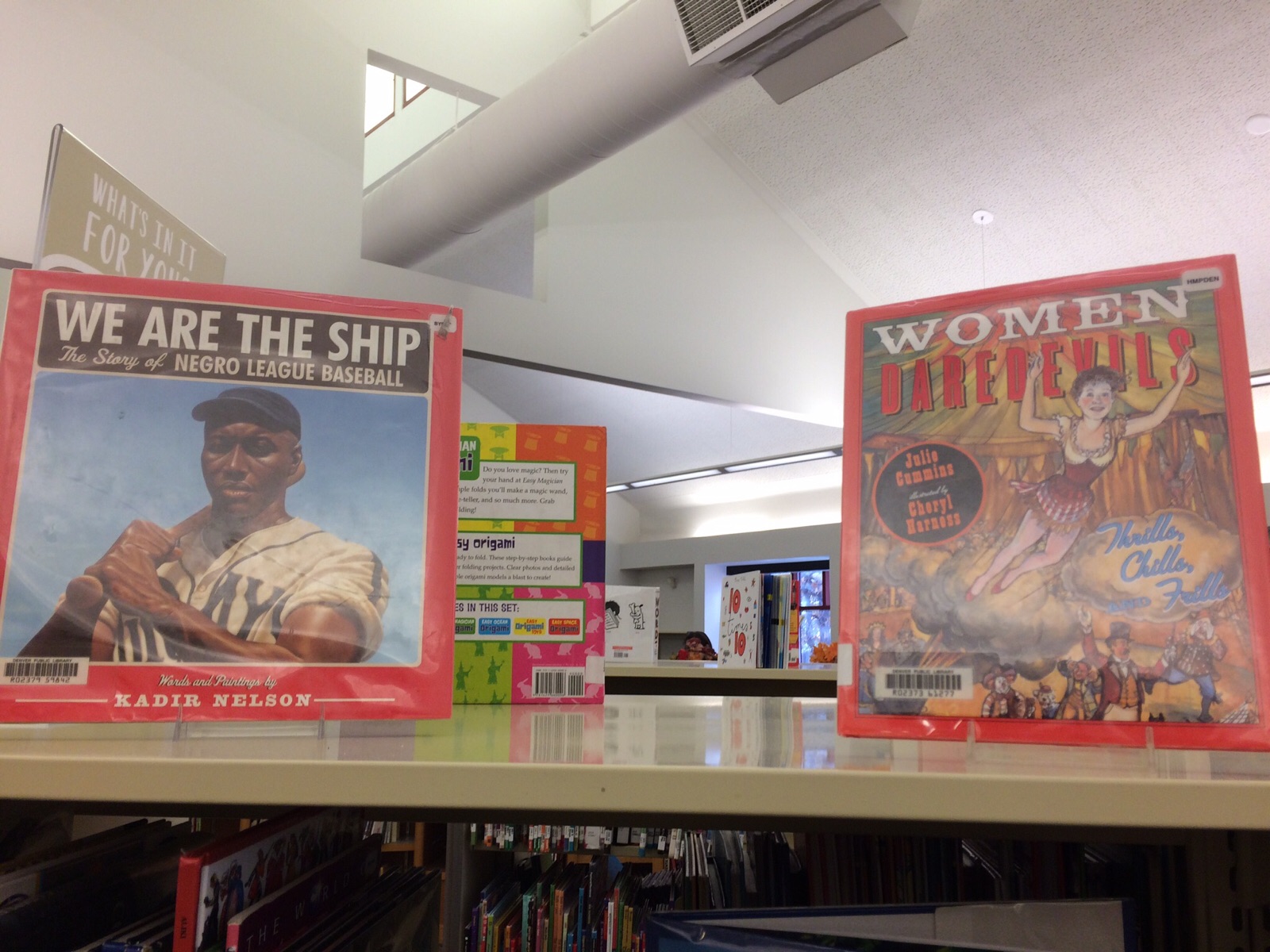
Once we arrived at book heaven, tears found themselves poised at the corners of my eyes. A simple trip to the library on Thanksgiving Monday. Books were propped up on every shelf, ready to sell themselves to anxious readers of every age. We Are the Ship: The Story of Negro League Baseball. Women Daredevils. But What If We’re Wrong? Another Day in the Death of America. Rachel: The Story of Rachel Carson. Hatshepsut: The Princess Who Became King. George Washington: The First U.S. President. A Most Improbable Journey: A Big History of Our Planet and Ourselves. Grandfather’s Turn: A Journey to the Ballot.
 
I found myself snapping pics. The titles spoke for themselves. I saw the librarian quietly setting out more, and a sign that read, “Free and Equal Access for All… You Are Welcome Here.”
 
And for the first time in thirteen days, I felt that I could move. I could go on a bike ride. I could do yoga. I could take a long walk.
 
I can continue to go to my immigrant-led dentist. And eat falafel at the local Mediterranean restaurant. And bring my daughters to the place where the world can change: the public library, where all walks of life are welcome, will enter, will read… Will open their minds and begin to change the world back.
 
I can pop my white bubble and hope for a better tomorrow. I can clearly pronounce my daughter’s hard-to-say name (MY-thuh-lee) so the world will learn that multiculturalism is about opening our eyes, our minds, our ears to beautiful new sounds and words and images.
 
 I can be hopeful and thankful on Thanksgiving Monday, on each and every day, that we can win this world back.