Progress Monitoring

This is my seventeenth year of teaching, my seventh in this school district. I have taught seventh through twelfth grade English literature as well as English Language Development to every level of English Learners.  I have co-taught seventh- and eighth-grade science and social studies courses, and I have even taught a computer applications middle school elective.

At this school, I have taught a new curriculum for at least one of my classes every. Single. Year.

This year, I have four preps. Every other year, I’ve had at least two, if not three.

In addition to these preps, I have to spend a minimum of five hours every week sitting in data meetings, leadership meetings, and planning meetings.

On top of these meetings, I have to make sure that my students understand enough English to be able to take the bus home. To find the food bank. To sift through the clothes in our donation closet for coats and gloves for a sudden October snow.

For the course I’ve been teaching consistently for the better part of seven years, I have worked tirelessly to build a curriculum when there was none. I have listened to my school, my neighborhood, my district, and my world tell me about how fucking important a grade-level standardized test is even if my students are still learning how to correctly form letters or decode words.

I have built assessments based on those standardized tests, based on the grade-level curriculum, but tapered down, sheltered, supported, for my students.

I spend anywhere between thirty and forty hours a week PLANNING the lessons for four preps, trying to teach my Newcomers everything from how to greet strangers to present progressive verb tenses to vowel-intensive phonics identification. Trying to teach my level 3 ELLs how to become fluent readers, how to effectively present information, how to listen to, write, and correct dictated sentences, how to create a cohesive paragraph supported by text evidence.

Do you give me time to meet with other ELD teachers?

Do you give me a curriculum that includes common assessments?

Do you visit my classroom and see that, oh, none of my Newcomers know how to write the letter ‘k’ because none of their languages use that letter, and maybe I should spend more time teaching them how to do this? Or see that my ELD Seminar kids spend each Tuesday sifting through grammatical rules to correctly identify their errors on their SAT-style assessments? Or see that every word I teach my kids, whether it be “north” or “however”, is built upon a concept or misunderstanding from a previous lesson?

Have you ever looked at–let me break some shocking barriers here–my GRADEBOOK? Do you think, just for a moment, that it is possible that I progress monitor my students there each week? That I look at their scores and determine what I need to reteach? That my students meet with me to retake quizzes and revise written work based on the scores that they receive, and that I endlessly allow this?

Oh. I forgot.

You don’t have time to visit my classroom.

You are running this and seven other meetings this week.

You are sharing SAT data with the entire staff.

You are making me fill out a graphic organizer that analyzes how blatantly biased standardized tests are against ALL OF THE KIDS I TEACH.

You are here to criticize what I HAVEN’T done. Not to offer:

  1. Common planning with ELD teachers.
  2. Fewer preps.
  3. A curriculum with its own COMMON ASSESSMENTS.
  4. Fewer data meetings and ones that ACTUALLY APPLY TO ELLs.

This is my seventeenth year of teaching. I know I have taught longer than you, probably more than all of the admin team combined. I think I have an idea of how to monitor the progress of my students.

Do you have an idea of how to progress monitor your ability to listen? To support? To collaborate with those of us who are in the trenches?

I didn’t think so. This “meeting” is adjourned.


Dream House. Dream Fire. Dream Husband.

in warm October

you will find his love for me

as in all seasons

Scarred for Life

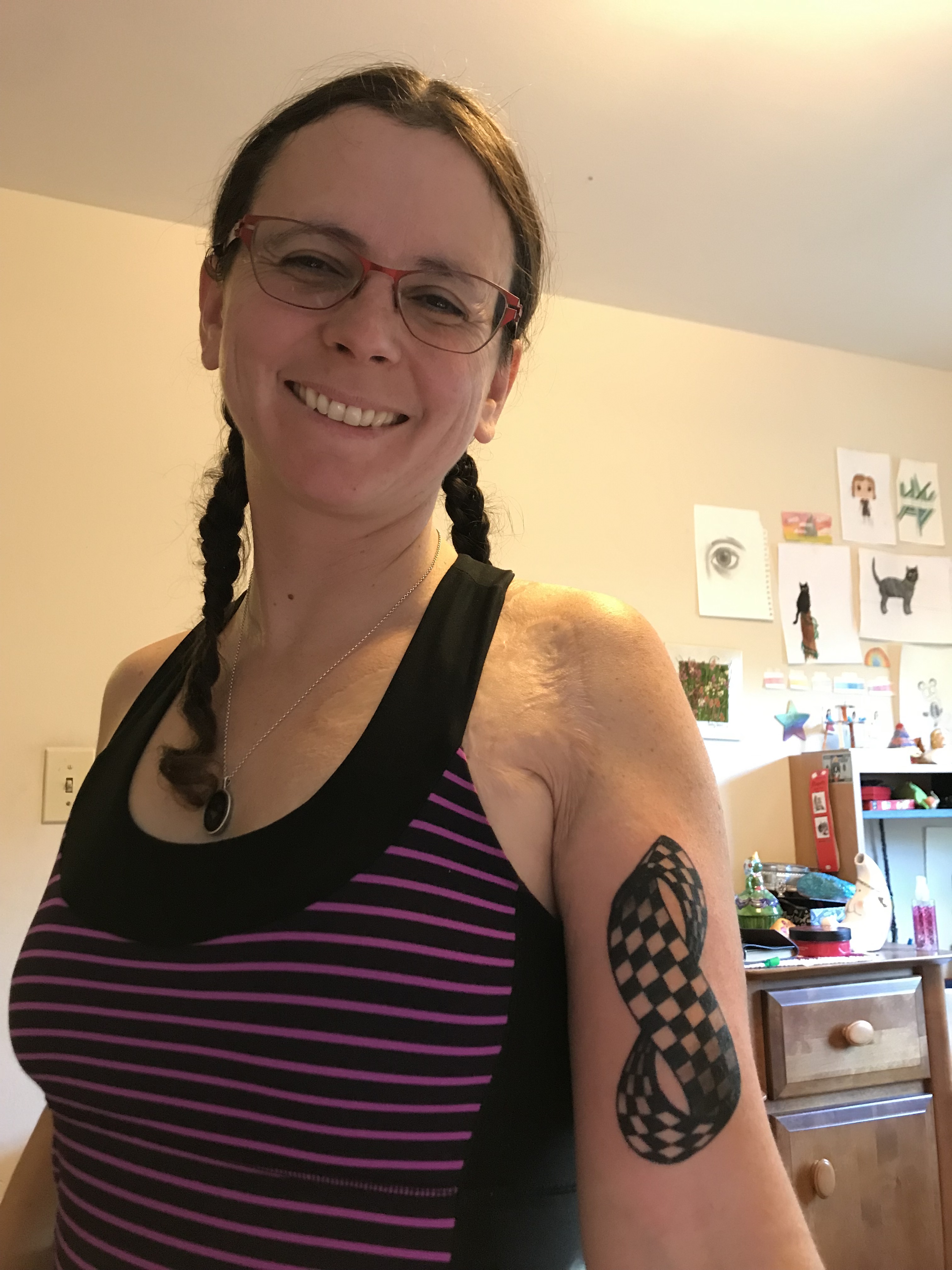
I was eight when the plastic surgeons took their scalpels and shaved a thin layer of rectangular skin from my upper right thigh to carefully morph it onto my shoulder and, twenty stitches and forty-seven staples later, make me a new scar over my burn scar.

For the remaining years of my youth, every time I wore a swimsuit, a tank top, an open-necked dress, I had to answer questions. “What happened?” “How old were you?” “What were you doing?” “How much did it hurt?”

Even though I know my mother worried that the questions would always lead to blaming  her, no one ever asked me, “Where were your parents?”

Obviously, they had done the best that they could. After a few moments of shock when the six cups of water came tumbling down onto my ballerina-shoe sweatshirt, they ripped off the thick cotton and lifted me towards the sink, flushing me with cold water. They called the neighbor who was an EMT. They placed me in an ice-cold bath to try to soothe the bubbling blisters. They drove me to the hospital, to doctor appointment after doctor appointment for six months. They scheduled the surgery. My mother took off work for two weeks to care for me in and out of the hospital–her only vacation time of the year spent fretting over the major surgery her eight-year-old child had to undergo. The extra three days in the hospital because I just wouldn’t heal. The forty-five minutes I screamed after the surgery because the hospital was undergoing a major renovation and no one could find me a nurse to administer pain meds.

But no matter the sacrifice, no matter the recovery, no matter the gymnastics lessons I took that fall to stretch the skin, no matter the special silicone-filled vest I had to wear for months to press the new skin onto the old, that scar would always be there.

Primarily on my shoulder, but truly spilling beyond their surgical tools till all the way below my belly button, I was scarred for life.

Its bitter reminder stung me on my wedding day when I knew I could only pick a dress that would fully cover my shoulder.

On each of my children’s birthdays, when their anxious, hungry lips opened up a new wound in my left nipple that wouldn’t heal for six weeks of excruciating, needle-through-the-veins pain each time they nursed.

On every cock-eyed look I’d received throughout my life when people noticed the scar more than they noticed me.

I was eight years old when I had the best birthday of my life. My parents spoiled me that year because the surgery would prevent me from swimming in any of the five Finger Lakes for an entire summer, a punishment equal to hell for an upstate-New York kid. They let me have not one (the usual), but three friends spend the night. I got a Smurf watch and two Slinkys and a bouncy Gummi Bears toy that we played with for hours. My mom made a strawberry cake with strawberry frosting because I was obsessed with pink. They borrowed the neighbor’s VCR and let us stay up late watching movies. They made my night magical.

Despite everything–the ugliness of the scar, the ugliness of the pain–the scar became a part of me. So what if every time I went to the beach I’d get a look or too? At least I had a story to tell. At least it wasn’t worse. At least it was the worst thing that had happened to me as a child.

When my fiancé proposed to me more than ten years later, there was only one date I had in mind for my wedding day: 8.8.98. The number reflected everything–twenty years old, infinity, the life-changing events of my eighth year of life.

And though my mother always fretted over my scar, and though I feared making the choice I made yesterday for my entire adult life because of my fear of never healing and that cursed scar, I have no regrets.

It is dark. It is light. It felt like a cat scratching me a thousand times. But it did not feel like pouring six cups of boiling water onto myself. It did not feel like giving natural birth to three 9-pound babies. It did not feel like surgeons pulling forty-seven staples out of my skin graft.

It felt like infinity. Like the perfect figure 8.

Scarred for life. Just like I always have been and always will be.


The Rush. The Run. The Race.

My daughter’s face perfectly encapsulates my day, my motherhood, my career. Straining to run through the burning sun of a late summer day, pushing the limits of what she’s run before, and wishing for a closer finish line.

Disgruntlement at a too-hard, too-narrow concrete runway, making it nearly impossible, impassable.

Fear that her time will be worse than before, that the heat will beat her, that the world will beat her.

A sliver of hope for that final push, that final lap, that is just around the corner yet feels like twenty thousand steps too far.

In the background, teens cheer.  “You got this!” “Just one more mile!” “Keep it up!”

Parents chase the runners, crossing the park’s midsection while they wrap their legs around its exterior shaded walkways. Parents trying to get the next best vantage point to capture that pic, that glimpse of angst that is in every athlete’s face.

Coaches stand on the sidelines, their own cheers tight with passion, with expectation and longing. “Lift your legs!” “Raise up those arms!” “Just like at practice!”

Her expression, their words, the globally-warmed, never-ending sun, beat down on the tumble of meetings that began and ended my day. The constant admonishments from my administration. The constantly shifting expectations and placement of people in power at my school district. The constant lack of a curriculum for the students who need it most and don’t have the right words, the right expression, to beg for that finish line. The constant task of preparing three hours of sometimes-failing lesson plans I must place in front of my Newcomers.

The rush–my god, the rush. Three weeks back, adding item number one thousand and seventy-three to our Google family calendar, Bruce rearranging his ever-strict hours to be able to make this meet, the shuffle of only-two cars, three girls in three activities with varying times, my after-work meeting, my cycle down the bike path, my fifteen-minute window to cross a park three times to gather this glimpse, my Torchy’s Tacos stop, bike locked and unlocked, bathroom locked and unlocked but only with a code, taco bag ripped on the rush up the elevator, only to find a buffet of snacks waiting in the final meeting room. My race to beat the moon home because it would never be light enough, our car in the shop for nearly six weeks, and I don’t even have time to fix the chain on my bike, let alone buy a decent headlamp.

All of this is in my daughter’s face. All the angst, the cheers, the backtalk, the doubts.

And just like her, I am racing to the finish line. It is never close enough, but both of us, somehow, have made it today. We have made one more race, one more step, towards what we hope will be better on the other side.

And that is enough. For today, it is enough.

Teen Driver Woes

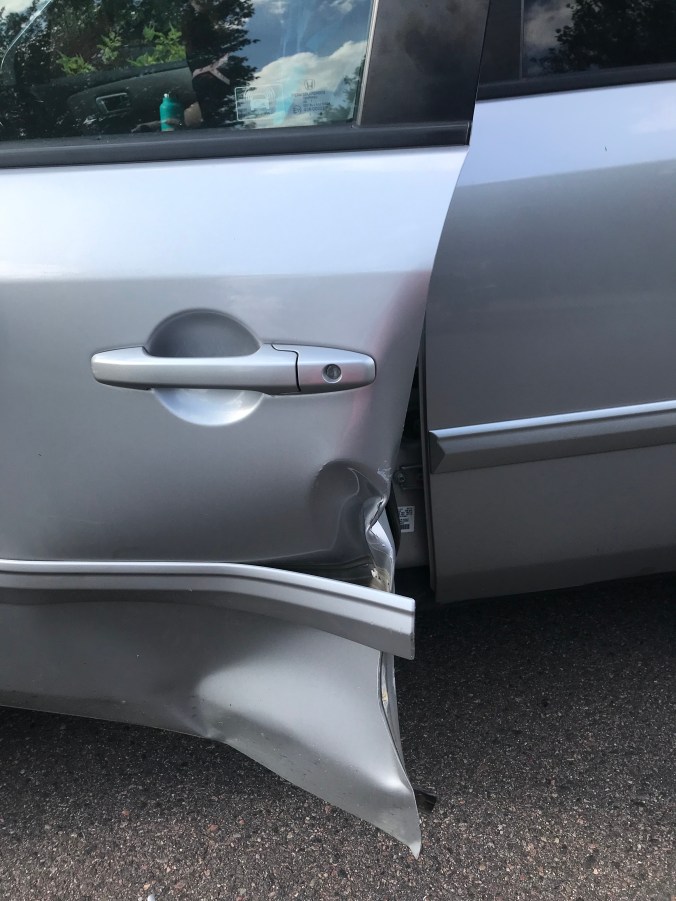
welcome back, Pilot

we’re sorry we wrecked you, girl

please forgive our luck

Road Trip 2019: Day Sixteen, Lake Vermilion

Dear Minnesota,

How do you tease with lakes buried under ice for seven months that are swimmable by July?

How my Colorado blood envies your lack of altitude.

How windy you made this lake for three days until the dusk presented a photo-less calm that brought all eleven of us onto the water.

Even Ruby, just six, paddled to the bald eagle island halfway across the bay.

Even my mother, just sixty-five, tolerated the nearly-still lake.

You should have seen it with your non-existent books, your lack of information published online, your secret beauty buried beneath ponderosa pines and fish-hunting loons.

You should have told me that peat bogs and mosquitos mask the firelit perfection of summer.

That the North Woods encapsulate the fairy tale life we’ve all wished to achieve.

I should have known, Minnesota, that you were too good to be true.

Stand Up. Paddle.

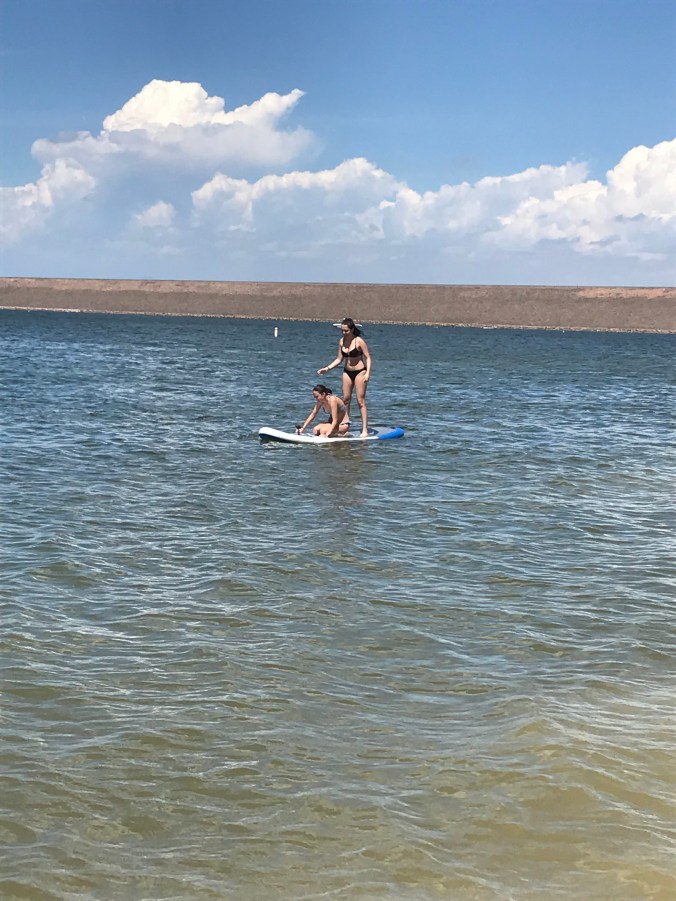
my oldest happy?

so hard for me to earn now.

worth every penny.

Lemonade

Most people who hear that I have three, not two, daughters, send me a sympathetic look, or trade empathic stories of their own three or four girls, or commiserate in some form or fashion.

“Three teenagers? All at once?” Their shock and worry for my well-being come hand in hand with the realization.

Rarely am I praised or labeled blessed for such a thing. Because three is too many. Three girls, or three of any one gender, is too many.

But an accusation is a whole other ballpark that I don’t quite know how to bat for.

“Can’t you understand the plight of my daughter, someone who doesn’t have two sisters who are her best friends, and how lonely she must feel? And you sit here with your sisters and have a house full of friends and treat her that way?”

She stands at my doorstep. I recognize her voice, but I find my feet paralyzed in the kitchen staring at the pizza dough my youngest has spent the better part of a day preparing. My youngest, who righteously defends herself against the bullied petulance of her sisters, but outside of our family, has likely never said an unkind word to anyone.

“Do you not like my daughter? Do you have the decency to admit it? And YOU, what did YOU say to her? What did you do to her?”

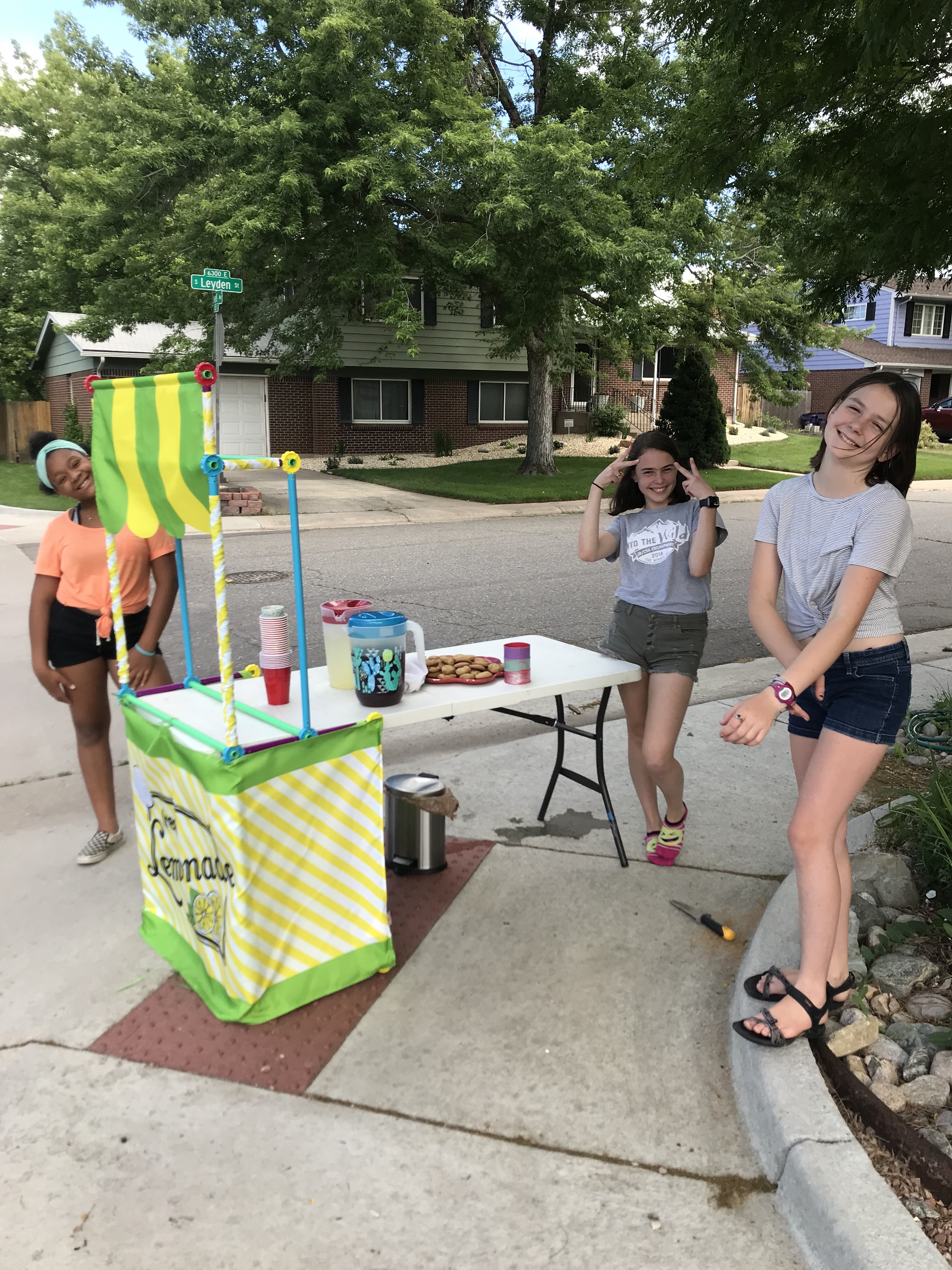
I listen to my girls stumble over words as I put the scene together in my mind. One neighbor came over and spent the morning rolling out cookie dough, boiling water, squeezing lemons, and stirring iced tea. She and my youngest set up the lemonade stand at the corner and made a catchy but annoying hip-hop rant to woo passing cars: “Lemon-ade and cookies too, get your lemon-ade, doo-doo!”

After more than an hour and many dollars later, the pitchers of iced tea and lemonade were nearly empty before the third child arrived. My middle girl and I were still in the midst of the nightmare job of pulling tiny bits of crabgrass out of five hundred square feet of pink rocks, and my oldest had just pulled up with a shake and chicken nuggets, her hair freshly cut, offering everyone a taste.

The third girl stood at the edge of the scene, and Riona offered for her to help clean up, giving her two cookies and five dollars once the lemonade was gone.

“I want to know who called my daughter anus? Was it you?” I can feel her eyes burning into Riona’s, whose tears are already burning down her cheeks.

“We were just messing around. We say that to each other all the time,” the first friend pipes in.

But she is not done ranting. She lays on the (must-be) Catholic guilt of her daughter coming home crying, of being excluded, of the disgrace of the name-calling, pinning it directly on this household and “the fact that we know nothing about you three girls even though we’ve spent so much time with ___, and nothing like this has happened before.”

The snake that is Jealousy has slithered heavily down the block, consuming all air from my lungs, from my children’s stuttered responses, and choked us all into shocked silence. How venomous it tears apart a young girl’s heart, how twisted offhand remarks become when in the presence of new friends.

I begin to find footing to approach the mother, but she has stormed off before I can peel myself from petrification in my pocket-door kitchen.

Did she not take a moment, in her Mama-Bear attack, to think that it might be possible, just maybe, that her girl was feeling left out and blew the comment out of proportion? Did she want to find a scapegoat for the tears? Did she want her to lose a friend?

Tears are the only characters in the room once she leaves. Everyone has her version.

“She thinks we’re friends with each other?” the sisters exchanged snarky glances.

“I just offered her some of my ice cream.”

“I was weeding.”

“I gave her five dollars and a cookie.”

“I called her anus like I do every day, and I am NOT playing soccer with her no more.”

And what is a mother to do?

I present my Jealousy Lecture, fresh from my pocket and a conversation with my oldest from just a few days ago. “Just think how you feel when your sister gets something that you don’t, and how hurt you are, thinking that we favor one of you over the other one.”

Everyone nods, recollects, brings fresh tears to her eyes as they draw upon recent memories of Air Pods or Apple Watches or a damn raincoat two sizes too small and three years past being angry about.

But they get it.

“Why don’t you two make a card…”

They take the card stock, the permanent markers, the classroom supplies I am always buying for my classroom, and blatantly apologize as only children can: “I’m sorry you felt discluded.” “I’m sorry I called you anus.” “You are our friend.”

Too afraid to walk the block alone, I accompany them to the house. They timidly ring the bell, and the mother answers, her husband hovering in the doorway.

Perhaps the mother says something. Calls her daughter. Perhaps there is a vague apology to me for storming in and accusing my girls of something that they didn’t say.

But no one hears anything but his voice. Threatening. Thick with hatred. Eyes on the friend. “Don’t you EVER say that crap to my daughter again, do you understand me?”

I can almost feel the fist in his voice. The toxic masculinity as he repeats the command as if he is speaking to an enemy in the ring, a wife who won’t listen, a waiter who brought him the wrong drink.

Tears immediately fill her face as she backs away, unable to even speak the words of her apology to the young girl whose parents believe everything she says and have no idea how to handle any of it.

Riona puts her arm around her for the long block home, consoling her, telling her it’s not her fault.

In the retelling of events, Izzy asks, “Is he like that angry customer who tried to get us all fired for asking him to check the freezer for the pint he wanted?”

Yes. Exactly like that.

“Is he like that guy who cut you off and flipped you off?”

Yes. Exactly like that.

“Is he like Trump?”

Yes. Exactly like that.

And… I don’t have to explain. They already know, though no men in their direct life are anything like these men, and no women in their life would accuse without taking the time to understand.

They enter, finish baking the pizza with the fresh-snipped basil and spinach from the garden, set up the hammock to eat it in, sit in the swing together, play Scattergories and act like best friends… if only for a couple of hours.

At least one of today’s accusations can have some validity.

At least I don’t need a sympathetic look for how I have raised them. How lucky I am to have a man who has never spoken a harsh word to anyone, let alone an 11-year-old girl.

And at least they know how to make lemonade out of lemons.

The Endless Cycle

shooting aftermath:
AP testing in mid-June
for suburbanites

the gun’s reach has wrath
stretching fifteen miles south
of where my home is

they shuffle in, grin;
calculators, pens ready
for a number game

but they’re missing one,
his seat echoed in “thank-yous”
as they shuffle out

they are just children
trying to grow up and catch
the world’s beauty

my tires spin home,
the grey ponds reflecting love
i cannot give them

The Adolescence of My Motherhood

strawberry rhubarb

can’t save our relationship

no matter how sweet

i’ll have to find words

to fill the lattice loopholes

between bites of love